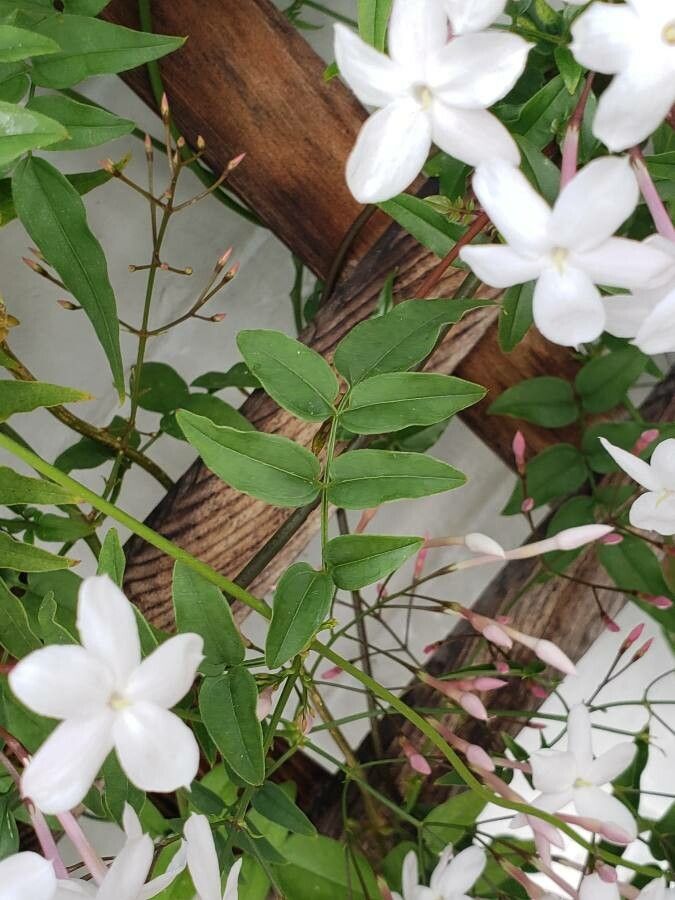
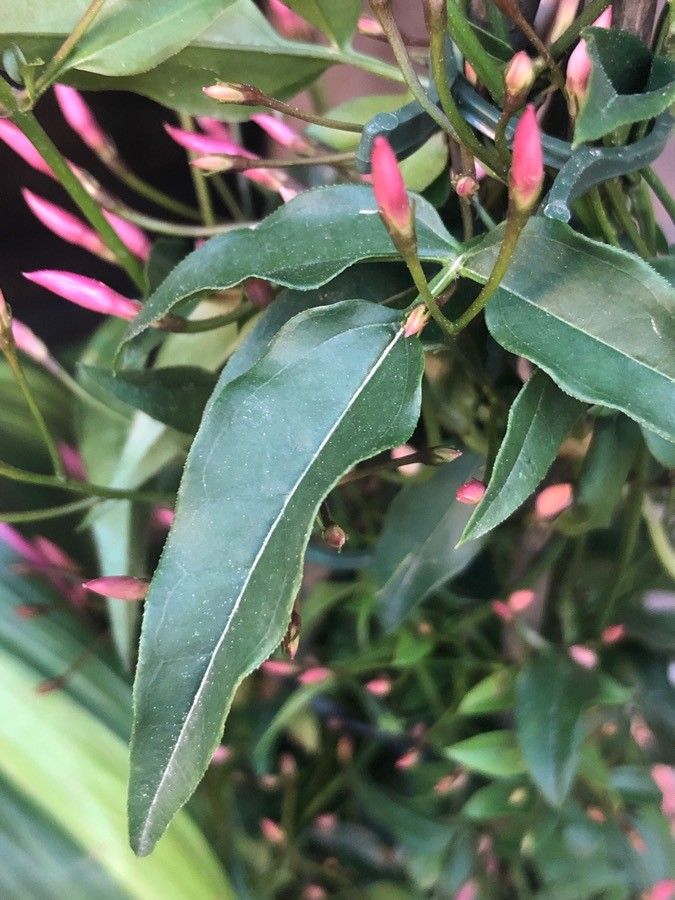
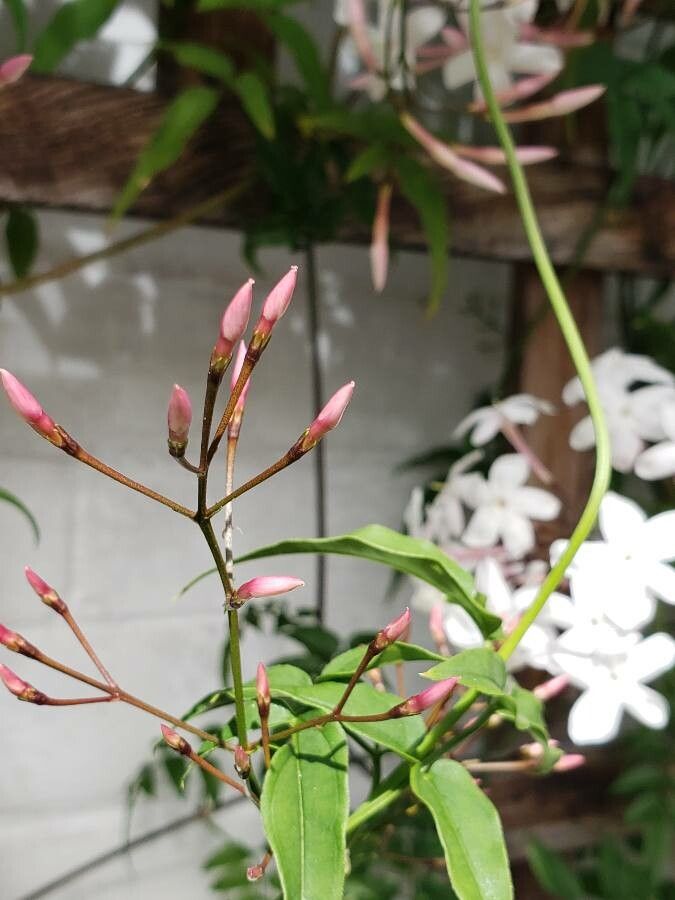
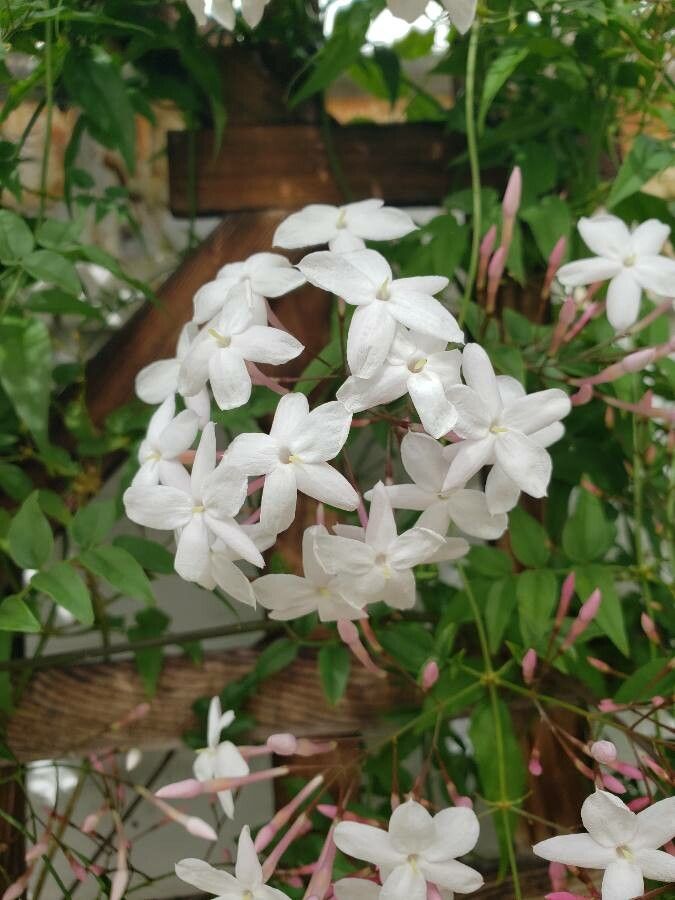
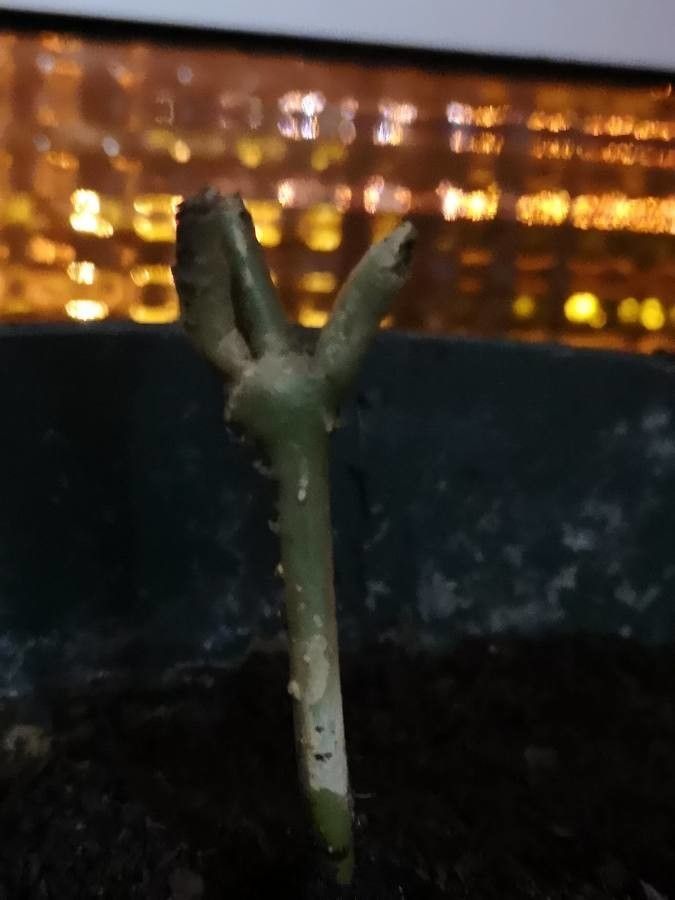
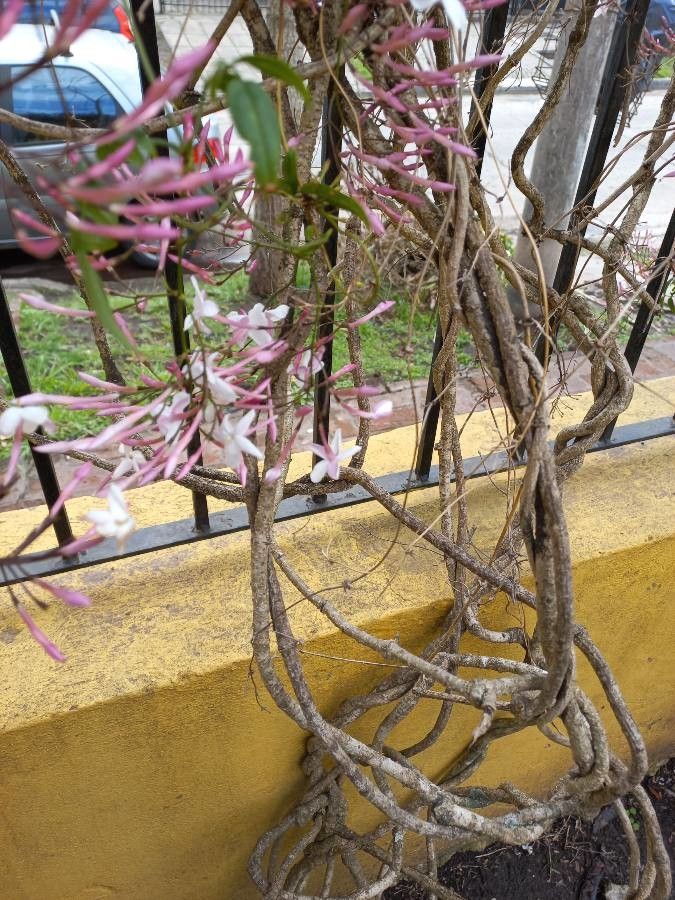
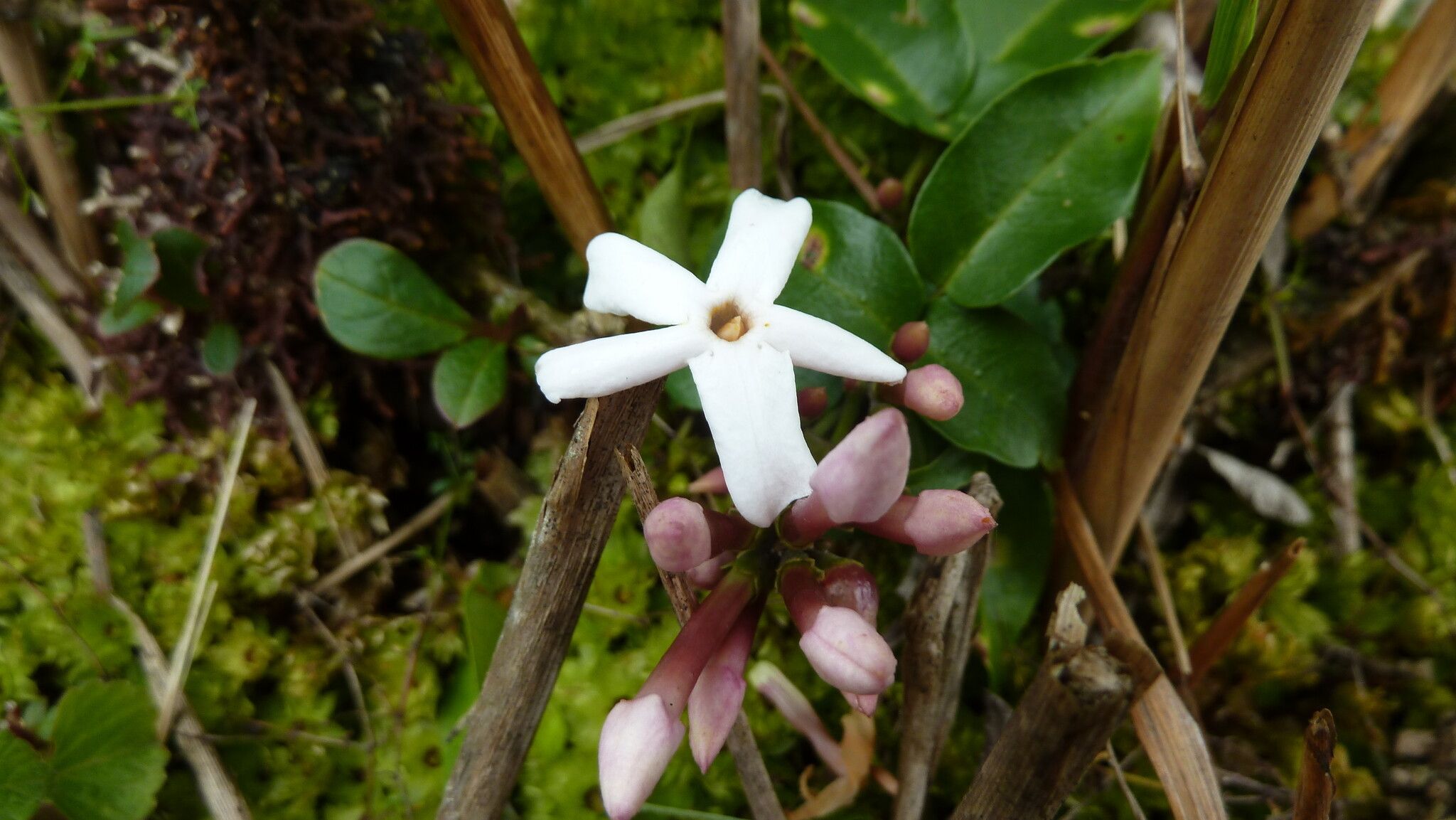
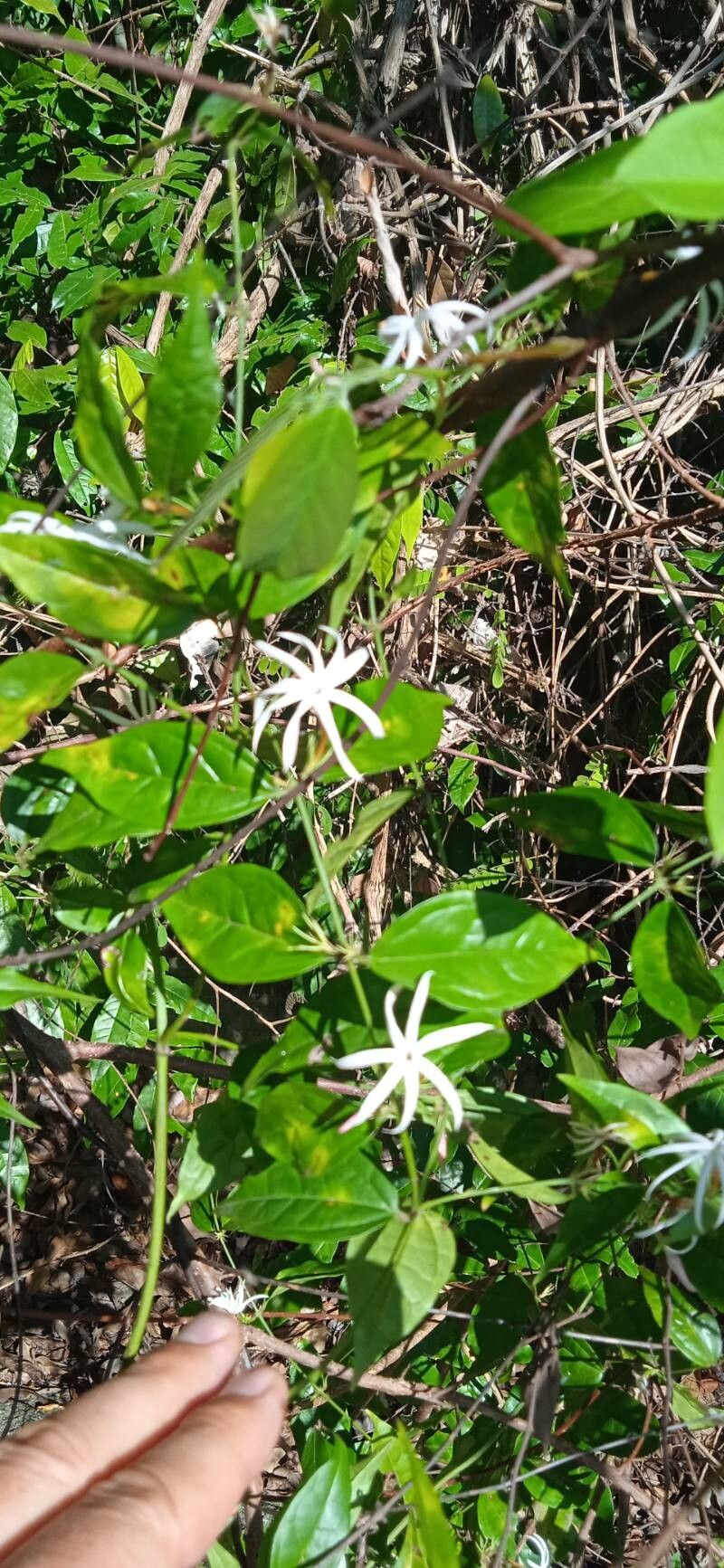
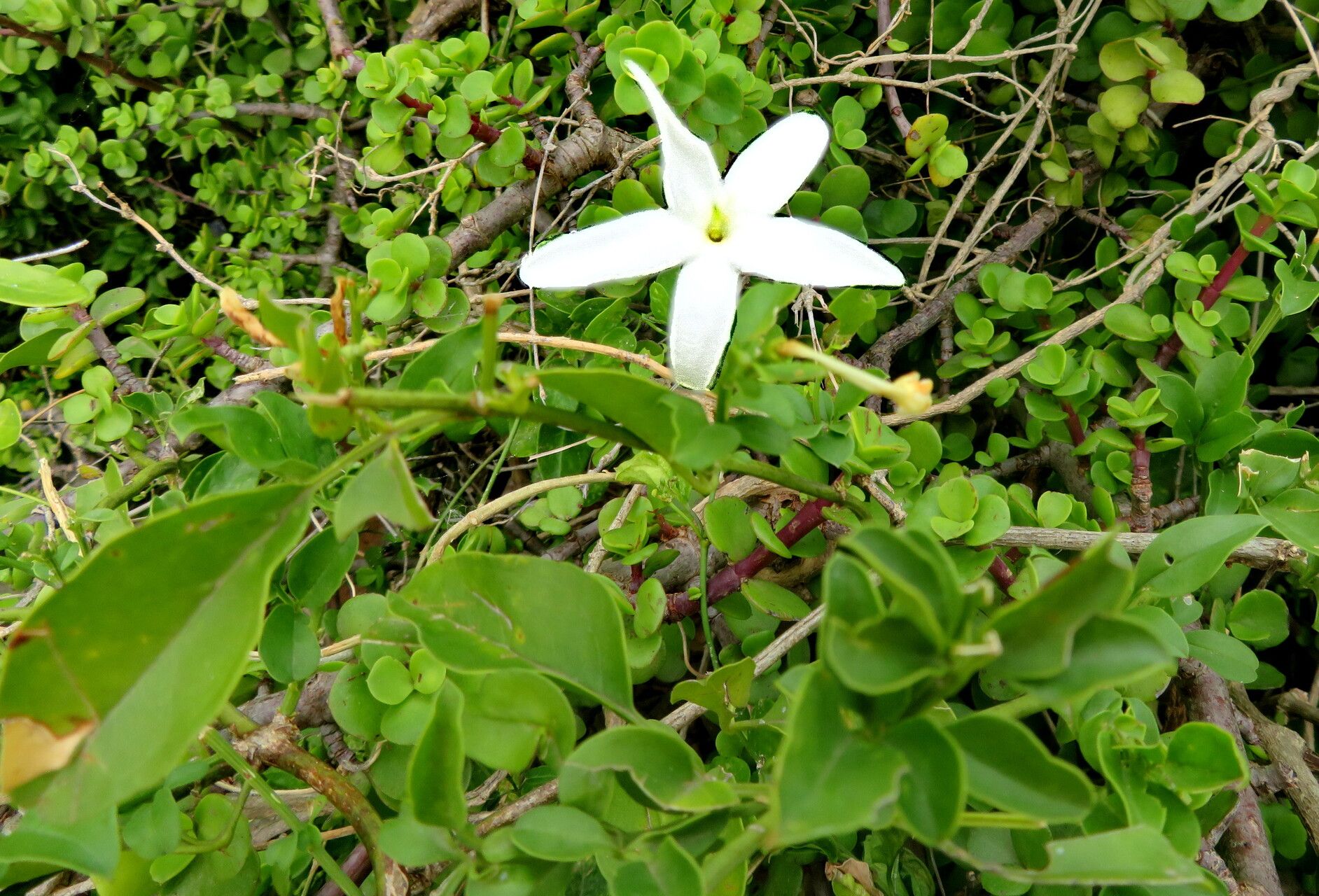
Jasminum polyanthum, commonly known as pink jasmine or white jasmine, is a fast-growing evergreen vine native to China and Myanmar. Belonging to the Oleaceae family, this plant is widely cultivated for its fragrant flowers. Jasminum polyanthum can grow up to 20 feet in length and features glossy green leaves arranged in opposite pairs along the stem. The flowers of Jasminum polyanthum are small and white or pinkish-white. They emit a sweet fragrance that intensifies at night and bloom profusely from late winter through early spring. This makes it an ideal plant for adding color and fragrance to gardens during this season. Jasminum polyanthum prefers well-drained soil with moderate moisture levels. It thrives in full sun or partial shade but needs protection from strong winds, as its delicate branches can break easily. Propagation can be achieved through stem cuttings taken during the summer or by layering branches into the soil during spring. Regular pruning is necessary to control its growth and maintain its shape. Overall, Jasminum polyanthum is an excellent choice for gardeners seeking a fast-growing vine with fragrant blooms that add beauty and charm to any landscape design.
Pink jasmine, known scientifically as Polyanthum, translates to "many-flowered," a nod to the plant's impressive display of numerous whitish-pink, star-shaped blossoms. Similar to other jasmine varieties, pink jasmine is highly fragrant and is often used as a scent in perfumes.
Pink jasmine has strong disease resistance and is typically not prone to illnesses. However, it can be vulnerable to leaf spots when light and ventilation are poor and watering is excessive. Its care level is regarded as easy, since it only needs regular watering and little else. Pink jasmine is well suited to people who do not have the time or energy to devote to routine care.
How to keep Jasminum Polyanthum.
Light
Pink jasmine thrives with consistent, steady sunlight but also does well in partial shade or even in mostly shaded spots. Since it comes from sunny habitats, care is needed not to withhold light or expose it to too much sun, as either can negatively affect its growth.
Water
Pink jasmine prospers in tropical conditions where there is regular moisture and high humidity. It requires consistent hydration, so watering it weekly will promote lush growth. As an evergreen plant, it needs a steady supply of water to keep its leaves vibrant. Pink jasmine is ideal for indoor environments where humidity can be maintained, allowing it to flourish.
Temperature
In its native habitat, pink jasmine thrives at temperatures from 20 to 38 ℃ (68 to 100.4 ℉). It prefers warm conditions, which makes it well suited for indoor cultivation in colder areas. In summer, some shade can help prevent it from overheating.
Fertilizer
The best time to fertilize Pink jasmine is in early spring, as it comes out of dormancy and begins active growth. Fertilizer supplies essential nutrients for healthy growth. Although Pink jasmine has relatively low fertilization needs, applying fertilizer annually can enhance its survival and encourage better, longer-lasting flowers.
Pruning
Pink jasmine flourishes with regular pruning, which is best done from late winter to early spring after it has finished blooming. To maintain its shape and density and enhance its ornamental appeal, remove weak stems and trim the plant back vigorously. Always use clean tools to prevent the spread of diseases.
Pot & Repot
Repot Pink jasmine in early spring, selecting a pot only slightly larger than the existing one and with good drainage. Use a well-draining potting mix and ensure the root ball is placed at the same level as before. Gently loosen any root-bound roots. After repotting, water thoroughly and put the plant in a warm, shady spot. Prune regularly to keep the size down and encourage new growth.
Toxicity
Pink jasmine has no known toxic elements, and although it will not poison your pet, it may create gastrointestinal symptoms that resemble poisoning if consumed. These symptoms include appetite loss, vomiting, and diarrhea. Many pets, including cats and dogs, do not consume plants as part of their normal diet, yet they may be allergic or sensitive to some plants.
Further reading →
The toxicity and danger assessments provided are for reference only. We do not assure their accuracy, so it's crucial not to depend on them. Seek professional advice when necessary for accurate guidance.
Botanical profile.
- Plant Type
- Vine, Herb
- Life Cycle
- Perennial
- Genus
- Jasminum
- Family
- Oleaceae
- Hardiness Zone
- 9-11
- Mature Height
- 0.91 m to 10.06 m
- Mature Spread
- 0.91 m to 1.52 m
- Leaf Color
- Green
- Leaf Type
- Evergreen
- Flower Color
- White, Pink
- Flower Size
- 2.03 cm
- Bloom Time
- Spring
- Planting Time
- Spring
- Harvest Time
- Early summer, Mid summer
- Native Area
- India, Myanmar, China
Other names.
Reader questions.
How should I water my Pink jasmine?
To ensure the Pink jasmine plant's well-being, it is recommended to water it with filtered water at room temperature. Tap water may contain harmful particles, so using filtered water is preferable. The water's temperature is important too, as the plant is accustomed to warmer conditions, and cold water may shock it. Avoid sprinkling water on the foliage, as this can cause problems. Instead, slowly pour the filtered room temperature water onto the soil until it is fully saturated. This promotes root moisture and allows them to spread and absorb nutrients effectively.
Why do I have to add fertilizer to my Pink jasmine?
Fertilization is important for Pink jasmine for a few reasons. It helps provide essential nutrients for the plant's growth above and below ground. However, Pink jasmine doesn't require a lot of fertilization. While it can survive without it, annual fertilization can greatly benefit the plant. It not only keeps the plant alive but also promotes the production of longer-lasting, beautiful flowers. Therefore, those who wish to enhance the appearance of their Pink jasmine should consider annual fertilization.
What are the sunlight requirements for Pink Jasmine (Jasminum polyanthum)?
Pink Jasmine requires full sun, defined as above 6 hours of sunlight daily, to thrive. It can also tolerate partial sun or full shade, amounting to about 3-6 hours of sunlight. When arranging your garden or choosing a spot for Pink Jasmine, it's vital to observe the sunlight's movement to ensure the chosen location provides a balanced environment of light and shade. This ensures the plant's growth and happiness are optimal.
What are the ideal growing conditions for Pink Jasmine?
Pink Jasmine (Jasminum polyanthum) thrives in a temperature range of 20 to 38°C (68 to 100.4°F), making it suitable for indoor cultivation in colder regions. Although it appreciates warm temperatures, during the hotter months, it benefits from some shading to prevent overheating. This plant has a certain level of cold tolerance and usually does not require special care when temperatures are above 0°C. However, if temperatures are expected to fall below freezing point, protective measures such as wrapping the plant in plastic film, fabric, or other materials should be taken. These protections should be removed once the temperature rises to ensure the plant remains healthy.
What should I do if I give my Pink jasmine plant too much or too little water?
Overwatering and underwatering can both harm your Pink jasmine, but overwatering is more common. When the plant receives too much water, its stems and leaves may wilt and turn yellow. Overwatering for a long time can also cause diseases like root rot, mold, and mildew, which can be fatal for the plant. Underwatering is less likely with Pink jasmine as it can tolerate drought. However, it can still happen, and you may notice brittle and brown leaves. It's important to spot signs of overwatering early because certain diseases, like root rot, may not be fixable if left too long. If you see early signs, reduce watering immediately. Also check the quality of the soil; if it drains poorly, replace it with a loose, well-draining potting mix. On the other hand, if you notice signs of underwatering, simply water more regularly until the signs disappear.
When should I fertilize my Pink jasmine plant?
The best time to fertilize a Pink jasmine is in late winter to early spring when it is transitioning from dormant to active growth. Fertilizing at this time promotes healthy growth and sets the plant up for a successful season. Fertilizing in the fall is also acceptable, but it is not recommended in the summer or winter.
How does Pink Jasmine respond to different lighting conditions?
Pink Jasmine flourishes under steady, full sunlight but can also grow well in partial shade or largely shaded areas. Its native habitat is typically sunny, so while it can adapt to various lighting conditions, both underexposure and overexposure to sunlight can adversely affect its growth. In indoor settings where natural light is insufficient, especially during winter, artificial lighting such as LED lights can be a suitable alternative, promoting healthy growth. For full sun plants, 30-50W per square foot is recommended, for partial sun plants, 20-30W per square foot, and for full shade plants, 10-20W per square foot of artificial light.
How does Pink Jasmine react to low and high temperatures?
Pink Jasmine has a moderate tolerance to low temperatures, flourishing best when conditions are above 20°C and maintaining health above 0°C. If temperatures drop below -5°C, the leaves may droop; they might recover in mild conditions but can wilt and fall off in severe cases. To protect against cold damage, trimming frost-damaged parts and wrapping the plant with non-woven fabric or cloth, as well as constructing a wind barrier, are effective solutions. In high temperatures, particularly above 38°C, Pink Jasmine may experience lightening of leaves, drying of leaf tips, curling of leaves, and increased susceptibility to sunburn when exposed to temperature over 43°C. Adjusting the plant’s location to receive afternoon shade or utilizing shade cloth, along with watering in the morning and evening, helps mitigate the risk of heat damage.
How frequently do I need to water my Pink jasmine plant?
If your Pink jasmine is in a pot, you can check if it needs water by sticking your finger into the soil. If the top two to three inches are dry, it's time to water it. The same method applies if your Pink jasmine is planted outdoors. When the first few inches of soil dry out, it's time to water it. In the spring and early fall, watering once a week is usually enough. During extremely hot weather, you may need to water two or more times per week. However, mature Pink jasmine plants are resilient and can handle drought conditions.
When is not a good time to fertilize my Pink jasmine?
To avoid overfertilization and its potential complications, it is best to only fertilize your Pink jasmine in late winter and early spring. A single annual feeding is sufficient for this plant's low fertilization needs. However, if you didn't fertilize in spring, it is acceptable to feed the plant in fall. During the growing season, which includes spring, summer, and fall, it is recommended to refrain from fertilizing. In winter, when the Pink jasmine is in a dormant growth phase and not producing new growth, fertilization is not advisable.
What are the symptoms of incorrect lighting on Pink Jasmine?
Symptoms of lighting issues in Pink Jasmine include small new leaves, leggy or sparse growth, faster leaf drop, slower or halted new growth, lighter-colored new leaves, chlorosis (leaf yellowing), sunscald, leaf curling, wilting, and leaf scorching. These symptoms arise from both insufficient and excessive light exposure. Insufficient light leads to weakened growth and foliage issues, while excessive sunlight can cause damage to leaves, affect photosynthesis, and reduce plant health.
How much water does my Pink jasmine plant need?
To properly water your Pink jasmine, do not hold back on the amount of water you give it. Make sure that the top 2-3 inches of soil are dry before watering. It is recommended to thoroughly water the plant, ensuring that the entire soil is soaked. Adding enough water to make it flow through the drainage holes in the pot is ideal. If you don't see excess water draining, it means you haven't watered enough. However, be cautious not to let the water accumulate in the soil as it can harm the plant. On the other hand, if water doesn't drain well through the pot, it could indicate poorly draining soil, which is not good for the plant's health. When the plant is outdoors, receiving about 1 inch of rain per week is sufficient.