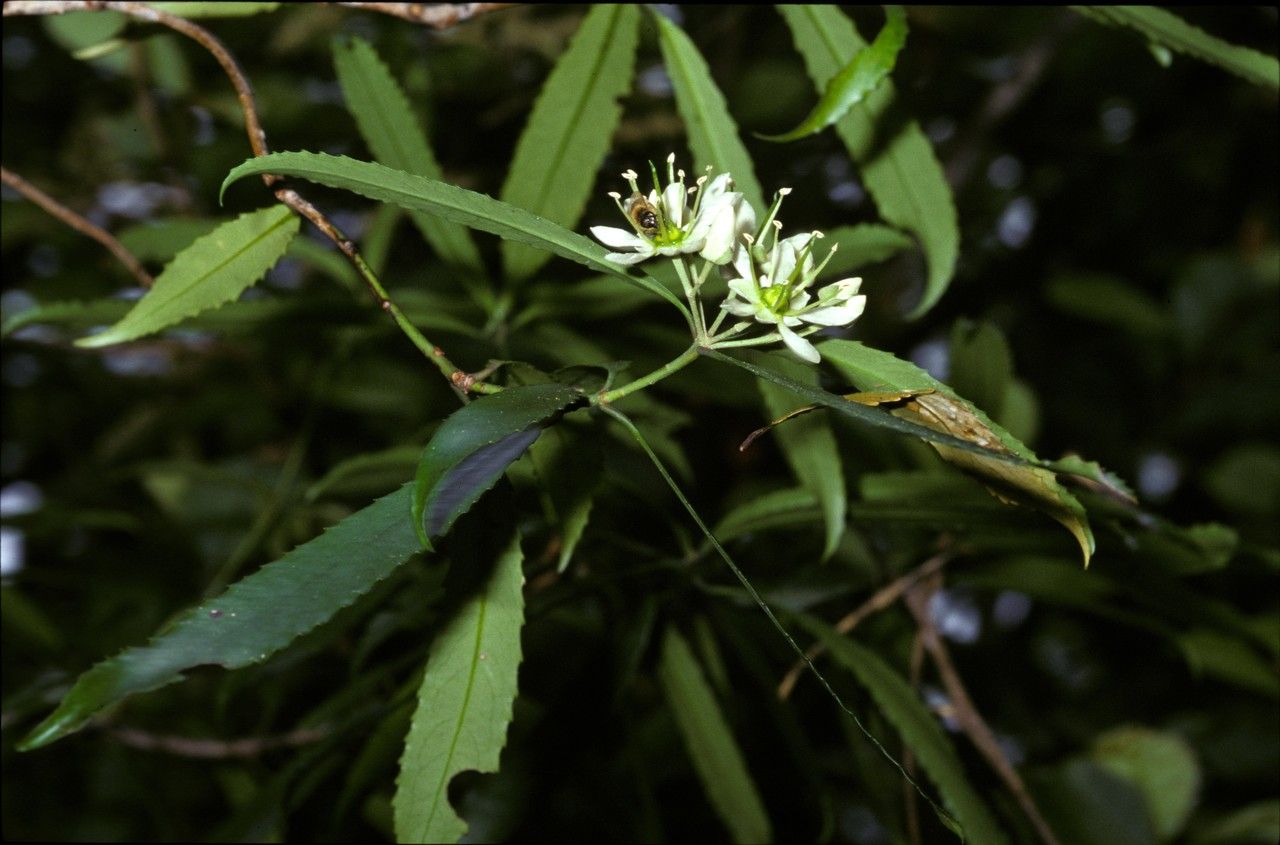
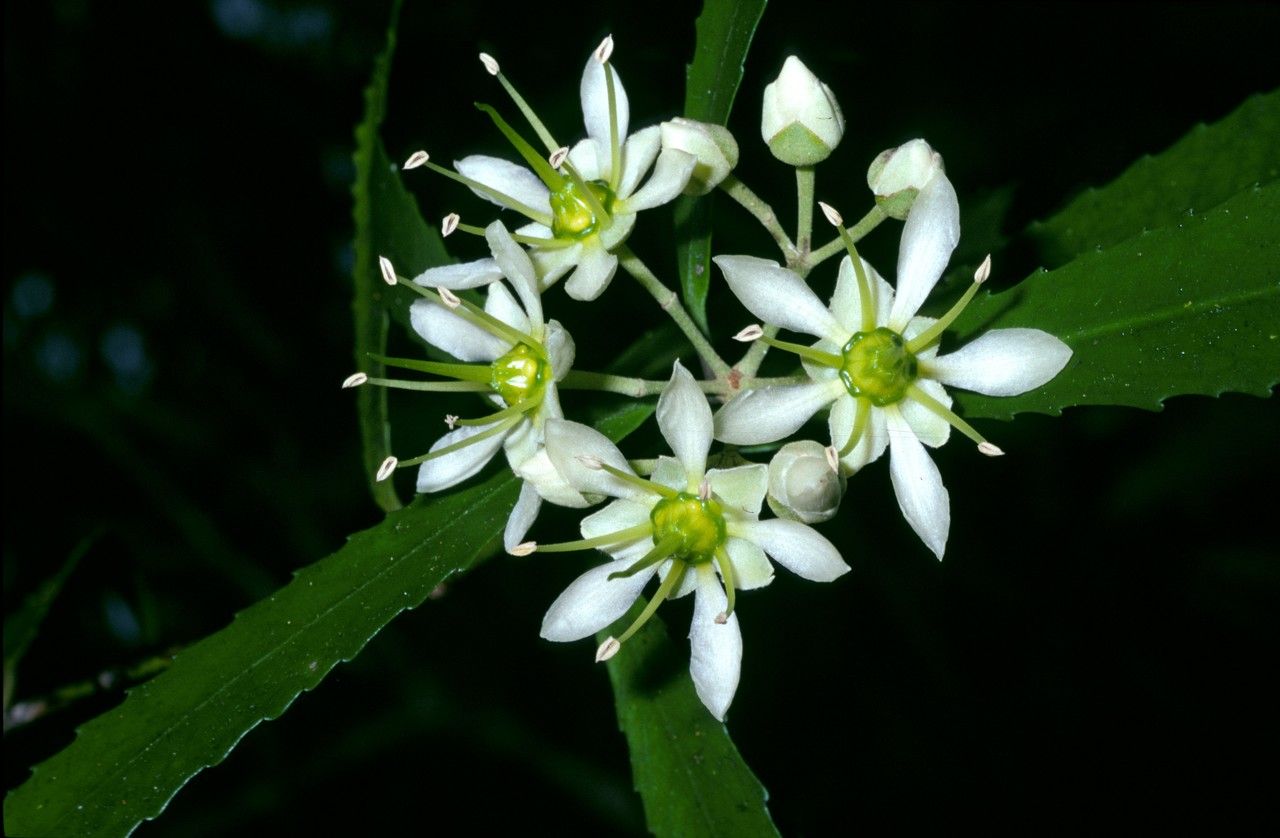
Ixerba brexioides, the sole species in the genus Ixerba, is a bushy tree with thick, narrow, serrated, dark green leaves and panicles of white flowers with a green heart. The fruit is a green capsule that splits open to reveal the black seeds partly covered with a fleshy scarlet aril against the white inside of the fruit. Ixerba is an endemic of the northern half of the North Island of New Zealand. Common names used in New Zealand are tawari (Māori: tāwari) for the tree and whakou when in flower. It is assigned to the family Strasburgeriaceae.
Tawari has good resistance to disease and is generally not susceptible to illnesses. In terms of care, this plant is relatively low-maintenance. When planted outdoors, it requires minimal watering, and larger plants generally do not need pruning. However, smaller plants should be pruned after they have bloomed. Tawarit is appropriate for anyone with an outdoor area, such as a garden or deck, and does not demand much prior care experience.
How to keep Ixerba Brexioides.
Light
Tawari is native to habitats like forest understories and rocky sites, where it grows in natural shade. It prefers partial sun but can tolerate full sun or full shade, reflecting its adaptable and hardy nature.
Water
Tawari thrives in environments with high humidity, much like the forests of its native New Zealand. It prefers soil that is consistently moist but well-drained and needs to be watered weekly. This evergreen plant is best suited for outdoor cultivation, where it's important to manage its water supply carefully, especially during drier seasons.
Temperature
Tawari shows strong adaptability to different climate conditions, from blazing summers to freezing winters. Nonetheless, it has an ideal temperature range for growth. If temperatures rise too high, the plant is vulnerable to heat and humidity stress, which can lead to its death. In places where temperatures near the lower limit of its cold tolerance, providing insulation is important to protect the plant.
Fertilizer
The timing of fertilizing Tawari is important. Apply fertilizer in early spring and continue monthly until early summer. Fertilizer encourages attractive blooms and supplies energy during both dormant and active growth periods.
Pruning
Tawari plants are known for their lush foliage and white flowers. To keep them healthy, it's best to prune them between early and late winter. The main techniques involve light trimming and removing any damaged branches to improve airflow and overall plant health. Always ensure you're using clean, sharp tools to prevent the spread of diseases.
Botanical profile.
- Plant Type
- Tree
- Life Cycle
- Perennial
- Genus
- Ixerba
- Family
- Strasburgeriaceae
- Hardiness Zone
- 9-11
- Mature Height
- 10.06 m
- Mature Spread
- 2.13 m
- Leaf Color
- Dark Green
- Leaf Type
- Evergreen
- Flower Color
- White
- Flower Size
- 2.54 cm to 3.56 cm
- Bloom Time
- Late spring, Early summer
- Planting Time
- Spring, Summer
- Harvest Time
- Late summer, Early fall, Mid fall
- Native Area
- New Zealand
Other names.