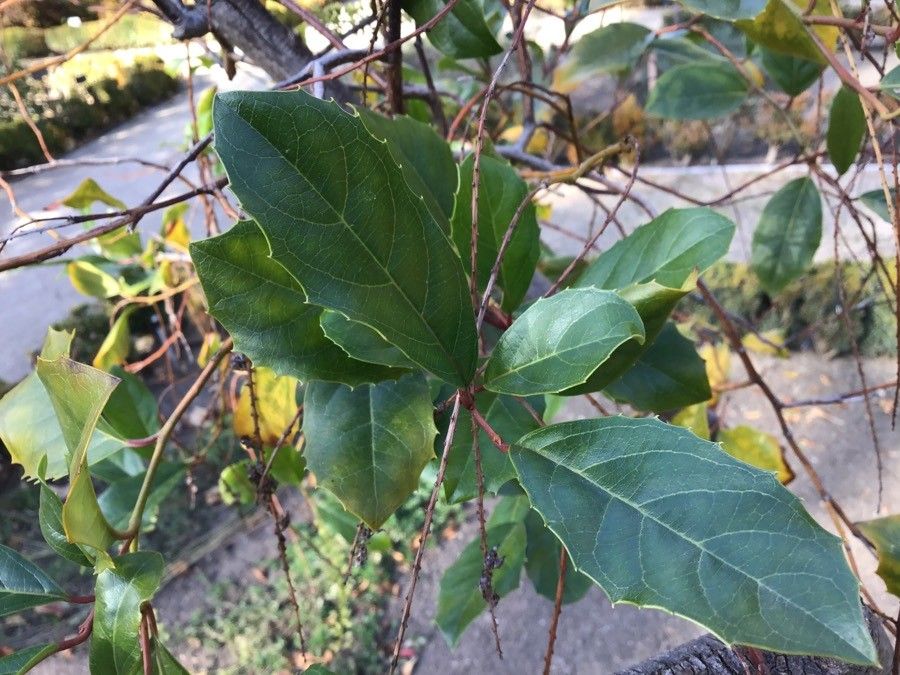
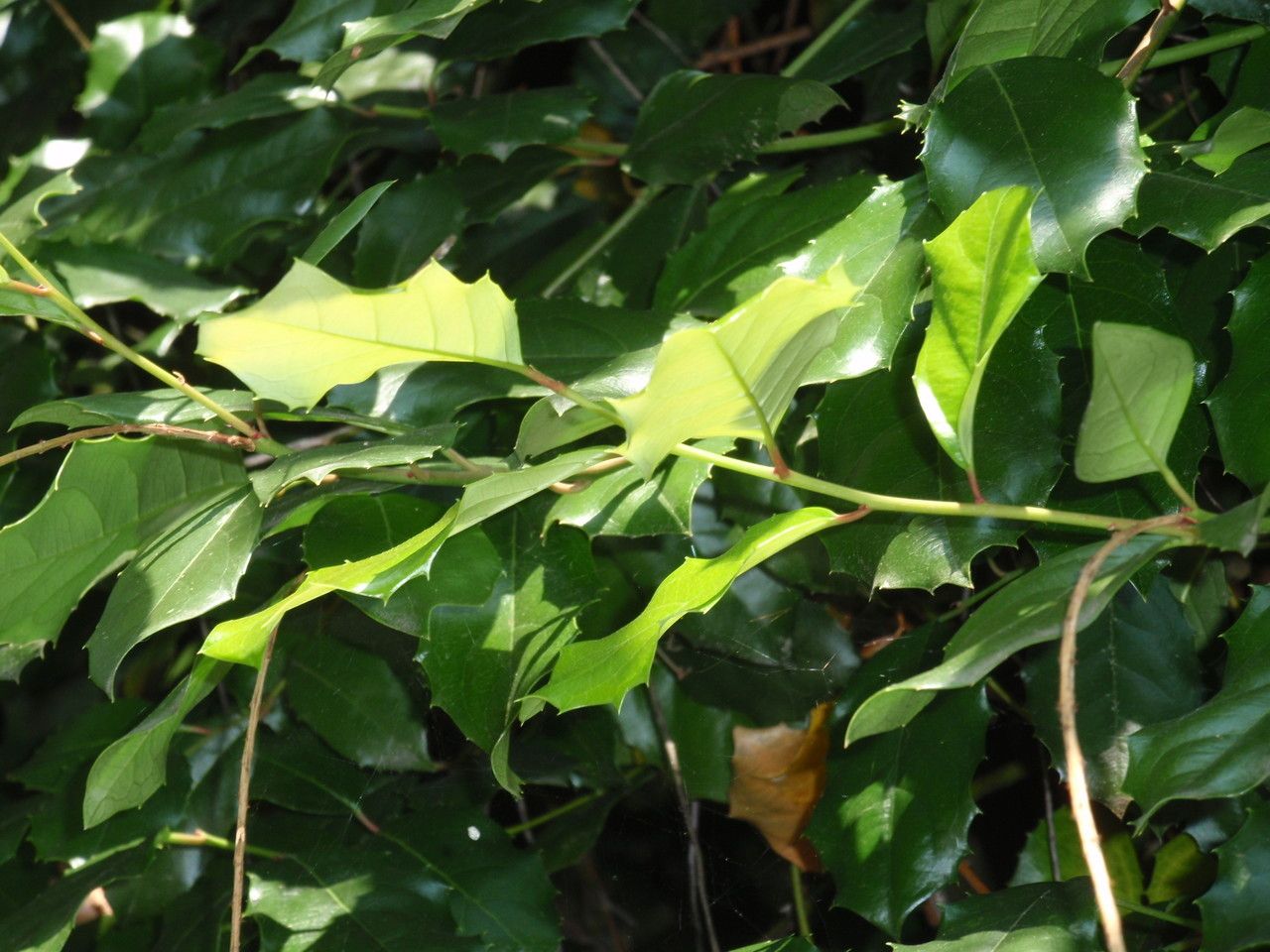
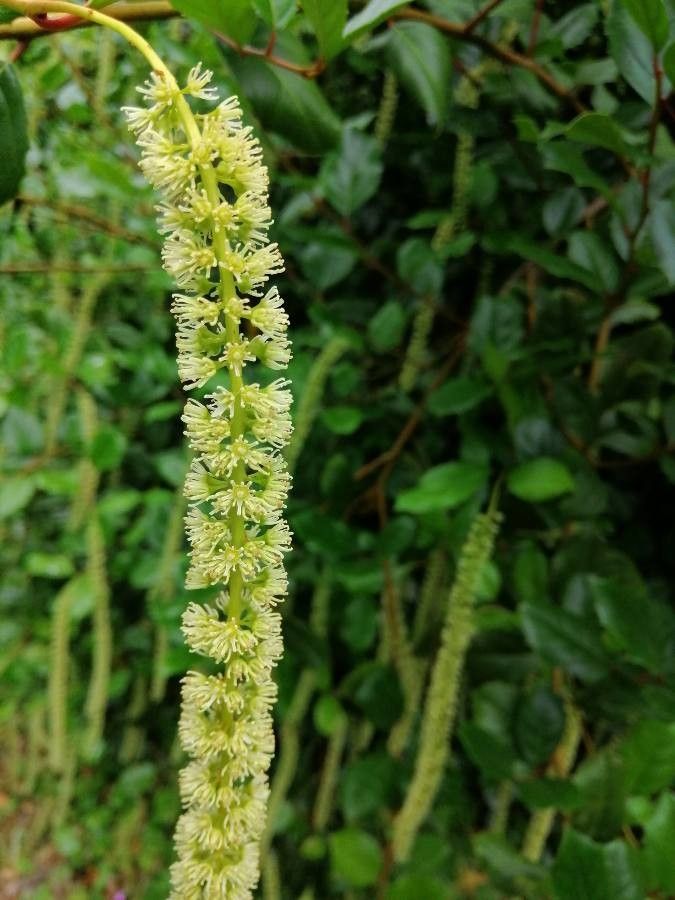
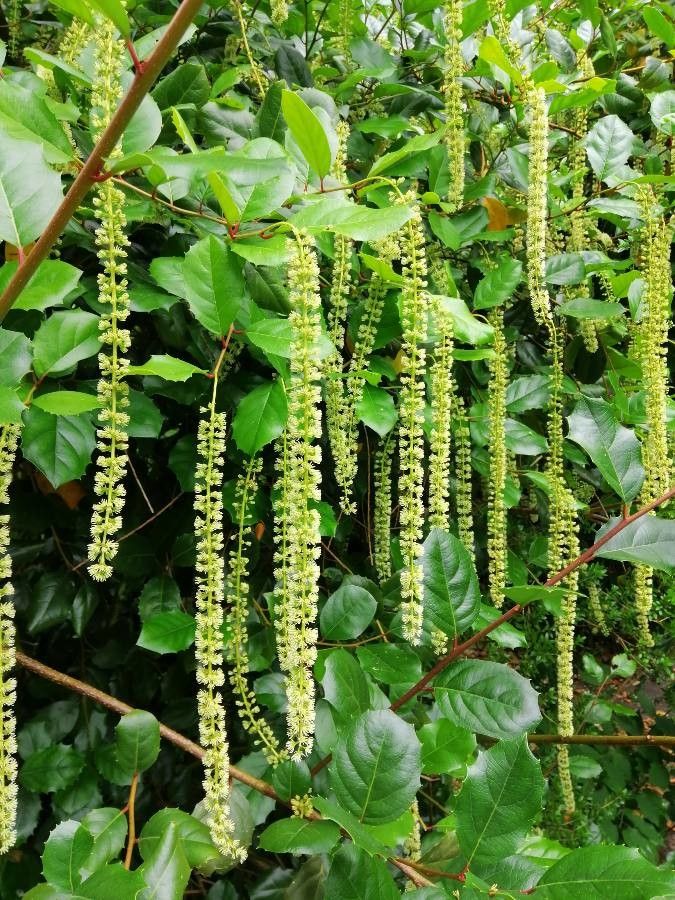
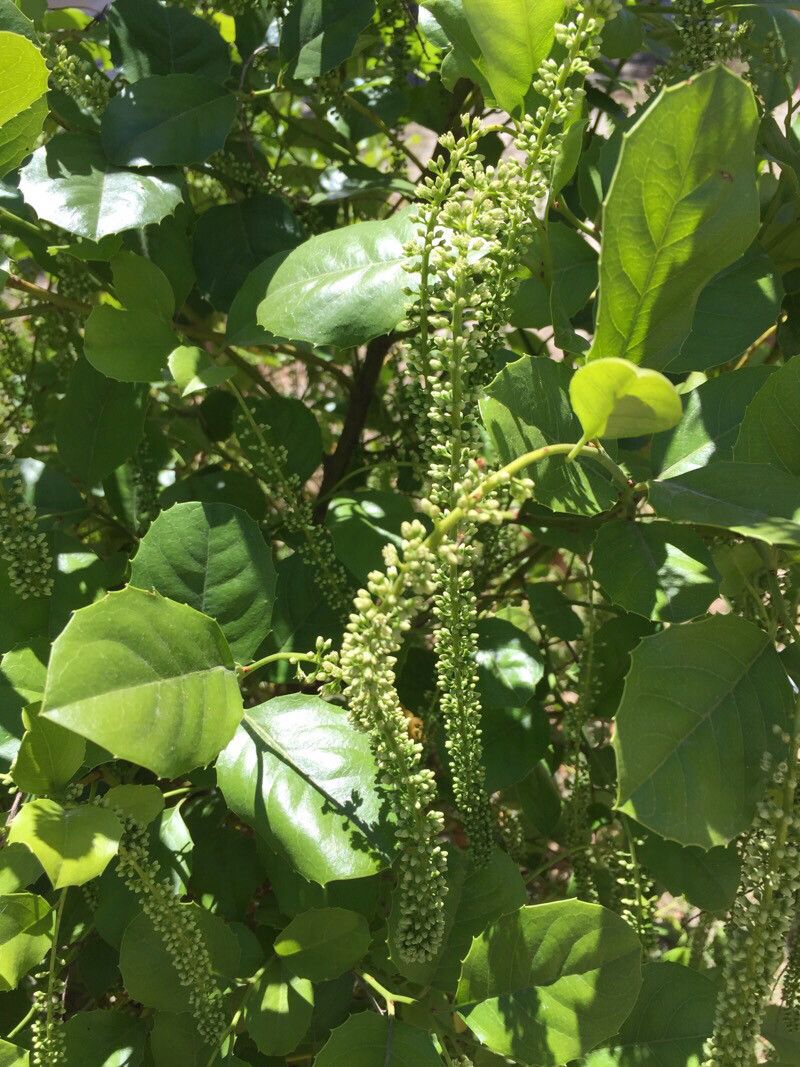
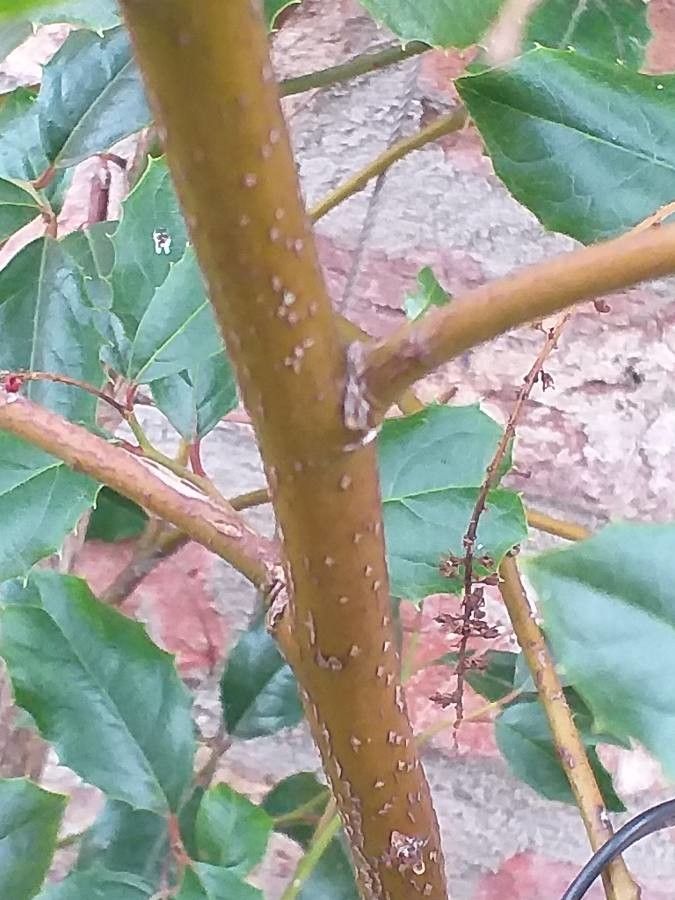
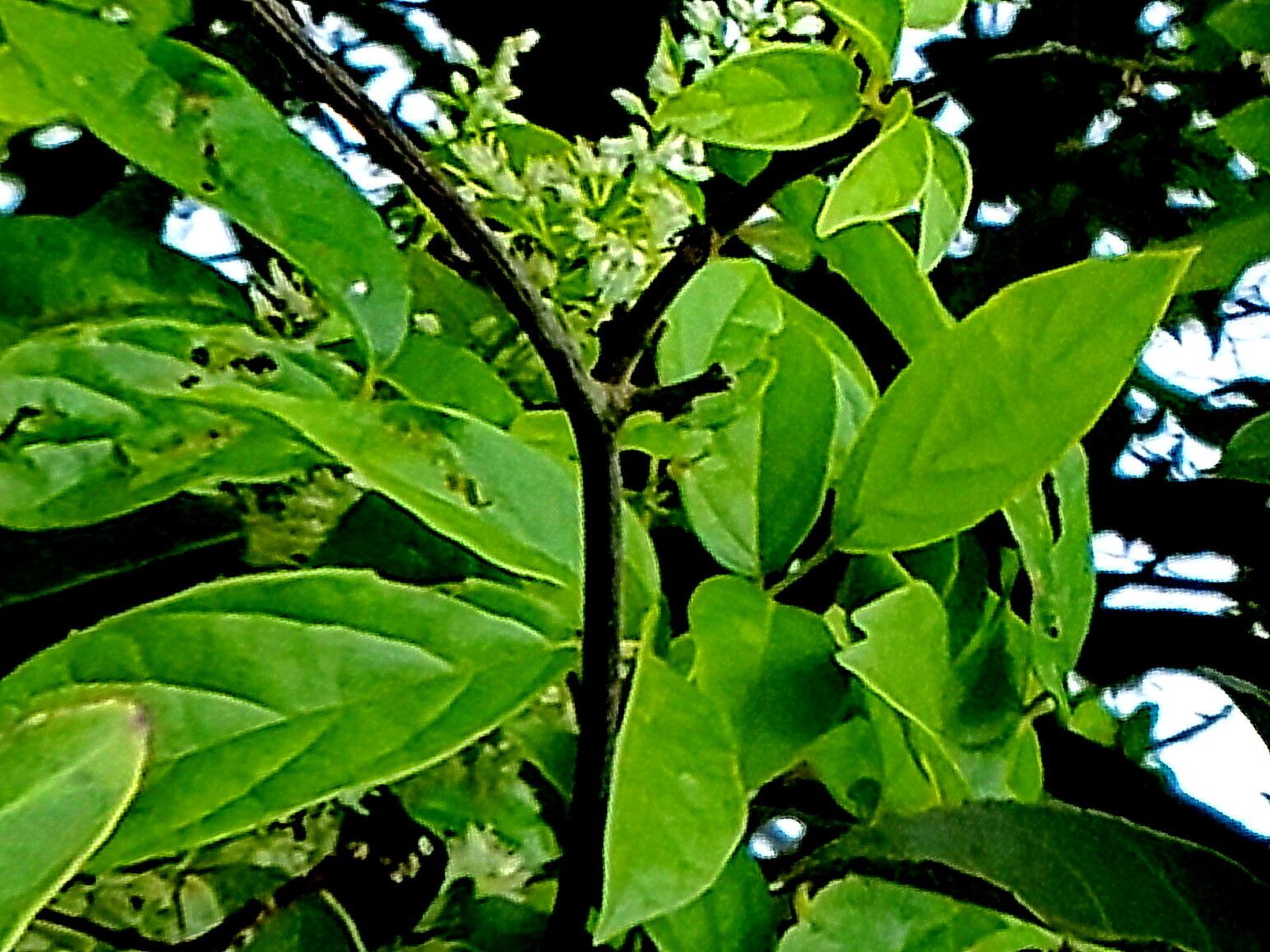
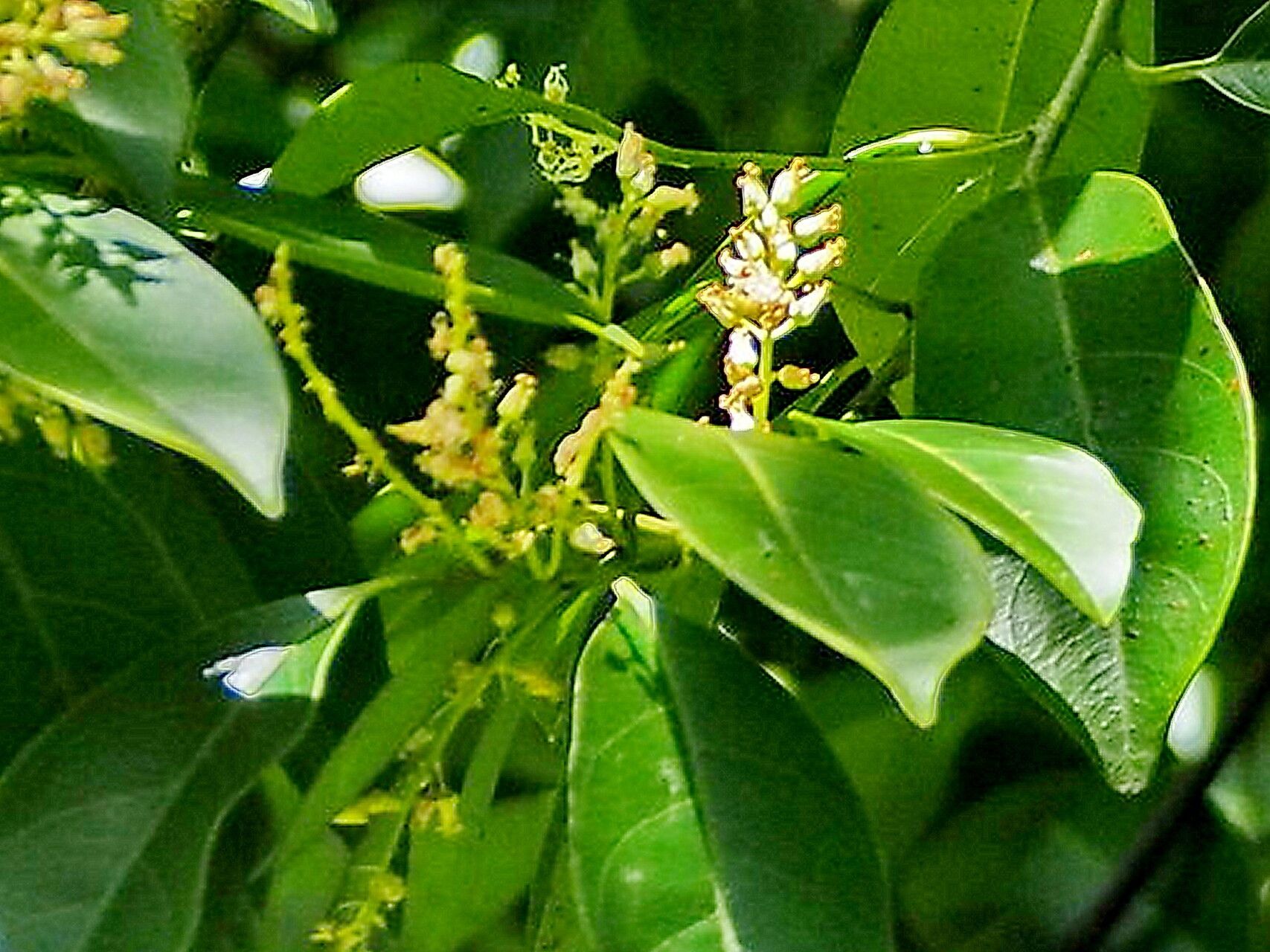
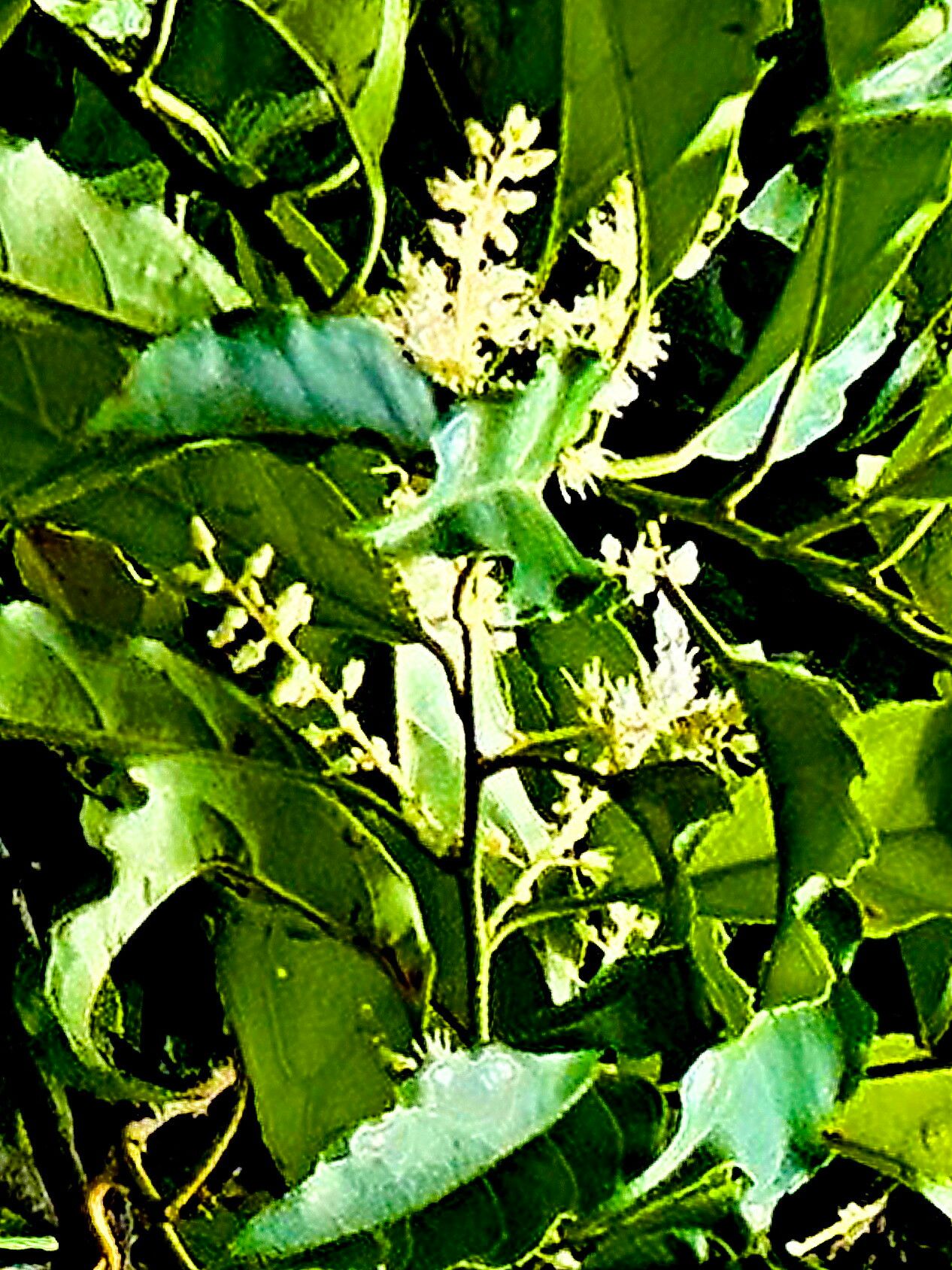
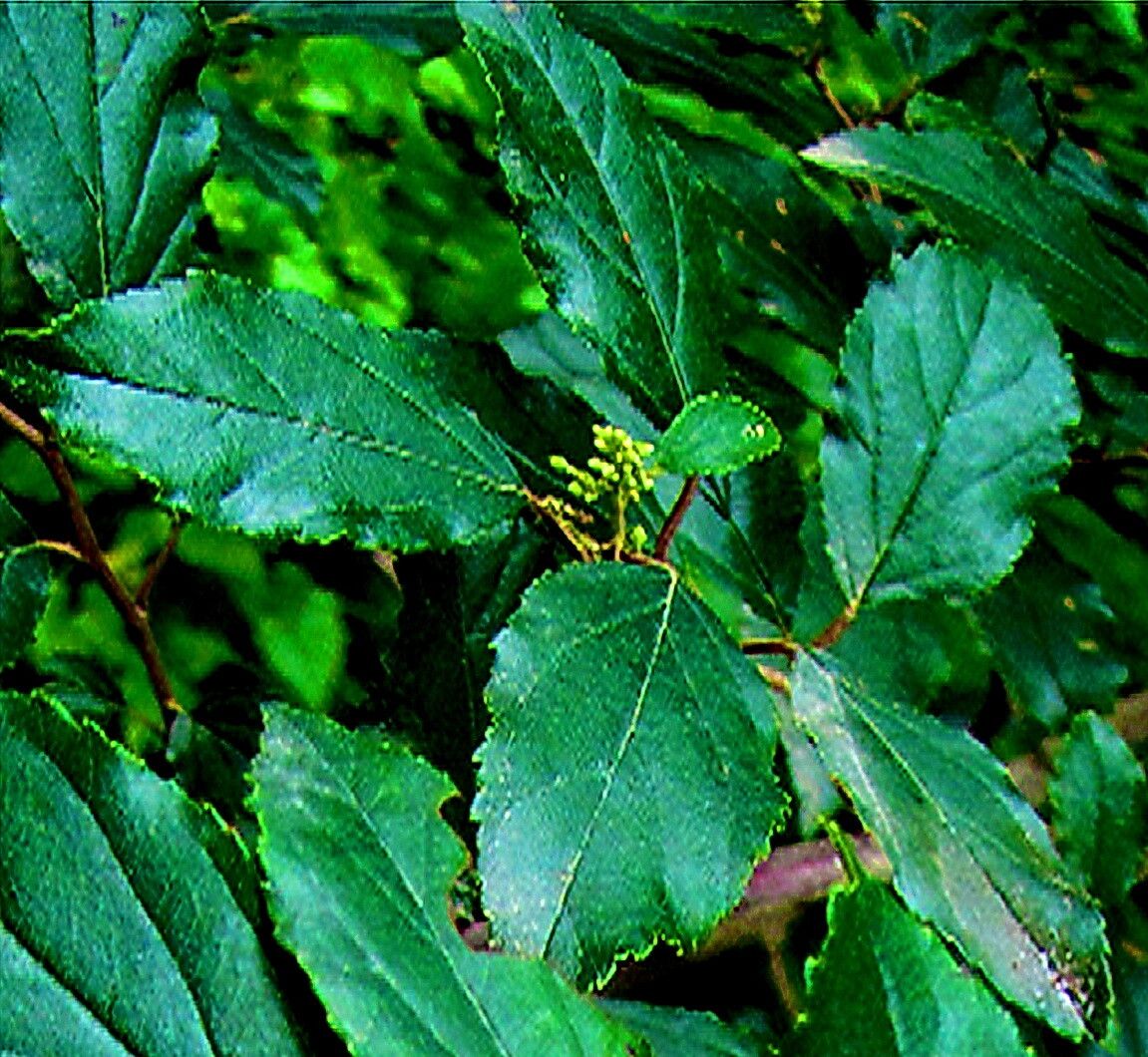
Itea ilicifolia, commonly known as Holly-leaved Sweetspire, is a deciduous shrub that belongs to the Itea family. It is native to the southeastern United States and can reach heights and widths of 6 to 8 feet. The shrub features a dense, rounded growth habit and glossy green leaves that resemble those of holly.
In late spring or early summer, Holly-leaved Sweetspire produces fragrant white flowers in long racemes, attracting bees and butterflies. The plant thrives in moist soil but can tolerate drought once established. It grows best in partial shade, though it can also flourish in full sun with adequate moisture. Moreover, it is easy to grow and requires minimal maintenance.
Beyond its ornamental value as a landscape plant, Itea ilicifolia also possesses medicinal properties. Its bark contains compounds traditionally used to treat various ailments, such as fever, diarrhea, dysentery, and skin diseases.
Overall, Holly-leaved Sweetspire is an attractive shrub with both aesthetic and medicinal benefits, making it an excellent addition to any garden or landscape design project.
Holyleaf sweetspire is resistant to diseases and is typically not vulnerable to them. Regarding care, this plant is fairly low-maintenance. When grown outdoors, it needs only minimal watering, and larger specimens usually do not require pruning. Smaller plants, however, should be pruned after they have finished blooming. Holyleaf sweetspiret is appropriate for anyone with outdoor space, such as a garden or deck, and does not need extensive care experience.
How to keep Itea Ilicifolia.
Light
Holyleaf sweetspire naturally occurs in habitats like forest understories and rocky sites, where it grows in shaded conditions. It prefers partial sun but can tolerate full sun or complete shade, showing its adaptable, hardy character.
Water
The Holyleaf sweetspire thrives in environments with consistent moisture and prefers a balanced level of wetness. It can tolerate moderate drought conditions. It's advisable to water the plant every 1-2 weeks. Additionally, applying mulch can help retain soil moisture, which supports the plant's growth in various climate zones.
Temperature
Holyleaf sweetspire is highly adaptable to a range of climate conditions, from blistering summers to freezing winters. That said, it does require a preferred temperature range for healthy growth. If temperatures rise too far, the plant can suffer from heat and humidity stress, which may lead to its death. In places where temperatures approach the lower boundary of its cold tolerance, taking steps to insulate and protect the plant is necessary.
Fertilizer
The timing of fertilizing Holyleaf sweetspire is important. Apply fertilizer in early spring and repeat monthly until early summer. Fertilizer encourages attractive blooms and supplies energy during both dormant and active growth periods.
Pruning
Holyleaf sweetspire boasts clusters of fragrant flowers and evergreen leaves. To promote blooming and maintain its health, prune the plant in early spring. This helps remove damaged branches and improves air circulation. Use clean and sharp tools for pruning to prevent disease, encourage robust growth, and maintain an attractive appearance.
Botanical profile.
- Plant Type
- Shrub
- Life Cycle
- Perennial
- Genus
- Itea
- Family
- Iteaceae
- Hardiness Zone
- 6-9
- Mature Height
- 3.05 m to 4.57 m
- Mature Spread
- 3.05 m
- Leaf Color
- Green
- Leaf Type
- Deciduous
- Flower Color
- White
- Flower Size
- 0.51 cm to 1.02 cm
- Bloom Time
- Early summer, Mid summer
- Planting Time
- Spring, Summer
- Harvest Time
- Late summer, Early fall, Mid fall
- Native Area
- China
Other names.