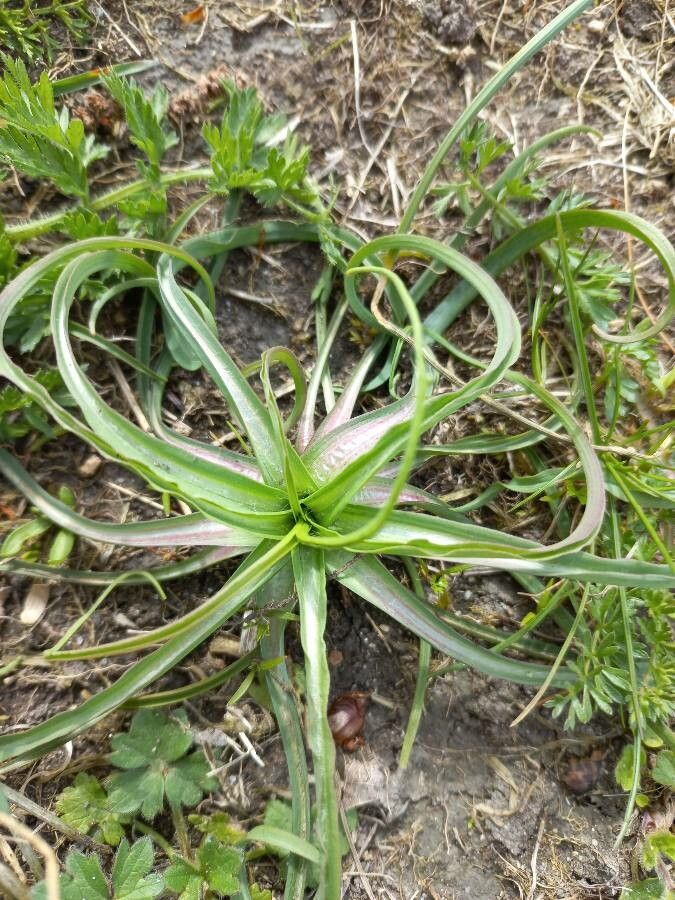
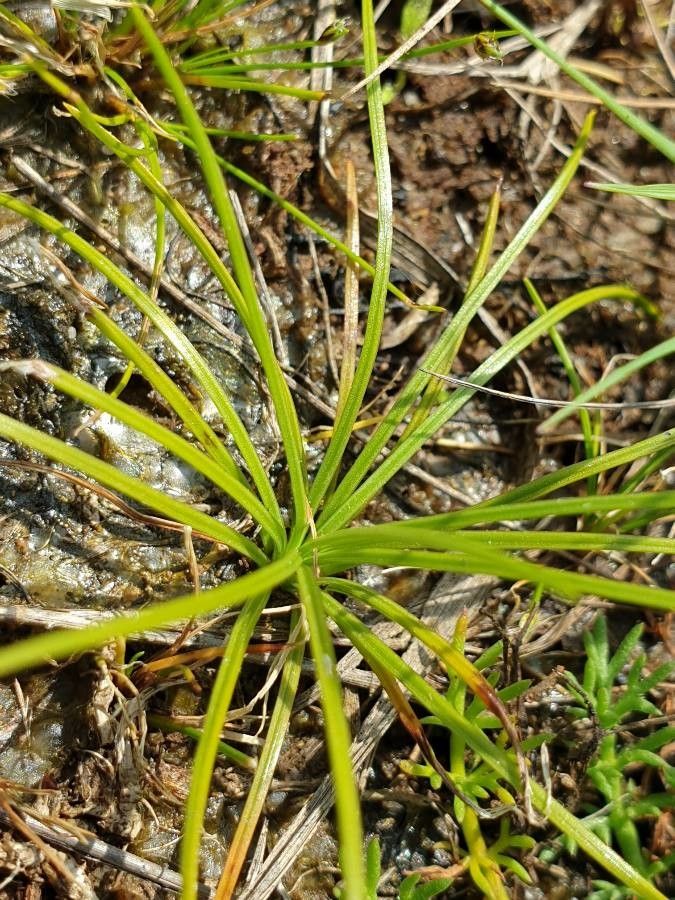
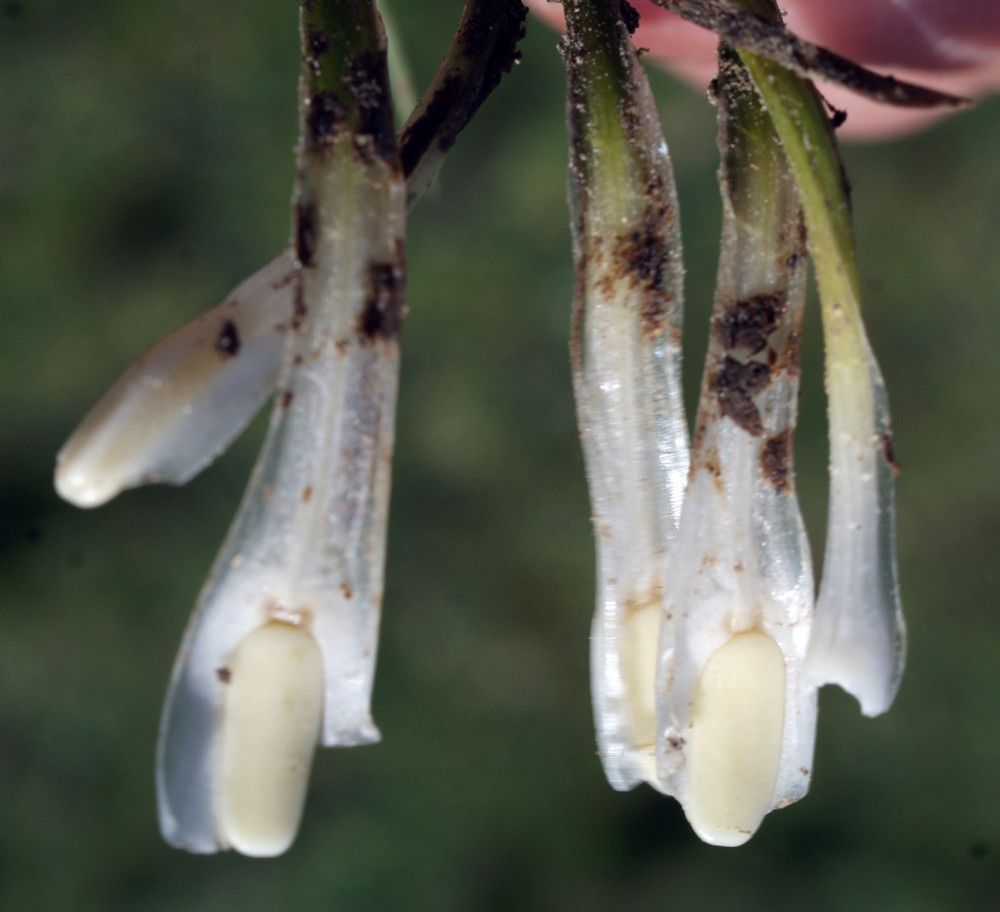
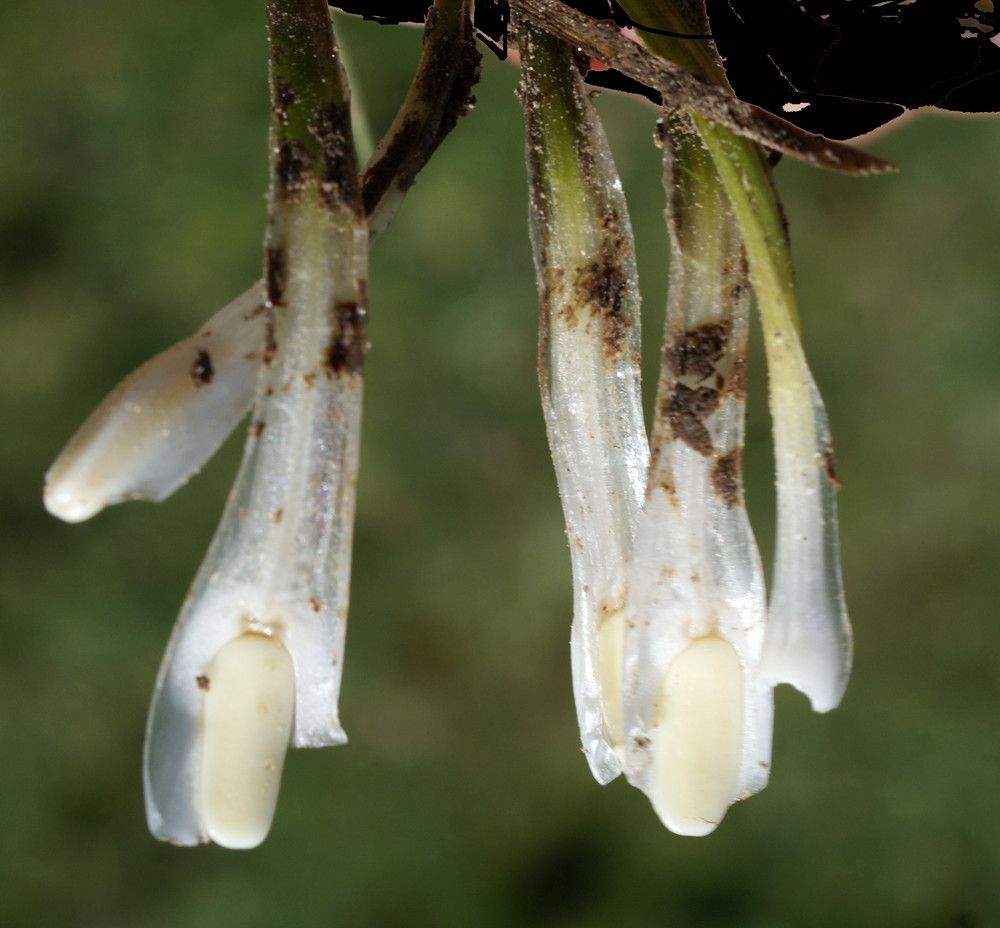
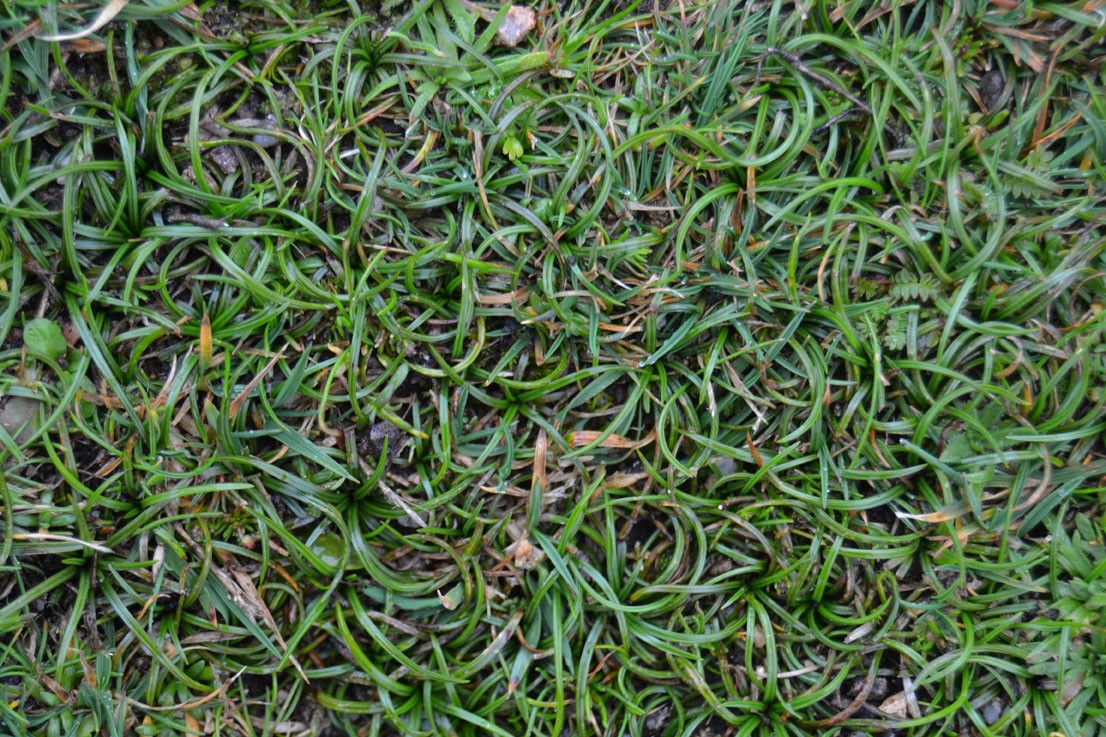
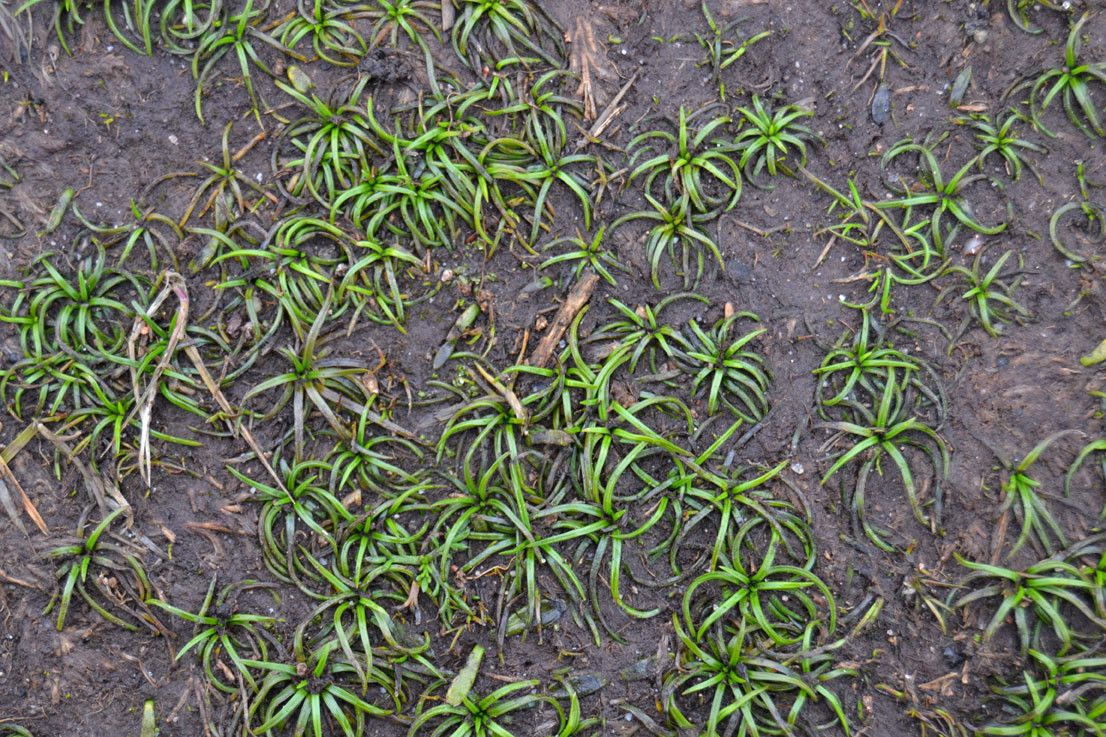
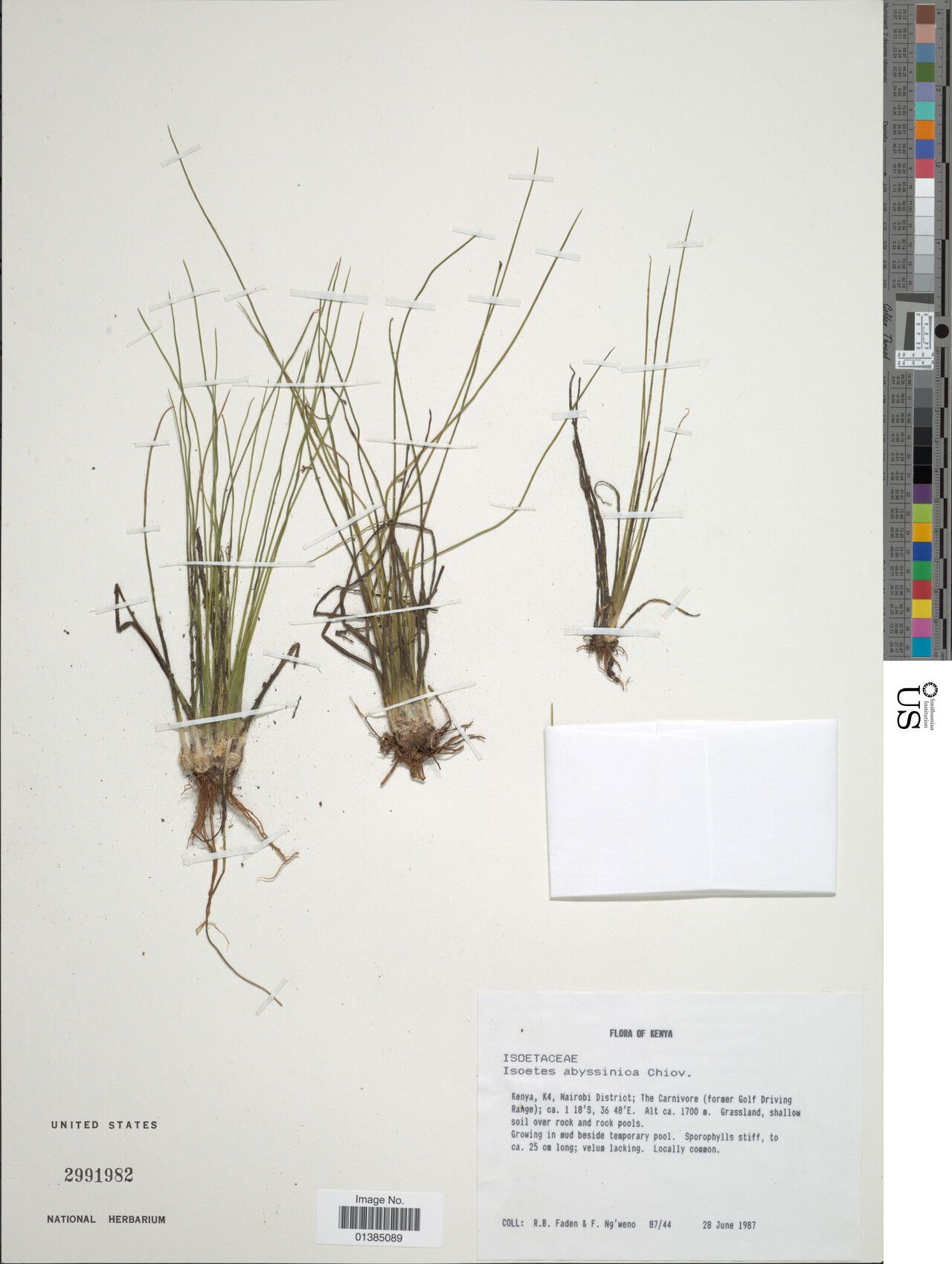
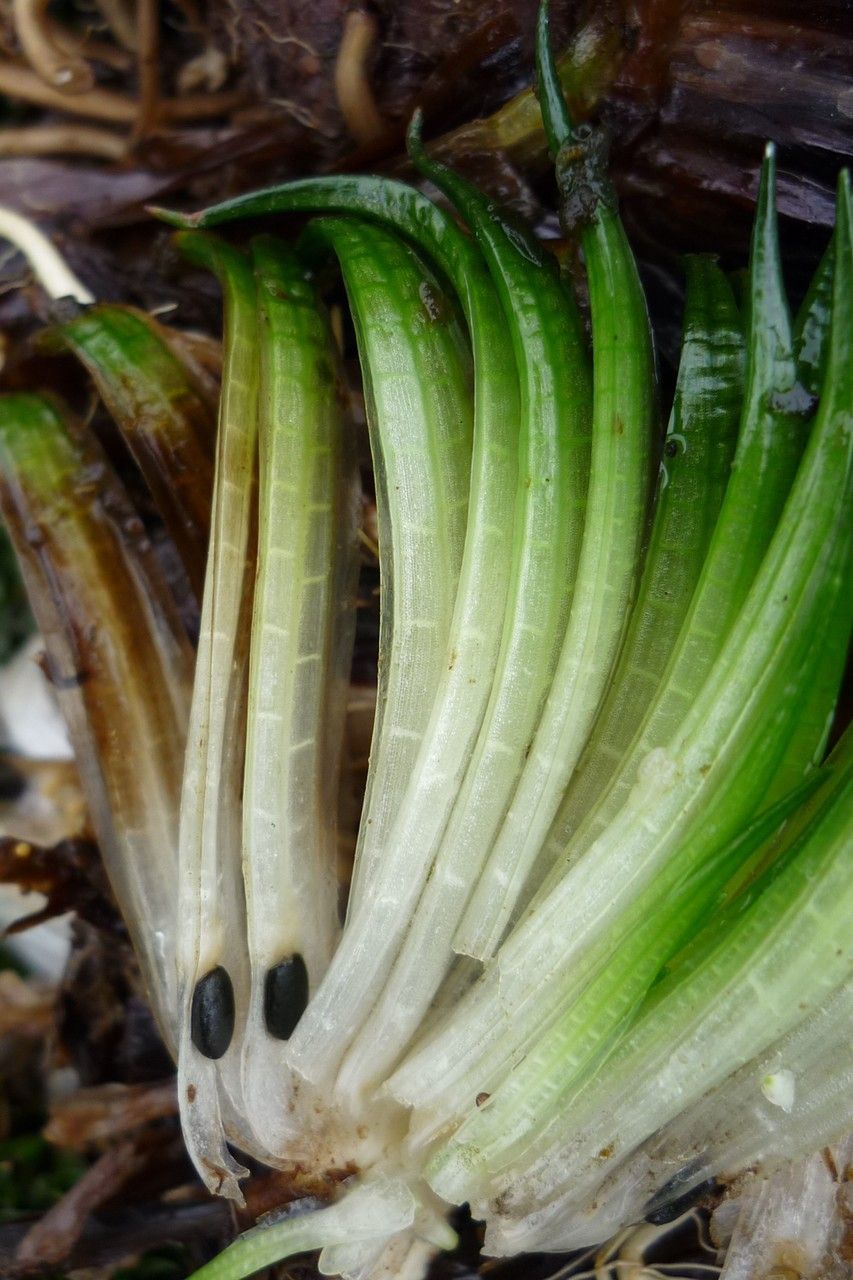
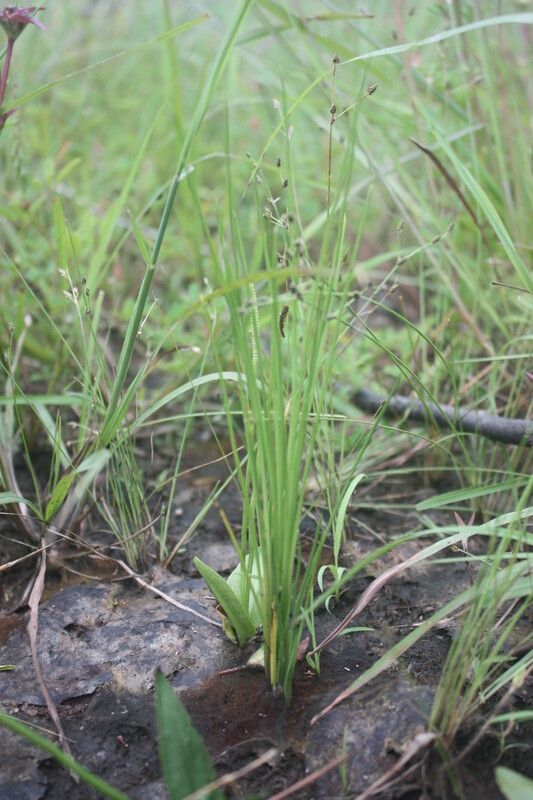
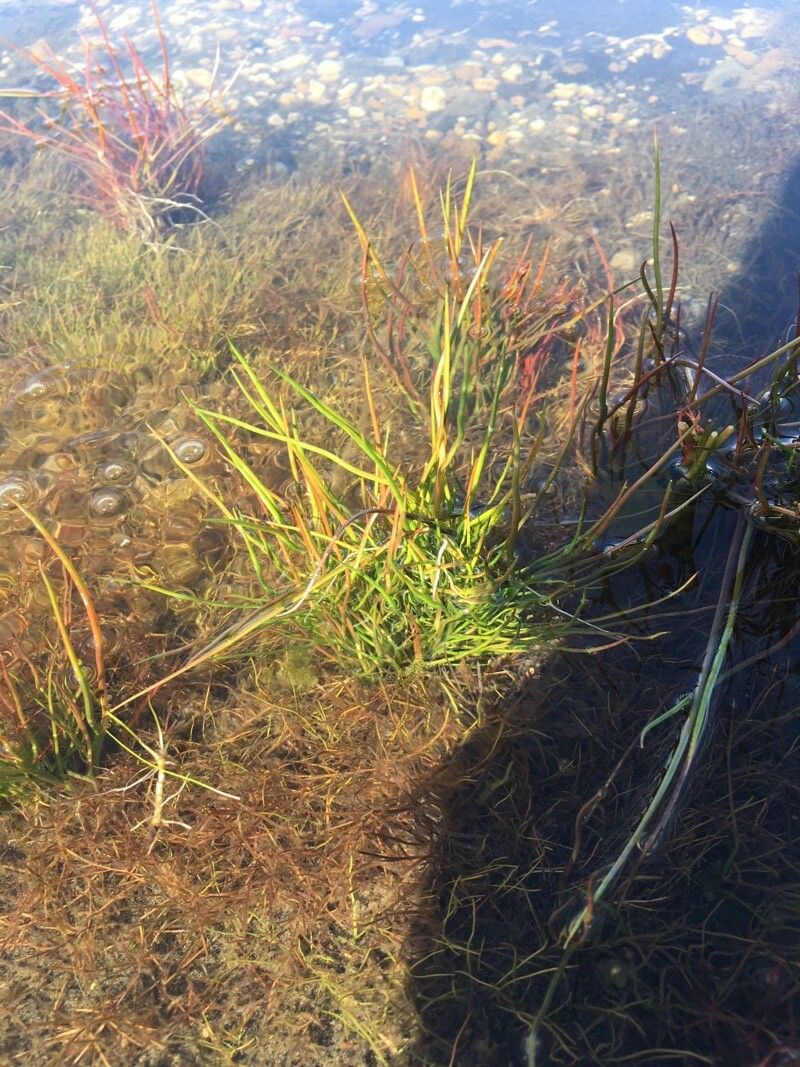
Isoetes histrix, the land quillwort, is an aquatic pteridophyte native to the Mediterranean region, northwestern Africa, and the coasts of western Europe northwest to Cornwall. It occurs mainly in temporarily wet habitats, otherwise called vernal pools. The leaves are 3–8 cm long, and summer-deciduous. It differs from Isoetes durieui by its large black scales between the leaves, though these are not always present, and a surface of megaspores with tubercles, whereas I. durieui has a network of ridges.
Land quillwort typically has good resistance to disease and faces relatively few insect pests. Its care is regarded as difficult, because it requires a moist environment and frequent watering. The roots, however, are prone to rot if watered too much and if the surroundings are not well ventilated. Land quillwort suits people with some growing experience, as most people can keep it alive for a certain period. Still, it may have difficulty thriving, and its leaves can dry out and become less healthy over time.
How to keep Isoetes Histrix.
Light
Land quillwort is native to habitats such as forest understories or rocky sites that provide natural shade. It prefers Full Shade but can tolerate Partial Sun.
Water
Land quillwort thrives in moist environments and requires consistent hydration. To maintain optimal dampness without oversaturating the plant, water it twice a week. When potted in well-draining soil, the plant benefits from a balance of water retention and drainage, making it well-suited for indoor settings.
Temperature
Land quillwort grows best in forest thickets. It is very sensitive to temperature and humidity; high heat, dry conditions, and strong sunlight can all cause it stress. In summer it needs adequate shade and a humid environment. Generally it does not need special attention in winter, but a prolonged winter drought can still kill the plant.
Pruning
Land quillwort is a low-growing aquatic plant that benefits from light pruning in early spring. When pruning, focus on removing dead or yellowing leaves. Avoid heavy pruning, as it can stress the plant. Use clean shears to cut back old foliage to enhance the plant's appearance and reduce the risk of disease.
Botanical profile.
- Plant Type
- Fern
- Life Cycle
- Perennial
- Genus
- Isoetes
- Family
- Isoëtaceae
- Hardiness Zone
- 7-10
- Mature Height
- 5 cm to 15 cm
- Mature Spread
- 5 cm to 10 cm
- Leaf Color
- Dark Green
- Leaf Type
- Evergreen
- Planting Time
- Spring, Summer
- Native Area
- Turkey, Tunisia, Italy, Spain, France, Albania, United Kingdom, Greece, Algeria, Morocco, Lebanon, Portugal
Other names.