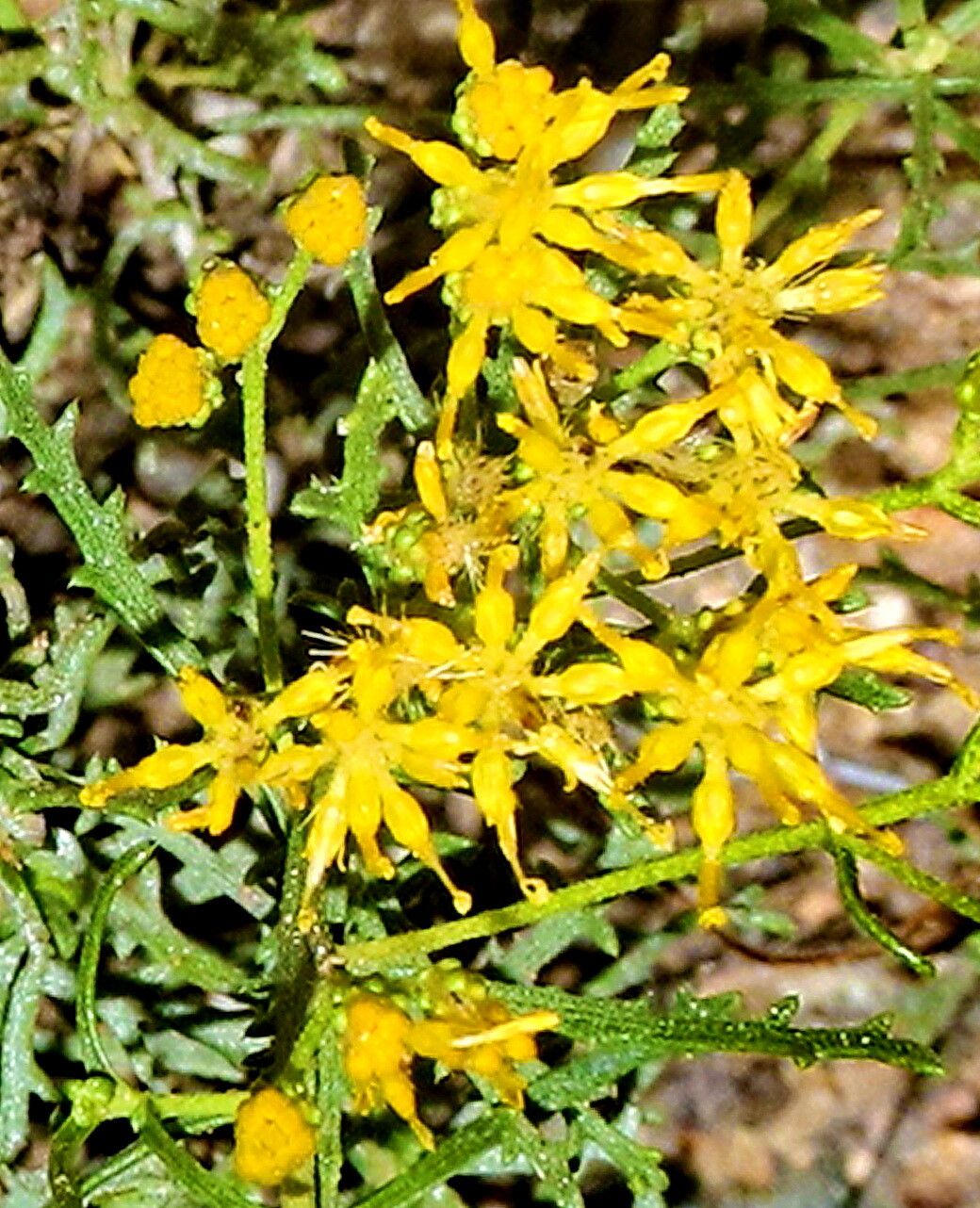
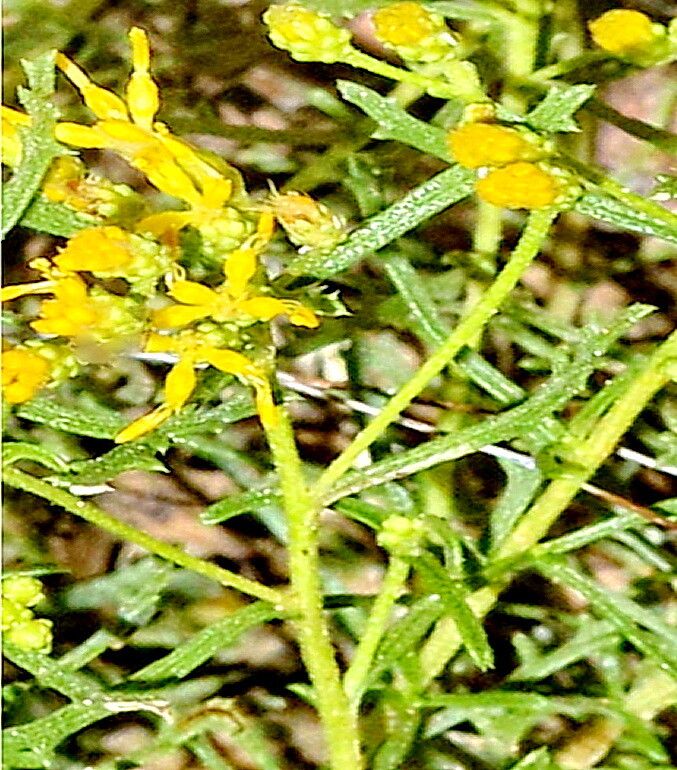
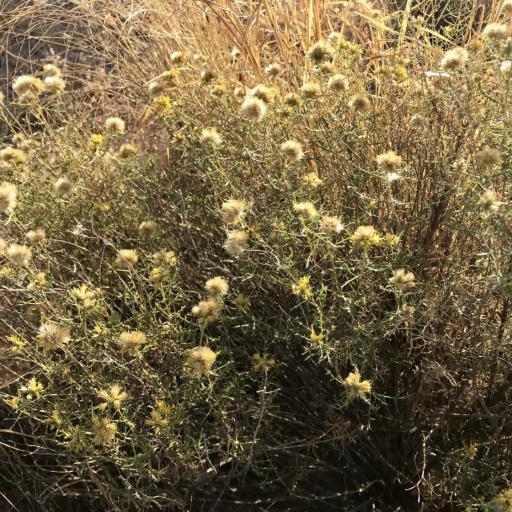
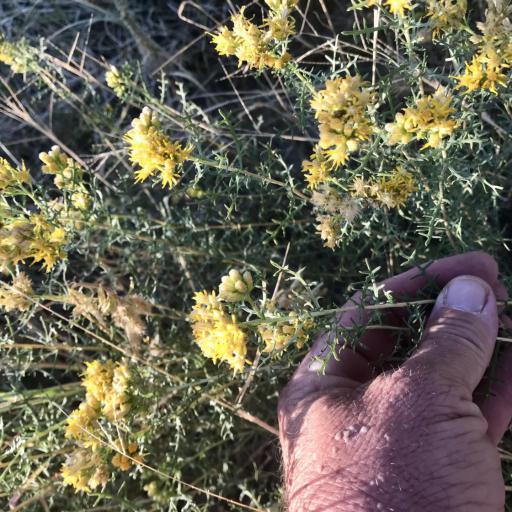
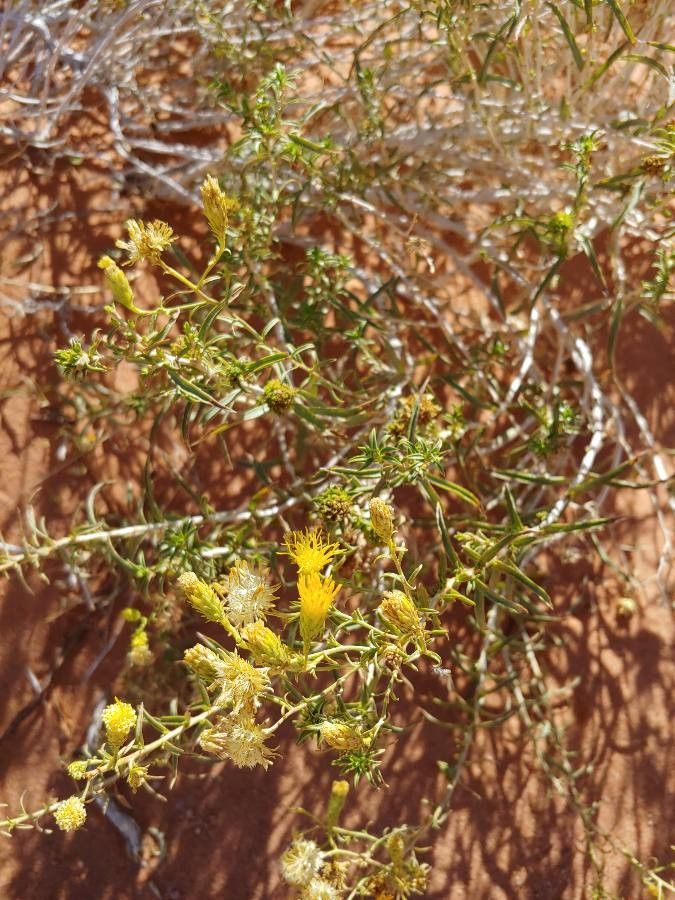
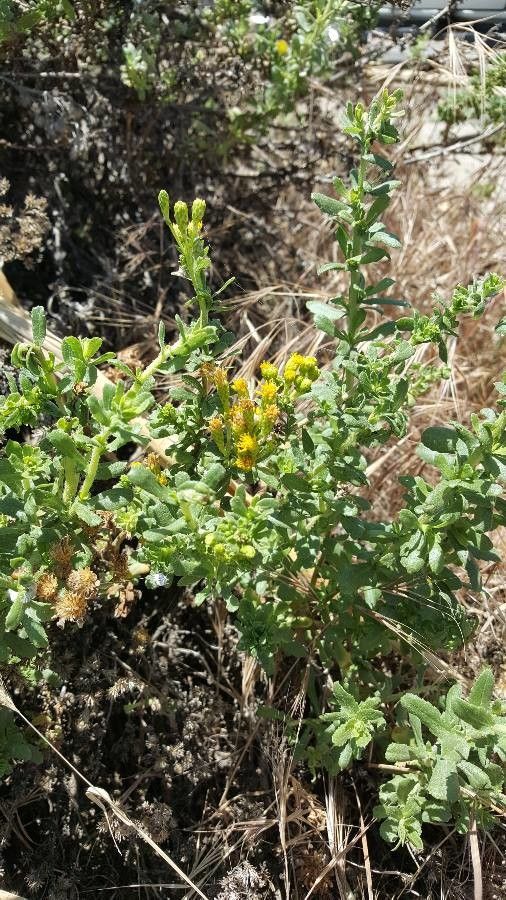
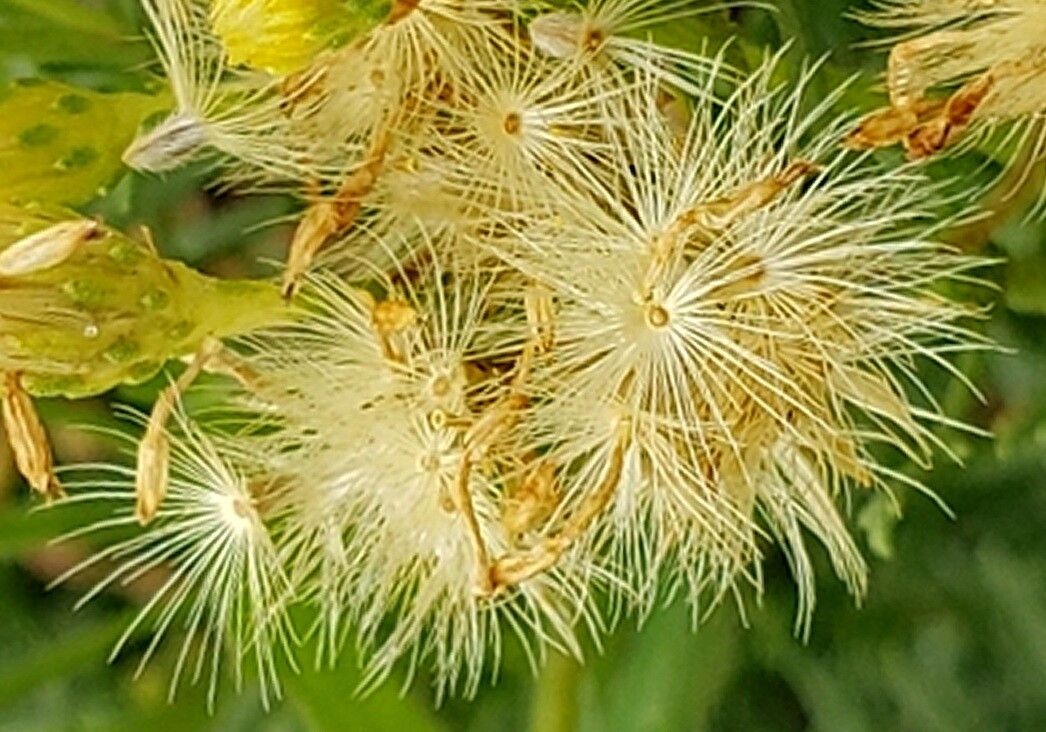
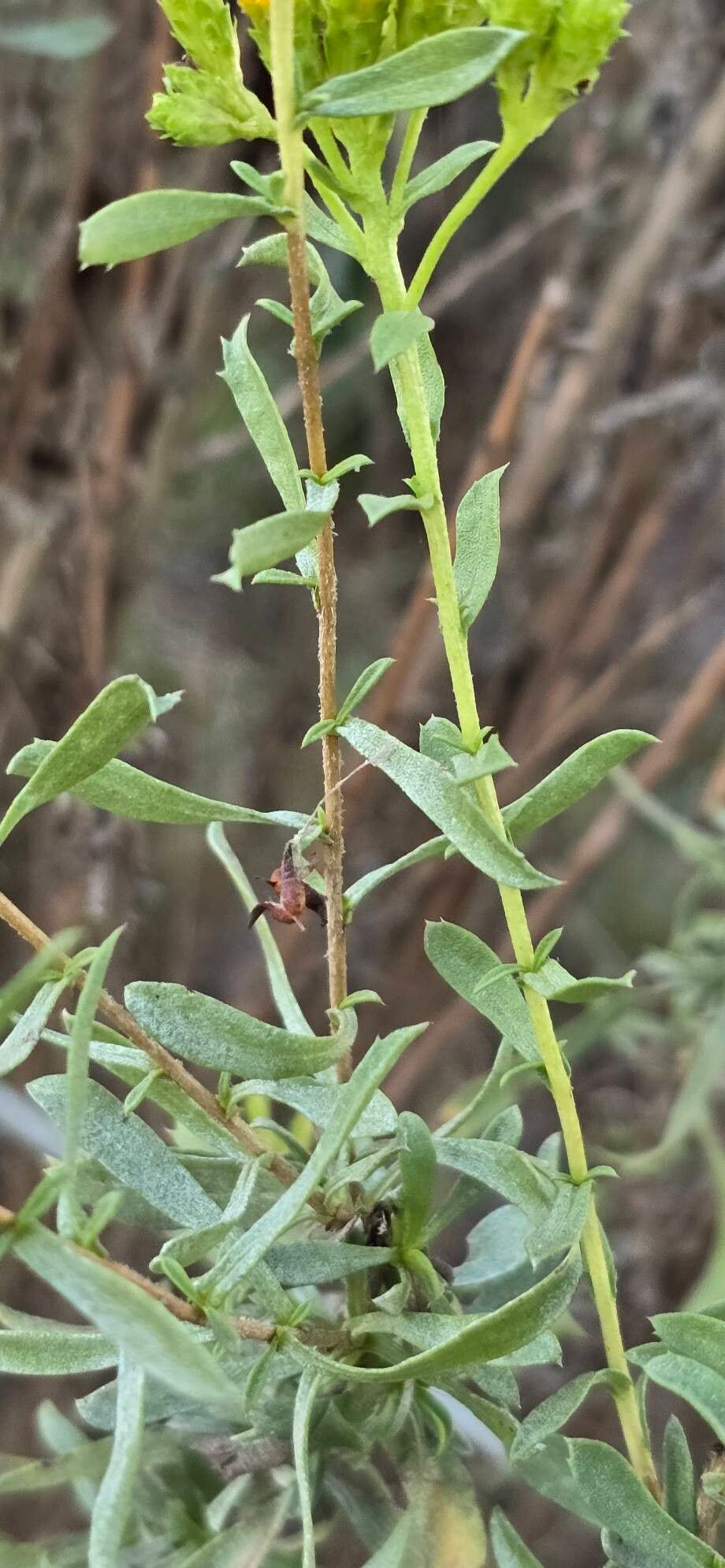
Isocoma tenuisecta, commonly called burroweed, shrine jimmyweed, or burrow goldenweed is a North American species of small, flowering perennial herbs in the sunflower family. It is native to Arizona, New Mexico, and Sonora. Isocoma tenuisecta grows 1 to 3 feet (30–90 cm) tall. Leaves are narrowly lance-shaped, with numerous large teeth or small lobes along the edges. The leaves are glandular and lobed. The plant flowers in September through November, with clusters of heads at the ends of branches and on top of the main stem. Each head contains 8-15 yellow disc flowers but no ray flowers. The old heads turn dry and tan and remain on the plant after the achenes have dispersed. Burroweed is poisonous to mammals, including cattle, which can transfer the poison to humans through milk.
Burroweed displays strong resistance to disease and is typically not prone to illnesses. In terms of care, this plant is relatively low-maintenance. When grown outdoors it needs only minimal watering, and larger plants generally do not require pruning. Smaller plants, however, should be pruned after they have bloomed. Burroweedt is suitable for anyone with an outdoor space, such as a garden or deck, and does not require a lot of care experience.
How to keep Isocoma Tenuisecta.
Fertilizer
Fertilize your Burroweed in early spring to encourage healthy growth. Regular fertilizing boosts overall health, producing vigorous growth, increased tolerance of harsh conditions, and enhanced resistance to pests and diseases. Keep to a specific fertilization schedule for your Burroweed to maintain foliage that is vibrant, deeply colored, and lush in appearance.
Botanical profile.
- Plant Type
- Shrub
- Life Cycle
- Perennial
- Genus
- Isocoma
- Family
- Asteraceae
- Hardiness Zone
- 9
- Native Area
- Mexico
Other names.