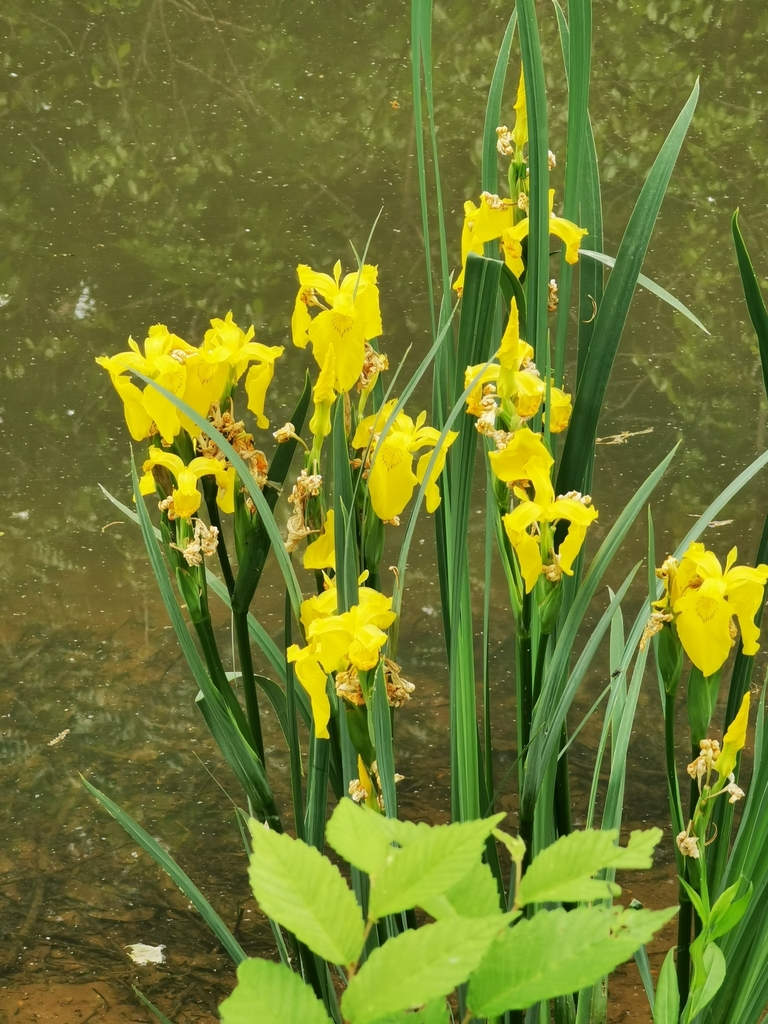
Iris pseudacorus, commonly known as yellow flag iris, is a perennial herbaceous plant belonging to the family Iridaceae. Native to Europe, North Africa, and Western Asia, it has since been introduced to many other parts of the world. The plant typically grows to a height of 1 to 1.5 meters and features bright green, sword-shaped leaves.
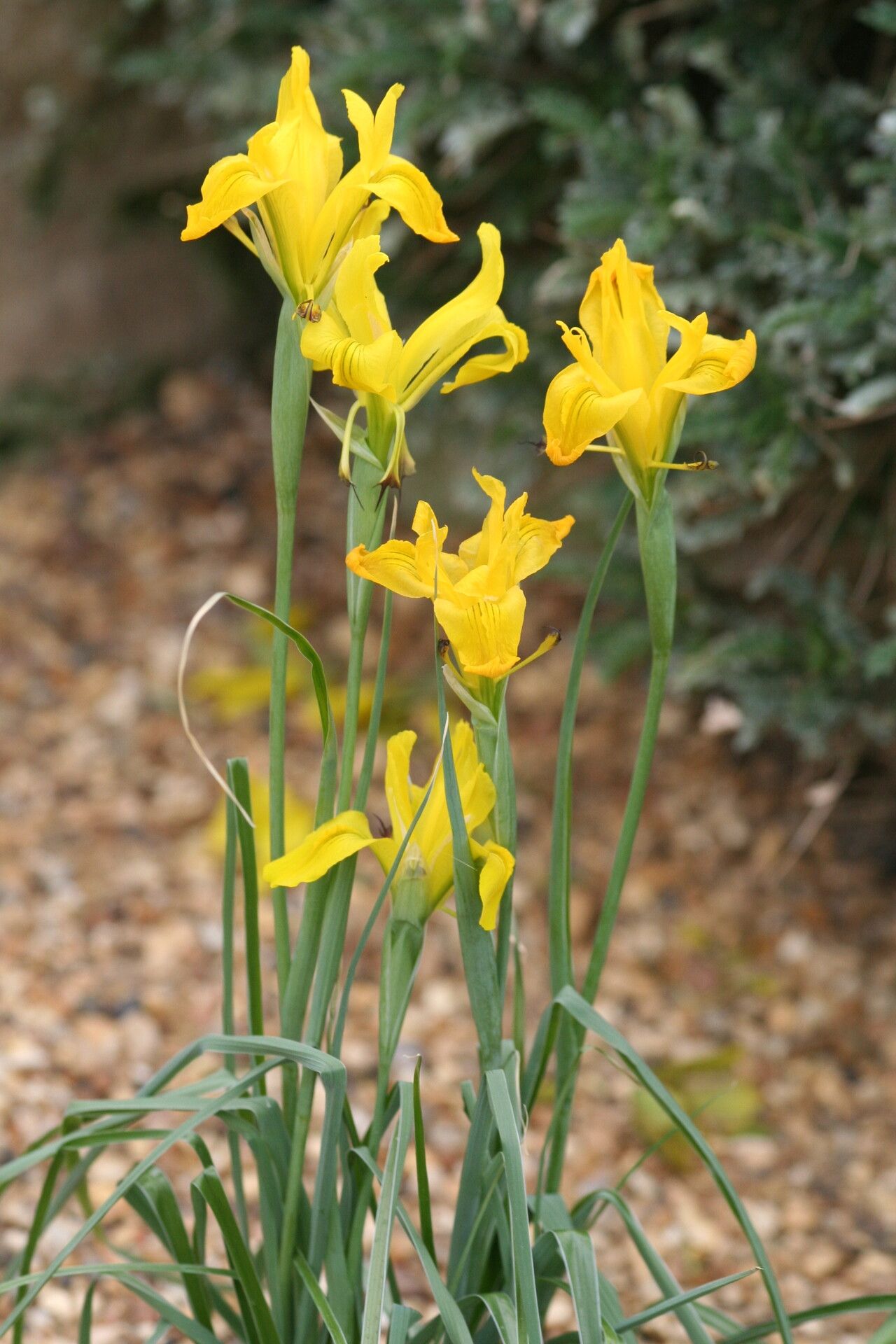
The yellow flag iris produces large, bright yellow flowers with three petals, which bloom from May to July. These flowers are followed by seed pods containing numerous small seeds.
Yellow flag iris thrives in wet soils such as those found in marshes, swamps, or along riverbanks, but it can also grow in drier soils provided there is adequate moisture. It is a hardy plant capable of tolerating both full sun and partial shade.
Historically, the plant has been used for medicinal purposes due to its anti-inflammatory properties, which make it useful for treating skin conditions like eczema and psoriasis.
However, it is important to note that all parts of the yellow flag iris contain toxic compounds that can cause skin irritation or even poisoning if ingested by humans or animals.
In summary, Iris pseudacorus is a visually striking wetland species with beautiful flowers, but it should be handled with care due to its toxic nature.
Yellow flag iris is fairly disease-resistant and usually does not develop many illnesses. Still, it can be vulnerable to pests and diseases found in its environment. Such infections are generally mild. For care, the plant requires moderate maintenance. It should be pruned regularly to preserve a neat appearance and healthy growth. Fertilizing can also encourage flowering. The yellow flag iris is appropriate for anyone with an outdoor area, like a garden or patio, and does not need extensive care experience. It may demand more attention if kept indoors.
How to keep Iris Pseudacorus.
Light
The yellow flag iris thrives in bright light to achieve optimal growth. It can also tolerate moderate lighting. It comes from environments with abundant light, which improves its vigor and photosynthetic activity. However, too much or too little light can negatively affect its health and development.
Water
The Yellow Flag Iris thrives in high humidity and grows best in wetlands, where it can tolerate balanced moisture levels. For optimal growth, it requires weekly watering. This plant can withstand changing soil conditions and temporary flooding, making it ideal for areas near bodies of water.
Temperature
The yellow flag iris plant performs best in temperate climates, favoring temperatures of 5 to 32 ℃ (41 to 90 ℉). In colder months, it should be in well-drained soil and given some protection from frost. In warmer months, it needs regular watering to keep its moisture levels stable.
Fertilizer
The best time to fertilize a Yellow flag iris is in early spring, when it is coming out of dormancy and starting active growth. Fertilizing supplies essential nutrients for healthy development. Although the Yellow flag iris has relatively low fertilizer requirements, an annual application can boost its survival and encourage better, longer-lasting blooms.
Pruning
The yellow flag plant is characterized by its tall, yellow flowers and sword-like leaves. To maintain its health and appearance, remove dead leaves in early spring and cut back spent flower stalks after they bloom. This helps control the plant's size and prevents it from spreading seeds. Regular maintenance is key to keeping the plant vibrant and tidy. Be sure to check local guidelines for specific care advice tailored to your area.
Pot & Repot
When repotting Yellow flag iris, pick a pot 1-2 inches (2.5–5.1 cm) larger with ample drainage. Use a well-draining potting mix. Repot in spring or fall, making sure the root ball is slightly lower than the rim of the flower pot. Water thoroughly after repotting and place in a warm spot with indirect sunlight.
Botanical profile.
- Plant Type
- Herb
- Life Cycle
- Perennial
- Genus
- Iris
- Family
- Iridaceae
- Hardiness Zone
- 5-8
- Mature Height
- 0.91 m to 1.52 m
- Mature Spread
- 61 cm to 91 cm
- Leaf Color
- Green, Yellow
- Leaf Type
- Deciduous
- Flower Color
- Yellow
- Flower Size
- 6.35 cm to 10.16 cm
- Bloom Time
- Late spring, Early summer
- Planting Time
- Spring
- Harvest Time
- Mid summer
- Native Area
- Turkey, Sweden, Austria, Slovakia, Montenegro, Slovenia, Morocco, Croatia, Belarus, Russia, Germany, Estonia, Romania, Latvia, Belgium, Moldova, Portugal, Netherlands, France, Tunisia, Czech Republic, Bulgaria, Armenia, Poland, Greece, Ukraine, Serbia, Lebanon, Lithuania, Norway, Syria, Italy, Kazakhstan, Spain, Switzerland, Denmark, Finland, Iran, Albania, Ireland, United Kingdom, Hungary, Algeria, Azerbaijan
Other names.
Reader questions.
How should I water my Yellow flag plant?
To properly water the Yellow flag, it is recommended to use filtered water at room temperature. Tap water may contain harmful particles for this plant, so filtering it is preferable. It is important to use room temperature or slightly warmer water because the Yellow flag is accustomed to a warm environment and cold water might be a shock to its system. Avoid overhead watering as it can lead to foliage issues. Instead, apply the filtered room temperature water directly to the soil until it is completely soaked. This helps moisten the roots and facilitate their spread in the soil to gather the necessary nutrients.
Why is it necessary to fertilize my Yellow flag?
Fertilization is important for the Yellow flag due to several reasons. It helps the plant by providing essential nutrients for its growth both above and below ground. However, compared to other plants, the Yellow flag has relatively low fertilization needs. While it can survive without fertilization, annual fertilization can greatly benefit the Yellow flag. It helps maintain the plant's health and may even enhance the quality and longevity of its flowers. Therefore, for those looking to enhance the appearance of their Yellow flag, regular fertilization is recommended.
What are the sunlight requirements for Yellow Flag?
Yellow Flag, or Iris pseudacorus, thrives when it receives the appropriate amount of sunlight. It needs full sun, which is above 6 hours of sunlight daily, to flourish optimally. However, it can also tolerate partial sun, defined as about 3-6 hours of sunlight. It's essential to observe how sunlight moves through your garden throughout the day to choose spots that provide a perfect balance of light and shade. This ensures the plants receive the correct amount of sunlight for their health and happiness.
What is the ideal temperature range for the Yellow Flag plant to thrive?
The Yellow Flag plant, scientifically known as Iris pseudacorus, thrives in temperate environments with temperatures ranging from 5 to 32°C (41 to 90°F). To ensure its health, it's important to maintain environment conditions within this range. In colder seasons, keep the plant in well-drained soil and slightly protected from frost to maintain optimal growth conditions. During warmer seasons, regular watering is crucial to keep the soil moist and support the plant's needs.
What can I do if I give my Yellow flag too much or too little water?
Overwatering is a common issue that can harm your Yellow flag plant. It causes wilting and yellowing of stems and leaves. It can also lead to diseases like root rot, mold, and mildew, which can be fatal to the plant. Underwatering is less common but still possible. It makes the leaves brittle and brown. It's important to spot signs of overwatering early and reduce watering immediately. If the soil doesn't drain well, replace it with a loose, well-draining potting mix. When underwatering, simply increase watering until the plant recovers.
When should I put fertilizer on my Yellow flag?
The best time to fertilize a Yellow flag is in the late winter to early spring. This is when the plant is coming out of dormancy and starting to grow actively. Fertilizing at this time helps promote healthy growth for the season. While it’s usually best to fertilize in the early spring, you can also fertilize in the fall. However, it's not recommended to fertilize during summer or winter.
What are the essentials for growing Yellow Flag?
Yellow Flag prospers in abundant light but also tolerates moderate light conditions, making it versatile in various lighting environments. Its natural habitats offer plentiful light, which is key to its vitality and the effectiveness of its photosynthesis processes. However, the health and growth of Yellow Flag can be adversely affected by both excessive and insufficient light. When natural sunlight is not enough, especially during winter or in less sunny spaces, artificial lighting such as LED lights can be employed. These lights should be customized to the plant's needs, with full sun plants requiring 30-50W/sq ft, partial sun plants 20-30W/sq ft, and full shade plants 10-20W/sq ft. The light source should be placed 12-36 inches above the plant and kept on for 8-12 hours per day to mimic natural daylight hours effectively.
How should the Yellow Flag be cared for in winter to prevent frost damage?
The Yellow Flag plant has strong cold resistance, meaning special frost protection measures are not usually necessary. However, when winter temperatures are expected to plummet below -25°C (-13°F), it's vital to provide additional cold protection. This can be done by covering the plant with soil or straw to secure it against the cold. It is also recommended to water the plant abundantly before the first freeze in autumn, ensuring the soil remains moist and enters a frozen state to prevent drought and water scarcity during winter and early spring.
How frequently should I water my Yellow flag?
Determining whether your Yellow flag plant needs water depends on whether it is in a pot or planted in the ground. If it's in a pot, simply check the soil by sticking your finger in it. If the first two to three inches of soil are dry, it's time to water. The same method applies if it's planted outdoors. Usually, watering once a week during spring and early fall is sufficient. However, during extremely hot weather, you may need to water twice or more per week. It's worth noting that mature, well-established Yellow flag plants can endure drought conditions well.
When should I not put fertilizer on my Yellow flag plant?
To properly care for your Yellow flag plant, it's important to fertilize it only during late winter and early spring. This plant does not require frequent feeding, so a single annual fertilization is sufficient. Fertilizing during spring, summer, and fall can lead to overfertilization and related problems, unless you missed fertilizing in spring, in which case it's acceptable to feed it in fall. It's also unnecessary to fertilize the plant during winter, as it enters a dormant growth phase and does not produce new growth. Therefore, it's not recommended to fertilize the Yellow flag for most of the winter.
What are the symptoms of incorrect lighting for Yellow Flag?
Incorrect lighting can manifest through various symptoms in Yellow Flag. Insufficient light can lead to smaller new leaves, leggy or sparse growth, faster leaf drop, slower or halted growth, and paler new leaves, indicating a lack of chlorophyll and nutrients. Excessive sunlight exposure can cause chlorosis, where leaves lose their green color, sunscald characterized by pale, bleached areas on the plant, leaf curling as a defense mechanism against excessive light, wilting due to increased water loss, and leaf scorching, sowing brown, crispy edges on leaves. These symptoms serve as indicators that the plant's lighting conditions need to be adjusted for optimal health and growth.
What should be done if the Yellow Flag experiences low temperatures below its tolerance level?
While the Yellow Flag is cold-tolerant and typically thrives in temperatures above 5°C (41°F), it should be kept above -20°C (-4°F) during winter. If temperatures fall below -25°C (-13°F), the plant may not show immediate damage during the winter, but you could observe a decrease in sprouting or even a complete lack of sprouting in spring. In such cases, it's advisable to remove any parts of the plant that have failed to sprout once spring arrives.