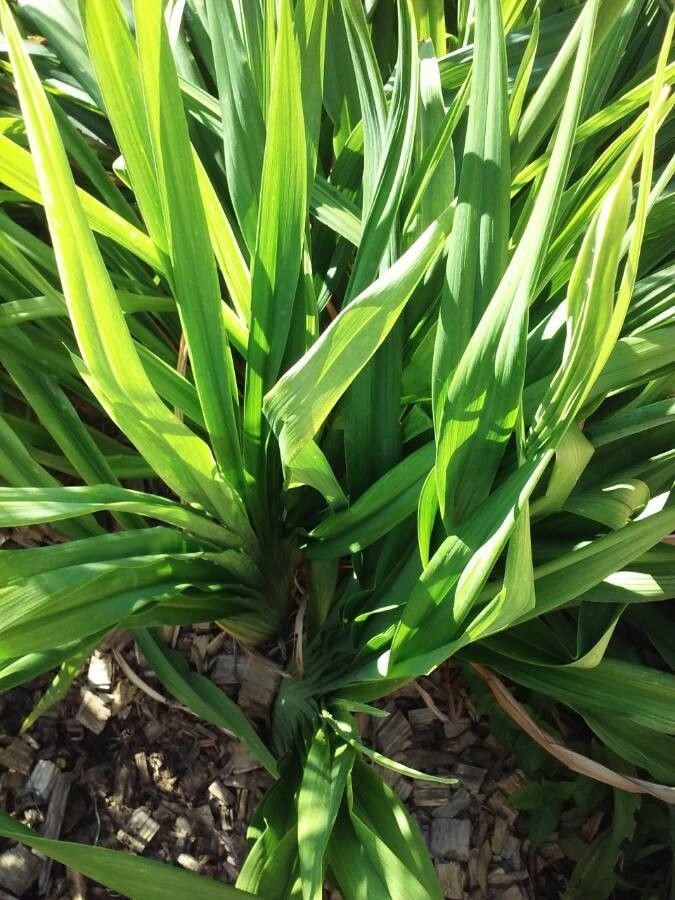
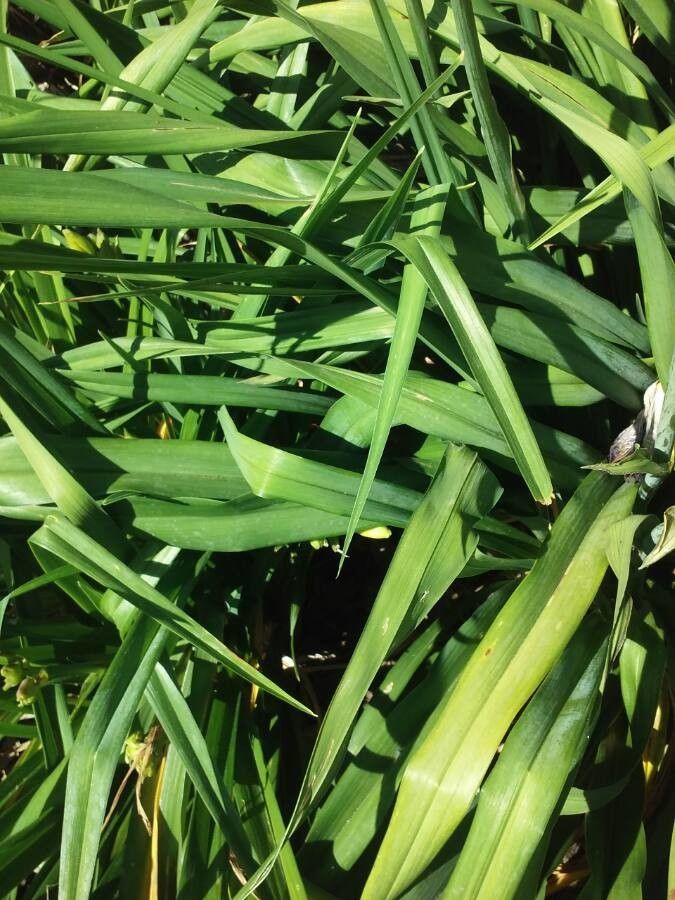
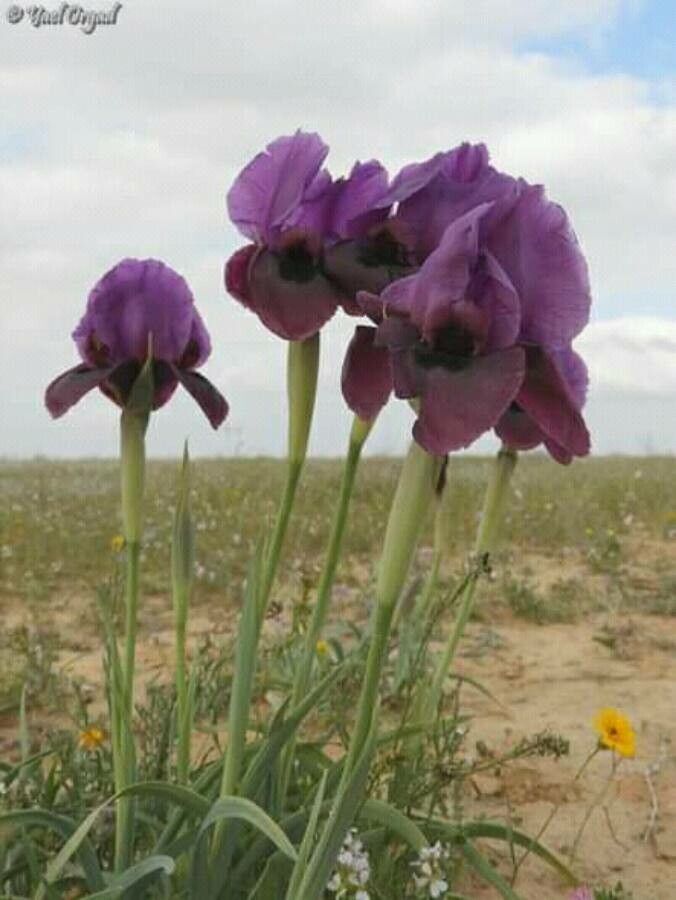
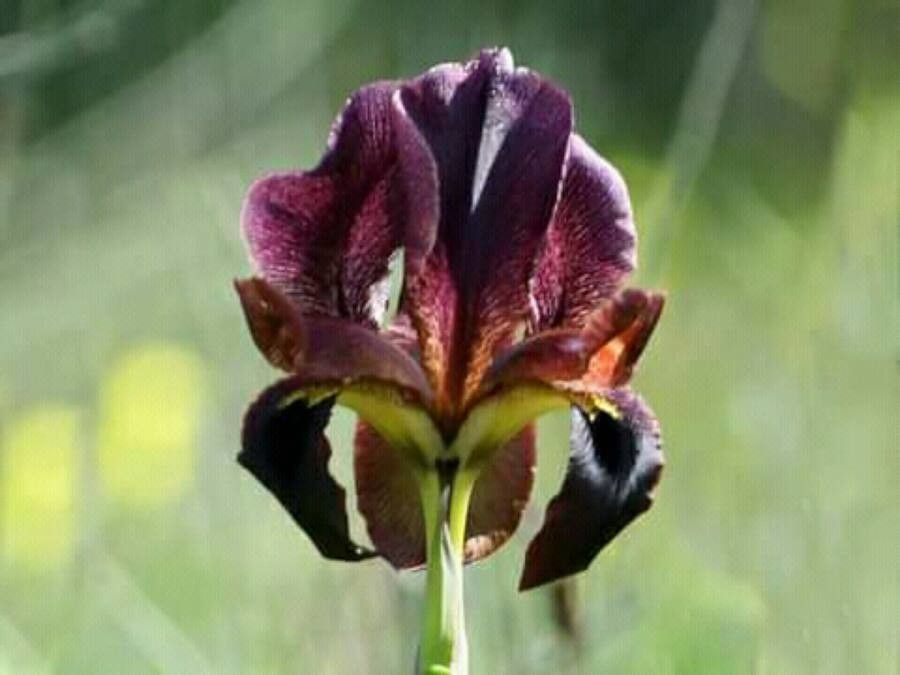
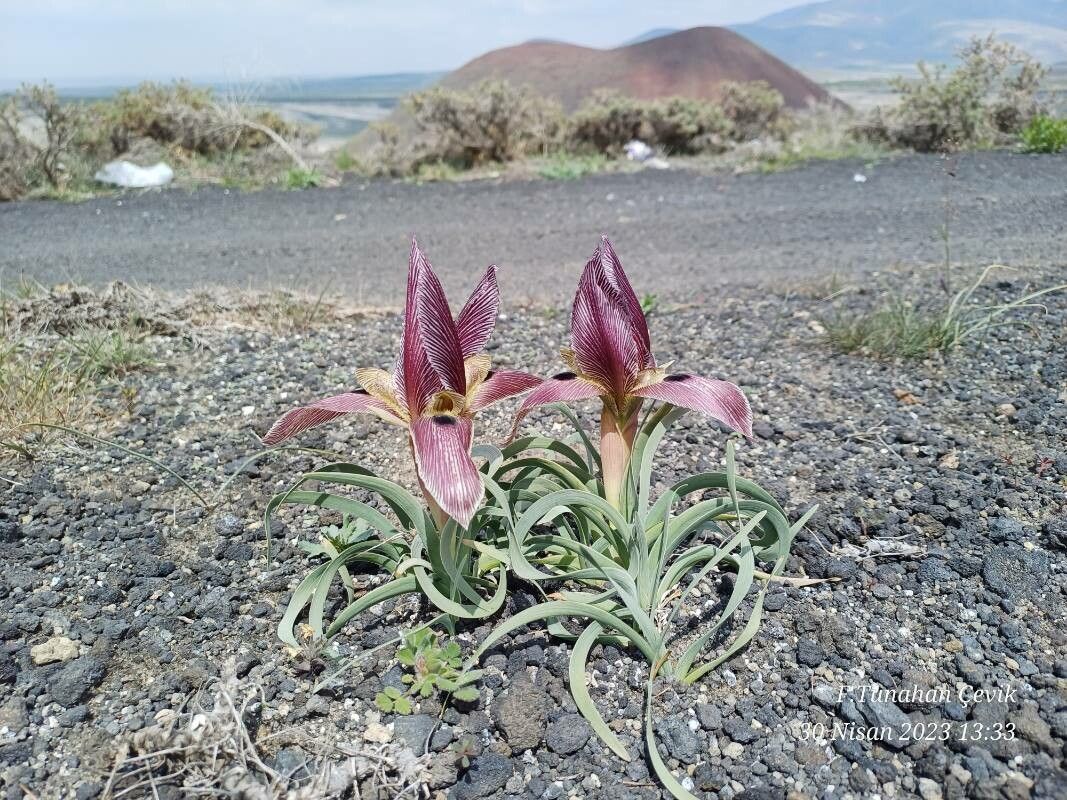
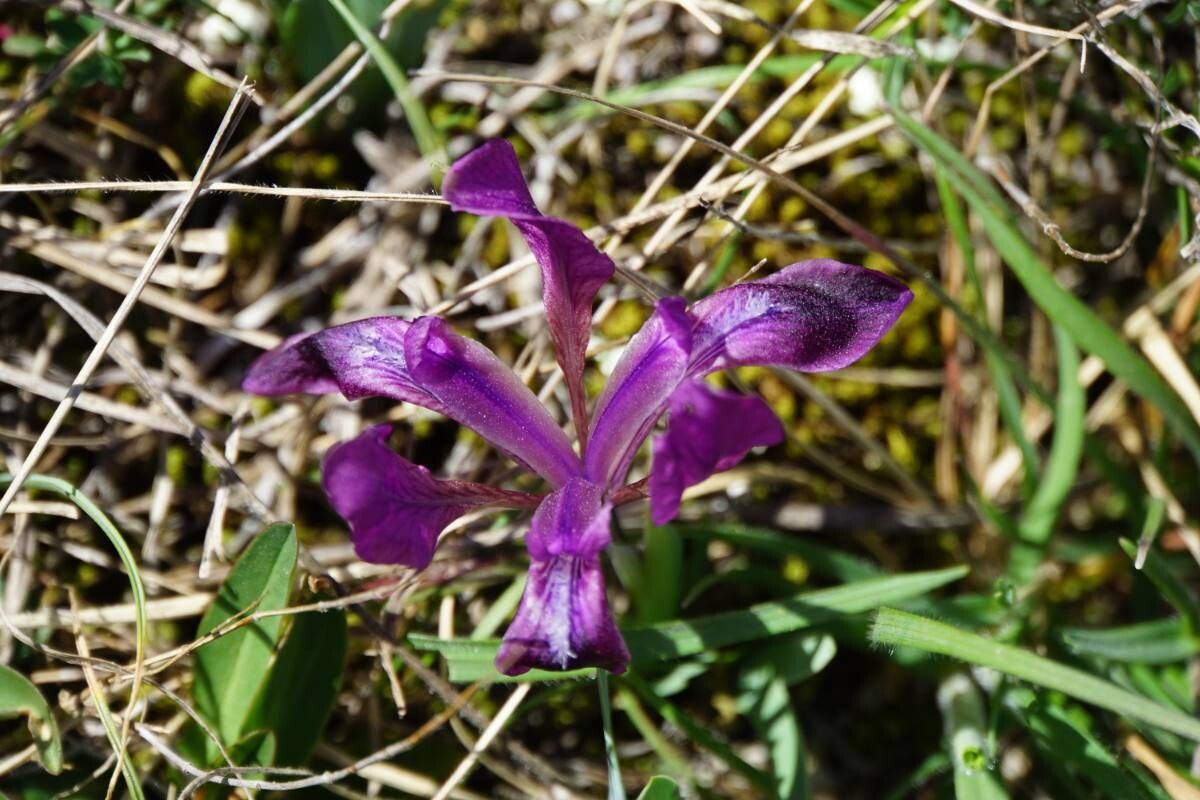
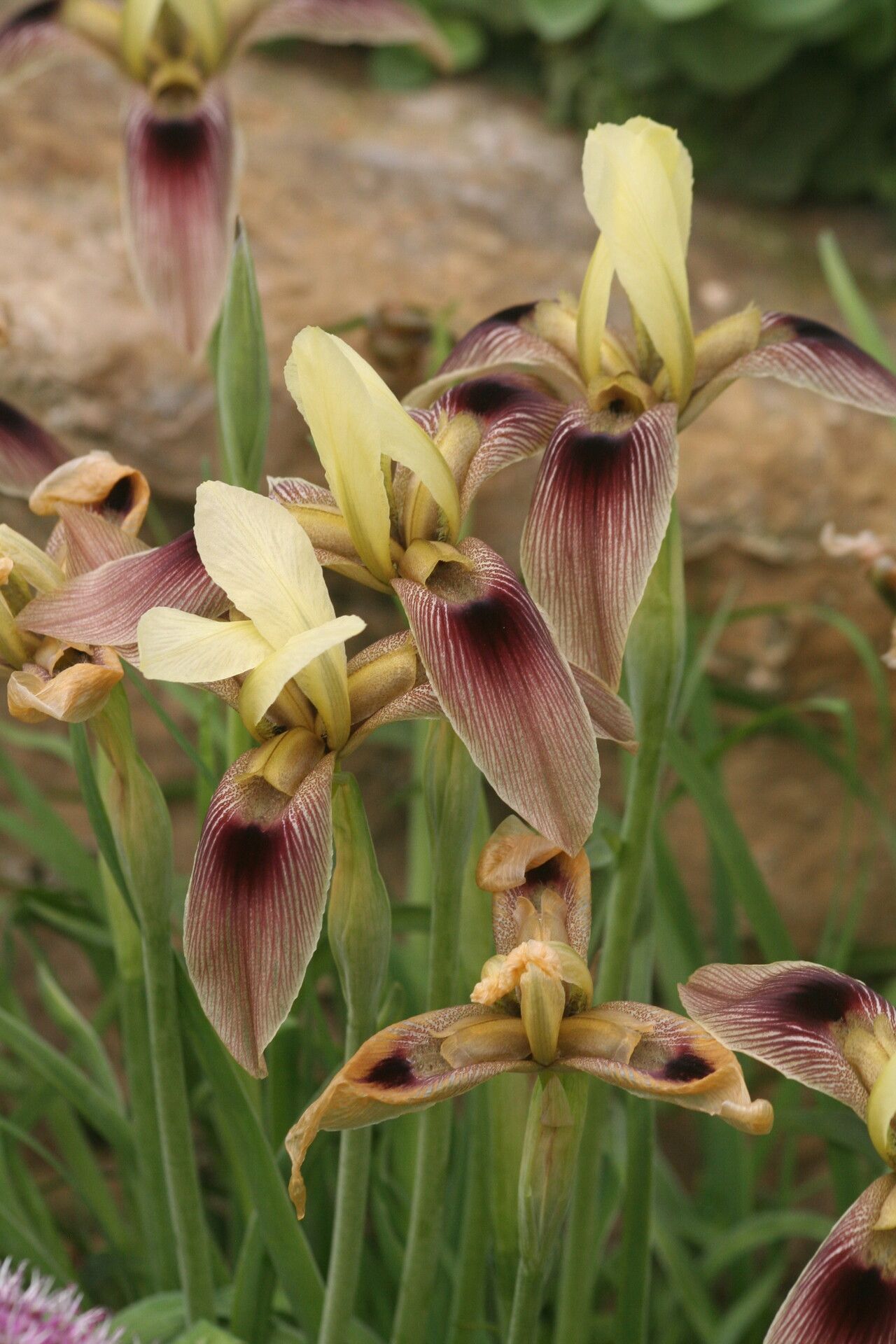
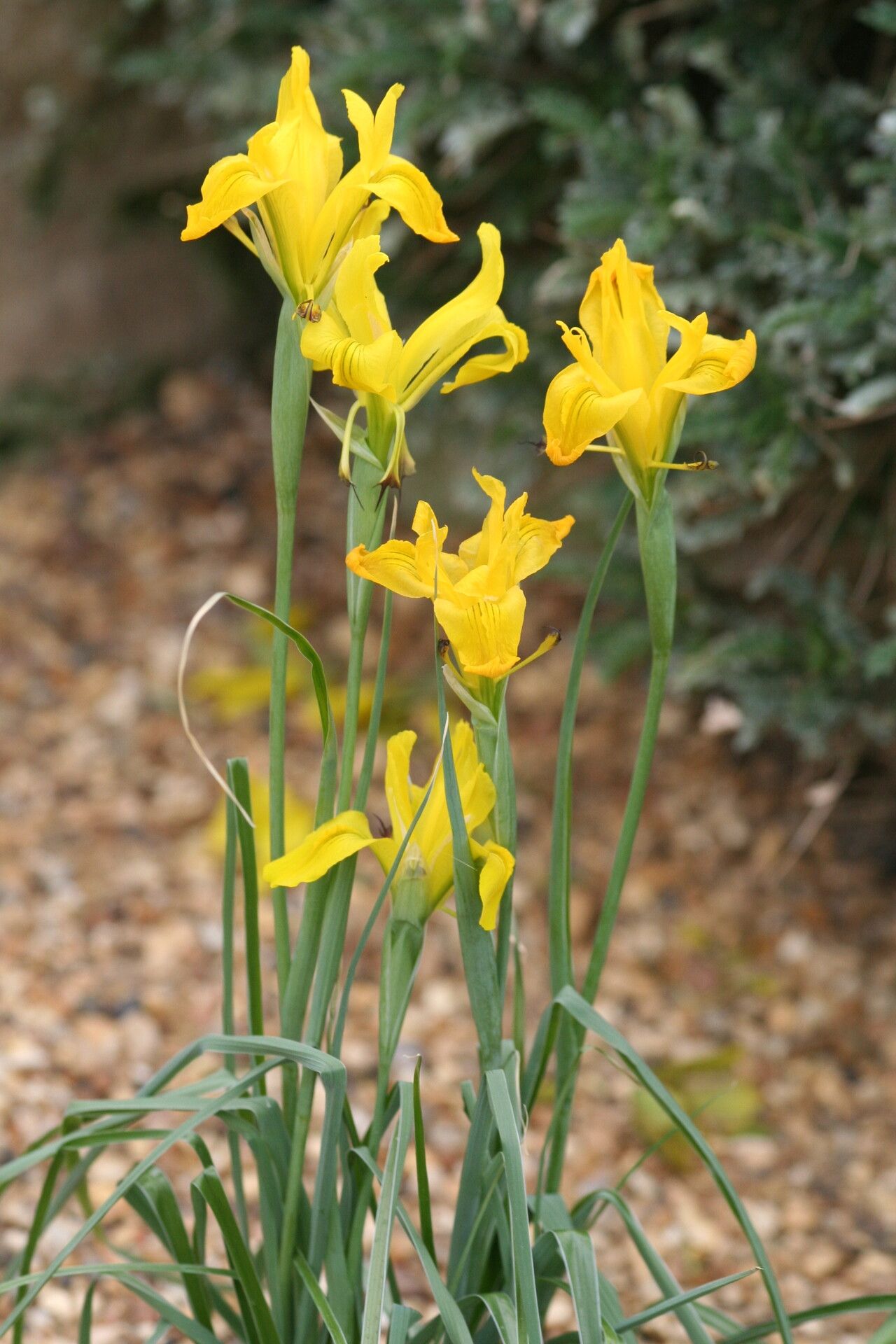
Iris petrana, commonly known as the Petra iris, is a species in the genus Iris, it is also in the subgenus of Iris and in the Oncocyclus section. It has spring blooming flowers that come in shades from burgundy, dark brown to dark violet and purple. They have yellow or dark 'beards' and flower over sword-like grey-green leaves. It is normally found in the desert sands between the countries of Jordan and Israel.
Petra Iris has strong resistance to disease and is generally not likely to suffer from illnesses. Still, it can be vulnerable to pests and diseases present in its environment. These problems are typically mild. Regarding care, this plant needs a moderate level of maintenance. It should be pruned regularly to preserve a neat appearance and encourage healthy growth. Applying fertilizer can also aid in boosting flowering. Petra Iris is appropriate for anyone with outdoor areas like a garden or patio and does not demand extensive gardening experience. It may need extra attention when cultivated indoors.
How to keep Iris Petrana.
Temperature
Petra Iris can tolerate a wide range of temperatures, but its distribution may still be restricted by various combinations of moisture and heat. It performs best in warm summer climates with sufficient rainfall or watering. Extended periods of cloudy, rainy weather or sustained high temperatures can raise the likelihood of Petra Iris dying. In winter, adequate protection from cold can enhance the plant's chances of survival.
Fertilizer
One fertilizer application in spring is generally adequate for Petra Iris, though multiple feedings can enhance growth. Apply fertilizer about once a month to every six weeks. Fertilizing improves the leaves' appearance and function, helping maintain even color and a healthy texture. It also promotes root development and nutrient uptake for the plant's long-term health.
Botanical profile.
Other names.