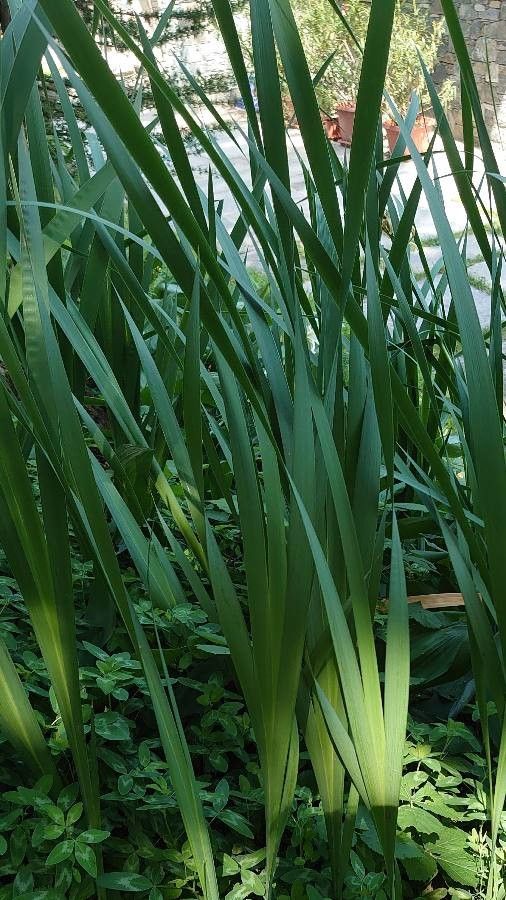
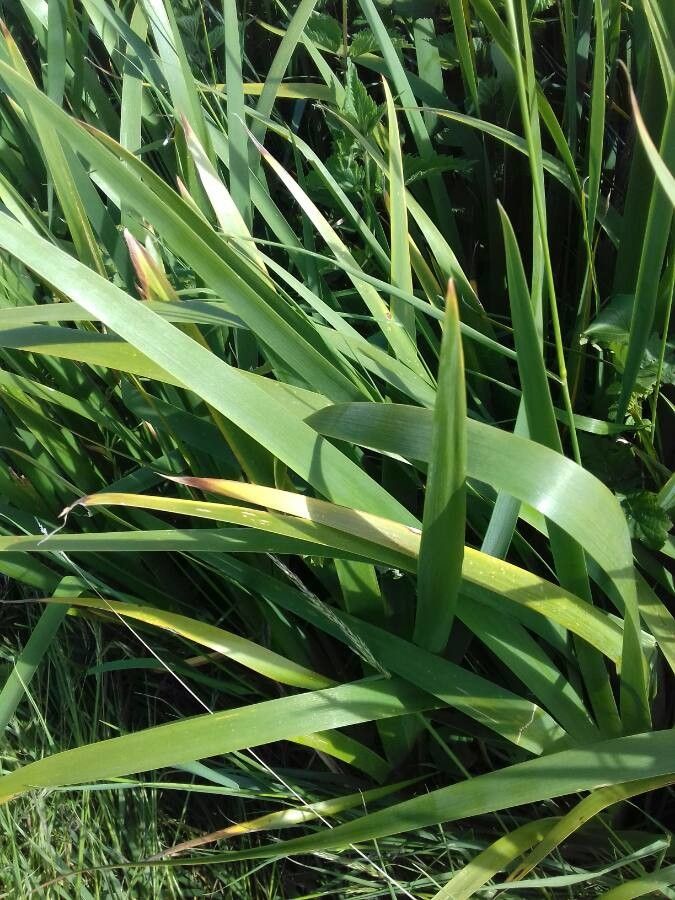
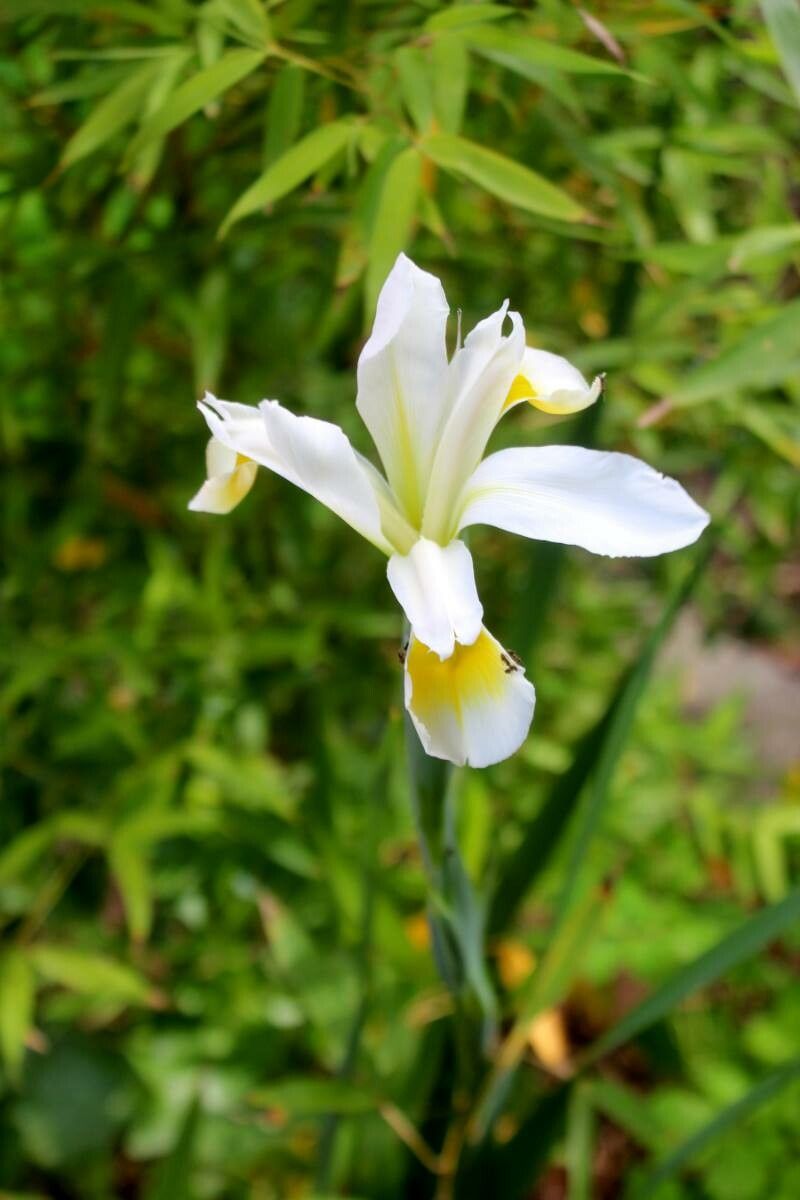
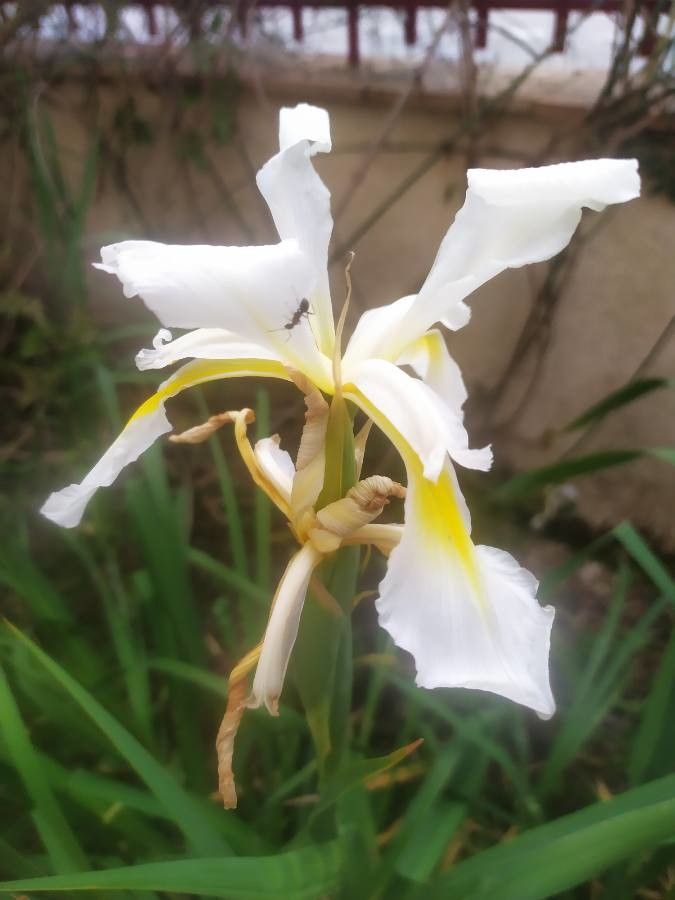
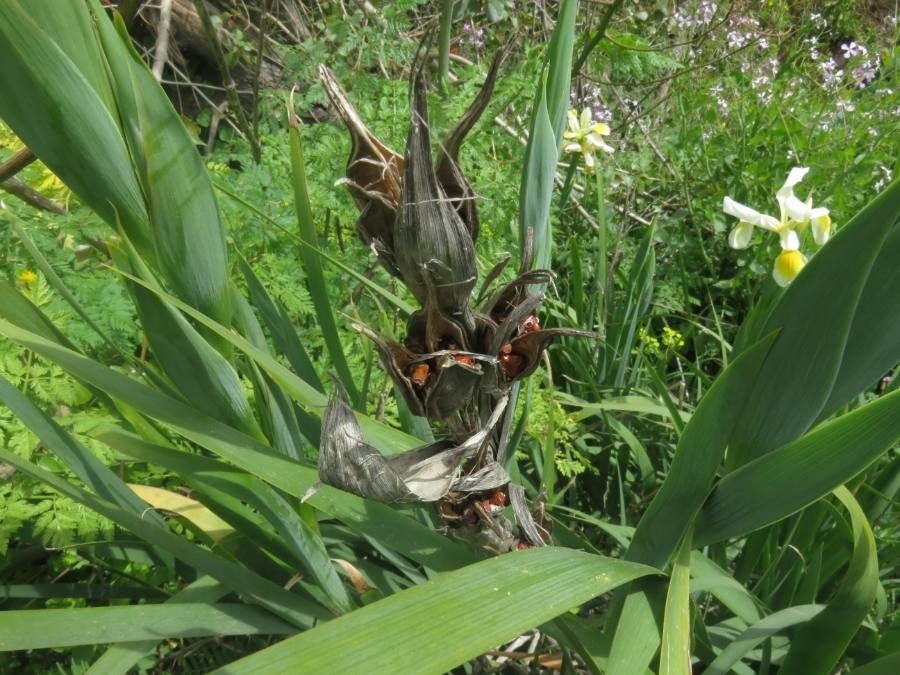
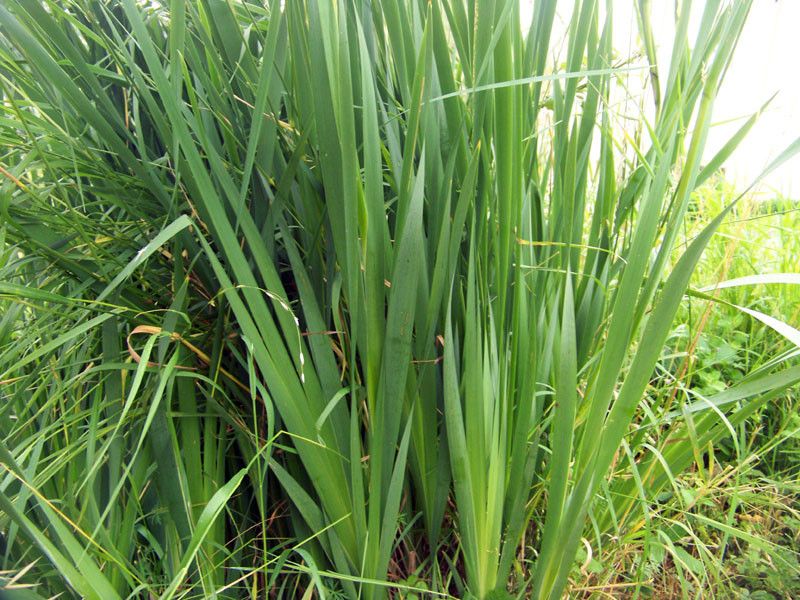
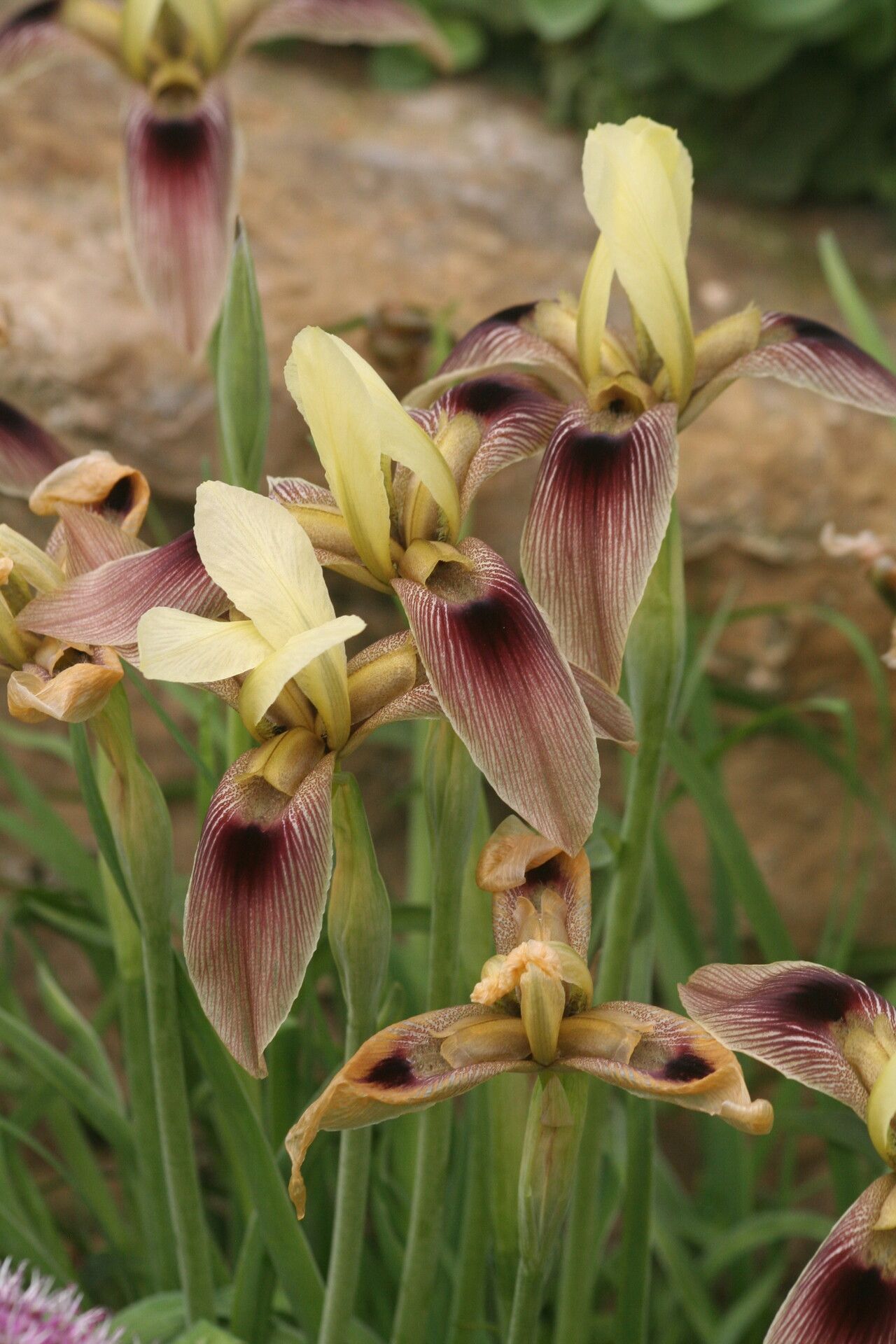
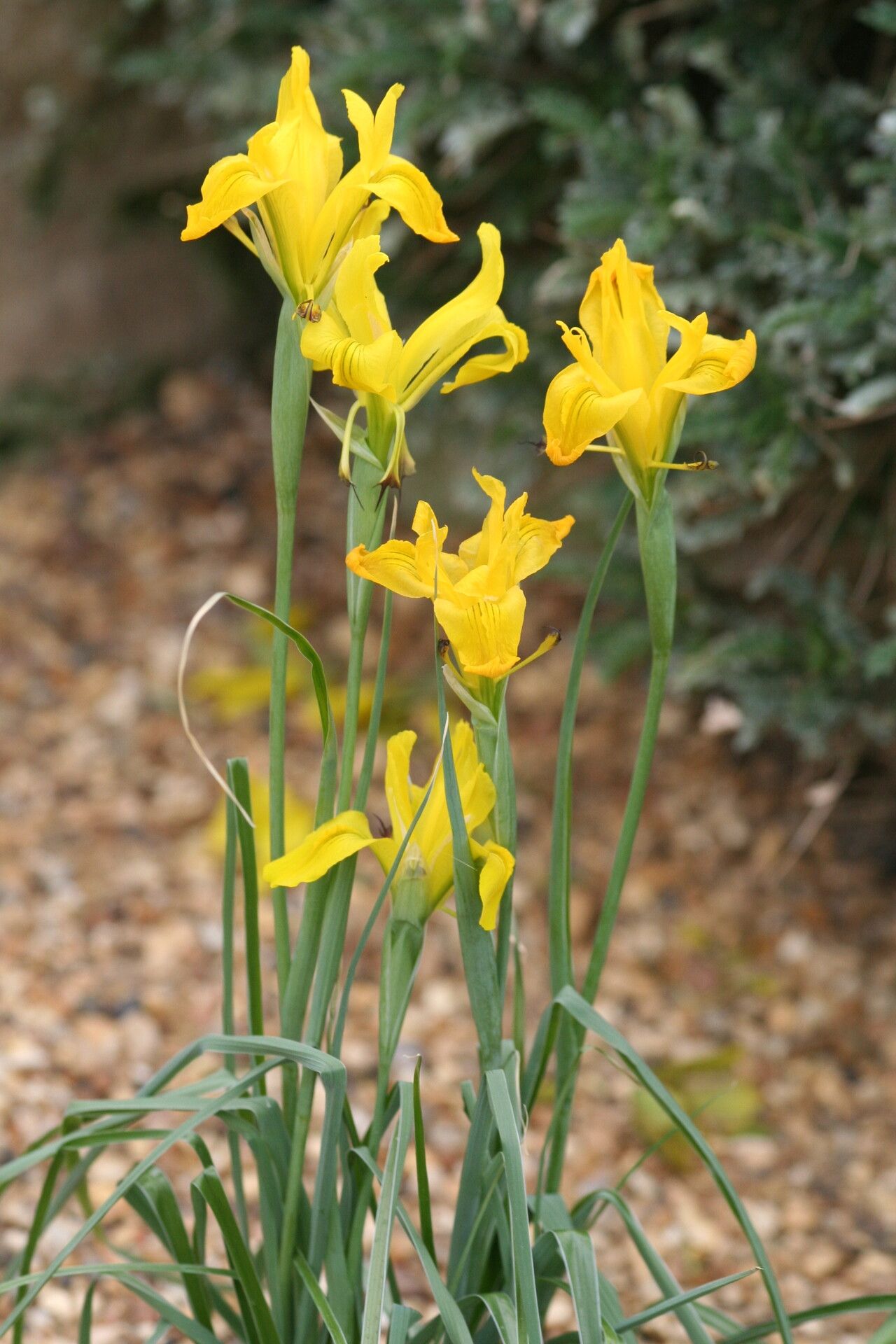
Iris orientalis is a species in the genus Iris; it is also in the subgenus Limniris and in the series Spuriae. It is a rhizomatous perennial plant, from Turkey and Greece, with white flowers with a yellow mark or blotch. It was also known as Iris ochroleuca for a long time. It is commonly known as yellow banded iris in the U.S. and Turkish iris in the UK but also has some other less common names. It is very hardy and has been known to naturalize in various countries. It is widely cultivated as an ornamental plant in temperate regions.
The Spuria beardless iris shows strong resistance to disease and is typically not vulnerable to illnesses. Still, it can be affected by pests and diseases found in its environment. When these occur, they are generally mild. Regarding maintenance, this plant needs a moderate level of care. Regular pruning is necessary to preserve an attractive appearance and support healthy growth. Applying fertilizer can also encourage more blooms. This iris is appropriate for anyone who has outdoor areas like a garden or patio and does not demand extensive gardening experience. If grown indoors, it may need a higher level of attention.
How to keep Iris Orientalis.
Light
The spuria beardless iris is a herbaceous perennial that thrives in sunny locations and originates from open habitats, commonly found in meadows and grasslands. It prefers full sun but can also tolerate partial sun.
Water
The spuria beardless iris, native to dry regions, is a drought-tolerant plant that prefers drier soil. It thrives when watered just once every one to two weeks. As an outdoor plant in temperate zones, it efficiently regulates its water intake, adapting well to the changing patterns of seasonal rainfall.
Temperature
Spuria beardless iris can adapt to a wide range of temperatures, but its distribution may still be limited by different combinations of water and heat. It does best in warm summer climates with adequate rainfall or watering. Extended periods of cloudy, rainy weather, as well as prolonged high temperatures, can increase the likelihood of Spuria beardless iris dying. In winter, proper protection against cold can improve the plant's survival rate.
Fertilizer
The best time to fertilize a Spuria beardless iris is in early spring, as it is coming out of dormancy and starting active growth. Fertilization supplies essential nutrients for healthy development. While Spuria beardless iris has fairly low fertilizer requirements, applying fertilizer annually can improve its survival and encourage better, longer-lasting blooms.
Pruning
Spuria beardless iris are known for their tall stems and vibrant blooms. To keep them thriving, it's important to prune them annually in early to late spring after they have finished flowering. Remove any dead foliage and cut back the spent stalks to promote better blooms next season. Regular pruning helps maintain their health and shape. Always use clean, sharp tools to prevent infections.
Botanical profile.
- Plant Type
- Herb
- Life Cycle
- Perennial
- Genus
- Iris
- Family
- Iridaceae
- Hardiness Zone
- 4-9
- Mature Height
- 91 cm
- Mature Spread
- 30 cm
- Leaf Color
- Green, Gray
- Leaf Type
- Deciduous
- Flower Color
- White, Yellow
- Flower Size
- 6.35 cm to 10.16 cm
- Bloom Time
- Mid spring, Late spring
- Planting Time
- Spring, Autumn
- Harvest Time
- Early summer, Mid summer
- Native Area
- Greece, Turkey, Lebanon
Other names.
Reader questions.
How should I water my Spuria beardless iris plant?
To properly water the Spuria beardless iris, it is important to use filtered water at room temperature. Tap water can have harmful particles that can affect the plant's health. The Spuria beardless iris is native to warm climates, so it is best to avoid shocking it with cold water. Instead of overhead watering, it is recommended to pour the filtered, room temperature water directly onto the soil until it is fully saturated. This helps the roots stay moist and enables them to spread and absorb the necessary nutrients for the plant's growth.
Why should I put fertilizer on my Spuria beardless iris?
The leaves of the Spuria beardless iris are a crucial part of its structure. Fertilization plays a significant role in ensuring that the leaves not only look great but also fulfill their function effectively. By fertilizing your Spuria beardless iris correctly, you can help maintain consistent color and a healthy texture in the leaves. Additionally, fertilization supports the growth of new roots and helps maintain the existing ones beneath the soil surface. This not only promotes the current health of your plant but also enhances its ability to absorb essential nutrients from the soil in the future.
What are the sunlight requirements for Spuria beardless iris?
Spuria beardless iris requires full sun, meaning it thrives in conditions where it receives more than 6 hours of direct sunlight daily. It can also tolerate partial sun, with about 3-6 hours of sunlight. It's important to observe the movement of sunlight through your garden to find the perfect spot for your plants, ensuring they get the right balance of light and shade to flourish.
What is the common name of Iris orientalis?
The common name of Iris orientalis is Spuria beardless iris.
What should I do if I give too much or too little water to my Spuria beardless iris?
Overwatering is a common issue for Spuria beardless iris plants and can cause wilting, yellowing of stems and leaves, and various diseases like root rot, mold, and mildew. Underwatering is less common but can cause brittle, brown leaves. It is important to notice signs of overwatering and take action promptly, as some diseases may not be reversible if left unattended. If overwatering is detected, reduce watering immediately and check the soil's drainage. Poor drainage may require replacing the soil with a well-draining potting mix. If underwatering is suspected, simply increase the frequency of watering until the signs subside.
When should I fertilize my Spuria beardless iris for the best results?
To help your Spuria beardless iris thrive outdoors each year, it's important to know when to fertilize. When the new growth appears in early spring, it's a good indication that it's time to start fertilizing. Generally, a single application of fertilizer should be sufficient for the plant. However, if you want to promote maximum growth, you can fertilize multiple times during spring and early summer. In this case, feeding the iris every month to a month and a half is recommended.
How does artificial lighting support plant growth?
Artificial lighting is crucial for indoor plants, especially when natural sunlight is insufficient, like during winter or in less sunny spaces. LED lights are recommended as they can be tailored to provide specific wavelengths needed by plants. Full sun plants require 30-50W/sq ft, partial sun 20-30W/sq ft, and full shade plants need 10-20W/sq ft of artificial light. The light source should be placed 12-36 inches above the plant to mimic natural sunlight, and plants generally need 8-12 hours of light per day to mimic natural daylight conditions.
What can you tell me about the Spuria beardless iris?
The Spuria beardless iris, with its botanic name Iris orientalis, does not have detailed information provided about essentials, content, or symptoms in the available data. Therefore, specific traits or care instructions are not mentioned here.
How frequently should I water my Spuria beardless iris plant?
If your Spuria beardless iris is in a pot, you can use the most precise method to determine if it needs water by sticking your finger in the soil. If the top two to three inches of soil are dry, it's time to water. If you have your Spuria beardless iris planted outdoors, you can use a similar method to check the soil. When the top few inches of soil are dry, it's time to water. Typically, during spring and early fall, you'll need to water once a week using this method. However, in extremely hot weather, you may need to water twice a week or even more. Despite this, mature and well-established Spuria beardless iris plants can withstand drought quite well.
When is it not a good idea to use fertilizer on my Spuria beardless iris?
During the late fall and winter, your Spuria beardless iris will go into a period of dormancy where it stops growing. It is important to avoid fertilizing your Spuria beardless iris during this time. In the spring and summer, if you decide to fertilize, start decreasing the amount of fertilizer as summer approaches because the growth rate slows down. It is never a good idea to fertilize your Spuria beardless iris when the weather is unusually hot or when the soil is very dry. Fertilizing in these conditions can stress the plant and cause it to die prematurely.
What are the common symptoms of light deficiency in Spuria beardless iris?
Symptoms of light deficiency in Spuria beardless iris include smaller new leaves compared to mature ones, leggy or sparse growth, faster leaf drop, slower or halted new growth, lighter-colored or pale new leaves, chlorosis (leaves turning yellow), sunscald, leaf curling, wilting, and leaf scorching. These conditions occur when the plant does not receive adequate sunlight and begin to adapt in various ways to cope with the stress.
How much water does my Spuria beardless iris plant need?
When watering your Spuria beardless iris, don't be shy about giving it a generous amount of water. Make sure the top two to three inches of soil are dry before watering, and then give the plant a thorough watering to fully saturate the soil. You should add enough water to see excess water flowing out of the drainage holes at the bottom of the pot. If you don't, it means you haven't watered enough. On the other hand, be careful not to let water accumulate inside the soil, as this can harm the plant. If water doesn't drain properly from the pot, it could be due to poorly draining soils, which is not good for the plant's health. If the plant is outside, watering with 1 inch of rain per week will be enough.