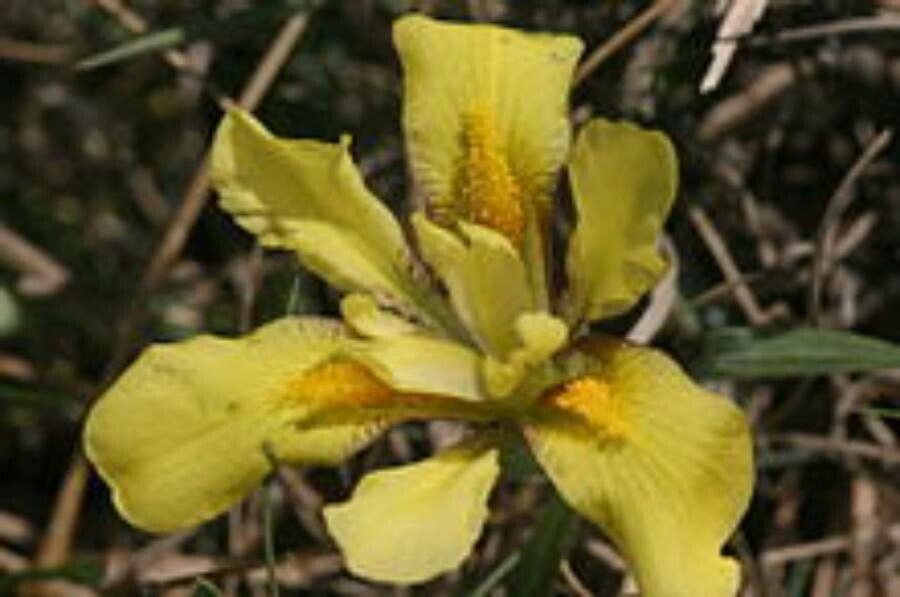
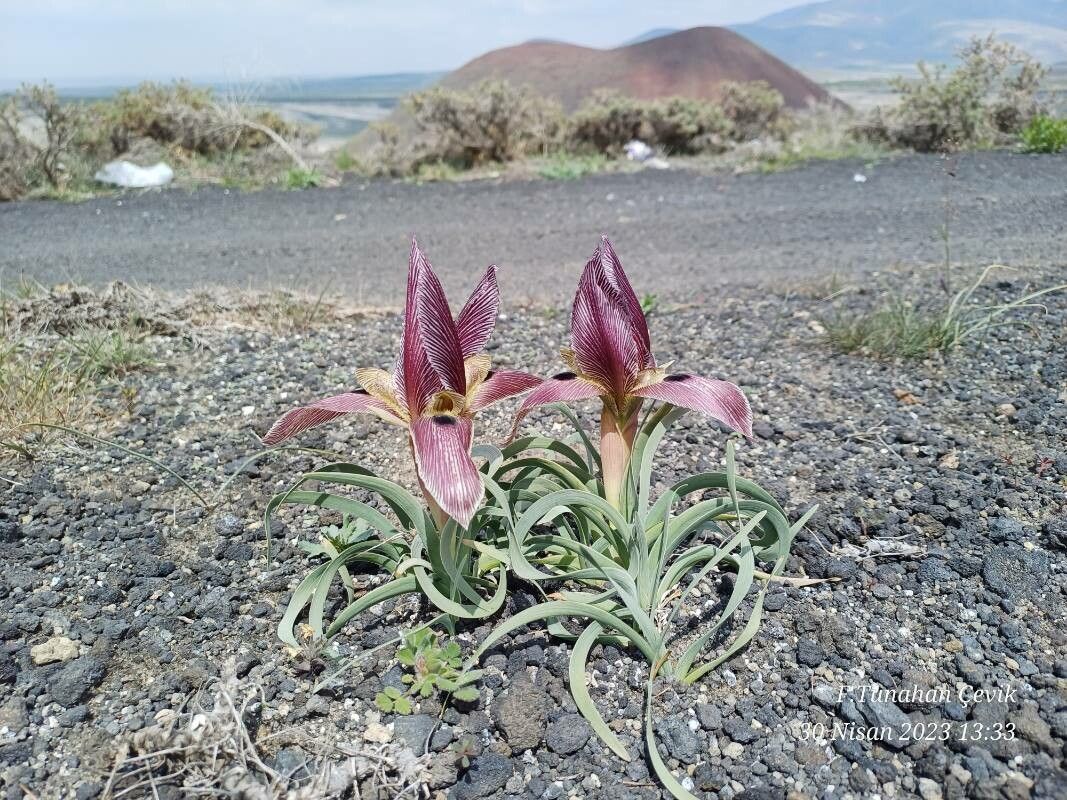
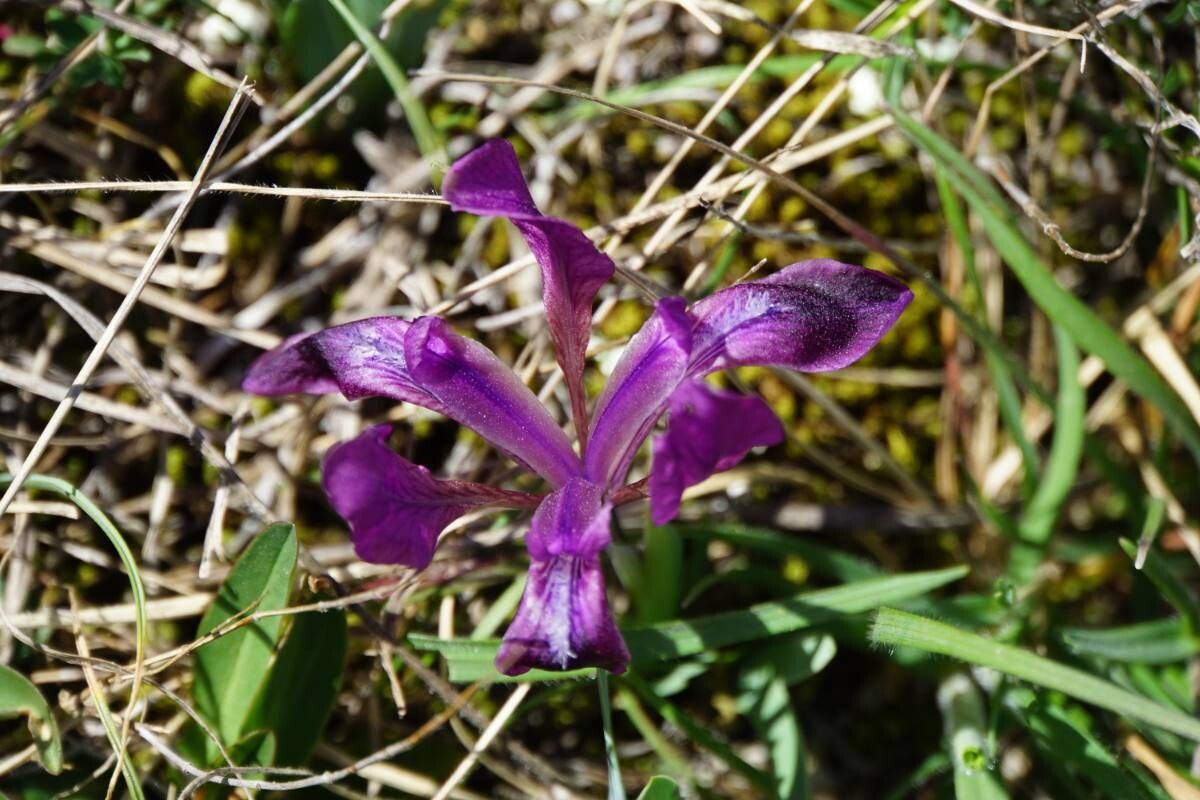
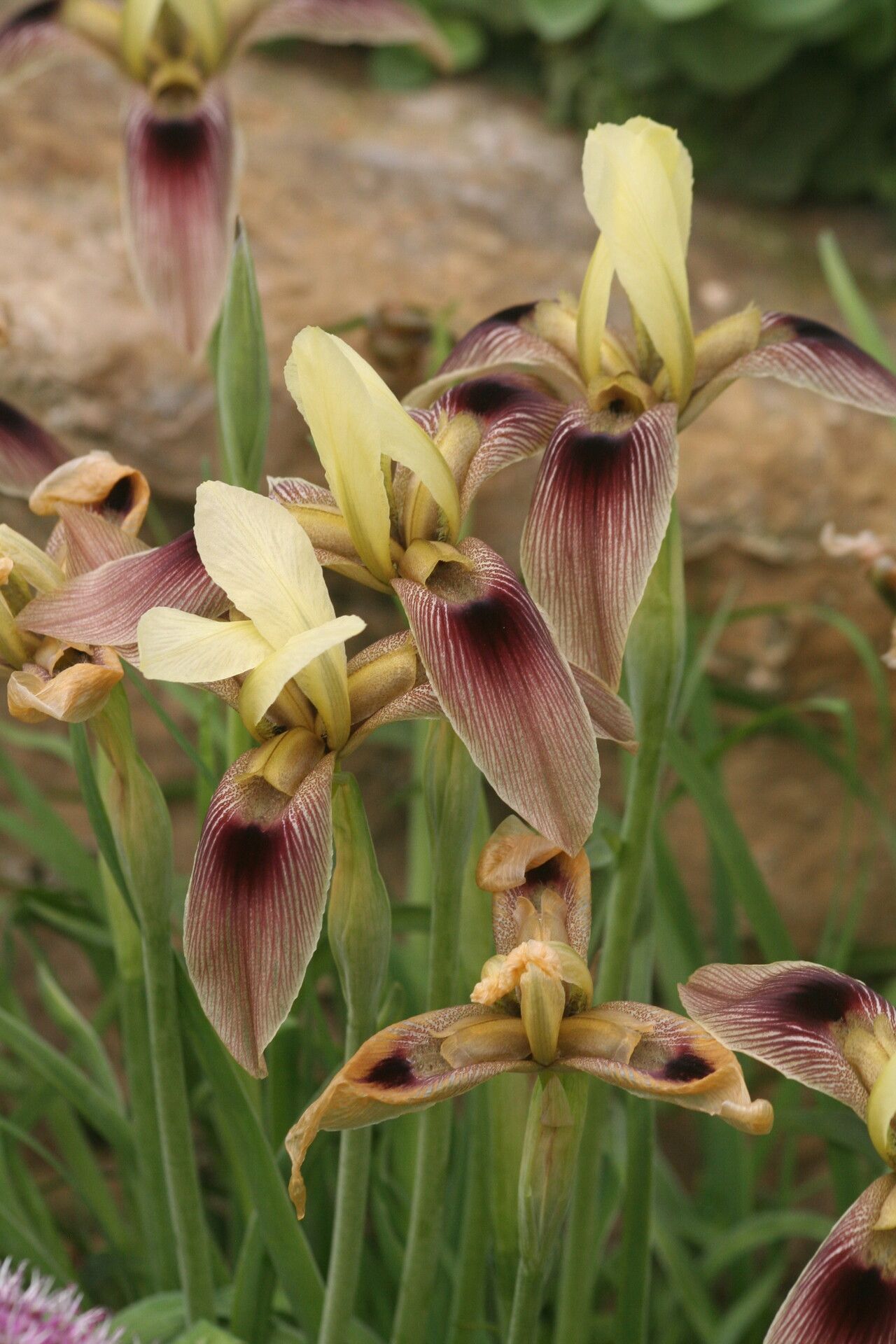
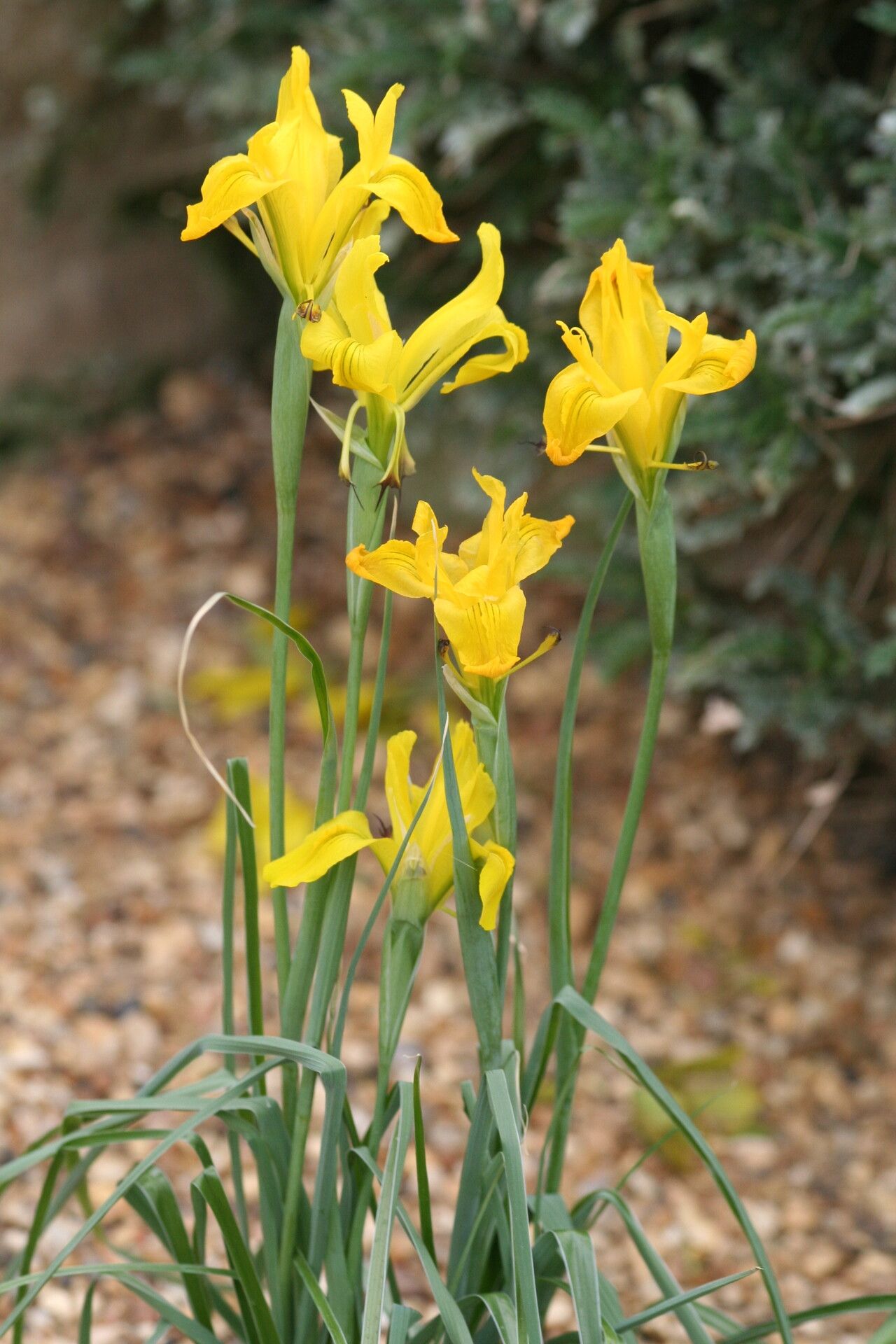
Iris humilis is a plant species in the genus Iris, it is also in the subgenus of Iris and in the Psammiris section. It is a rhizomatous perennial, with a wide distribution range from Europe to Russia to China, via Mongolia and Kazakhstan. It has sword-shaped leaves, a short stem and yellow flowers with an orange beard. It is cultivated as an ornamental plant in temperate regions. It once had Iris arenaria as a synonym or as a subspecies. It is a yellow dwarf iris only from central Europe. In some sources it is still listed as a subspecies of Iris humilis.
Iris pontica shows strong resistance to diseases and is generally unlikely to suffer from them. Nevertheless, it can be affected by pests and illnesses found nearby. Such infections are typically mild. Regarding maintenance, this species needs a moderate level of care. Regular pruning is necessary to preserve a neat appearance and encourage healthy growth. Applying fertilizer can also aid in increasing bloom. Iris pontica is appropriate for anyone with outdoor areas like a garden or patio and does not demand extensive gardening experience. When cultivated indoors, it may need more attentive care.
How to keep Iris Humilis.
Light
Iris pontica is a sun‑loving, perennial herbaceous plant that originates in open habitats and is commonly found in meadows and grasslands. It prefers full sun but can also tolerate partial sun.
Water
The water needs for the iris humilis species can vary. Bearded iris humilis requires minimal watering and should only be watered when the soil is dry. In contrast, Siberian iris humilis needs the soil to remain consistently moist. It is important to note that most iris humilis species do not tolerate standing water; poorly drained soil can cause root rot.
Temperature
Iris pontica can tolerate a broad range of temperatures, though its distribution may still be constrained by particular combinations of moisture and heat. It performs best in warm summer conditions with sufficient rainfall or watering. Extended periods of cloudy, rainy weather, as well as prolonged high temperatures, increase the risk of Iris pontica dying. In winter, adequate protection from cold can enhance the plant’s chances of survival.
Fertilizer
Usually a single fertilizer application in spring is enough for Iris pontica, but several feedings can maximize growth. Apply fertilizer every one to one and a half months. Fertilization improves the leaves' appearance and function, helping maintain even color and a healthy texture. It also promotes root development and nutrient uptake for the plant's long-term health.
Pruning
Iris humilis is known for its vibrant blooms and compact growth. To maintain its health and beauty, prune the plant in early spring. This helps remove dead leaves and spent stems, encouraging healthy growth and abundant flowering. Be careful not to prune too heavily, as this can stress the plant. Regular pruning prevents overcrowding, ensuring that the plant remains vigorous and visually appealing throughout the growing season.
Botanical profile.
- Plant Type
- Herb
- Life Cycle
- Perennial
- Genus
- Iris
- Family
- Iridaceae
- Hardiness Zone
- 5-9
- Mature Height
- 20 cm to 30 cm
- Mature Spread
- 15 cm to 25 cm
- Leaf Color
- Green
- Leaf Type
- Deciduous
- Flower Size
- 5.08 cm to 6.35 cm
- Bloom Time
- Mid spring, Late spring
- Planting Time
- Spring
- Harvest Time
- Early summer, Mid summer
- Native Area
- Ukraine, Moldova, Romania