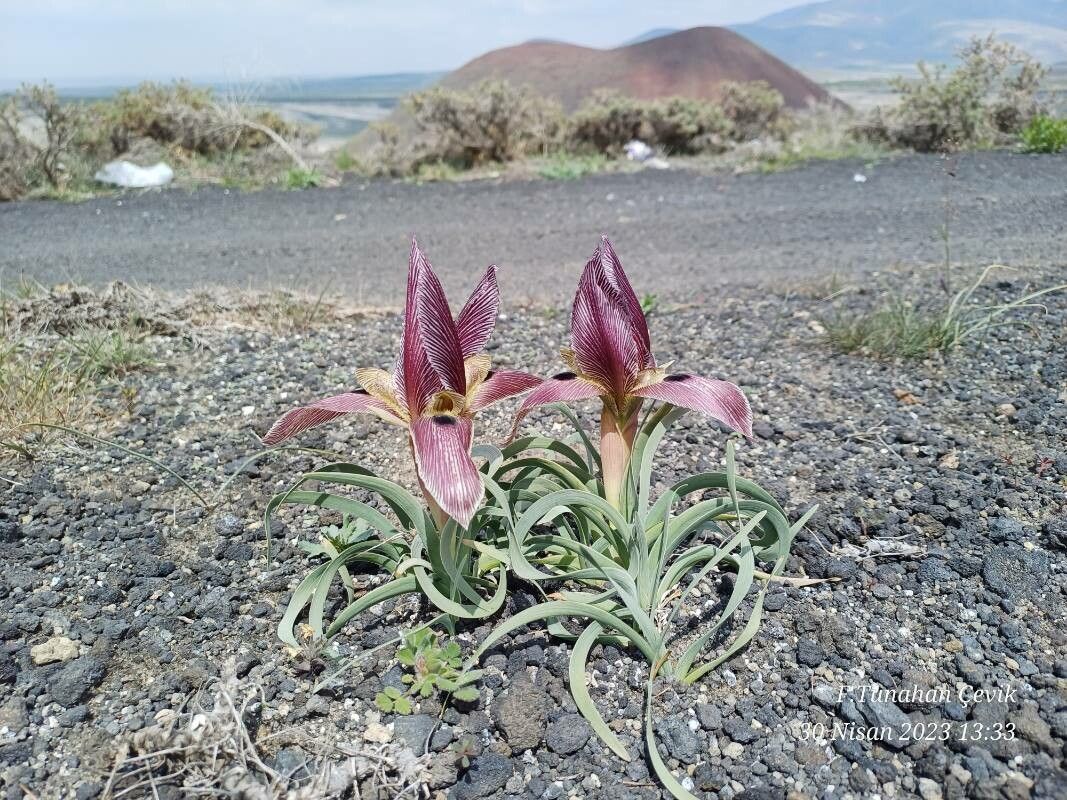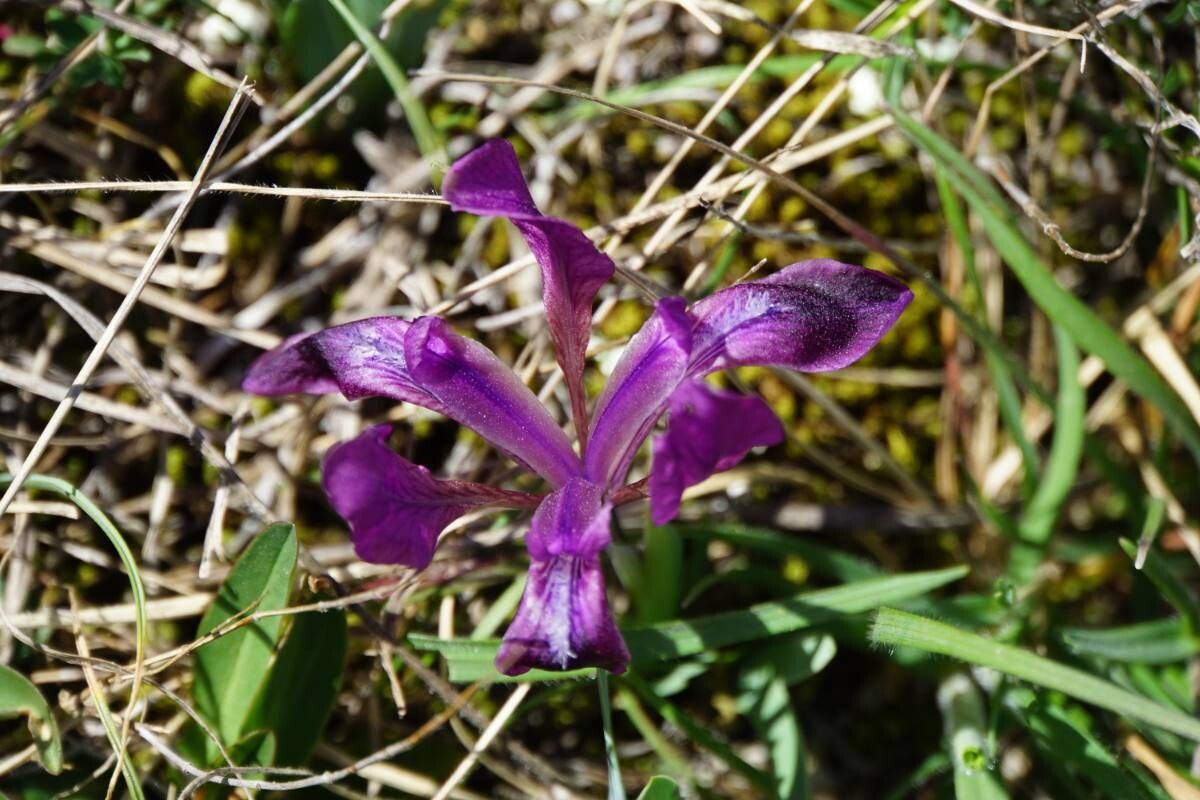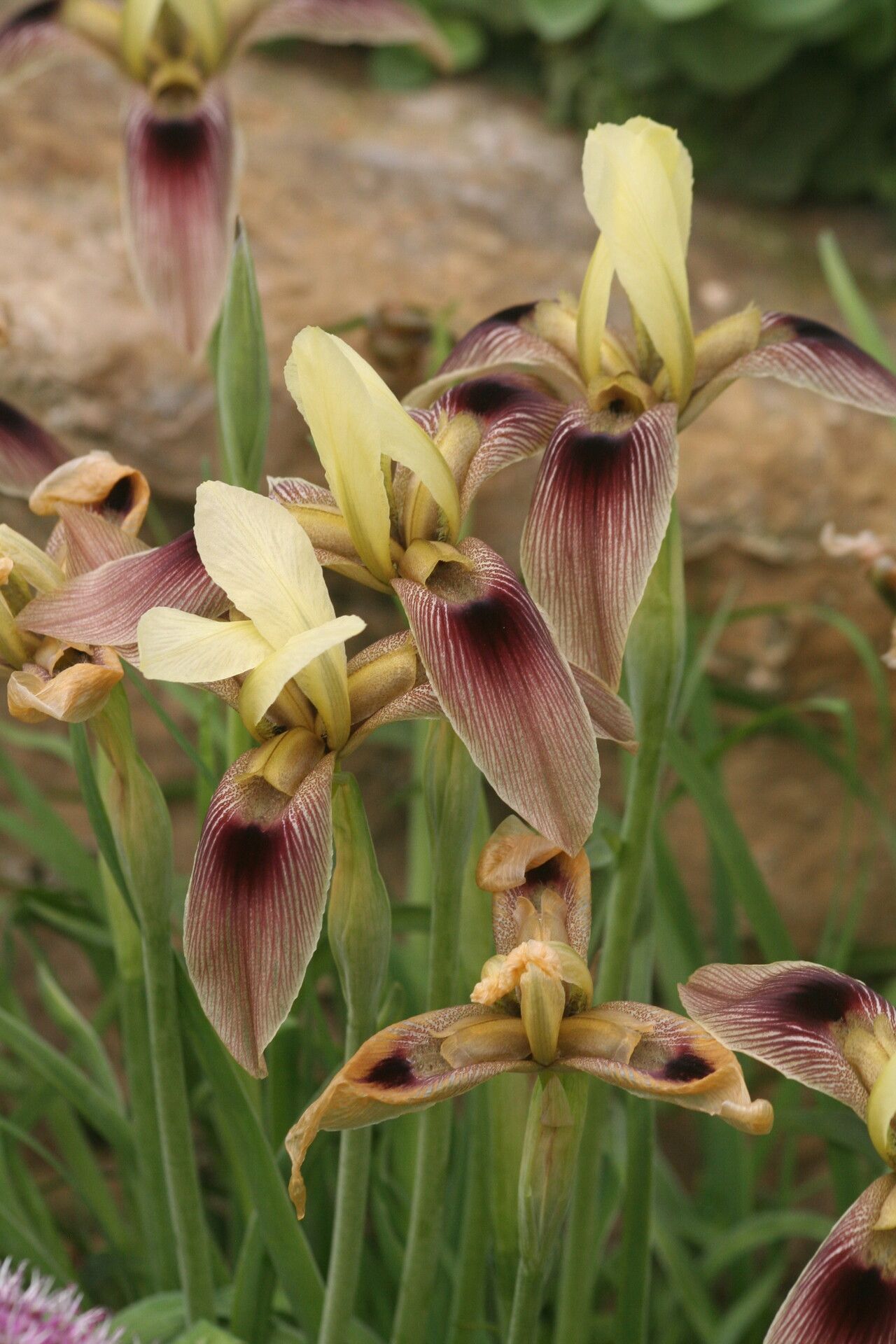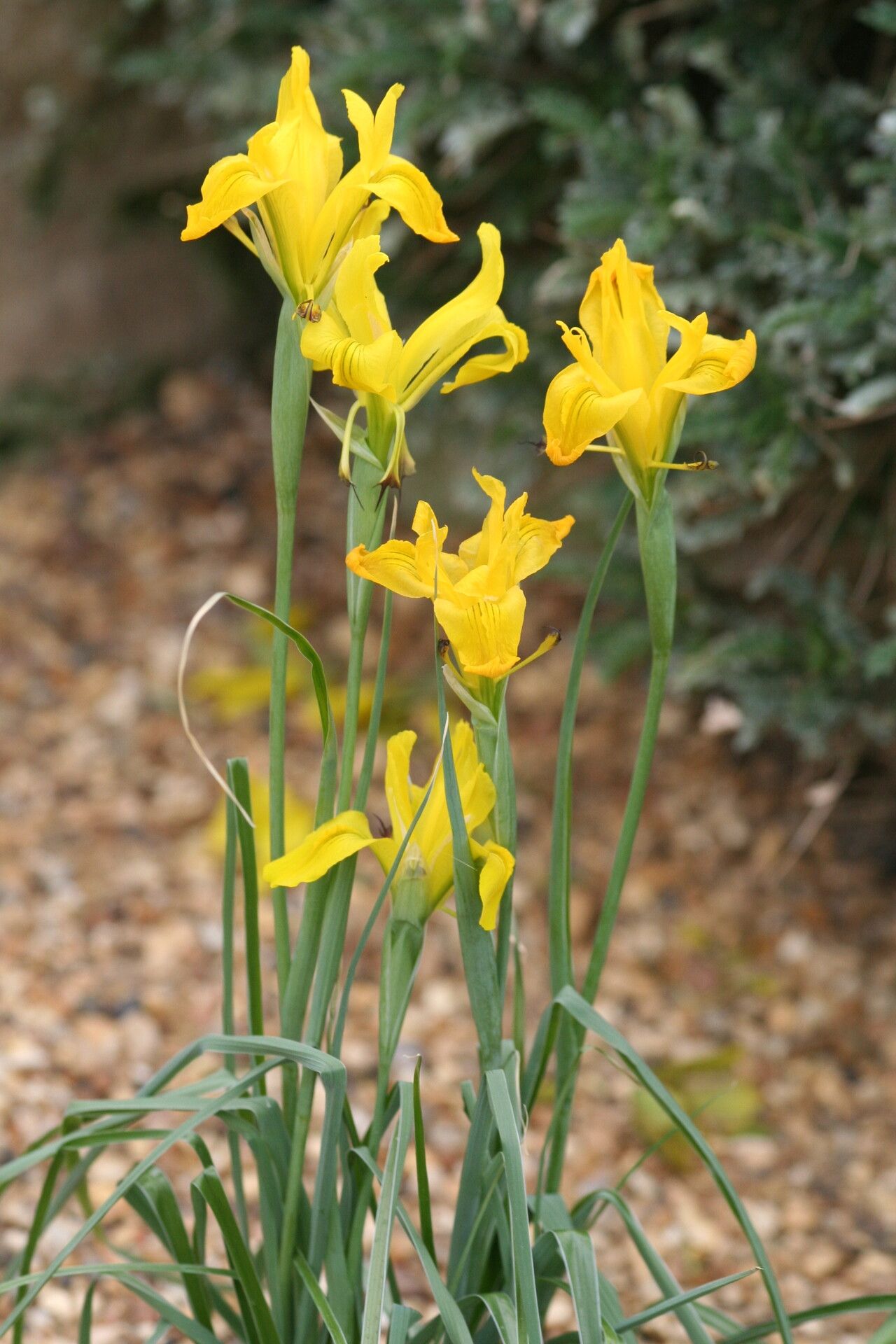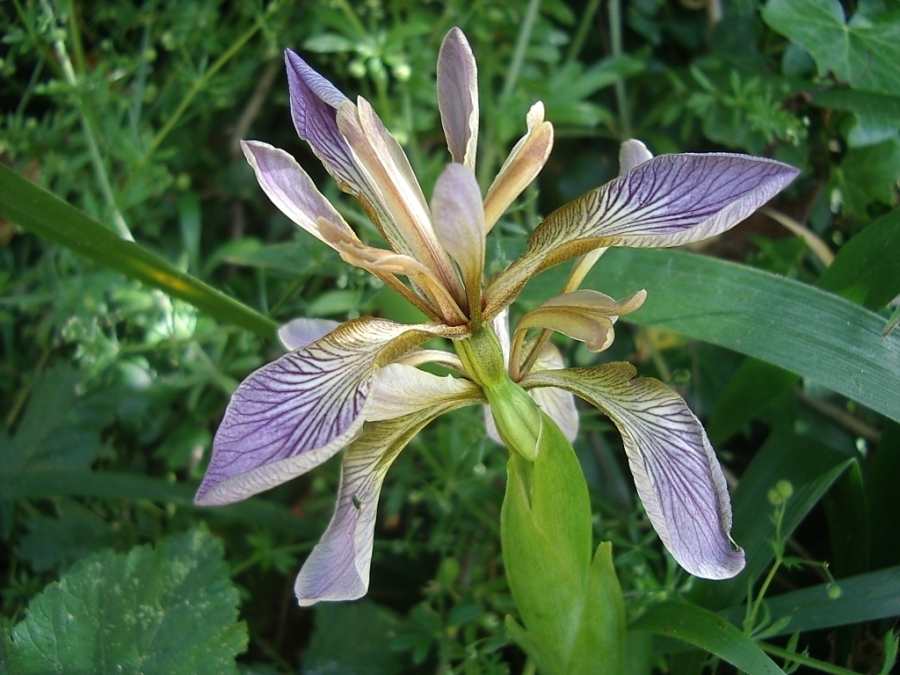
Iris foetidissima, commonly known as the stinking iris or gladdon, is a flowering plant species in the iris family. Native to Europe and western Asia, this plant thrives in various habitats, including woodlands, hedgerows, and coastal areas. Typically, Iris foetidissima grows up to 60 cm tall and features long, narrow, dark green leaves. Its flowers are small and yellowish-green with striking purple veins on the petals, blooming from May to July. A distinctive characteristic of Iris foetidissima is its seed pods, which resemble large berries that turn bright orange-red when mature. The seeds inside are covered with a bright orange, fleshy coating that attracts birds, aiding in seed dispersal. Despite its unpleasant odor when crushed or bruised—hence the name "stinking iris"—Iris foetidissima has been used for medicinal purposes for centuries, thanks to its anti-inflammatory properties. Overall, Iris foetidissima is a fascinating plant with unique features that set it apart from other irises.
Roast-beef plant has good disease resistance and is generally not prone to illnesses. However, it can be affected by pests and diseases present in its surroundings. These infections are usually mild. Regarding care, this plant requires a moderate amount of maintenance. It should be pruned regularly to maintain a neat appearance and healthy growth. Fertilizing can also help encourage flowering. Roast-beef plant is suitable for anyone with outdoor space, such as a garden or patio, and does not demand much care experience. It may need more attention when grown indoors.
How to keep Iris Foetidissima.
Light
The roast-beef plant prefers spots with moderate sunlight and can tolerate both greater and lesser exposure. Insufficient sun can hinder its healthy growth, while excessive sun may cause harm. Native to habitats with varied light conditions, it has become adapted to fluctuating sunlight levels.
Water
The roast-beef plant thrives on the edges of woodlands and needs balanced moisture to grow well. It's important to water it weekly to prevent the soil from becoming too saturated. Once the plant is established, it can tolerate drought conditions. Applying mulch is helpful because it retains moisture and regulates the temperature, which supports the evergreen's foliage throughout the year.
Humidity
This plant will thrive in moderate humidity, which is probably the level in your home. However, misting it a few times a week can be very beneficial. Make sure the room has good ventilation.
Temperature
The roast-beef plant is native to regions where temperatures range from 50 to 95 °F (10 to 35 ℃). It favors warmer conditions but can adapt to seasonal shifts. Providing insulation during periods of extreme cold can be beneficial.
Fertilizer
The best time to fertilize a Roast-beef plant is in early spring, as it emerges from dormancy and starts active growth. Fertilization supplies essential nutrients for healthy development. Although the Roast-beef plant has fairly low fertilization requirements, applying fertilizer once a year can improve its survival and encourage better, longer-lasting flowers.
Pruning
The roast-beef plant is characterized by its sword-shaped leaves and vibrant flowers. To encourage growth, it's best to prune in early spring or late winter. By removing dead foliage and spent stems, you can improve air circulation and prevent disease. For the best results, use sharp and sterile tools during the pruning process.
Botanical profile.
- Plant Type
- Herb
- Life Cycle
- Perennial
- Genus
- Iris
- Family
- Iridaceae
- Hardiness Zone
- 6-9
- Mature Height
- 76 cm
- Mature Spread
- 46 cm
- Leaf Color
- Green
- Leaf Type
- Evergreen
- Flower Color
- Purple, Lavender
- Flower Size
- 10.16 cm
- Bloom Time
- Late spring, Early summer, Mid summer
- Planting Time
- Spring
- Harvest Time
- Spring, Mid summer, Late summer, Fall, Winter
- Native Area
- Tunisia, Italy, Spain, France, United Kingdom, Algeria, Morocco, Portugal
Other names.
Reader questions.
How should I water my Roast-beef plant?
To properly water the Roast-beef plant, it's best to use filtered water at room temperature. Tap water might have harmful particles, so filtered water is safer. The water should be at room temperature or slightly warmer because the Roast-beef plant is used to a warm environment and cold water can shock it. Avoid watering the plant from above as it can cause problems with the foliage. Instead, pour the filtered room temperature water directly onto the soil until it's fully soaked. This method benefits the plant by moistening the roots and helping them spread through the soil to collect nutrients.
Why should I put fertilizer on my Roast-beef plant?
Fertilization is important for Roast-beef plants because it provides key nutrients that help the plant grow both above and below ground. Although Roast-beef plants have relatively low fertilization needs, annual fertilization can be very beneficial. It helps keep the plant alive and may also improve flower quality and duration. Therefore, those who want their Roast-beef plant to look its best should regularly fertilize it.
What are the sunlight requirements for the Roast-beef plant?
The Roast-beef plant (Iris foetidissima) thrives in areas with medium levels of sunlight but can adapt to both higher and lower light conditions. It requires about 3-6 hours of sunlight daily, categorized under partial sun exposure. However, it can also grow in conditions classified as full sun or full shade, where it receives more than 6 hours of sunlight. It's essential to watch how sunlight moves through your garden to find the perfect balance of light and shade for these plants, ensuring their happiness and healthy growth.
What is the native climate of the Roast-beef plant?
The Roast-beef plant, also known by its botanical name Iris foetidissima, is native to areas where temperatures fluctuate between 50 to 95 °F (10 to 35 °C). It thrives in warmer climates but can adapt to seasonal changes. The plant has strong cold resistance, meaning special frost protection measures are not typically necessary. However, in extremely cold conditions where temperatures are expected to drop below -25°C, protective measures such as covering the plant with soil or straw are advisable. Before the onset of autumn's first freeze, it's recommended to water the plant abundantly to ensure the soil is moist going into the freeze, helping prevent drought and water scarcity during the winter and early spring months.
What should I do if I give my Roast-beef plant too much or too little water?
Both overwatering and underwatering can harm the health of your Roast-beef plant, but overwatering is more common. Excessive watering can cause wilting and yellowing of the stems and leaves. It can also lead to diseases like root rot, mold, and mildew, which can be fatal to the plant. Underwatering is less likely to occur because the Roast-beef plant can tolerate drought to some extent. However, when it does happen, the leaves may become brittle and brown. It is crucial to recognize the signs of overwatering early on. Some of the diseases caused by overwatering, such as root rot, may be irreversible if not addressed promptly. If you notice early signs of overwatering, reduce your watering schedule and check the soil's drainage. Replace poorly draining soil with a loose, well-draining potting mix. If you observe signs of underwatering, simply water your plant more frequently until the signs diminish.
When should I put fertilizer on my Roast-beef plant?
The best time to fertilize your Roast-beef plant is in the late winter to early spring when it is transitioning from dormant to active growth. Fertilizing during this time promotes healthy growth and sets the plant up for a successful season. While it is generally recommended to fertilize in the early spring, it is also fine to fertilize in the fall. However, it is not advisable to fertilize during summer or winter.
How can artificial lighting benefit indoor Roast-beef plants?
Artificial lighting is crucial for the growth of indoor Roast-beef plants, especially when natural sunlight is insufficient, such as in winter or less sunny spaces. LED lights are recommended for their ability to provide specific wavelengths needed by the plants. For optimal growth, full sun plants should have 30-50W/sq ft of artificial light, partial sun plants require 20-30W/sq ft, and full shade plants need 10-20W/sq ft. The artificial light source should be placed 12-36 inches above the plant to mimic natural sunlight conditions, ensuring the plant gets 8-12 hours of light per day.
How does the Roast-beef plant react to low temperatures?
The Roast-beef plant is cold-tolerant and prefers temperatures to remain above 10°C. In winter, temperatures should ideally stay above -15°C. If temperatures fall below -25°C, the plant may not show immediate damage during the winter, but there could be a noticeable decrease in sprouting or even a complete lack of sprouting come springtime. To mitigate this, any parts of the plant that have failed to sprout in the spring should be removed.
How often should I give water to my Roast-beef plant?
If your Roast-beef plant is in a pot, the most accurate way to determine if it needs water is by checking the soil with your finger. If the top two to three inches of soil feel dry, it's time to water it. For Roast-beef plants grown outdoors in the ground, you can use the same method to test the soil. Once you find that the first few inches of soil have dried out, it's time to water it. Usually, during spring and early fall, you will need to water this plant about once a week using this method. However, when it gets really hot, you may need to water it two or more times per week. It's worth noting that mature, well-established Roast-beef plants have a remarkable ability to withstand drought.
When should I not add fertilizer to my Roast-beef plant?
The best time to fertilize your Roast-beef plant is during late winter or early spring. This plant has low fertilization needs, so one annual feeding is sufficient. Avoid fertilizing during spring, summer, and fall to prevent overfertilization. However, if you missed fertilizing in spring, it is okay to feed the plant in fall. During winter, when the plant is in a dormant phase and not growing, fertilization is not recommended.
What are the symptoms of insufficient light in Roast-beef plants?
When Roast-beef plants are grown indoors and experience insufficient light, they may show several symptoms indicating light deficiency. These include smaller new leaves, leggy or sparse growth, faster leaf drop, slower or stopped growth, and lighter-colored new leaves. They may also suffer from chlorosis (leaves losing their green color and turning yellow), sunscald (damage from intense exposure), leaf curling (a defense mechanism to reduce surface area exposed to sun), wilting (loss of turgor pressure), and leaf scorching (brown, dry edges on leaves due to excessive sunlight).
How does the Roast-beef plant react to high temperatures?
During the summer months, it's important to ensure that the Roast-beef plant is kept below 35°C. Exposure to temperatures above 38°C can lead to the leaves lightening in color, becoming prone to curling and sunburn, and in severe cases, the entire plant may wilt and dry out. To address these issues, sunburned and dried parts of the plant should be trimmed away. Relocating the plant to a shaded area or employing a shade cloth to protect it from the midday and afternoon sun can be beneficial. Additionally, watering the plant in the morning and evening to maintain moist soil is recommended.