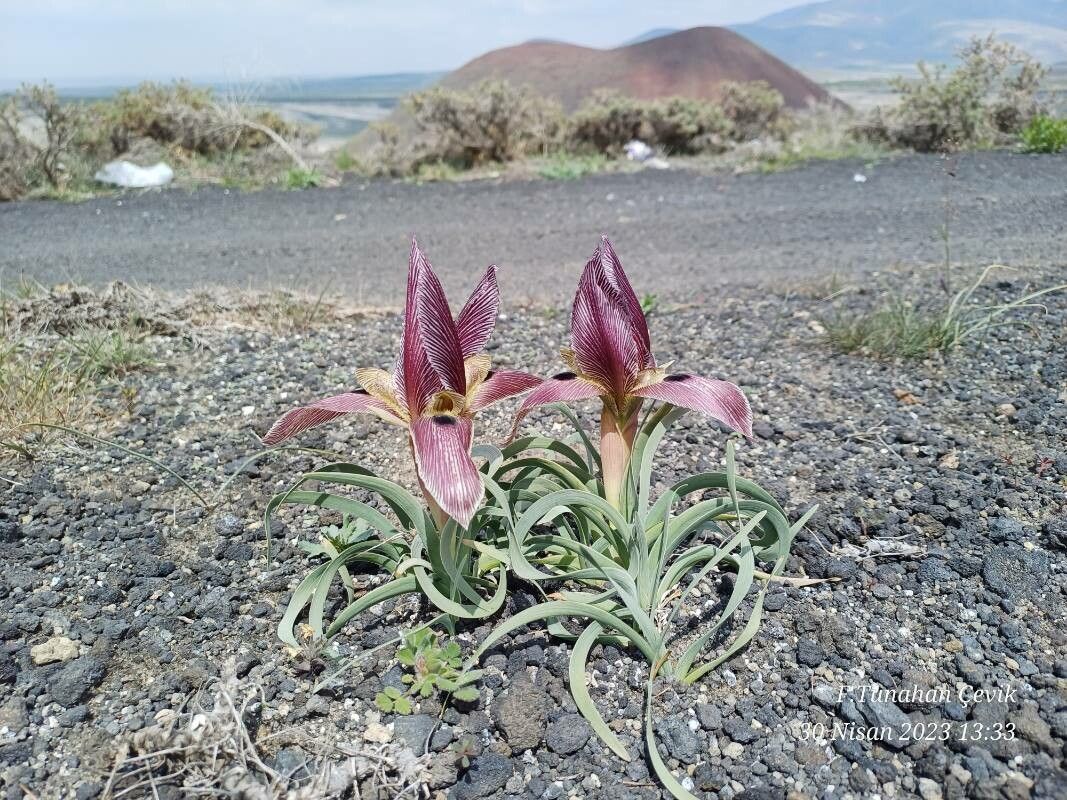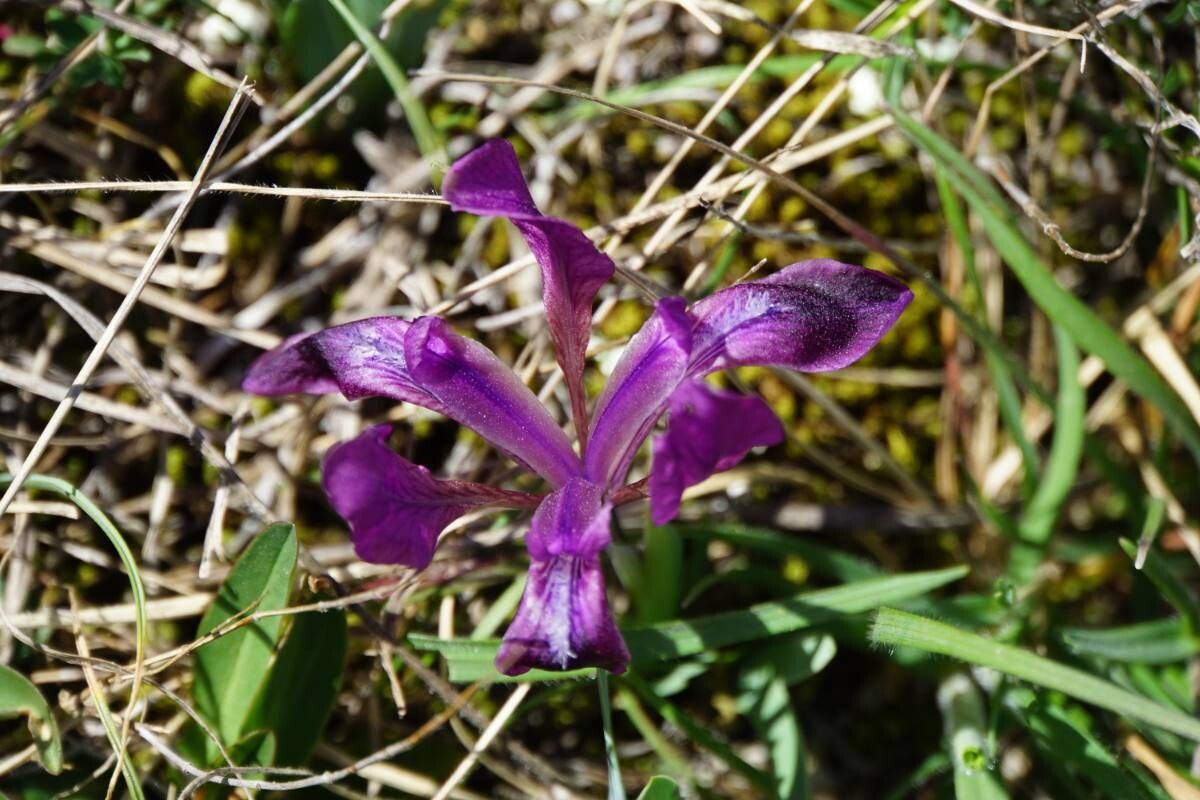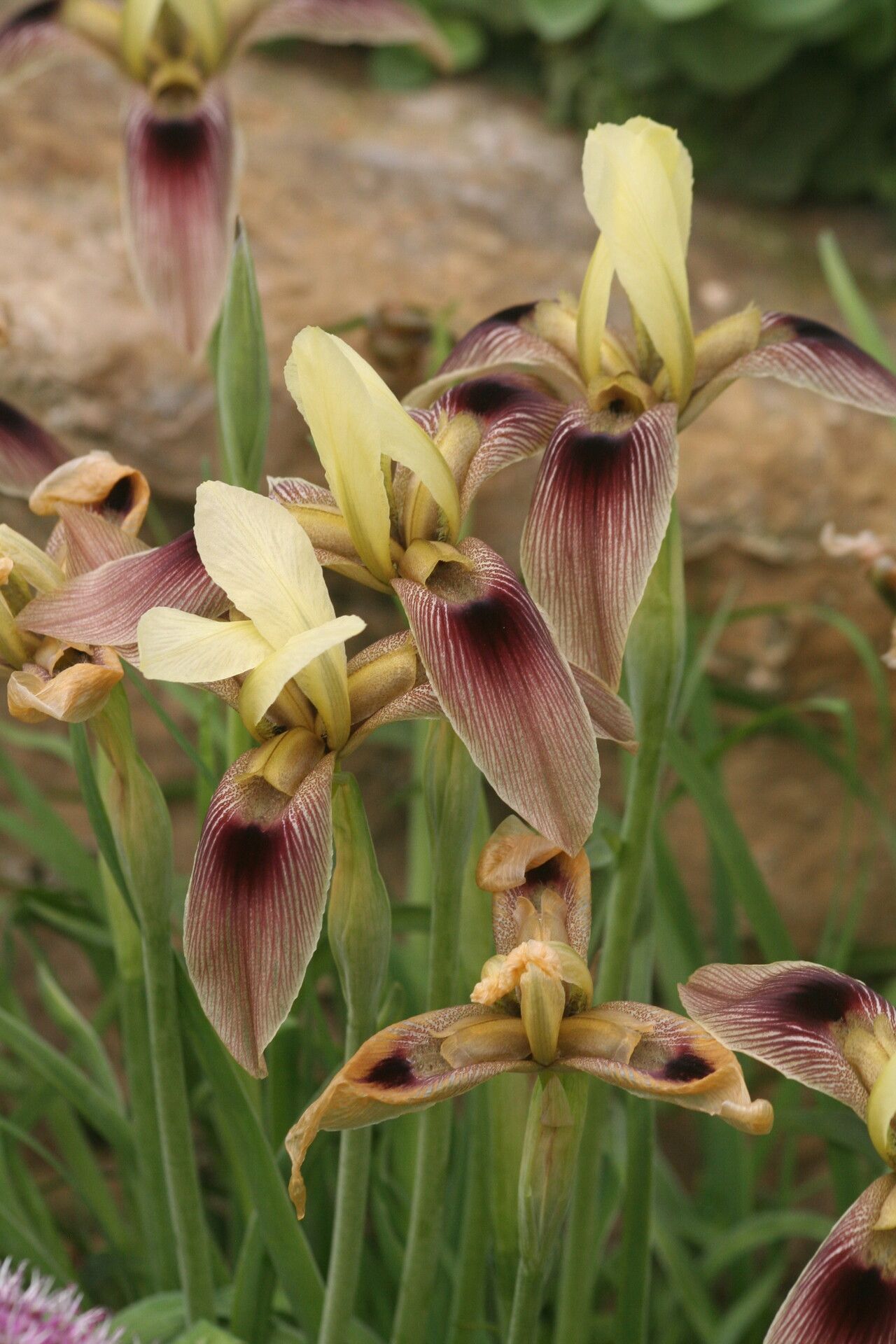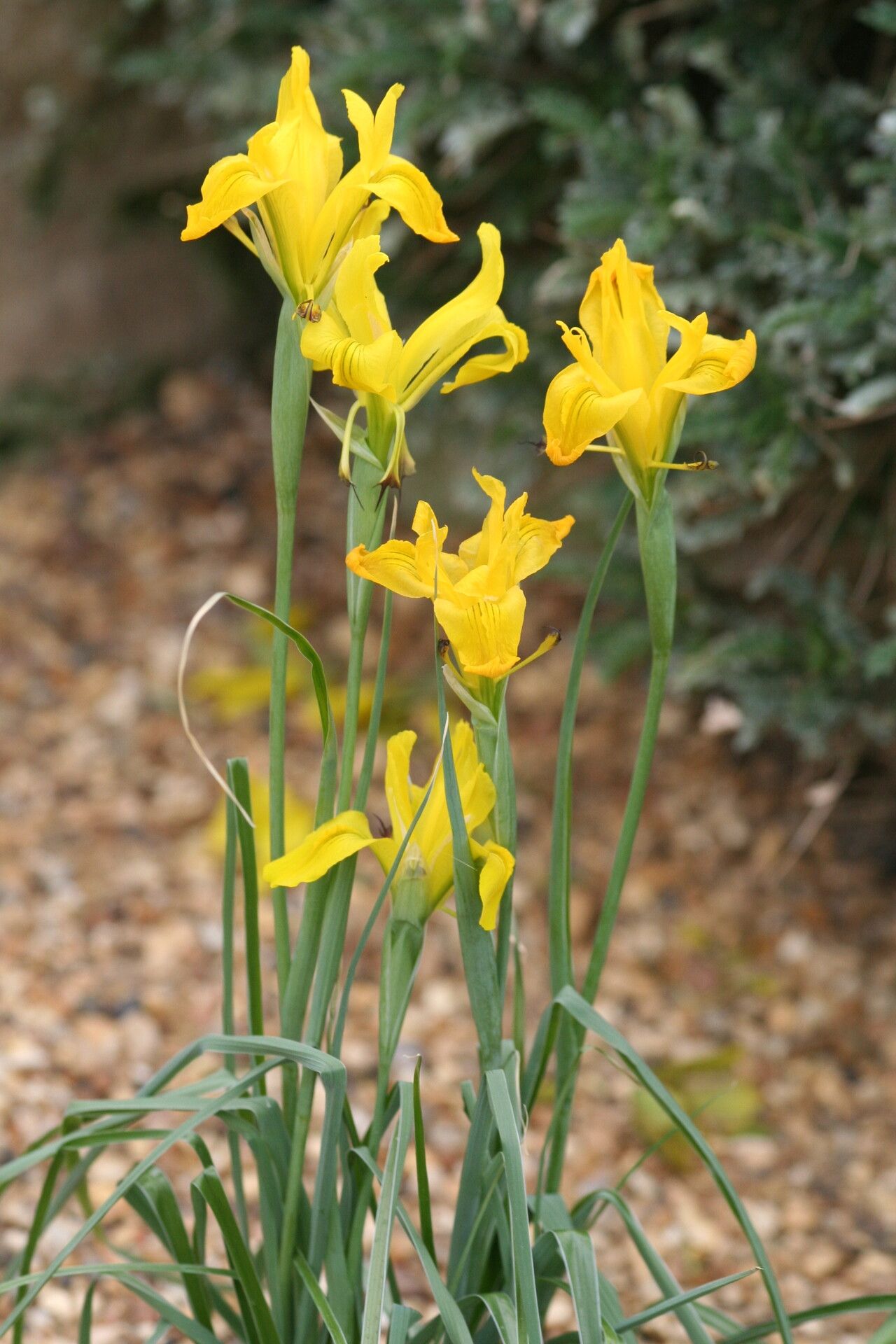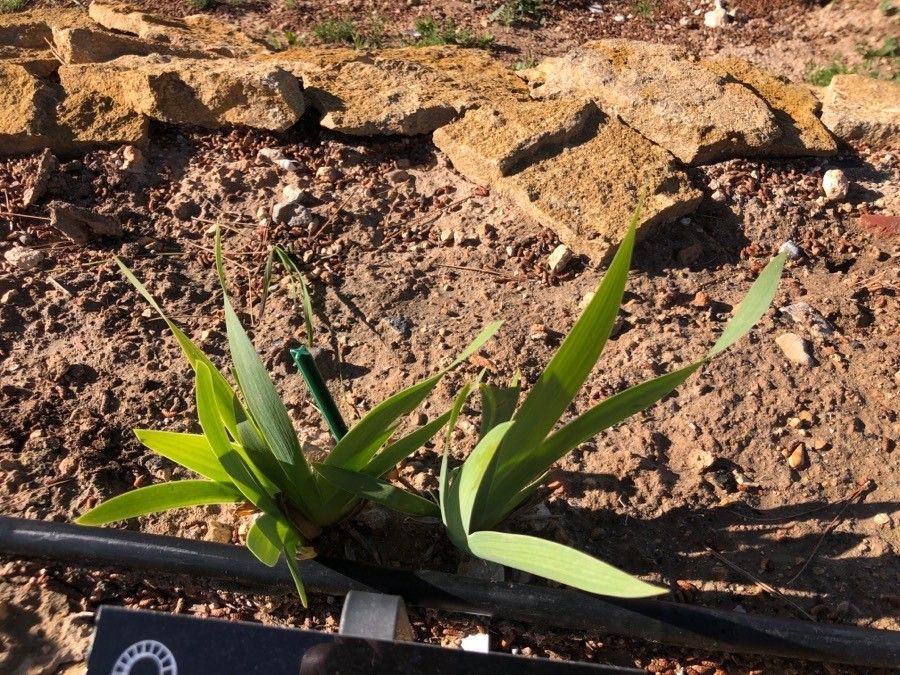
Iris bicapitata is a plant species in the genus Iris, it is also in the subgenus Iris. It is a rhizomatous perennial, from the Gargano Peninsula, Italy. It has sickle or pointed leaves, shorter than the flowering stem. It has two flowers, which come in variable shades from yellow, white, lilac, blue and violet. They can also be bi-coloured. It is thought to have been derived from Iris pseudopumila. It is cultivated as an ornamental plant in temperate regions.
The two-flowered iris has strong resistance to disease and is generally unlikely to suffer from illnesses. However, it can be affected by pests and diseases present in its environment. These issues are typically mild. For care, this plant requires a moderate amount of maintenance. It should be pruned regularly to keep a good appearance and encourage healthy growth. Fertilizing can also help boost flowering. The two-flowered iris is suitable for anyone with outdoor space, such as a garden or patio, and does not demand extensive care experience. It may need more attention when cultivated indoors.
How to keep Iris Bicapitata.
Light
Typically, the two-flowered iris performs best when it gets plenty of sun all day, though it can also survive in fairly shaded locations. Strong sunlight is important for its optimal development, while extreme lack of light may harm its vigor. The species' origin in open habitats further supports this.
Water
The two-flowered iris, native to temperate climates, thrives with weekly watering while avoiding waterlogging. This herbaceous perennial prefers well-draining soil to prevent root rot, ensuring adequate moisture during its growing season. Typically grown outdoors, the two-flowered iris maintains a balance in water retention for optimal growth.
Temperature
The two-flowered iris does best in conditions that resemble its native temperate habitat, favoring temperatures from 68 to 95 °F (20 to 35 ℃). Seasonal adjustments may be necessary to keep it comfortable. In winter, expose the two-flowered iris to cooler temperatures to mimic the natural seasonal shift.
Fertilizer
For the Two-flowered iris, the primary time to fertilize is in early spring when the flowers are forming. The proper fertilizer promotes better blooms and helps the Two-flowered iris produce attractive flowers. Fertilizing in early spring ensures excellent flowers during the season and supplies energy for dormant growth phases.
Pruning
Pruning two-flowered irises in early to late spring is crucial for maintaining their health and appearance. Removing dead foliage and spent stalks encourages new growth and helps prevent disease. This timing not only enhances the plants' health and flowering but also improves their aesthetics and vigor by allowing more efficient energy allocation.
Botanical profile.
- Plant Type
- Herb
- Life Cycle
- Perennial
- Genus
- Iris
- Family
- Iridaceae
- Hardiness Zone
- 9
- Mature Height
- 30 cm to 61 cm
- Mature Spread
- 20 cm to 30 cm
- Leaf Color
- Green
- Leaf Type
- Deciduous
- Flower Color
- Purple, Lavender, Blue, Violet
- Flower Size
- 3.05 cm to 5.08 cm
- Bloom Time
- Mid spring, Late spring
- Planting Time
- Spring, Autumn
- Harvest Time
- Early summer, Mid summer
- Native Area
- Italy
Other names.
Reader questions.
How should I water my Two-flowered iris?
To ensure the health of your Two-flowered iris, it's best to water it with filtered water at room temperature. Tap water may contain harmful particles, so filtered water is preferred. The plant prefers warm water because it originates from a warm environment and cold water can be a shock. It's also important not to water from above, as this can cause issues with the leaves. Instead, carefully pour the filtered room temperature water onto the soil until it is fully saturated. This method helps moisten the roots and allows them to spread and absorb the necessary nutrients from the soil.
Why is it necessary to put fertilizer on my Two-flowered iris?
Fertilization is important for the Two-flowered iris because it provides essential nutrients for the plant's growth. Although the overall fertilization needs of the Two-flowered iris are relatively low, annual fertilization can greatly benefit the plant. It helps to keep the plant alive and promotes the development of longer-lasting, more beautiful flowers. Therefore, those who want their Two-flowered iris to thrive should prioritize annual fertilization.
How much sunlight does the Two-flowered iris need to grow?
Two-flowered iris plants require a minimum of six to eight hours of direct sunlight daily. For outdoor growth, select a location that receives full sunlight throughout the day. Indoor growth should involve placing the plant near a south-facing window or any area with ample sunlight. While full sunlight is essential for the plant's growth and vitality, it is crucial to prevent exposure to direct sunlight during excessively high temperatures, such as over 35°C(95℉) or hot summer afternoons. Intense sunlight can cause scorching or wilting of the leaves. To prevent this, consider using sheer curtains or blinds to filter the sunlight or relocating the plant to a shadier spot.
What is the best temperature for Two-flowered iris?
Plants can be affected by colder temperatures because they have the same temperature as the air around them. When the sun is out, they can warm up, but this does not happen in winter. The Two-flowered iris typically thrives in temperatures between 70~85℉(21~30℃). They may be able to handle temperatures as low as 20~30℉(-6~0℃) or even 15℉(-10℃), but only for a short time as it can lead to frost damage. It is important to maintain maximum temperatures around 70~85℉(21~30℃) and remember to occasionally spray them with water and provide shade to prevent wilting.
What should I do if I give my Two-flowered iris too much or too little water?
Both overwatering and underwatering can harm the health of your Two-flowered iris, but overwatering is more common. Too much water can cause the stems and leaves to wilt and turn yellow. Overwatering for a long time may also lead to diseases like root rot, mold, and mildew, which can kill the plant. Although underwatering is less likely for the Two-flowered iris because it can tolerate drought, it is still possible. In such cases, you will notice that the leaves become brittle and brown. It's important to recognize the signs of overwatering early. Some of the diseases caused by overwatering, like root rot, cannot be fixed if you wait too long. If you see early signs, reduce your watering immediately. Also, check the soil quality where the iris is planted. Replace poorly draining soil with a loose, well-draining potting mix. On the other hand, if you notice signs of underwatering, simply water more regularly until the signs go away.
When should I fertilize my Two-flowered iris?
The best time to fertilize a Two-flowered iris is in late winter to early spring. This is when the plant is coming out of dormancy and starting to grow actively. Fertilizing during this time promotes healthy growth and sets the plant up for a successful season. Fertilizing in early spring is most beneficial, but it is also fine to fertilize in the fall. However, it is not recommended to fertilize during summer or winter.
What happens if Two-flowered iris doesn't get enough sunlight?
Insufficient sunlight can cause your Two-flowered iris to have growth issues, appearing weak and leggy. Yellow leaves can also signal a lack of sunlight, as the plant cannot produce chlorophyll properly. In severe situations, the plant might even die.
Should I change the temperature for Two-flowered iris at different stages of growth?
To successfully grow Two-flowered iris, it is important to research and ensure that the temperature conditions are appropriate. Some growers may choose to lower their plants' thermostats during the growing season to save on HVAC costs. However, it is crucial to understand that temperature significantly impacts flowering, pest management, and overall plant quality. Throughout the winter, certain species of Two-flowered iris may enter a dormant state, causing growth to halt. As the seasons change and the temperature rises, the base temperature for growth also increases, leading to faster growth. It is worth noting that species native to warmer environments have higher optimal temperatures compared to those adapted to cooler climates. Cool temperatures can negatively affect the uniformity and timing of seed growth in Two-flowered iris. It may be advisable to lower the temperature specifically during the flowering phase while maintaining normal temperatures during other stages. Nighttime cooling also reduces water requirements, so adjusting irrigation accordingly is recommended.
How often do I need to water my Two-flowered iris?
If your Two-flowered iris is in a pot, the most precise way to determine if it needs water is by testing the soil with your finger. If the top two to three inches of soil are dry, it's time to water it. If you have the Two-flowered iris planted outdoors, you can use the same method to check the soil. If the first few inches are dry, it's time to water. Typically, during spring and early fall, watering once a week is sufficient. However, during extremely hot weather, you may need to water twice a week or more. It's worth noting that mature, well-established Two-flowered iris plants have an impressive ability to survive without much water.
When is not a good time to fertilize my Two-flowered iris?
To take care of your Two-flowered iris, it's best to fertilize only in late winter and early spring. This plant doesn't need much fertilizer, so one annual feeding is enough. Avoid fertilizing in spring, summer, and fall to prevent overfertilization. However, if you missed fertilizing in spring, it's alright to fertilize in fall. Also, there's no need to fertilize in winter as the Two-flowered iris goes into a dormant phase and doesn't grow.
What happens if the Two-flowered iris gets too much sunlight?
Two-flowered iris requires full sunlight, but it's important to prevent overexposure to direct sunlight. If the plant receives intense sunlight for a long time, it may develop sunburn symptoms like brown or scorched leaves. To prevent this, regularly check the plant and relocate it to a shadier area if needed.
How can I make sure the Two-flowered iris stays warm when it's cold outside?
To help the Two-flowered iris withstand colder temperatures, first, cease fertilizing the plant to prevent new growth and allow the existing ones to become more resilient. Next, consider constructing cages or trellises around the plant to provide additional warmth. Alternatively, you can use heat mats to gently warm the soil, as they can consistently maintain an ideal temperature range for the Two-flowered iris.