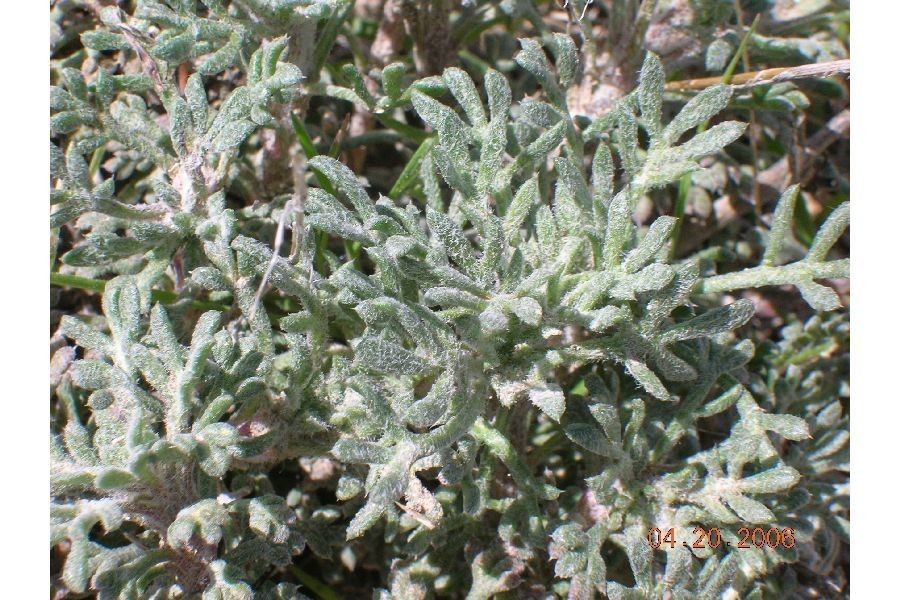
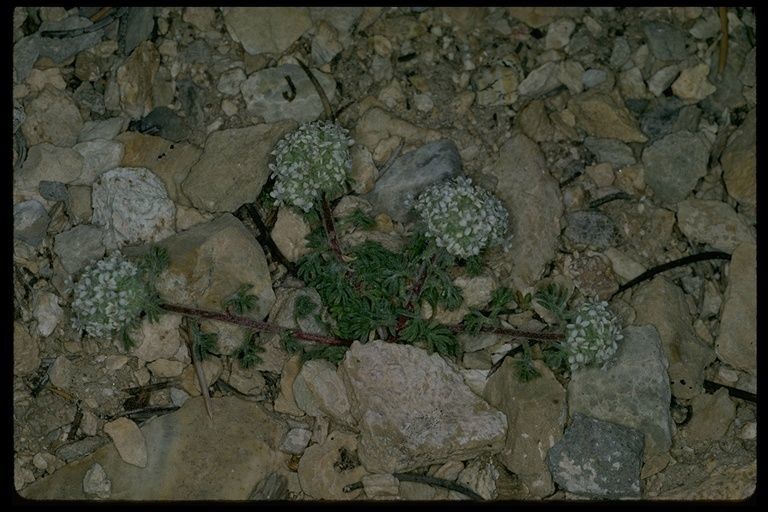
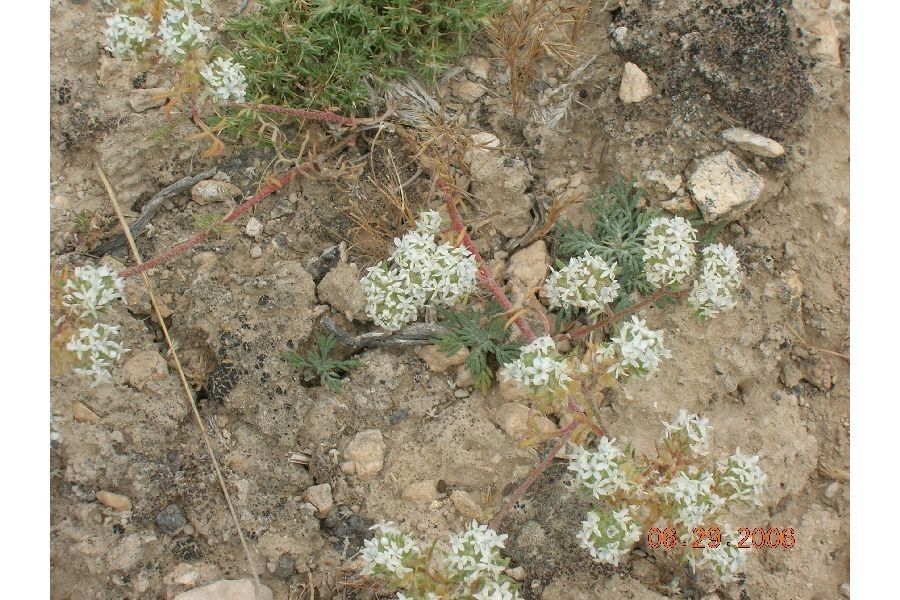
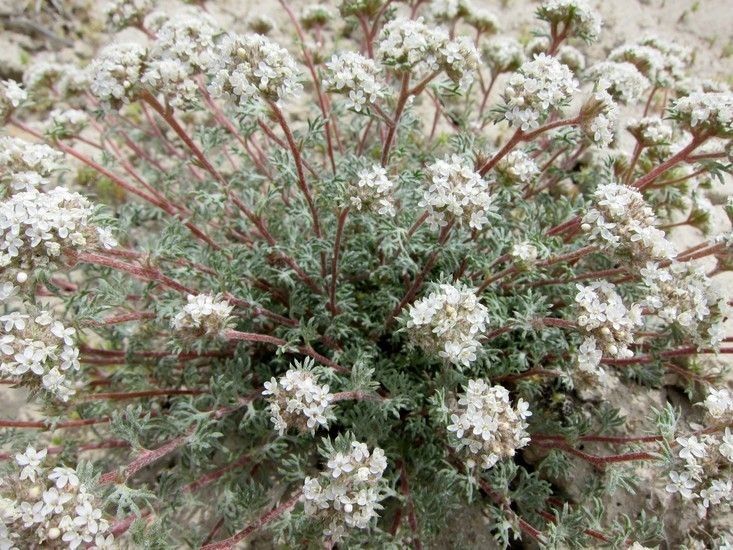
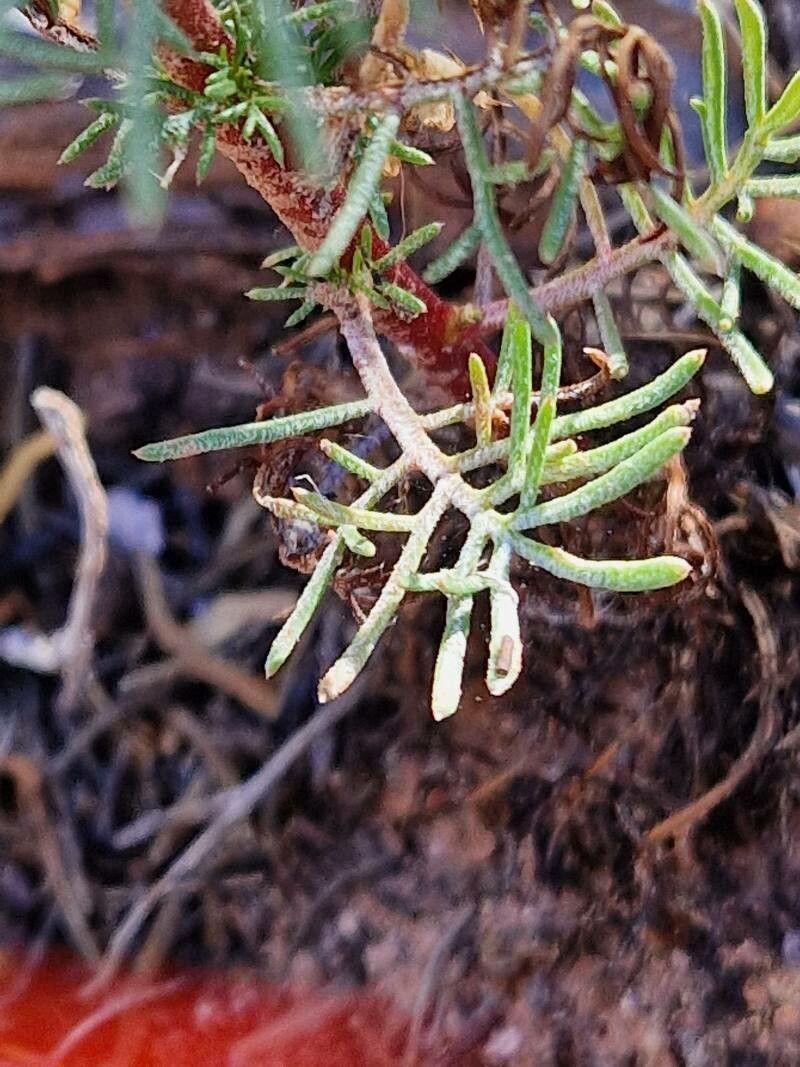
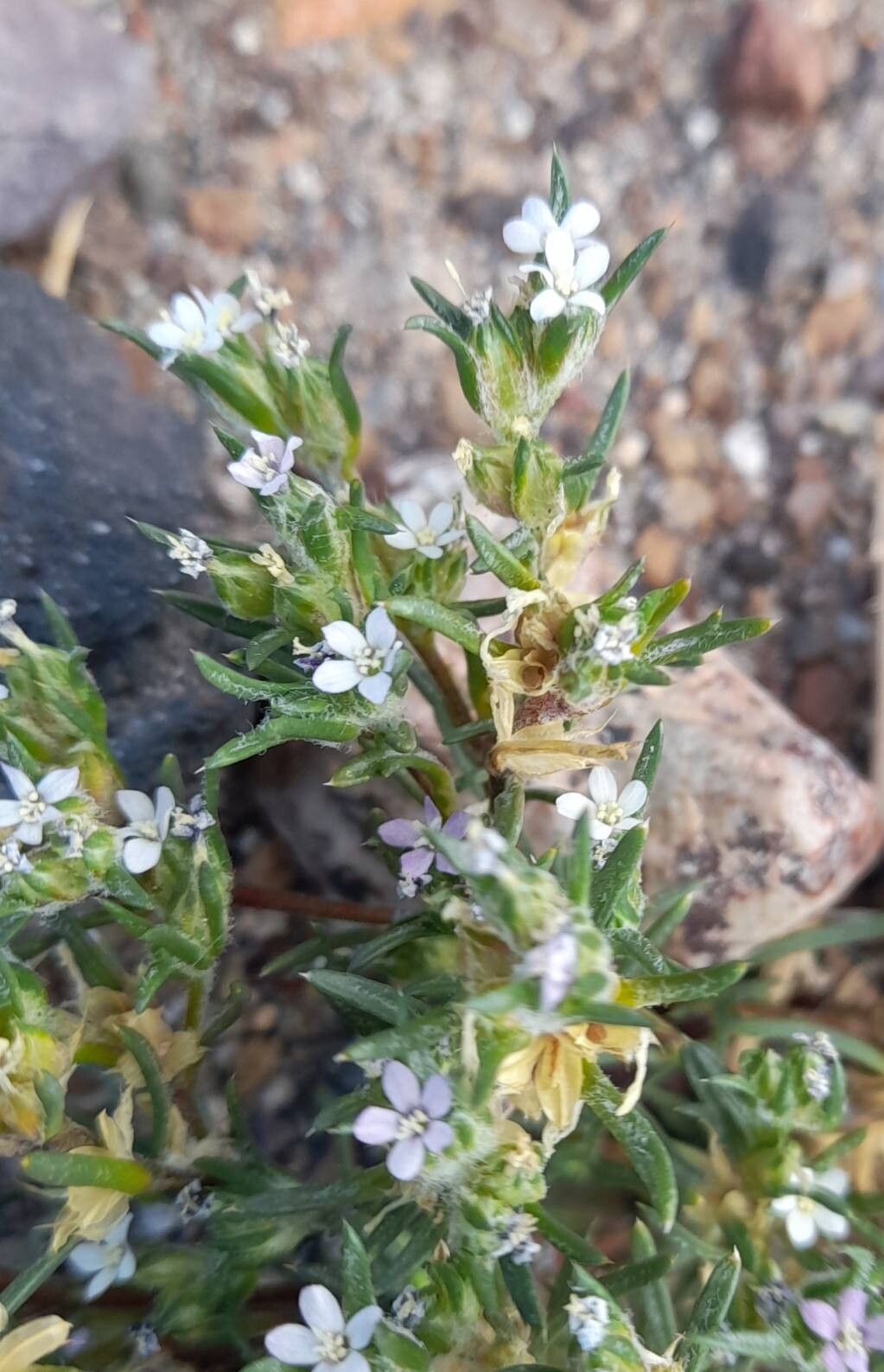
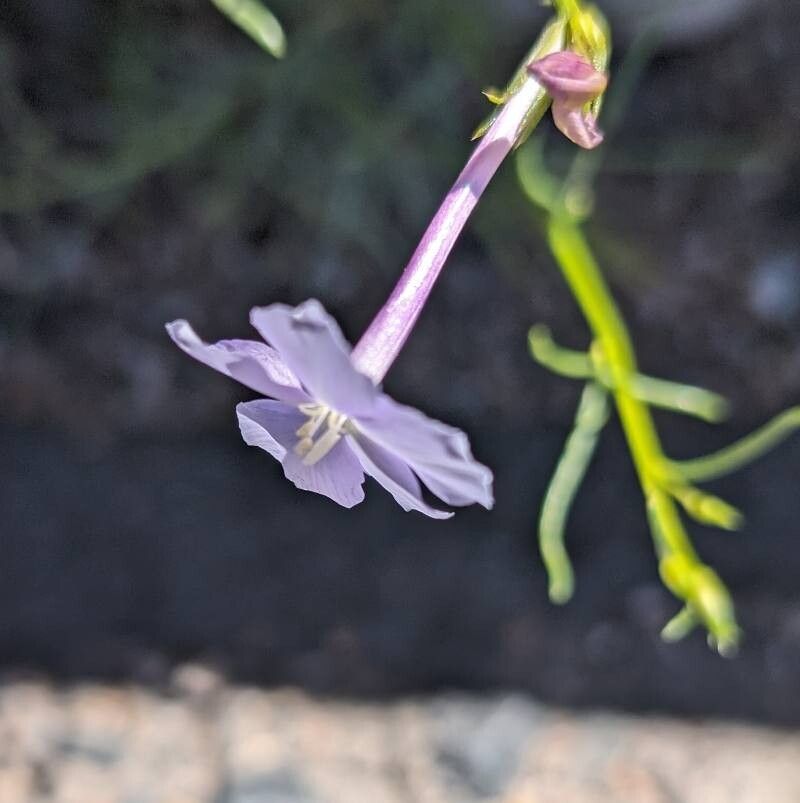
Ipomopsis congesta is a species of flowering plant in the phlox family, known by the common name ballhead ipomopsis. It is native to much of western North America, where it grows in many habitats from alpine peaks to low-elevation scrub. It is a perennial herb which varies in appearance, especially across subspecies and climates. It may take the form of a squat patch with stems under 10 centimeters in height or a more erect form up to 30 centimeters tall. The stems are often hairy to woolly. The thick leaves are usually fork-shaped with a number of clawlike lobes and 1 to 4 centimeters long. The flowers appear in a rounded, dense cluster atop the stem. Each flower is bell-shaped to funnel-shaped and white with a pale yellow throat and protruding yellow or white stamens. There are several subspecies, many of which were formerly considered species of Gilia.
Ballhead ipomopsis has strong disease resistance and is generally not prone to illnesses. However, it can be affected by pests and diseases present in its environment. Such infections are typically not serious. Regarding care, this plant requires moderate maintenance. It should be pruned regularly to preserve a neat appearance and healthy growth. Fertilizing can also help encourage flowering. Ballhead ipomopsis is suitable for anyone with an outdoor area, like a garden or patio, and does not demand extensive care experience. It may need more attention when grown indoors.
How to keep Ipomopsis Congesta.
Pruning
Prune ballhead ipomopsis in early spring to remove dead stems and help maintain its shape. This promotes denser growth and improves air circulation. Pruning after blooming encourages more vigorous flowering. With regular care, you can enjoy healthier, more vibrant plants that display clusters of white, pink, or lavender flowers.
Botanical profile.
- Plant Type
- Herb
- Genus
- Ipomopsis
- Family
- Polemoniaceae
- Hardiness Zone
- 6-9
- Mature Height
- 10 cm to 30 cm
Other names.