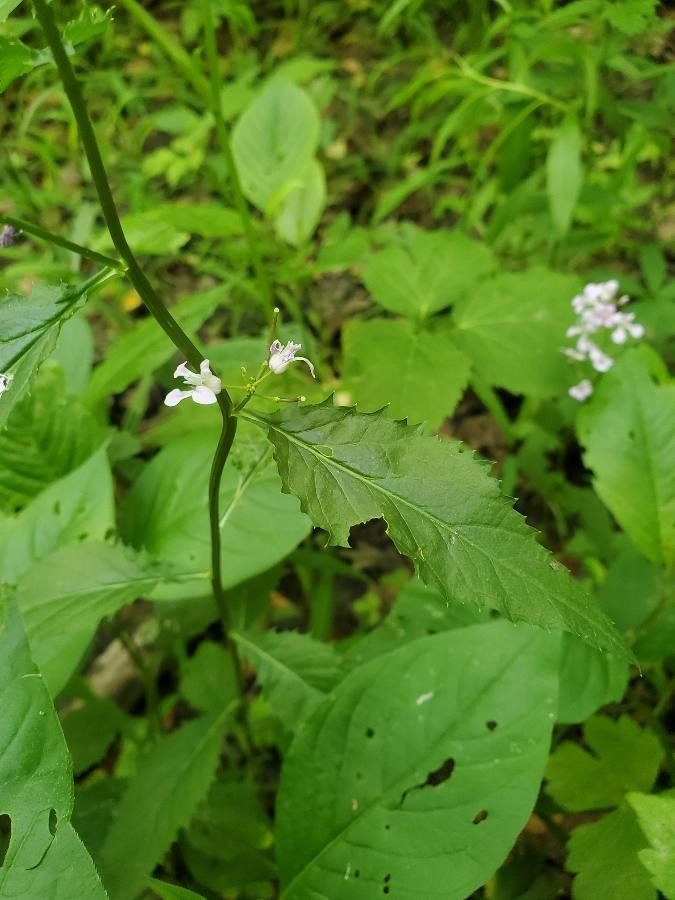
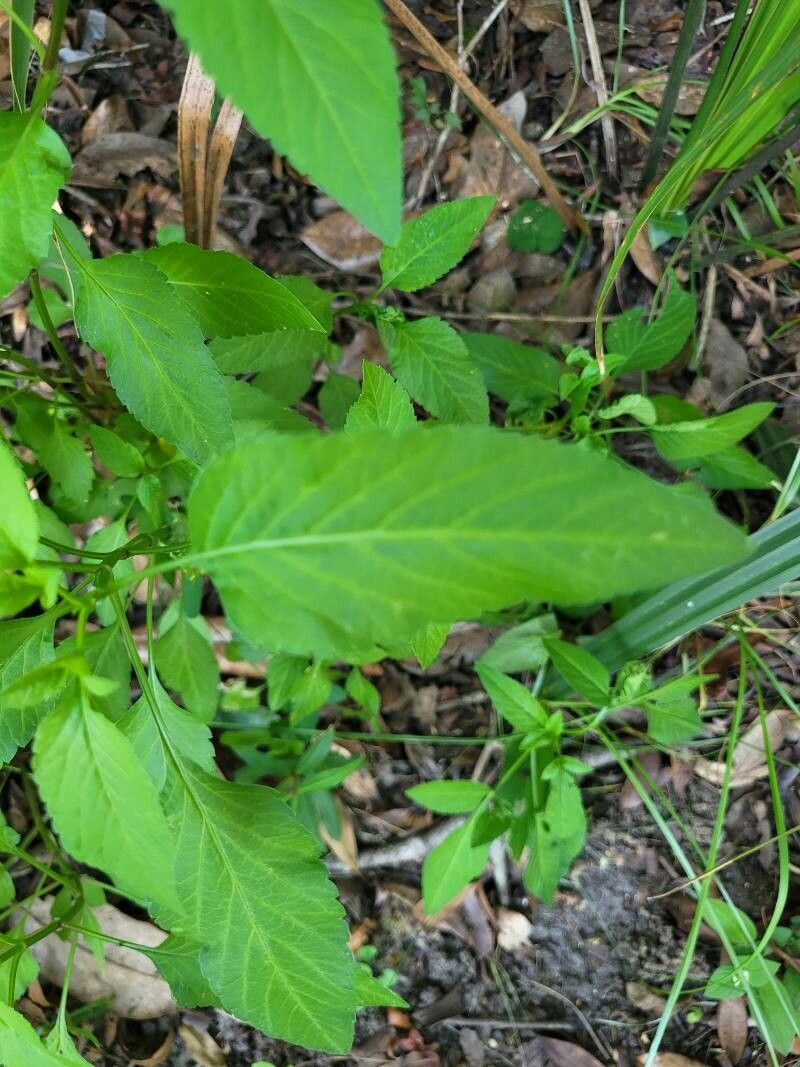
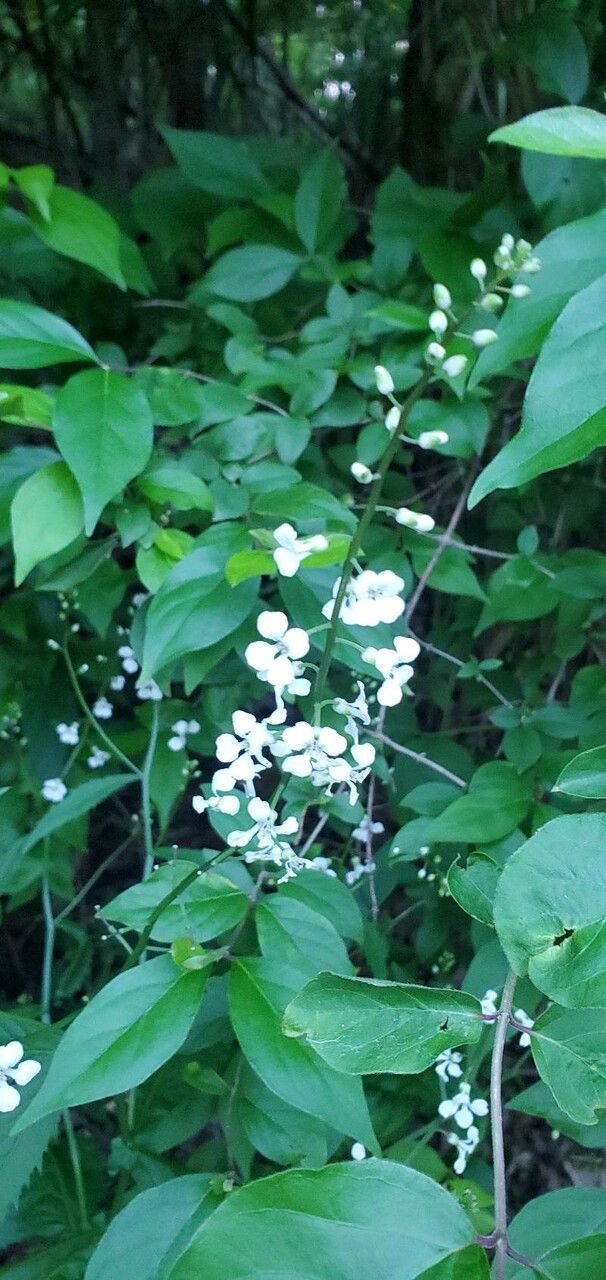
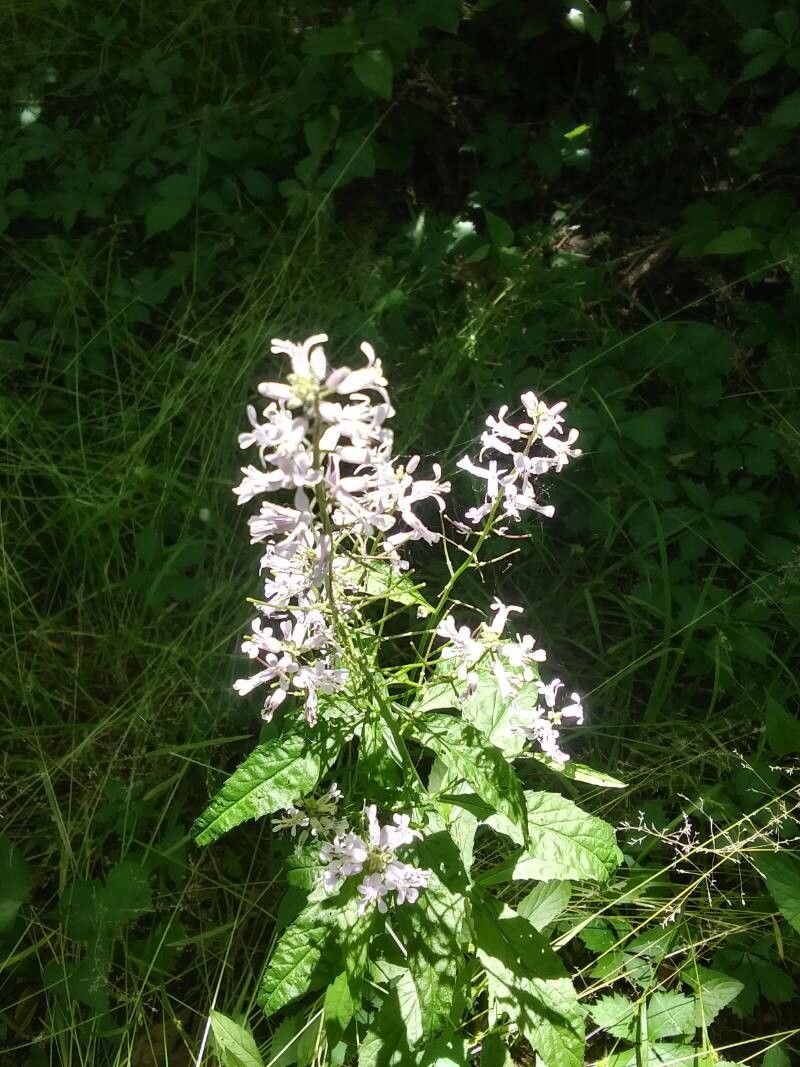
Iodanthus pinnatifidus, commonly known as purplerocket, is a species of flowering plant in the mustard family. It is monotypic, with no other species in the genus Iodanthus. It is native to eastern North America, where its range is centered in the Midwest and Upper South regions of the United States. Its typical natural habitat is in wet to mesic forests, in bottomlands and lower slopes. It can also occur in more open wet thickets and meadows. It is a conservative species that typically occurs in intact natural areas, and is not found in ecologically degraded sites.Iodanthus pinnatifidus is an erect perennial herb. It produces a raceme of light purple flowers which fade to white. It blooms from late April to early July.
Purple rocket has strong resistance to disease and is generally not very susceptible to illnesses. Still, it can be vulnerable to pests and diseases found in its environment. Such infections tend to be mild. Regarding care, this plant demands a moderate amount of attention. It should be pruned on a regular basis to preserve a neat appearance and encourage healthy growth. Applying fertilizer can also aid in boosting flower production. Purple rocket is appropriate for anyone who has outdoor space, like a garden or patio, and it does not call for extensive gardening experience. When cultivated indoors, however, it may need extra care.
How to keep Iodanthus Pinnatifidus.
Light
Purple rocket favors locations with a moderate amount of sunlight, reflecting its natural habitat's partial sun conditions. Too much or too little sun can impair its growth. For optimal development it requires sun exposure that is neither too scarce nor excessive.
Water
The Purple Rocket flourishes in moist environments and requires regular watering to stay healthy. It benefits from weekly irrigation and thrives in soil that retains moisture well, making it somewhat drought-tolerant. Providing this care is essential for maintaining its vitality, particularly during dry periods.
Temperature
Purple rocket is suited to cooler temperate climates and does best in a temperature range of 41 to 89.6 °F (5 to 32 ℃). This indicates a preference for moderately cool to warm conditions. Adjustments may be necessary during extreme seasons to keep the temperature ideal for plant growth.
Fertilizer
The best time to fertilize Purple rocket is in early spring, as it comes out of dormancy and begins active growth. Fertilizing supplies essential nutrients needed for healthy development. Although Purple rocket has fairly low fertilizer requirements, feeding it once a year can improve its survival and encourage healthier, longer-lasting blooms.
Pruning
The Purple Rocket plant showcases delicate lavender blooms and is best pruned between early and late spring. To improve air circulation and promote healthy growth, remove any dead or crowded stems. Light trimming not only encourages more abundant flowering but also helps the plant maintain its shape. Always use clean tools to prevent damage and reduce the risk of disease, ensuring vibrant blooms.
Botanical profile.
- Plant Type
- Herb
- Life Cycle
- Perennial
- Genus
- Iodanthus
- Family
- Brassicaceae
- Hardiness Zone
- 4-8
- Mature Height
- 30 cm to 91 cm
- Mature Spread
- 20 cm to 40 cm
- Leaf Color
- Green, Dark Green
- Leaf Type
- Semi-evergreen
- Flower Color
- White, Purple, Pink
- Flower Size
- 0.51 cm to 0.76 cm
- Bloom Time
- Mid spring, Late spring, Early summer
- Planting Time
- Spring, Summer
- Harvest Time
- Summer
Other names.
Reader questions.
How should I water my Purple rocket to make it grow best?
To properly water the Purple rocket, use filtered water at room temperature or slightly warmer. Tap water may contain harmful particles, so filtered water is preferred. The plant prefers warmer water since it is native to a warm environment, and cold water can shock its system. Avoid overhead watering, which can cause problems with the foliage. Instead, water the soil directly with filtered room temperature water until the soil is completely soaked. This method benefits the plant by moistening the roots and allowing them to spread and absorb nutrients from the soil.
Why should I put fertilizer on my Purple rocket?
Fertilization is important for the Purple rocket and other plants because it provides essential nutrients for growth. While the Purple rocket does not require extensive fertilization, it can still benefit from annual fertilization. This will not only help the plant stay healthy, but it may also improve flower quality and longevity. Therefore, those wanting their Purple rocket to thrive should consider regular fertilization.
What kind of sun exposure does Purple rocket require?
Purple rocket thrives best in areas with partial sun, requiring about 3-6 hours of sunlight daily. It is important to observe the movement of sunlight in your garden to identify spots that offer the right balance of light and shade, ensuring the plant's growth and happiness. The natural habitat of Purple rocket features moderate sun exposure, so aiming for a similar condition is key to its health. Optimal growth is achieved with the right amount of light, avoiding both excessive and scarce sunlight.
What are the ideal temperature conditions for Purple Rocket?
Purple Rocket, scientifically known as Iodanthus pinnatifidus, is adapted to cooler temperate climates and thrives best within a temperature range of 41 to 89.6 °F (5 to 32 °C). It prefers a moderately cool to warm environment and has strong cold resistance. Although special frost protection measures are not typically necessary, if temperatures are expected to drop below -30°C, it's important to provide some form of cold protection, such as covering the plant with soil or straw. Before the first freeze in autumn, watering the plant abundantly to keep the soil moist helps prevent drought and water scarcity during winter and early spring.
What should I do if I give too much water or too little water to my Purple rocket plant?
Too much water is a common problem for Purple rocket plants, causing wilting, yellowing of leaves, and potential diseases like root rot, mold, and mildew. Underwatering is less likely, but can result in brittle, brown leaves. It's important to recognize and address overwatering promptly, as certain diseases may become irreversible if left untreated. Reduce watering and ensure proper drainage if overwatering is suspected. For underwatering, simply increase watering until signs improve.
When should I fertilize my Purple rocket plant for the best results?
The best time to fertilize a Purple rocket is in late winter to early spring when it is transitioning from dormancy to active growth. Fertilizing at this time helps promote healthy growth for the season ahead. While early spring is usually the most beneficial, it is also acceptable to fertilize in the fall. However, it is not recommended to fertilize during summer or winter.
How can artificial lighting benefit indoor Purple rocket plants?
Artificial lighting is crucial for the growth of indoor Purple rocket plants, especially when natural sunlight is insufficient. LED lights are recommended because they can be customized to provide specific wavelengths needed by the plants. For full sun plants, 30-50W/sq ft is needed; for partial sun plants, 20-30W/sq ft; and for full shade plants, 10-20W/sq ft. Artificial lights should be placed 12-36 inches above the plants, mimicking natural daylight hours, with most plants needing 8-12 hours of light per day.
What should be done if Purple Rocket experiences very low temperatures?
Purple Rocket can thrive in cold conditions and remains tolerant as long as the temperature is above 5°C. However, it should be kept above -25°C during the winter. In cases where the temperature falls below -30°C, the plant may show no noticeable changes initially but might have a decreased sprouting rate or fail to sprout at all come springtime. If this occurs, remove any parts of the plant that have failed to sprout as part of the spring care routine.
How often do I need to water my Purple rocket plant?
If your Purple rocket plant is in a pot, you can check if it needs water by sticking your finger in the soil. If the top two to three inches of soil are dry, it's time to water it. The same method can be used if you're growing the Purple rocket plant outdoors in the ground. Again, if the top few inches of soil have dried out, it needs water. Usually, during spring and early fall, you will need to water this plant about once a week using this method. However, during extremely hot weather, you may need to water it two or more times per week. Despite this, mature and well-established Purple rocket plants can tolerate drought well.
When is not a good time to put fertilizer on my Purple rocket plant?
To properly care for your Purple rocket, it is best to only fertilize it during late winter and early spring. This plant's low fertilization needs mean that a single annual feeding is enough. Fertilizing during spring, summer, and fall can easily result in overfertilization and its associated issues. However, if you didn't fertilize in spring, it's okay to feed the plant in the fall. Additionally, it's unnecessary to fertilize the Purple rocket during winter since it will be in a dormant phase and not actively growing.
What are the signs of insufficient light in Purple rocket plants?
When Purple rocket plants receive inadequate light, they may show several symptoms, including smaller new leaves, leggy or sparse growth, faster leaf drop, halted growth, lighter-colored or chlorotic new leaves, and symptoms of sunscald, leaf curling, wilting, and leaf scorching. These signs indicate the plant is struggling with the light conditions, either with too little or too much light.
How should Purple Rocket be cared for in high temperatures?
During the summer, the ideal temperature for Purple Rocket should not exceed 32°C. When temperatures rise above 35°C, the plant's leaves may lighten in color, become prone to curling, suffer from sunburn, and in severe cases, the entire plant may wilt and dry out. To care for the plant in such conditions, trim away the sunburned and dried-up parts. Move the plant to a location that provides some shade during the midday and afternoon, or use a shade cloth to protect it. Additionally, water the plant in the morning and evening to keep the soil moist and help it cope with the heat.