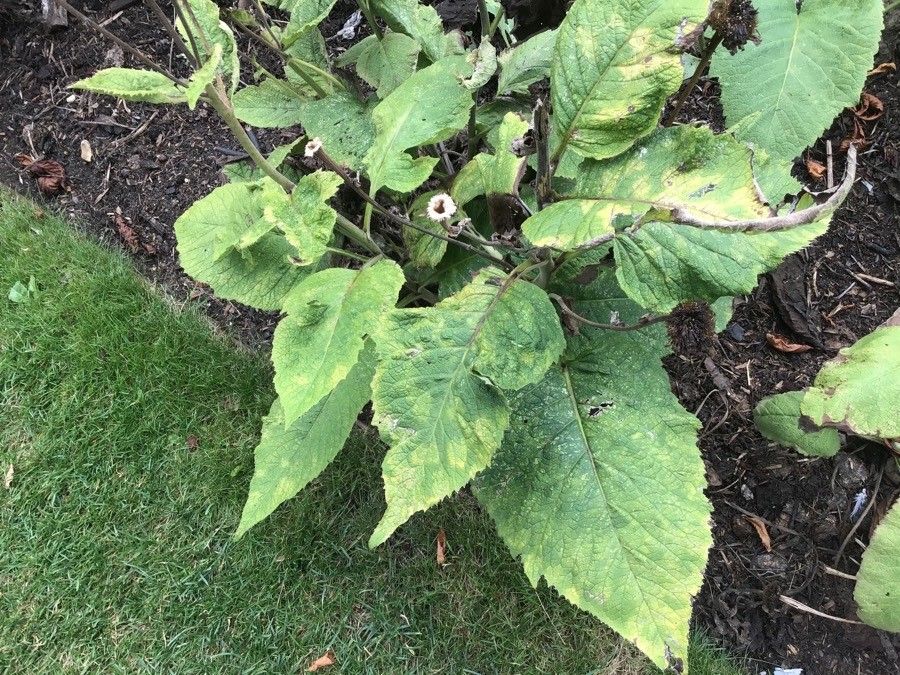
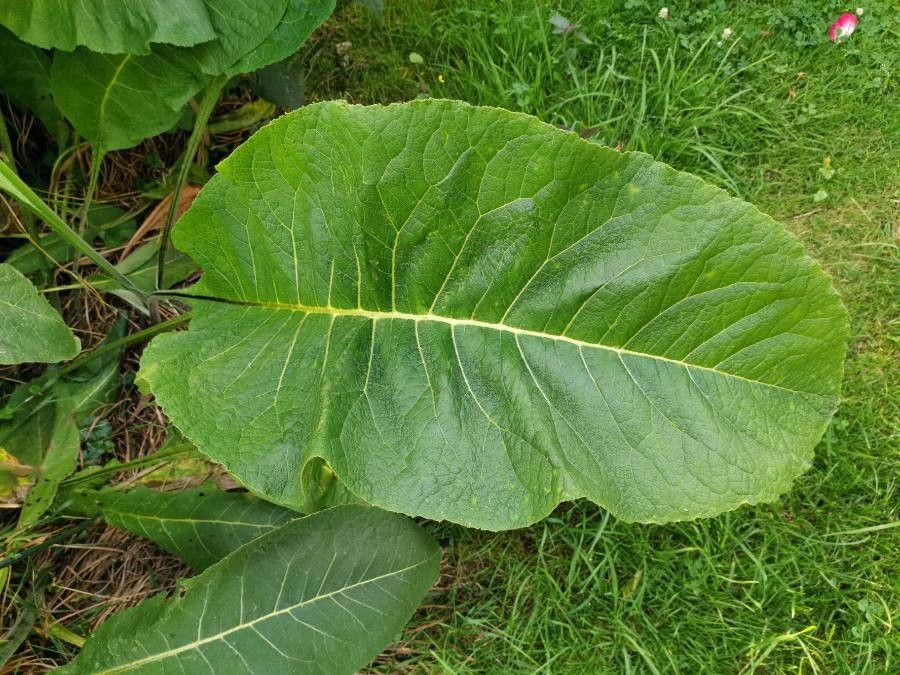
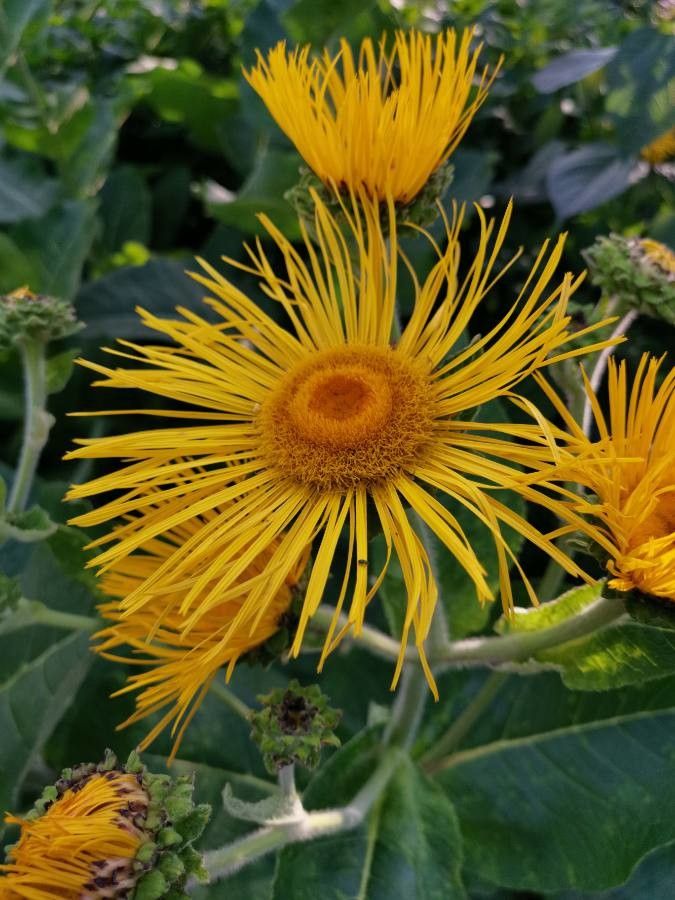
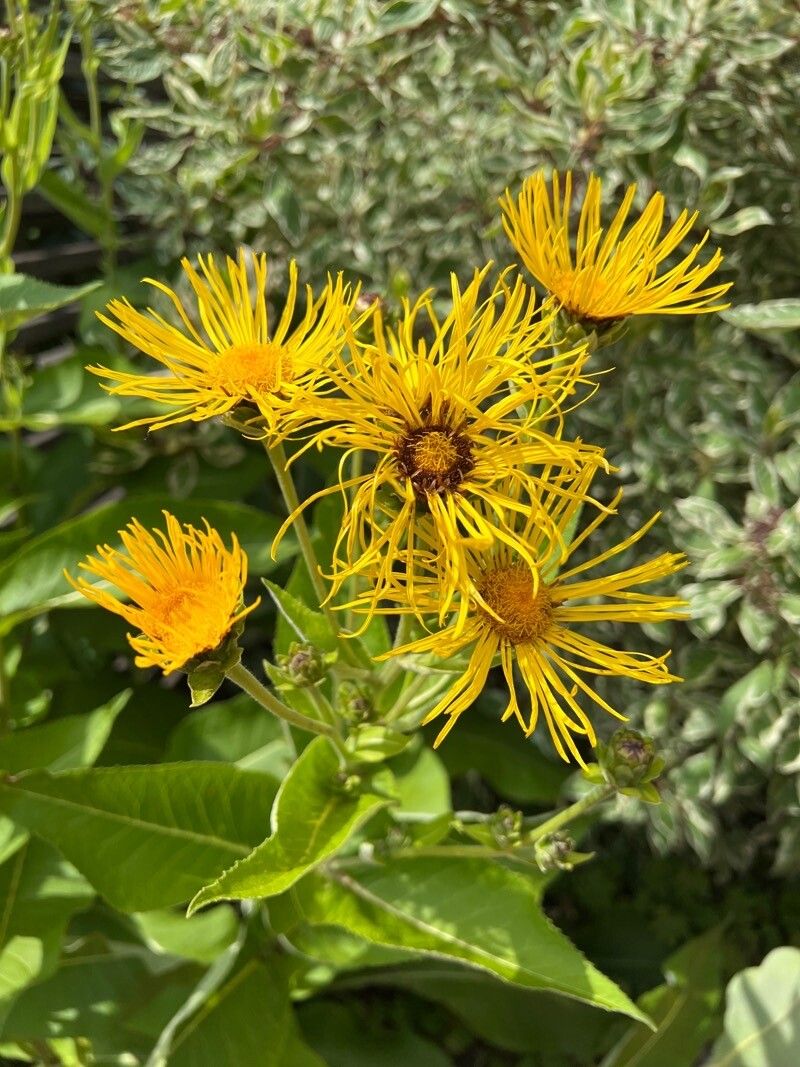
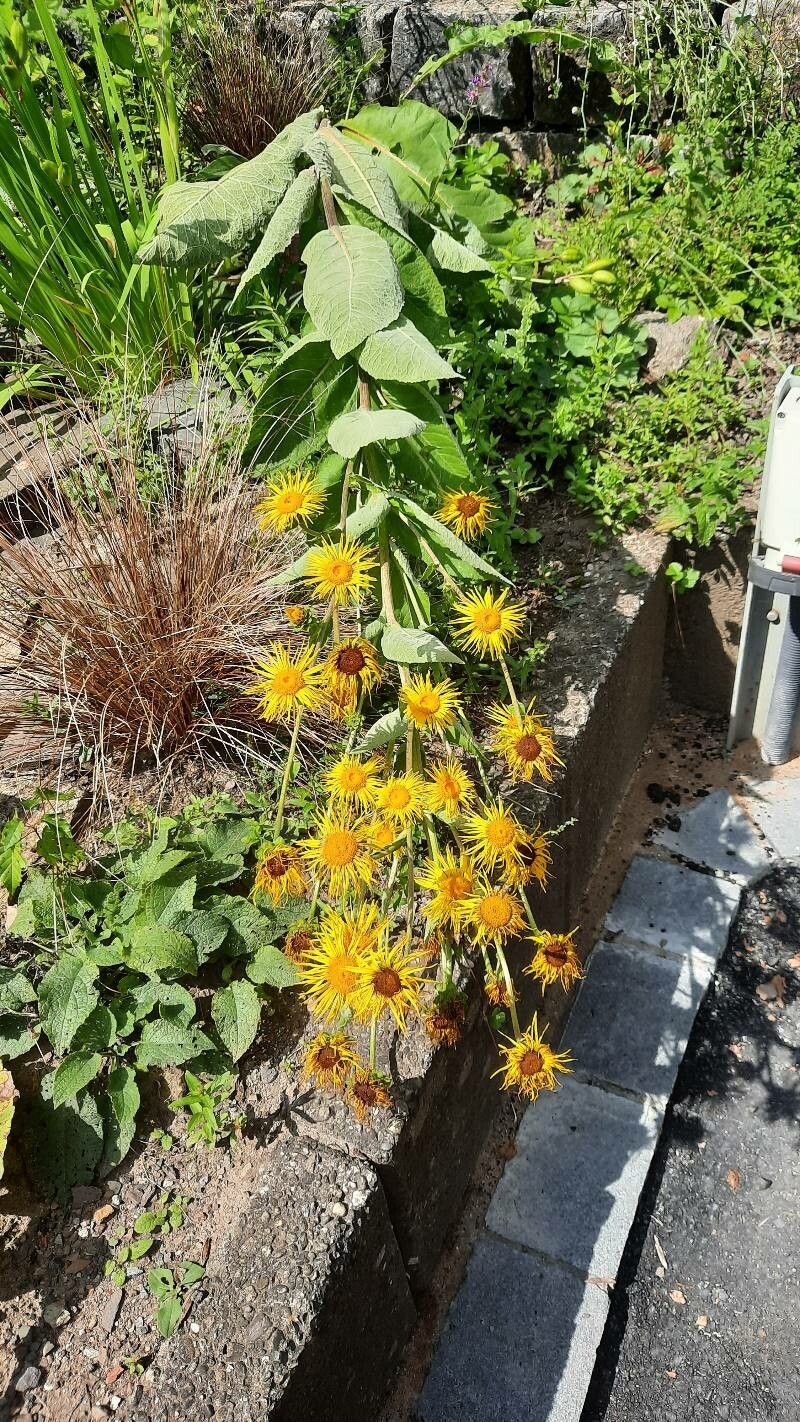
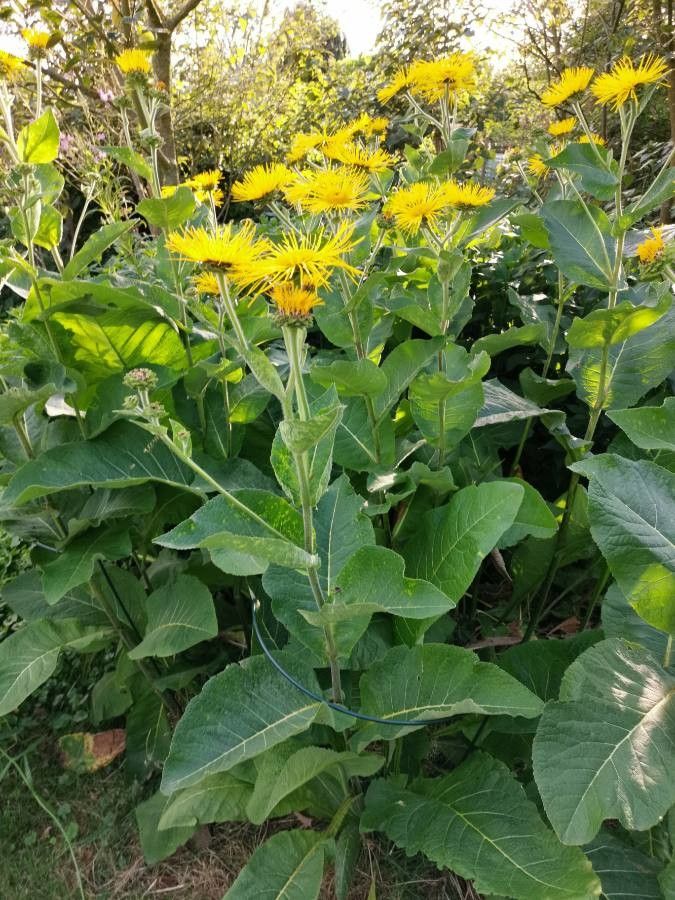
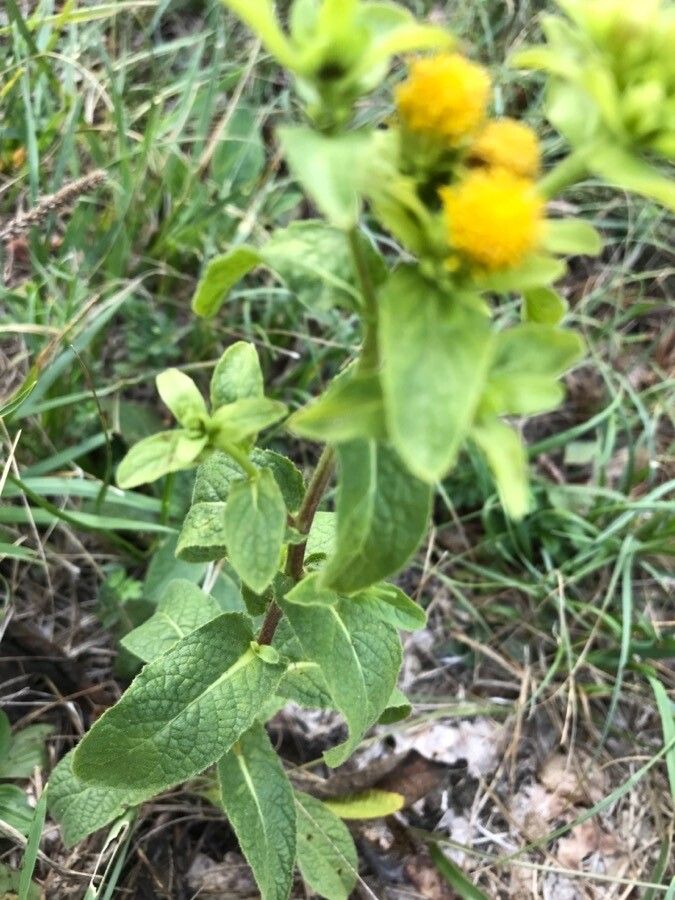
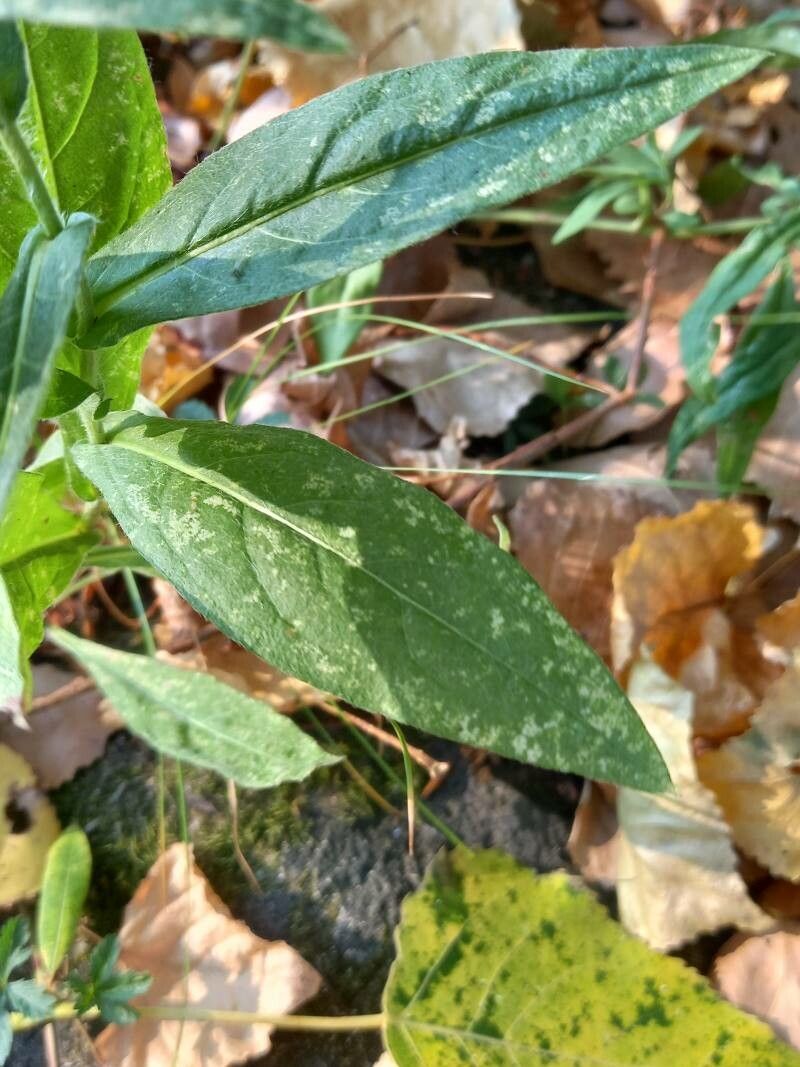
Inula magnifica, the giant fleabane, is a species of flowering plant in the sunflower family Asteraceae, native to the eastern Caucasus. It is a tall herbaceous perennial growing to 1.8 m (6 ft) tall by 1 m (3 ft) broad, with hairy stems and leaves. In late summer it bears rich yellow, daisy-like composite flower-heads 15 cm (6 in) in diameter, with narrowly tubular ray florets. It is suitable for planting at the back of a border, or in a wild meadow or prairie-style garden. The cultivar 'Sonnenstrahl' has gained the Royal Horticultural Society's Award of Garden Merit.
Giant Fleabane is fairly resistant to disease and typically does not suffer from illnesses. Still, it can be vulnerable to pests and diseases present in its environment. When infections do occur, they are normally mild. Regarding care, this plant needs a moderate amount of attention. It should be pruned on a regular basis to preserve a neat appearance and encourage healthy growth. Applying fertilizer can also aid in boosting flowering. Giant Fleabane is appropriate for anyone with outdoor areas like a garden or patio and does not demand extensive gardening experience. It may need extra care if cultivated indoors.
How to keep Inula Magnifica.
Light
Giant Fleabane is a perennial herbaceous plant that favors sunny sites and comes from open habitats, frequently growing in meadows and grasslands. It prefers full sun but can also tolerate partial sun.
Temperature
Giant Fleabane can tolerate a broad range of temperatures, but its distribution may still be restricted by particular combinations of moisture and heat. It performs best in warm summer climates with sufficient rainfall or irrigation. Long spells of cloudy, rainy weather and extended high temperatures can raise the chance of Giant Fleabane dying. In winter, adequate protection from cold can increase the plant's survival.
Fertilizer
The best time to fertilize a Giant Fleabane is in early spring, when it is coming out of dormancy and beginning active growth. Fertilizing supplies essential nutrients for healthy development. Although Giant Fleabane has relatively low fertilizer requirements, an annual application can improve its survival and encourage better, longer-lasting flowers.
Pruning
Inula magnifica has strong, tall stems topped with large, sunflower-like flowers. To keep the plant healthy and attractive, prune it in early spring to remove any dead stems. You can prune again in late spring to shape the plant. Regular pruning improves air circulation, which helps prevent mildew. For the best results, use clean, sharp tools.
Botanical profile.
- Plant Type
- Herb
- Life Cycle
- Perennial
- Genus
- Inula
- Family
- Asteraceae
- Hardiness Zone
- 4-9
- Mature Height
- 2.44 m
- Mature Spread
- 91 cm
- Leaf Color
- Green
- Leaf Type
- Deciduous
- Flower Color
- Yellow
- Flower Size
- 6.35 cm to 10.16 cm
- Bloom Time
- Mid summer, Late summer
- Planting Time
- Spring, Summer
- Harvest Time
- Late summer, Early fall, Mid fall
Other names.