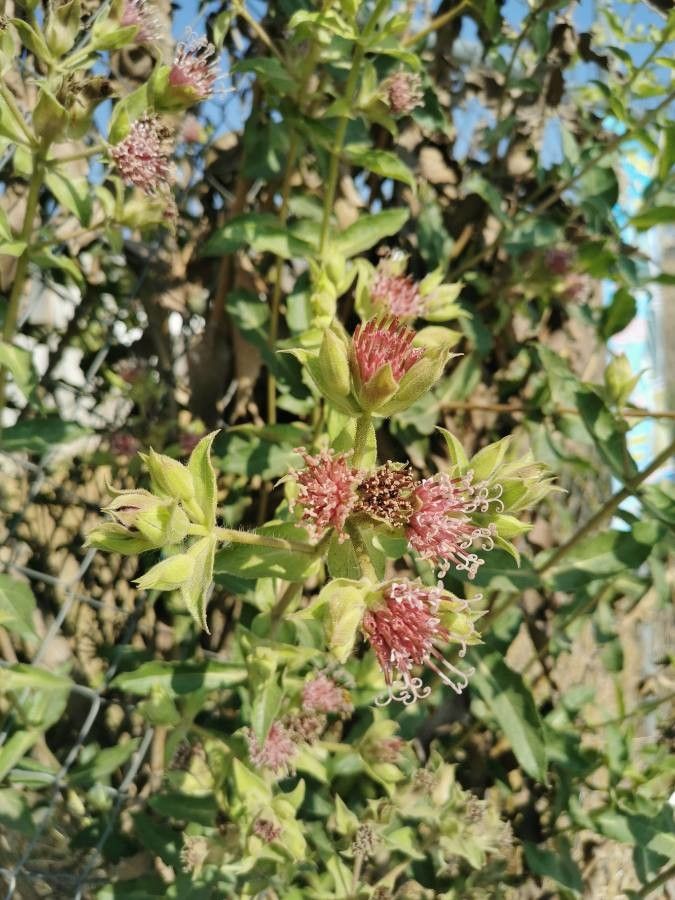
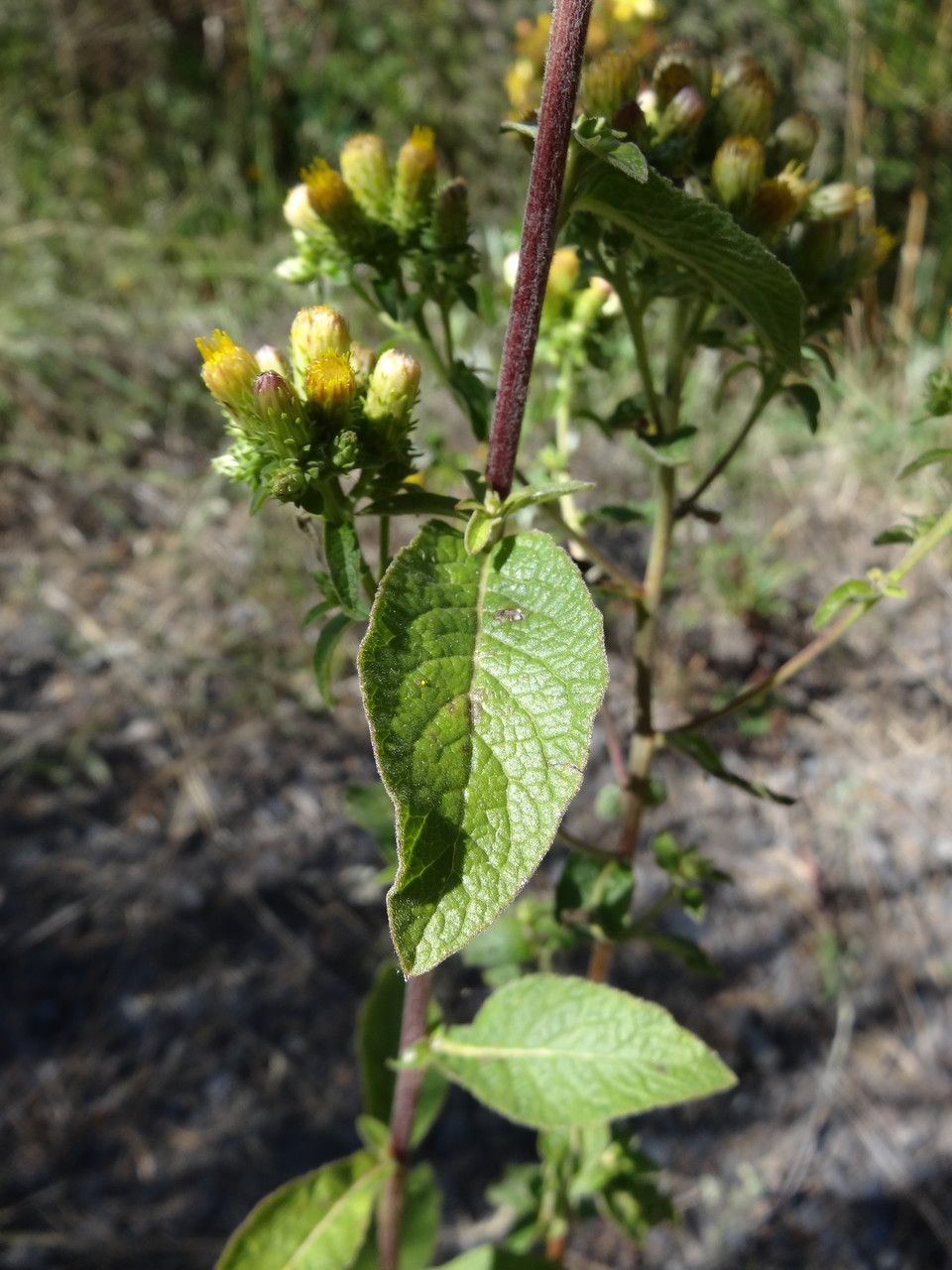
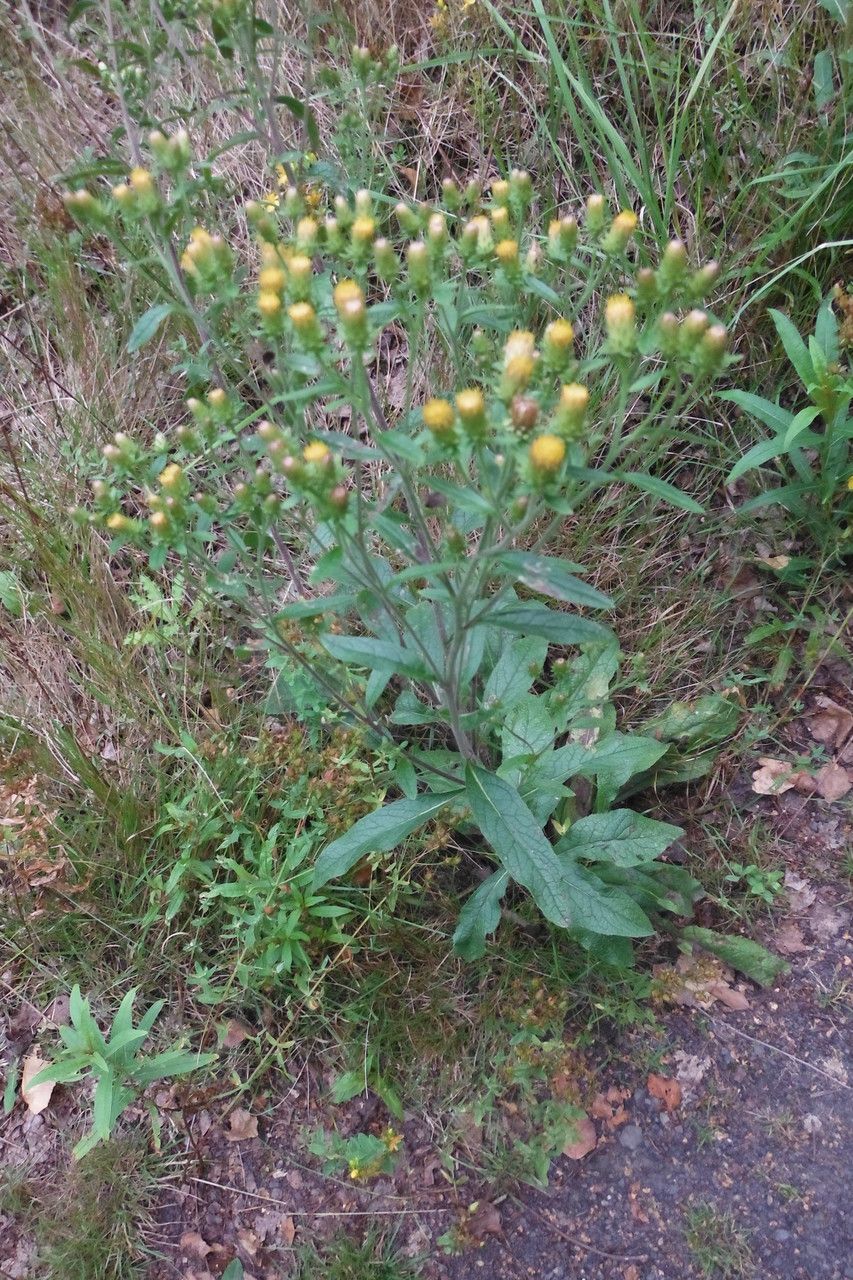
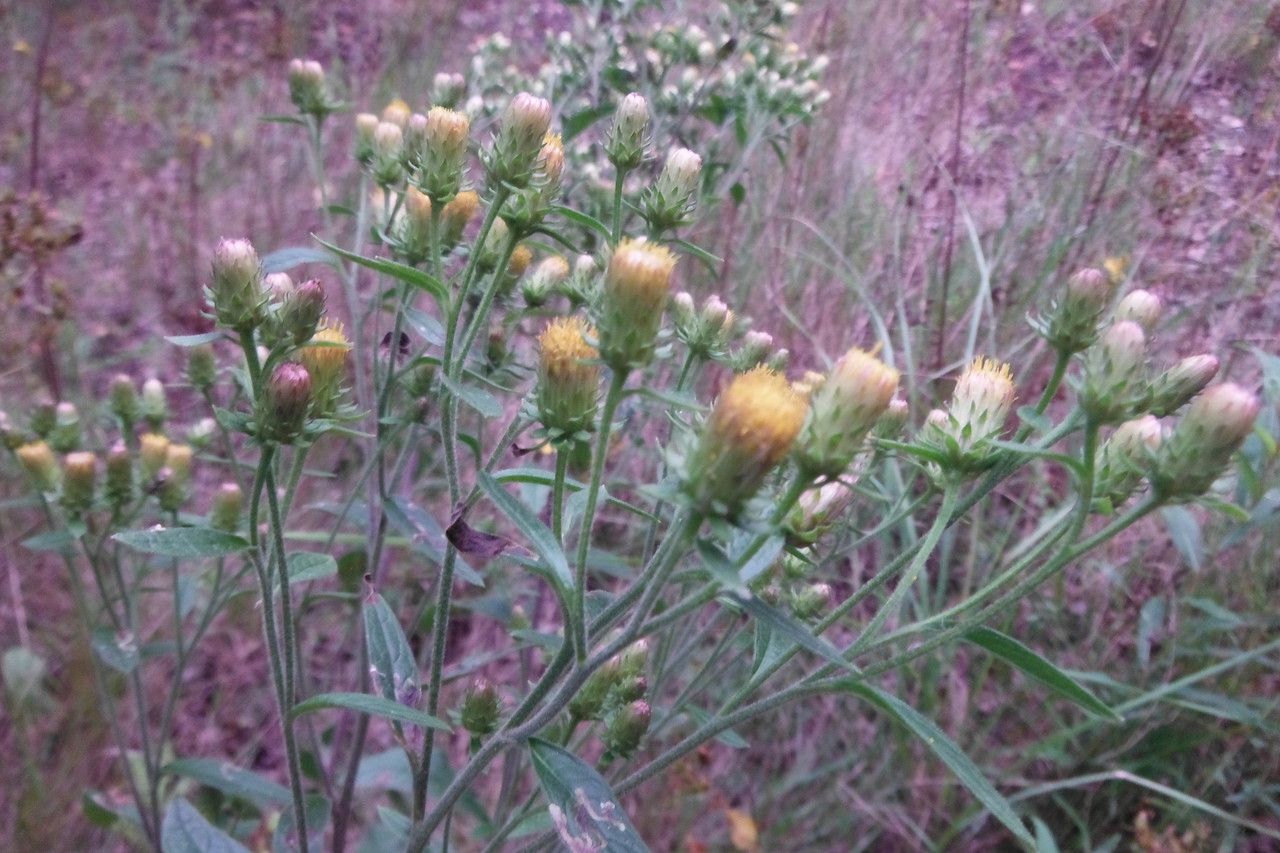
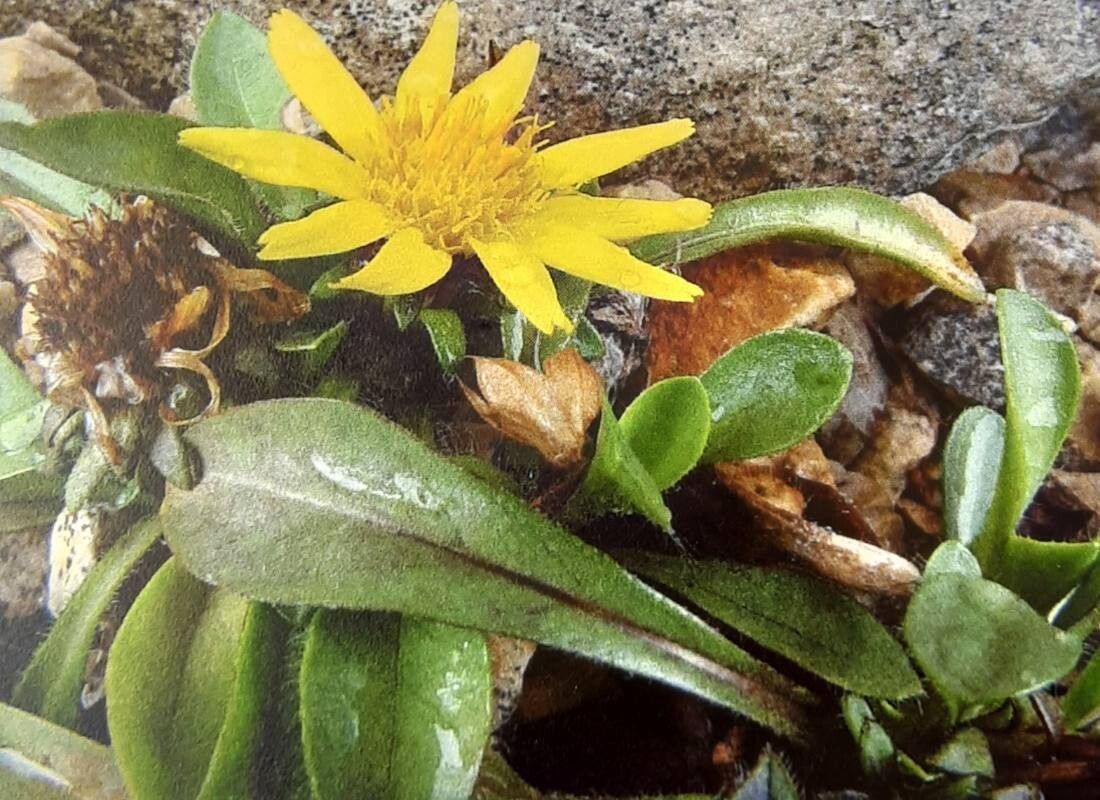
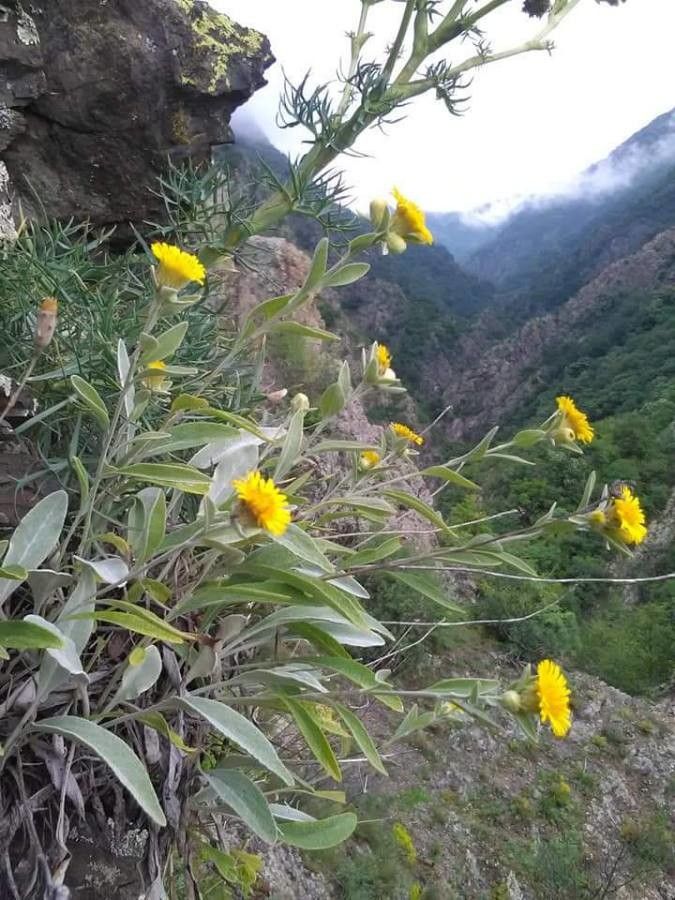
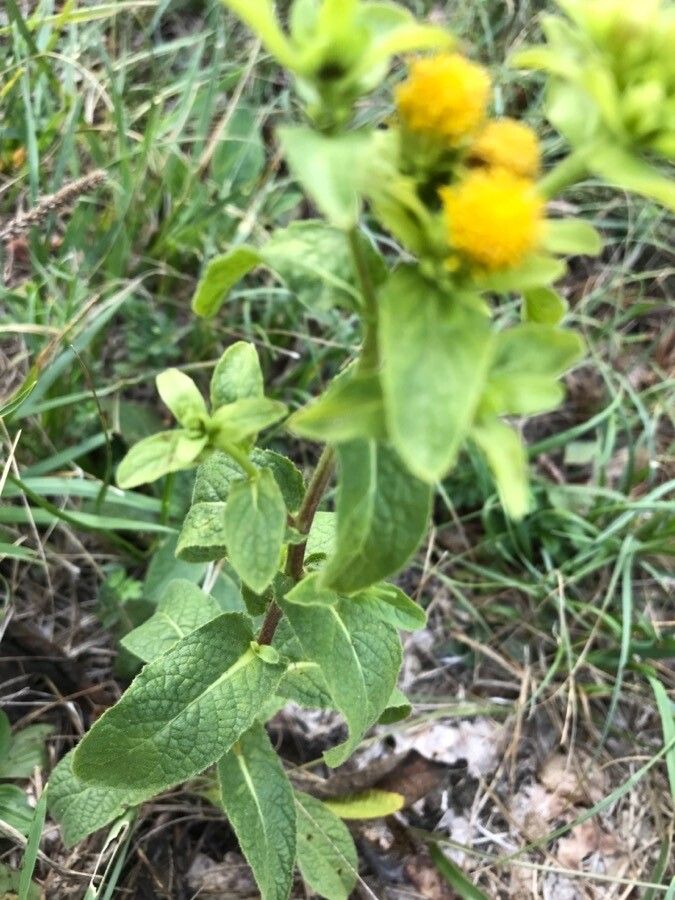
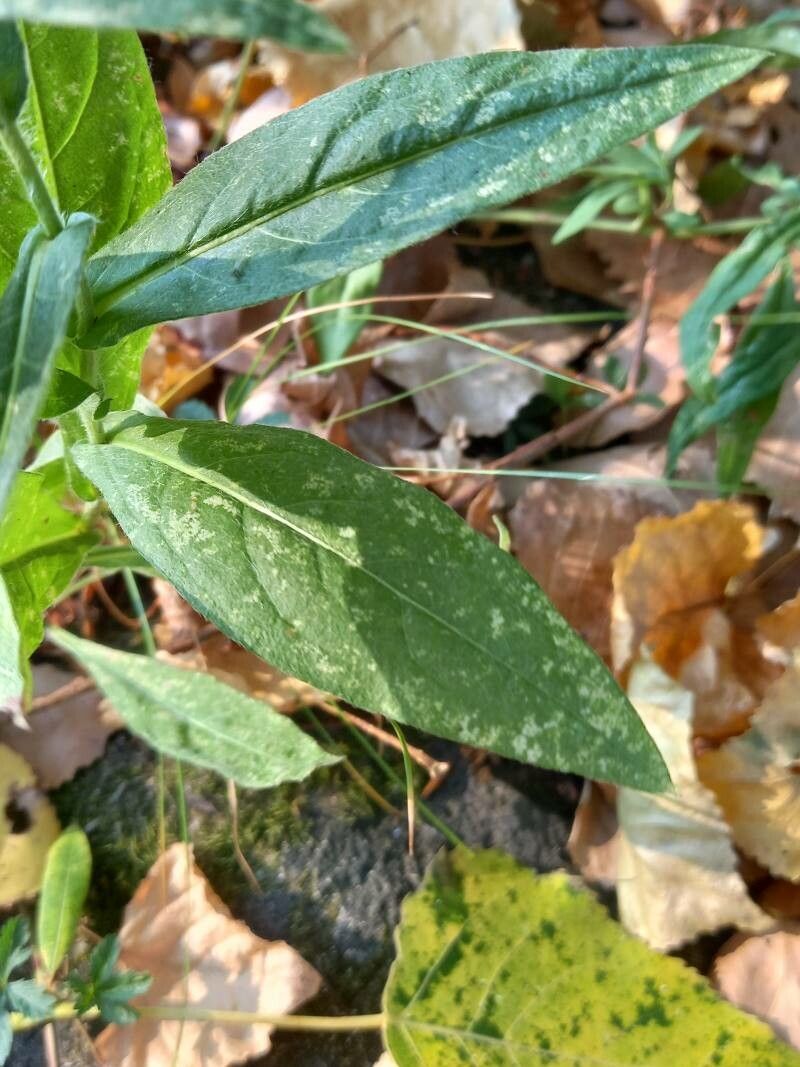
Pentanema squarrosum, known as ploughman's-spikenard, is a species of plant in the family Asteraceae found in Europe, North Africa, and the Near East.It is a tall, hairy plant (to 1.2 m) that grows on calcareous, low-nutrient, well-drained soils. It is a short lived perennial plant. Before flowering, the basal rosette of leaves resembles those of foxgloves. It flowers after mid-summer in Europe, from July to September. When in flower, the plant has many small flowerheads grouped together into a flat-topped structure that resembles a single flowerhead (pseudanthium). The individual flowerheads have prominent yellow disc florets and no (or inconspicuous) ray florets.
Ploughman's spikenard is fairly disease-resistant and usually not prone to illnesses. However, it can be vulnerable to pests and diseases present in its environment. These problems are typically mild. In terms of care, this plant has moderate maintenance needs. It should be pruned regularly to maintain a tidy appearance and healthy growth. Fertilizing can also encourage flowering. Ploughman's spikenard is well suited to anyone with outdoor space, such as a garden or patio, and does not require extensive experience in plant care. It may need extra attention when grown indoors.
How to keep Inula Conyzae.
Light
Ploughman's spikenard is a perennial herbaceous species that prefers sunny sites and comes from open habitats, commonly flourishing in meadows and grasslands. It favors full sun but can also tolerate partial sun conditions.
Water
Ploughman's spikenard grows best in well-drained soil that maintains moderate moisture. It needs consistent watering but doesn’t tolerate being waterlogged. Watering once a week is generally sufficient. If grown outdoors, the plant benefits from natural rainfall, but adjustments may be needed depending on the amount of seasonal precipitation.
Temperature
Ploughman's spikenard can tolerate a wide range of temperatures, though its distribution may still be restricted by particular combinations of moisture and heat. It performs best in warm summer conditions with adequate rainfall or irrigation. Extended stretches of cloudy, rainy weather, as well as prolonged high temperatures, increase the chance of the plant dying. In winter, protecting it from cold can enhance its survival.
Fertilizer
The best time to fertilize Ploughman's spikenard is in early spring, when it is coming out of dormancy and beginning active growth. Fertilization supplies essential nutrients needed for healthy growth. Although Ploughman's spikenard has fairly low fertilizer requirements, feeding it annually can improve its survival and encourage better, longer-lasting flowers.
Pruning
Ploughman's spikenard has aromatic foliage and bright yellow flowers. To encourage bushier growth and more abundant blooms, prune the stems in early to mid-spring. Be sure to remove any dead or damaged stems, as this will improve the plant's health, prevent leggy growth, and support vigorous flowering.
Botanical profile.
- Plant Type
- Herb
- Life Cycle
- Perennial
- Genus
- Inula
- Family
- Compositae
- Hardiness Zone
- 4-9
- Mature Height
- 61 cm to 91 cm
- Mature Spread
- 20 cm to 40 cm
- Leaf Color
- Dark Green
- Leaf Type
- Deciduous
- Flower Color
- Yellow
- Flower Size
- 1.02 cm to 1.02 cm
- Bloom Time
- Mid summer, Late summer, Early fall
- Planting Time
- Spring, Summer
- Harvest Time
- Early fall, Mid fall
Other names.
Reader questions.
What are the sunlight requirements for Ploughman's spikenard?
Ploughman's spikenard, or Inula conyzae, requires specific conditions in terms of sunlight exposure to thrive. It needs full sun, which is above 6 hours of direct sunlight daily, or partial sun, about 3-6 hours of sunlight each day. It's important to observe how sunlight moves through your garden to ensure you choose a spot that offers the ideal mix of light and shade, guaranteeing the well-being of your plants.
Is there any advice on finding the right sunlight spot for Ploughman's spikenard in the garden?
Yes, there is advice on selecting the perfect location for Ploughman's spikenard in your garden. It's recommended to watch the sunlight's movement throughout your garden to find spots that provide a proper balance of light and shade. This observation will help ensure that your Ploughman's spikenard, or Inula conyzae, receives the appropriate amount of sunlight it needs to flourish.