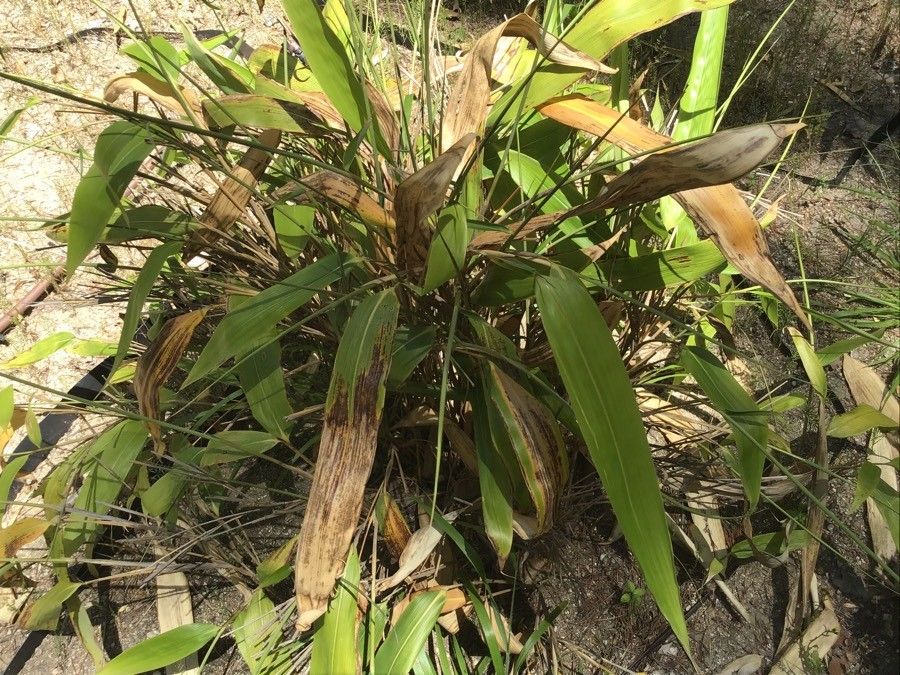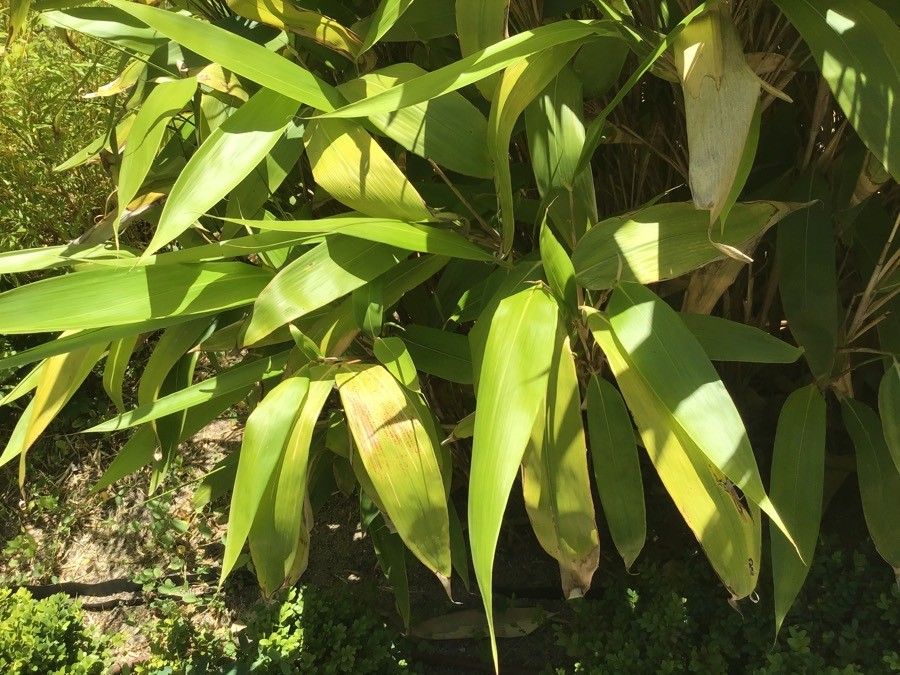
Indocalamus latifolius is an East Asian species of bamboo in the genus Indocalamus.
Broad-leaf bamboo is highly disease-resistant and generally not susceptible to illnesses. Regarding care, this plant is relatively low-maintenance. When grown outdoors it requires minimal watering, and larger plants typically do not need pruning. Smaller plants, however, should be pruned after they have bloomed. Broad-leaf bamboo is suitable for anyone with outdoor space, such as a garden or deck, and does not demand much care experience.
How to keep Indocalamus Latifolius.
Light
Broad-leaf bamboo originates from habitats like forest understories or rocky terrain, where it grows under natural shade. It prefers partial sun but can adjust to full sun or full shade, showing its hardy, adaptable nature.
Water
Broad-leaf bamboo flourishes in environments that are moderately moist, needing watering every two weeks. As an evergreen plant, it keeps its leaves vibrant and green throughout the year, making it an excellent choice for outdoor gardening. In such settings, it can also take advantage of natural rainfall.
Temperature
Broad-leaf bamboo is quite adaptable to heat, able to tolerate higher temperatures and greater temperature fluctuations. In hot conditions, attention should be paid to watering and providing adequate shade to prevent sunburn. However, broad-leaf bamboo is relatively intolerant of low temperatures. While it can endure some cold, very cold conditions can cause frost damage.
Fertilizer
Fertilize your Broad-leaf bamboo in early spring to encourage healthy growth. Regular feeding improves overall health, producing vigorous growth, increased tolerance of harsh conditions, and enhanced resistance to pests and diseases. Follow a consistent fertilization routine for your Broad-leaf bamboo to keep the foliage vibrant with deep color and a lush appearance.
Pruning
Broad-leaf bamboo, known for its wide leaves and dense growth, benefits from annual pruning in early spring. To maintain the plant's health and size, remove any dead canes and thin out some of the growth. This helps to improve light and air circulation, which promotes overall plant health and helps prevent disease.
Pot & Repot
Repot broad-leaf bamboo every 2 to 3 years during spring or early summer, using a container that is 2 inches wider than the current one. After repotting, make sure to keep the moisture consistent and the light conditions stable to encourage healthy recovery and lush growth.
Botanical profile.
- Plant Type
- Shrub
- Life Cycle
- Perennial
- Genus
- Indocalamus
- Family
- Poaceae
- Hardiness Zone
- 7-10
- Mature Height
- 3.05 m
- Mature Spread
- 7.92 m
- Leaf Color
- Dark Green, Forest Green
- Leaf Type
- Evergreen
- Flower Size
- 6.35 cm to 20.32 cm
- Bloom Time
- Early summer, Mid summer
- Planting Time
- Spring, Summer, Autumn
- Harvest Time
- Late summer, Early fall
- Native Area
- China
Other names.
Reader questions.
How should I water my Broad-leaf bamboo?
Your Broad-leaf bamboo is not very particular about how you water it. Any common watering tool, such as a watering can, hose, or even a cup, will work fine for watering your plant. Regardless of which tool you choose, it's important to water the soil directly and make sure all areas are equally moistened to provide water to all parts of the root system. Using filtered water is beneficial as tap water may have harmful particles. Additionally, using water at or slightly above room temperature is helpful as extremely cold or hot water can shock the plant. However, the Broad-leaf bamboo usually responds well to any type of water you give it.
Why should I put fertilizer on my Broad-leaf bamboo?
No matter what type of Broad-leaf bamboo you have, regular fertilization is key for optimal plant health. Providing the right nutrients will encourage vigorous growth, making your bamboo more adaptable to challenging conditions and better equipped to withstand diseases and pests. Your bamboo's foliage is one of its most appealing aspects, so it's important to prioritize its maintenance. This involves sticking to a consistent fertilization routine tailored to your specific Broad-leaf bamboo variety. By doing so, you'll promote the development of richly colored leaves and an overall lush appearance.
How much sunlight does Broad-leaf bamboo need to grow?
Broad-leaf bamboo needs 3-6 hours of direct sunlight daily to thrive but also requires shade during the hottest parts of the day. Morning sunlight is ideal, but it can tolerate some afternoon sun if it's not too hot. To achieve the right amount of sunlight, consider planting it in a partially sunny area like under a tree or on the east side of a building.
What should I do if I give my Broad-leaf bamboo plant too much water or too little water?
For outdoor plants, especially newly planted ones or seedlings, lack of watering can be a problem. It's important to water them enough for a few months, especially when they are small or just planted. Once the roots are established, Broad-leaf bamboo can usually rely on rain. When your Broad-leaf bamboo is in pots, overwatering is more likely. If you accidentally overwater it, you should act quickly to fix the situation. First, stop watering the plant immediately to minimize the effects of overwatering. Then, remove the plant from its pot to inspect the roots. If there is no root rot, you can put the plant back in its container. If you find root rot, trim away the affected roots and consider applying a fungicide. Finally, repot the Broad-leaf bamboo in well-draining soil. If your Broad-leaf bamboo is underwatered, simply water it more frequently. Underwatering can be easily fixed - the plant's leaves will droop, dry out, and fall off, but they will return to fullness after sufficient watering. Make sure to adjust your watering frequency as soon as you notice underwatering.
What is the best time to give my Broad-leaf bamboo plant fertilizer?
To ensure healthy growth of your Broad-leaf bamboo, it is recommended to fertilize it in late winter or early spring. This will provide the necessary nutrients for the bamboo to thrive once the weather becomes warmer. In warm climate regions, an additional fertilizer feeding in early fall can be beneficial. This not only adds nutrients to the soil for the following growing season but also helps the bamboo withstand winter cold without foliage damage. Fertilizing earlier will allow the new branches to grow sufficiently to withstand the cold winter.
What will happen if Broad-leaf bamboo doesn't receive enough sunlight?
When Broad-leaf bamboo is exposed to excessive direct sunlight, its leaves may change color to yellow, dry up, or even get burnt. Additionally, you may observe that the plant starts to wilt or grows abnormally. To avoid sun damage, it is important to provide Broad-leaf bamboo with some shade during the hottest periods of the day. You can accomplish this by using a shade cloth or by planting Broad-leaf bamboo near taller plants that can naturally provide shade.
How frequently should I give water to my Broad-leaf bamboo?
Here are some tips on watering your outdoor plants and potted Broad-leaf bamboo: 1. Outdoor Plants: Most outdoor plants can rely on rainfall for watering. However, if your area doesn't get enough rain, you should water them adequately every 2 weeks in spring and fall. During summer, when plants need more water, you should water them more often. In winter, when growth slows down, water sparingly or not at all. 2. Young or Newly Planted Broad-leaf Bamboo: If your Broad-leaf bamboo is young or newly planted, it needs more frequent watering to establish itself and become more adaptable and drought-tolerant. 3. Potted Plants: There are two ways to determine how often to water your potted Broad-leaf bamboo: - Predetermined Watering Schedule: You can set a schedule to water your plant once a week or once every other week. However, this may not always be suitable as it doesn't consider the specific conditions of your plant's environment. - Soil Moisture: Another approach is to rely on the moisture level of the soil. Wait until the top two to four inches of soil, about one-third to one-half the depth of the pot, have completely dried out before watering again. Remember that the frequency of watering may change depending on the season, especially during summer when the plant's water needs are highest. Adjust your watering routine accordingly.
When is it not a good idea to fertilize my Broad-leaf bamboo?
There are a few specific times when you should avoid fertilizing your Broad-leaf bamboo. Firstly, during the early and mid-winter months, it is dormant and does not require feeding. Similarly, in the late spring and entirety of summer, when the weather is hotter and drier, it is best to avoid fertilizing. These conditions can have a detrimental effect on your Broad-leaf bamboo if fertilized. To prevent any issues, it is advised to stick to a fertilization schedule that involves feeding only during early spring and early fall.
What will happen if Broad-leaf bamboo receives too much sunlight?
If Broad-leaf bamboo doesn't receive sufficient sunlight, it might grow tall and thin, with not many leaves. Additionally, the leaves could turn yellow or pale green, which shows that the plant isn't producing enough chlorophyll due to the lack of sunlight. To fix this, consider moving the Broad-leaf bamboo to a sunnier location or trimming nearby foliage so that more light can reach the plant.
How much water does my Broad-leaf bamboo plant need?
Watering your Broad-leaf bamboo doesn't necessarily require a high volume of water. If only a few inches of soil have dried since the last watering, providing five to ten ounces of water is sufficient for healthy growth. You can also determine the water volume based on soil moisture. Keep track of how many inches of soil have dried out between waterings. To ensure adequate moisture, water enough to moisten all the dry soil layers since the last watering. When over half of the soil has dried, consider giving more water, and continue until excess water drains from the pot's holes. If your Broad-leaf bamboo is outdoors and receives ample rain, additional watering may not be necessary. For young or newly planted bamboo, provide 1-2 inches of rainwater per week. As it grows, it can rely on rainwater except during extended periods without rainfall in hot weather. In such cases, give your Broad-leaf bamboo a thorough watering to prevent stress.
What kind of fertilizer should I use for my Broad-leaf bamboo?
Broad-leaf bamboo primarily relies on nitrogen as its key nutrient, but this does not mean that phosphorus and potassium should be disregarded. In fact, all three main nutrients are important for the optimal growth of your Broad-leaf bamboo, which is why a balanced fertilizer like 10-10-10 can be effective. However, a more specific nutrient ratio, with higher nitrogen content, can often result in even better growth. For instance, a 10-6-4 ratio may be beneficial. When it comes to fertilizing, both granular and liquid-based fertilizers can be used.
How do I know if I am watering my Broad-leaf bamboo plant enough?
Broad-leaf bamboo is often overwatered, which can be identified by yellowing leaves, leaf drop, and shrinkage of the plant's structure due to root rot. On the other hand, underwatered Broad-leaf bamboo will wilt, have brown or brittle leaves. Whether you observe signs of overwatering or underwatering, taking action to restore the plant's health is essential.