Impatiens hawkeri, commonly known as New Guinea impatiens, is a popular flowering plant from the Balsaminaceae family. Native to Papua New Guinea and the Solomon Islands, this plant has become a widely favored ornamental option worldwide due to its attractive flowers and lush foliage.
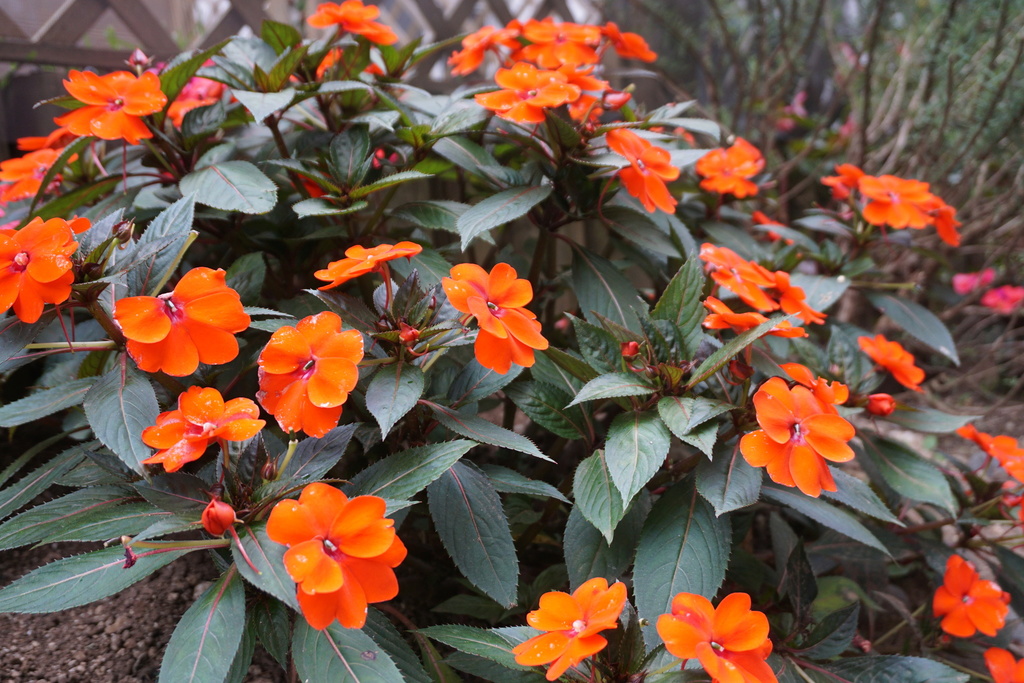
Typically, New Guinea impatiens grow up to 2 feet tall and feature dark green leaves that are either ovate or lanceolate in shape. The flowers are large and showy, available in a wide range of colors including pink, red, orange, white, and purple. They bloom abundantly from spring through fall.
These plants thrive in partial shade or filtered sunlight but can also tolerate full sun if they receive adequate moisture. They prefer well-draining soil that is rich in organic matter.
Caring for New Guinea impatiens is relatively easy. They require regular watering but can withstand short periods of drought. Additionally, they benefit from regular fertilization during the growing season.
Commonly used for bedding plants or container gardens, New Guinea impatiens are prized for their vibrant colors and long blooming period. They also attract pollinators such as bees and butterflies, making them a fantastic addition to any garden setting.
New Guinea impatiens are known for their larger flowers compared to other impatiens varieties. They are highly regarded by home gardeners for their vibrant and lively colors. The plant is named after its native island, New Guinea.
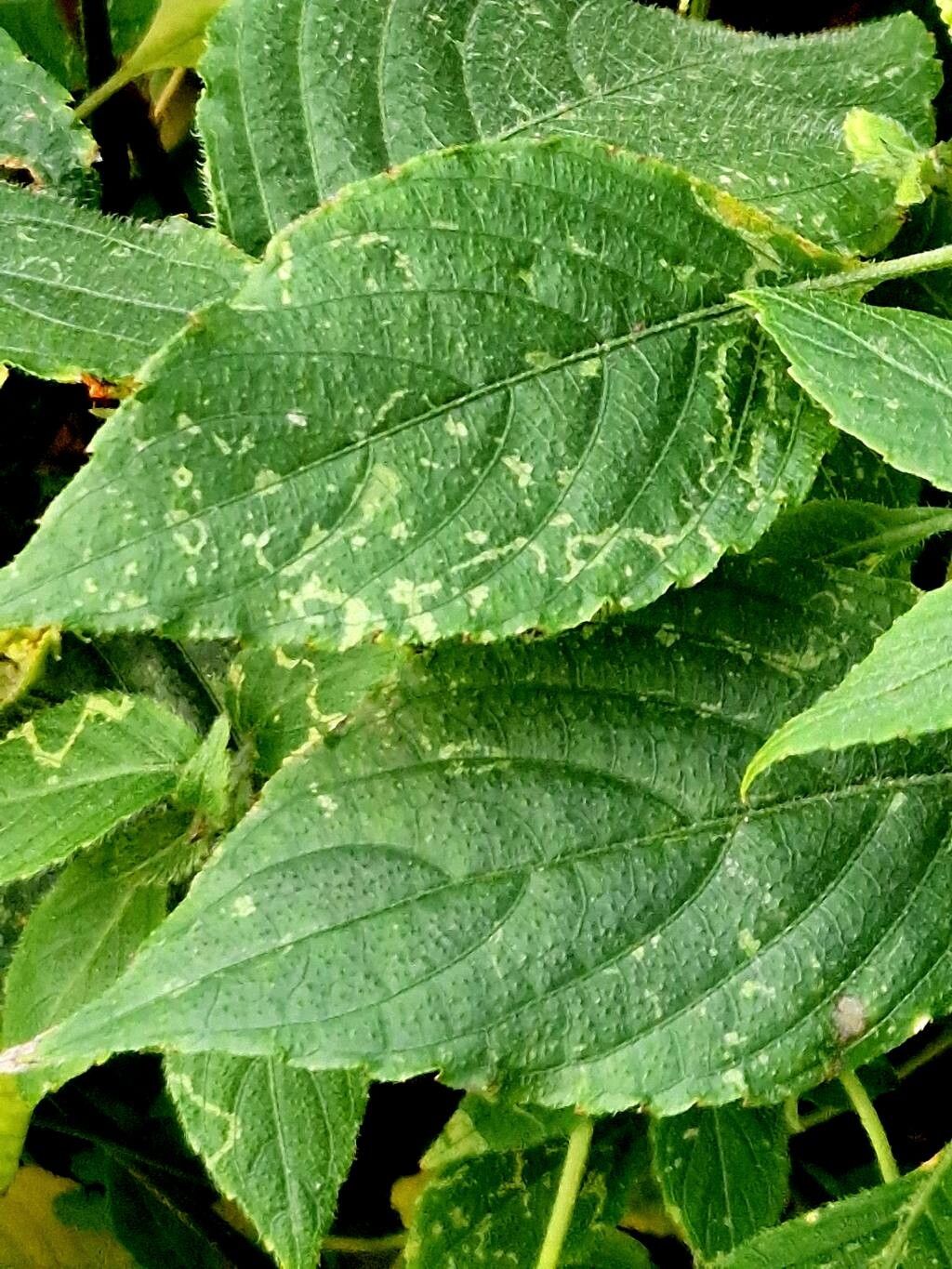
New Guinea impatiens is fairly disease-resistant and generally not prone to illness. Still, it can develop leaf spots if light and ventilation are inadequate and watering is excessive. Its care level is considered easy — it mainly needs regular watering and little else. New Guinea impatiens is appropriate for people who do not have the time or energy for frequent maintenance.
How to keep Impatiens Hawkeri.
Light
New guinea impatiens does well in areas with dappled sunlight, but is also comfortable in spots with lower light. Originating from an environment with varying light conditions, new guinea impatiens requires adequate exposure to grow impressively. If light availability is too limited or too abundant, it may adversely affect new guinea impatiens growth.
Water
New Guinea impatiens, which originate from the humid regions of New Guinea, thrive best with consistent moisture. For optimal growth, they should be watered twice a week. These plants prefer stable temperatures, making them ideal for indoor cultivation. To maintain proper hydration levels, they should be shielded from direct sunlight.
Humidity
This plant will thrive in moderate humidity, which is probably the level in your home. However, misting it a few times a week can be very beneficial. Make sure the room has good ventilation.
Temperature
Native to New Guinea, new guinea impatiens do best in warm temperatures between 68 to 100 ℉ (20 to 38 ℃). In colder seasons, maintain at least 60 ℉ (15.6 ℃) to prevent stunted growth. During warmer periods, temperatures can be increased up to 90 ℉ (32.2 ℃) to encourage blooming.
Fertilizer
Proper fertilization is vital for the health and appearance of New guinea impatiens. Fertilize New guinea impatiens during summer, repeating the application monthly throughout summer. Nutrients drive growth and support the plant's parts. Fertilization improves New guinea impatiens' flower display, ensuring the best blooms.
Pruning
New Guinea impatiens flourish with regular pruning, ideally done from early to late spring during their growth phase. Effective techniques include pinching young stems to encourage bushiness and removing spent flowers to promote more blooms. These practices not only enhance the plant's appearance and health but also help maintain sanitation, which prevents diseases.
Pot & Repot
When repotting New guinea impatiens, select a container 1-2 inches (2.5–5.1 cm) larger that has good drainage. Use a well-draining potting mix. Repot in spring or fall, making sure the root ball sits slightly below the rim of the flower pot. Water thoroughly after repotting and place the plant in a warm spot with indirect sunlight.
Toxicity
As with all impatiens, New Guinea impatiens are not toxic to people and pets. But, ingesting a large amount may cause mild digestive symptoms, like vomiting and diarrhea.
Further reading →
The toxicity and danger assessments provided are for reference only. We do not assure their accuracy, so it's crucial not to depend on them. Seek professional advice when necessary for accurate guidance.
Botanical profile.
- Plant Type
- Herb
- Life Cycle
- Perennial, Annual
- Genus
- Impatiens
- Family
- Balsaminaceae
- Hardiness Zone
- 10-12
- Mature Height
- 20 cm to 61 cm
- Mature Spread
- 15 cm to 30 cm
- Leaf Color
- Green
- Leaf Type
- Deciduous
- Flower Color
- White, Pink, Red, Orange, Purple, Lavender, Burgundy
- Flower Size
- 4.06 cm to 6.35 cm
- Bloom Time
- All year round
- Planting Time
- Spring
- Harvest Time
- All year round
- Native Area
- New Guinea
Other names.
Reader questions.
When Should I Water My New Guinea Impatiens?
Proper and timely watering is crucial for the health and development of New Guinea Impatiens, affecting its growth, flower production, and disease resistance. You should water the plant when the top 1 to 2 inches of soil are dry. The plant's leaves will also indicate water needs; if they appear wilted or lose their vibrant color, it's likely time to water. During the pre-flowering stage and in conditions of warm temperatures and high sunlight exposure, watering needs increase. However, watering too early can lead to root diseases, and watering too late can cause wilting or stunt growth.
Why should I put fertilizer on my New Guinea impatiens plants?
Fertilizer and soil nutrients are important fuel for your New Guinea impatiens to grow healthily. Plants use these nutrients from the soil to develop new plant material and maintain their overall health. Fertilization is specifically necessary for New Guinea impatiens to create beautiful flowers, which are the main attraction of this plant. Most gardeners want to ensure that the flowers of their New Guinea impatiens look their best, and fertilizing the plant is one of the most reliable methods to achieve this.
What are the sunlight requirements for New Guinea Impatiens?
New Guinea Impatiens require nuanced sunlight conditions to thrive, doing well in both areas with ample sunlight and those with less exposure. The plant is adaptable to varying light conditions due to its origin. It needs about 3-6 hours of sunlight when exposed to partial sun but can also grow under full shade, which is defined as less than 3 hours of sunlight daily. It's crucial to observe how sunlight moves through your garden to ensure spots provide the ideal balance of light and shade, guaranteeing the plants' wellbeing.
What is the ideal temperature range for New Guinea impatiens?
New Guinea impatiens, native to New Guinea, flourish in warm temperatures, ideally between 68°F to 100°F (20°C to 38°C). To prevent growth stunting, it's recommended to keep the temperature above 60°F (15.6°C) during colder seasons. In warmer months, temperatures can safely reach up to 90°F (32.2°C) to promote blooming. The plant loves heat and can be harmed by cold. In autumn, it's advised to bring outdoor plants inside, placing them near a bright window but away from direct heat sources, and maintaining indoor temperatures above 20°C to encourage growth. It's crucial to avoid temperatures nearing 5°C as they're harmful to the plant.
How Should I Water My New Guinea Impatiens?
New Guinea Impatiens thrives in moist, well-drained soil and should not be overwatered. Bottom-watering is an effective technique, allowing the plant to absorb moisture through the pot's drainage holes. Misting can help maintain humidity. Use a watering can with a long, thin spout to water gently and ensure the soil is evenly moist, focusing on the base to avoid leaf diseases. A moisture meter can help determine when to water. Ensure good drainage in the plant's pot to prevent waterlogging.
When should I fertilize my New Guinea impatiens?
The New Guinea Impatiens plant goes through two main phases each year. The first phase is the dormant phase during winter, when there is minimal new growth. The second phase is the active growth phase, which occurs in spring and fall. During this phase, the plant requires the most fertilization. It is recommended to start fertilizing the New Guinea Impatiens in the spring, continuing to do so once a month throughout spring and most of summer. As fall approaches, the fertilization rate can be reduced.
How can artificial lighting support New Guinea Impatiens growth indoors?
When natural sunlight is insufficient, especially during winter or in less sunny spaces, artificial lighting becomes essential for the growth of New Guinea Impatiens. LED lights are recommended as they can be tailored to provide specific light wavelengths needed by the plants. For optimal growth, full sun plants require 30-50W/sq ft of artificial light, partial sun plants 20-30W/sq ft, and full shade plants 10-20W/sq ft. The artificial light source should be placed 12-36 inches above the plants, mimicking natural sunlight conditions, and should remain on for 8-12 hours per day to emulate the natural daylight duration for most plant species.
How does low temperature affect New Guinea impatiens, and what should be done?
New Guinea impatiens are not tolerant of low temperatures and perform best when the temperature remains above 20°C. Exposure to temperatures below 5°C during winter or below 1°C can lead to leaf discoloration, turning from light shades to brown or black, accompanied by wilting and drooping as signs of frost damage. To address this, frosted parts should be trimmed off, and the plant should be moved indoors to a warmer location. Placement near a south-facing window ensures ample sunlight, but the plant should be kept away from heaters or air conditioning vents to avoid air dryness.
How Much Water Does New Guinea Impatiens Really Need?
Reflecting its native humid conditions, New Guinea Impatiens needs consistent moisture. Generally, one to two cups of water per week are required, keeping the soil moist but not waterlogged. The right amount of water makes the foliage lush and vibrant; signs of under-watering include wilted or curling leaves, while over-watering may cause root rot and yellowing leaves. Watering needs may vary with environmental conditions; it's important to check soil moisture regularly.
When is the best time to not fertilize my New Guinea impatiens?
To support the growth of your New Guinea impatiens without causing root burn, it is important to provide extra nutrients during the active growth stage in spring and summer. However, during the fall and winter when the plant enters dormancy, fertilizing should be stopped.
What are the symptoms of light deficiency in New Guinea Impatiens?
Symptoms of light deficiency in New Guinea Impatiens might not always be obvious but can significantly affect the plant's growth and health. Insufficient light can impact the plant's flowering and fruiting potential, lead to slower or halted growth, cause leggy or sparse growth, result in the development of smaller leaves, and also produce lighter-colored new leaves. Additionally, excessive sunlight can cause chlorosis, sunscald, leaf curling, wilting, and leaf scorching. These symptoms reflect the plant's struggle to adapt to improper lighting conditions.
What steps should be taken if New Guinea impatiens are exposed to high temperatures?
During the summer, it's important to ensure that New Guinea impatiens are kept in conditions below 100°F (38°C). Should the temperature exceed 107°F (43°C), the plant may display signs of stress, such as lighter leaf color and susceptibility to sunburn. Remedial actions include trimming the sunburned and dry parts and relocating the plant to a shaded area, especially from the midday and afternoon sun. Additionally, watering the plant in the morning and evening helps maintain soil moisture, which is crucial for the plant's health in high temperatures.