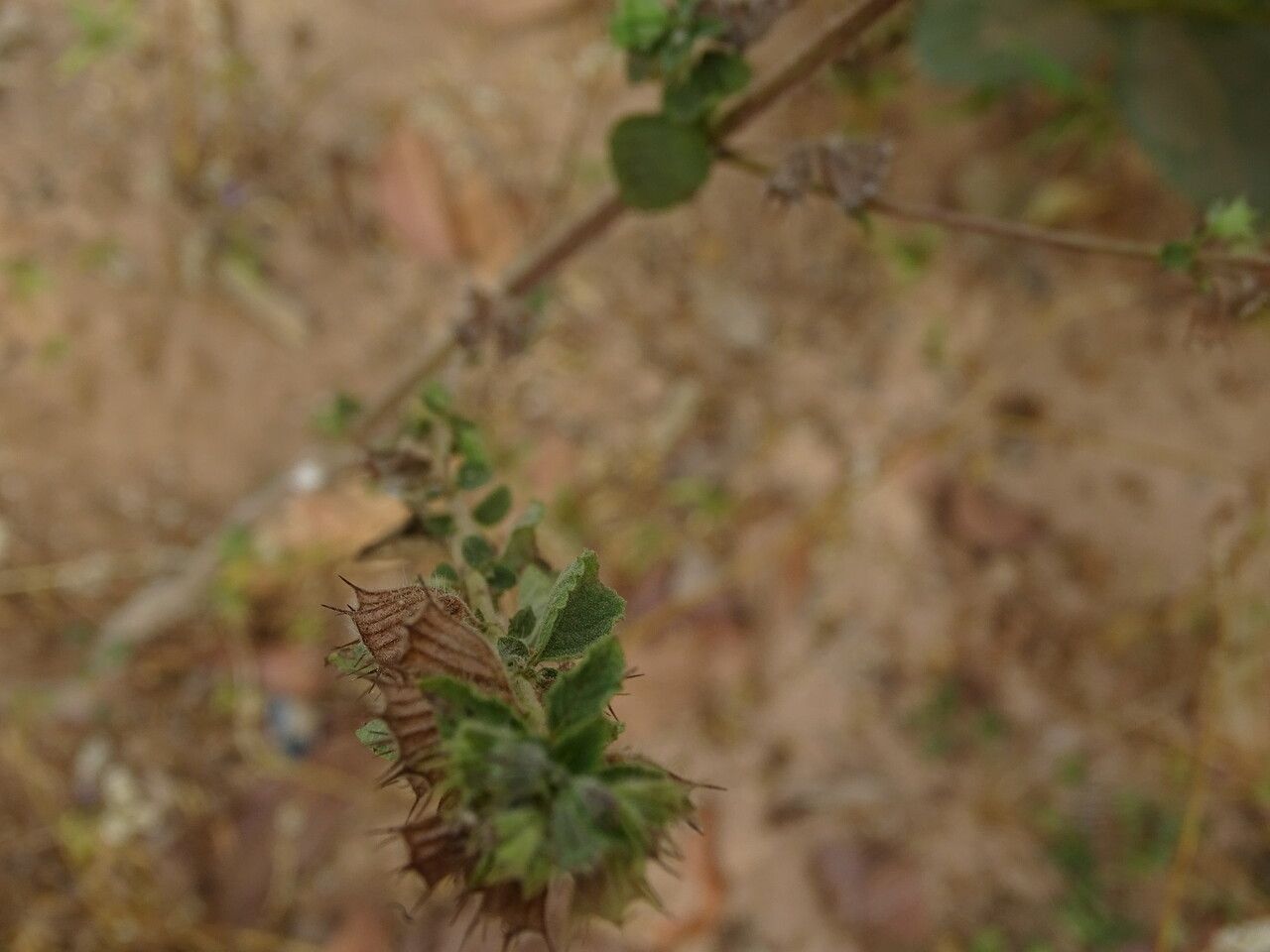
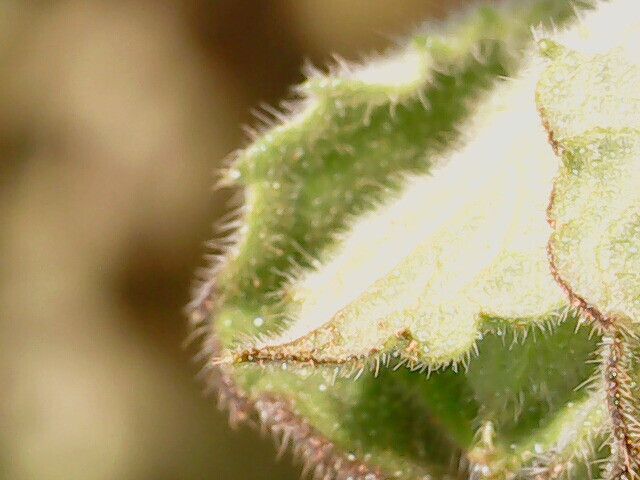
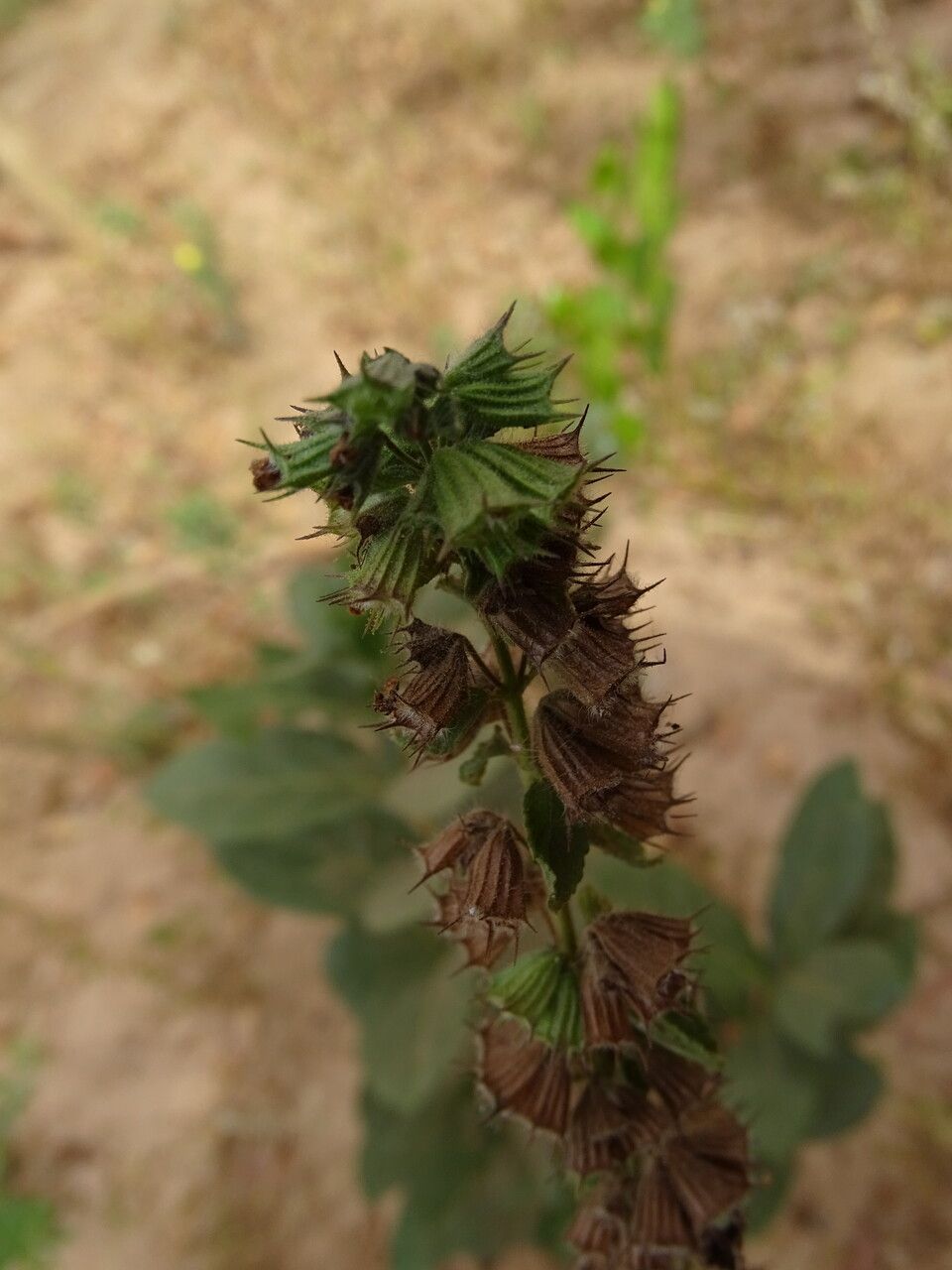
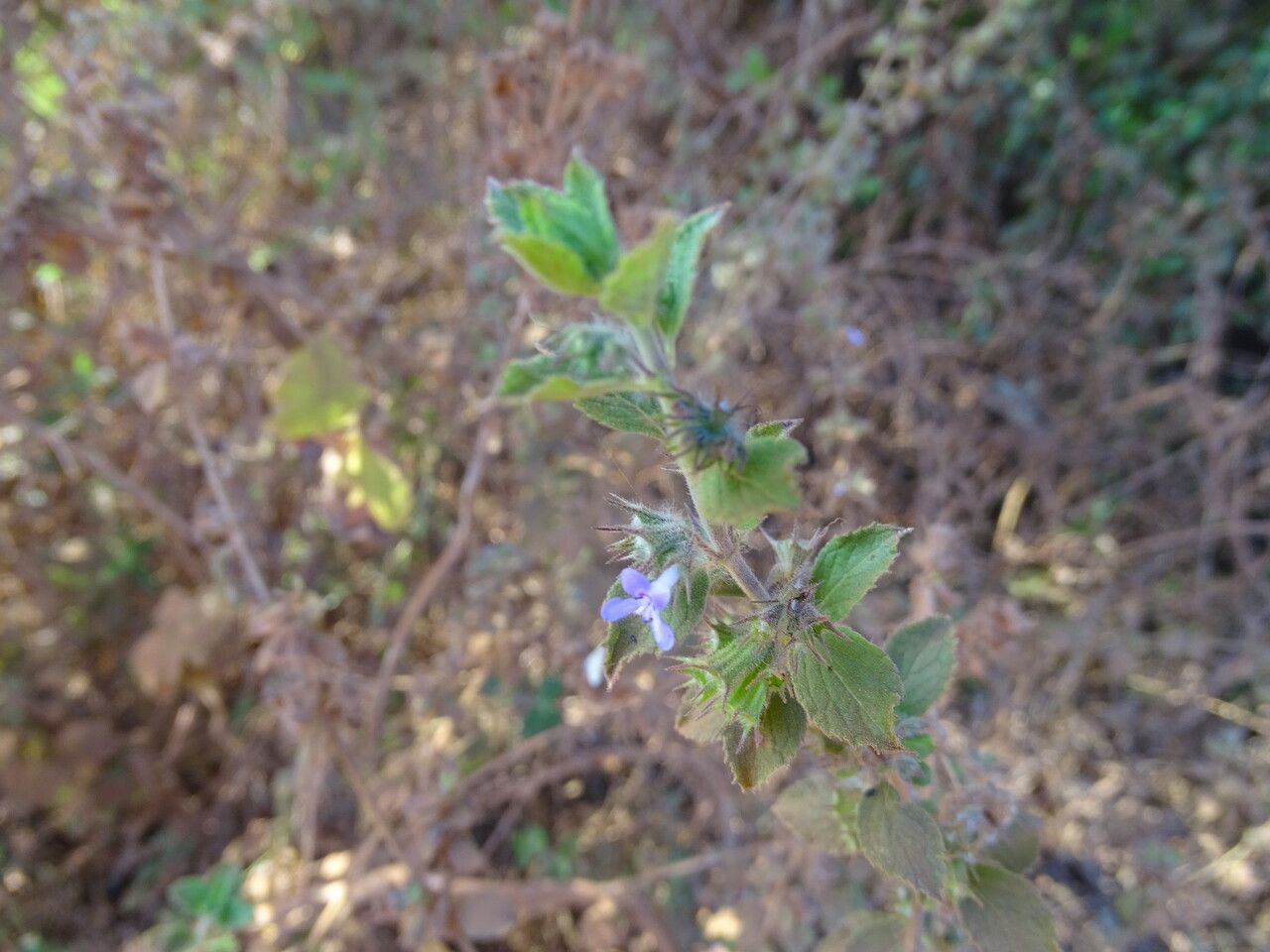
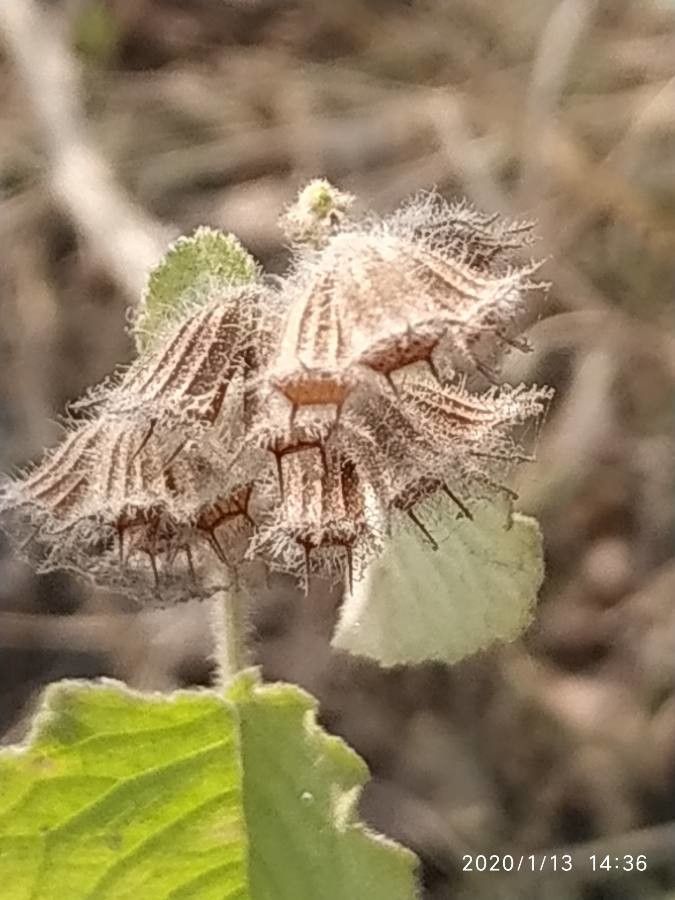
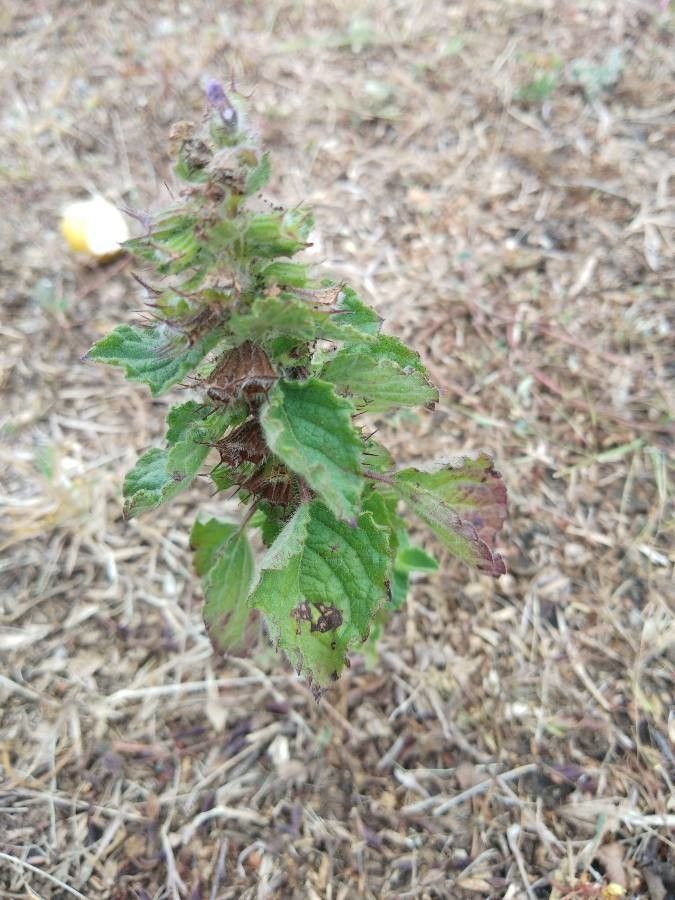
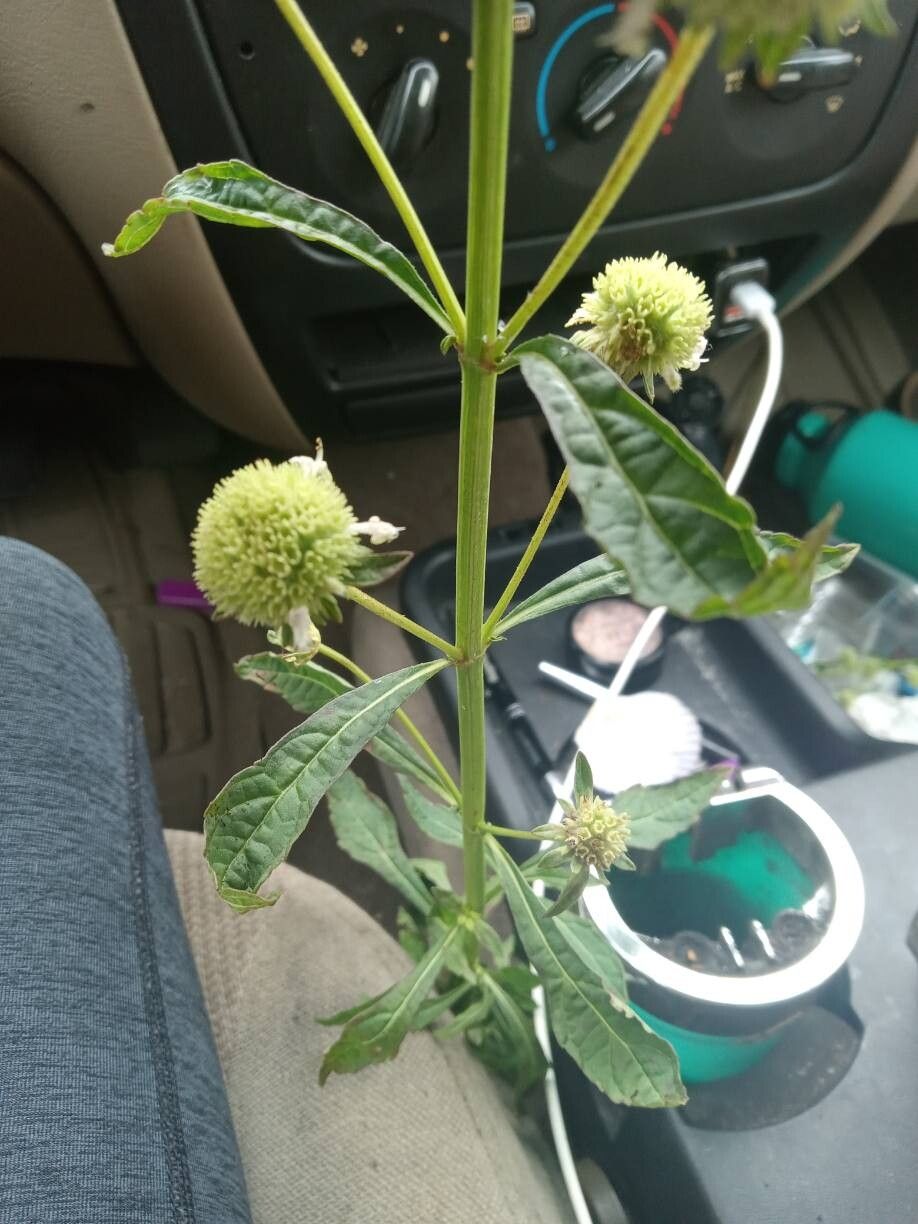
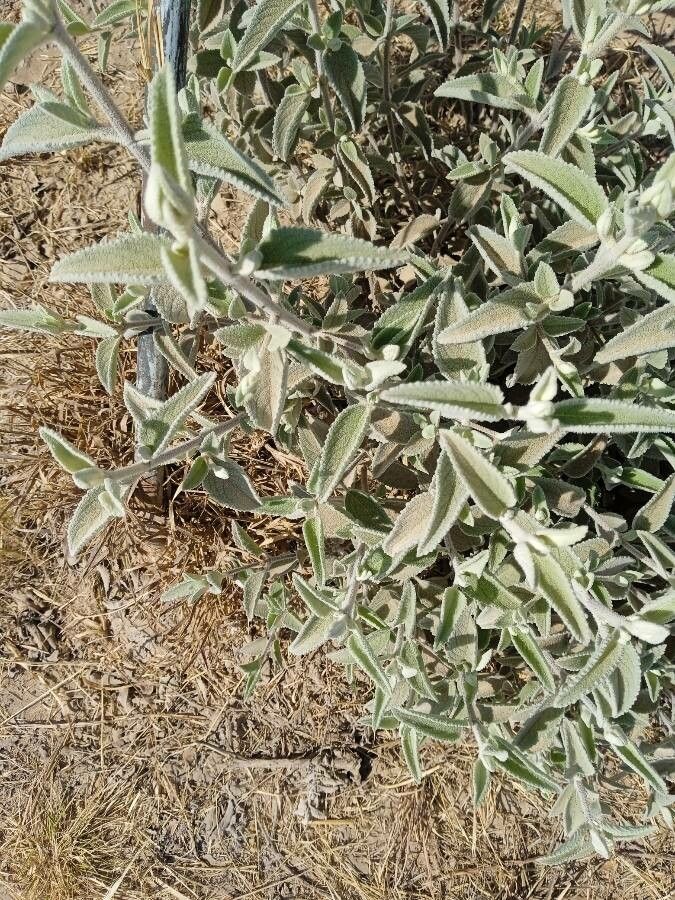
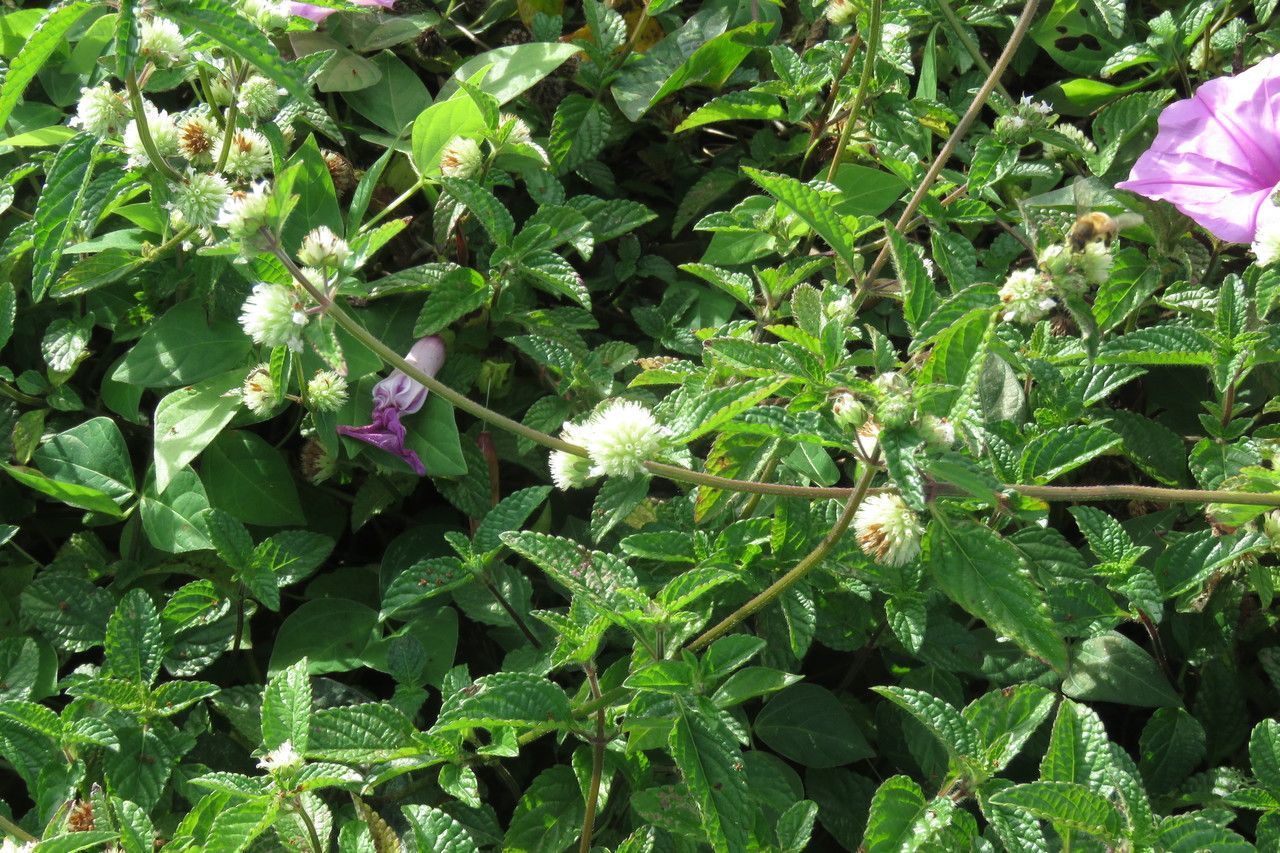
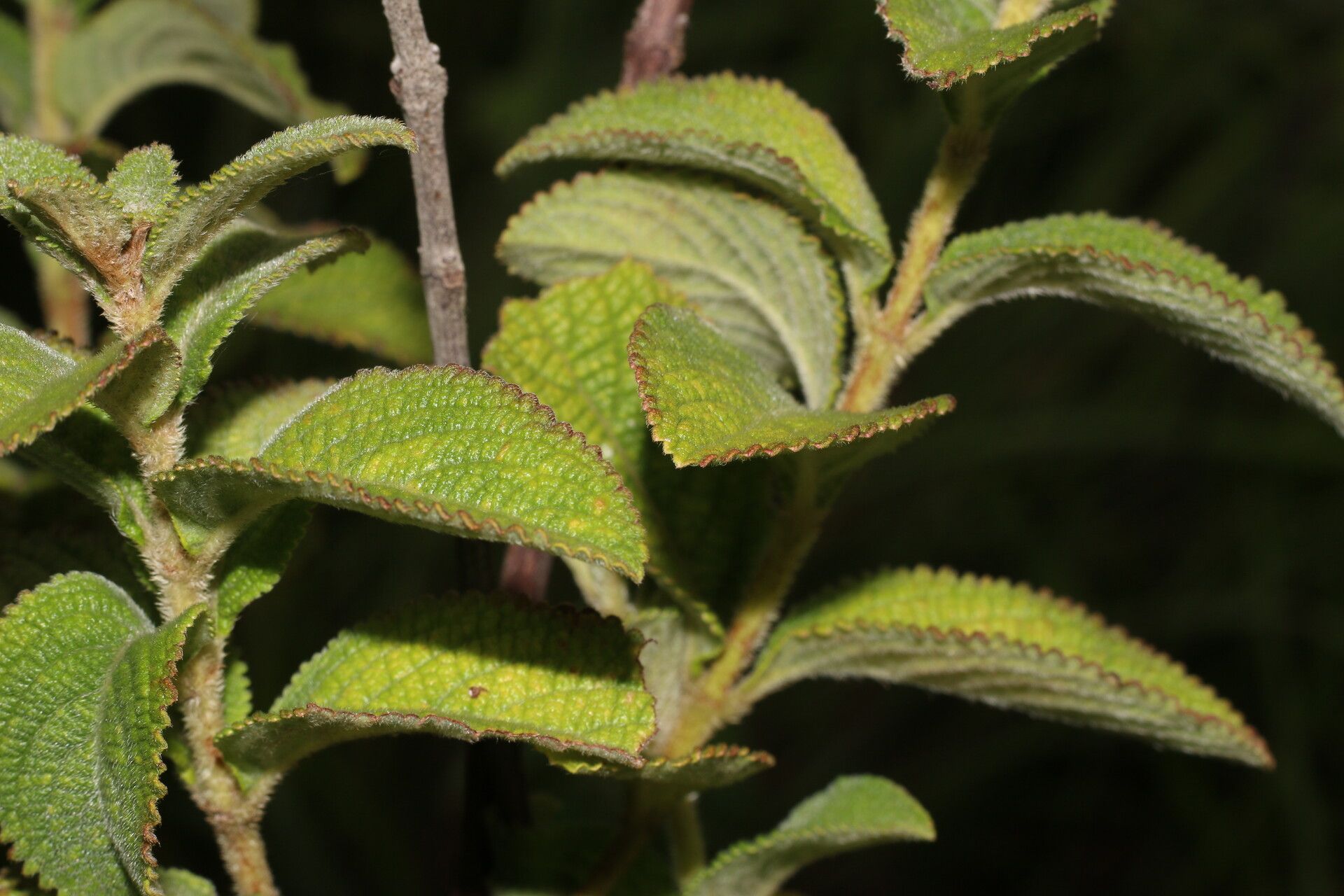
Mesosphaerum suaveolens, synonym Hyptis suaveolens, the pignut or chan, is a branching pseudocereal plant native to tropical regions of Mexico, Central, the West Indies, and South America, as well as being naturalized in tropical parts of Africa, Asia and Australia. It is generally 1–1.5 m (3.3–4.9 ft) tall, occasionally up to 3 m (9.8 ft). Stems are hairy, and square in cross section. Leaves are oppositely arranged, 2–10 cm (0.79–3.94 in) long, with shallowly toothed margins, and emit a strong minty odor if crushed. Flowers are pink or purple, arranged in clusters of 1–5 in the upper leaf axils.
Pignut is fairly resistant to disease and generally not prone to illness. However, it can be vulnerable to pests and diseases present in its surroundings. These problems are usually mild. In terms of care, this plant needs moderate maintenance. It requires regular pruning to keep a good appearance and support healthy growth. Fertilizing can also help encourage flowering. Pignut is suitable for anyone with outdoor space, such as a garden or patio, and does not demand extensive gardening experience. It may need more attention when grown indoors.
How to keep Hyptis Suaveolens.
Light
The pignut does best with the maximum daily sunlight, though it can cope with less-than-ideal exposure. It comes from habitats dominated by sun. Its light needs remain largely unchanged across growth stages. However, insufficient sun can stunt growth, while too much can scorch the leaves.
Temperature
Pignut comes from tropical areas where the climate is generally warm and humid. Consequently, it is adapted to high heat and moisture. It does not tolerate abrupt temperature shifts and prefers a steady thermal environment, so indoor temperature fluctuations should be avoided. It typically cannot withstand cold conditions and needs warmer temperatures to grow. If temperatures fall too low, the plant may stop growing or could die.
Fertilizer
Pignut does well with regular, light applications of fertilizer to encourage healthy leaf development. Fertilize Pignut roughly once a month during the summer. Nitrogen is important for foliage, and adding nitrogen-rich sources helps Pignut thrive.
Botanical profile.
- Plant Type
- Herb
- Life Cycle
- Annual, Perennial
- Genus
- Hyptis
- Family
- Lamiaceae
- Hardiness Zone
- 9-11
- Mature Height
- 0.91 m to 3.05 m
- Mature Spread
- 49 cm to 91 cm
- Leaf Color
- Green, Blue
- Leaf Type
- Evergreen
- Flower Color
- White
- Flower Size
- 2.54 cm
- Bloom Time
- Summer, Fall
- Planting Time
- Spring, Autumn
- Harvest Time
- Late summer, Fall, Early winter
- Native Area
- Colombia, Bahamas, Belize, Cuba, Honduras, Mexico, Bolivia, Venezuela, Peru, Guyana, Nicaragua, Ecuador, Costa Rica, Panama, Jamaica
Other names.