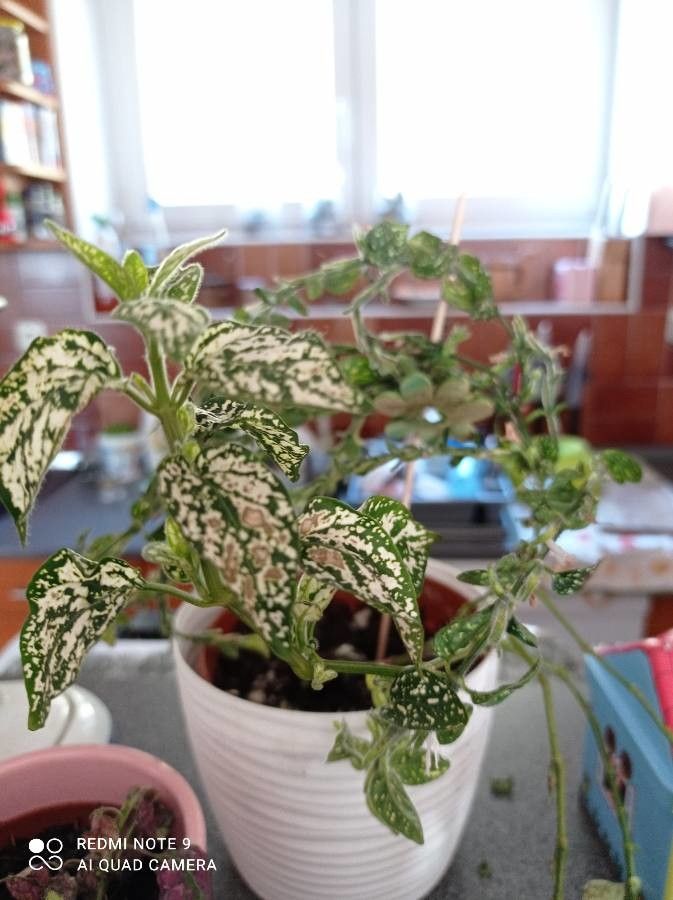
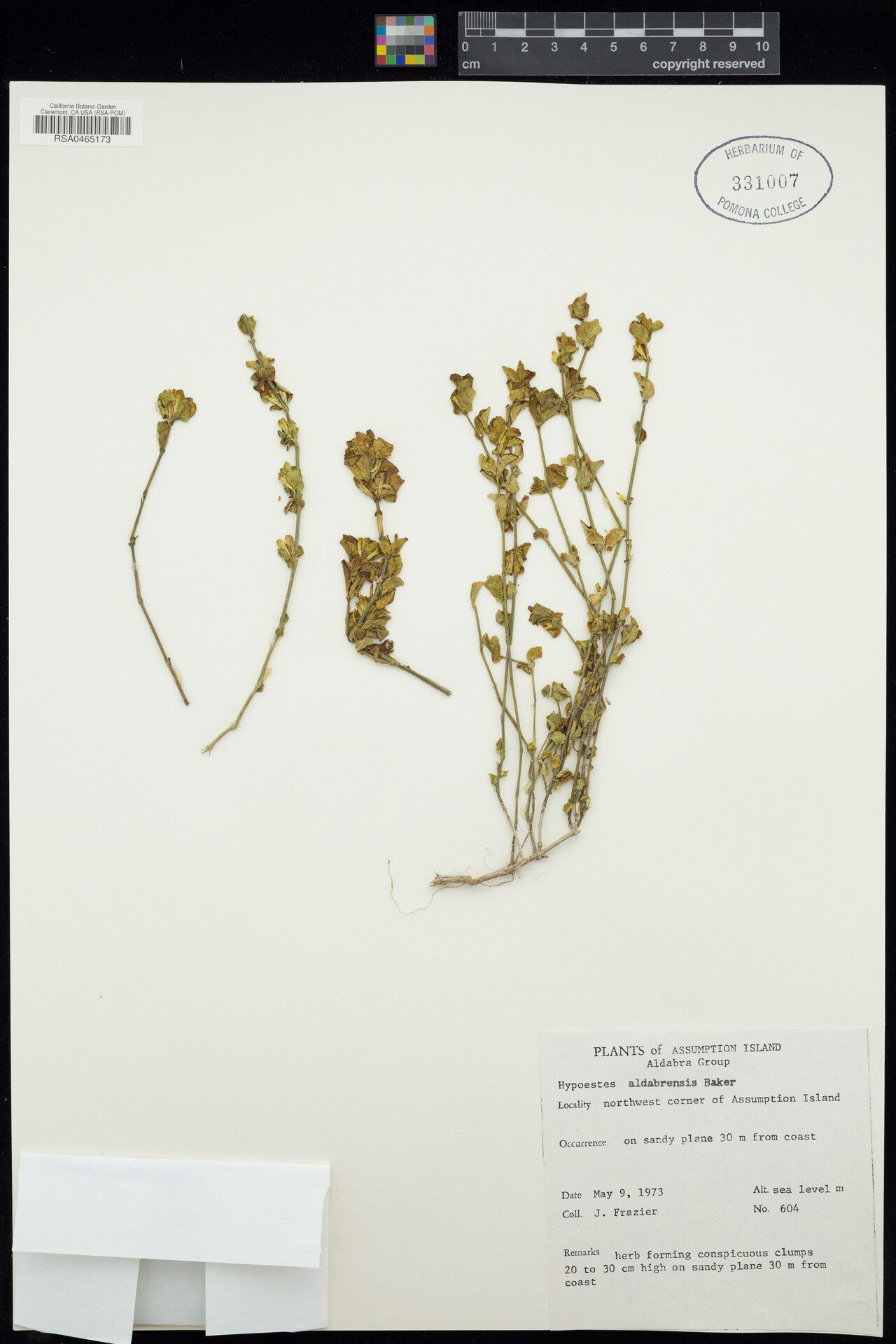
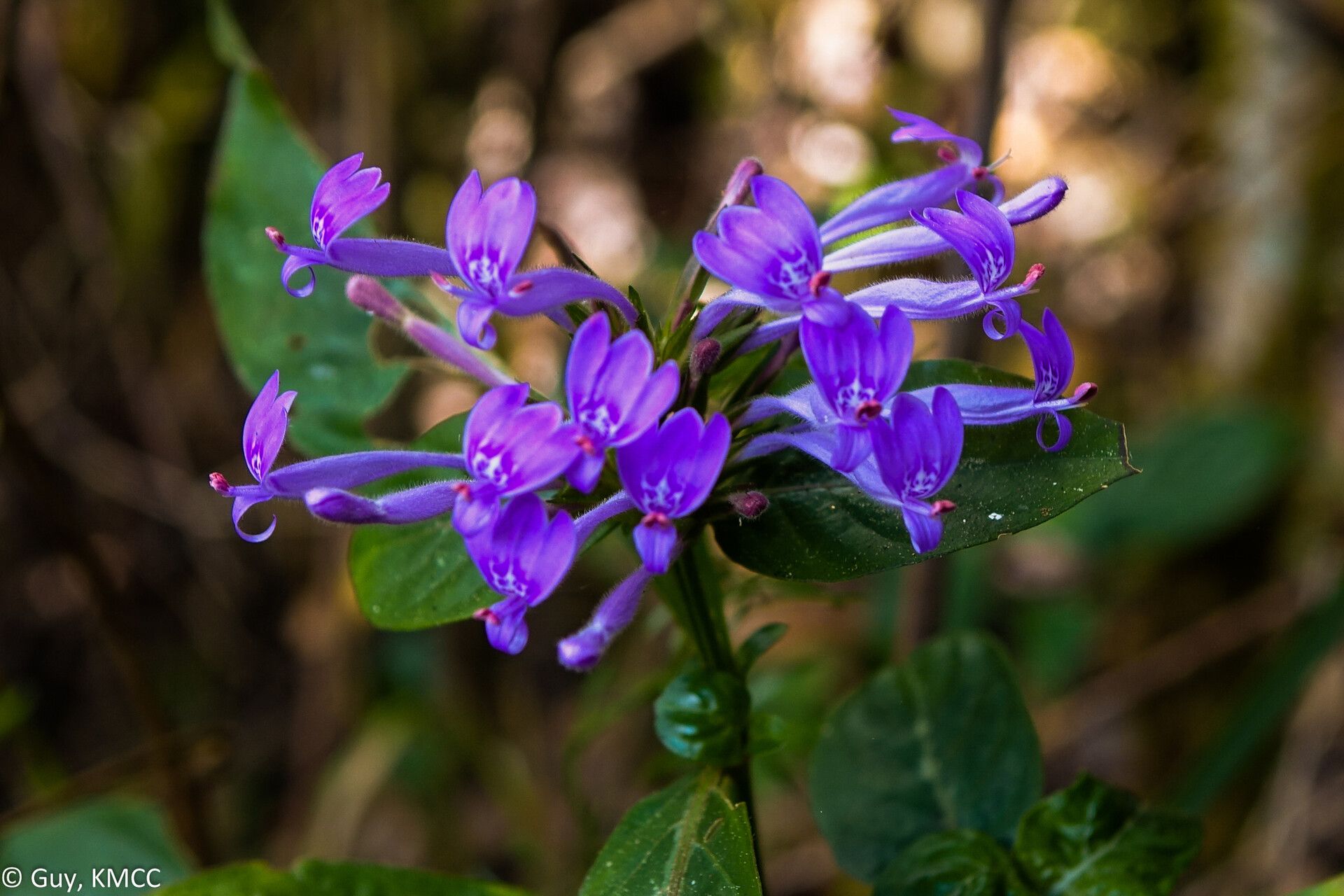
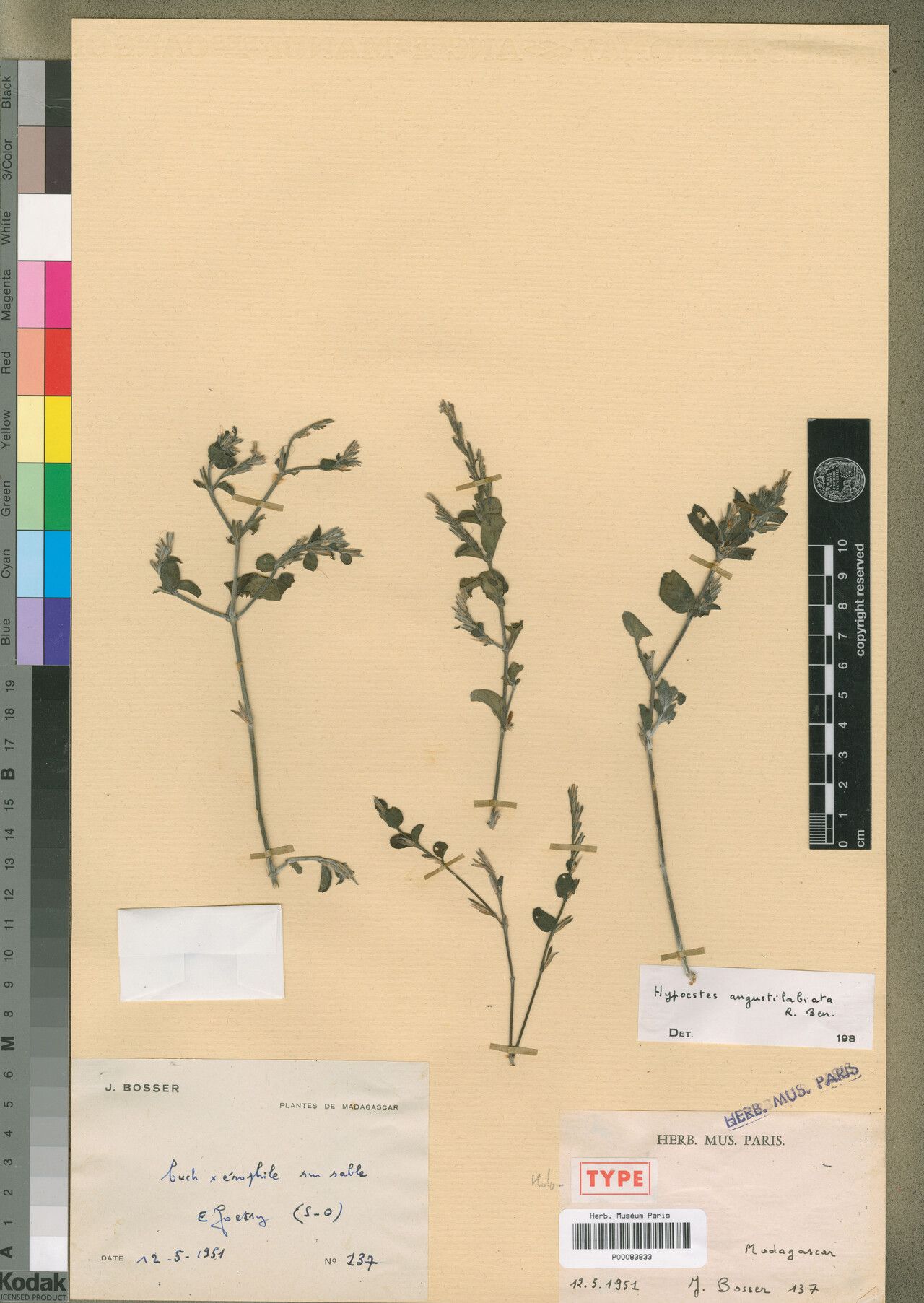
Hypoestes sanguinolenta, commonly known as the polka dot plant, is a popular houseplant native to Madagascar. It belongs to the Acanthaceae family and is renowned for its attractive foliage, which features pink or red spots on green leaves. The plant typically grows up to 30 cm in height and has a bushy appearance.
The polka dot plant thrives in bright, indirect light and well-draining soil. It requires regular watering, but caution should be taken to avoid overwatering, as this can lead to root rot. Propagation of the plant can be easily achieved through stem cuttings or by dividing the root ball.
Due to its low maintenance and appealing appearance, the polka dot plant is a favored choice for indoor gardening. It adds a vibrant pop of color and texture to any space, making it an excellent option for those seeking a visually appealing and easy-to-care-for houseplant.
The polka dot plant is generally resistant to disease and is usually not prone to illness. However, it can develop leaf spots if light and air circulation are poor or if it is overwatered. Its care level is considered easy, since it mainly needs regular watering and little else. The polka dot plant is well suited for people who lack the time or energy to provide frequent care.
How to keep Hypoestes Sanguinolenta.
Light
The polka dot plant flourishes in moderate light but can also cope with low light conditions. Being native to understory environments, it's accustomed to less bright circumstances. Nonetheless, inadequate light can result in stunted growth and the disappearance of unique color patterns. Excessive exposure, on the other hand, may lead to leaf scorching.
Temperature
The polka dot plant's native habitat requires a temperature range of 20 to 38 ℃ (68 to 100.4 ℉) for optimal growth. This type favors warm climates yet isn't resilient to intense heat. Manage the temperature throughout the various seasons, steering clear of exposing it to direct sun during hotter periods and maintaining a temperature over 10 ℃ (50 ℉) in the colder months.
Fertilizer
The polka dot plant necessitates the greatest amount of fertilizer during its main growth stage, typically in the spring, summer, and beginning of fall. The fertilizer is needed to supply crucial nutrients that might be deficient in the ground, supporting vigorous stem and root growth, in addition to appealing foliage, which is a distinctive characteristic of this specific plant.
Pot & Repot
When you are looking to repot the Polka dot plant, select a pot that's 1-2 inches (2.5-5 cm) bigger with plenty of drainage ability. Make sure to use a potting mix that drains well. Preferably do the repotting in spring or autumn, and position the root ball so it's somewhat beneath the flower pot's rim. After you've repotted, water the plant thoroughly and place it in a warm area with indirect light.
Botanical profile.
- Plant Type
- Herb
- Life Cycle
- Perennial
- Genus
- Hypoestes
- Family
- Acanthaceae
- Hardiness Zone
- 10-11
- Mature Height
- 10 cm to 49 cm
- Mature Spread
- 40 cm to 49 cm
- Leaf Color
- Green, Variegated, White, Red
- Leaf Type
- Evergreen
- Flower Color
- Purple
- Flower Size
- 2.54 cm
- Bloom Time
- Mid spring, Late spring, Summer
- Planting Time
- Spring, Summer, Autumn, Winter
- Harvest Time
- All year round
- Native Area
- Madagascar