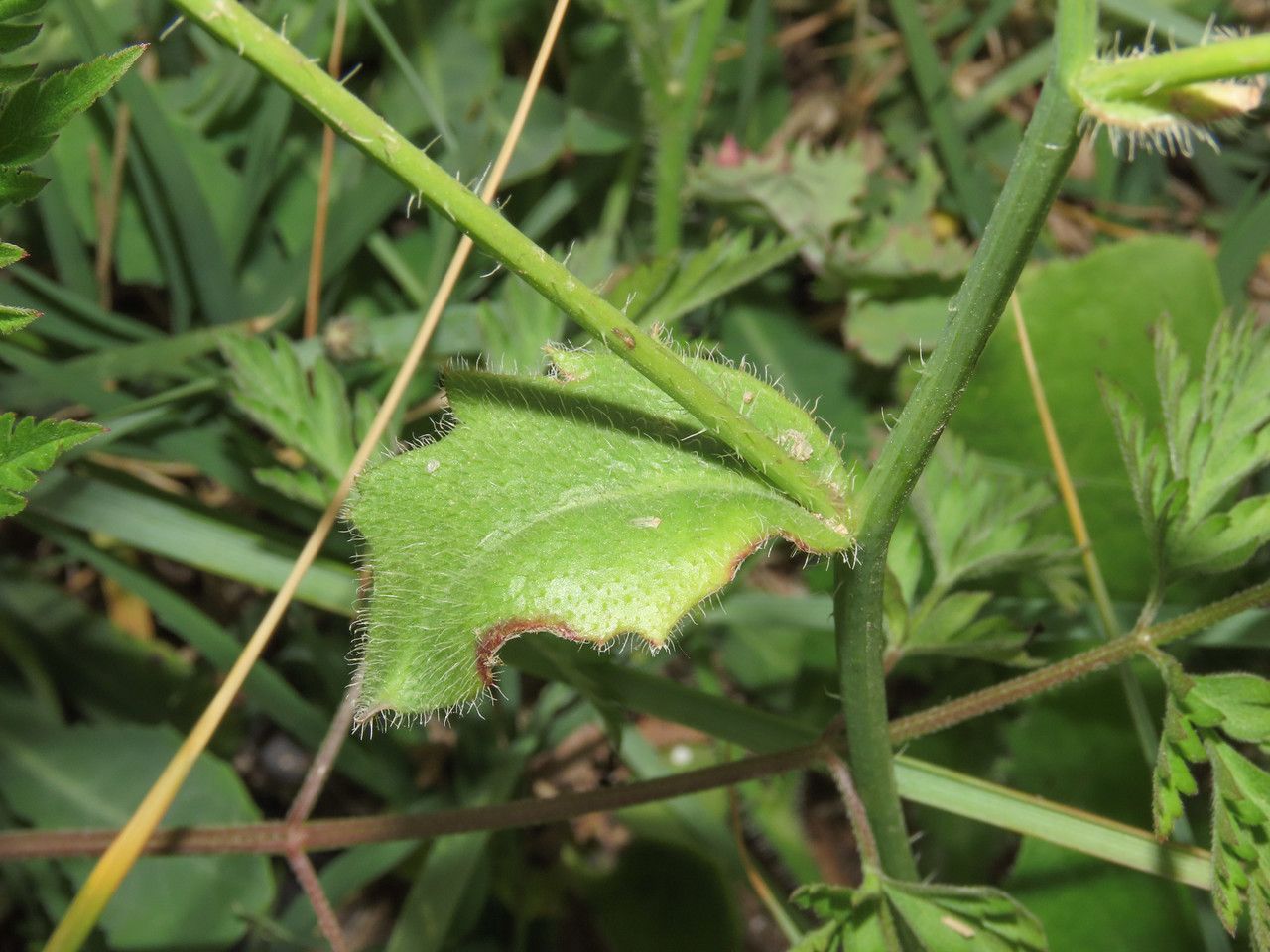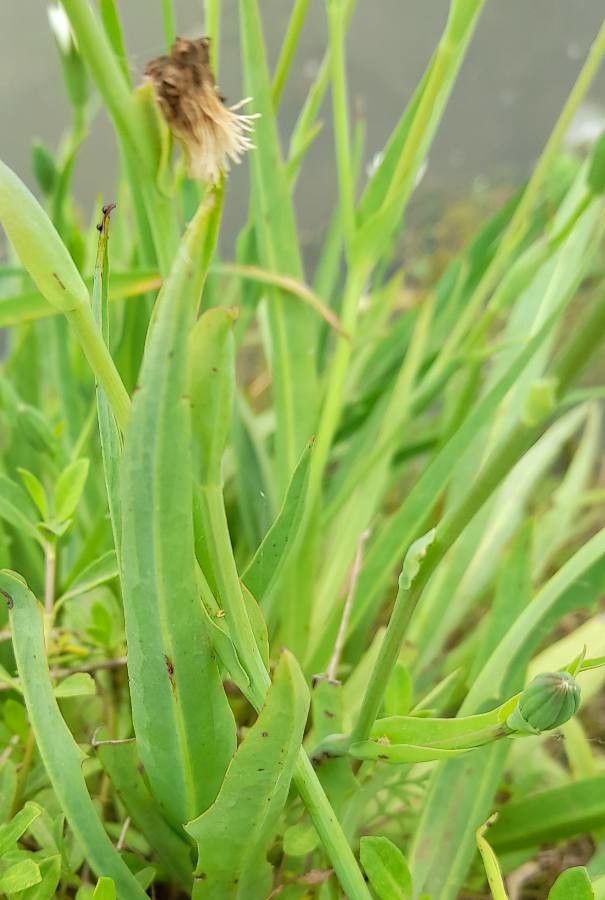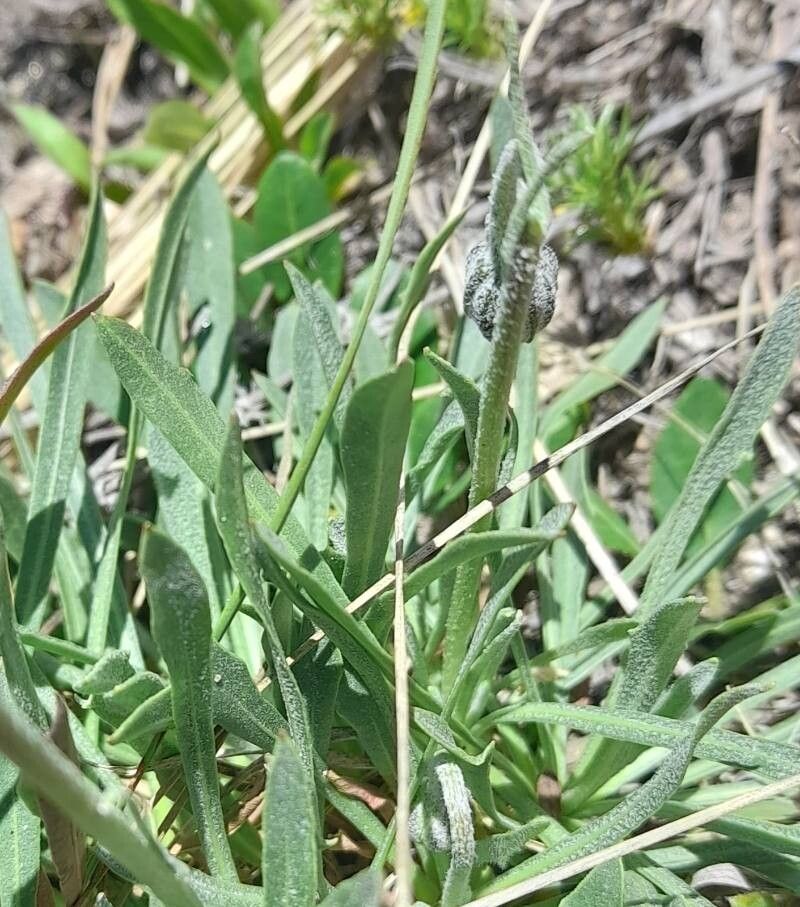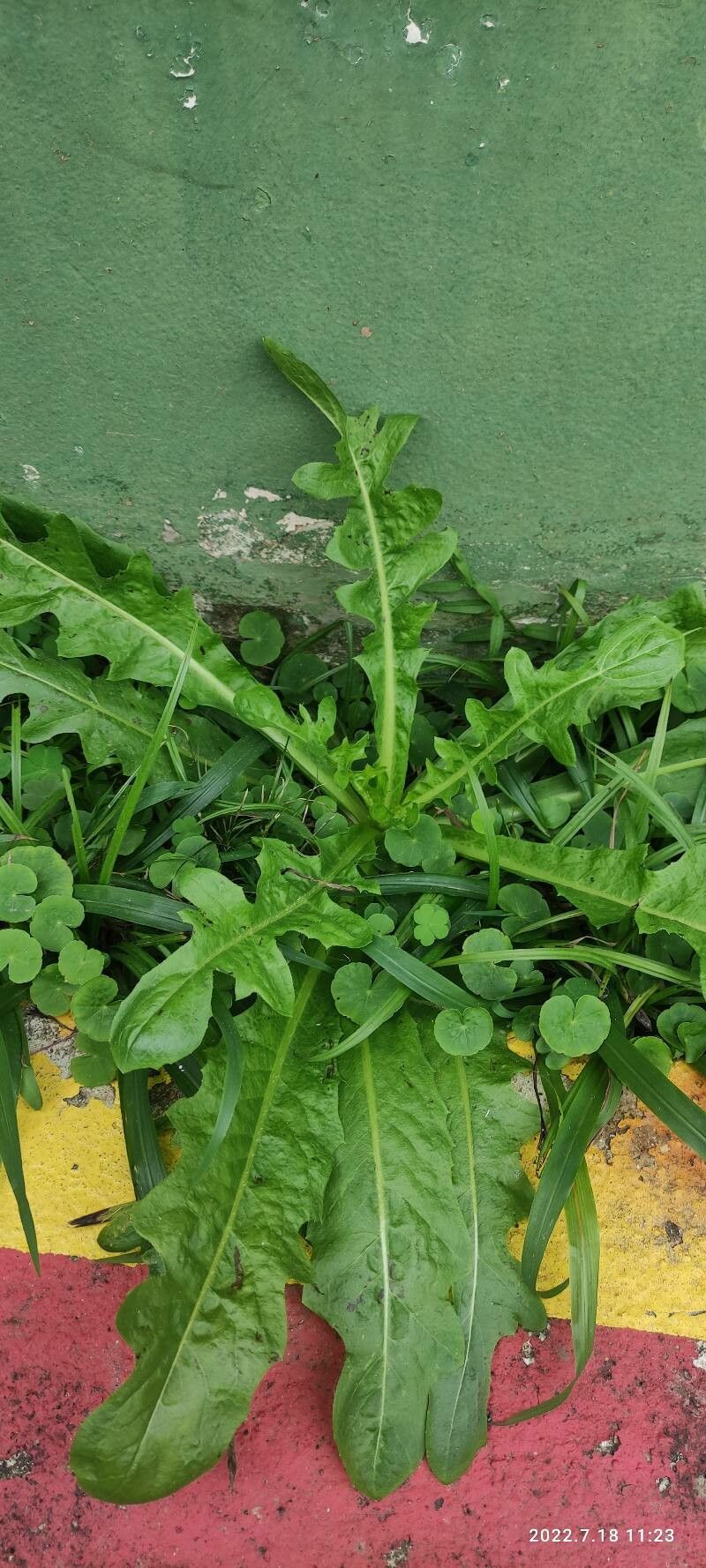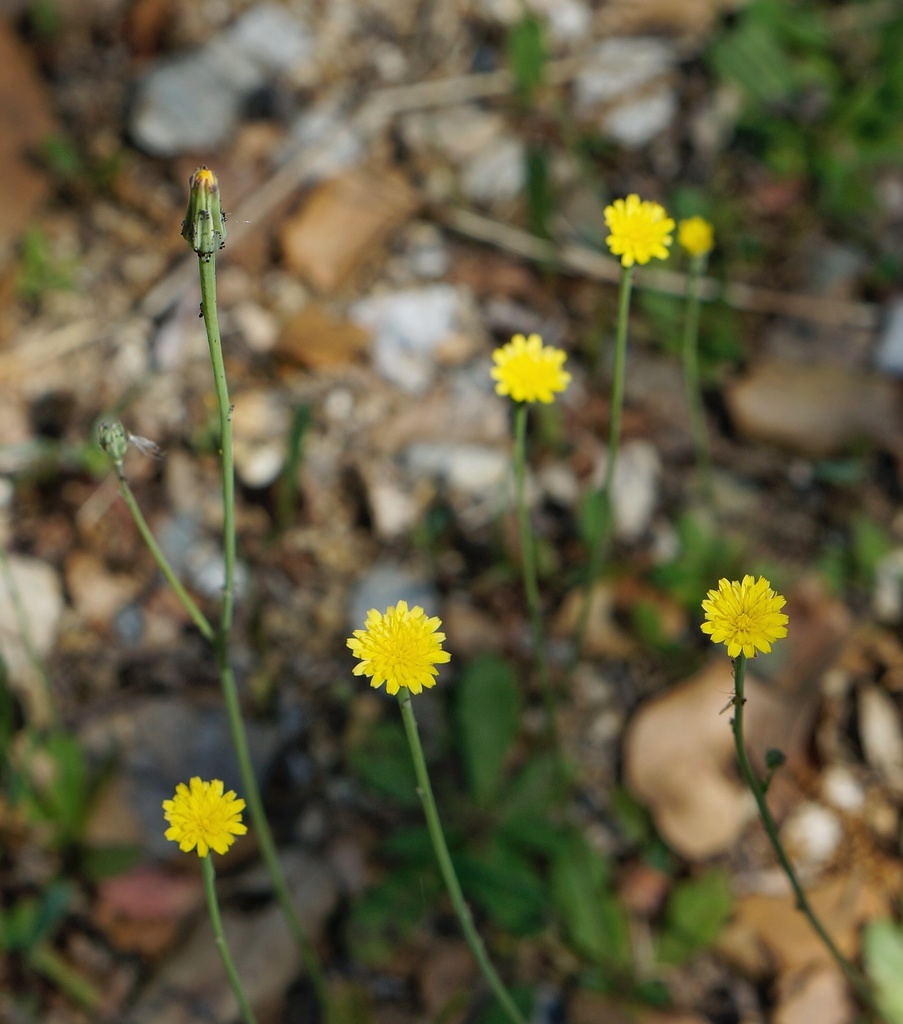
Hypochaeris glabra is a species of flowering plant in the tribe Cichorieae within the family Asteraceae known by the common name smooth cat's ear. It is native to Europe, North Africa, and the Middle East but it can be found on other continents where it is an introduced species and a widespread weed. It has become widespread in Africa, southern and southeastern Asia, Australia, and parts of the Americas (especially California).Hypochaeris glabra is an annual herb growing a small taproot, a basal rosette of leaves, and one or more thin stems 10–40 cm (4–16 in) tall. The leaves are 2–10 cm (3⁄4–4 in) long, smooth along the edges or with small lobes, and green in color, sometimes with a purplish tint near the veins. Atop the thin, naked stems are flower heads with small overlapping purple-tipped phyllaries and bright yellow ray florets. The fruit is a cylindrical achene with a white pappus almost 1 cm (3⁄8 in) long.
Smooth Cat's Ear has good resistance to disease and is generally not highly susceptible to illnesses. However, it can be affected by pests and diseases present nearby. These infections are typically mild. In terms of care, this plant requires a moderate level of maintenance. It should be pruned regularly to maintain its appearance and encourage healthy growth. Fertilizing can also help increase flowering. Smooth Cat's Ear is suitable for anyone with outdoor space, such as a garden or patio, and does not require extensive gardening experience. It may need more attention when grown indoors.
How to keep Hypochaeris Glabra.
Light
Smooth Cat's Ear is native to bright, open areas and flourishes in full sun. It will tolerate partial shade but prefers direct sunlight for the best growth. This species, which can be annual or biennial, is noted for its sun-loving habit.
Water
Smooth Cat's Ear is well-suited for arid conditions, as it demonstrates a high tolerance for drought. This plant requires minimal water, with weekly watering being sufficient. Although it is typically grown outdoors, it thrives in full sunlight. During dry periods, it may enter dormancy to conserve water.
Temperature
Smooth Cat's Ear comes from habitats where temperatures range from 68 to 95 °F (20 to 35 °C). It does well in these conditions, so when growing it indoors, it's advisable to adjust the temperature with the seasons.
Fertilizer
Smooth Cat's Ear benefits from regular, light applications of fertilizer to encourage healthy leaf growth. You should fertilize Smooth Cat's Ear about once a month during the summer months. Nitrogen is essential for foliage, and providing nitrogen-rich sources helps Smooth Cat's Ear thrive.
Botanical profile.
- Plant Type
- Herb
- Life Cycle
- Annual
- Genus
- Hypochaeris
- Family
- Asteraceae
- Hardiness Zone
- 7-10
- Mature Height
- 10 cm to 49 cm
- Mature Spread
- 40 cm
- Leaf Color
- Green, Blue
- Leaf Type
- Semi-evergreen
- Flower Color
- Yellow
- Flower Size
- 3.05 cm
- Bloom Time
- Mid spring, Late spring, Early summer
- Planting Time
- Spring, Summer
- Harvest Time
- Early summer, Mid summer
- Native Area
- Libya, Turkey, Austria, Sweden, Slovakia, Montenegro, Croatia, Slovenia, Morocco, Russia, Germany, Romania, Belgium, Netherlands, France, Saudi Arabia, Portugal, Tunisia, Czech Republic, Cyprus, Bulgaria, Poland, Greece, Ukraine, Lebanon, Serbia, Norway, Italy, Spain, Switzerland, Denmark, Albania, Ireland, United Kingdom, Algeria
Other names.
Reader questions.
How should I water my Smooth Cat's Ear plant?
To water Smooth Cat's Ear, you have several options such as using a garden hose with a spray nozzle, a watering can, or any common watering tool. Fortunately, this plant is not too fussy about the water source and can thrive with rainwater, tap water, or filtered water. However, it is advisable to avoid watering from above as this can harm the leaves and flowers and potentially lead to disease. Instead, setting up a drip irrigation system is often the best method for watering. These systems are effective because they deliver water evenly and directly to the soil. For Smooth Cat's Ear growing in containers, a similar watering approach can be used, but with different tools. In this case, you can use a cup, watering can, or tap water to apply water directly to the soil of the container.
What are the sun requirements for Smooth Cat's Ear?
Smooth Cat's Ear, known botanically as Hypochaeris glabra, thrives best in environments that mimic its native bright, open landscapes. It requires full sun exposure, which means it should receive more than 6 hours of direct sunlight daily for optimal growth. The plant can also tolerate partial sun, which consists of about 3-6 hours of sunlight a day. It's important to monitor how sunlight moves through your garden to select the best spots that offer a balance of light and shade, ensuring the plant's health and happiness.
What is Smooth Cat's Ear and where does it originate?
Smooth Cat's Ear, with its botanical name Hypochaeris glabra, is a plant that originates from environments with temperatures ranging from 68 to 95 °F (20 to 35 °C). It thrives in these conditions, making it suitable for growth in similar indoor environments by adjusting temperatures through the seasons.
What do I need to do if I give too much or too little water to my Smooth Cat's Ear?
The solution for underwatering the Smooth Cat's Ear is simple: water it more regularly when you notice it lacks moisture. However, overwatering can be a more serious problem if not caught early. Overwatering can lead to diseases and eventual death of the plant. To prevent this, choose a suitable location for the plant that gets plenty of sunlight to dry out the soil and has proper drainage to avoid water pooling. If you overwater a potted Smooth Cat's Ear, consider transferring it to a new pot with better drainage and loose soil.
How does artificial lighting support Smooth Cat's Ear growth indoors?
When growing Smooth Cat's Ear indoors where natural sunlight might be insufficient, especially during winter or in less sun-exposed areas, artificial lighting can provide a crucial alternative. For optimal growth, indoor plants require specific types of artificial lighting that mimic the natural light spectrum. LED lights are recommended because they can be customized to supply the wavelengths needed by the plants. Full sun plants need 30-50W/sq ft of artificial light, while partial sun plants require 20-30W/sq ft. The light source should be placed 12-36 inches above the plant and be on for 8-12 hours per day to mimic natural daylight conditions effectively.
Does Smooth Cat's Ear require frost protection in winter?
Smooth Cat's Ear has strong cold resistance and usually does not require special frost protection measures during the winter. However, if temperatures are expected to drop below -15°C, providing some form of cold protection is still important. This can be done by covering the plant with soil or straw. Additionally, it is recommended to water the plant abundantly before the first freeze in autumn, ensuring the soil remains moist and enters a frozen state to prevent drought and water scarcity during the winter and early spring.
How often do I need to water my Smooth Cat's Ear plant?
Smooth Cat's Ear requires regular watering throughout the growing season. In the spring, water once a week. As the season progresses and it gets warmer, you may need to water two to three times a week. However, watering too much can harm the plant. It's important to keep the soil moist but not wet, regardless of how often you water. If your Smooth Cat's Ear is in a pot, you'll need to water it more frequently, as pot soil can dry out faster. Generally, water container-grown plants a few times a week, compared to just once a week for those in the ground.
What are the symptoms of light deficiency in Smooth Cat's Ear?
When Smooth Cat's Ear does not receive adequate sunlight, it may exhibit several symptoms indicating light deficiency. These include the appearance of smaller new leaves, leggy or sparse growth, faster leaf drop, slower or halted growth, and the development of lighter-colored or chlorotic leaves. Direct consequences of excessive sunlight are also observed, such as sunscald, which damages plant tissue, leaf curling as a defense mechanism against water loss, wilting due to increased transpiration, and leaf scorching characterized by dry, brown edges on leaves.
How does low temperature affect Smooth Cat's Ear, and what are the solutions?
Smooth Cat's Ear is cold-tolerant and performs best when temperatures are above 20°C, but it should be kept above 0°C during winter. If temperatures fall below -15°C, you might not notice any change during the winter, but there may be a decrease in sprouting or even no sprouting during springtime. In such cases, the solution is to remove any parts in spring that have failed to sprout.
How much water does my Smooth Cat's Ear plant need?
Determining how much water to give your Smooth Cat's Ear can be approached in a few different ways. Some gardeners prefer to gauge the moisture level of the soil by feeling it, suggesting that you should water until the top six inches are moist. Alternatively, you can use a fixed measurement, such as giving your plant about two gallons of water per week, considering factors like temperature and soil dryness. However, it's important to be mindful of overwatering if your plant requires less than two gallons per week. When growing Smooth Cat's Ear in a container, a different method is needed. It's recommended to water enough to moisten all the dry layers of soil, which can be tested by feeling the soil with your finger. Another indicator is when you observe a slight trickle of excess water draining from the pot's holes.
What solutions are available for light deficiency in Smooth Cat's Ear?
To address light deficiency in Smooth Cat's Ear, gradual adjustment to sunlight exposure is key. For indoor plants, shifting them to sunnier spots or near south-facing windows can be beneficial, along with the use of artificial light for at least 8 hours daily if moving the plant is not feasible. Outdoors, it's essential to gradually relocate plants to sunnier locations while avoiding sudden intense light exposure to prevent sunburn. If sunlight is obstructed, consider pruning nearby trees or transplanting smaller plants to more sun-exposed areas. Remember, while plants can recover with increased light exposure, parts already affected by insufficient light may not revive, highlighting the importance of ensuring new growth receives proper sunlight.
How does high temperature affect Smooth Cat's Ear, and what are the solutions?
During the summer, it's important to keep the Smooth Cat's Ear plant below 35°C. Exposure to temperatures exceeding 41°C can cause the leaves to lighten in color, become prone to curling, susceptible to sunburn, and in severe cases, lead the entire plant to wilt and become dry. To address this, trim away any sunburned and dried-up parts. Move the plant to a shaded location, especially during the midday and afternoon sun, or use a shade cloth. Ensure the plant is watered in the morning and evening to keep the soil moist.