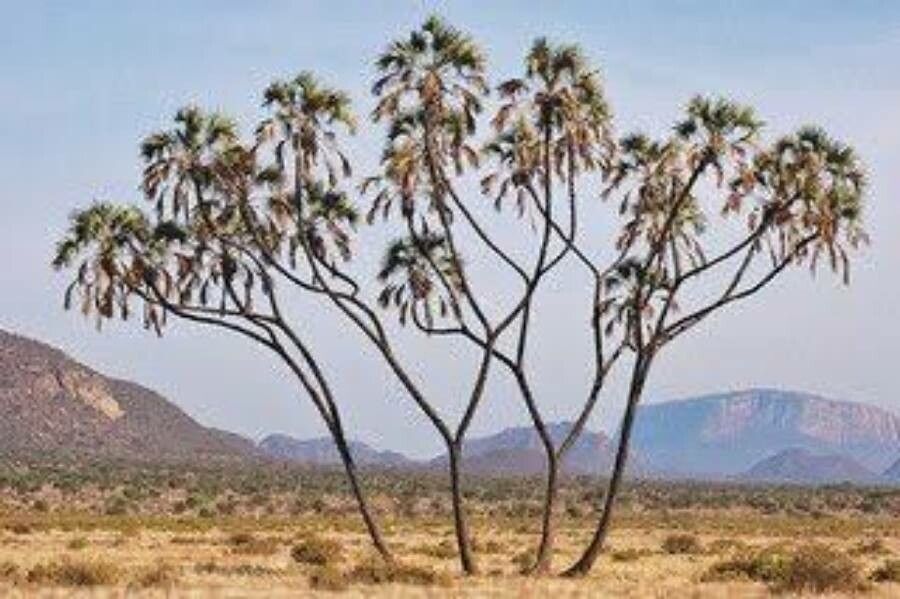
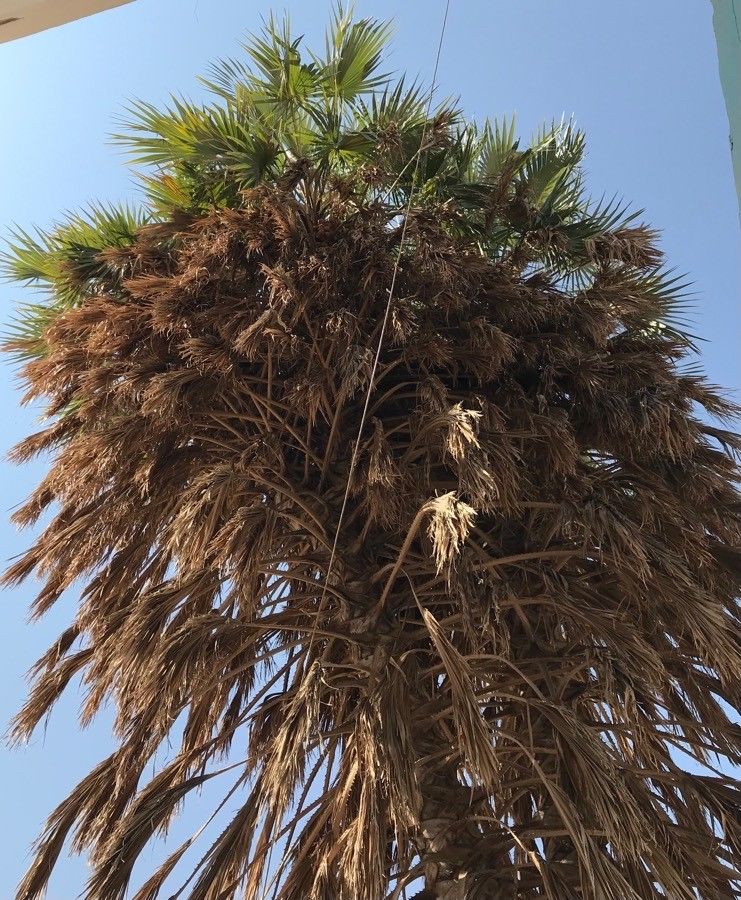
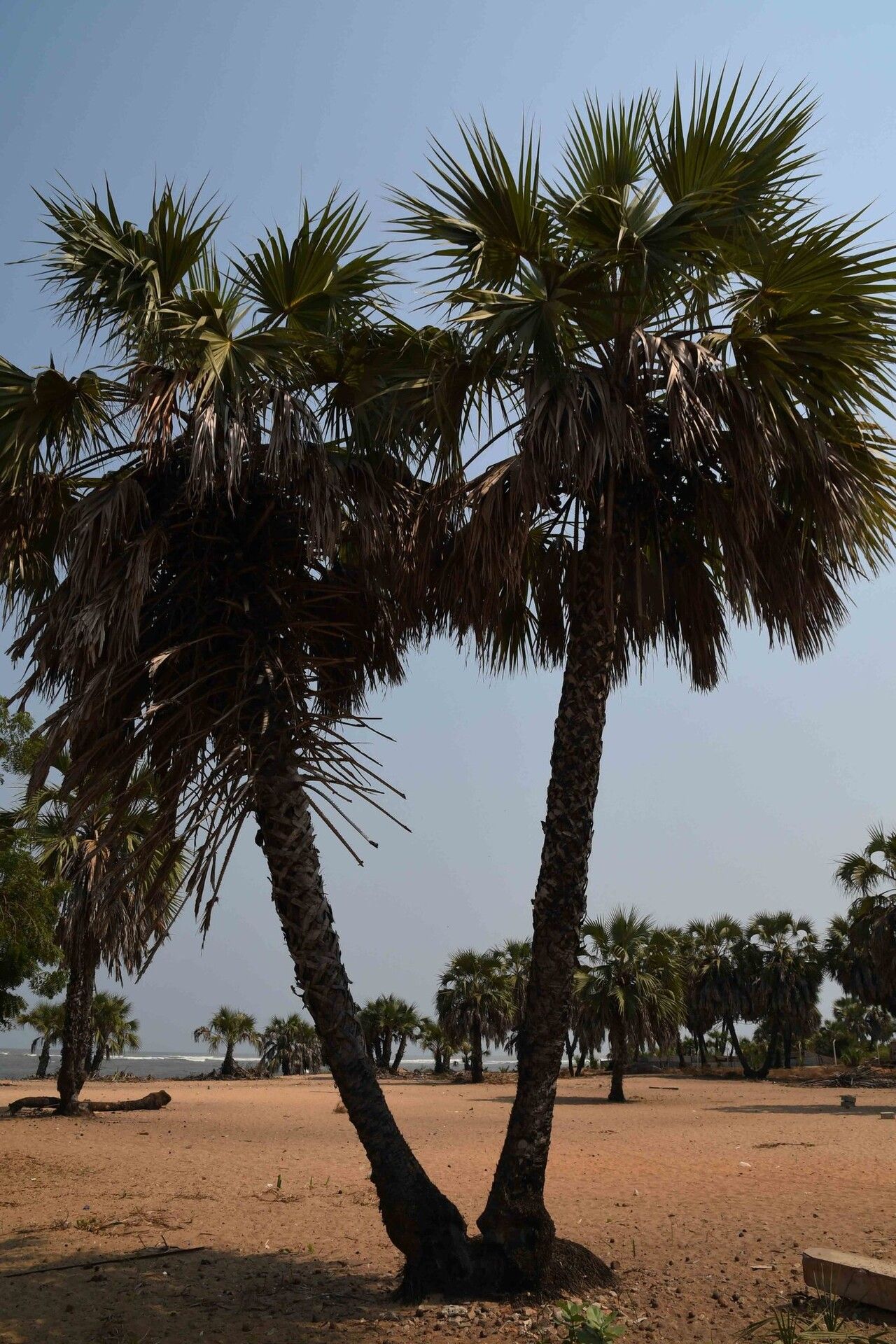
Hyphaene petersiana, commonly known as the real fan palm or doum palm, is a species of palm tree native to Africa. This slow-growing tree can reach heights of up to 15 meters and features a distinctive fan-shaped crown of large leaves. These leaves can grow up to 3 meters in length and have sharp spines along their edges.
The doum palm produces large clusters of oval-shaped fruit that are about 15 cm long. The fruit has a hard outer shell and contains sweet, edible pulp when ripe. This pulp can be eaten raw or used to make juice or wine.
The doum palm holds significant traditional value in Africa, serving as a food source for both humans and animals and being used for various medicinal purposes. Indigenous people have used it for centuries to treat ailments such as fever, diarrhea, dysentery, and respiratory infections.
Beyond its practical uses, Hyphaene petersiana also plays an important role in African culture. Its leaves are often used for weaving baskets and mats, while its wood is utilized for making furniture and constructing houses.
Overall, Hyphaene petersiana is a plant of great cultural significance that provides practical benefits, such as a food source with medicinal properties, making it an important species within African communities today.
Real fan palm possesses strong resistance to disease and is generally unlikely to be affected by illnesses. In terms of upkeep, this plant is fairly low-maintenance. When grown outdoors it needs only minimal watering, and larger plants typically do not require pruning. However, smaller plants should be pruned after they finish blooming. The Real fan palm is suitable for anyone with an outdoor area, such as a garden or deck, and does not demand extensive gardening experience.
How to keep Hyphaene Petersiana.
Light
The real fan palm comes from open habitats, such as sunny meadows and forest edges, which offer plenty of light. It does best in full sun but can also tolerate partial sun, adapting well to different light conditions.
Temperature
Real fan palm comes from tropical regions, where the climate is generally warm and humid. Therefore it is well adapted to high temperatures and humidity. It does not tolerate sudden temperature changes and prefers a stable temperature environment, so it is important to avoid temperature fluctuations indoors. It typically cannot withstand cold temperatures and requires warmer conditions for growth. If the ambient temperature drops too low, the plant may stop growing or even die.
Fertilizer
Fertilize your Real fan palm in early spring to encourage healthy growth. Regular feeding boosts overall health, producing vigorous growth, greater tolerance of harsh conditions, and improved resistance to pests and diseases. Keep to a consistent fertilization schedule for your Real fan palm to maintain vibrant, richly colored foliage and a lush appearance.
Pruning
The real fan palm needs minimal pruning, which is best done in early spring. Remove dead fronds and crowded branches to improve airflow and prevent pests. Regularly check for basal suckers to maintain a single-trunk appearance, enhancing both the plant's aesthetics and the health of its foliage.
Botanical profile.
- Plant Type
- Palm
- Life Cycle
- Perennial
- Genus
- Hyphaene
- Family
- Arecaceae
- Hardiness Zone
- 10-12
- Mature Height
- 10.06 m to 20.12 m
- Mature Spread
- 4.88 m to 7.92 m
- Leaf Color
- Dark Green
- Leaf Type
- Evergreen
- Bloom Time
- Late spring, Summer
- Planting Time
- Spring, Summer
- Harvest Time
- Late summer, Fall
- Native Area
- Angola, Burundi, Mozambique, South Africa, Namibia, Rwanda, Congo (DRC), Tanzania, Zimbabwe