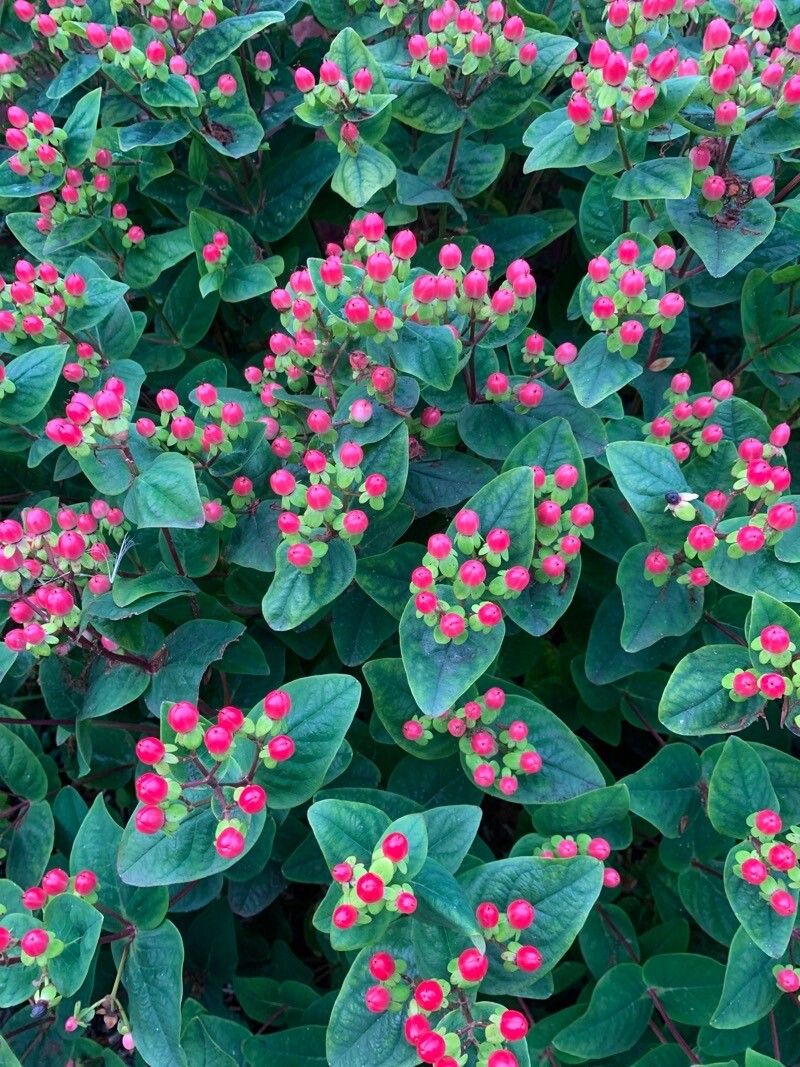
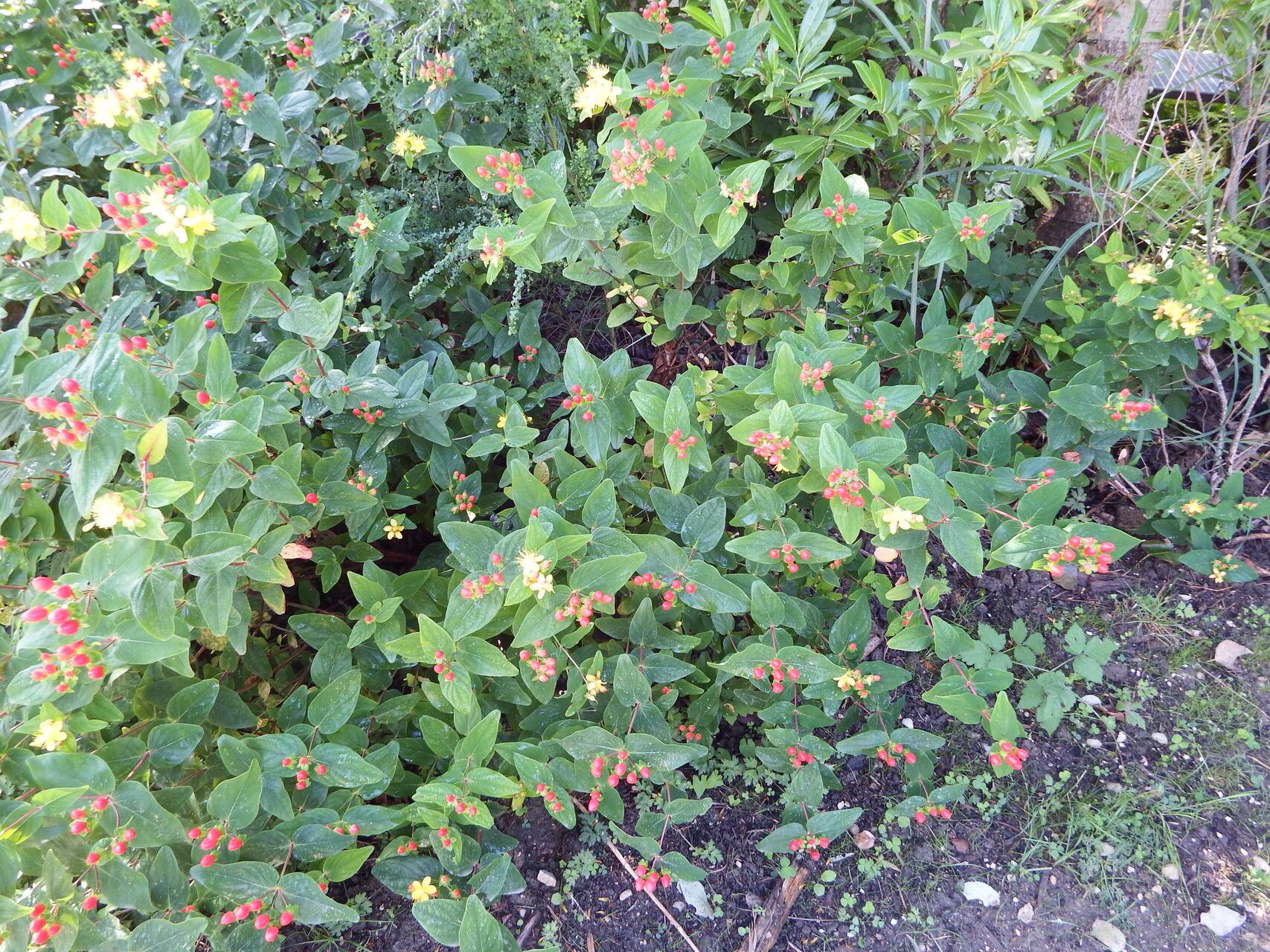
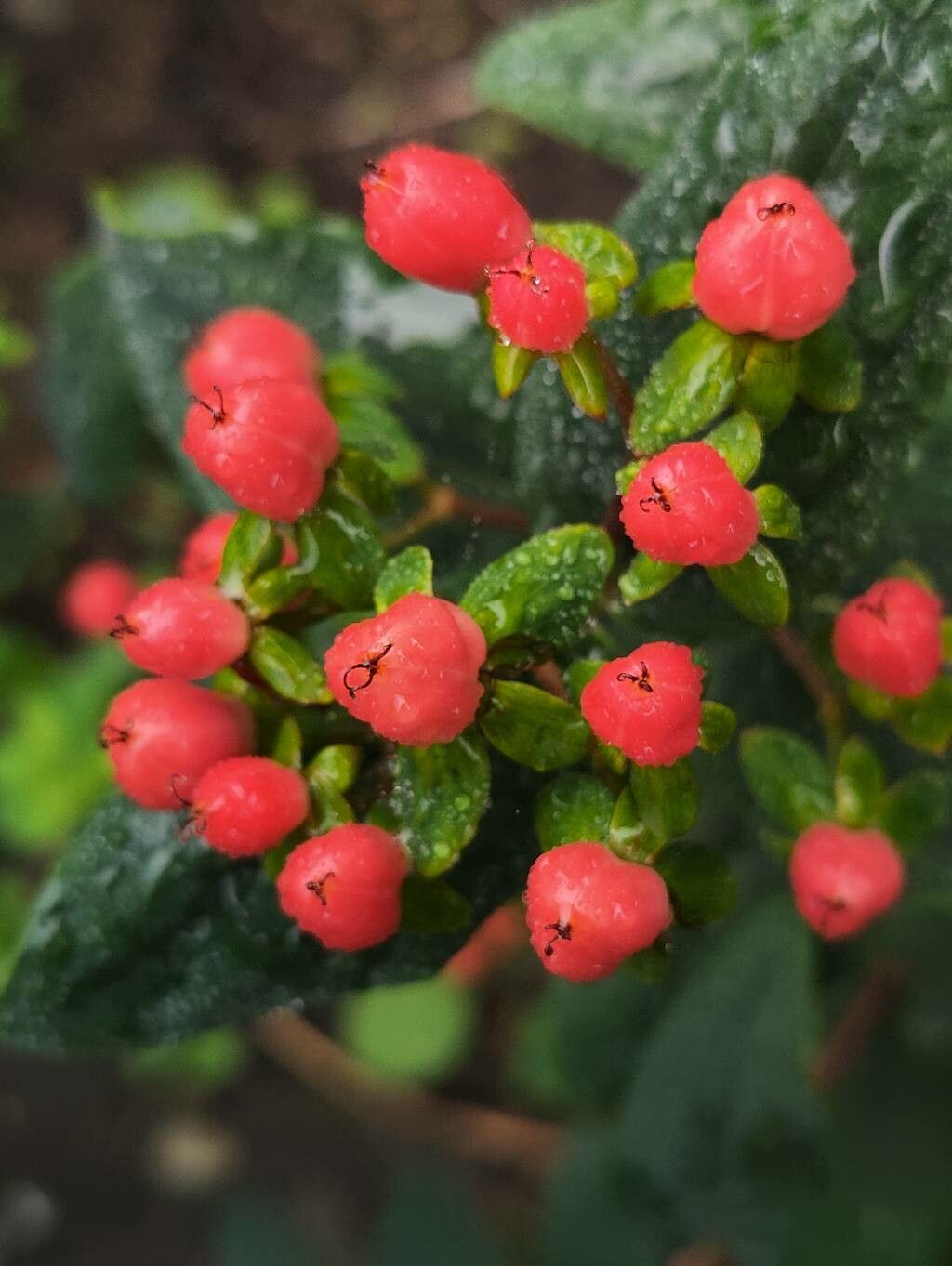
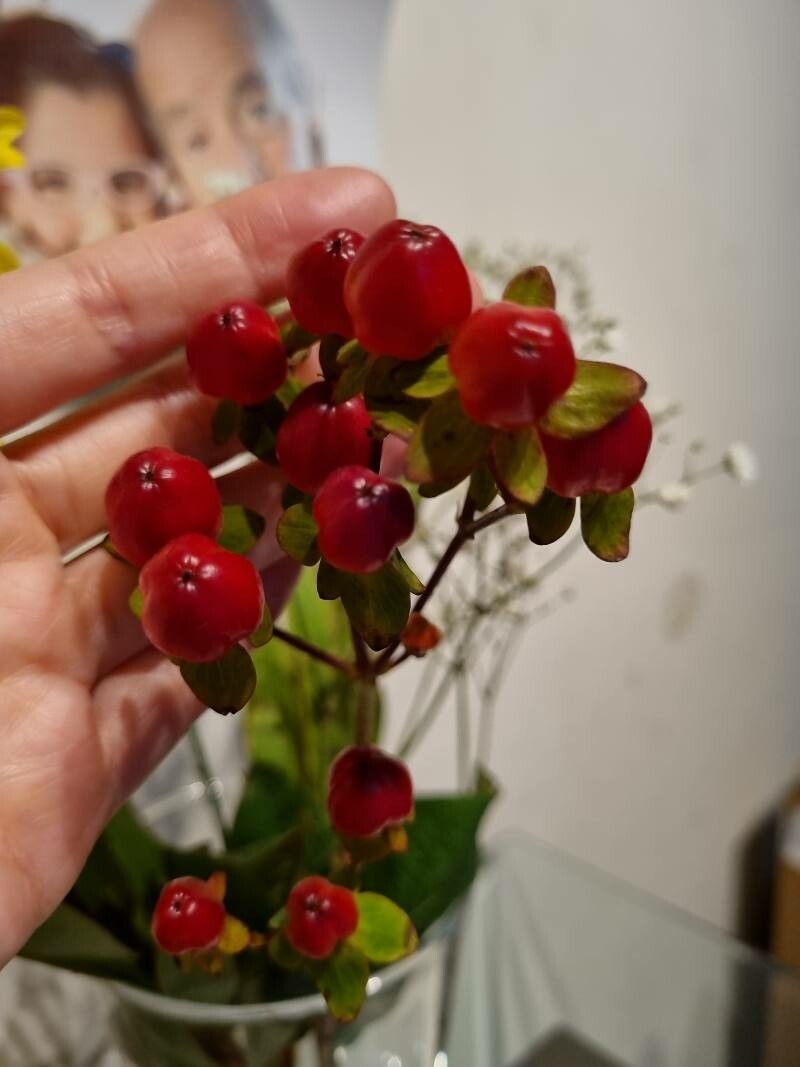
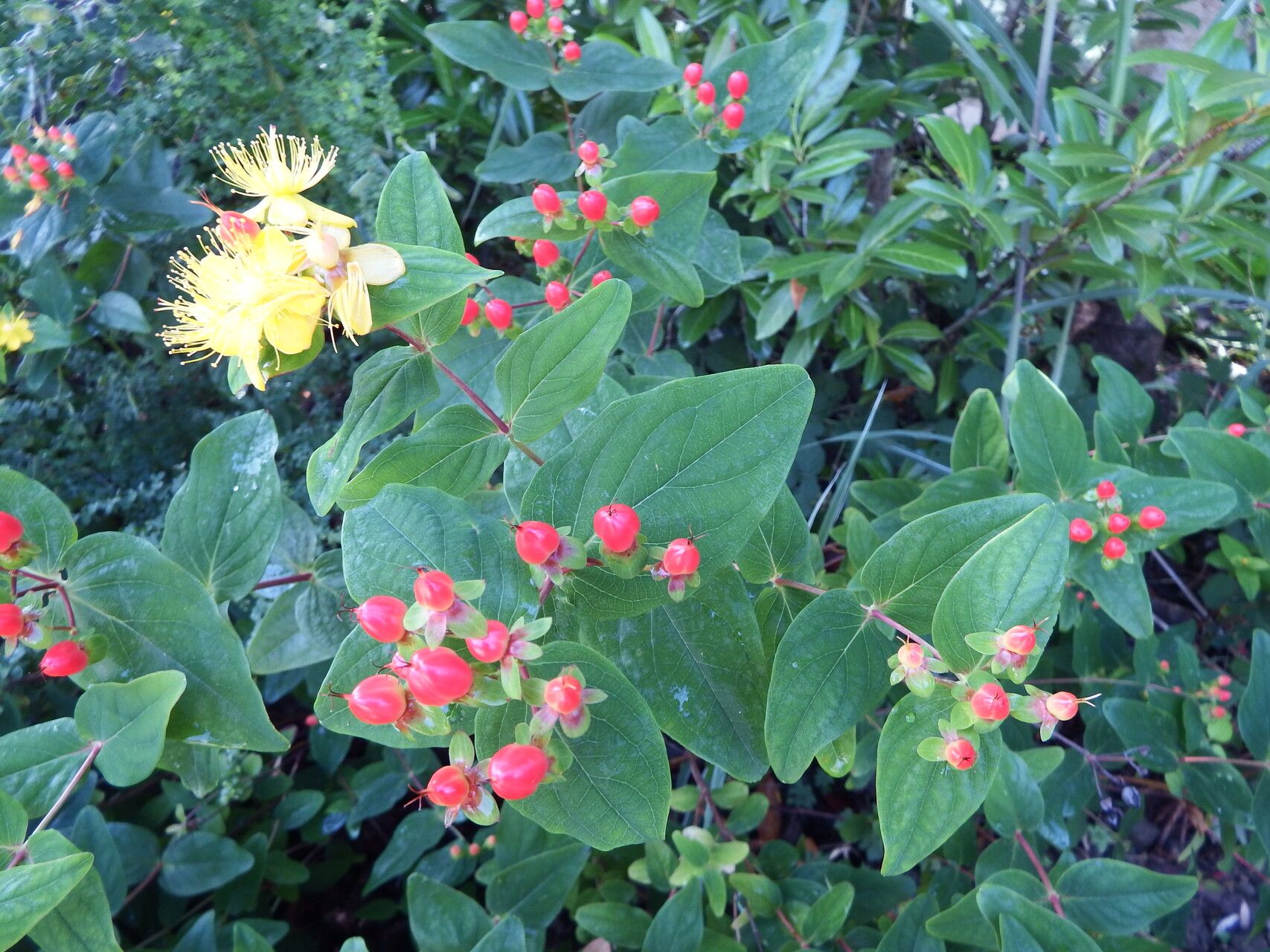
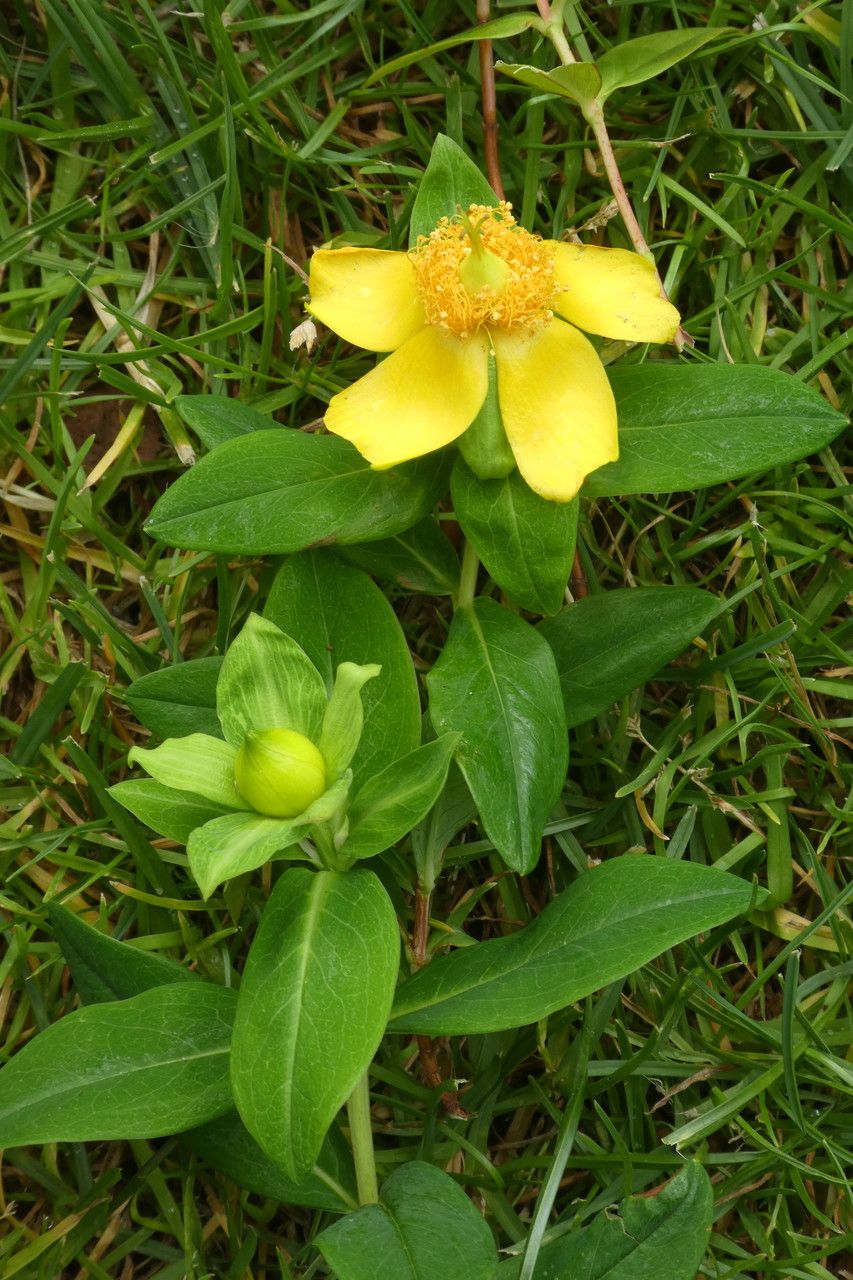
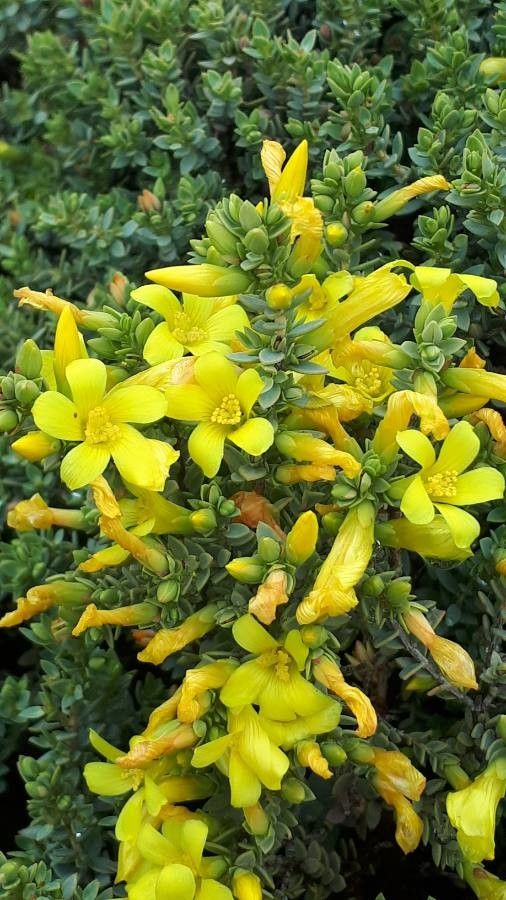
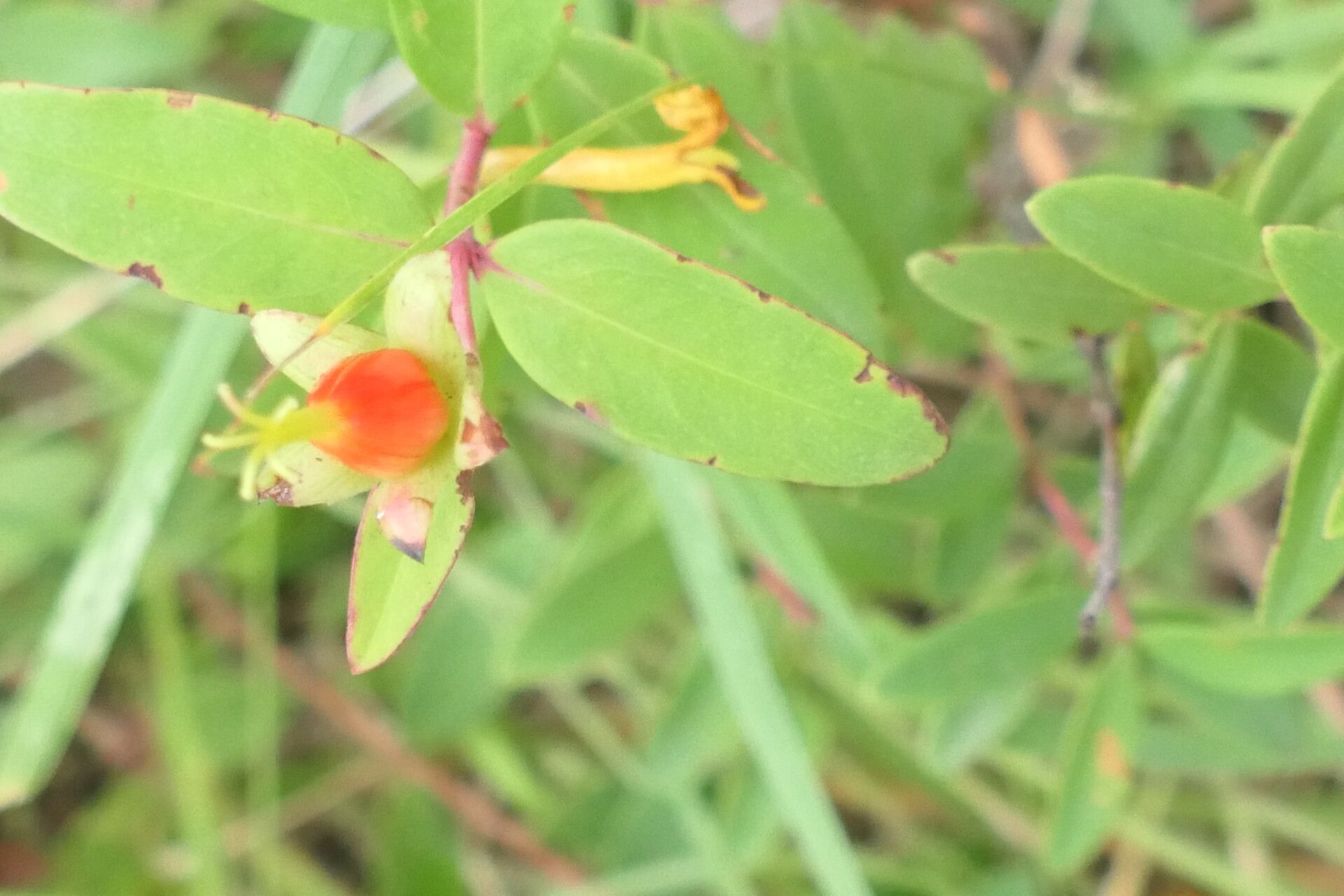
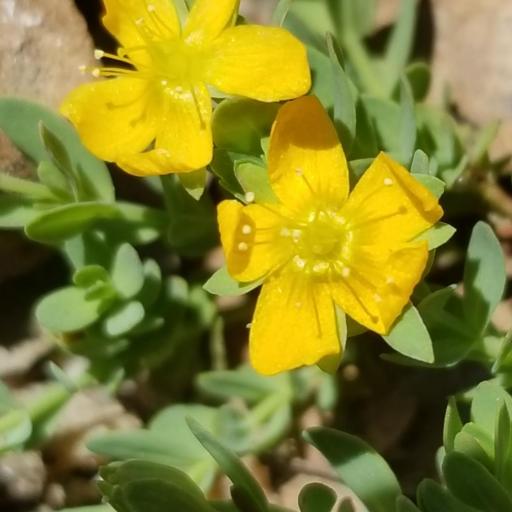
Hypericum × inodorum is a nothospecies of flowering plant in the family Hypericaceae which is native to France, Italy, and Spain, and has been introduced to the United Kingdom, Ireland, Portugal, Switzerland, Chile, Mexico, New Zealand, and Indonesia. The nothospecies is a fertile hybrid of Hypericum androsaemum and Hypericum hircinum, and its hybrid name inodorum derives from the Latin for "odorless". Its cultivar 'Wilhyp' (Golden Beacon) has gained the Royal Horticultural Society's Award of Garden Merit.
St. John's Wort displays strong resistance to disease and is generally not susceptible to illnesses. As for care, the plant is fairly low-maintenance. When grown outdoors it needs only minimal watering, and larger specimens usually do not require pruning. Smaller plants, however, should be cut back after they finish blooming. St. John's Wortt is appropriate for anyone with outdoor space, like a garden or deck, and does not need much experience in plant care.
How to keep Hypericum Ux Inodorum.
Light
St. John's Wort does best in spots that receive abundant sunlight for much of the day. It can tolerate reduced light, though this may somewhat impede its growth. In its native range, it prospers in areas with plentiful sun. Excessive exposure can cause leaf scorch, while too little light may lead to stunted growth and fewer flowers.
Water
Originating from moderately moist environments, St. John's Wort thrives with consistent watering every 1-2 weeks to prevent waterlogging. Typically grown outdoors, it requires more hydration during its active growing season to maintain healthy foliage and blooms.
Temperature
St. John's Wort is highly adaptable to different climates, from very hot summers to cold winters. However, it still has an optimal temperature range for growth; if temperatures become too high, the plant can suffer heat and humidity stress that may lead to its death. In areas where temperatures near the lower limit of its cold tolerance, providing insulation is important to protect the plant.
Fertilizer
Proper timing matters when feeding St. John's Wort. Apply fertilizer in early spring and continue monthly until early summer. Fertilizer promotes attractive blooms and supplies energy during both dormant and active growth periods.
Pruning
St. John's Wort is a deciduous shrub known for its vibrant yellow flowers and berry-like fruits. To maintain its health and appearance, prune it in early spring by removing dead branches and thinning out one-third of the oldest stems. This practice improves air circulation, encourages blooming, and reduces the risk of disease.
Botanical profile.
- Plant Type
- Shrub
- Life Cycle
- Perennial
- Genus
- Hypericum
- Family
- Hypericaceae
- Hardiness Zone
- 5-9
- Mature Height
- 0.91 m to 1.52 m
- Mature Spread
- 0.91 m to 1.52 m
- Leaf Color
- Green
- Leaf Type
- Semi-evergreen
- Flower Color
- Yellow
- Flower Size
- 2.03 cm to 3.05 cm
- Bloom Time
- Summer
- Planting Time
- Spring, Summer, Autumn
- Harvest Time
- Fall
Other names.