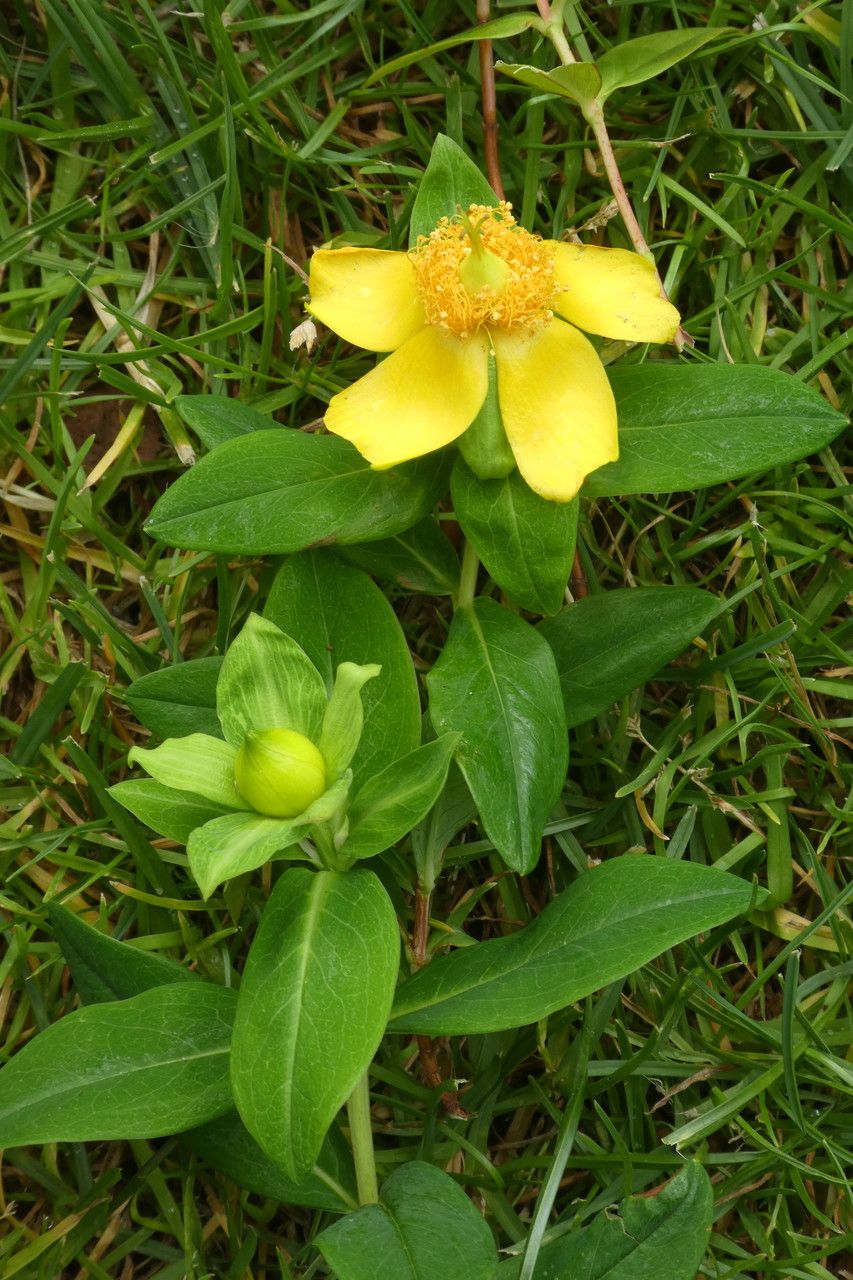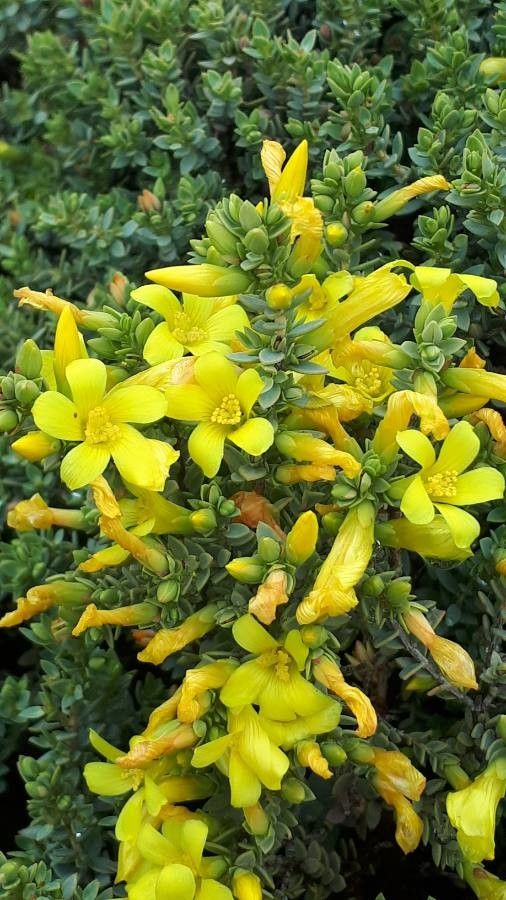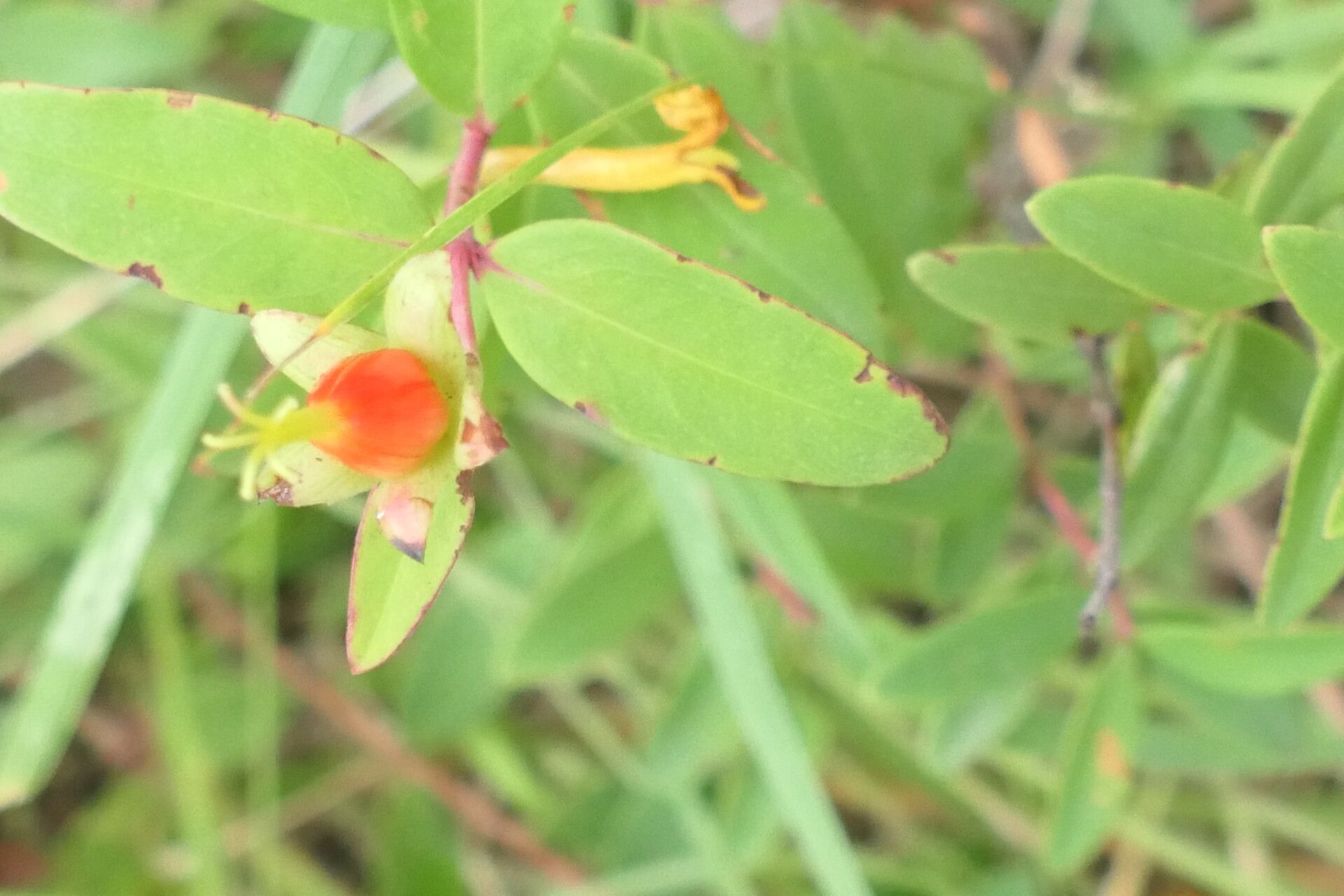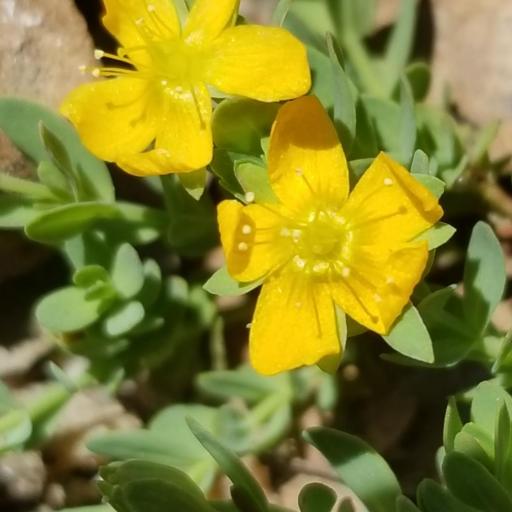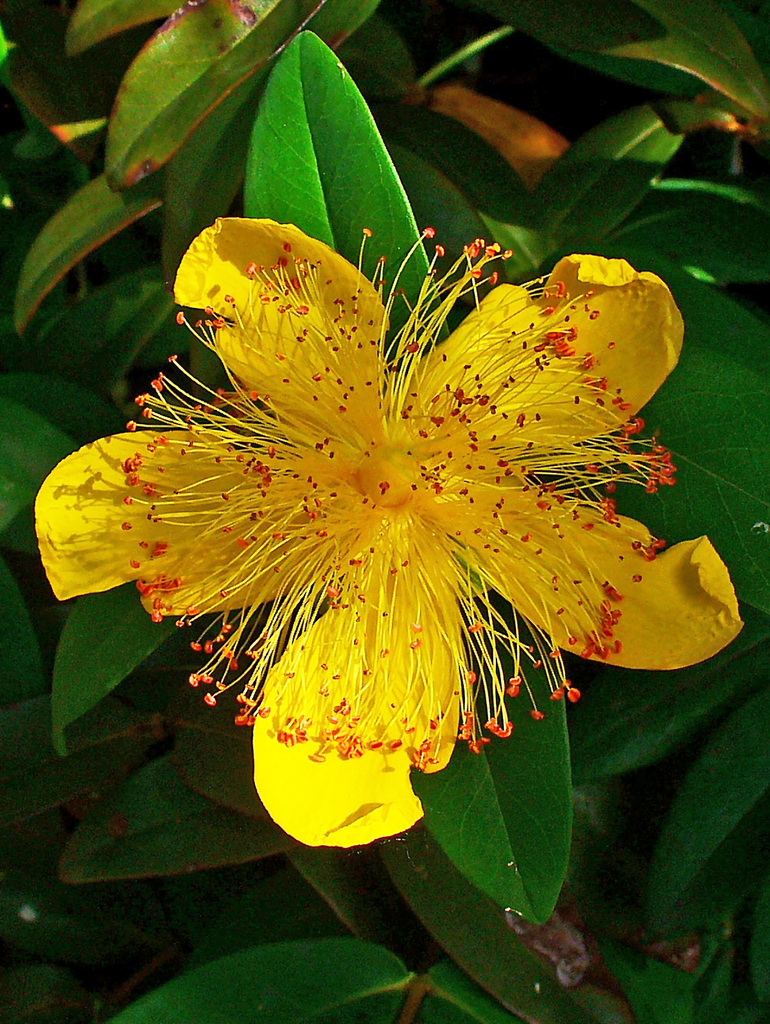
Hypericum calycinum, commonly known as St. John's Wort, is a low-growing perennial plant from the Hypericaceae family. Native to Europe and Asia, it has spread widely and is now naturalized in North America and other regions worldwide. This plant features glossy, dark green leaves that are oblong or lance-shaped, growing up to 3 inches in length. From mid-summer to early fall, it produces bright yellow flowers with five petals. These blooms are followed by small capsules containing numerous tiny seeds. Hypericum calycinum thrives in well-drained soil and can grow in full sun or partial shade. It is adaptable to a wide range of soil types and conditions. Often used as ground cover, this plant spreads quickly through underground rhizomes. The plant has a long history of medicinal use, known for its anti-inflammatory, antiviral, and antidepressant properties. However, caution is advised as some species of Hypericum may interact with medications, including antidepressants. In summary, Hypericum calycinum is an attractive, low-maintenance plant that adds ornamental value to gardens. It also offers potential medicinal benefits when used correctly and under medical supervision.
Rose of Sharon: The name Hypericum calycinum has various interpretations. In Greek, "hyper" means above or exceeding, and "eikon" means a picture, suggesting that the name could mean "exceeding imagination," which might refer to the plant's reputed healing powers. Alternatively, the name could be linked to Hyperion, a Titan and the father of the sun god Helios. The flower's prominent calyx gives rise to the name "calycinum."
Creeping St. John's wort is highly disease-resistant and is typically not vulnerable to illnesses. Regarding care, the plant is fairly low-maintenance. Planted outdoors it needs little watering, and larger specimens usually do not require pruning. Smaller plants, however, should be trimmed after they finish blooming. Creeping St. John's wort is appropriate for anyone with an outdoor area, such as a garden or a deck, and does not demand extensive gardening experience.
How to keep Hypericum Calycinum.
Light
Creeping St. John's wort flourishes best in locations that receive ample daylight. A moderate amount of sunlight can also support its vigorous growth. It has the ability to endure in spots with limited light, though this might restrain its progress. Originating from a setting with varied sunlight, intense exposure could be harmful, resulting in burned leaves. Likewise, limited sunlight could result in less blooming and a weaker overall constitution.
Water
Creeping St. John's Wort is a hardy plant native to dry, rocky regions. Known for its drought tolerance, it thrives with minimal moisture and needs watering only every 2 to 3 weeks once established. This evergreen plant prefers well-draining soil and is often grown outdoors. While it can withstand dry conditions, consistent moisture helps maintain its vibrant foliage.
Temperature
Creeping St. John's wort naturally thrives in climates with temperatures that oscillate between 41 to 95 °F (5 to 35 ℃). To promote ideal growth, aim to uphold this temperature range. As the seasons change, adjust appropriately so as to avoid excessively high or low temperatures.
Fertilizer
Fertilizing Creeping St. John's wort at the right times is vital. Begin fertilization in the early spring and continue it on a monthly basis until the start of summer. The addition of fertilizer aids in creating beautiful flowers and supplies energy during both dormant and active periods of growth.
Pruning
Creeping St. John's Wort displays bright yellow flowers and thrives when pruned in late spring after it blooms. To care for this plant, remove any dead stems and cut older stems down to ground level to encourage new growth. Annual trimming helps maintain its low, compact shape, improves blooming, and increases its resistance to pests and diseases.
Toxicity
Hypericum calycinum may cause increased sensitivity to sunlight, especially when taken in large doses. Other side effects can include insomnia, anxiety, dry mouth, dizziness, gastrointestinal symptoms, fatigue, headache, or sexual dysfunction.
Further reading →
The toxicity and danger assessments provided are for reference only. We do not assure their accuracy, so it's crucial not to depend on them. Seek professional advice when necessary for accurate guidance.
Botanical profile.
- Plant Type
- Shrub
- Life Cycle
- Perennial
- Genus
- Hypericum
- Family
- Hypericaceae
- Hardiness Zone
- 4-9
- Mature Height
- 91 cm
- Mature Spread
- 0.91 m to 2.13 m
- Leaf Color
- Green
- Leaf Type
- Evergreen
- Flower Color
- Yellow
- Flower Size
- 3.05 cm to 5.08 cm
- Bloom Time
- Early summer, Mid summer
- Planting Time
- Spring, Autumn
- Harvest Time
- Mid summer
- Native Area
- Croatia, Bulgaria, Turkey
Other names.
Reader questions.
How should I water my Creeping St. John's wort plant?
You can water your Creeping St. John's wort with various watering tools, such as watering cans, hoses, or cups. It's important to water the soil directly and make sure all areas are evenly moistened to nourish the entire root system. Using filtered water is helpful because tap water may contain harmful particles. Additionally, using water at or slightly above room temperature is beneficial, as extremely hot or cold water may shock the plant. However, the Creeping St. John's wort generally responds well to any type of water.
Why is it important to add fertilizer to my Creeping St. John's wort?
To help your Creeping St. John's wort thrive and bloom beautifully, fertilizing is essential. By fertilizing in early spring, you can ensure that your plant will produce excellent flowers during that season. Additionally, fertilizer provides your Creeping St. John's wort with the necessary energy to store in the ground during its dormant phases. Giving your plant some extra nutrients in the fall or late spring will help it store more energy for when it resumes active growth.
What are the sunlight requirements for Creeping St. John's Wort?
Creeping St. John's Wort requires different levels of sunlight depending on the condition. For full sun, it needs above 6 hours of sunlight, while partial sun or full shade conditions require about 3-6 hours of sunlight. It's important to observe how sunlight moves through your garden and choose spots that provide a perfect balance of light and shade. This ensures that your plants are happy and healthy. Creeping St. John's Wort can survive in various sunlight exposures, but extreme sunlight may cause leaf scorching, and insufficient light can lead to sparse flowering and weaker health.
What is the ideal temperature range for Creeping St. John's wort?
Creeping St. John's wort thrives in environments where temperatures range from 41 to 95 °F (5 to 35 °C). To ensure optimal growth, maintaining this temperature range is essential. Adaptations may be necessary during seasonal changes to avoid exposure to extreme temperatures. The plant displays strong cold resistance, so special frost protection measures are not usually required in winter. However, if temperatures are expected to drop below -30°C, it's important to wrap the trunk and branches with protective materials such as non-woven fabric or cloth. Additionally, watering the plant abundantly before the first autumn freeze helps retain soil moisture through the winter and early spring, preventing drought and water scarcity.
What should I do if I give too much or too little water to my Creeping St. John's wort plant?
Outdoor plants, especially newly planted ones or seedlings, can suffer from lack of watering. To avoid this, make sure you water them consistently for a few months until they become established and can rely on rainwater. When it comes to Creeping St. John's wort in pots, overwatering is a common issue. If you accidentally overwater your plant, act quickly to resolve the problem. Stop watering it immediately and check the roots by removing it from the pot. If the roots are unaffected, you can return the plant to its container. However, if you find root rot, trim away the affected roots and consider applying a fungicide. Repot the plant in well-draining soil. On the other hand, if you underwater your Creeping St. John's wort and notice drooping or drying leaves, simply water it more frequently. Correct the watering frequency as soon as you notice underwatering to prevent further issues.
When should I give my Creeping St. John's wort plant fertilizer?
To ensure successful fertilization of Creeping St. John's wort, timing is vital. Applying fertilizer too early, while the plant is still dormant, will render it ineffective and easily washed away by rainwater, resulting in wastage and pollution. You should first apply fertilizer in early spring, and then continue monthly application until early summer.
What are the artificial lighting requirements for indoor Creeping St. John's Wort?
Indoor Creeping St. John's Wort requires adequate artificial lighting when natural sunlight is insufficient, especially during winter or in less sunny spaces. LED lights are recommended because they can be customized to provide specific wavelengths of light needed by your plants. Full sun plants need 30-50W/sq ft, partial sun plants need 20-30W/sq ft, and full shade plants need 10-20W/sq ft of artificial light. The light source should be placed 12-36 inches above the plant to mimic natural sunlight, and most plants need 8-12 hours of light per day.
How does Creeping St. John's wort react to low temperatures, and what are the recommended solutions?
Creeping St. John's wort is cold-tolerant, preferring temperatures above 5°C during winter, and ideally remaining above -25°C. When temperatures fall below -30°C, the plant may not show immediate damage in winter, but come spring, its branches can become brittle and dry, with no new shoots emerging. The recommended solution for this condition is to prune away any dead branches in the spring that have failed to produce new leaves, aiding the plant in recovering and promoting new growth.
How frequently do I need to water my Creeping St. John's wort plant?
Here are some tips for watering your plants, particularly Creeping St. John's wort: - Most outdoor plants can rely on rainfall, but if your area doesn't get enough rain, you'll need to water them regularly. - In spring and fall, watering every 2 weeks should be sufficient. However, in the summer when growth is faster, you'll need to water more frequently. - During winter, when growth slows down and plants require less water, you can water sparingly or even not at all. - If you have a young or newly planted Creeping St. John's wort, it's important to water it more often to help it establish and become more drought tolerant. - For potted plants, there are two main approaches to determine watering frequency: a predetermined schedule or monitoring soil moisture. - If you opt for a schedule, water the plant once a week or once every other week. However, keep in mind that this may not account for the specific conditions of your plant's environment. - Alternatively, you can check the soil moisture and water when the top two to four inches have completely dried out, typically around one-third to half of the pot's depth. This method ensures you're not over or under-watering.
When is it not a good time to fertilize my Creeping St. John's wort?
To ensure optimal blooming, it is important to avoid using fertilizer with high nitrogen levels on Creeping St. John's wort. Such fertilizers can cause the plant to produce an abundance of leaves but limited blooms. Instead, opt for fertilizers with lower nitrogen levels in comparison to other nutrients. Additionally, refrain from fertilizing the plant after early autumn, as this can result in excessive growth right before winter. It is also not recommended to fertilize Creeping St. John's wort during hot and dry times of the year, as dry soil does not effectively absorb fertilizers, and this can stimulate growth that requires extra water, which may not be readily available. It is best to apply fertilizer during cooler temperatures earlier in the season. Lastly, keep in mind that Creeping St. John's wort can absorb fertilizer from neighboring plants or lawns, so take care to avoid inadvertently giving the plant a double-dose of fertilizer.
What symptoms indicate light deficiency or overexposure in Creeping St. John's Wort?
Symptoms of light deficiency in Creeping St. John's Wort include smaller new leaves, leggy or sparse growth, faster leaf drop, slower or no new growth, lighter-colored new leaves, and chlorosis. Overexposure symptoms include sunscald, leaf curling, wilting, leaf scorching, indicating damage from intense sunlight exposure. These symptoms reveal the plant's struggle to adapt to its lighting conditions, whether it's receiving too much or too little light.
How does Creeping St. John's wort respond to high temperatures, and what should be done?
During the summer, it's important to keep the Creeping St. John's wort below 35°C. Exceeding 38°C can cause the plant's leaves to lighten in color, with tips becoming dry and withered, and increasing the risk of sunburn. To mitigate these effects, it's advisable to trim away the sunburned and dried parts, relocate the plant to a shadier area, or use a shade cloth to protect it from the harsh midday and afternoon sun. Also, watering the plant in the morning and evening helps keep the soil moist and supports the overall health of the plant.