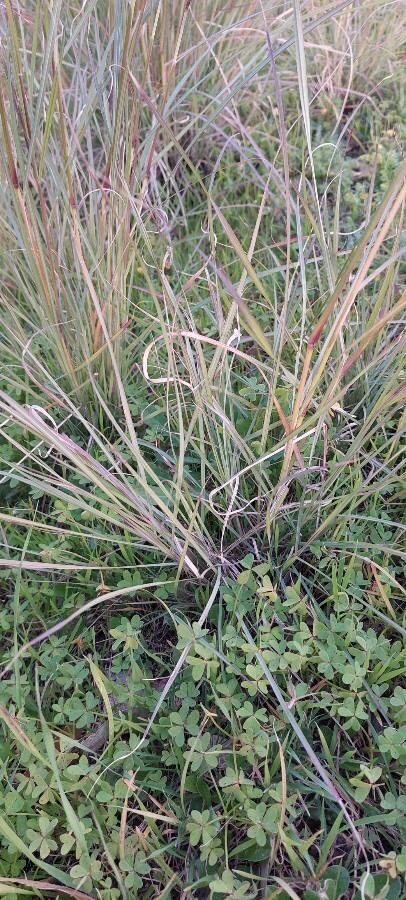
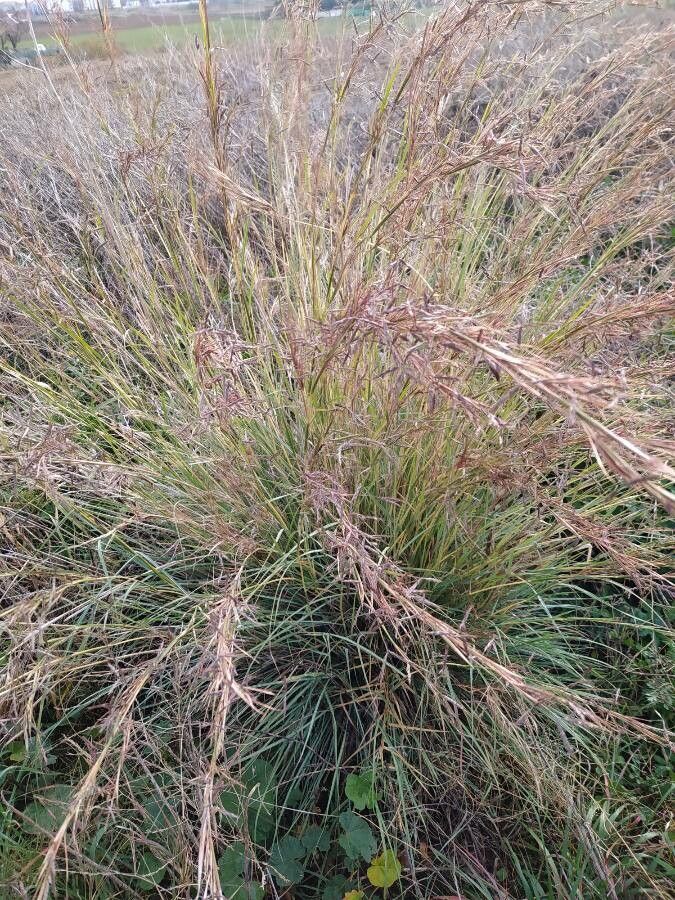
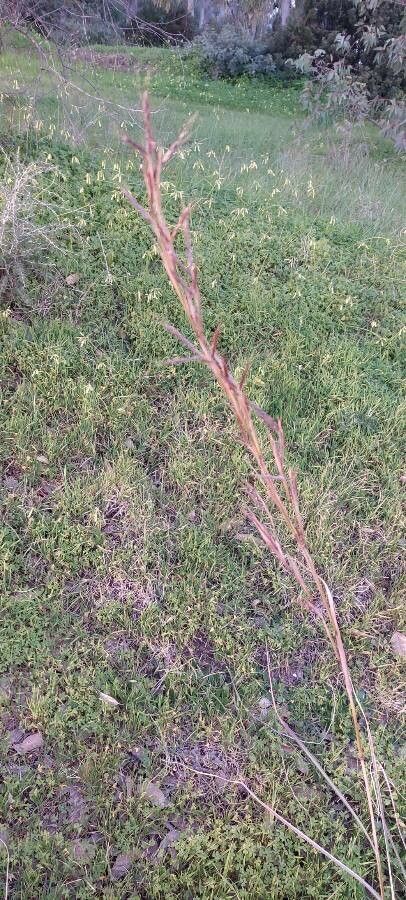
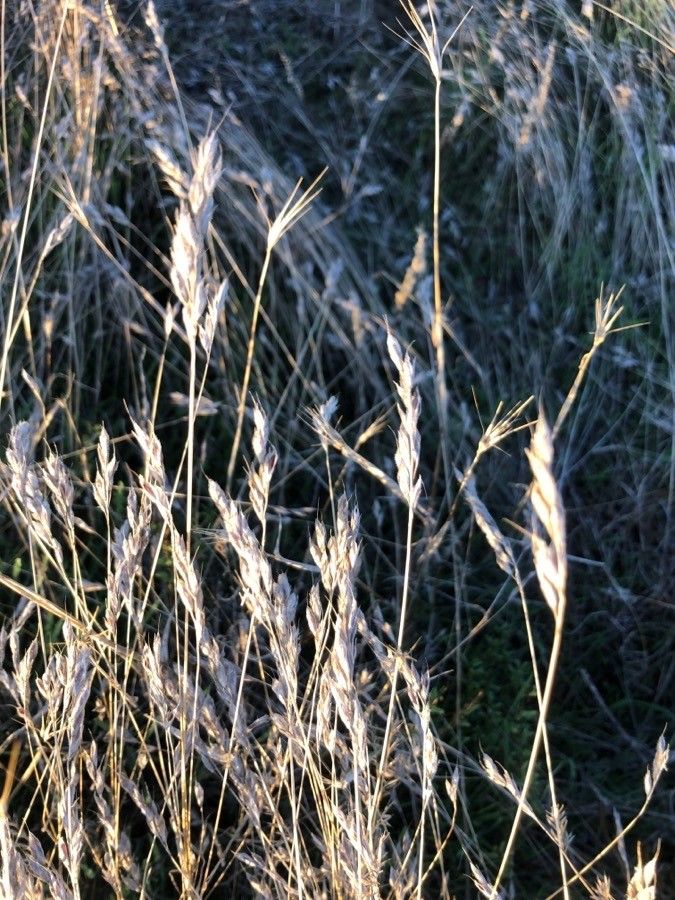
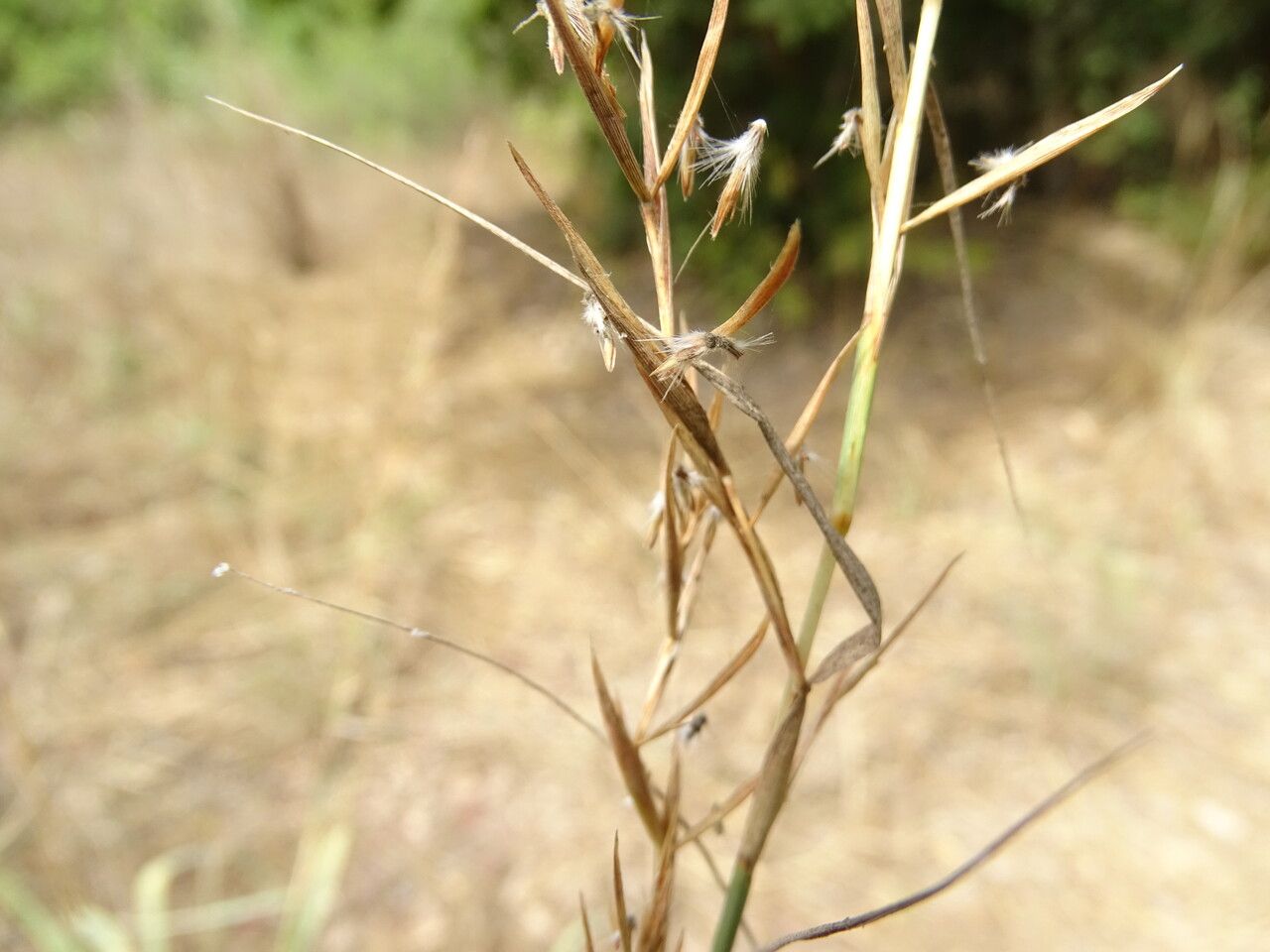
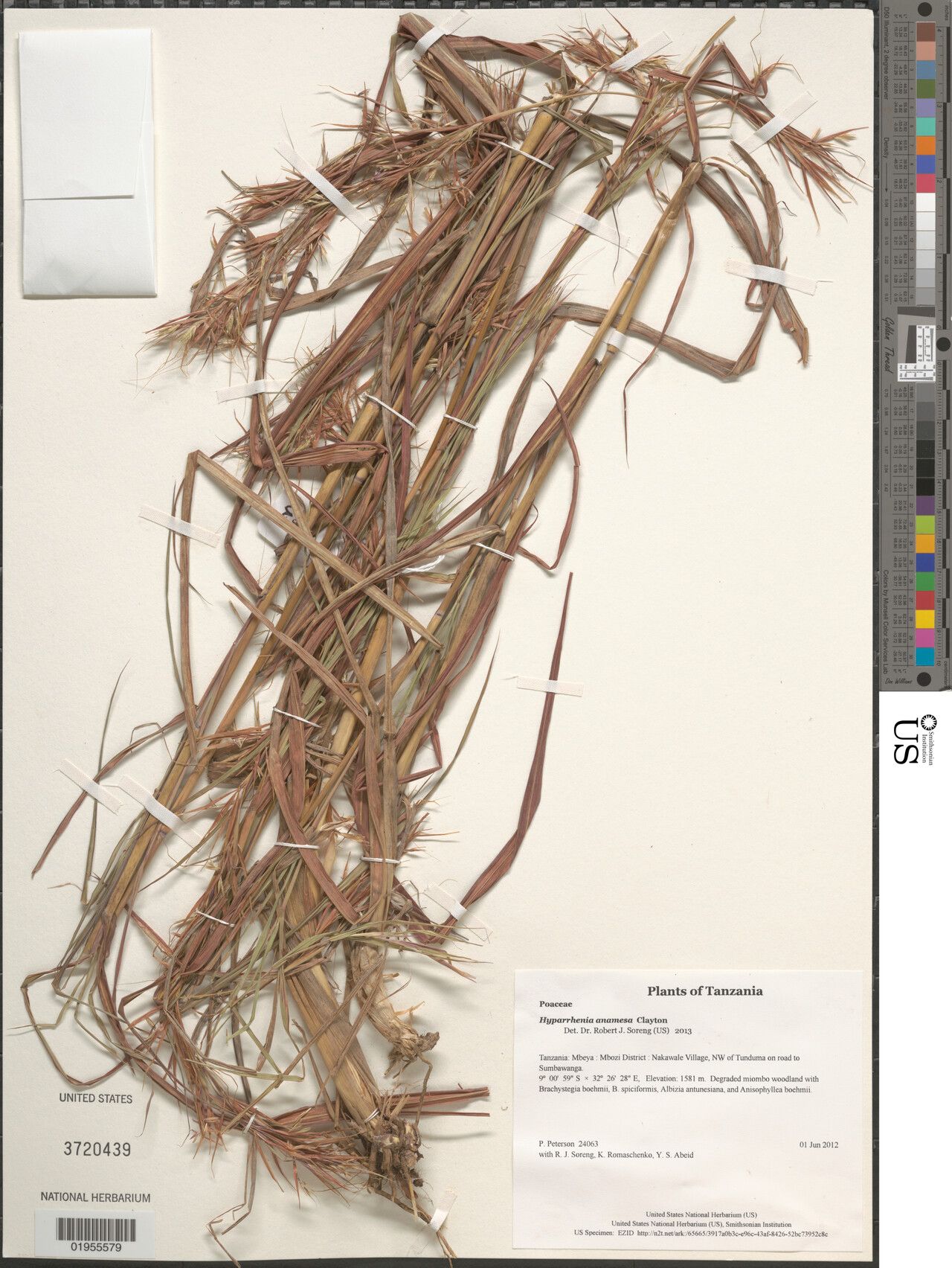
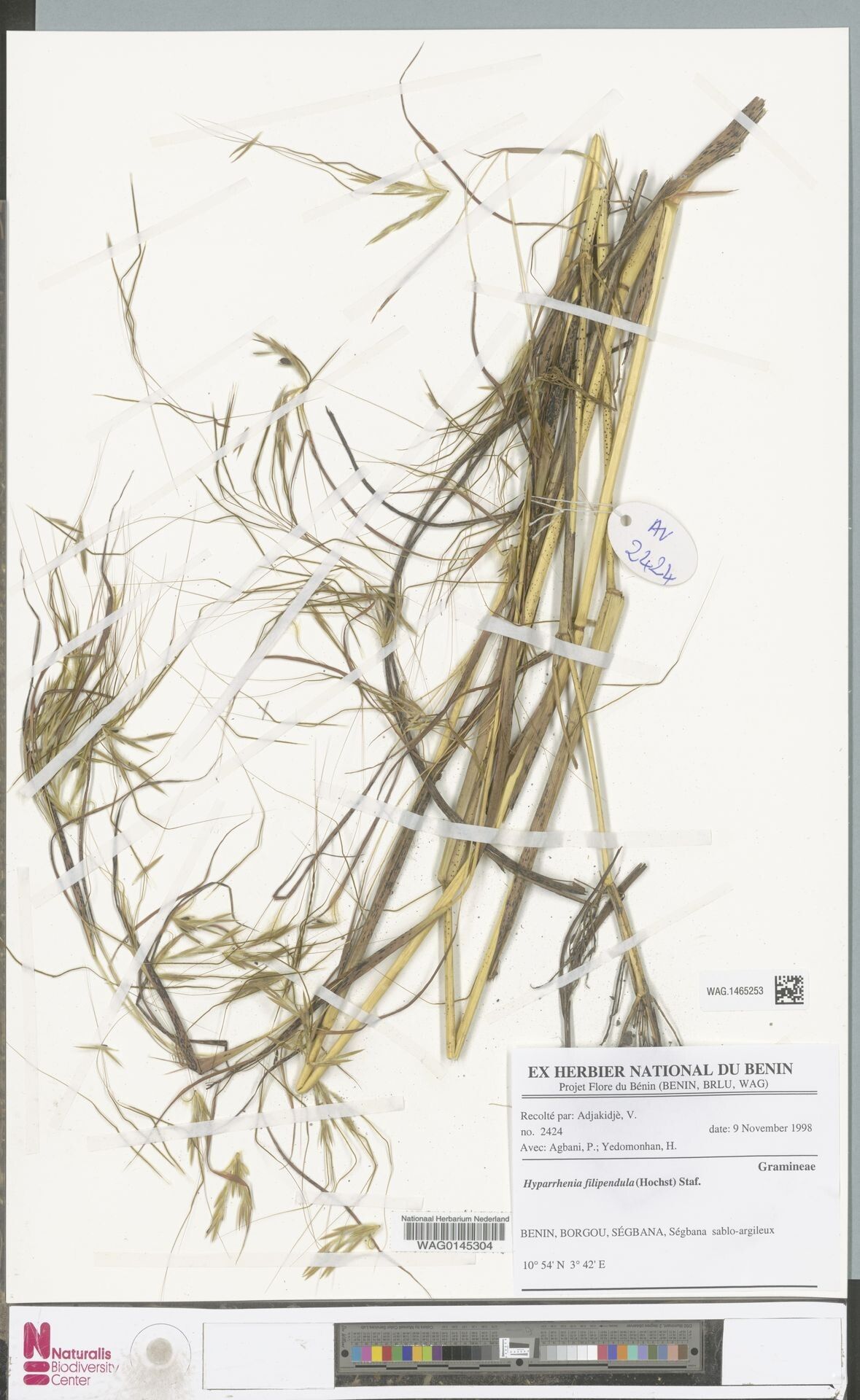
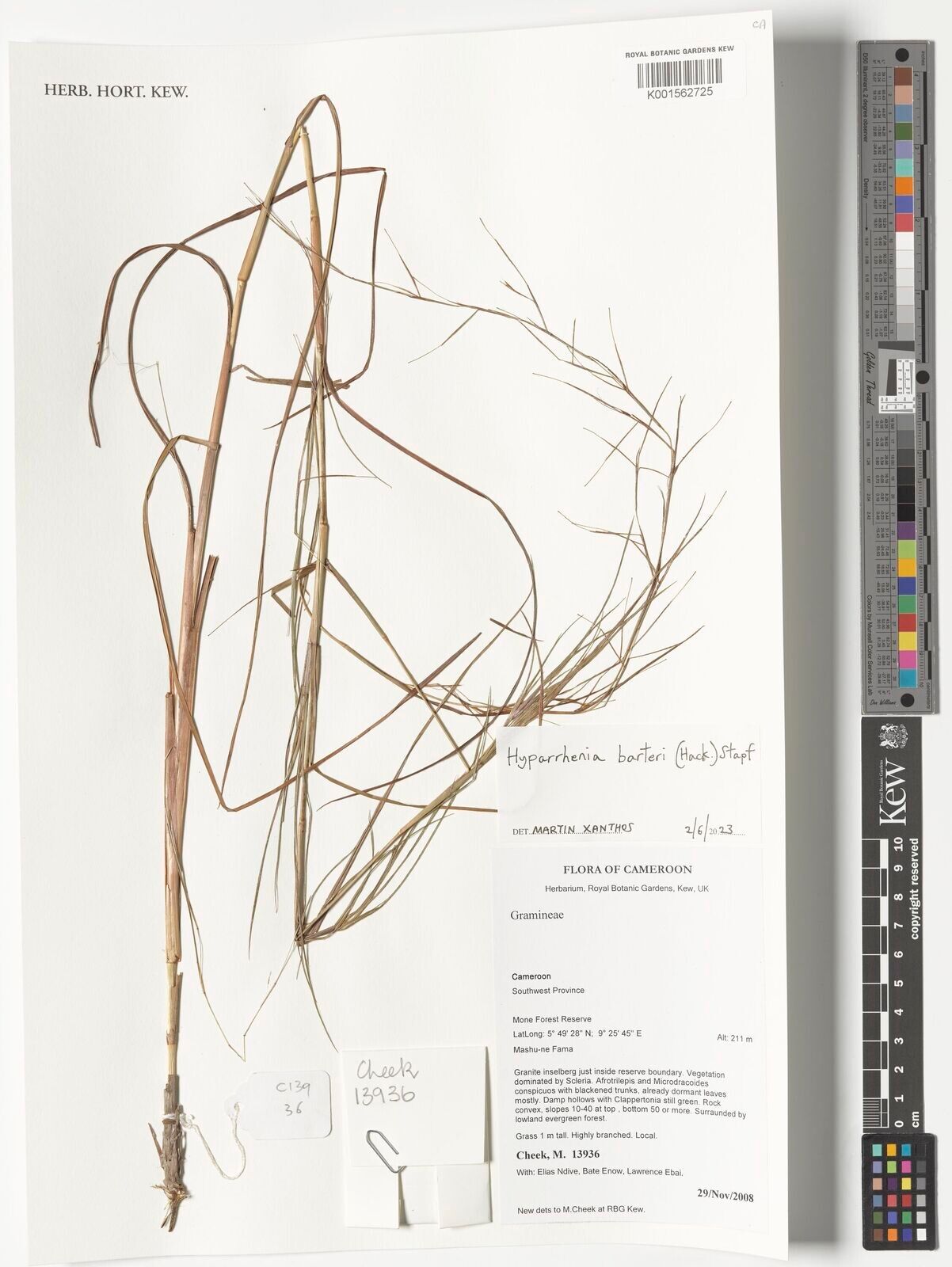
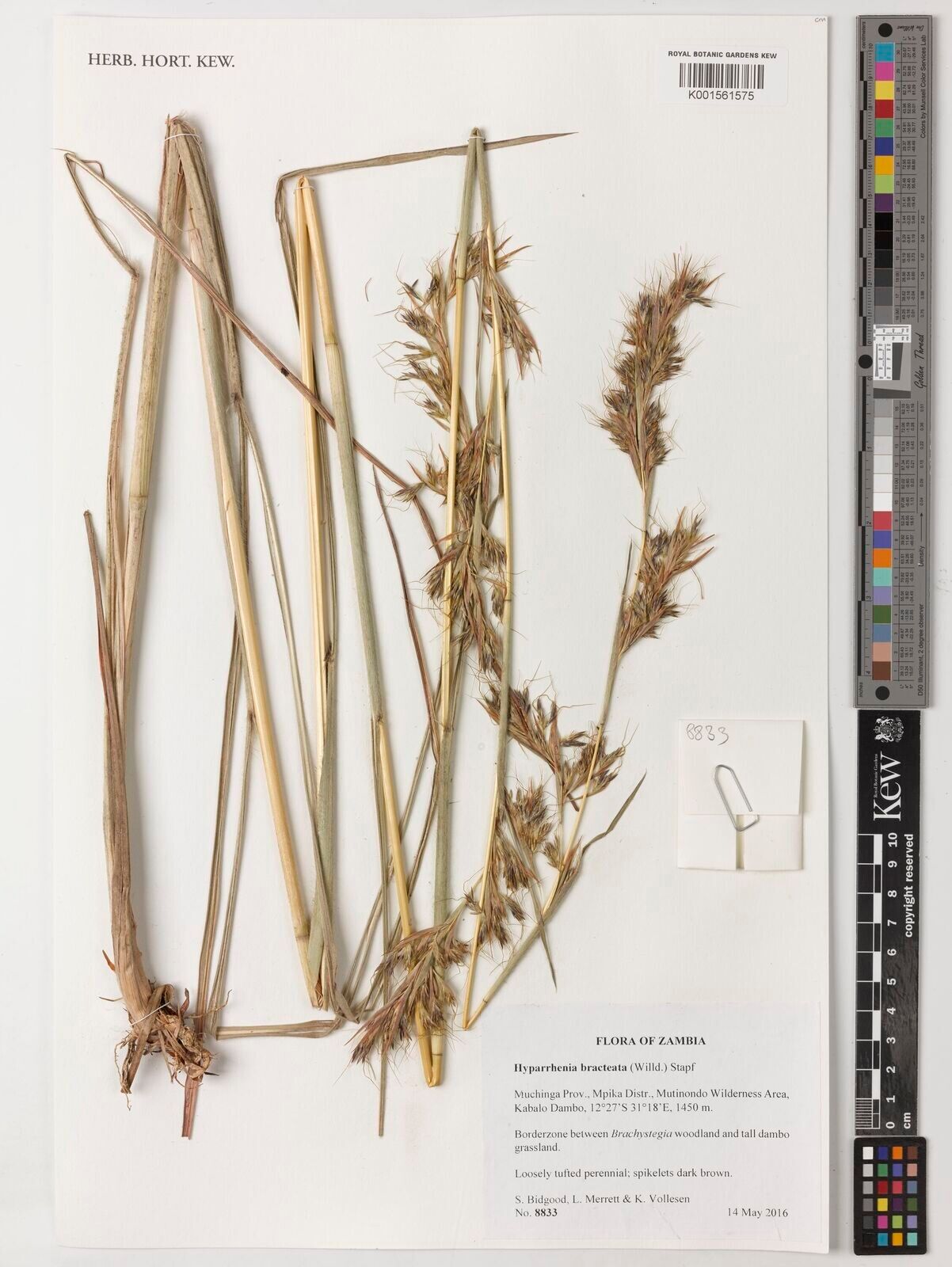
Hyparrhenia hirta, commonly known as hairy grass or common thatching grass, is a perennial species that belongs to the Poaceae family. Originally native to Africa, it has now been introduced and naturalized in various parts of the world, including Asia and Australia.
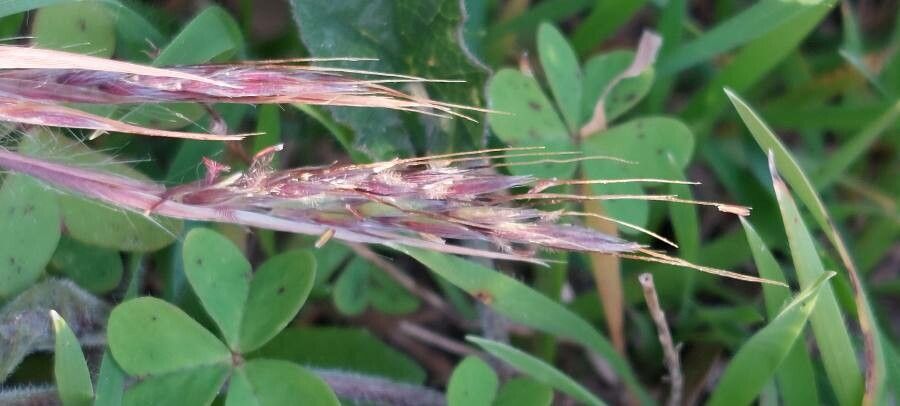
The plant can grow up to 2 meters in height and features long leaves that are hairy on both sides. It produces dense clusters of spikelets with long awns, giving it a distinctive appearance. Hyparrhenia hirta thrives in well-drained soils and is capable of tolerating drought conditions.
This plant has numerous uses in traditional medicine due to its anti-inflammatory properties. In addition, it is popular for grazing by livestock because of its high nutritional value.
However, Hyparrhenia hirta can also be considered an invasive species in some regions where it has been introduced. Its ability to outcompete native vegetation can reduce biodiversity.
In summary, Hyparrhenia hirta is a notable species with both beneficial and negative impacts on the environment, depending on its location and how it is managed.
Botanical profile.
- Plant Type
- Grass
- Life Cycle
- Perennial
- Genus
- Hyparrhenia
- Family
- Poaceae
- Hardiness Zone
- 7-10
- Mature Height
- 91 cm
- Mature Spread
- 61 cm
- Leaf Color
- Green
- Leaf Type
- Deciduous
- Flower Color
- Yellow, Brown
- Flower Size
- 1.52 cm to 5.08 cm
- Bloom Time
- Summer
- Planting Time
- Spring, Autumn
- Harvest Time
- Late summer, Early fall, Mid fall
- Native Area
- Libya, Somalia, Lesotho, Turkey, India, Egypt, Djibouti, Angola, United Arab Emirates, Namibia, Madagascar, Montenegro, Pakistan, Eritrea, Croatia, Morocco, Yemen, Kenya, Niger, Uganda, Tanzania, Iraq, Cambodia, Cameroon, Oman, Ethiopia, Qatar, Botswana, Portugal, France, Saudi Arabia, Congo, Central African Republic, Tunisia, South Africa, Zambia, Sudan, Mauritania, Cyprus, Greece, Chad, Afghanistan, Italy, Spain, Eswatini, Iran, Albania, Algeria, Congo (DRC), Gabon
Other names.