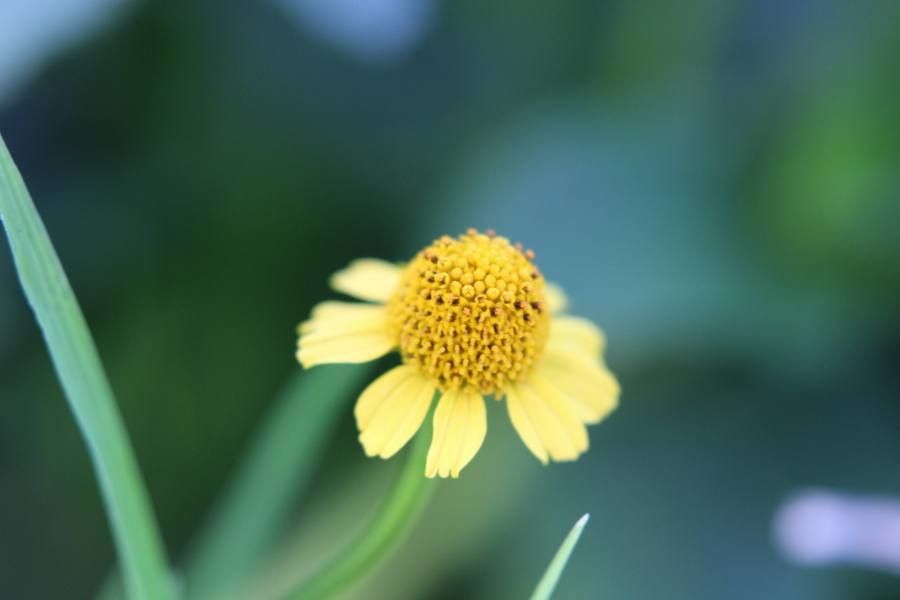
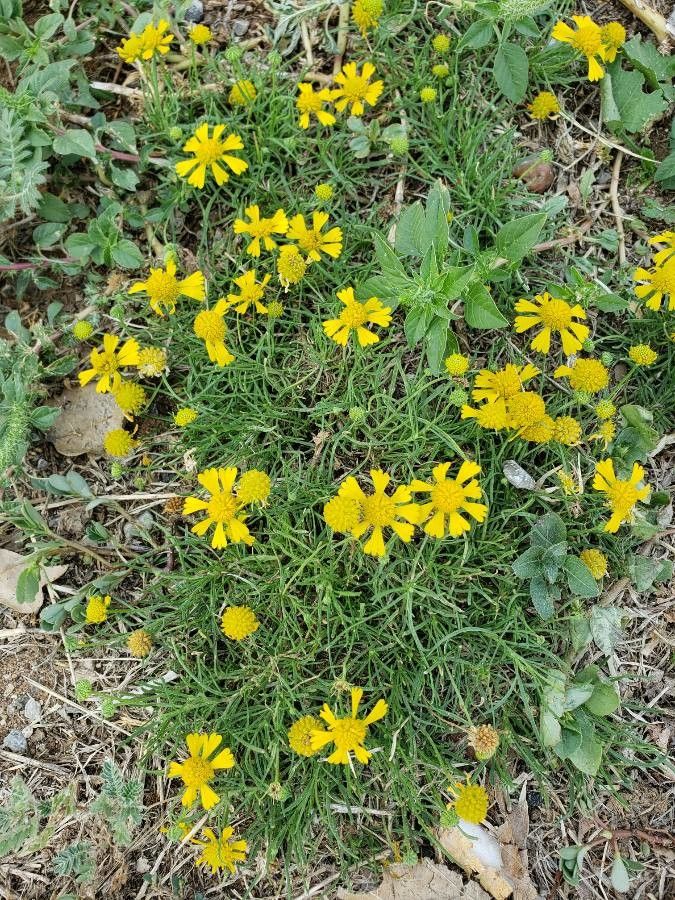
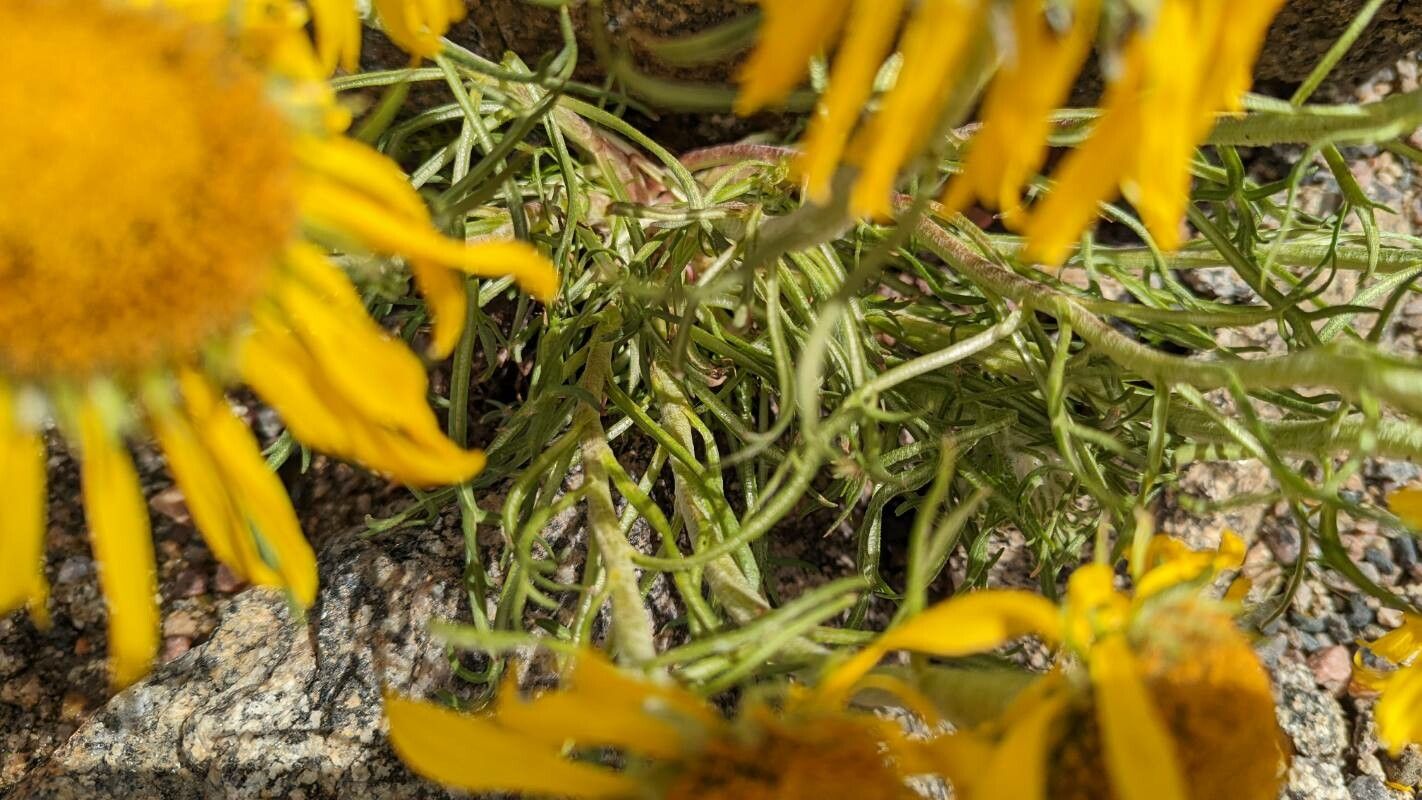
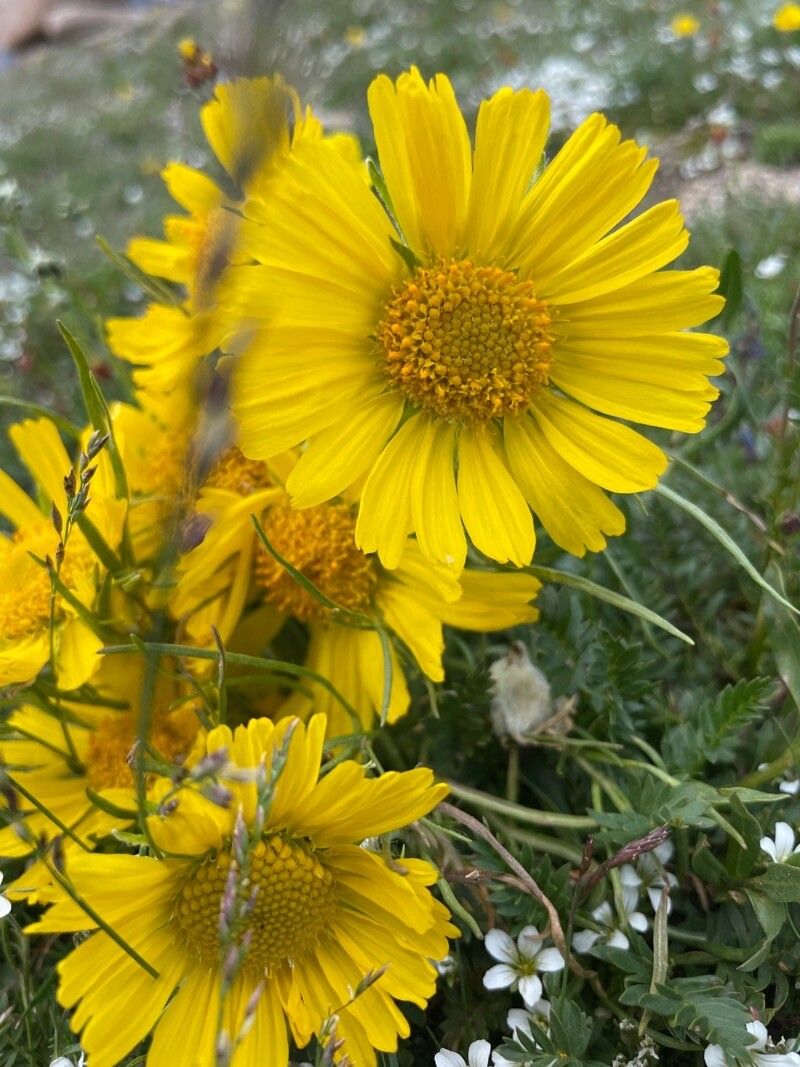
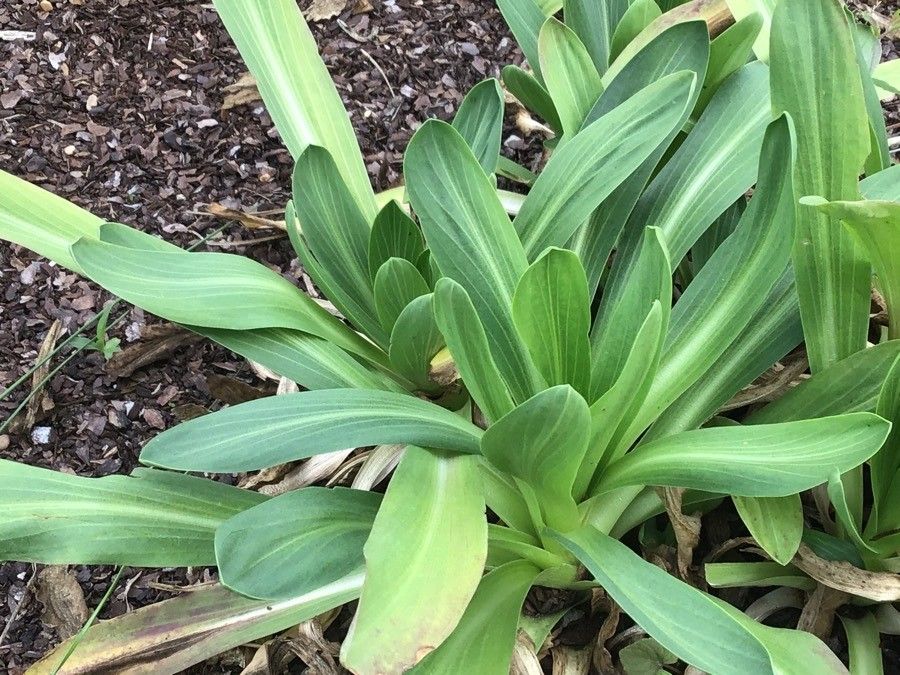
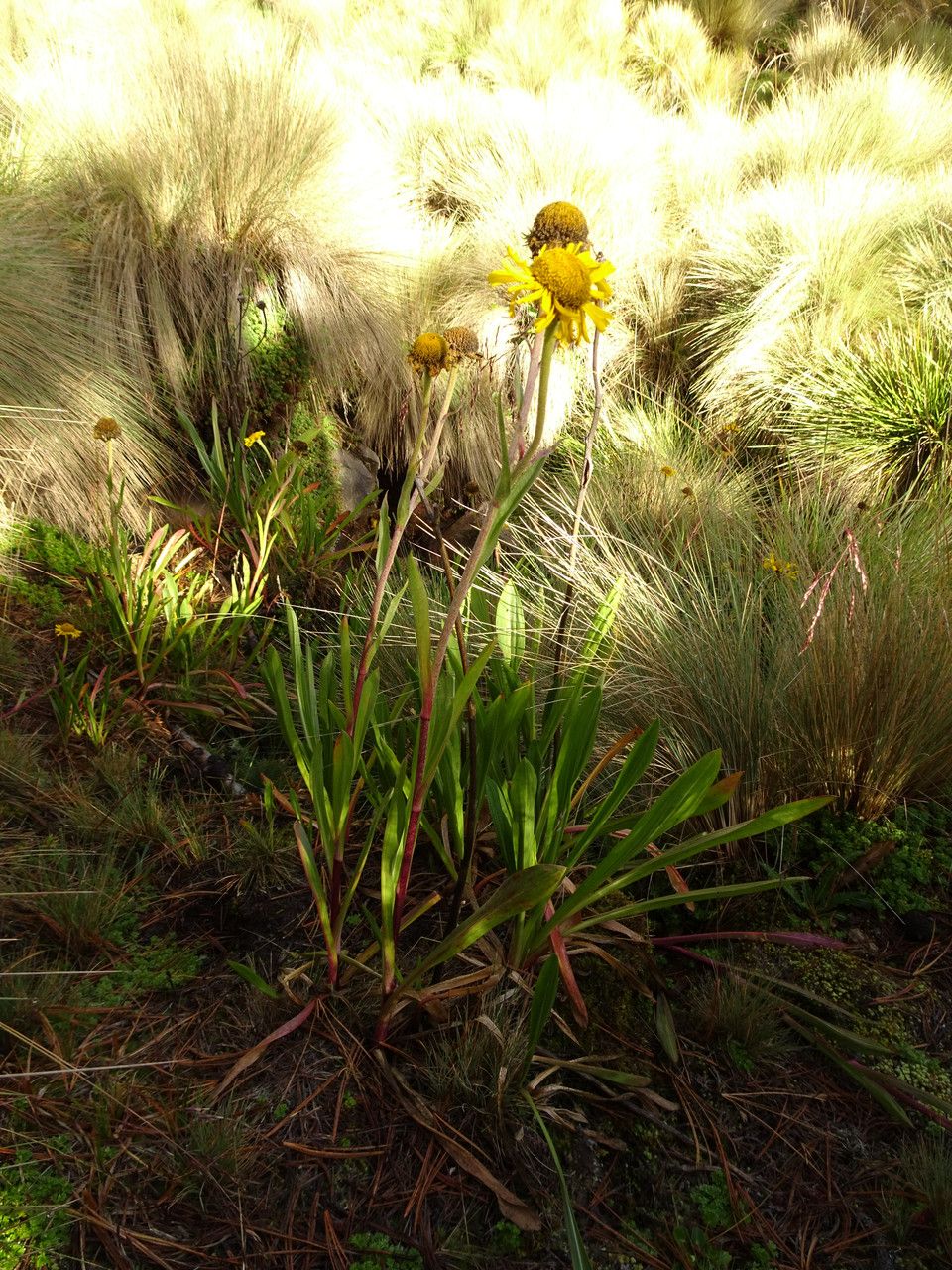
Hymenoxys odorata is a species of flowering plant in the daisy family known by the common names bitter rubberweed and western bitterweed. It is native to the southwestern and south-central United States from southern California to Texas north as far as Kansas and Colorado, as well as northern Mexico (Chihuahua, Coahuila, Durango, Nuevo León, San Luis Potosí, Sonora, Tamaulipas). It grows in dry regions.Hymenoxys odorata is an annual herb producing a branching stem up to 60 centimeters (2 feet) tall. The stems are covered in a foliage of short leaves which are divided into narrow, pointed lobes. Each of the many flower heads contains 50–150 bright yellow disc florets and 8–13 short yellow ray florets.Hymenoxys odorata is poisonous to livestock; it is mostly a problem of the sheep industry. The toxic compounds are sesquiterpene lactones called hymenovin and hymenoxon. When ingested by sheep the plant produces inflammation of the stomach, renal necrosis, and toxic hepatitis, as well as inhibition of clotting factors. An ill sheep may be bloated, anorexic, weak, drooling, and vomiting. Acute and chronic, cumulative poisoning is often fatal. Sheep tend to avoid the plant because they find it distasteful but they will eat it in the absence of other forage.
Bitter rubberweed has strong disease resistance and is generally unlikely to develop illnesses. Still, it can be affected by pests and diseases present in its environment. These infections are generally mild. As for care, the plant requires moderate maintenance. It should be pruned regularly to keep a neat appearance and encourage healthy growth. Fertilizing can also help stimulate flowering. Bitter rubberweed is suitable for people with outdoor areas, such as a garden or patio, and does not demand extensive plant-care experience. It may need greater attention if grown indoors.
How to keep Hymenoxys Odorata.
Light
Bitter rubberweed is a sun-loving, perennial herbaceous plant native to open habitats and commonly found in meadows and grasslands. It prefers full sun but can also tolerate partial sun.
Temperature
Bitter rubberweed is fairly adaptable to temperature, able to withstand high heat and wide temperature fluctuations. In hot weather, attention should be paid to watering and suitable shade should be provided to prevent sunburn. However, Bitter rubberweed has limited tolerance for low temperatures. While it can tolerate a certain amount of cold, overly cold conditions can cause frost damage.
Fertilizer
The best time to fertilize a Bitter rubberweed is in early spring, as it emerges from dormancy and starts active growth. Fertilizing supplies essential nutrients needed for healthy development. Although Bitter rubberweed has fairly low fertilizer requirements, an annual application can improve its survival and encourage better, longer-lasting flowers.
Pruning
Bitter rubberweed produces vibrant yellow flowers and benefits from pruning in early spring for optimal growth and blooming. To minimize stress on the plant, remove only dead stems and avoid excessive pruning. Proper pruning encourages strong flowering, enhancing the plant's ornamental appeal. Always use clean, sharp tools during the process to prevent disease.
Botanical profile.
- Plant Type
- Herb
- Life Cycle
- Perennial
- Genus
- Hymenoxys
- Family
- Asteraceae
- Hardiness Zone
- 5-9
- Mature Height
- 20 cm to 40 cm
- Mature Spread
- 15 cm to 30 cm
- Leaf Color
- Green, Dark Green
- Leaf Type
- Deciduous
- Flower Color
- Yellow, Gold
- Flower Size
- 2.03 cm to 3.05 cm
- Bloom Time
- Mid spring, Late spring, Early summer, Mid summer
- Planting Time
- Spring, Autumn
- Harvest Time
- Summer
- Native Area
- Mexico
Other names.