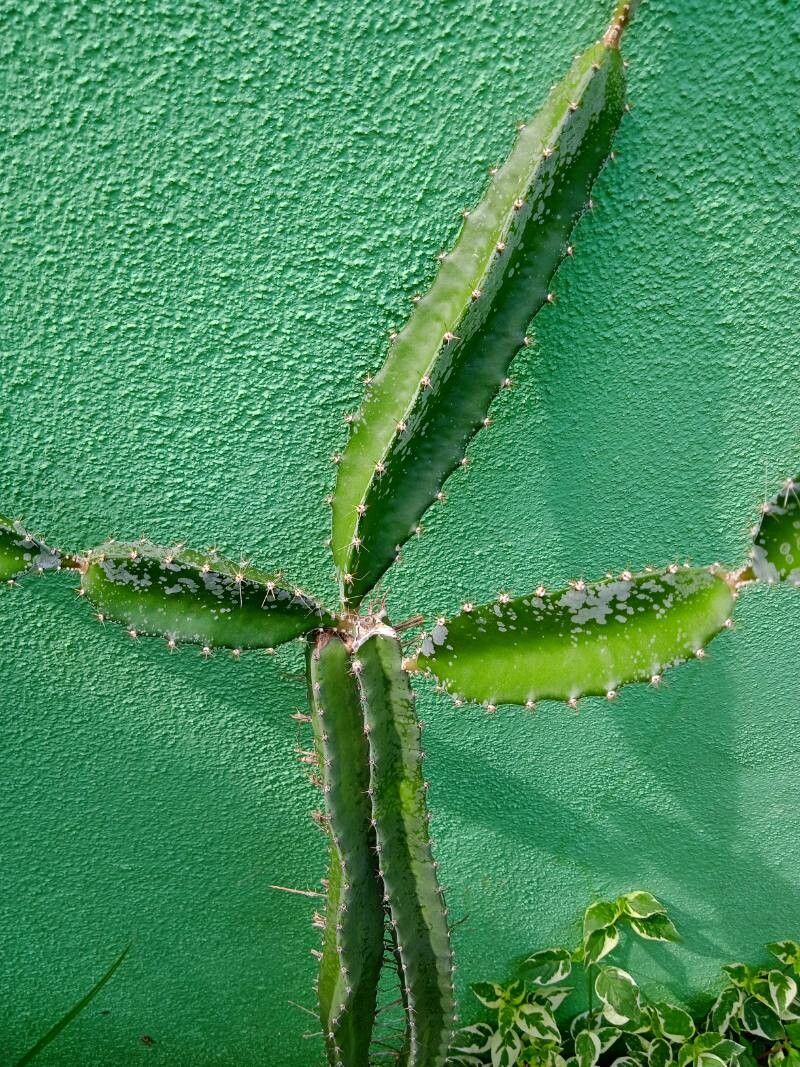
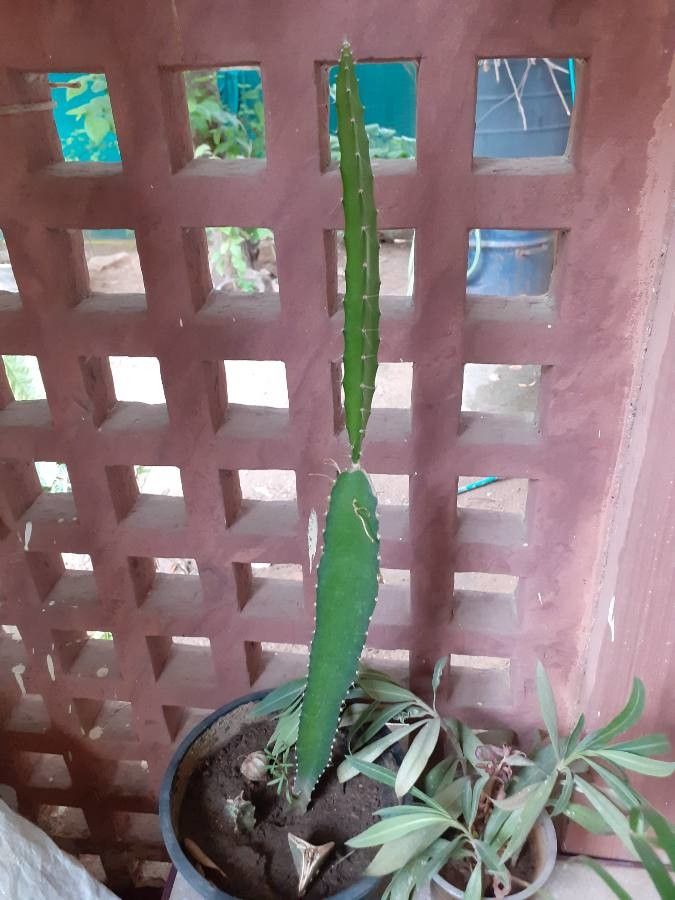
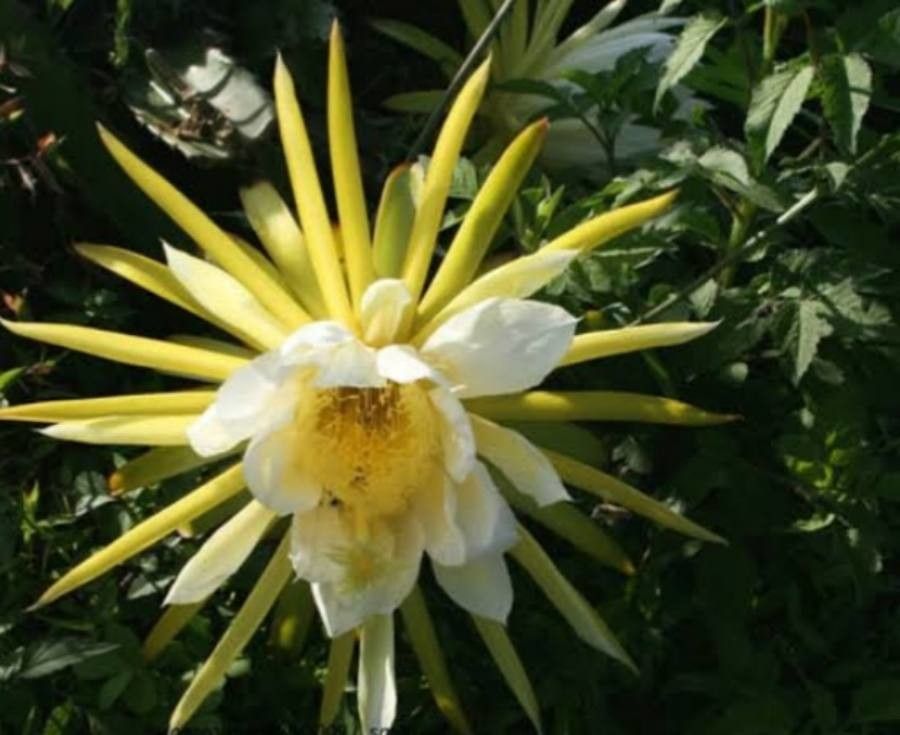
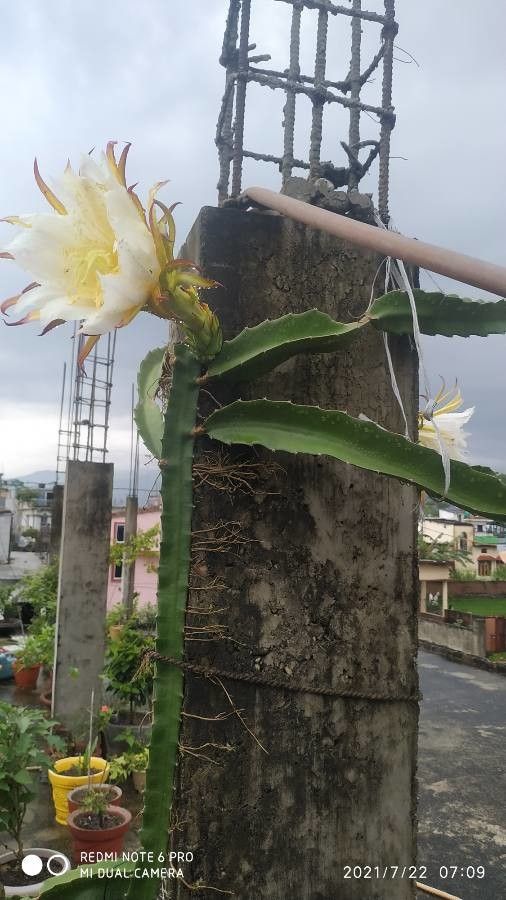
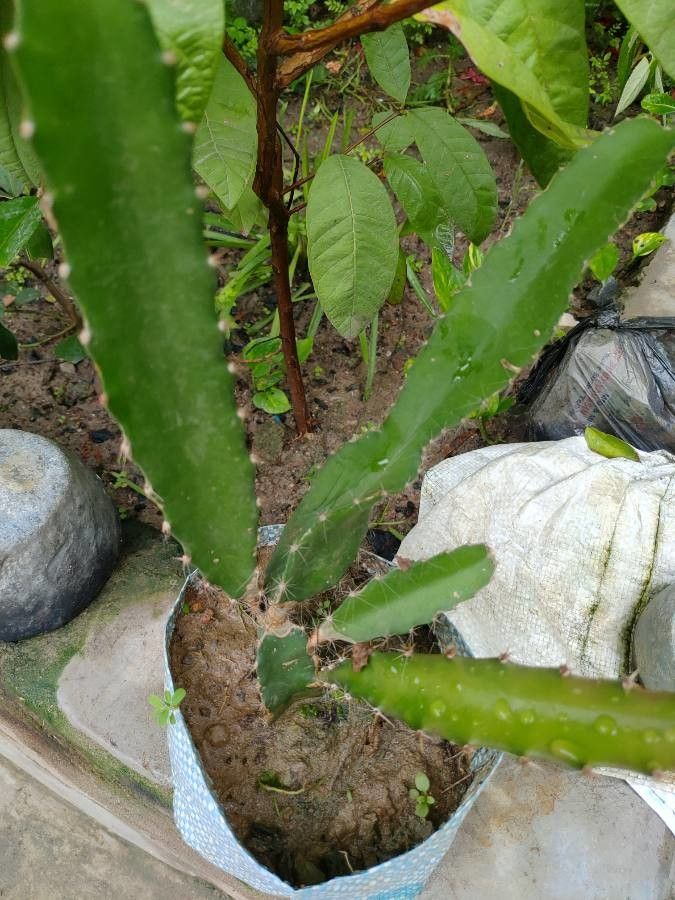
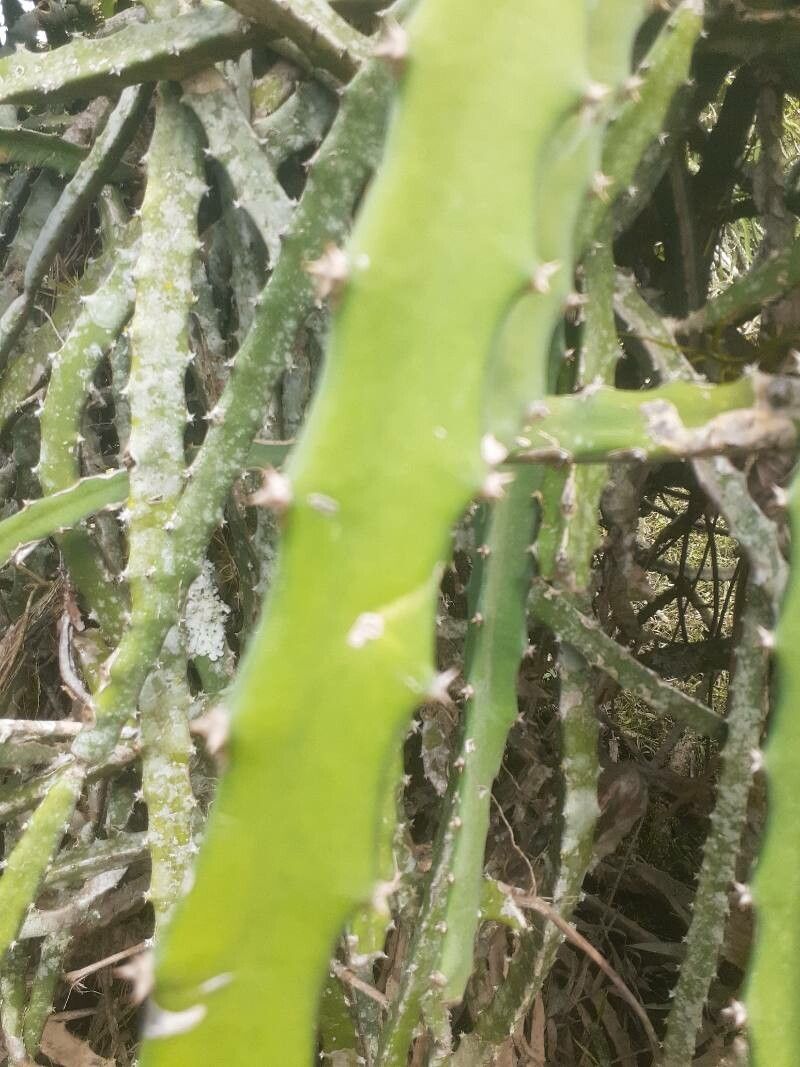
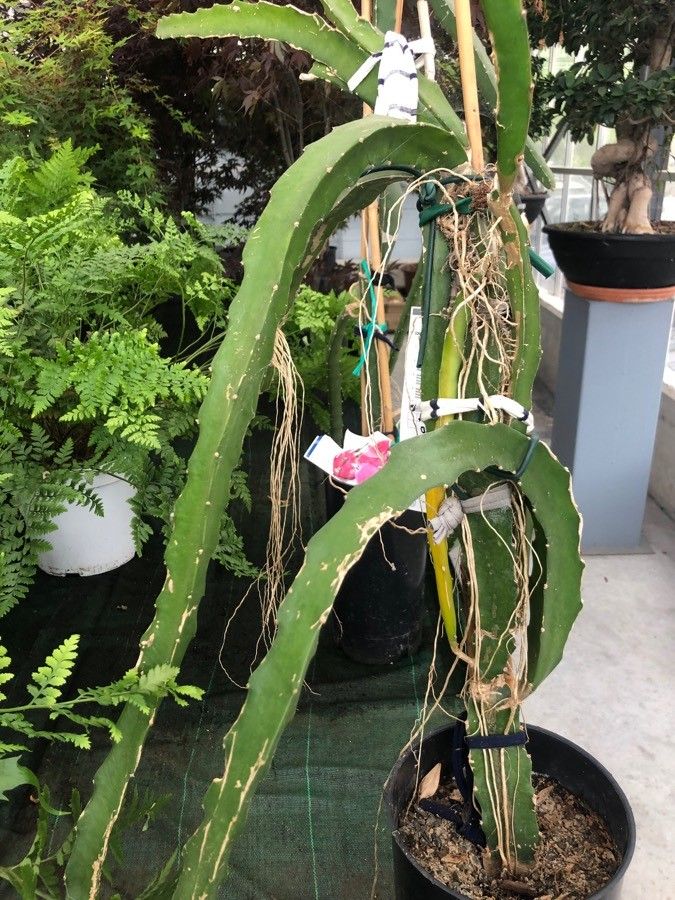
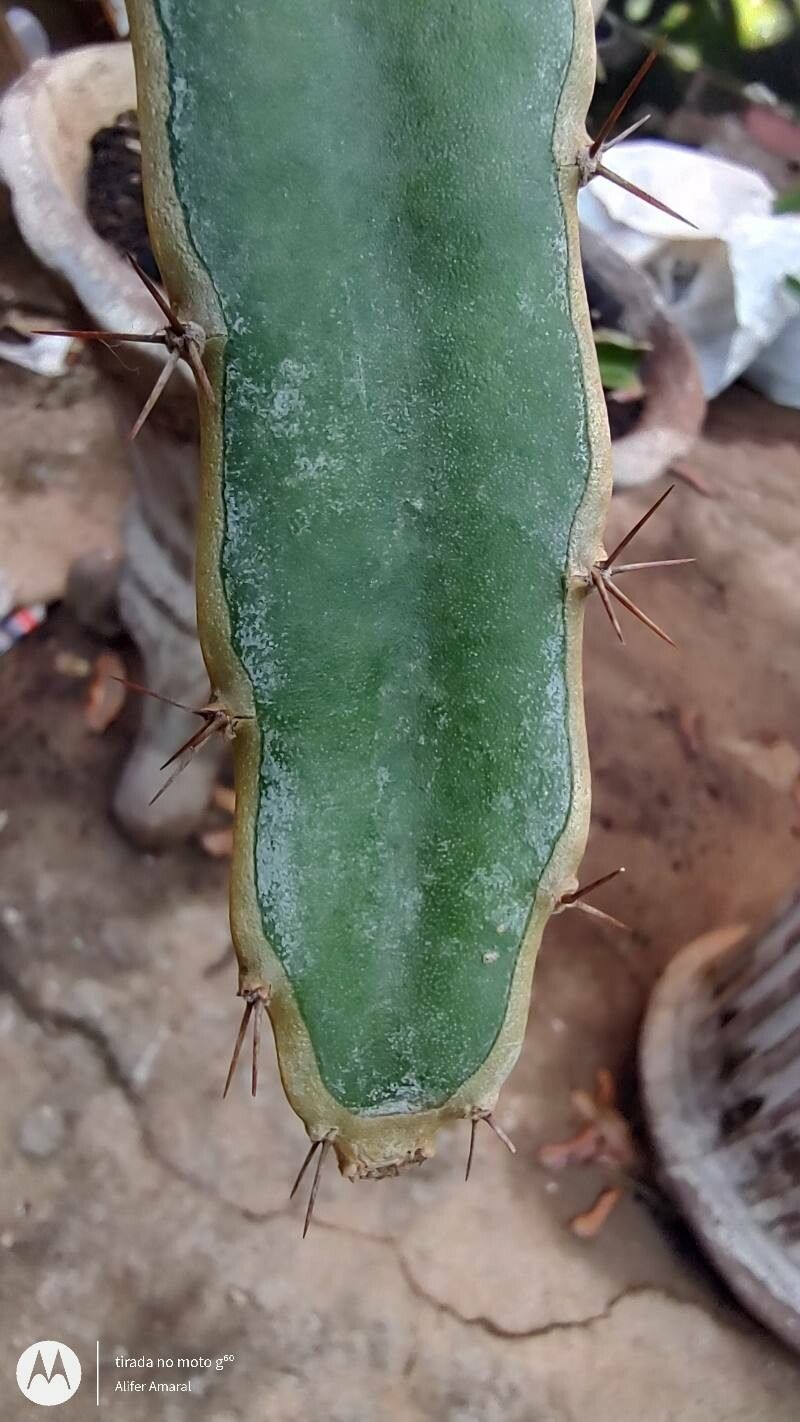
Selenicereus costaricensis, synonym Hylocereus costaricensis, known as the Costa Rican pitahaya or Costa Rica nightblooming cactus, is a cactus species native to Costa Rica, Panama and Nicaragua. The species is grown commercially for its fruit, called pitaya or pitahaya, but is also an impressive ornamental vine with huge flowers. The species may not be distinct from Selenicereus monacanthus.
Costa Rican pitahaya is fairly disease-resistant and generally tolerates routine care without becoming sick easily. That said, it can be vulnerable to mealybugs, which may cause some harm but are typically not a serious danger. Regarding care needs, Costa Rican pitahaya is drought-tolerant and does not require frequent watering. It can withstand long periods without water and needs little fertilizer. However, if kept in poor light and overwatered, it is very prone to root rot. Overall, Costa Rican pitahaya is well suited to people who want a low-maintenance plant, though it's important to know and meet its basic needs. It is especially appropriate for those who are away for long periods and might forget to water regularly.
How to keep Hylocereus Costaricensis.
Light
Costa rican pitahaya thrives in areas with abundant sun, allowing it to take in enough sunlight for optimal growth. It can also grow in places that receive a moderate amount of sunlight. Too much exposure can cause sunburn, while too little light may hinder its growth. Its natural habitat features substantial sun exposure.
Water
The Costa Rican pitahaya thrives in high humidity and can adapt to periods of dryness, demonstrating moderate drought tolerance. To promote lush growth, it is recommended to water the plant every two weeks. The pitahaya grows best outdoors where it can benefit from natural rainfall, making it particularly well-suited for regions with wet seasons that resemble its native environment.
Temperature
Costa Rican pitahaya comes from areas with temperatures between 68 and 100 °F (20 to 38 °C). It prefers similar temperatures, implying that warmth supports its growth. Modify conditions with the seasons to keep it within this range.
Fertilizer
For Costa Rican pitahaya, light applications of fertilizer once or twice a year during the growing season are adequate. Do not fertilize in winter or summer when the plant is dormant. Reduce fertilizer for repotted plants and wait a couple of months after repotting before applying any. Fertilizing promotes healthy growth and encourages blooms.
Pruning
The Costa Rican pitahaya is a type of vining cactus known for producing vibrant red fruit with white flesh. To encourage new growth and boost fruit production, prune the plant in early spring by trimming back to healthy buds. This practice also improves air circulation and helps prevent pest infestations.
Botanical profile.
- Plant Type
- Shrub
- Life Cycle
- Perennial
- Genus
- Hylocereus
- Family
- Cactaceae
- Hardiness Zone
- 10-11
- Mature Height
- 10.06 m
- Mature Spread
- 91 cm
- Leaf Color
- Green
- Leaf Type
- Evergreen
- Flower Color
- White
- Flower Size
- 15.24 cm to 30.48 cm
- Bloom Time
- Summer, Early fall
- Planting Time
- Spring, Summer, Autumn
- Harvest Time
- Late summer, Fall
Other names.
Reader questions.
How should I water my Costa Rican pitahaya plant?
Knowing the different techniques for watering the Costa Rican pitahaya is crucial. Many may wonder if they should water it from top to bottom or vice versa. Experts recommend starting from the bottom as it ensures that the roots receive enough water. Starting from the top does not provide adequate saturation; the water trickles and evaporates, resulting in only a small amount reaching the roots.
Why should I add fertilizer to my Costa Rican pitahaya plant?
If the soil in your area is rich, there may be no need to fertilize. However, if the soil lacks nutrients, it can impact the growth of a Costa Rican pitahaya, resulting in insufficient leaves, flowers, and fruits. Conducting a soil test is the most effective way to assess the nutrient content and deficiencies. Nutrient deficiencies in Costa Rican pitahayas can lead to small leaves, short branches, yellowing or bronze-colored leaves, as well as more acidic and less flavorful fruits. Certain nutrient deficiencies can even cause the fruit to prematurely fall off or split.
How much sunlight does Costa Rican pitahaya need to grow?
Tropical ornamental plants that thrive in full sun require at least 6 hours of direct sunlight each day. These plants are well-suited to areas with strong and direct sunlight, as they need this light to flourish. In their natural habitats, they tend to grow in open fields or along forest edges, where they can enjoy abundant sunlight all day long.
What is the best temperature for Costa Rican pitahaya?
To help your tropical plants thrive, it's best to maintain a temperature range of 75℉ to 90℉ (25-32℃). While different species can tolerate temperatures outside this range, sticking within a few degrees of these limits will ensure optimal growth. However, there are extreme temperature limits to be aware of. Anything below 50℉ (10℃) or above 95℉ (35℃) can hinder growth and cause issues with the leaves and stems. Low temperatures are particularly damaging, as even a light frost can lead to the death of your tropical plants. In fact, cellular death can occur rapidly, with some species dying within 12 to 24 hours.
What should I do if my Costa Rican pitahaya doesn't have enough water?
If you find that your flowers are drying out despite watering them regularly, the issue may be with the container they are planted in. In this case, choose a larger container with good drainage. It's important to use the right potting soil and clean sand mixture to help the plant absorb more water easily. This species is an epiphyte and cannot handle soggy roots, as it obtains water and nutrients from the air. Therefore, proper drainage is necessary to prevent fungal infections. If your cactus becomes limp, you can transfer it to fresh soil. Gently remove as much of the old soil as possible and keep the new soil evenly moist. Mist the cactus frequently if possible. After the flowers have finished blooming, reduce watering until new buds appear. Be careful not to let the soil dry out too much, as this can cause the buds to drop. Underwatering followed by overwatering is a common mistake made by many owners of these succulent cacti. The lack of water may not be noticeable until it's too late, so it's important to pay attention to signs of wilting or withering. While it is tempting to overcompensate with excessive watering, this can lead to desiccated roots that cannot take in any more water. This can result in waterlogged plants and rotting roots. If you notice signs of underwatering, you can try to revive the cactus by providing regular and frequent, yet controlled, watering. Give the cactus a chance to regenerate and recover its roots without overdoing it.
When should I fertilize my Costa Rican pitahaya?
To support the strong leaf and root development of young Costa Rican pitahaya for future growth, it is recommended to provide higher nitrogen and phosphorus fertilizer. The best time to apply fertilizer is during the spring of the first growing season. It is advised to mix in compost or another fertilizer into the soil before or immediately after planting. For mature plants, it is necessary to supplement with a balanced fertilizer or one that addresses specific soil deficiencies in your area every few years during the spring and summer season. It is important to avoid fertilizing Costa Rican pitahaya in the autumn or winter.
What happens if Costa Rican pitahaya doesn't get enough sunlight?
Tropical ornamental plants that need full sun may face issues if they don't receive enough sunlight. They might become leggy and weak, and their leaves could turn yellow or pale. Furthermore, they may stop producing flowers. Ultimately, if these plants continue to lack the required amount of direct sunlight, there is a possibility that they may die.
Do Costa Rican pitahaya need different temperatures for different stages of growth?
Costa Rican pitahaya does not require temperature changes to enter different growing phases, but it is important to maintain consistency. Fluctuations in temperature can slow down its growth, regardless of the phase it is currently in, so it is recommended to keep the plant in a controlled environment. It is crucial to maintain an optimal temperature range of 75℉ and 90℉ (25-32℃), especially making sure it doesn't go below the lower limit. While temperatures above 90℉ (32℃) are not ideal, as a tropical plant, it can tolerate them to some extent. On the other hand, temperatures below 50℉ (10℃) and particularly 40℉/5℃ can directly harm this species, which thrives in heat.
How often should I water my Costa Rican pitahaya plant?
To keep the Costa Rican pitahaya healthy, it is important to water it properly throughout the year. Use well-draining soil and pot it in a suitable container to encourage beautiful blooms. The amount of water needed for the Costa Rican pitahaya can vary, but a good rule of thumb is to water when about 1/3 of the topsoil is dry, which is usually once a week. Check the soil by feeling about two inches down with your fingers. If the top layer of soil is very dry, water the plant until the excess water drains out through the pot's drainage holes. Make sure to have a tray underneath the pot to catch any extra water, but discard it after 10 to 15 minutes to prevent root rot. During the flowering stage, water sparingly and only when you notice the leaves drooping. To add humidity, place pebbles in the saucer of the pot and add water to them. Avoid letting the pot sit in water, especially during winter when the soil takes longer to dry. Consider the climate when watering the Costa Rican pitahaya. In dry and hot climates, watering twice a week may be necessary, while in humid areas, watering once a week will suffice. Water less frequently in the fall and winter to promote blooming. If the pots are exposed to a lot of sunlight, they may need more frequent watering, whereas in cooler and more humid environments, watering can be reduced.
When is the best time to not add fertilizer to my Costa Rican pitahaya plant?
To ensure the health of your Costa Rican pitahaya, it's important to follow these guidelines: First, avoid fertilizing after pruning, when the plant is dealing with disease, insects, or other stress factors. Fertilizer is effective only in treating soil with insufficient nutrients, and cannot address any other underlying issues that may be causing problems for the pitahaya. It is crucial to accurately diagnose the problem before applying fertilizer, as there may be an alternative cause that needs to be addressed instead. Lastly, avoid fertilizing during the winter or during hot and dry periods of the summer.
What happens when Costa Rican pitahaya gets too much sunlight?
Tropical ornamental plants that thrive in full sun require ample direct sunlight, but excessive exposure to intense sunlight can harm them. Prolonged periods of direct sunlight can cause sunburned leaves or the development of unsightly brown spots. Additionally, if the soil dries out too rapidly in full sun, these plants may become dehydrated.
Does the type of pitahaya from Costa Rica require different temperatures depending on the season?
Costa Rican pitahaya grows well in a consistent temperature range, so it does not require different temperatures for different seasons. To provide the best care, it is recommended to keep this plant indoors. This allows you to control the temperature regardless of the outdoor climate. Light is also crucial for tropical species, including pitahaya. They prefer partial shade or filtered sunlight, meaning the light they receive should be dappled or indirect. Too much direct sunlight can harm the plant's leaves and hinder its growth.