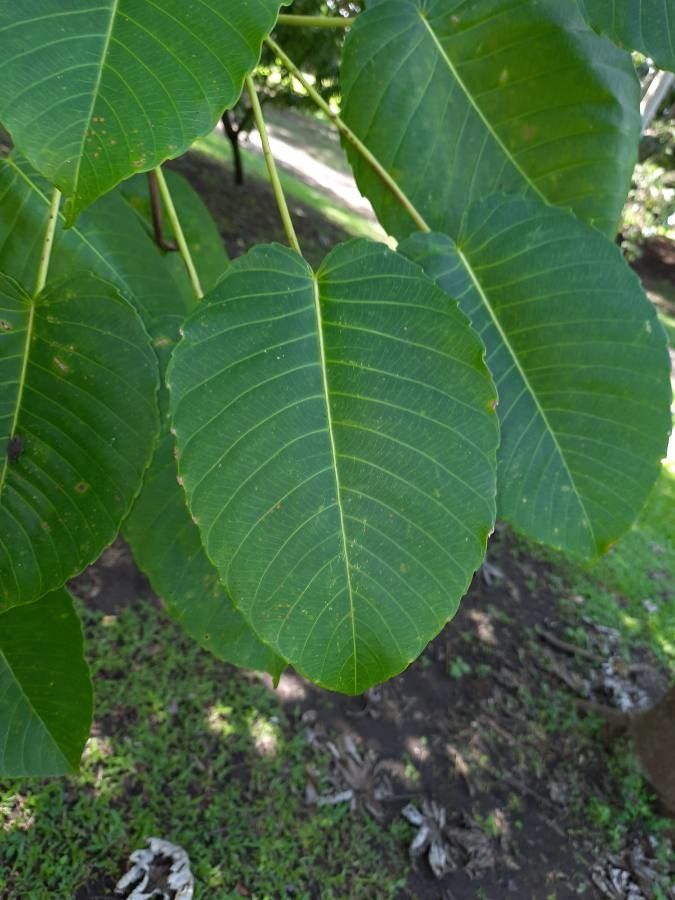
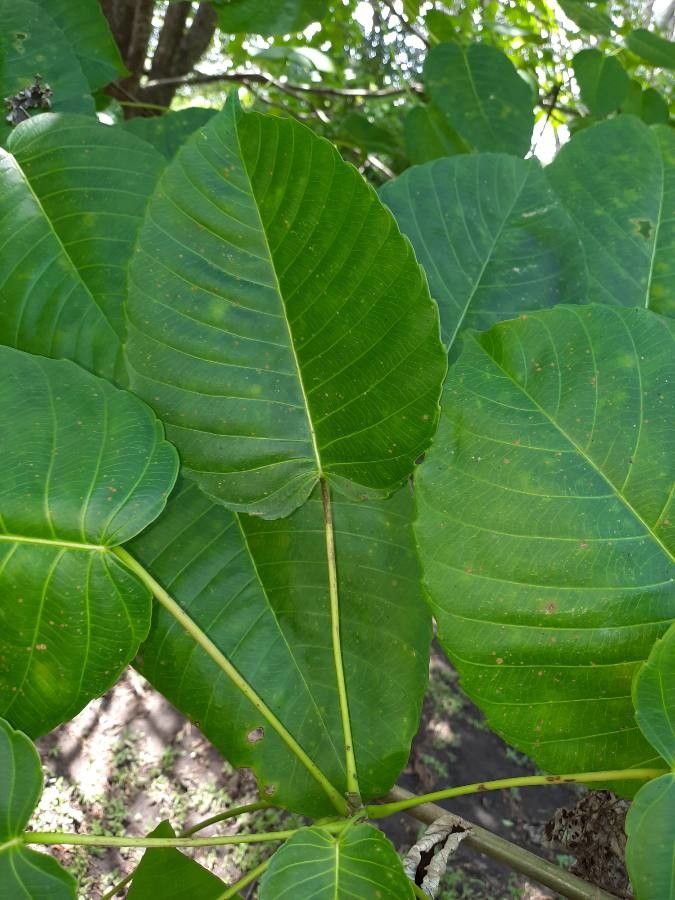
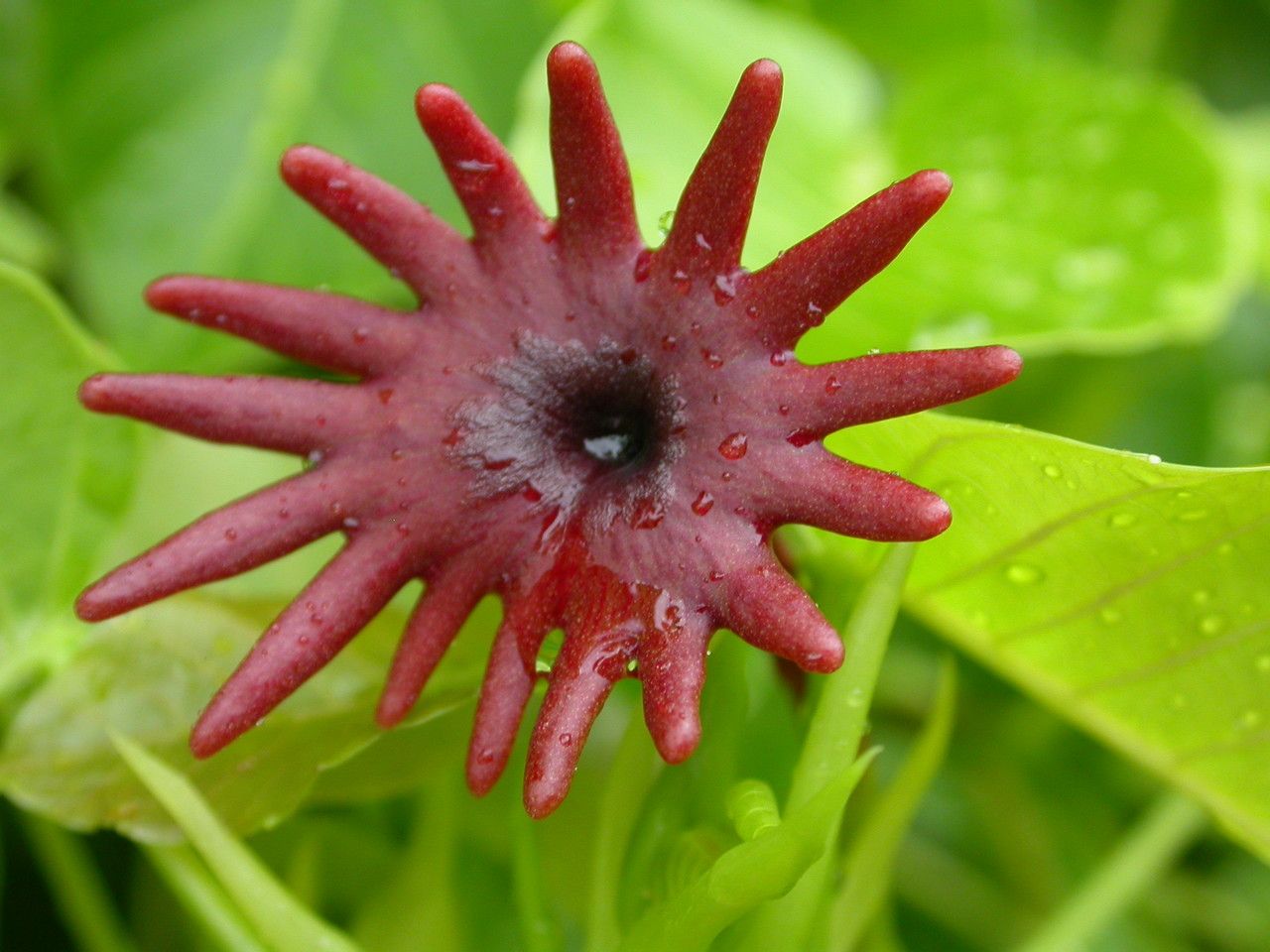
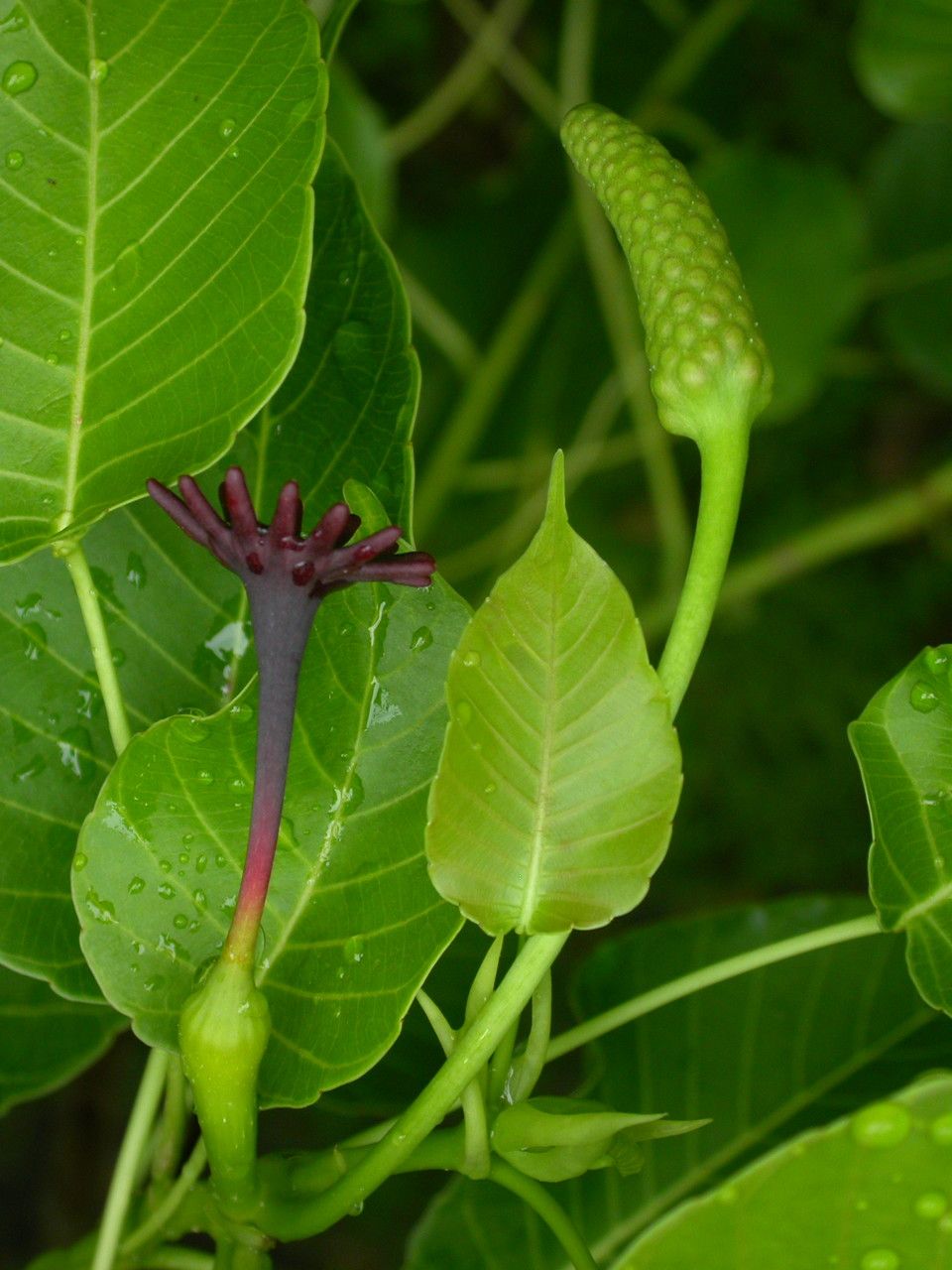
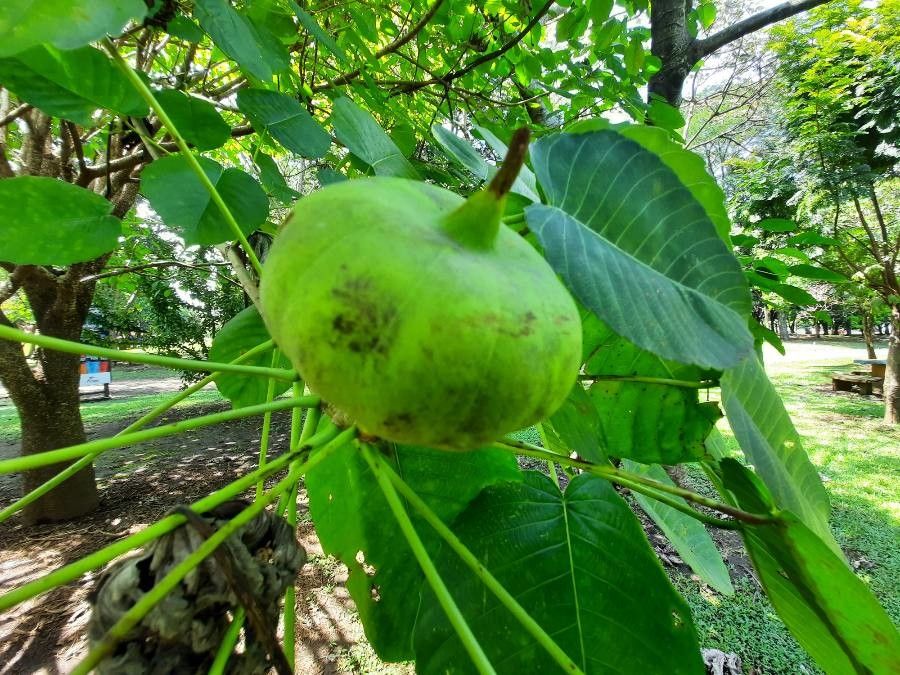
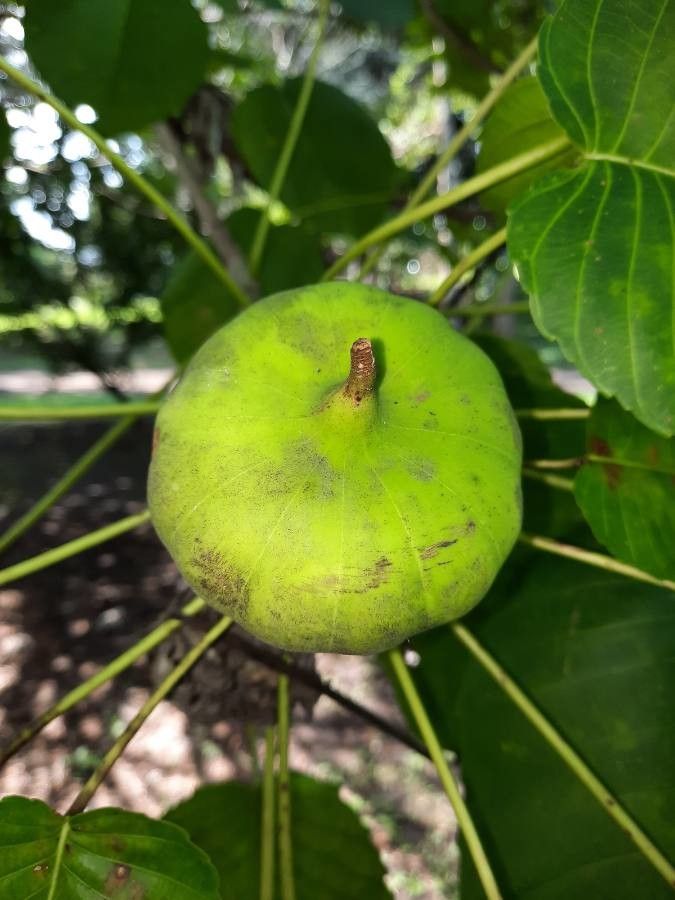
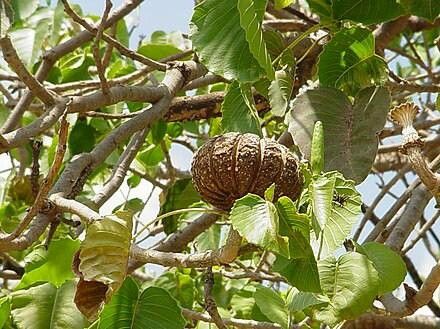
Hura crepitans, the sandbox tree, also known as possumwood and jabillo, is an evergreen tree of the spurge family (Euphorbiaceae), native to tropical regions of North and South America including the Amazon rainforest. It is also present in parts of Tanzania, where it is considered an invasive species. It can be recognized by its smooth brown bark covered in many dark, pointed spines which have led to its being nicknamed monkey no-climb. Because its fruit explodes when ripe, it has also received the colloquial nickname the dynamite tree.
Sandboxtree shows strong resistance to disease and is generally not susceptible to diseases. Regarding care, the plant is relatively low-maintenance. When grown outdoors it needs little watering, and larger specimens usually do not require pruning. Smaller plants, however, should be pruned after they have finished blooming. Sandboxtreet is suitable for anyone with outdoor space, such as a garden or deck, and does not demand much care experience.
How to keep Hura Crepitans.
Light
Sandboxtree does well in places with strong sunlight, favoring locations that receive full sun throughout the day. Excessive or insufficient sun can impair its growth and health. Coming from habitats with abundant sunlight, sandboxtree is suited to continuous sun exposure and cannot tolerate shade.
Water
Originating from tropical regions, the sandbox tree thrives in high humidity and regular rainfall. To maintain its moisture needs, it should be watered every 1-2 weeks. As an evergreen, it's important to meet its water requirements during the growing season, although it does exhibit moderate drought tolerance.
Temperature
Sandboxtree is native to regions where temperatures range from 68 to 100 °F (20 to 38 ℃). It favors warm conditions. In colder climates, seasonal adjustments may be necessary to ensure optimal growth.
Fertilizer
Fertilizing is essential for Sandboxtree care. Regular feeding during the growing season preserves energy for its showy leaves and supports overall growth. If fertilization is neglected, leaves can become unhealthy, the plant’s ornamental appeal can decline, and growth may be stunted or weak and prone to breakage.
Pruning
The sandbox tree, a tropical species, benefits from being pruned in the winter. This helps remove dead or diseased branches and improves air circulation. Careful trimming encourages healthy structure and growth, but it's important to avoid over-pruning to prevent causing stress to the tree. It's also advisable to regularly check for sap, as it can be irritating.
Botanical profile.
- Plant Type
- Tree
- Life Cycle
- Perennial
- Genus
- Hura
- Family
- Euphorbiaceae
- Hardiness Zone
- 10-11
- Mature Height
- 10.06 m to 39.93 m
- Mature Spread
- 14.94 m to 29.87 m
- Leaf Color
- Green
- Leaf Type
- Evergreen, Semi-evergreen
- Flower Color
- Red
- Flower Size
- 1.02 cm to 2.03 cm
- Bloom Time
- Late spring, Summer, Early fall, Mid fall
- Planting Time
- Spring
- Harvest Time
- Late summer, Fall, Early winter, Mid winter
- Native Area
- Colombia, Bahamas, Cuba, Honduras, Bolivia, Venezuela, Peru, Guyana, Brazil, Nicaragua, Costa Rica, Jamaica
Other names.
Reader questions.
How should I water my Sandboxtree?
Your Sandboxtree is not picky when it comes to watering methods. You can use any usual watering tool, such as watering cans, hoses, or even cups, to moisten the soil of this plant. Regardless of the tool, it's important to water the soil directly and ensure equal moisture distribution to all parts of the root system. Using filtered water is recommended to avoid any harmful particles that may be present in tap water. Also, it is better to use water at or slightly above room temperature, as extremely cold or hot water can shock the Sandboxtree. However, the Sandboxtree generally responds well to any type of water.
Why should I add fertilizer to my Sandboxtree?
Sandboxtrees require regular fertilization because their showy leaves demand a significant amount of energy for their production and maintenance. However, they also need additional energy to support the growth of their stems, branches, roots, and other vital structures. Neglecting fertilization can lead to two likely outcomes. Firstly, the leaves of the Sandboxtree will lose their natural color and texture, appearing generally unhealthy and diminishing their ornamental appeal. Secondly, the overall growth of the Sandboxtree may slow down or produce weak growth that is susceptible to breakage.
What are the sunlight requirements for Sandboxtree?
Sandboxtree requires over 6 hours of sunlight daily, thriving in full sun but can tolerate partial shade. It's crucial to monitor the movement of sunlight through your garden to ensure your Sandboxtree receives the perfect balance of light and shade. Inadequate sunlight exposure can significantly impair the plant's growth and health. Sandboxtree is well-adapted to constant sun exposure, originating from regions with abundant sunlight.
What is the ideal temperature range for Sandboxtree growth?
The Sandboxtree, or Hura crepitans, thrives best in temperatures ranging from 68 to 100°F (20 to 38°C). It is extremely heat-loving and requires a warm environment for optimal growth. In regions experiencing colder climates, seasonal adjustments may be necessary to maintain these temperature conditions and ensure the plant's health.
What should I do if I give too much or too little water to my Sandboxtree?
Outdoor plants, especially newly planted ones or seedlings, can be at risk of not getting enough water. It's important to water them adequately for the first few months while they are small or recently planted. Once the roots are established, Sandboxtrees can typically rely on rain for moisture. However, if you have potted Sandboxtrees, overwatering is more likely to happen. If you accidentally overwater your Sandboxtree, there are some steps you can take to address the situation. First, stop watering the plant immediately to minimize the impact of overwatering. Then, remove the Sandboxtree from its pot and check its roots. If there are no signs of root rot, you can return the plant to its container. But if you find any roots affected by root rot, trim them away and consider applying a fungicide. Lastly, repot the Sandboxtree in well-draining soil. On the other hand, if you underwatered your Sandboxtree, increase your watering frequency. Underwatering can be easily fixed as the leaves will droop, dry out, and fall off. Once the plant is sufficiently watered, the leaves will regain their fullness. It's crucial to adjust your watering schedule promptly if you notice the signs of underwatering.
When should I fertilize my Sandboxtree?
To ensure the optimal growth of your Sandboxtree, occasional feedings are beneficial. Thus, there is no need to establish a strict routine for feeding when initially planting these plants. Simply watering the plant sometimes and applying fertilizer is an easy way to meet its fertilization needs. Additionally, during the growing season, your Sandboxtree will require a sufficient amount of water. Feeding the plant every two to three weeks will ensure it receives the necessary nutrients. It is important to maintain this feeding frequency throughout the period when your plant is producing new growth.
How can I provide adequate lighting for Sandboxtree indoors?
Indoor Sandboxtrees require adequate lighting, especially when natural sunlight is insufficient. This is common during winter or in less sunny spaces. Artificial lights serve as a vital solution in these scenarios, promoting faster and healthier growth. LED lights are recommended for their ability to provide specific wavelengths needed by plants. Full sun plants need 30-50W/sq ft, partial sun plants 20-30W/sq ft, and full shade plants 10-20W/sq ft of artificial light. Position the light source 12-36 inches above the plant and provide 8-12 hours of light daily to mimic natural sunlight conditions.
How should I care for my Sandboxtree during the winter?
During winter, it's crucial to protect your Sandboxtree from cold temperatures. If you're growing the tree outdoors, it is recommended to bring it indoors when autumn approaches, placing it near a bright window but away from heaters to avoid dry air damage. Maintaining an indoor temperature above 20°C is beneficial for the Sandboxtree's growth, as temperatures nearing 5°C can be detrimental.
How much water does my Sandboxtree need?
If you have outdoor plants and it rains regularly in your area, they can usually grow normally without additional watering. However, if you live in a region with less rainfall, you should water your plants every 2 weeks in spring and fall, and more frequently in the summer. In winter, plants require less water, so you can water them less frequently or even not at all. If your Sandboxtree is young or newly planted, it will need more frequent watering to help it establish and grow into a drought-tolerant plant. For potted plants, you have two options for determining how often to water your Sandboxtree. The first option is to follow a set schedule, such as watering once a week or every other week. However, this may not always be the best approach as it doesn't account for the specific growing conditions of your Sandboxtree. The second option is to monitor the soil moisture and water accordingly. Ideally, you should wait until the top 2-4 inches of soil have completely dried out before giving the plant more water. This approach allows you to adjust the watering frequency based on the season, as the plant's water needs are highest during summer.
When is not a good time to fertilize my Sandboxtree?
For most of the year, you can stick to the regular fertilization schedule for your Sandboxtree, which includes spring, summer, and early fall. However, it's important to note that during the winter, you should not fertilize the plant. In the winter, the Sandboxtree goes into a dormant growth phase, where it either doesn't grow at all or has minimal growth. Since the plant is using less energy during this time, there is no need for fertilization.
What are the symptoms of insufficient sunlight for Sandboxtree?
Symptoms of insufficient sunlight in Sandboxtree include smaller new leaves, leggy or sparse growth, faster leaf drop, slower or no new growth, lighter-colored new leaves, chlorosis (yellowing of leaves due to lack of chlorophyll), sunscald, leaf curling, wilting, and leaf scorching. These symptoms indicate that the Sandboxtree is not receiving adequate sunlight, affecting its health and growth.
What symptoms indicate my Sandboxtree is experiencing stress from low temperatures, and how can I address this?
Signs that your Sandboxtree is stressed by low temperatures include a lightening of leaf color when temperatures fall below 1°C, with frost damage eventually turning the leaves brown or black. Symptoms such as wilting and drooping may also occur. To address frost damage, trim the affected parts and move the plant to a warmer indoor location, ideally near a south-facing window for ample sunlight. It's also important to avoid placing the plant near heaters or air conditioning vents to prevent air dryness.