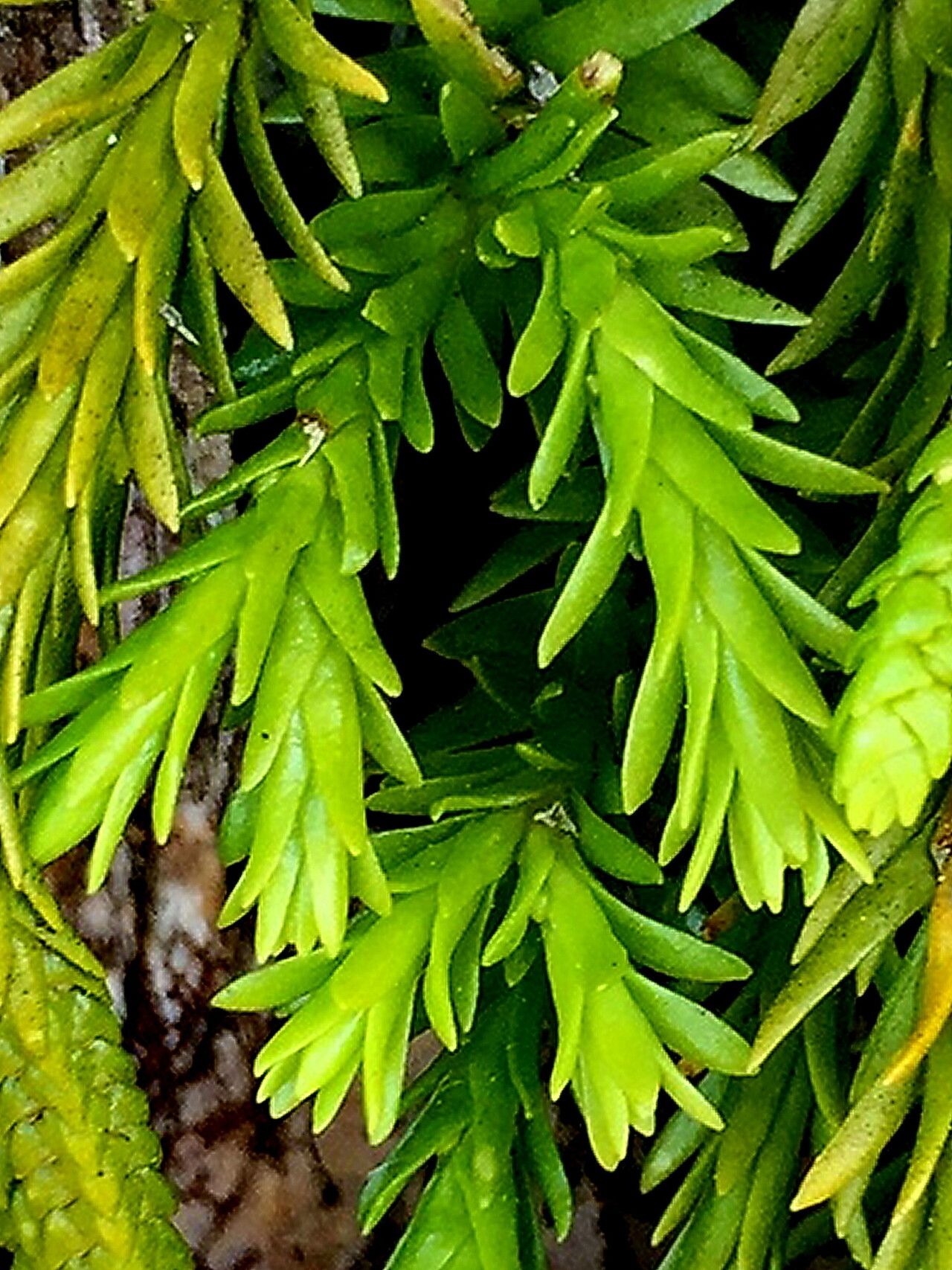
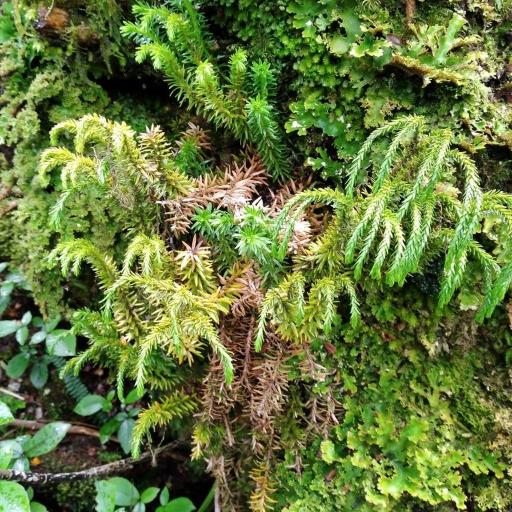
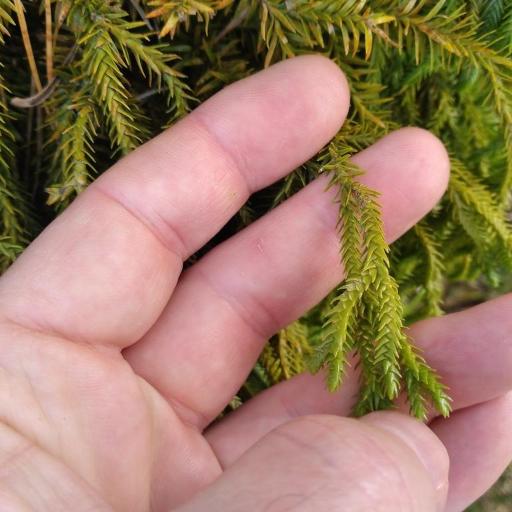
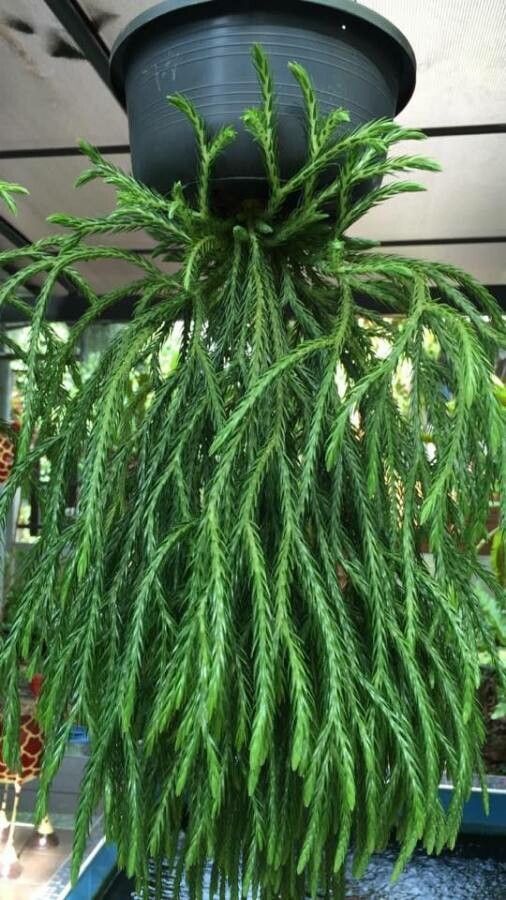
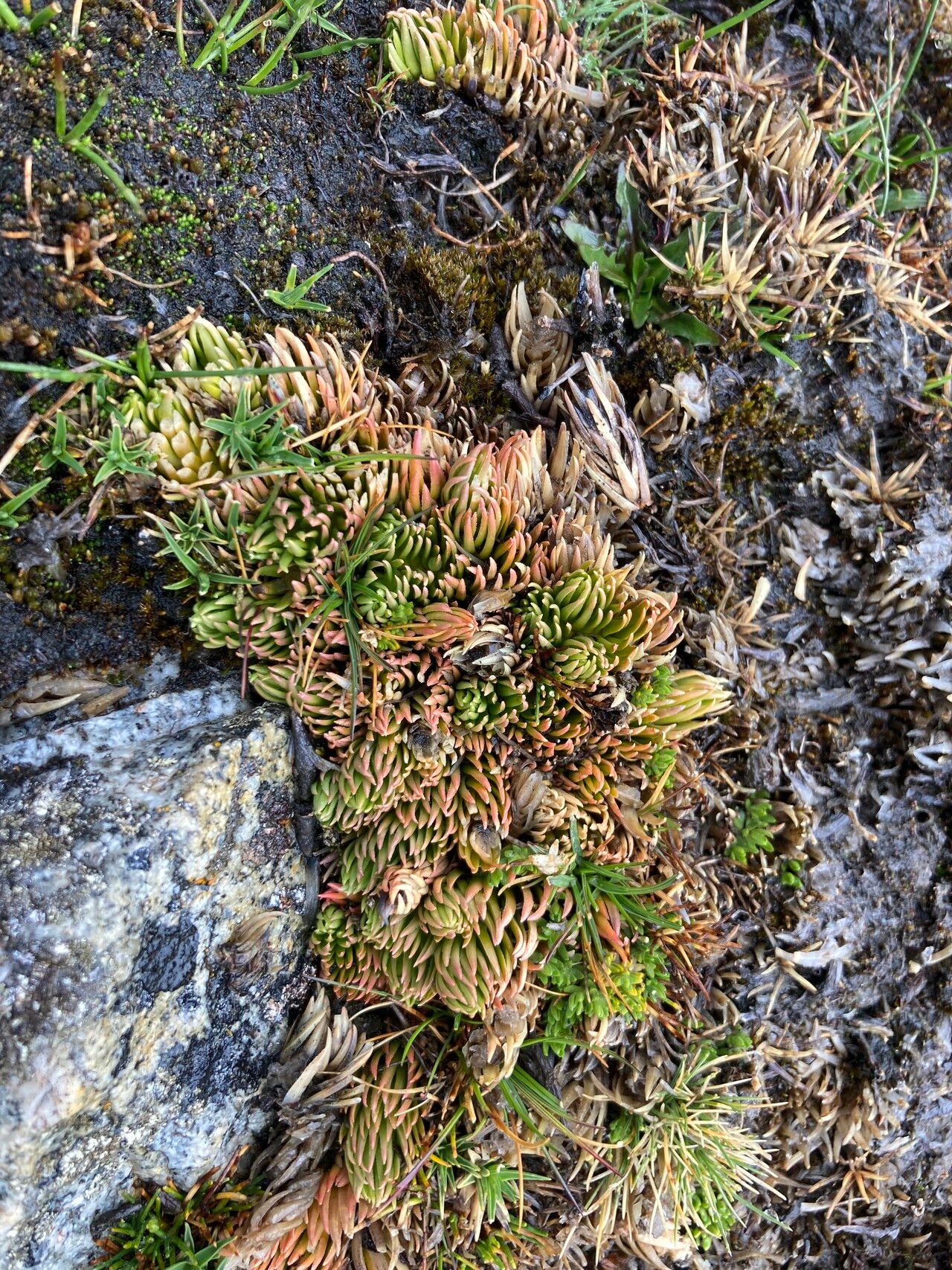
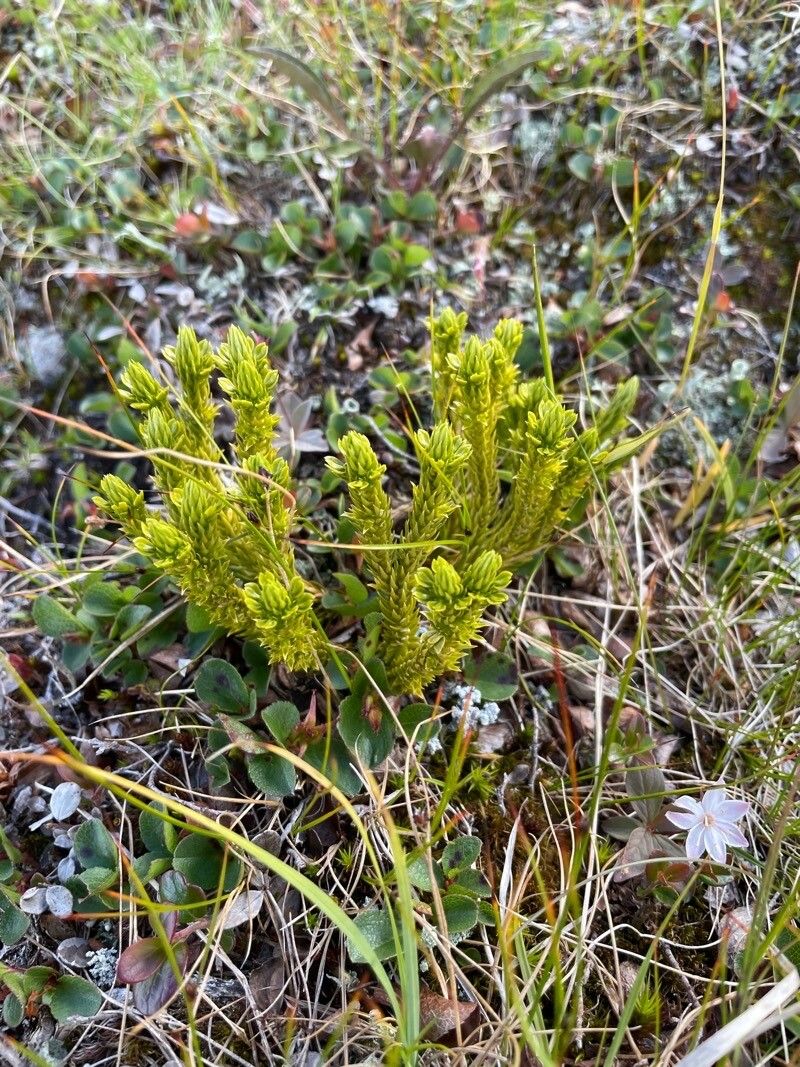
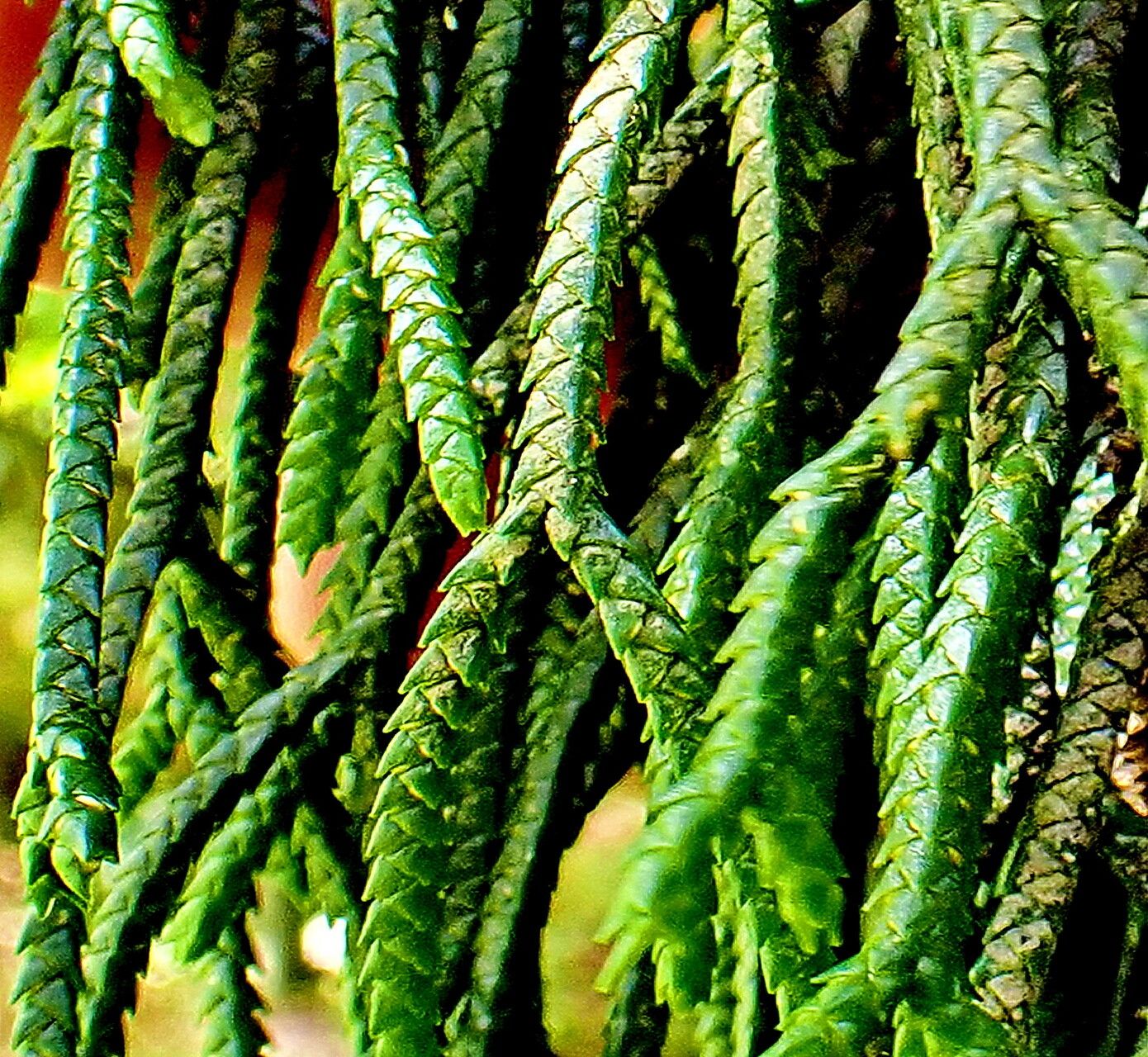
Phlegmariurus varius, is a fir moss or club moss in the family Lycopodiaceae found in areas of Australia, New Zealand and associated islands. It has a number of synonyms including Huperzia varia. Phlegmariurus varius can grow on the ground and as a lithophyte or epiphyte. It can have one or many branches that are spirally arranged with slender leaves that narrow to a point. The plant varies from green to green-yellow and is sometimes orange in appearance. A recent article provides morphological and genetic evidence to separate Phlegmariurus billardierei, the only species of Lycopodiaceae endemic to New Zealand, from P. varius.
Hanging clubmoss is fairly resistant to disease and typically does not suffer from many illnesses. Still, it can be vulnerable to pests and diseases that exist nearby. Such infections tend to be minor. Regarding care, the plant demands a moderate level of attention. It should be pruned regularly to preserve an attractive appearance and healthy growth, and applying fertilizer can assist in encouraging flowering. Hanging clubmoss is well suited for people who have outdoor areas like a garden or patio and does not need extensive gardening experience. When kept indoors, it may call for more attentive care.
How to keep Huperzia Varia.
Light
Hanging clubmoss does best in settings where sunlight is moderate, favoring a mix of shade and light. Native to areas with dense foliage, it is adapted to places with reduced sun. Excessive sunlight can damage the plant, while too little light may restrict its growth.
Temperature
Hanging clubmoss comes from tropical areas, where the climate is usually warm and humid. Consequently, it is adapted to high heat and moisture. It does not tolerate sudden temperature swings and prefers a steady temperature, so avoiding indoor temperature fluctuations is important. It typically cannot withstand cold and needs warmer conditions to grow. If the ambient temperature falls too low, the plant may stop growing or even die.
Fertilizer
Hanging clubmoss needs the most fertilizer during its active growth period, which is mainly in spring, summer, and early fall. Fertilization supplies essential nutrients the soil may be missing, supporting healthy root and stem development and producing the attractive foliage that is a distinctive feature of this plant.
Botanical profile.
- Plant Type
- Herb
- Life Cycle
- Perennial
- Genus
- Huperzia
- Family
- Lycopodiaceae
- Hardiness Zone
- 10-12
- Mature Height
- 10 cm to 49 cm
- Mature Spread
- 5 cm to 20 cm
- Leaf Color
- Green, Blue
- Leaf Type
- Evergreen
- Flower Size
- 1.02 cm to 33.53 cm
- Planting Time
- Spring, Summer, Autumn
- Native Area
- New Zealand