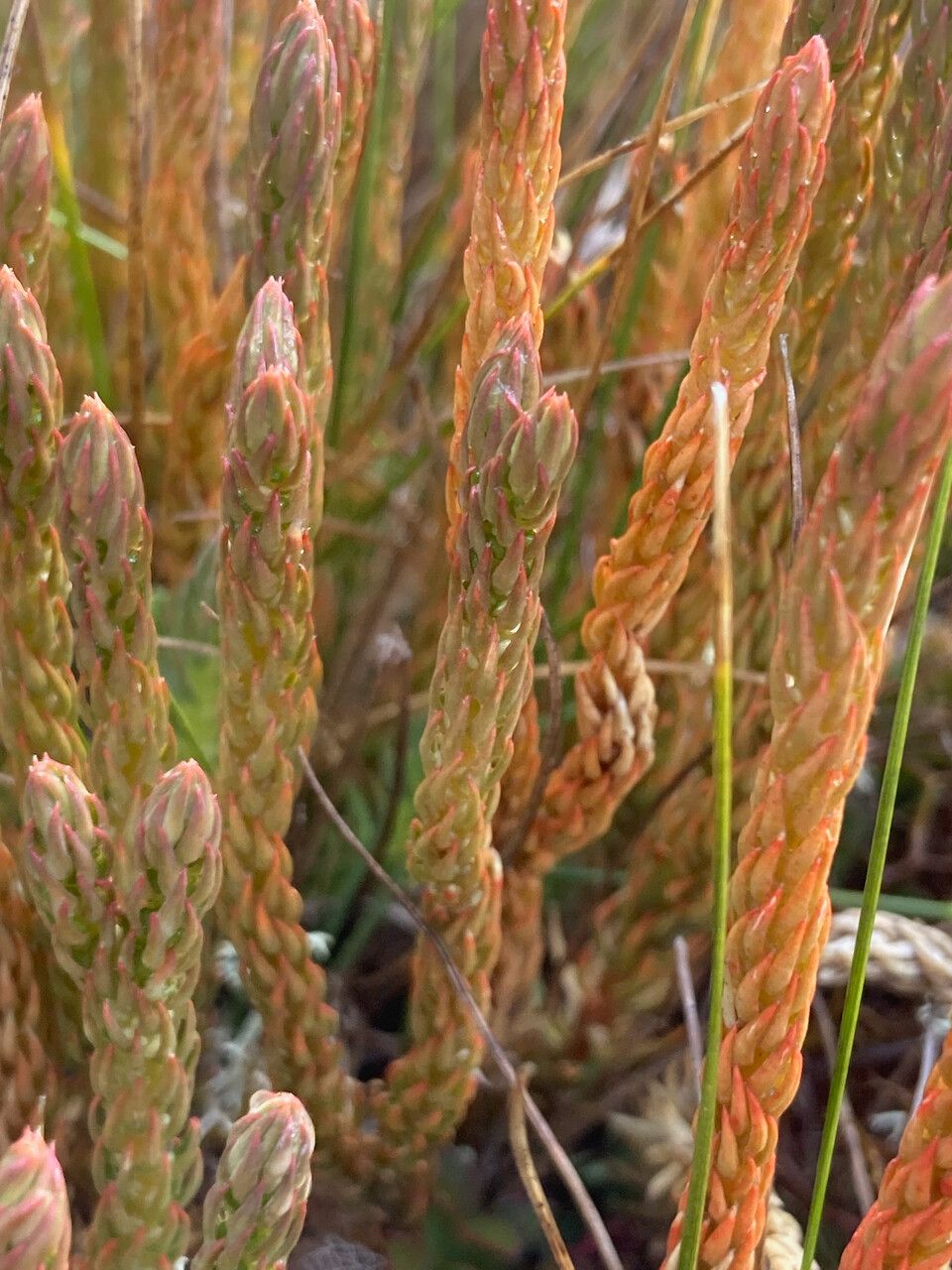
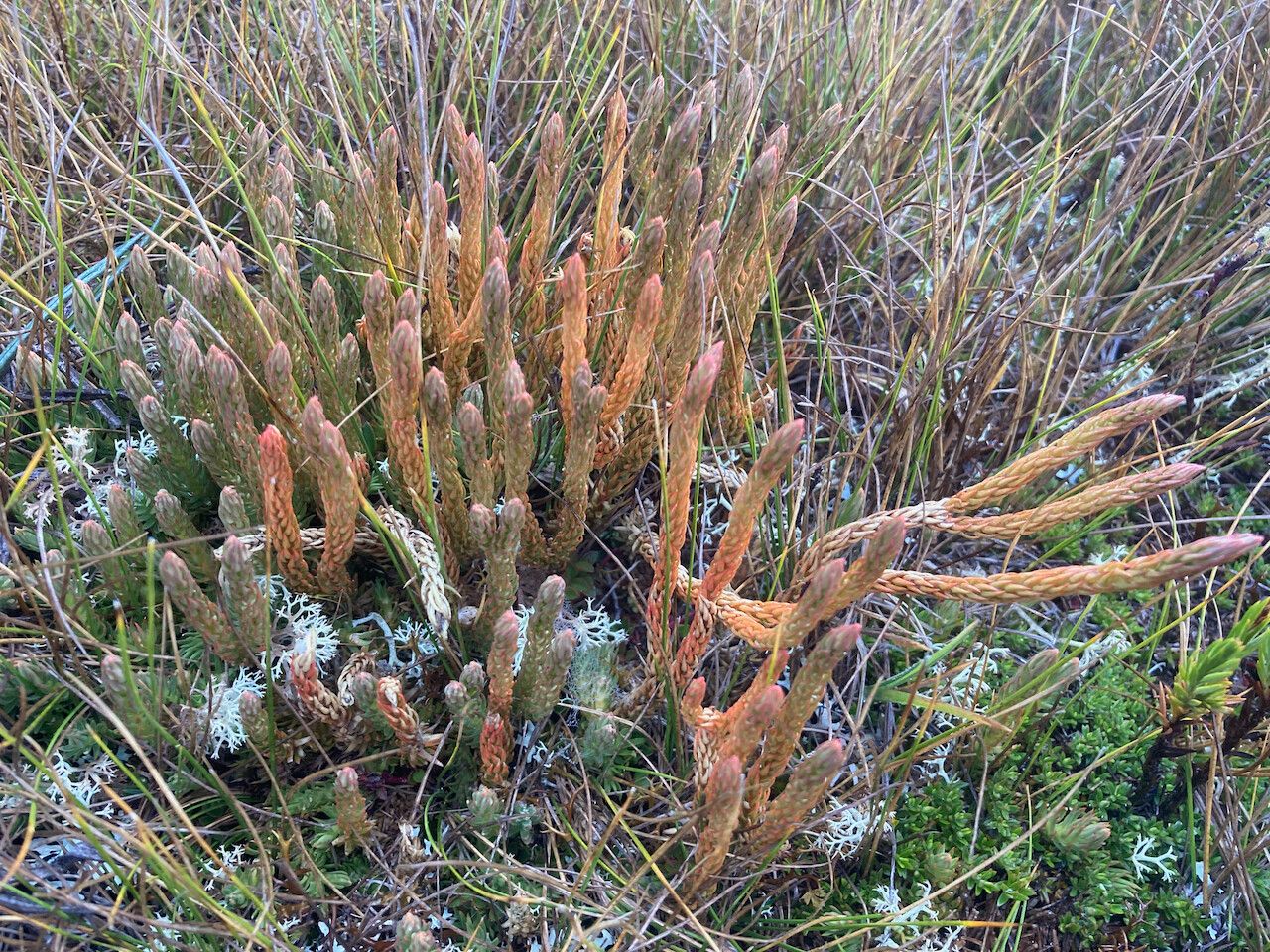
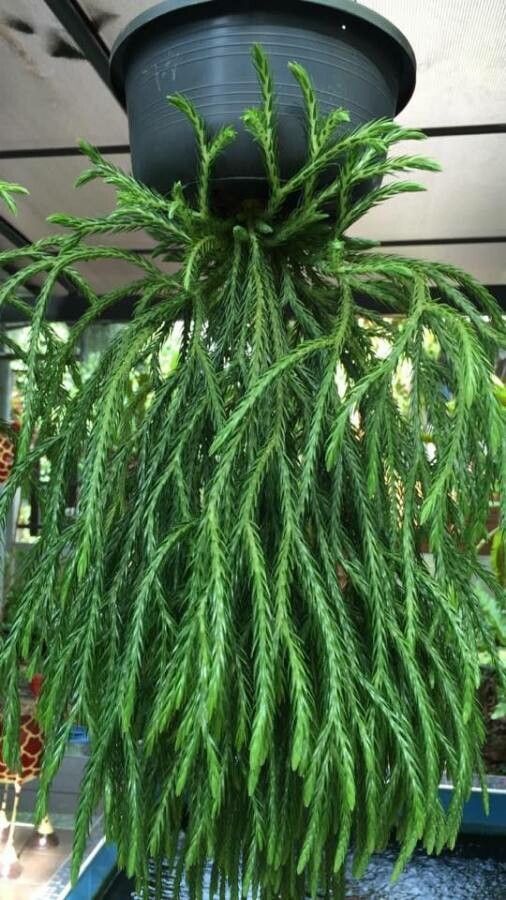
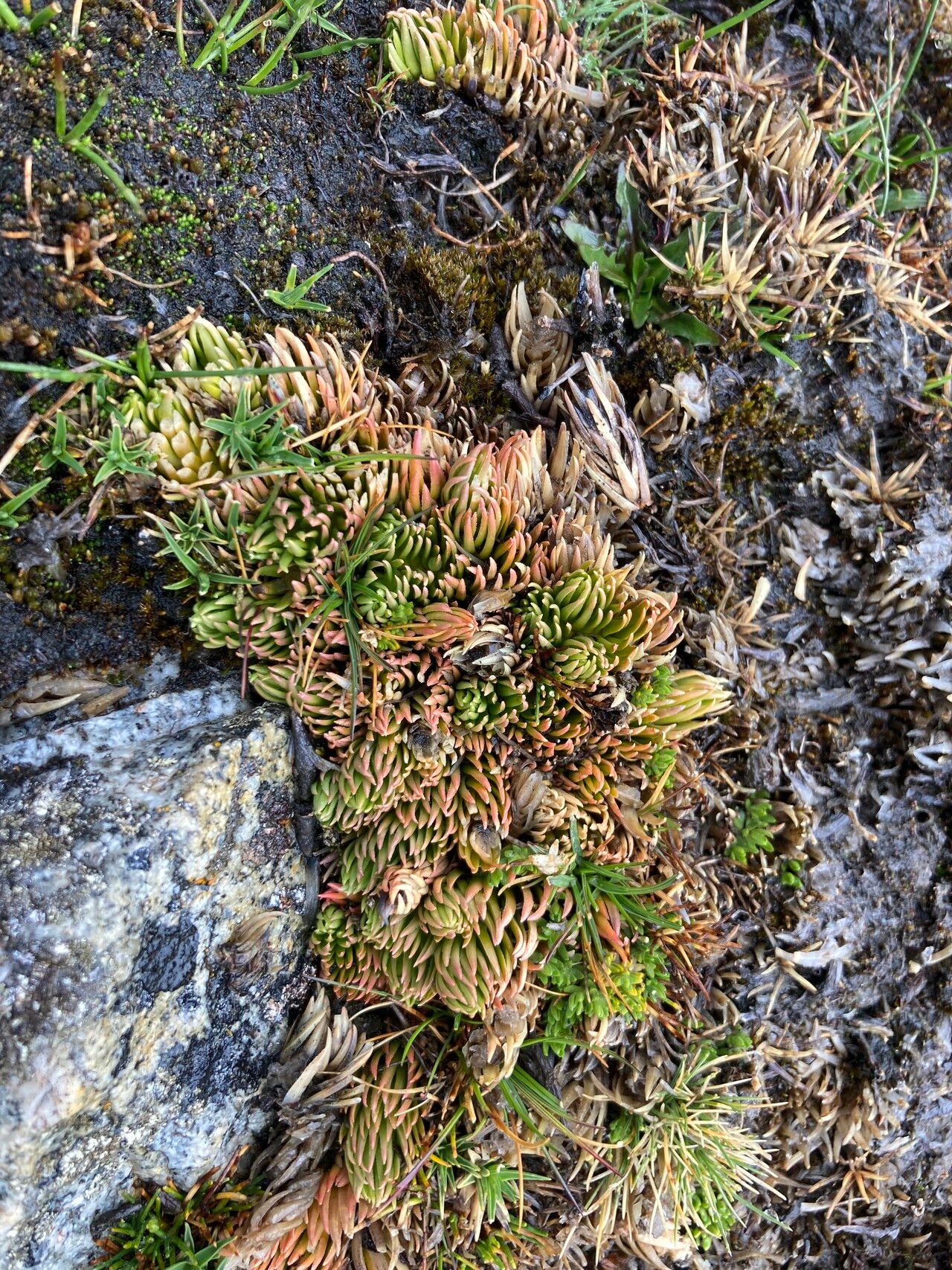
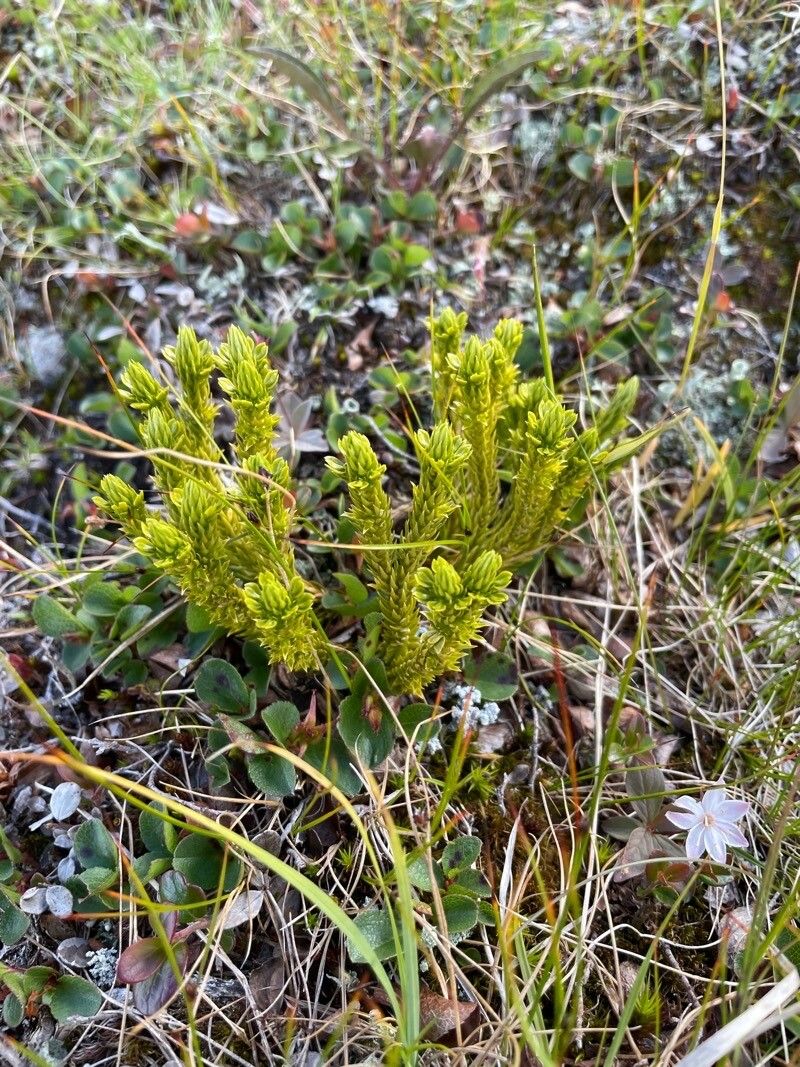
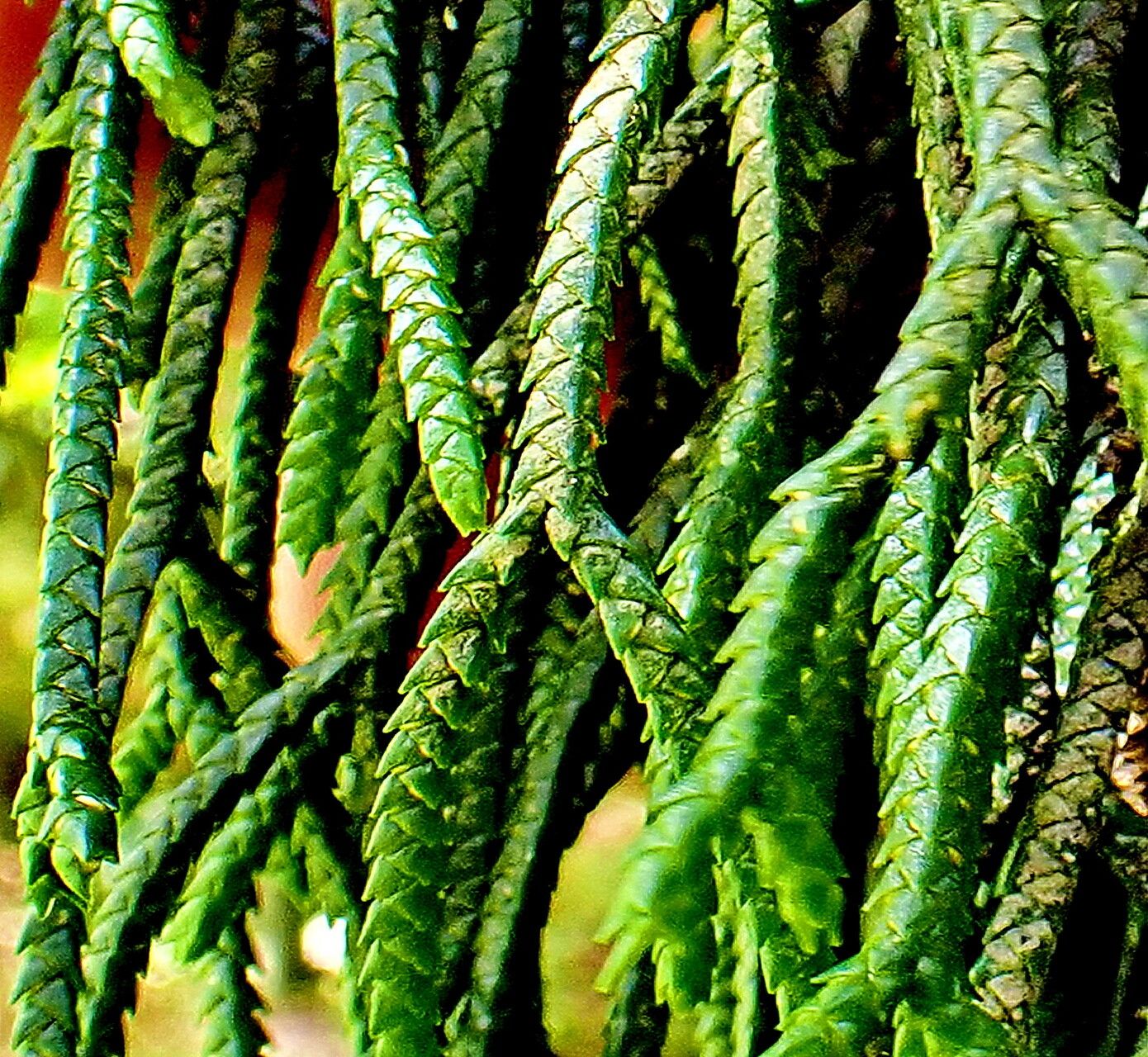
Phlegmariurus crassus is a lycophyte found in Central and South America.
Phlegmariurus crassus is typically quite resistant to disease and is affected by relatively few insect pests. Its care is regarded as challenging because it needs a consistently moist setting and frequent watering. At the same time, the roots can rot if the plant is overwatered or if the surroundings lack adequate ventilation. Phlegmariurus crassus is best suited to growers with some experience, although many people can keep it alive for a period. Still, it can struggle to flourish and its leaves may dry out and become less vigorous as time goes on.
How to keep Huperzia Crassa.
Light
Phlegmariurus crassus is native to habitats like the understories of forests or areas with rocks, which provide natural shade. While it favors full shade for sunlight conditions, it can also withstand partial sun.
Temperature
Phlegmariurus crassus is native to the tropics, an area characterized by a consistently hot and damp climate. This makes it highly adaptible to conditions of high heat and moisture. It does not favor abrupt shifts in temperature and prefers a constant temperature setting, thus indoor temperature swings should be evaded. This plant generally cannot withstand cold weathers and necessitates elevated temperatures to flourish. If exposed to excessively low temperatures, its growth might be inhibited or it could potentially perish.
Botanical profile.
- Plant Type
- Fern
- Life Cycle
- Perennial
- Genus
- Huperzia
- Family
- Lycopodiaceae
- Hardiness Zone
- 10-12
- Mature Height
- 20 cm to 40 cm
- Mature Spread
- 10 cm to 20 cm
- Leaf Color
- Dark Green
- Leaf Type
- Evergreen
- Planting Time
- Spring, Summer, Autumn
- Native Area
- Colombia, Mexico, Guatemala, Bolivia, Venezuela, Peru, Ecuador, Costa Rica, Panama