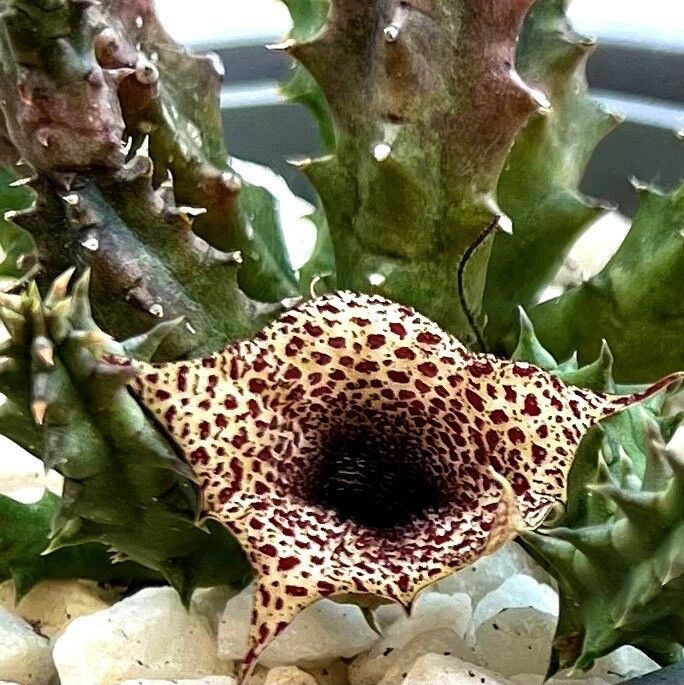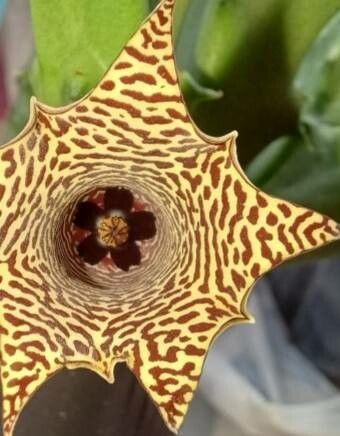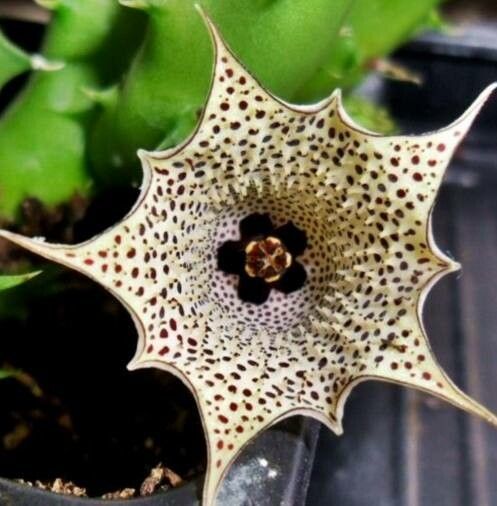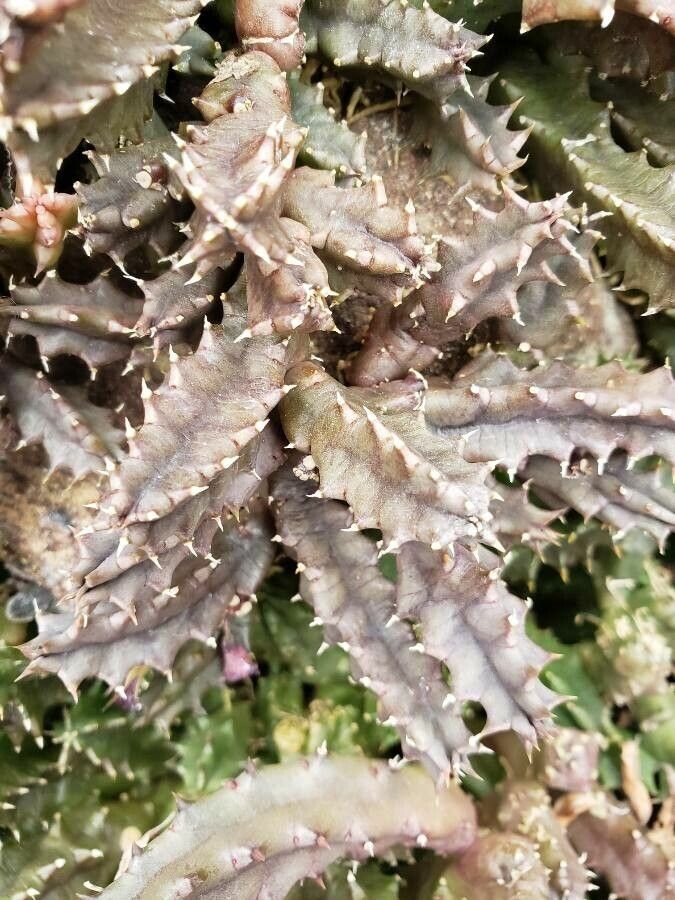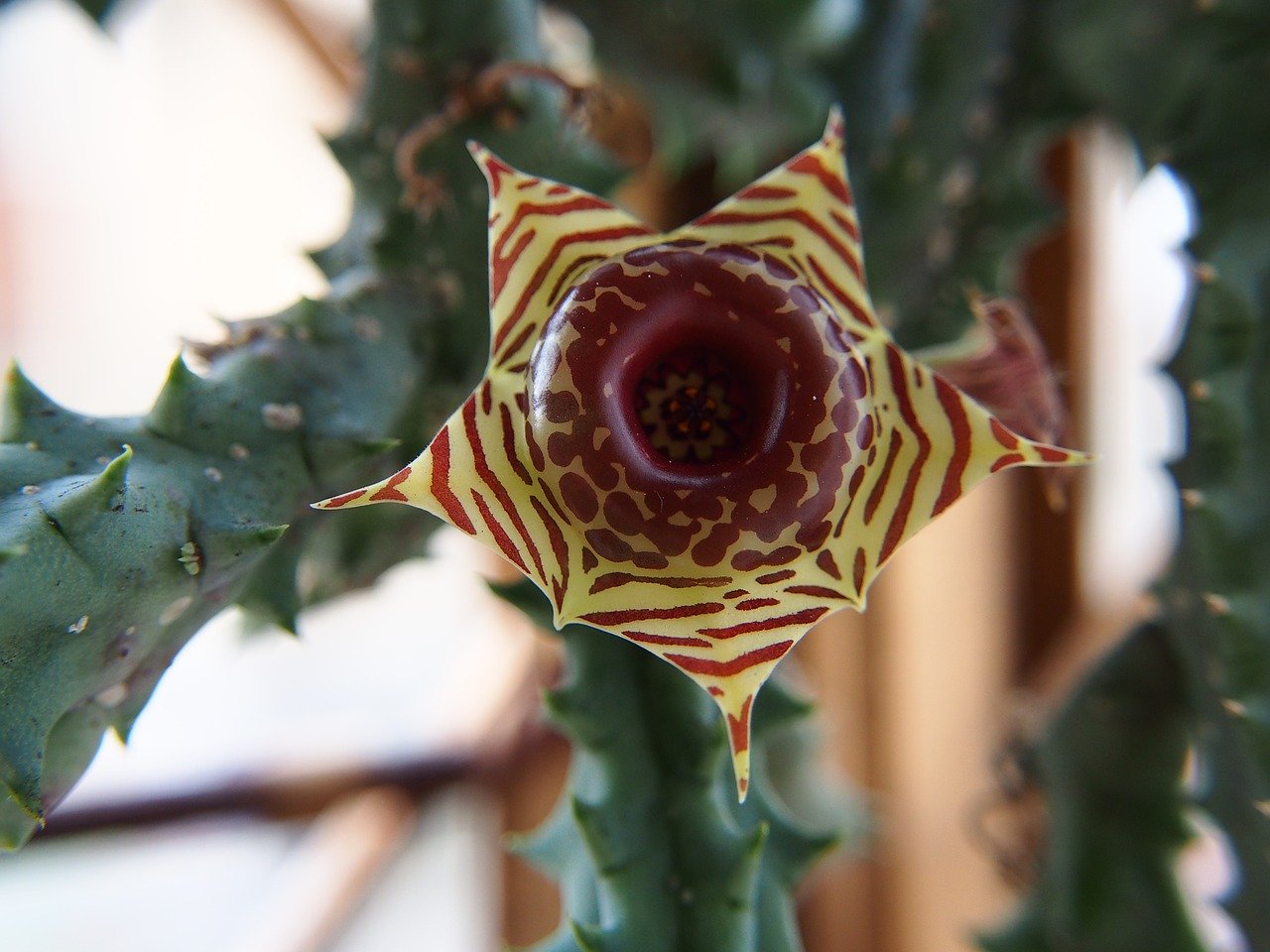
Huernia zebrina flowers have a corolla with zebra-striped red and cream-colored petals and a raised, shiny, rubber-like burgundy ring in the center called annulus that looks like it belongs in a fantasy film. The common name for the houseplant is lifesaving plant or lifebuoy plant. Huernia zebrina is a one-of-a-kind little perennial succulent with a creeping pattern. You may think that a plant that beautiful is tough to grow, but it isn't; in fact, as long as it's in a pot with the right potting soil, good drainage, and is watered properly, it's actually simple maintenance.
The Lifesaver plant has moderate disease resistance and is more sensitive to humidity and excessive watering. It is also more prone to illness when it receives insufficient light and is overwatered. Regarding care, the Lifesaver plant tolerates drought and can withstand extended periods without watering. It requires little fertilizer and only occasional pruning. This makes it appropriate for people at any experience level, particularly those who prefer to spend less time on plant care or who may be away from home for long stretches. It is a suitable option for anyone who does not want to devote much time to maintenance but still wants an easy-to-care-for plant.
How to keep Huernia Zebrina.
Light
The lifesaver plant does best with plenty of sunlight, imitating its native environment which is typically bright and sunny. Sunlight is essential for healthy development at every stage of growth. Too little light can produce weak stems, while too much may scorch the leaves.
Water
The lifesaver plant, native to semi-arid regions, is highly drought-tolerant and only needs watering every three weeks. It thrives in bright, indirect light and requires well-draining soil. It's important to let the soil dry out completely between waterings. During its active growth period in warmer months, providing consistent moisture can support healthy development.
Humidity
This plant prefers dry conditions, so don't mist it. However, watering it less often can also thrive in higher humidity.
Temperature
The lifesaver plant originates from areas with temperatures ranging from 68 to 100 °F (20 to 38 ℃), showing its tolerance for significant heat. In cooler seasons, keep temperatures at those levels and avoid exposing it to freezes — insulate if necessary.
Fertilizer
For the Lifesaver plant, light applications of fertilizer once or twice a year during the growing season are sufficient. Do not fertilize in winter or summer while it is dormant. Cut back on fertilizer for plants that have been repotted and wait a couple of months after repotting before feeding. Fertilizing helps maintain healthy growth and promotes blooms.
Pruning
Lifesaver plants typically do not require pruning unless you want to manage their size.
Pot & Repot
When repotting a Lifesaver plant, pick a pot slightly bigger than the current one that provides good drainage. Use a gritty, well-draining cactus or succulent mix. Gently lift the plant from its old pot, remove excess soil, and set it in the new pot at the same depth. Wait several days before watering to let any root damage recover. Repot in spring or fall and place the plant in a brightly lit spot.
Toxicity
Because this plant belongs to the milkweed family, it is harmful to both animals and humans if eaten or if the latex "sap" gets into your eyes. This plant produces a white latex that is toxic if consumed and can cause eye injury if it comes into contact with the eyes.
Further reading →
The toxicity and danger assessments provided are for reference only. We do not assure their accuracy, so it's crucial not to depend on them. Seek professional advice when necessary for accurate guidance.
Botanical profile.
- Plant Type
- Succulent
- Life Cycle
- Perennial
- Genus
- Huernia
- Family
- Apocynaceae
- Hardiness Zone
- 9-11
- Mature Height
- 25 cm
- Mature Spread
- 34 cm
- Leaf Color
- Dark Green
- Leaf Type
- Semi-evergreen
- Flower Color
- Yellow
- Flower Size
- 2.54 cm
- Bloom Time
- Early summer, Mid summer
- Planting Time
- Spring, Summer, Autumn
- Harvest Time
- Mid summer, Late summer
- Native Area
- Mozambique, South Africa, Namibia, Eswatini, Botswana, Zimbabwe