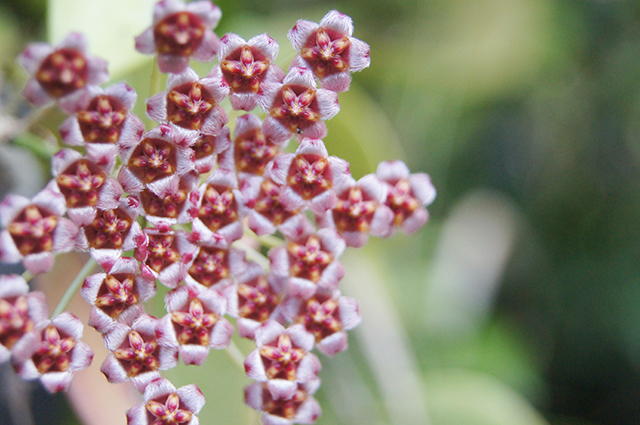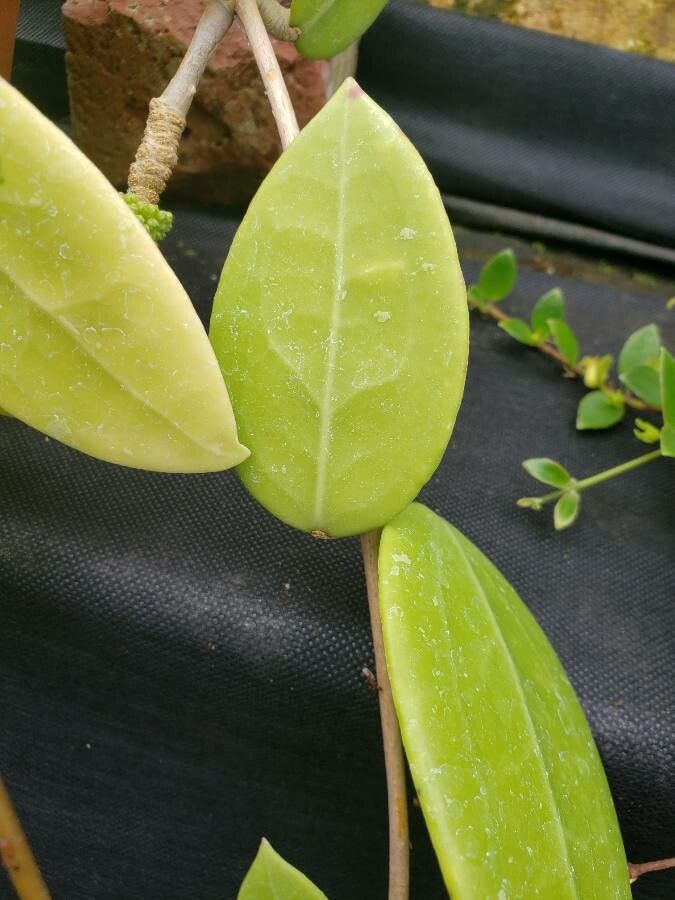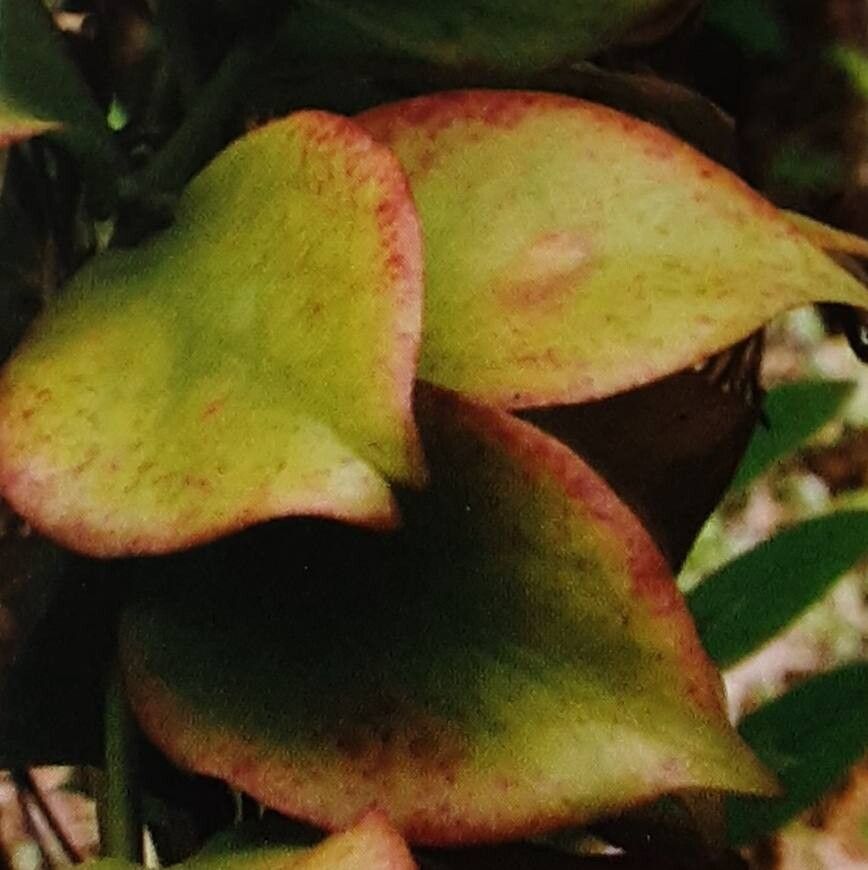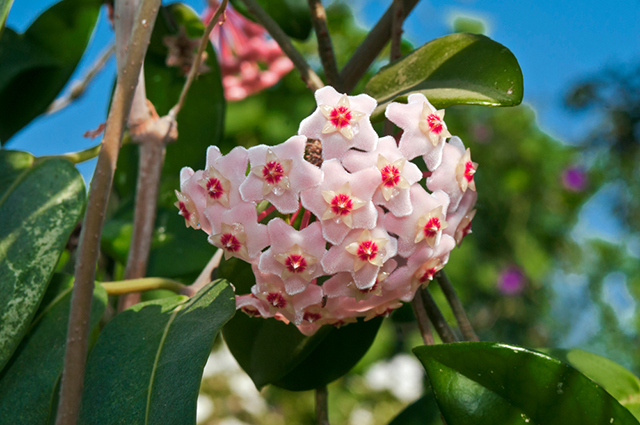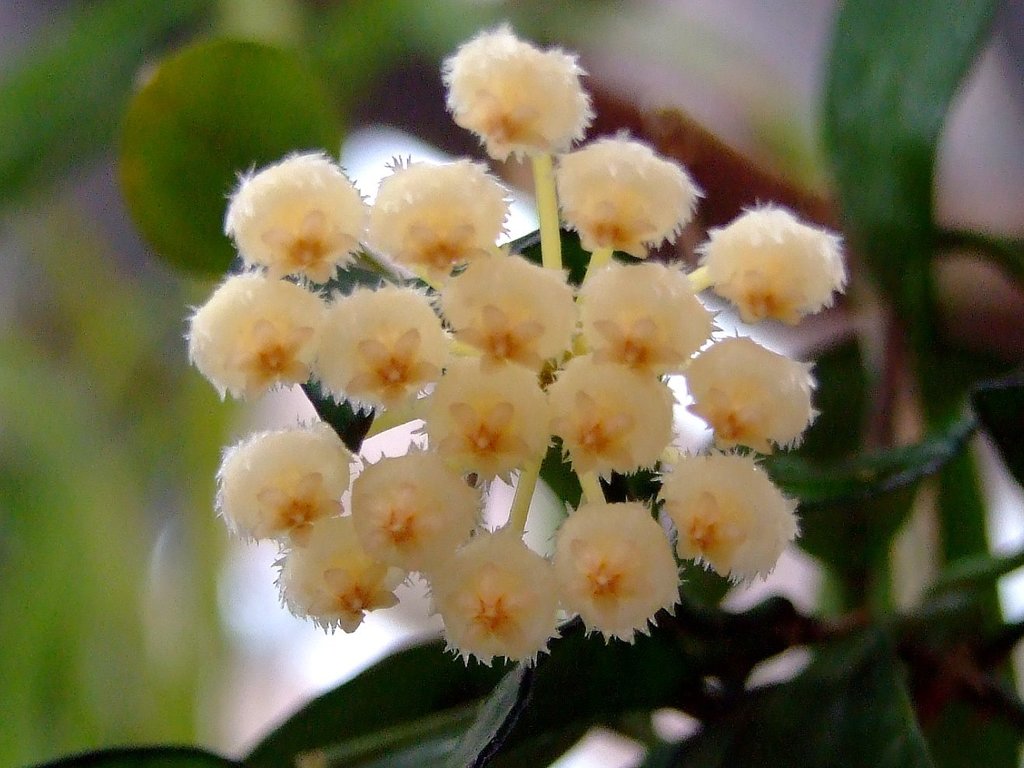
Hoya lacunosa is a species of plant in the genus Hoya native to Southeast Asia. Its native range is Thailand through Borneo, Java, Sumatra, and the Philippines, and it is introduced in other countries as well. Like most Hoya, it is an epiphytic vining climber. It has smooth ovate to lanceolate leaves, and flowers that are scented like cinnamon.
Grooved wax flower has moderate disease resistance but is more sensitive to humidity and excessive watering. It also becomes more prone to disease when it receives insufficient light and is overwatered. In terms of care, Grooved wax flower is drought-tolerant and can withstand long periods without watering. It needs little fertilizer and only occasional pruning. These traits make it suitable for people of all experience levels, especially those who want to spend less time on plant care and who may sometimes be away from home for extended periods. It is a good option for those who do not want to devote a lot of time to caring for their plants but still want an easy-to-maintain plant.
How to keep Hoya Lacunosa.
Light
Grooved wax flower is native to habitats with dappled light, such as the understory of forests or rocky locations that provide natural shade. It prefers partial sun but can also tolerate full sun.
Water
Originating from tropical rainforests, the grooved wax flower thrives in conditions of high humidity and consistent moisture. It should be watered once a week, taking care to avoid waterlogging. Often cultivated indoors for its ornamental beauty, this plant benefits from increased humidity, which can be achieved using a pebble tray setup. This method helps support its vibrant flowering.
Humidity
This plant will thrive in moderate humidity, which is probably the level in your home. However, misting it a few times a week can be very beneficial. Make sure the room has good ventilation.
Temperature
Grooved wax flower performs best in warm conditions and requires elevated temperatures during the growing season to encourage growth and metabolic processes. It favors abundant sunlight, proper moisture levels, and good airflow. However, it is vulnerable to harm from very low temperatures and from too much water. Similarly, overly high temperatures and excessively dry conditions should be avoided.
Fertilizer
Grooved wax flower needs light doses of fertilizer once or twice a year during the growing season. Avoid fertilizing in winter and in summer when it is dormant. Reduce fertilizer for repotted plants and wait a couple of months after repotting before applying fertilizer. Fertilizing supports healthy growth and encourages blooms.
Pruning
Pruning the grooved wax flower is usually not needed, since the plant naturally produces new growth at the tips of its tendrils, which encourages flowering when conditions are favorable. However, light trimming to control its size or remove dead parts is acceptable. This should only be done in early spring, as the plant does not respond well to severe pruning.
Pot & Repot
When repotting Grooved wax flower, choose a pot slightly larger than the current one that has good drainage. Use a gritty, well-draining succulent or cactus potting mix. Gently remove the plant from its old pot, brush off excess soil, and plant it at the same depth. Wait a few days before watering to allow any root damage to heal. Repot in spring or fall and place the plant in a brightly lit spot.
Botanical profile.
- Plant Type
- Herb, Vine, Succulent
- Life Cycle
- Perennial
- Genus
- Hoya
- Family
- Apocynaceae
- Hardiness Zone
- 9-11
- Mature Height
- 0 cm to 4 cm
- Mature Spread
- 30 cm to 61 cm
- Leaf Color
- Green
- Leaf Type
- Evergreen
- Flower Color
- White
- Flower Size
- 0.51 cm to 1.02 cm
- Bloom Time
- Summer, Early fall, Mid fall
- Planting Time
- Spring, Summer, Autumn
- Harvest Time
- Fall
- Native Area
- Malaysia, Indonesia, Philippines, Singapore, Thailand