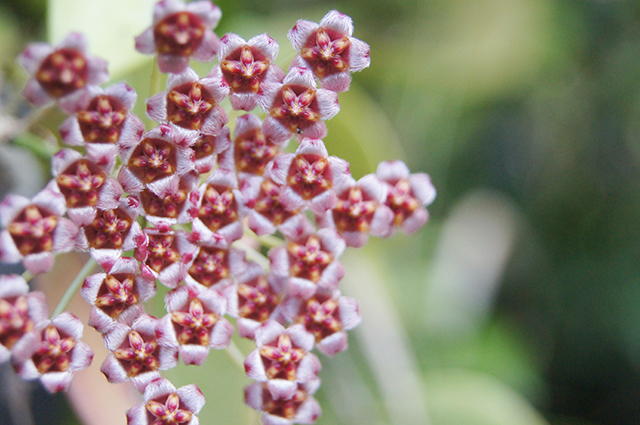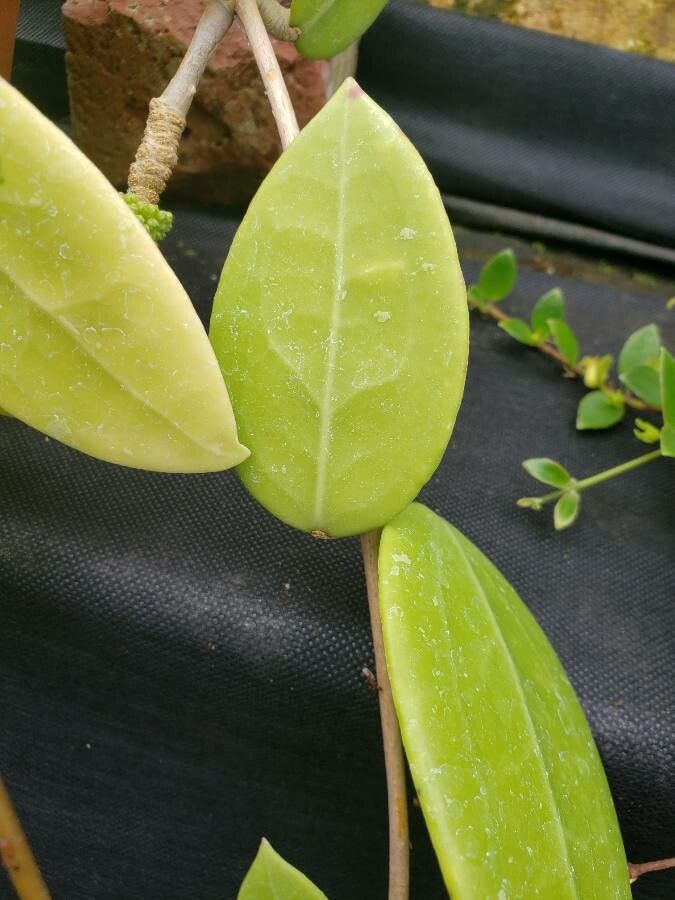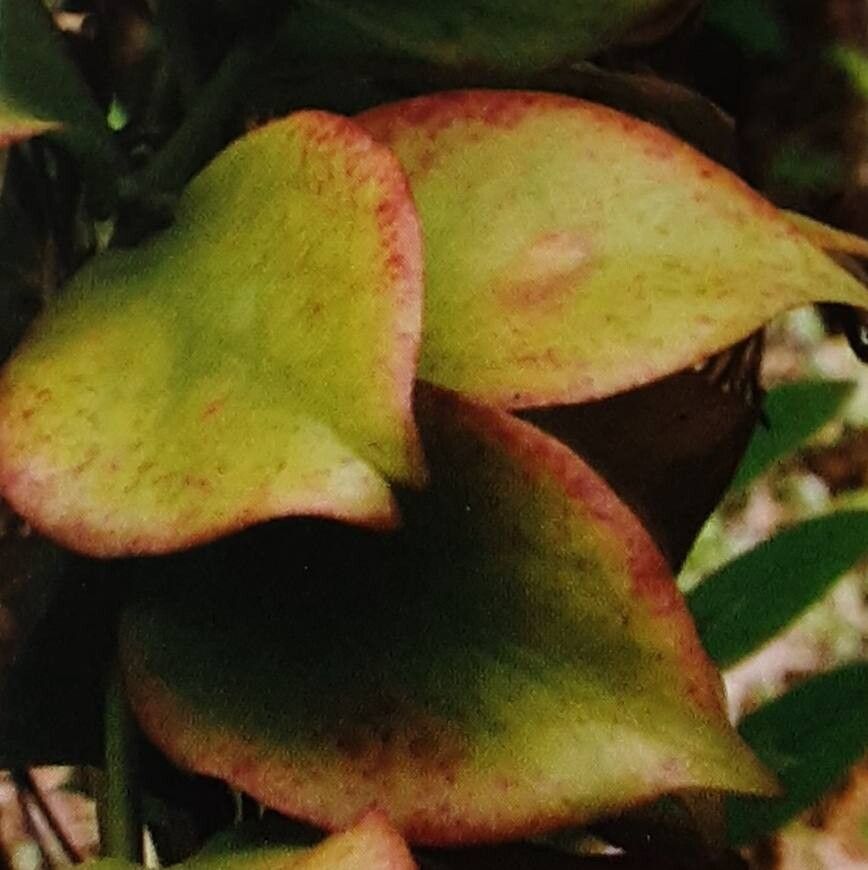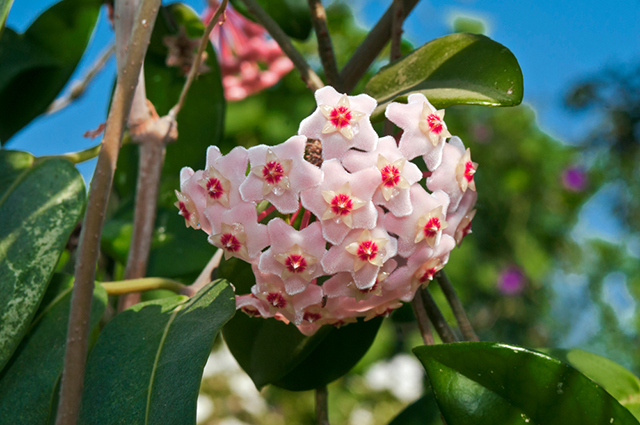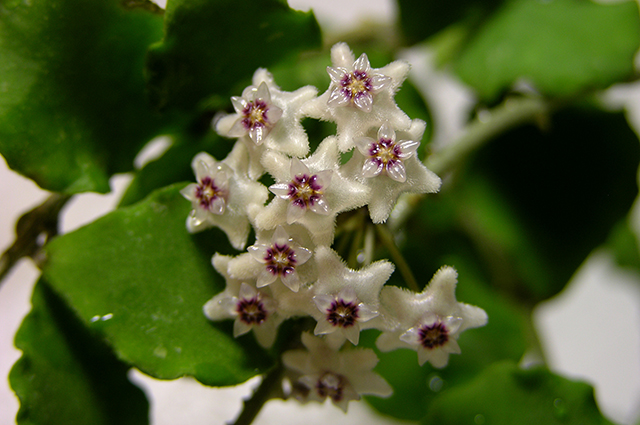
It is small growing non-twiner with white flowers from India. Hoya is an Asian native plant introduced by Scottish botanist Robert Brown and named in honor of the 18th-century botanist Thomas Hoy. Gardeners today find it a fragrant, low-maintenance tropical flower. They are slow to moderate growers, and should be planted outside in spring or early summer.
How to keep Hoya Kanyakumariana.
Water
Hoyas should be watered weekly, and left to let dry completely between waterings.
Temperature
As a tropical plant, hoyas thrive in warm and moist, humid climates.
Fertilizer
Hoyas should be fertilized monthly; The International Hoya Association suggests feeding them with a fertilizer that includes nitrogen, phosphorus, and potassium.
Pruning
When your hoya plant finishes blooming, leave the flower stalk, as it may produce new flowers. Removing the stalk forces the plant to produce a new stalk, which delays blooming and wastes the plant’s energy. Hoyas are light feeders, and a monthly drink of compost tea or dilute fish emulsion provides all the nutrition these tropicals need.
Toxicity
According to The University of Kansas Health System, hoya's leaves and sap are non-toxic to humans and pets. Still, if your child or pet eats them, it's best to call your doctor or veterinarian for advice.
Further reading →
The toxicity and danger assessments provided are for reference only. We do not assure their accuracy, so it's crucial not to depend on them. Seek professional advice when necessary for accurate guidance.
Botanical profile.
- Plant Type
- Tropical succulent
- Hardiness Zone
- 8-11
- Native Area
- Tropical Asia, Australia