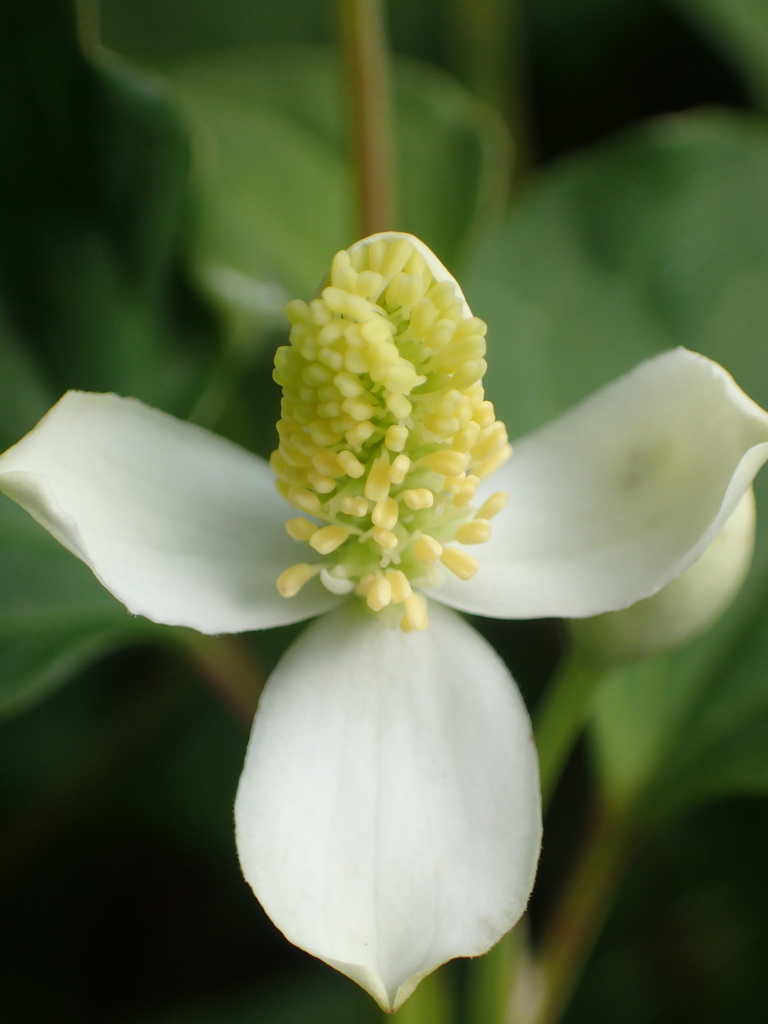
Houttuynia cordata, commonly known as fish mint or the chameleon plant, is a perennial herbaceous plant that belongs to the Saururaceae family. Native to Asia, this plant can be found in countries such as China, Japan, Korea, and Vietnam.
The plant features heart-shaped leaves that are green with red veins and can grow up to 20 cm in length. During the summer months, it produces small white flowers that, while not particularly showy, emit a pleasant fragrance.
Houttuynia cordata has a long history in traditional medicine, where it is valued for its anti-inflammatory properties and its effectiveness in treating respiratory infections such as bronchitis and pneumonia. The leaves of the plant are also used as a culinary herb, offering a unique flavor often compared to coriander or parsley.
Additionally, Houttuynia cordata possesses antimicrobial properties that make it effective against certain types of bacteria, including E. coli and Staphylococcus aureus.
The plant's chameleon-like nature is evident in its ability to change color based on environmental conditions such as light intensity or temperature. In cooler temperatures, the leaves turn red, while under bright sunlight, they revert to green.
Overall, Houttuynia cordata is a fascinating herbaceous perennial with unique culinary uses and medicinal benefits, making it a valuable addition for any garden enthusiast seeking something different.
Chameleon plant has moderate disease resistance but can be susceptible to ailments such as leaf spot. Its susceptibility to insect pests varies by variety, though most varieties are less resistant to pests. For care, the chameleon plant needs regular watering and fertilizing, and yellow leaves should be pruned frequently. It is important to address pests and diseases when they occur and to harvest the plant in a timely way. Chameleon plant is suitable for people who can spare some time and energy for regular care.
How to keep Houttuynia Cordata.
Light
The chameleon plant grows best when partly exposed to sunlight but can tolerate strong sun or deep shade. This adaptability comes from its origins in habitats with varying light conditions. Excess light can burn the leaves, while too little light can limit its growth.
Water
The chameleon plant thrives in moist environments, similar to those found in wetlands, and requires consistent moisture to grow well. It can tolerate high humidity and benefits from being watered weekly. When planted outdoors, the chameleon plant flourishes near bodies of water, making it ideal for waterside gardens or boggy areas.
Humidity
This plant needs special care because it loves high humidity levels of 60-80% or more. The best way to achieve this is by placing a humidifier near the plant. Daily misting is also essential! Make sure the room has good ventilation.
Temperature
Chameleon plant originates from regions that are generally warm and prefers a temperature range of 68 to 100 °F (20 to 38 ℃). To reproduce its native climate, warmer temperatures should be kept, especially during colder months.
Fertilizer
Chameleon plant species do well with one or two applications of natural organic fertilizers that contain potassium and phosphorus. Apply the fertilizer before planting, work it into the soil, and water thoroughly. Usually one application is enough, but a second can be applied once seedlings are established. Avoid excessive fertilizer use to prevent damage to the plants.
Pruning
The chameleon plant is characterized by its heart-shaped, colorful leaves and benefits greatly from regular pruning throughout the spring. Trimming back overgrown stems encourages denser growth, helps control the plant's spread, and improves its overall appearance. Additionally, removing spent flowers and dead leaves promotes the plant's health. To prevent the spread of disease, be sure to use clean, sharp tools when pruning.
Pot & Repot
When repotting a Chameleon plant, select a pot 1-2 inches (2.5–5.1 cm) larger with good drainage. Use a well-draining potting mix. Repot in spring or fall, making sure the root ball sits slightly below the rim of the flower pot. Water thoroughly after repotting and place it in a warm spot with indirect sunlight.
Botanical profile.
- Plant Type
- Herb
- Life Cycle
- Perennial, Annual
- Genus
- Houttuynia
- Family
- Saururaceae
- Hardiness Zone
- 7-12
- Mature Height
- 30 cm to 91 cm
- Mature Spread
- 91 cm
- Leaf Color
- Green, Blue, Red, Variegated
- Leaf Type
- Deciduous
- Flower Color
- White
- Flower Size
- 2.03 cm to 3.05 cm
- Bloom Time
- Late spring, Early summer, Mid summer
- Planting Time
- Spring
- Harvest Time
- Summer
- Native Area
- Nepal, India, Indonesia, Cambodia, Vietnam, Myanmar, Japan, Bhutan, Bangladesh, Laos, South Korea, Thailand, China
Other names.
Reader questions.
How should I water my Chameleon plant for best results?
The Chameleon plant is picky about its water preferences and how it is watered. It's important to use the right watering technique to avoid harming your tomatoes. The best way to water the Chameleon plant is to apply the water directly to the soil, doing so slowly and gently. It's not recommended to pour all the water at once or do overhead watering. While watering slowly, make sure to water deeply to ensure the soil around the Chameleon plant is adequately moist.
Why is it important to use fertilizer for my Chameleon plant?
Chameleon plants are known for their fast growth and their ability to produce the root vegetables we love. Like any other plant, they require sunlight, oxygen, water, and nutrients to thrive. Although garden soil usually contains these necessary nutrients due to organic matter decomposition, there may be instances where there's a lack of nutrients for healthy chameleon plant growth. In such cases, fertilizer can provide that much-needed boost for the chameleon plant.
What are the sunlight requirements for the Chameleon plant?
The Chameleon plant requires about 3-6 hours of sunlight daily, known as partial sun, but can also thrive in conditions of full sun or full shade, which means it can endure more than 6 hours of sunlight. It's essential to observe the movement of sunlight through your garden to find the ideal balance of light and shade that ensures the plant's well-being.
What are the ideal temperature conditions for a Chameleon plant?
The Chameleon plant thrives in environments typically warm, preferring a temperature range of 68 to 100 °F (20 to 38 °C). To mimic its native climate conditions, it is crucial to maintain warmer temperatures, especially during the colder months. It's beneficial for the plant's growth to keep the temperature above the minimum suitable growth temperature during winter, ensuring it stays above freezing to avoid damage. In regions where outdoor temperatures drop to around -5°C (25°F) in winter, it's advisable to bring the Chameleon plant indoors or protect it using a temporary greenhouse, plastic film, or fabric wraps.
What should I do if I give my Chameleon plant too much water or too little water?
If you notice that your Chameleon plant has been overwatered and you are worried about the risk of disease, it is important to take immediate action. The best approach in this situation is to remove the plant from its current location. Once out of the ground, give the roots some time to dry before replanting in a new area that has well-draining soil. If you are growing the plant in pots, consider transferring it to a pot with better drainage. On the other hand, if you have been underwatering your plant, simply increase the frequency of watering.
When should I fertilize my Chameleon plant for the best results?
To prepare your soil for planting, apply natural fertilizer. It is recommended to allow enough time for incorporating the fertilizer into the soil and thoroughly watering it before planting seeds or seedlings. Typically, one application of fertilizer is sufficient for the entire growing season of Chameleon plants. However, if you want to further enhance their yield, you can apply an additional round of fertilizer once the seedlings have established themselves. Take caution not to overuse fertilizers, as this can harm the plants.
How does the Chameleon plant adapt to different lighting conditions?
Originating from a variety of lighting environments, the Chameleon plant shows remarkable adaptability. It can thrive partially exposed to the sun but also has the endurance for intense exposure or deep shade. Excessive light may scorch its leaves, while insufficient light might stunt its growth. This versatility is due to its diverse environmental origins.
How does low temperature affect the Chameleon plant, and what should I do?
The Chameleon plant has a moderate tolerance to low temperatures, preferring to stay within its suitable temperature range. In winter, temperatures should be kept above its tolerable growing minimum. Falling below this limit can cause the leaves to darken, and in severe cases, lead to water-soaked necrosis, wilting, drooping, and a gradual change of leaf color to brown. To address frost damage, trim away affected parts and immediately move the plant to a warm environment indoors or set up a makeshift greenhouse for protection. To ensure the plant receives ample sunlight indoors, place it near a south-facing window or supplement with additional lighting if necessary.
How frequently do I need to water my Chameleon plant?
Chameleon plant needs a lot of water during the growing season. To meet this need, water it regularly in the spring and summer. In the early part of the season, water once or twice a week. As the season goes on, increase the frequency of watering. In the summer, you may need to water it twice a day or more, depending on the weather. After the plant has gone through its main growth phases, you can reduce the watering to once a week until the end of the season.
When is it not a good idea to fertilize my Chameleon plant?
To ensure effective fertilization, remember to avoid applying fertilizer when the soil is dry. After fertilizing, make sure to water your plants thoroughly as this helps deliver the nutrients properly. If you prioritize the growth of foliage over the root crops, then high-nitrogen fertilizers might be suitable for you. However, take care not to let fertilizer come into contact with the base of the plant, leaves, or stems as it can potentially damage them.
What should I know about artificial lighting for the Chameleon plant?
Indoor Chameleon plants require adequate lighting for optimal growth, particularly when natural sunlight is lacking. Artificial lights, such as LEDs, are beneficial, offering specific wavelengths that plants need. For full sun plants, aim for 30-50W/sq ft of artificial light, partial sun plants require 20-30W/sq ft, and full shade plants need 10-20W/sq ft. The light source should be 12-36 inches above the plant, simulating natural sunlight, and most plants will need 8-12 hours of light per day.
What happens when the Chameleon plant is exposed to high temperatures, and how can I mitigate this?
During the summer, it's important to keep the Chameleon plant's environment below its maximum suitable growth temperature to prevent stress related to high heat. Exceeding the tolerable maximum temperature can slow the plant's growth, lighten the color of its leaves, and increase susceptibility to sunburn. To help the plant recover from heat stress, trim away sunburned and dried parts, and relocate it to an area protected from the intense afternoon sun. Ensuring the soil remains moist by watering in the morning and evening can also aid in managing the plant's health under high temperature conditions.