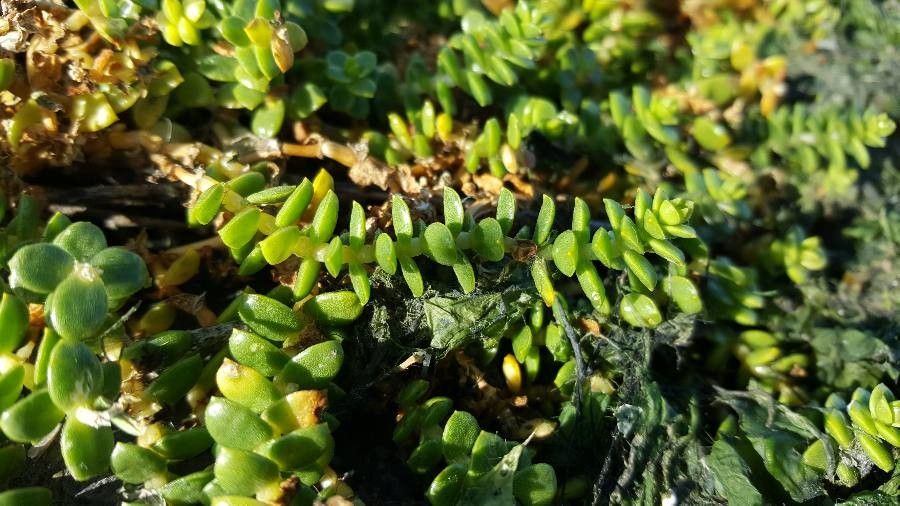
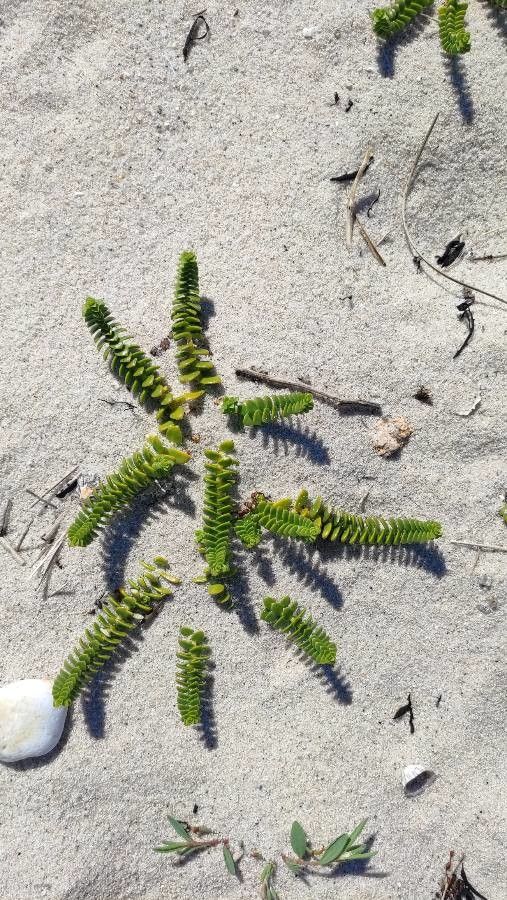
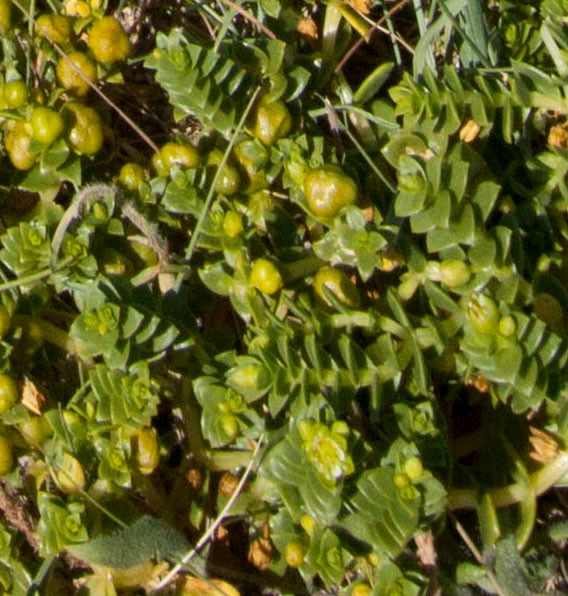
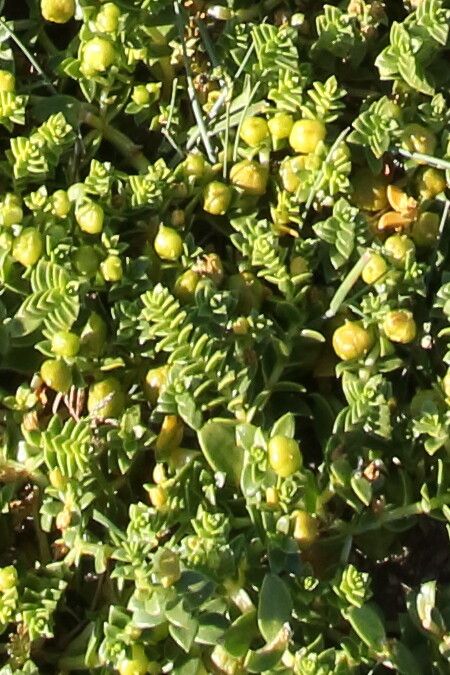
Honckenya peploides, commonly known as Sea Sandwort, is a small flowering plant in the Caryophyllaceae family. This perennial herb thrives in coastal areas and is well-adapted to endure harsh environmental conditions, such as salt spray and sandy soils.
The plant features succulent, cylindrical leaves that can grow up to 2 cm long. These leaves are fleshy, greenish-grey, and have a waxy coating that helps prevent water loss in harsh coastal environments.
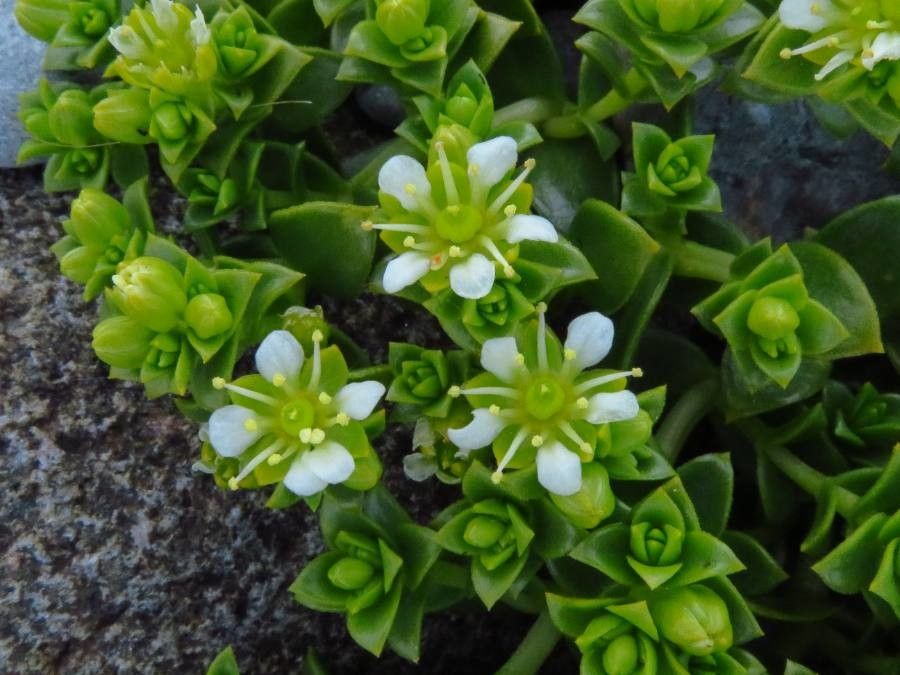
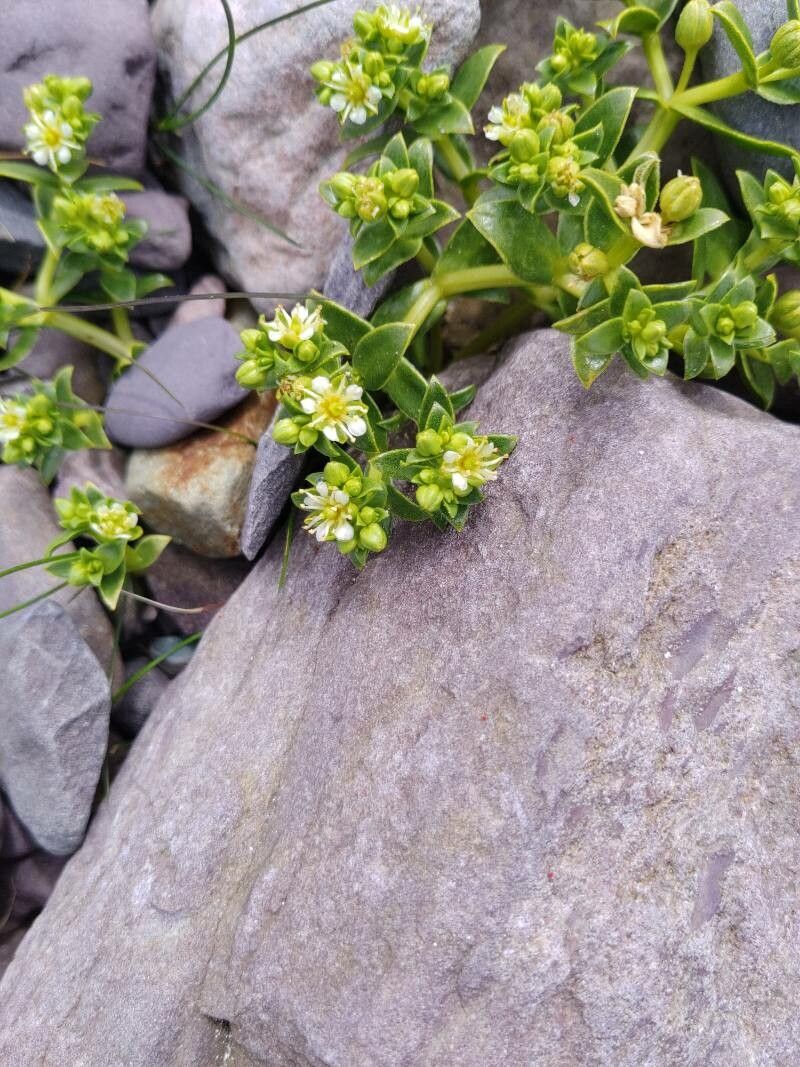
Honckenya peploides produces small flowers with five white petals arranged in a star shape. These flowers bloom from June through August on short stems that rise above the foliage.
Sea Sandwort plays a crucial role in stabilizing sand dunes along coastlines due to its ability to rapidly propagate vegetatively, producing new shoots from its roots or stem nodes.
Additionally, Honckenya peploides has been used medicinally by indigenous people to treat various ailments, including stomach disorders and skin infections.
In summary, Honckenya peploides is a significant coastal plant with unique adaptations that enable it to thrive in harsh environments while providing ecological benefits, such as sand dune stabilization along coastlines.
The Seaside Sandplant, scientifically known as Honckenya peploides, is a small, subdioecious plant that spreads to form patches on sand and shingle just above the high-water mark on beaches. Commonly found in coastal regions, it thrives on sand, shingle, and pebbles, hence its name, the Seaside Sandplant.
Seaside sandplant is fairly resistant to disease and generally not prone to illness. Still, it can be affected by pests and diseases present in its surroundings, though such infections are usually mild. Care-wise, this plant needs a moderate level of attention. Regular pruning is necessary to retain an attractive appearance and encourage healthy growth. Applying fertilizer can also aid in boosting flowering. Seaside sandplant is appropriate for anyone with outdoor space, like a garden or patio, and doesn’t require extensive care experience. It may demand more attention if grown indoors.
How to keep Honckenya Peploides.
Light
Seaside sandplant does best in places with plenty of sunlight, since light is important for its healthy development. It can moderately tolerate reduced sun exposure. Both stages of growth have the same light requirements. Too little sunlight can hinder its growth, while too much sun causes fewer harmful effects.
Water
The seaside sandplant flourishes in coastal environments, where it benefits from sea spray and occasional flooding. While it prefers consistent moisture, it can withstand short periods of dryness. To keep it healthy, it is recommended to water it weekly. Thanks to its robust root system, the plant is highly efficient at absorbing water, making it well-suited for sandy soils with varying moisture levels.
Temperature
Seaside sandplant originates from coastal areas where temperatures range from 32 to 68 ℉ (0 to 20 ℃). It prefers temperatures from 32 to 90 ℉ (0 to 32 ℃) and can tolerate freezing winter conditions. During hotter periods, keeping the plant in a slightly shaded, moist spot will help it adjust to higher temperatures.
Fertilizer
For Seaside sandplant, a single fertilizer application in spring is typically adequate, though multiple feedings can increase growth. Apply fertilizer every one to one and a half months. Fertilizing improves the leaves' appearance and function, encouraging uniform color and a healthy texture. It also promotes root development and better nutrient uptake, supporting the plant's long-term health.
Pot & Repot
When repotting Seaside sandplant, select a pot 1–2 inches (2.5–5.1 cm) larger with ample drainage. Use a well-draining potting mix. Repot in spring or fall, ensuring the root ball is slightly lower than the rim of the flower pot. Water thoroughly after repotting and place it in a warm spot with indirect sunlight.
Botanical profile.
- Plant Type
- Herb
- Life Cycle
- Perennial
- Genus
- Honckenya
- Family
- Caryophyllaceae
- Hardiness Zone
- 2-7
- Mature Height
- 5 cm to 30 cm
- Mature Spread
- 91 cm
- Leaf Color
- Green, Yellow
- Leaf Type
- Deciduous
- Flower Color
- White
- Flower Size
- 0.51 cm to 1.02 cm
- Bloom Time
- Late spring, Early summer, Mid summer
- Planting Time
- Spring, Summer
- Harvest Time
- Mid summer, Late summer, Early fall
Other names.
Reader questions.
How should I water my Seaside sandplant to keep it healthy?
To water the Seaside sandplant effectively, here are a few guidelines to follow. It is important to use filtered water at room temperature or slightly warmer instead of tap water, as tap water may contain harmful particles. This plant is accustomed to a warm environment, so cold water can potentially harm it. It is also advisable to avoid overhead watering to prevent foliage complications. Instead, apply your filtered room temperature water directly to the soil until it is completely soaked. This helps moisturize the roots and facilitates their spread through the soil for better nutrient absorption.
Why do I have to add plant food to my Seaside sandplant?
The Seaside sandplant's leaves are essential for its overall structure. Fertilization plays a crucial role in keeping these leaves healthy and attractive. By fertilizing properly, you can maintain consistent leaf color and ensure a robust texture. Fertilization also benefits the plant below the surface, promoting the growth of new roots and maintaining existing ones. This means that fertilizing not only keeps your plant healthy in the present but also improves its ability to absorb nutrients from the soil in the future.
What are the sunlight requirements for Seaside sandplant?
Seaside sandplant requires full sun, meaning it needs above 6 hours of sunlight each day to thrive. It's important to monitor the movement of sunlight through your garden to ensure your plants receive a balance of light and shade, which is essential for their growth. The plant has a moderate tolerance to a lack of sun exposure, but both growth stages demand ample sunlight. Insufficient sunlight may impede its growth, while it has a lesser susceptibility to the adverse effects of overexposure.
What is the native climate of the Seaside sandplant?
The Seaside sandplant, botanically known as Honckenya peploides, is native to coastal regions with a temperature range from 32 to 68°F (0 to 20°C). It thrives in these climates but can adapt to temperatures as high as 90°F (32°C) and is highly tolerant of freezing winter temperatures.
What should I do if I give my Seaside sandplant too much or too little water?
Overwatering is a common problem for Seaside sandplants and can cause wilting, yellowing leaves, and diseases such as root rot, mold, and mildew. Underwatering is less likely, but can result in brittle, brown leaves. It's important to detect signs of overwatering early, as some diseases may not be reversible if left too long. Reduce watering if signs of overwatering are present and consider improving soil drainage. If underwatering is observed, simply increase watering until symptoms improve.
When should I fertilize my Seaside sandplant?
If you grow your Seaside sandplant outdoors, it will start sending out new growth in early spring. This is when you should start fertilizing it for the year. Normally, one application of fertilizer in the spring is enough. But if you want to maximize growth, you can fertilize it multiple times throughout the spring and early summer. In that case, feed your Seaside sandplant every month to a month and a half.
How does artificial lighting benefit indoor Seaside sandplants?
Indoor Seaside sandplants can benefit significantly from artificial lighting, especially when natural sunlight is inadequate. During winter or in less sunny spaces, artificial lights can provide a crucial solution, promoting faster and healthier growth. LED lights are favored for indoor plants because they can offer specific wavelengths needed for plant growth. Depending on plant needs, full sun plants require 30-50W/sq ft, partial sun plants 20-30W/sq ft, and full shade plants 10-20W/sq ft of artificial light. The light source should be placed 12-36 inches above the plant, mimicking natural sunlight, and most plants will need 8-12 hours of light per day.
How do you care for a Seaside sandplant during the hotter and colder seasons?
In hotter seasons, keeping the Seaside sandplant in a slightly shaded and moist area helps it adjust to higher temperatures. During the colder seasons, it is highly cold-tolerant and doesn't require additional frost protection. However, watering the plant generously before the first freeze of autumn is recommended to keep the soil moist. This helps prevent drought and water scarcity for the plant during winter and early spring.
How often do I need to water my Seaside sandplant?
If your Seaside sandplant is in a pot, the most accurate way to determine if it needs water is to stick your finger into the soil. If the top two to three inches of soil feel dry, then it's time to water it. If you have the Seaside sandplant planted outdoors in the ground, you can use a similar method to test the soil. Once again, if the top few inches of soil are dry, then it's time to give it some water. Typically, during the spring and early fall, this approach will usually lead you to water the plant about once a week. However, when it's very hot outside, you may need to increase how often you water it to twice a week or more. However, it's worth noting that mature and well-established Seaside sandplants have an impressive ability to withstand dry periods.
When is it not a good idea to fertilize my Seaside sandplant?
During the late fall and winter, your Seaside sandplant goes into a dormant phase and stops growing. During this time, it's best not to fertilize it. In the spring and summer, if you choose to fertilize multiple times, start decreasing the amount as summer gets nearer because the plant's growth rate will also slow down. In general, it's not recommended to fertilize your Seaside sandplant when the weather is unusually hot or the soil is extremely dry. Fertilizing during these conditions can stress the plant and cause it to die earlier.
What are common symptoms of inappropriate light exposure in Seaside sandplant?
Seaside sandplant shows several symptoms when exposed to inadequate lighting, including smaller new leaves, leggy or sparse growth, faster leaf drop, slower or ceased growth, and lighter-colored or irregularly patterned new leaves. Excessive sunlight can lead to chlorosis (leaves turning yellow), sunscald (pale or bleached spots on leaves), leaf curling (as a defense against sunlight), wilting (due to excessive water loss), and leaf scorching (brown, dry edges on leaves). These symptoms indicate the plant's struggle with its light environment, affecting its health and growth.
What should I do if my Seaside sandplant experiences extremely low temperatures?
The Seaside sandplant can tolerate cold down to -40°C, beyond which it may struggle to sprout during spring. If temperatures fall below this threshold and the plant shows a decrease in sprouting, you should remove any parts in spring that have failed to sprout to encourage new growth.