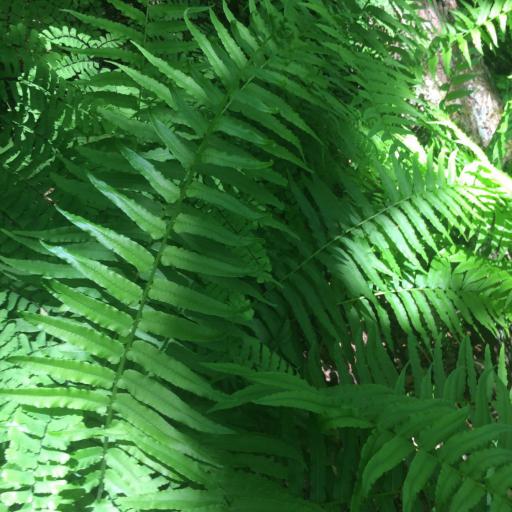
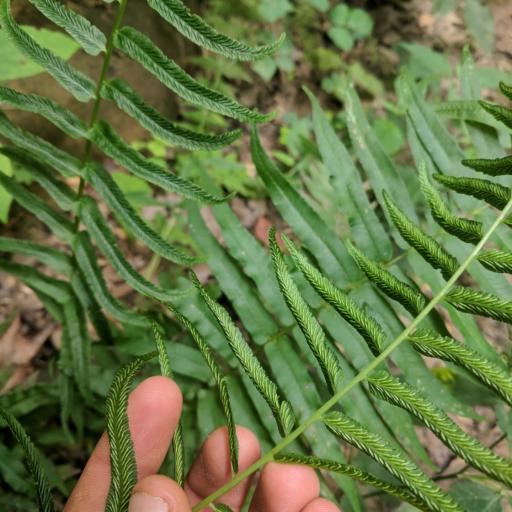
Homalosorus is a genus of fern with only one species, Homalosorus pycnocarpos. It may also be referred to by its older synonyms Athyrium pycnocarpon and Diplazium pycnocarpon. Commonly referred to as the narrow-leaved glade fern, narrow-leaved-spleenwort, or glade fern, it is endemic to eastern North America and typically grows in moist woodlands. Once classified in the family Athyriaceae due to its linear, often doubled sori, in the Pteridophyte Phylogeny Group classification of 2016 (PPG I), it is placed in the small family Diplaziopsidaceae, whose other three species are native to east Asia. Other sources place the genus in the subfamily Diplaziopsidoideae of a very broadly defined family Aspleniaceae, equivalent to the suborder Aspleniineae in PPG I.
Glade fern has strong disease resistance and is typically not vulnerable to illnesses. Still, it can be affected by pests and diseases present in its environment. Such infections are generally mild. Regarding maintenance, this plant needs a moderate level of care. It should be pruned regularly to maintain a neat appearance and healthy growth. Fertilizing can also help encourage flowering. Glade fern is appropriate for anyone who has outdoor space, like a garden or patio, and does not demand extensive care experience. It may need more attention when grown indoors.
How to keep Homalosorus Pycnocarpos.
Light
The glade fern prospers in areas with reduced sunlight, needing only the faintest rays to stay healthy. At any stage of its growth it can survive in places where sunlight is markedly limited. Excess sunlight can make its leaves yellow and wilt, while too little light may limit its growth. This suggests its origin is in predominantly shadowy habitats.
Water
Native to moist woodlands, the glade fern thrives in evenly moist soil and can withstand short periods of dryness. For optimal health, it is recommended to water it weekly. As an understory plant, the glade fern does well in shaded, humid environments, making it an excellent choice for indoor cultivation, particularly during its active growing season.
Temperature
Glade fern is a naturally hardy species, well suited to native temperatures between 41 and 95 °F (5 to 35 ℃). It does best in ambient conditions within that range, but may require seasonal adjustments when temperatures fall outside those limits.
Fertilizer
Typically, one fertilization treatment in the spring is enough for the Glade fern, but multiple applications can boost growth. You should fertilize it once a month to every six weeks. Fertilizing improves the looks and performance of the leaves by encouraging steady color and a healthy texture. It also fosters root growth and the uptake of nutrients, contributing to the long-term well-being of the plant.
Pruning
The Glade fern is a perennial plant known for its delicate fronds. To ensure healthy growth, it's best to prune it from early to late spring. This helps remove dead fronds and improves airflow. Additionally, trim any overgrown sections to maintain its shape and encourage new growth. Always use sterilized tools to reduce the risk of disease.
Botanical profile.
- Plant Type
- Herb
- Life Cycle
- Perennial
- Genus
- Homalosorus
- Family
- Aspleniaceae
- Hardiness Zone
- 4-9
- Mature Height
- 61 cm to 91 cm
- Mature Spread
- 61 cm to 91 cm
- Leaf Color
- Green
- Leaf Type
- Deciduous
- Planting Time
- Spring, Summer
Other names.