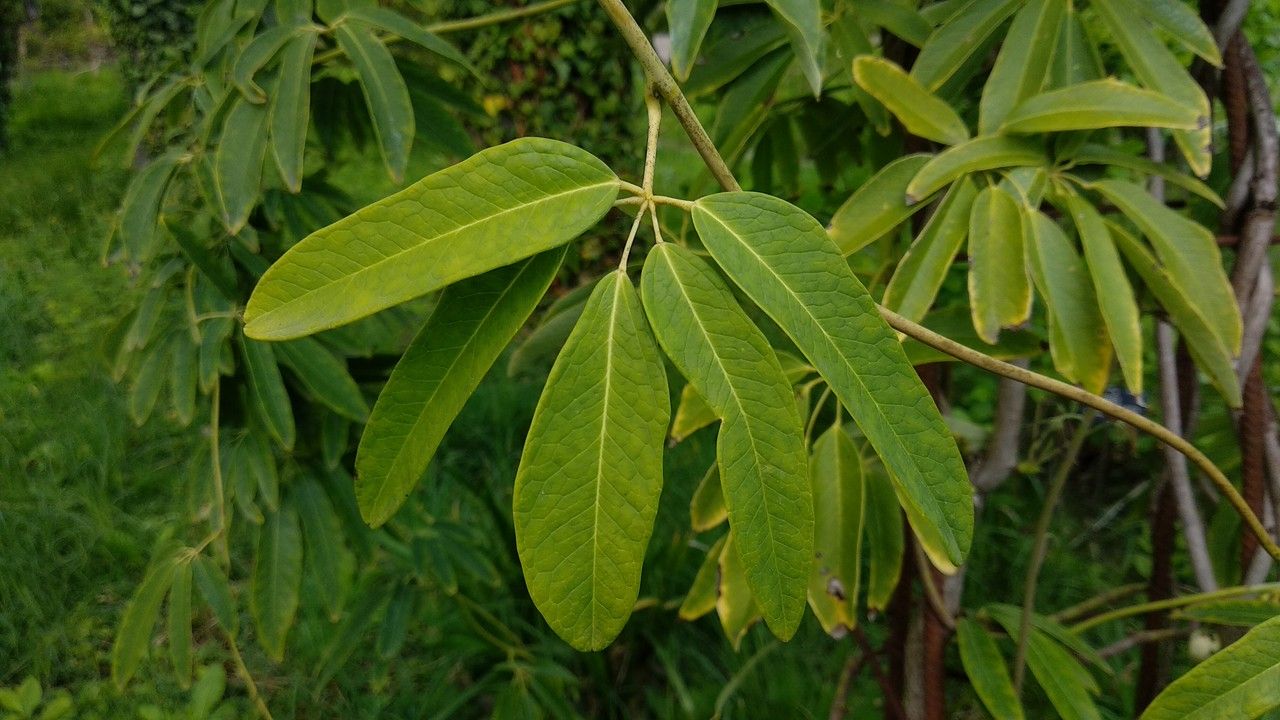
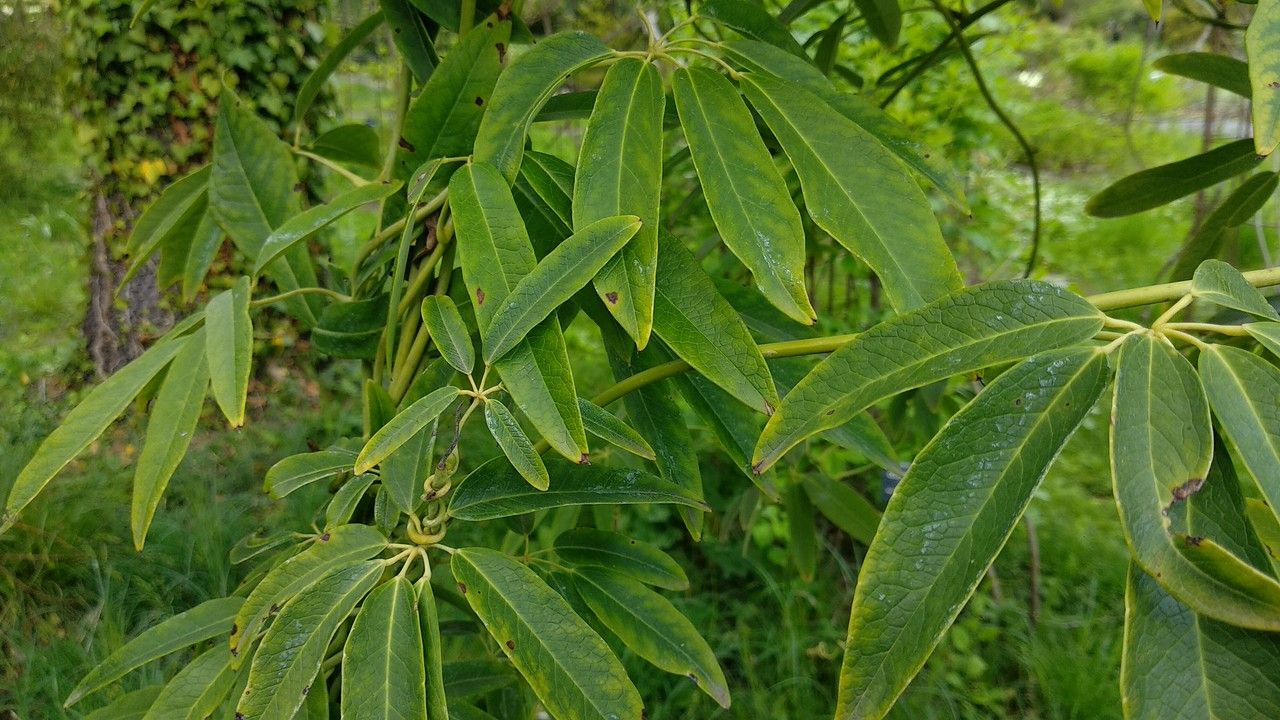
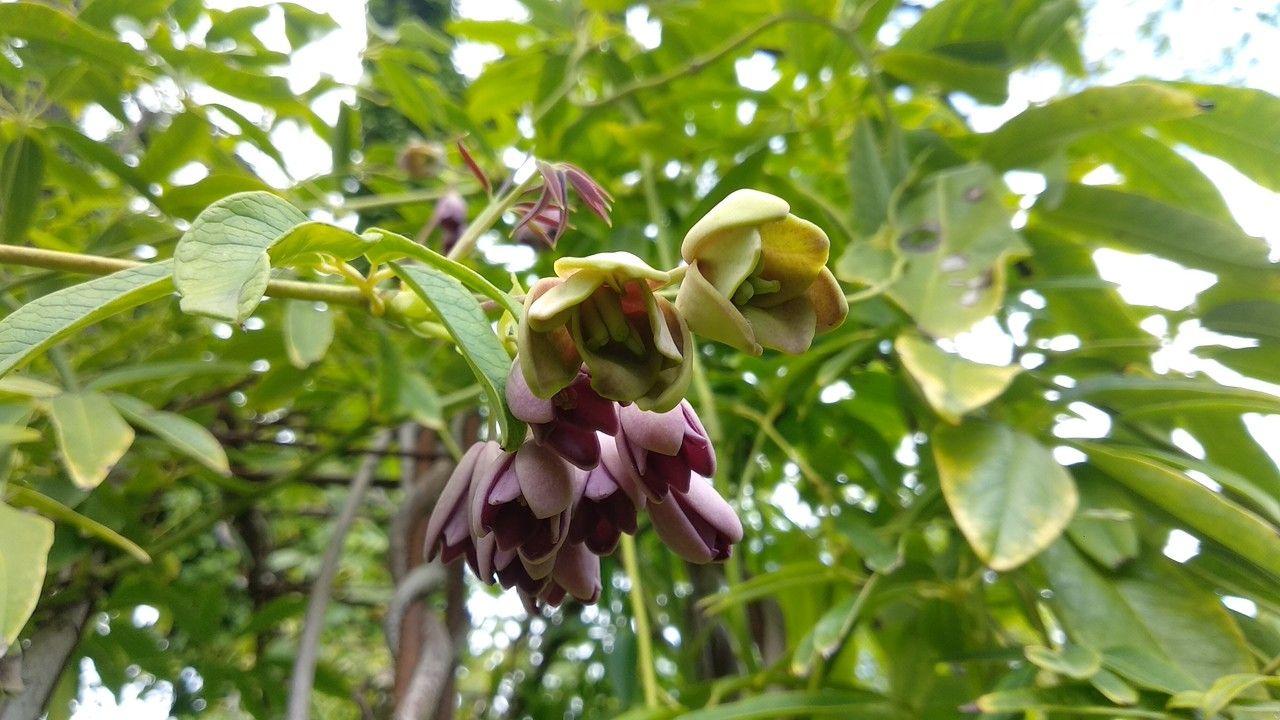
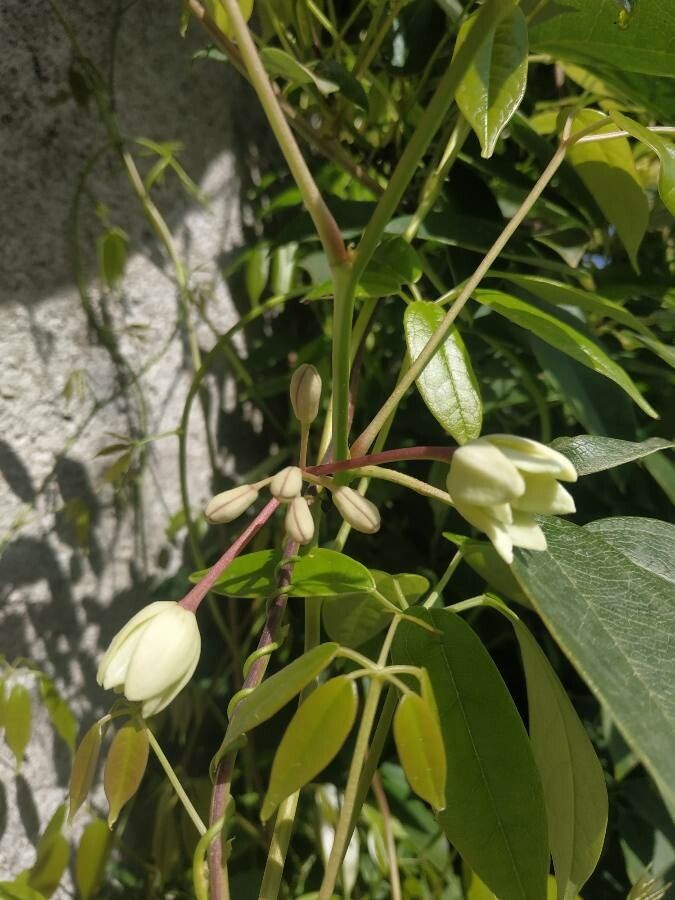
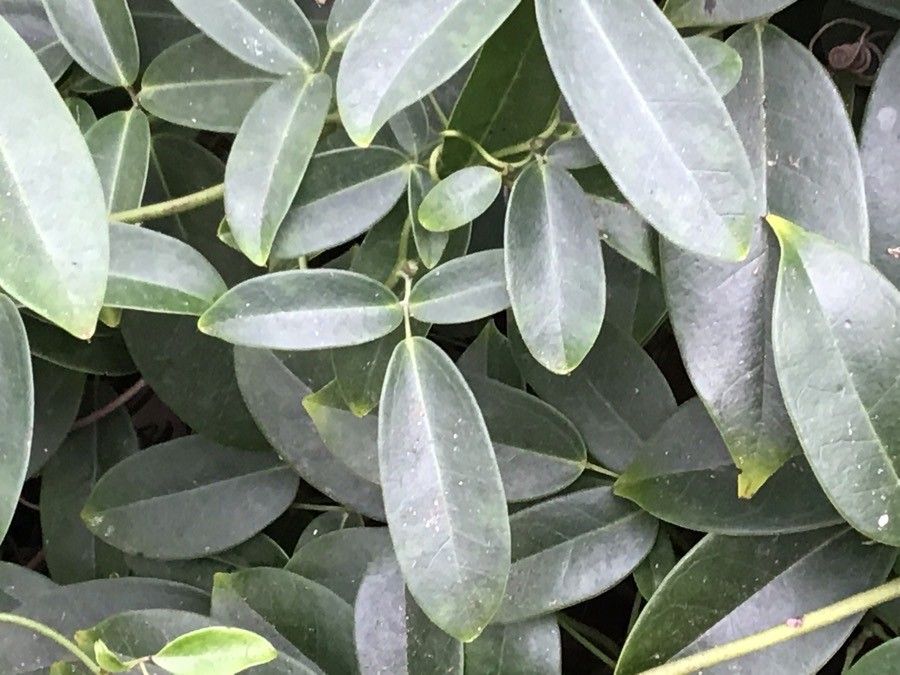
This remarkable collection was gathered by Dan Hinkley in the remote village of Ritak, Nepal, at an elevation exceeding 10,000 feet. Clusters of purplish, cinnamon-scented flowers frequently produce large, lavender, fleshy fruits.
Stauntonia latifolia shows strong resistance to disease and is usually not susceptible to illnesses. Regarding maintenance, this plant is fairly easy to care for. Outdoors it needs only light watering, and larger specimens typically do not require pruning. Smaller specimens, however, should be trimmed after they finish flowering. Stauntonia latifoliat is appropriate for anyone with an outdoor area, like a garden or a deck, and does not demand much gardening experience.
How to keep Holboellia Latifolia.
Light
Stauntonia latifolia occurs naturally in places like forest understories or rocky sites, where it is subject to natural shade. It favors partial sun but can tolerate full sun or full shade, showing its versatile and hardy character.
Temperature
Stauntonia latifolia is quite adaptable to temperature, able to endure higher heat and large temperature swings. In hot weather, attention should be paid to watering and providing proper shade to avoid sunburn. Conversely, Stauntonia latifolia has relatively low cold tolerance; it can tolerate some cold, but overly low temperatures may cause frost damage.
Fertilizer
Stauntonia latifolia needs adequate nutrients to achieve the best fruit production. Apply fertilizer in early spring to promote new growth and bloom development. Regular fertilizing keeps the plant healthy, produces more flavorful fruit, and prevents nutrient deficiency problems like yellow leaves and poor fruit production.
Botanical profile.
- Plant Type
- Vine
- Life Cycle
- Perennial
- Genus
- Holboellia
- Family
- Berberidaceae
- Hardiness Zone
- 8-11
- Mature Height
- 10.06 m to 14.94 m
- Mature Spread
- 3.05 m to 4.88 m
- Leaf Color
- Dark Green
- Leaf Type
- Semi-evergreen
- Flower Color
- White
- Flower Size
- 1.02 cm to 2.03 cm
- Bloom Time
- Mid spring, Late spring
- Planting Time
- Spring, Summer, Autumn
- Harvest Time
- Late summer, Early fall, Mid fall
- Native Area
- Nepal, India, Myanmar, Bhutan, Bangladesh, Pakistan, China