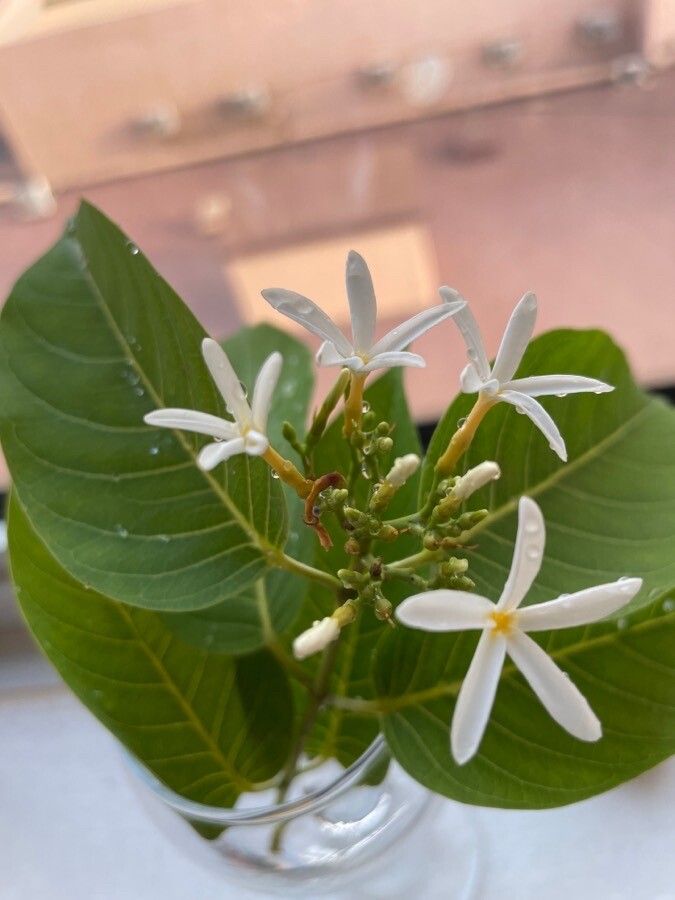
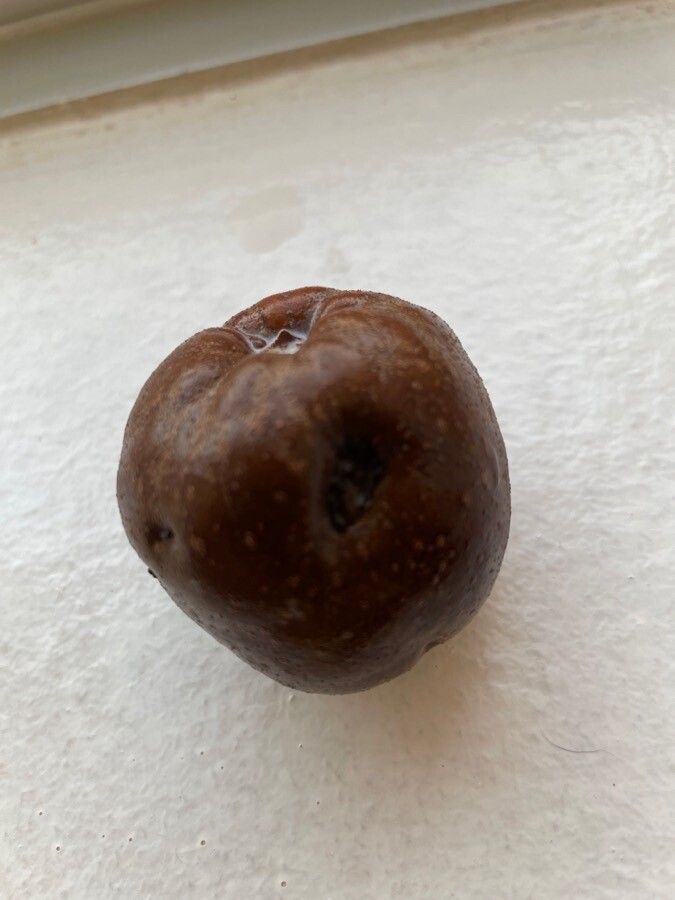
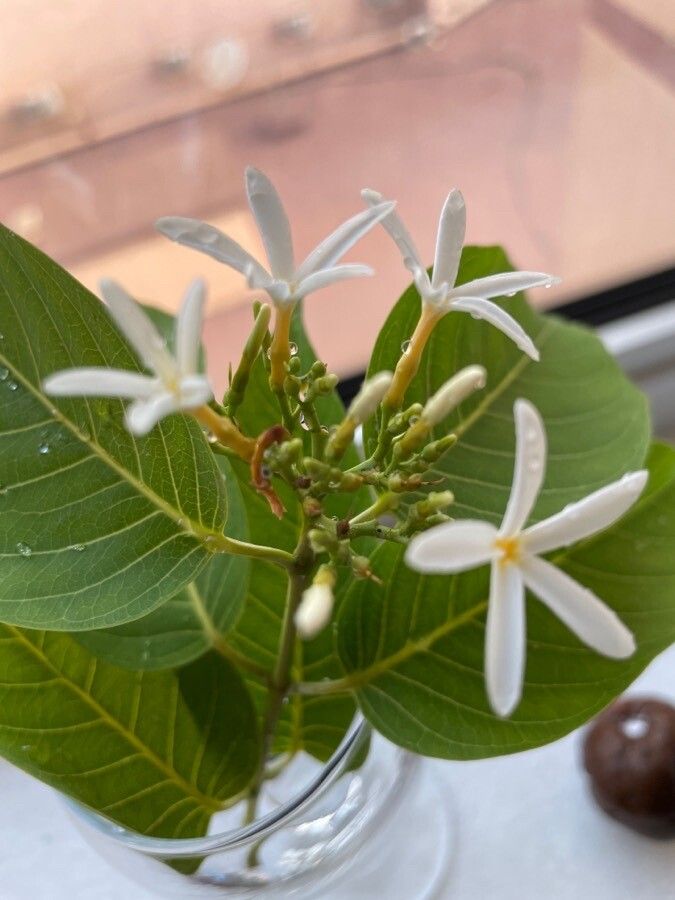
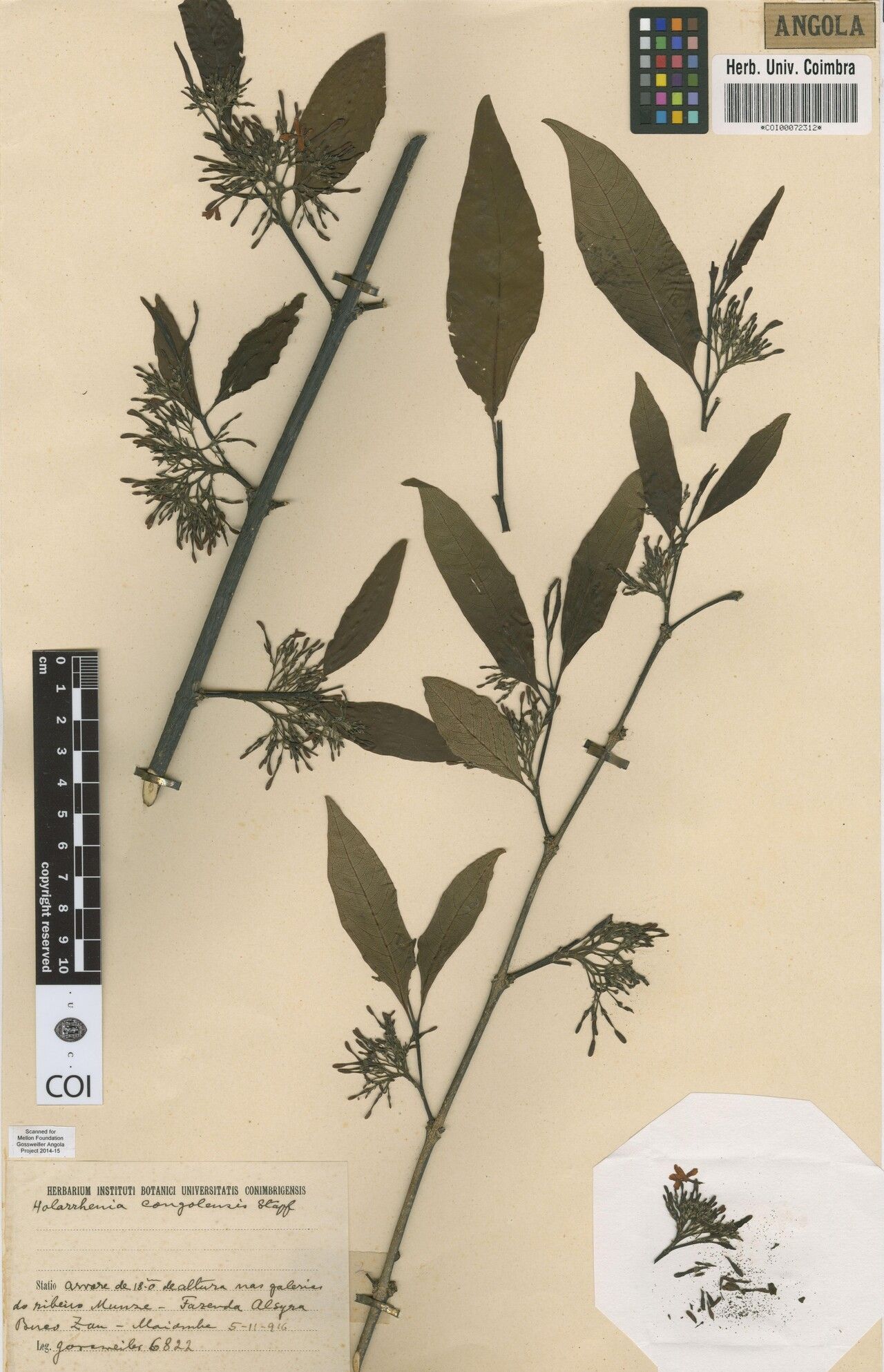
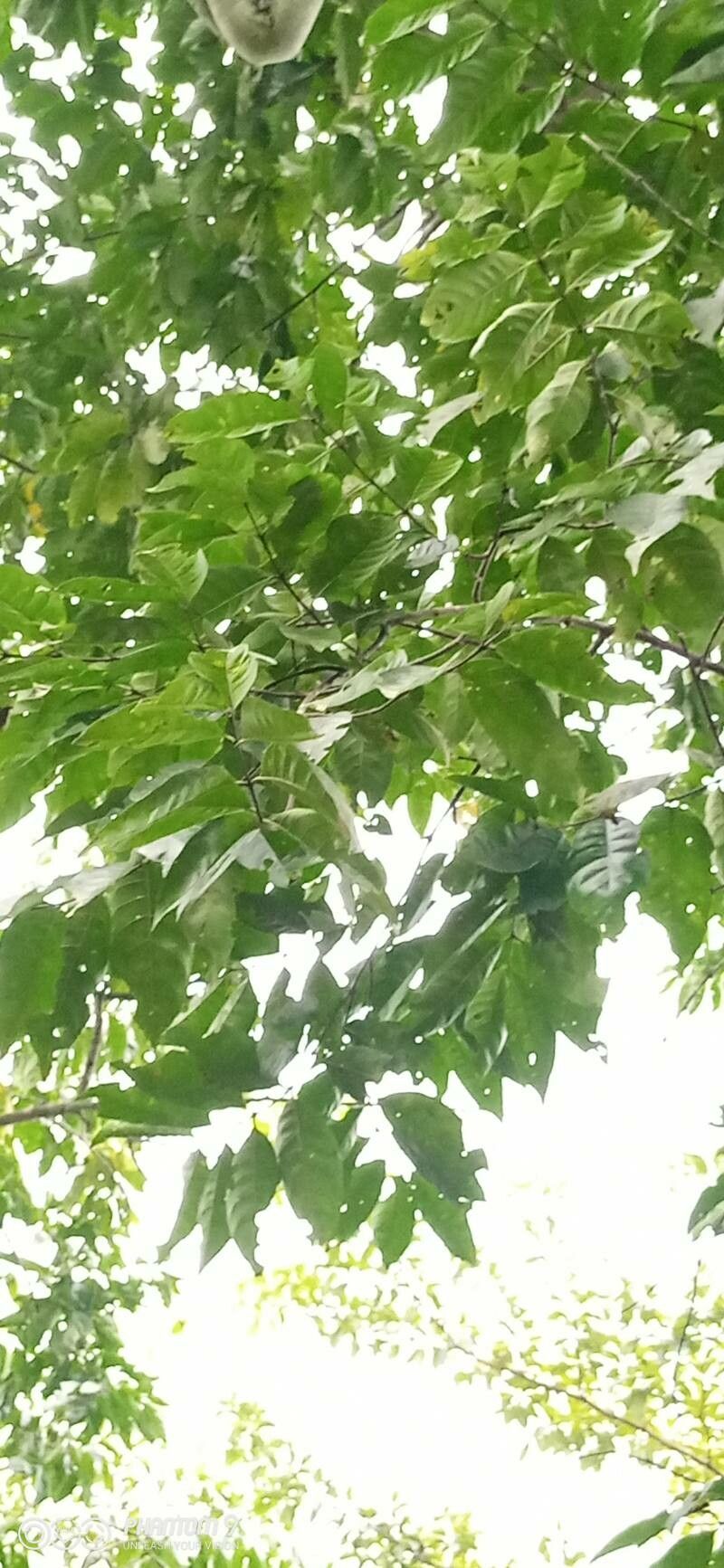
Holarrhena pubescens is a species of flowering plant in the family Apocynaceae. It is native to central and southern Africa, the Indian Subcontinent, Indochina, and parts of China. In Cambodia, it is called /tɨk dɑh kʰlaː thɔm/ ទឹកដោះខ្លាធំ big tiger milk or /kʰlaɛɲ kŭəŋ/ ខ្លែងគង់ invulnerable kite. These seeds are sold as indraja (इनद्राजा) for Ayurvedic medicine in India.
Feverpod, commonly known as Holarrhena pubescens, likely derives its name from the plant's traditional medicinal uses. Other common names, such as "dysentery rose bay," also highlight its medicinal properties. The Latin name of the genus, Holarrhena, originates from the Greek words "holos," meaning "entire" or "whole," and "arrhen," meaning "male," which refers to the plant's anthers. The specific epithet "pubescens" means "maturing" or "becoming hairy."
Feverpod resists disease well and is generally not susceptible to illnesses. In terms of care, this plant is fairly low maintenance. When grown outdoors it needs only minimal watering, and larger plants usually do not require pruning. Smaller plants, however, should be pruned after they finish blooming. Feverpodt is suitable for anyone with an outdoor area, such as a garden or deck, and does not demand much gardening experience.
How to keep Holarrhena Pubescens.
Light
Feverpod does best under a clear sky but can tolerate light shade. Native to regions with abundant sunlight, this plant needs substantial light to grow vigorously. Too little light may impede its growth, while too much can be harmful to its health.
Water
Feverpod, which comes from dry climates, is highly drought-tolerant and needs watering only every 2-3 weeks. It thrives outdoors, taking advantage of rain, and adjusts its growth based on water availability. During dry spells, it sheds leaves to conserve resources.
Temperature
Feverpod is native to environments where temperatures range from 68 to 95 °F (20 to 35 ℃). It grows best in moderately warm climates and must be kept within that range.
Fertilizer
The timing of fertilizing Feverpod is important. Apply fertilizer in early spring and continue every month until early summer. Fertilizer promotes attractive blooms and supplies energy during both dormant and active growth periods.
Pruning
To keep feverpod healthy and vibrant, it benefits from early spring pruning. Focus on removing any dead or diseased wood, as this encourages new growth. Make clean, angled cuts to prevent water damage and support the plant's natural growth cycle, which boosts its vitality and flowering. By pruning regularly, you ensure that feverpod stays both healthy and visually appealing.
Botanical profile.
- Plant Type
- Tree
- Life Cycle
- Perennial
- Genus
- Holarrhena
- Family
- Apocynaceae
- Hardiness Zone
- 9
- Mature Height
- 10.06 m
- Mature Spread
- 3.96 m
- Leaf Color
- Green, Dark Green
- Leaf Type
- Deciduous
- Flower Color
- White
- Flower Size
- 2.03 cm to 2.54 cm
- Bloom Time
- Late spring, Summer
- Planting Time
- Spring, Summer, Autumn
- Harvest Time
- Late summer, Fall
- Native Area
- Nepal, Sri Lanka, Malawi, India, South Africa, Zambia, Bangladesh, Pakistan, Laos, Kenya, Tanzania, Zimbabwe, Cambodia, Vietnam, Mozambique, Myanmar, Bhutan, Congo (DRC), Thailand
Other names.
Reader questions.
How should I water my Feverpod plant?
To ensure excellent root development, place a garden hose at the base of the plant. Avoid spraying the leaves directly and note that leaves outdoors and in direct sunlight will need more water. Use bubblers or soaker hoses to moisten the roots of each plant or cover the entire garden or bed. After adding or removing plants, make sure to drain any excess water and wait for the soil to dry before watering again. Water at ground level to prevent diseases. On sunny days, consider spraying the entire bush with water. Regardless of whether it's potted or in-ground, remember that Feverpod prefers deep watering rather than light sprinkling.
What are the sunlight requirements for Feverpod?
Feverpod requires significant light exposure for robust growth, thriving optimally under full sun, which is above 6 hours of sunlight, but can also withstand partial sun, receiving about 3-6 hours of sunlight. Originating from regions abundant in sunlight, Feverpod is resilient enough to endure light shade conditions. However, it's essential to monitor the sunlight in your garden to ensure your Feverpod gets the right balance of light and shade, as too little or too much sunlight can affect its health adversely.
What is the optimal temperature range for growing Feverpod?
Feverpod, botanically known as Holarrhena pubescens, is native to environments with temperatures ranging from 68 to 95°F (20 to 35°C). This plant thrives in moderately warm climates and functions best within this specific temperature range. It possesses some degree of cold tolerance and usually does not require additional protective measures when the temperature remains above 0°C. However, when temperatures are expected to fall below freezing, temporary measures for cold protection, such as wrapping the plant with plastic film, fabric, or other materials, are necessary. These protective measures should be removed once the temperature rises again to avoid any negative impact on the plant's health.
What should I do if I give Feverpod too much or too little water?
An overwatered Feverpod can exhibit yellowing, dropping, and wilting leaves. The plant may look dull and unhealthy with mushy stems. When these signs appear, it is best to adjust your watering schedule. Additionally, wilting can also indicate under watering. Underwatered plants will have crispy and dry leaves, while overwatered ones will have wilted and soft leaves. If the soil is dry and regular watering is not sufficient, give the plant a thorough watering. This will help the Feverpod recover, but it may still display dryness and yellow leaves for a few days due to damage to the root system. Once it returns to normal, the yellowing of the leaves will cease. When growing Feverpod indoors, always check the moisture levels in the pot and avoid overwatering. Look for signs of black spots, and if present, allow the soil to dry out by withholding water for a few days. Overwatering can lead to root rot, so if you observe discolored and slimy roots, consider transferring the plant to a different pot. It is crucial to prevent root rot by avoiding excessively soggy soil. When planting Feverpod outdoors, ensure proper watering by checking the soil moisture. If your fingers indicate dry soil, it may be a sign of underwatering. Adequate watering is necessary for aiding the plant's recovery.
How can artificial lighting support Feverpod's growth indoors?
Indoor Feverpod plants require adequate lighting for optimal growth, especially when natural sunlight is insufficient. Artificial lights, such as LED lights, are recommended because they can be customized to provide specific wavelengths needed by the plants. Full sun plants need 30-50 watts per square foot, partial sun plants require 20-30 watts per square foot, and full shade plants need 10-20 watts per square foot of artificial light. The light source should be placed 12-36 inches above the plant to simulate natural sunlight conditions, and most plants require 8-12 hours of light per day.
How does Feverpod react to low temperatures, and what are the recommended solutions?
Feverpod has a moderate tolerance to low temperatures, performing best when the thermometer reads above 20°C. It should be kept above 0°C during winter months to ensure its survival. When the temperature dips below -5°C, the plant's leaves may begin to droop. If the cold spell is mild, the plant might recover on its own, but in severe cases, the leaves will wilt and could eventually fall off. To mitigate frost damage and protect Feverpod from low temperatures, it's advisable to trim off any frost-damaged parts. Before low temperatures hit again, it's recommended to wrap the plant with materials like non-woven fabric or cloth, and create a wind barrier to shield it from cold winds, ensuring the plant's resilience against frost.
How often should I give water to my Feverpod plant?
The Feverpod plant prefers deep and infrequent watering, especially when in pots. Pots have limited water storage capacity, so the soil dries out quickly. In cold regions, water every 3 to 5 days. Water in the morning when the soil is dry, both indoors and outdoors. Check the soil moisture regularly and water when the top 2-3 inches are dry. During hot days, check the soil moisture daily to prevent it from drying out. If you have a garden, irrigate the soil regularly. In hot climates, water once a week. Consider rainfall and avoid over-watering to prevent root rot. Feverpod grows mainly in spring and fall. Use mulch outdoors to retain moisture. Sandy soil requires more frequent watering, while clay soil requires less frequent watering. Keep track of watering dates and look out for drooping leaves as a sign of needing water.
What are the symptoms of insufficient light in Feverpod plants?
When Feverpod is subjected to insufficient lighting, especially indoors during winter, various symptoms can manifest. These include smaller new leaves, leggy or sparse growth, faster leaf drop, a halt in leaf production indicating slower or no new growth, lighter-colored new leaves, chlorosis (yellowing of leaves), sunscald, leaf curling, wilting, and leaf scorching. These symptoms point to the plant's struggle with inadequate sunlight, affecting its growth and overall health.
How does Feverpod react to high temperatures, and what measures should be taken?
In the summer, Feverpod needs to be kept below 35°C to remain healthy. Temperatures above 38°C can cause the leaves to lighten in color, tips to dry and wither, leaves to curl, and increase the plant's susceptibility to sunburn. When faced with such conditions, it's crucial to trim away any sunburned or dried-up parts to prevent further stress. Moving the plant to a shaded location, especially during the midday and afternoon sun, or using a shade cloth can protect it from excessive heat. Regular watering in the morning and evening will help keep the soil adequately moist and assist in cooling the plant, ensuring its wellbeing during high temperature periods.
How much water should I give my Feverpod plant?
The Feverpod plant requires about a gallon of water on a regular basis. For potted plants, water them deeply until the water starts dripping out of the bottom of the pot. Allow the soil to dry before watering again. You can use a water calculator or moisture meter to track how much water you give the plant each week. During the flowering period, provide ample water, but allow the moisture to evaporate afterward to avoid root rot. If the Feverpod is planted outdoors with enough rainfall, additional watering may not be necessary. However, when the Feverpod is young or newly planted, ensure it receives 1-2 inches of rain per week. As the Feverpod matures, it can survive solely on rainfall. Only in extremely hot weather or when there is no rain for 2-3 weeks should you consider watering the Feverpod thoroughly during cooler moments of the day to prevent damage from high heat. In times of long dry spells, extra watering will be needed.
What solutions are recommended for adapting Feverpod plants to the right light conditions?
To optimize Feverpod growth in light conditions, gradual adaptation is key. For indoor plants, you can move them weekly to sunnier spots until they receive at least 6 hours of daily sunlight. Keep them near a south-facing window with curtains open during daylight. Artificial lighting can supplement natural light, ensuring at least 8 hours of light daily. For outdoor plants, similarly, move them gradually to avoid shock and sunburn. Trees obstructing light may need pruning. If relocating smaller ground-plants, do so during their dormant period to a position with ample sunlight and good drainage. It's important to remember that parts of the plant already affected by insufficient light might not recover, but increasing light exposure will promote healthy new growth.
Should I water my Feverpod plant more or less depending on the time of year or the weather?
The Feverpod is an outdoor plant that generally needs rain for watering, except in persistent dry weather. In spring and fall, it needs moist soil, but not soggy. Alternating dry and moist conditions are best for growth. In summer, hot weather causes water to evaporate quickly, so watering may be needed more often. In winter, it needs less water because it goes dormant. Good drainage is important, especially in winter. When potted, the plant has limited root growth and needs frequent watering in summer. Deep soaking is best, avoiding shallow sprinkles. Don't let it dry out completely in fall or winter. Avoid overwatering, as sitting in water for too long can harm the plant. Mulch can reduce stress and encourage healthy blooms.