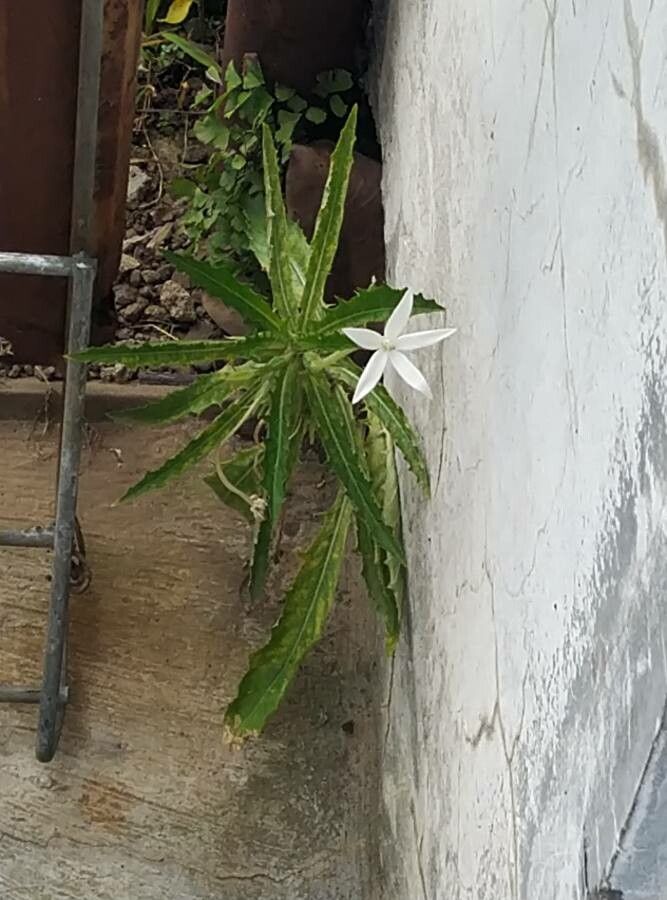
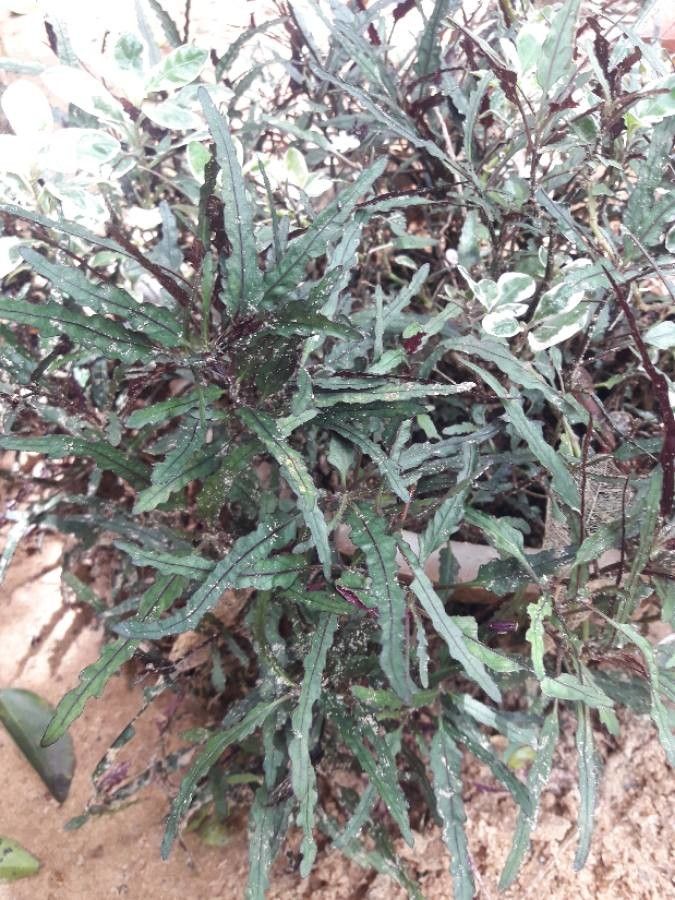
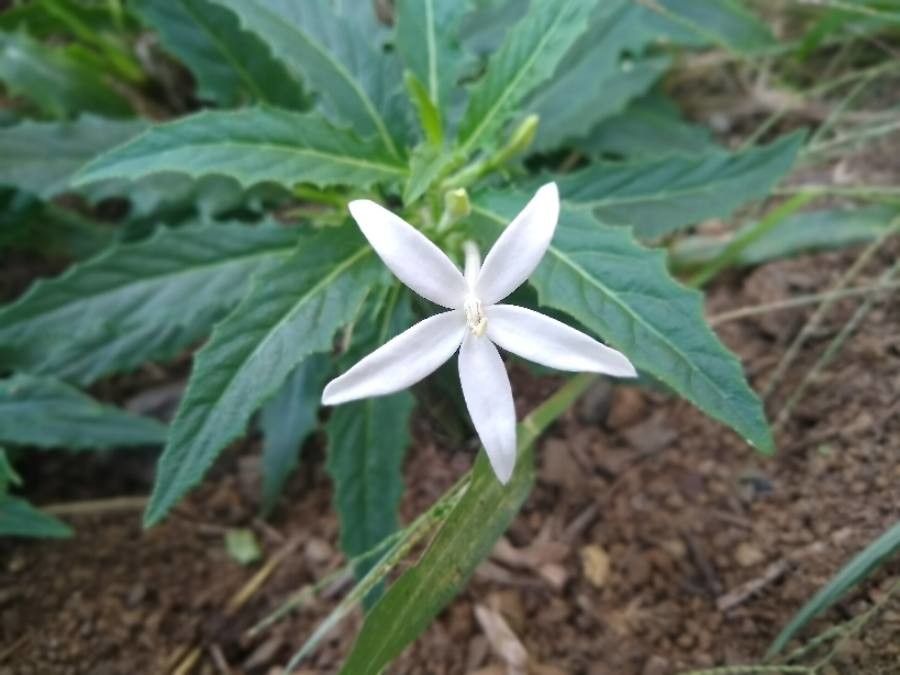
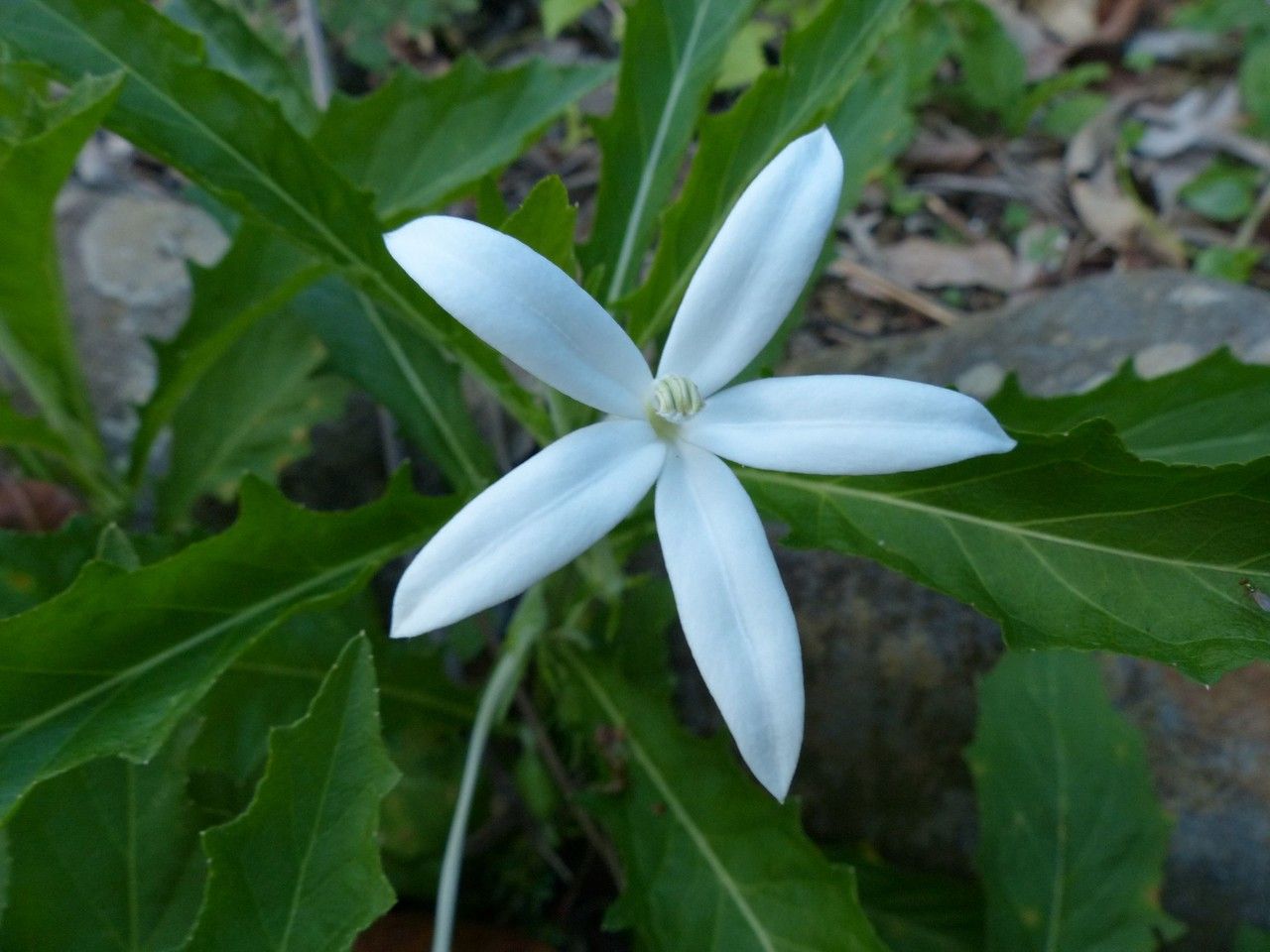
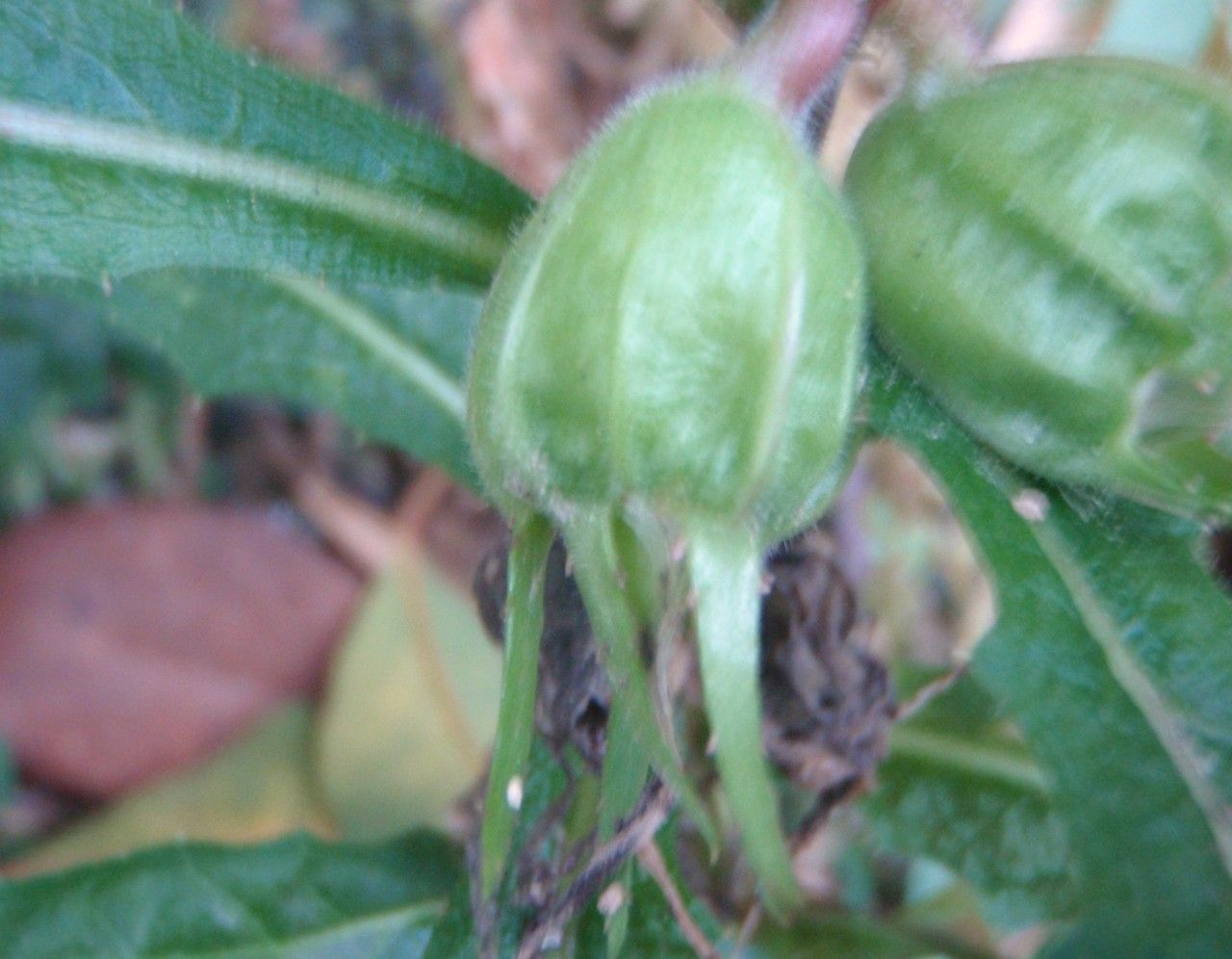
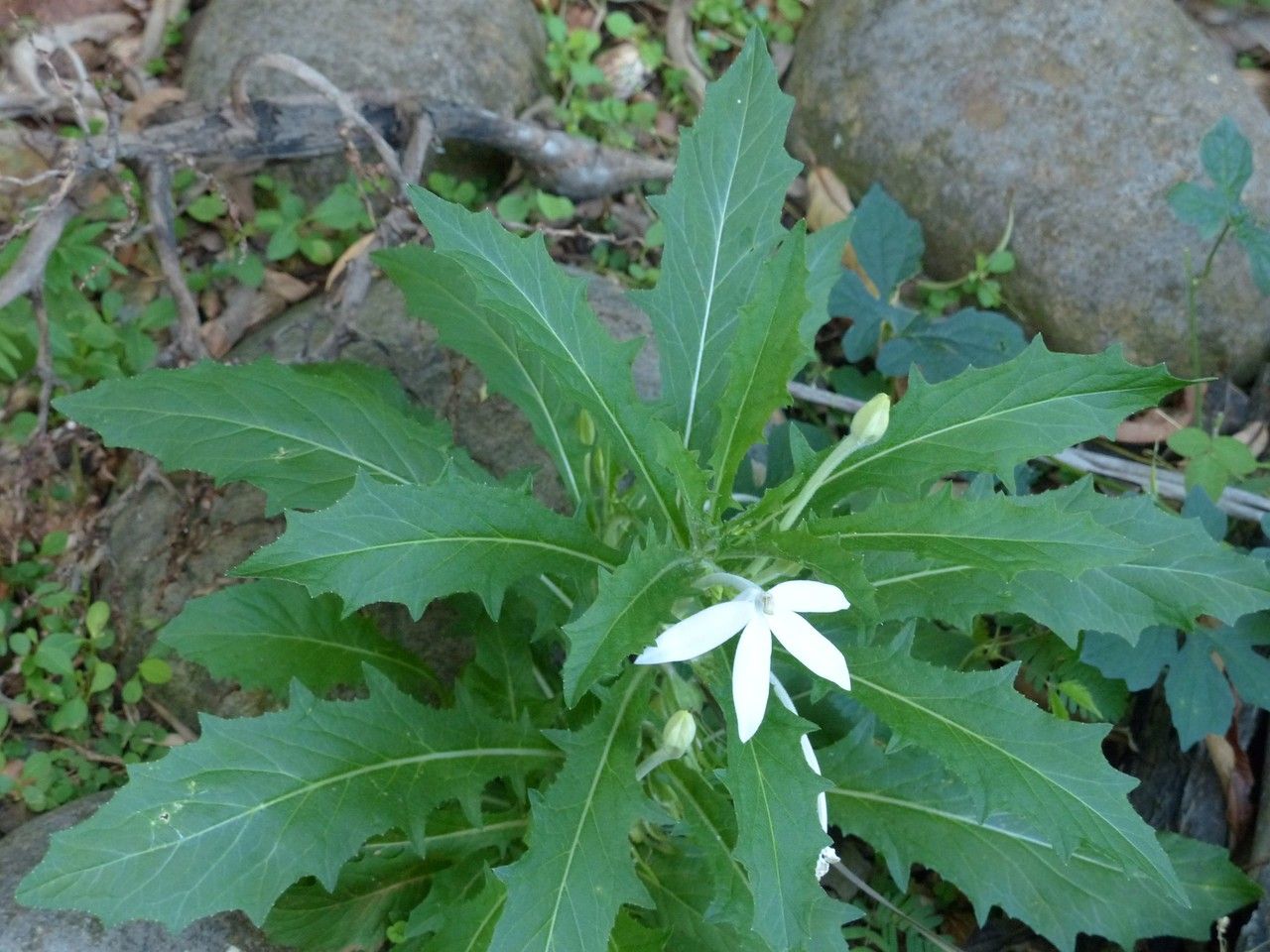
Hippobroma longiflora, also called Star of Bethlehem or madamfate, is a flowering plant in the family Campanulaceae. It is the only species in the genus Hippobroma. It is endemic to the West Indies, but has become naturalized across the American tropics and Oceania.It is notable for its concentrations of two pyridine alkaloids: lobeline and nicotine. The effects of nicotine and lobeline are quite similar, with psychoactive effects at small dosages and with unpleasant effects including vomiting, muscle paralysis, and trembling at higher dosages. For this reason, H. longiflora (and its various synonyms) is often referenced for both its toxicity and its ethnobotanical uses. When uprooting this weed, it is important to wear gloves: the sap is an irritant which can be absorbed through the skin, and a small amount of sap in the eyes can cause blindness.
Star of Bethlehem has strong resistance to disease and is generally not prone to ailments. However, it can be vulnerable to pests and diseases present in its environment. These infections are usually mild. In terms of maintenance, this plant requires a moderate amount of care. It should be pruned regularly to preserve a good appearance and support healthy growth. Fertilizing can also help encourage flowering. Star of Bethlehem is appropriate for anyone with outdoor space, such as a garden or patio, and does not demand extensive care experience. It may need more attention when grown indoors.
How to keep Hippobroma Longiflora.
Light
Star of Bethlehem prefers moderate, filtered sunlight similar to its original growing conditions. It can also do well in low-light areas without harm. Too much light can cause scorching, while too little can impede its optimal growth and development.
Water
The Star of Bethlehem plant thrives in tropical climates with consistent moisture and high humidity. It prefers to be watered weekly, though it can tolerate short periods of dryness. As an indoor evergreen, it needs well-draining soil to absorb water effectively without becoming waterlogged.
Temperature
Star of Bethlehem comes from temperate regions where temperatures usually range from 68 to 95°F (20 to 35°C). It prefers that temperature band but can adjust as the seasons change. In cooler months, creating an appropriate indoor microclimate may be necessary.
Fertilizer
The best time to fertilize a Star of Bethlehem is in early spring, as it comes out of dormancy and starts active growth. Fertilization supplies essential nutrients needed for healthy development. Although the Star of Bethlehem has fairly low fertilizer requirements, giving it fertilizer once a year can improve its survival and encourage better, longer-lasting blooms.
Pruning
The Star of Bethlehem is known for its star-shaped, white flowers and thrives with proper pruning. To care for this plant, focus on removing damaged stems and thinning the foliage to improve air circulation. The best time to prune is from early to late spring, which encourages healthier growth, reduces the risk of disease, and helps maintain the plant's shape for better ornamental appeal.
Botanical profile.
- Plant Type
- Herb
- Life Cycle
- Perennial
- Genus
- Hippobroma
- Family
- Campanulaceae
- Hardiness Zone
- 9
- Mature Height
- 34 cm to 46 cm
- Mature Spread
- 20 cm to 40 cm
- Leaf Color
- Green
- Leaf Type
- Deciduous
- Flower Color
- White
- Flower Size
- 7.62 cm to 10.16 cm
- Bloom Time
- All year round
- Planting Time
- Spring, Summer, Autumn
- Harvest Time
- All year round
- Native Area
- Colombia, Belize, Cuba, Honduras, Mexico, Bolivia, Venezuela, Peru, Guyana, Nicaragua, Ecuador, Costa Rica, Panama, Jamaica
Other names.
Reader questions.
How should I water my Star of Bethlehem plant?
To ensure the health of the Star of Bethlehem plant, it is best to use filtered water at room temperature. Tap water may contain harmful particles for this plant. It is also important to use water that is not too cold, as the plant is used to warm environments and cold water can be detrimental. Instead of watering from above, it is advisable to apply the filtered room temperature water directly to the soil until it is fully soaked. This allows the roots to absorb the necessary nutrients and continue to spread in the soil.
Why do I have to put fertilizer on my Star of Bethlehem plant?
Fertilization is important for the Star of Bethlehem and other plants as it provides essential nutrients for overall plant growth. While the Star of Bethlehem has relatively low fertilization needs, annual fertilization can greatly benefit the plant, keeping it healthy and improving the longevity of its flowers. Therefore, those who wish to enhance the appearance of their Star of Bethlehem should remember to fertilize it every year.
What are the sunlight requirements for Star of Bethlehem?
Star of Bethlehem thrives best in areas that receive moderate, yet filtered sunlight, mimicking its natural habitat conditions. It is adaptable and can survive in low-light areas without significant adverse effects. The plant needs about 3-6 hours of sunlight for partial sun conditions and less than 3 hours for full shade. It's crucial to observe the movement of sunlight in your garden to find the ideal balance of light and shade, ensuring the plant's well-being. Excessive sunlight may cause leaf scorching, while insufficient light could inhibit its growth and flourishing.
What is the preferred temperature range for the Star of Bethlehem?
The Star of Bethlehem (Hippobroma longiflora) thrives in temperate environments, preferring temperatures between 68 to 95°F (20 to 35°C). It can adjust to changing seasons, but in cooler months, creating a suitable microclimate indoors may be necessary. The plant possesses some degree of cold tolerance and generally does not require extra cold protection measures as long as temperatures remain above its lower tolerable limit. However, when temperatures are expected to drop below this threshold, temporary protective measures such as wrapping the plant in plastic film, fabric, or other insulating materials are recommended. These protective coverings should be removed once temperatures rise to suitable levels again.
What do I do if I give my Star of Bethlehem plant too much water or too little water?
Overwatering is a common issue that can harm the health of your Star of Bethlehem plant. When it receives too much water, the stems and leaves may wilt and turn yellow. Overwatering over a long period can also cause diseases like root rot, mold, and mildew, which can be fatal to the plant. Underwatering, on the other hand, is less likely to occur as this plant can tolerate drought well. However, it is still possible, and you may notice brittle and brown leaves when it happens. It is important to recognize the signs of overwatering early when caring for your Star of Bethlehem. Some diseases caused by overwatering, such as root rot, may not be fixable if you wait too long. If you see early signs of overwatering, reduce your watering schedule immediately. Check the quality of the soil your plant is in - if it drains poorly, replace it with a loose, well-draining potting mix. If you notice signs of underwatering, simply water more regularly until the signs improve.
When should I fertilize my Star of Bethlehem?
The best time to fertilize a Star of Bethlehem is in late winter to early spring. This is when the plant is transitioning from dormancy to active growth, and fertilizing at this time will promote healthy growth for the season. Fertilizing in early spring is generally recommended, but fall can also be an option. However, fertilizing should be avoided during summer and winter.
How do artificial lights benefit indoor Star of Bethlehem plants?
For indoor Star of Bethlehem plants, especially during periods of insufficient natural sunlight like winter, artificial lighting can be a crucial solution to promote optimal growth. LED lights are recommended due to their ability to provide specific light wavelengths needed by the plants. Full sun plants require 30-50W/sq ft, partial sun plants need 20-30W/sq ft, and full shade plants benefit from 10-20W/sq ft of artificial light. Positioning the light source 12-36 inches above the plant and ensuring it receives 8-12 hours of artificial light daily can mimic natural sunlight conditions effectively.
How does the Star of Bethlehem react to low temperatures?
The Star of Bethlehem has moderate tolerance to low temperatures and performs best when kept above its minimum suitable growth temperature. In winter, it's crucial to keep the temperature above the plant's tolerable growing temperature minimum to prevent damage. If temperatures fall below its growth limit, the plant's leaves may droop; while they can recover in mild cases, severe cold exposure can cause leaves to wilt and eventually fall off. To manage cold stress, frost-damaged parts should be trimmed off, and the plant should be wrapped with insulating materials like non-woven fabric or cloth. Additionally, constructing a wind barrier can provide protection against cold winds.
How often do I need to water my Star of Bethlehem plant?
If your Star of Bethlehem plant is in a pot, the most precise way to determine if it needs water is by checking the soil. Insert your finger into the soil and if the top two to three inches are dry, then it's time to water it. If you have planted your Star of Bethlehem outdoors in the ground, you can use a similar method to test the soil. When you find that the first few inches of soil have dried out, it's time to water it. During the spring and early fall, you will likely need to water this plant approximately once a week using this method. However, when it gets extremely hot, you may need to water it two or more times per week. It's worth noting that mature, well-established Star of Bethlehem plants have an impressive ability to withstand periods of drought.
When should I not put fertilizer on my Star of Bethlehem plant?
To properly care for your Star of Bethlehem plant, it is important to only fertilize it during late winter and early spring. This plant doesn't require much fertilizer, so one feeding per year is sufficient. Fertilizing during spring, summer, and fall can lead to overfertilization and its associated problems, unless you didn't fertilize in the spring, in which case it is okay to feed it during the fall. Additionally, there is no need to fertilize the plant during the winter, as it is in a dormant growth phase and won't produce new growth.
What are some common symptoms of inappropriate lighting conditions in Star of Bethlehem?
Symptoms of inadequate lighting in Star of Bethlehem plants include the appearance of smaller leaves than usual, leggy or sparse growth, faster leaf drop, slower or stopped growth, and the development of lighter-colored or yellow (chlorotic) leaves. Overexposure to sunlight can lead to sunscald, leaf curling, wilting, and leaf scorching, indicating damage to the plant's tissue and a reduction in its overall health. Observing these symptoms early can help in adjusting the plant's light conditions to prevent further issues.
What are the effects of high temperatures on the Star of Bethlehem and how can they be mitigated?
During the summer, it's important to keep the Star of Bethlehem below its maximum suitable growth temperature to prevent heat stress. Exceeding this temperature threshold can lead to lighter leaf coloring, dry and withered leaf tips, leaf curling, and increased susceptibility to sunburn. To mitigate these effects, sunburned and dried-up parts should be trimmed away, and the plant should be moved to a shaded location or protected with a shade cloth, especially from the midday and afternoon sun. Ensuring the soil remains moist by watering the plant in the morning and evening is also crucial for its health in high temperatures.