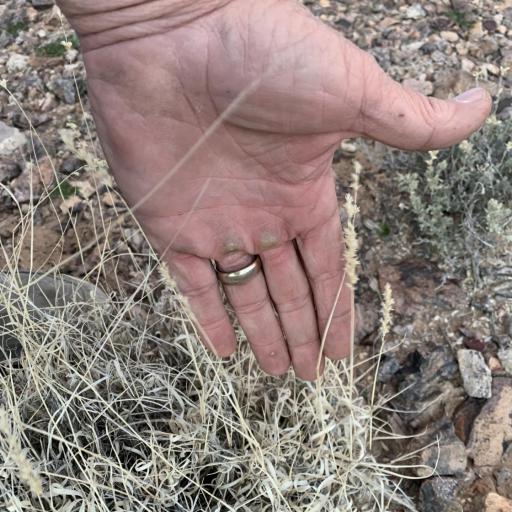
Hilaria rigida, commonly known as big galleta grass, is a perennial grass species native to the southwestern United States and northern Mexico. Belonging to the Poaceae family, this grass can grow up to 3 feet tall. It features a deep root system that enables it to thrive in arid environments with low rainfall.
Big galleta grass has narrow, gray-green leaves that can reach up to 10 inches in length. The plant produces dense clusters of spikelets at the ends of its stems, containing small flowers that bloom from May through September.
This species is a crucial component of many arid ecosystems, providing food and habitat for various wildlife, including pronghorns, mule deer, jackrabbits, quails, and other small mammals. Its deep root system also plays a vital role in preventing soil erosion by stabilizing sandy soils.
Hilaria rigida is often used for erosion control on disturbed lands such as roadsides or construction sites due to its ability to establish quickly in these areas. Additionally, it holds promise for rangeland restoration projects owing to its drought tolerance and capability to compete with invasive plant species.
Overall, Hilaria rigida plays an essential role in maintaining healthy ecosystems within arid regions. It provides food sources for wildlife and helps prevent soil erosion by stabilizing sandy soils with its deep roots, making it a vital part of the ecosystem's biodiversity.
Big galleta is resistant to disease and is generally not susceptible to illnesses. Regarding care, this plant is fairly low maintenance. When grown outdoors, it needs little watering, and larger specimens typically do not require pruning. However, smaller plants should be pruned after they have bloomed. Big galletat is appropriate for anyone with an outdoor area, such as a garden or deck, and does not demand extensive care experience.
How to keep Hilaria Rigida.
Light
Big galleta is a sun-loving perennial herbaceous plant that comes from open habitats and commonly thrives in meadows and grasslands. It prefers full sun but can also tolerate partial sun conditions.
Water
The resilient big galleta plant thrives in arid climates, thanks to its excellent drought tolerance and efficient water conservation abilities. Although it is ideally watered once a week, it actually prefers dry soil conditions. Its deep root systems allow the big galleta to access water during prolonged dry spells, showcasing its adaptation to infrequent rainfall.
Temperature
Big galleta comes from a native environment that has moderate temperatures, typically ranging from 59 to 89.6 °F (15 to 32 ℃). Big galleta prefers these temperate conditions, so aim to reproduce them in your care routine, adjusting as the seasons change.
Fertilizer
Big galleta needs extra nutrients to encourage healthy new growth. In spring, spreading compost around the plant’s base will effectively supply the nutrition it requires. Fertilizing helps support vigorous growth and improves the plant’s resistance to diseases and pests.
Pruning
Big galleta is a drought-tolerant perennial grass that forms dense clumps. To encourage new growth, improve air circulation, and increase sunlight penetration, prune old stems in early spring. Be sure to sanitize your tools to prevent contamination, which promotes healthy growth and minimizes the risk of disease.
Botanical profile.
- Plant Type
- Grass
- Life Cycle
- Perennial
- Genus
- Hilaria
- Family
- Poaceae
- Hardiness Zone
- 8
- Mature Height
- 91 cm
- Mature Spread
- 20 cm to 40 cm
- Leaf Color
- Green Yellow, Pale Green
- Leaf Type
- Evergreen
- Flower Color
- Yellow, Green, Purple, Brown
- Flower Size
- 0.51 cm to 1.02 cm
- Bloom Time
- Early spring, Mid spring
- Planting Time
- Spring, Summer, Autumn
- Harvest Time
- Late spring, Early summer
- Native Area
- Mexico
Other names.
Reader questions.
What should I do if I give my Big galleta too much water or too little water?
Proper watering is crucial for the performance of this beautiful ornamental grass. In the ground, watering issues can be fixed, but in a container, too much or too little water will quickly kill Big galleta. When Big galleta doesn't receive the right amount of water, it may stop growing. Overwatering can cause yellow leaves with brown tips, while underwatering can result in drooping leaves, weak seed head production, and browned leaves. If you suspect your Big galleta has been watered improperly, the first step is to determine if it is getting too much or too little water. If it's getting too much, immediately stop watering and be patient as heavy soils may take weeks to dry out. Once you see new growth, check the soil for moisture and decide if it needs additional watering. For Big galleta receiving too little water, simply give it a deep drink and observe if it perks up. Always remember that deep watering is better than frequent shallow waterings as it promotes deeper root growth, making the grass more resistant to drought and watering issues.
What kind of sunlight does Big galleta need?
Big galleta plants require full sun every day, which means they need at least six hours of sunlight to keep their leaves, roots, and blooms healthy. While most perennials also need six hours of sunlight daily, certain plants like the Orange Daylily or Giant Coreopsis can survive with just three hours of sun each day. However, it's important to note that although these perennials can tolerate less sunlight, they won't thrive as well as they would in sunnier conditions.
What is the best temperature for Big galleta?
The temperature requirements for Big galleta vary depending on the time of year. There are two main seasons to consider: the growing season and the dormancy season. During the growing season, which is when Big galleta begins to sprout, the ideal temperature range is between 65 to 80℉ (18 to 27℃). If the temperature drops below 15℉ (-10℃), the plant may suffer and its leaves may turn brown and wilt. However, if it is a short cold snap, Big galleta might survive with some assistance. During the warmer parts of the year, it is important to protect Big galleta from excessively high temperatures. The top end of its temperature range is 95 to 105℉ (35 to 40℃). Anything above that can damage the foliage and blooms of the plant. High temperatures can cause wilting, drooping, and even sunburn on the leaves, which can be challenging for Big galleta to recover from. Fortunately, there are several quick and easy methods to prevent these temperature-related issues.
How much should I water my Big galleta plant?
The watering needs of Big galleta grass will vary depending on where it is planted. Generally, it should be watered every week. In hot climates, watering it once or twice a week during the summer may be necessary. In moderate climates, watering once every seven days or more may be sufficient. Grass in containers usually need to be watered more frequently than grasses planted in the ground. However, the location of the grass also matters, as shaded grasses need to be watered less frequently than those in the ground. You should only water Big galleta when the soil is dry. To determine if the soil is dry, you can press your finger a couple of inches into the soil. For potted grass, you can weigh the grass with a portable scale or feel if the pot is light from lack of water. When the roots lack sufficient water, the blades of the grass may appear folded along their centers and thinner than usual. Despite its drought tolerance, regular and deep waterings will result in beautiful color. In the wild, Big galleta grows in open scrubland, exposed to extreme heat, bright sun, and intermittent rain. Although this grass is drought resistant, it still needs care and attention. Consistent watering is beneficial for its optimal growth and health. When first planted, Big galleta will require more frequent watering until it establishes deep roots. For potted grass, the soil may dry out quickly, especially if the pot is in hot, direct sun for most of the day. To determine when to water, test the soil every 3 to 4 days and water only when it feels dry. Big galleta planted in the ground generally needs less watering, but this depends on the type of soil. Heavy clay soil holds water for a longer time and may feel dry at the surface while retaining moisture beneath the ground. Sandy soils, on the other hand, drain quickly and will require more frequent watering.
Can the sun harm Big galleta? How can Big galleta be shielded from the sun and heat damage?
In warm climates, some Perennial Flowering Plants may struggle with excessive heat and suffer from sun damage. They can wilt, dry out, or even experience growth problems if they are consistently exposed to the intense afternoon sun. However, not all plants require protection from the light afternoon sun. For those that are harmed by intense afternoon exposure, it is recommended to provide them with some shade in warmer climates. Gardeners can achieve this by planting these plants in areas that do not receive direct heat during the afternoon, such as under trees or behind bushes.
The temperature needs for the first year or young Big galleta plants.
If this is the first year of your Big galleta plant being outdoors, it may require some extra care during the coldest months. Frost can be particularly damaging to a young Big galleta, and it can hinder its ability to grow back healthily in the spring. To protect the plant, it should be kept at a temperature of 40℉(5℃) or above until it becomes established. This can be done by either bringing the plant inside for a month or two, or using mulch or fabric barriers to shield it from the cold. During the first year or two, it is advisable to plant the Big galleta in a shadier location. Smaller and weaker plants struggle more to regulate their own temperature in hot weather. Therefore, it is recommended to limit the direct sunlight exposure to no more than five hours per day, especially if the daytime temperature exceeds 80℉(27℃). Controlling the summer heat can be achieved through the use of shadecloth and regular watering or misting.
What should I pay attention to when I water my Big galleta in different seasons, climates, or during different growing periods?
To determine if you are watering enough, observe the rate of growth of your grass. Big galleta, for example, tends to double in size during the hottest months of the year. If the weather is hot but the grass is not growing vigorously, adjust your watering schedule accordingly. In winter, watering once a month might suffice, but it is still necessary to check the soil for moisture. During the peak growing season, more water will be required, whereas water needs will be significantly reduced in winter and cooler months. Remember, before adding water, let the soil in which Big galleta is planted dry out completely.
Should I keep Big galleta away from the sun?
Certain perennial plants require ample sunlight to reach their maximum bloom. However, in warmer climates, some of these plants actually benefit from less sun. For instance, individuals residing in hotter regions might find it beneficial to shade their flowering perennials during the intense afternoon sun, especially during summer months. Although many perennial flowering plants prefer partial shade in the hottest climates, there are exceptions. Take the Giant Coreopsis, for example, as it is not bothered by excessive sun exposure. These plants can flourish even when placed in the full sun during scorching weather.
How can I keep Big galleta safe from very hot or cold weather?
If the growing season experiences cold temperatures below 15℉(-10℃), there are measures you can take to protect Big galleta from frost or cold damage. If it is grown in a container, simply bring the container indoors under bright, indirect light until temperatures rise above the lower threshold. If it is planted in the ground, use mulch or horticultural fabric to create a barrier around the plant to insulate it from frost and cold wind. For temperatures hotter than 80℉(27℃) in the shade during the day, it is important to limit Big galleta's exposure to sunlight to six hours or less per day, preferably in the morning. Using shade cloth or fine plastic mesh can help reduce direct sunlight during the hottest parts of the day. Another option is to install a misting system that releases a slow, cooling mist around the plant's base during the day to lower ground temperatures.
What will happen if Big galleta doesn't get enough sunlight?
If your Big galleta plants aren't receiving enough sunlight, you'll notice signs that they lack necessary conditions. They will produce fewer blooms compared to those under full sun exposure. Some plants may develop dry spots on their leaves, but they will still bloom despite the inadequate sunlight. However, the flowers will be smaller and less abundant.
Suggestions for the ideal temperature during the dormant season for Big galleta.
In the cold winter months, Big galleta needs a specific amount of cold to remain dormant until it's ready to sprout. If it starts sprouting too early, before the last frost has passed, it could be fatal, especially if it's already started growing and then frost occurs. Ideally, winter temperatures should be below 32°F (0°C), but if they reach 40°F (5°C), that's okay. Sometimes, in more moderate climates like woodland rainforests, an unexpected warm spell can cause Big galleta to sprout prematurely. If there's still a risk of frost, you can protect the new sprout by covering it with clear plastic on stakes. This covering can be removed once the danger of frost has passed. While Big galleta might naturally resprout at the right time, using this method increases the likelihood of a successful second sprouting.
Does Big galleta need extra attention when it comes to sunlight at different stages of its growth?
Big galleta is a wonderful flower for gardens, but it needs at least six hours of sunlight daily to bloom its best. To help the flowers last longer, it is helpful to offer them some shade during the hottest parts of the day. When the Big galleta is still young, it's important to make sure it receives enough sunlight without being exposed to intense afternoon heat. However, once it is fully grown, it requires ample sunlight to continue growing properly.