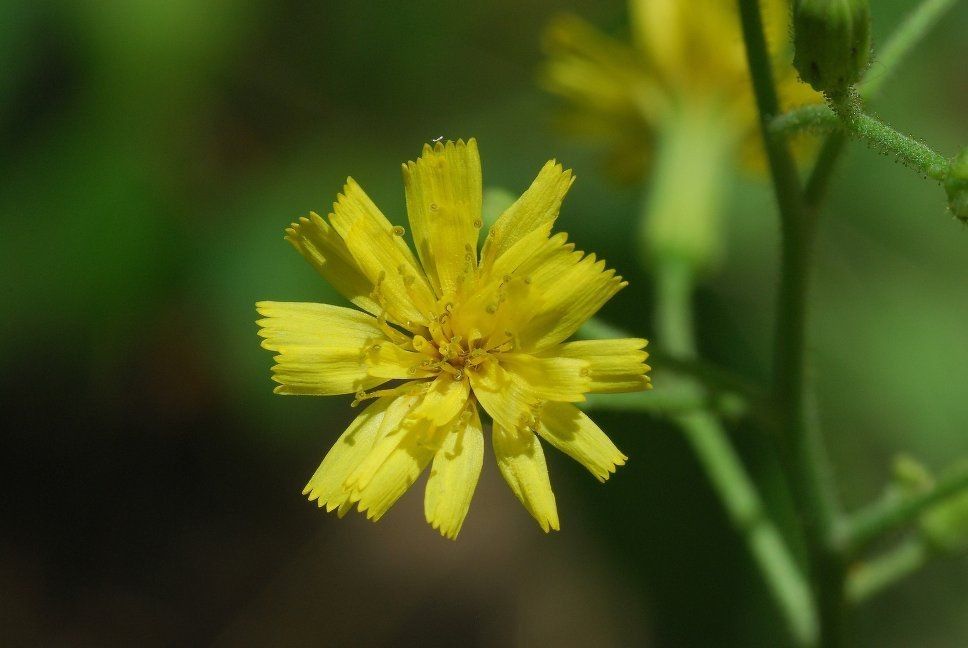
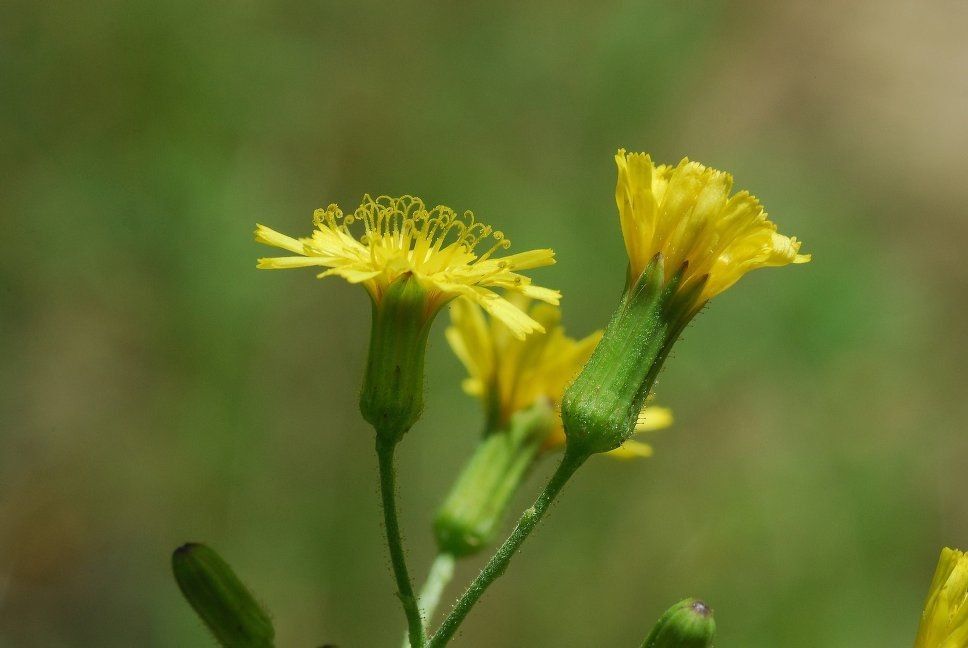
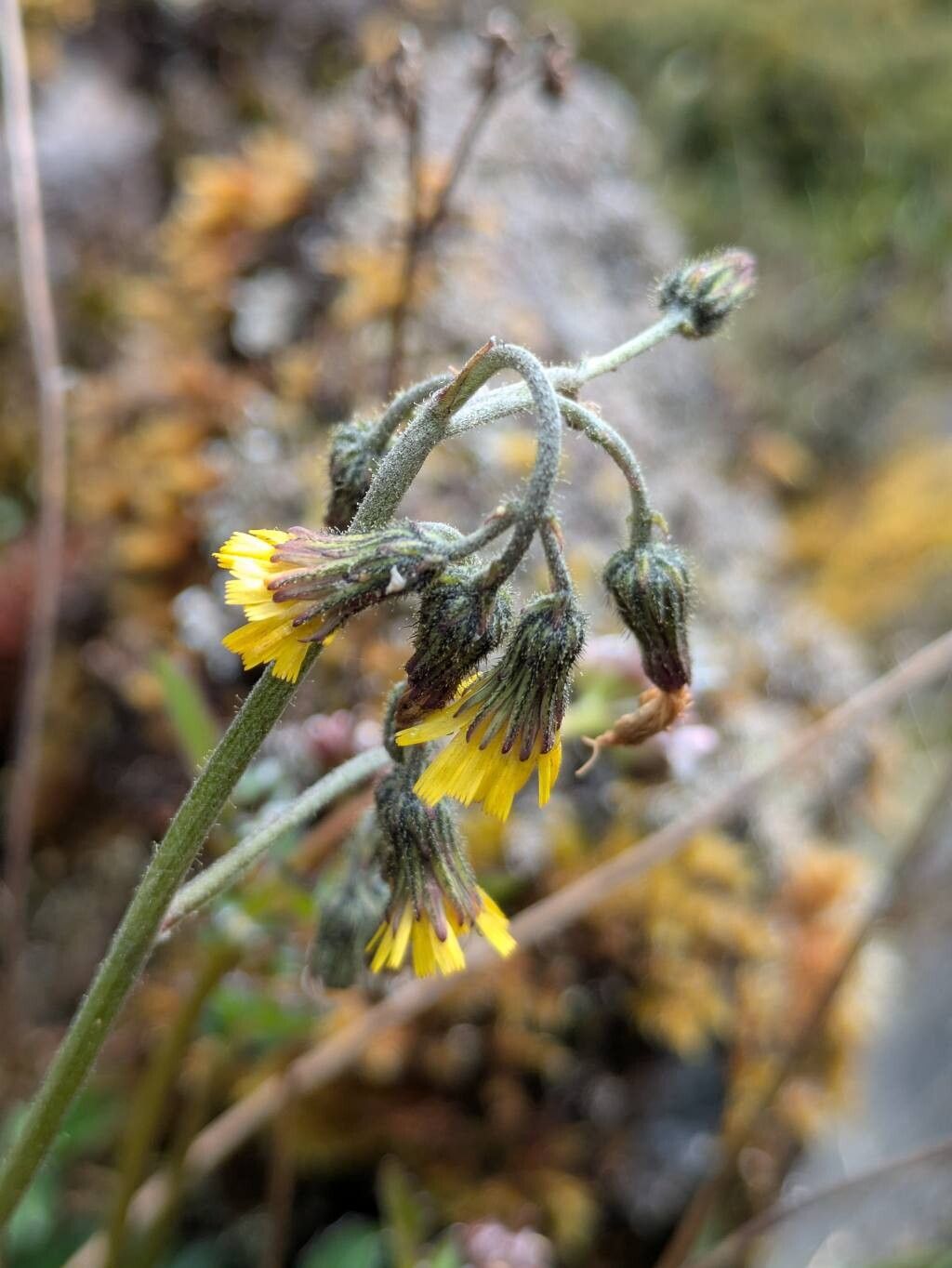
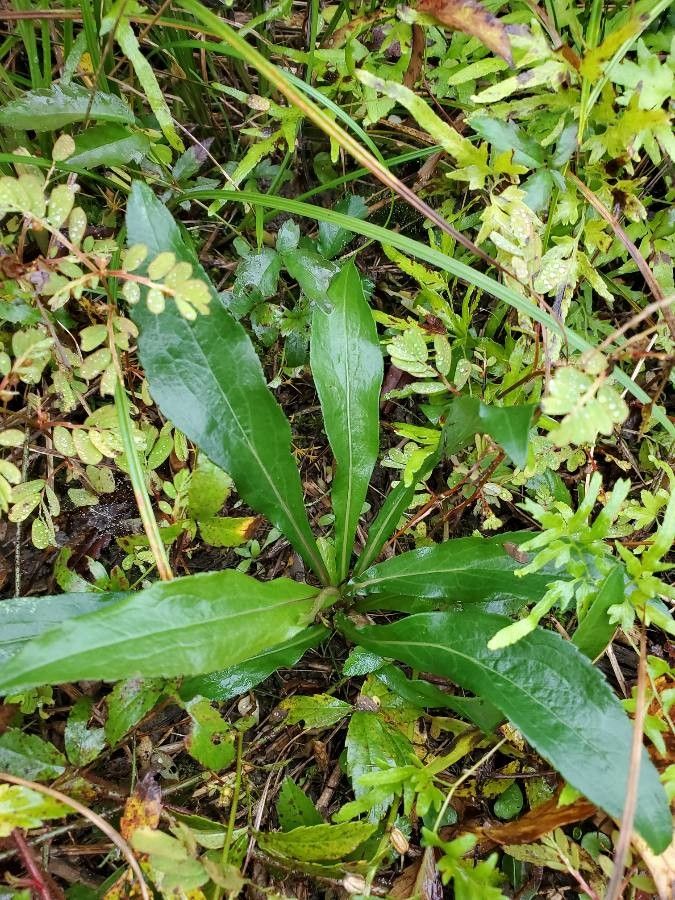
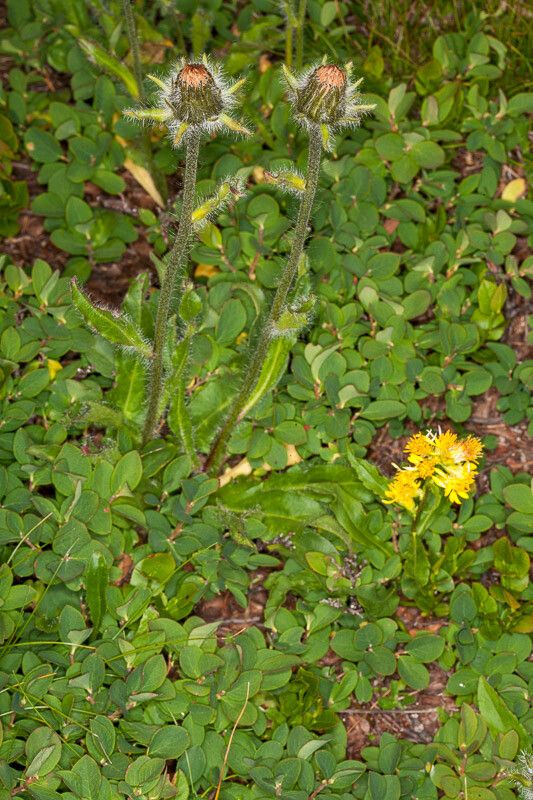
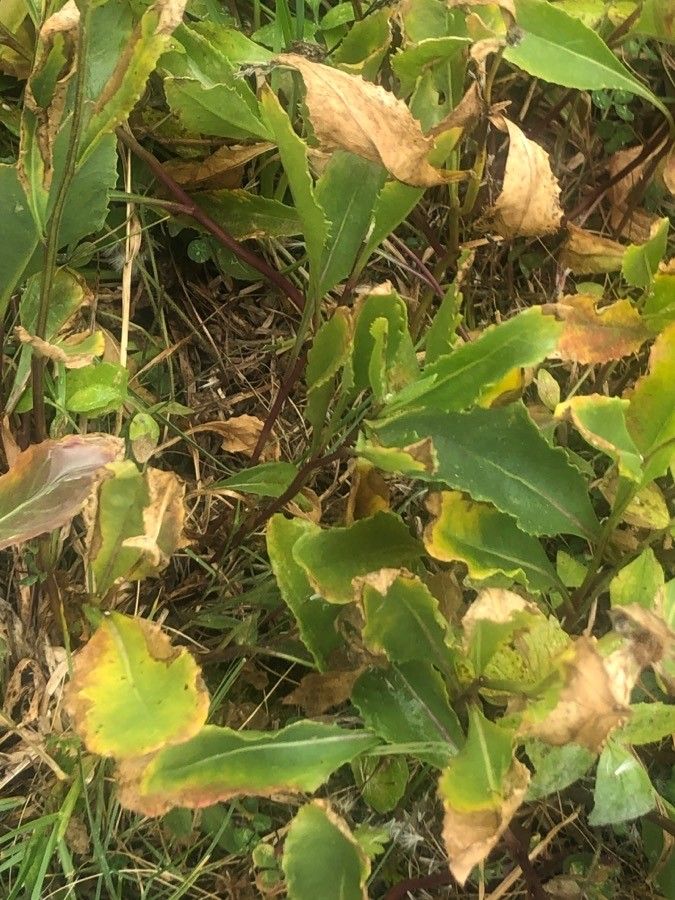
Hieracium gronovii or queendevil is a North American plant species in the tribe Cichorieae within the family Asteraceae. It is common and widespread across much of the continent from Ontario south as far as Florida, the Dominican Republic, and Panamá.Hieracium gronovii is an herb up to 80 cm (31 in) tall, with leaves mostly on the stem rather than in a rosette at the bottom. Leaves are up to 90 mm (3.5 in) long, with no teeth on the edges. One stalk will produce 5–50 flower heads in an elongated array. Each head has 12-20 yellow ray flowers but no disc flowers.
Rattlesnake hawkweed has good resistance to disease and is generally not prone to illnesses. However, it can be vulnerable to pests and diseases present in its environment. Such infections are generally not serious. Regarding care, this plant requires moderate maintenance. It should be pruned regularly to maintain an attractive appearance and healthy growth. Fertilizing can also help encourage flowering. Rattlesnake hawkweed is appropriate for anyone with outdoor space, such as a garden or patio, and does not demand extensive care experience. It may need more attention when cultivated indoors.
How to keep Hieracium Gronovii.
Light
The rattlesnake hawkweed flourishes in places where it gets a moderate amount of sunlight each day, which is common in its native habitat. Adequate sun exposure is crucial to its robust growth. Imbalanced exposure to sunlight might interfere with its progress and general well-being.
Temperature
Rattlesnake hawkweed is native to habitats where temperatures generally range from 32 to 77 °F (0 to 25 °C). It does best in these cooler conditions, so if grown in warmer areas it should be given shade to maintain its preferred temperature. Seasonal adjustments are usually unnecessary.
Fertilizer
The best period to fertilize a Rattlesnake hawkweed is in the early part of spring, as it moves out of dormancy and begins to actively grow. This process delivers essential nutrients for its optimal growth. Even though the Rattlesnake hawkweed doesn't require much fertilization, applying it annually can improve its lifespan and promote the production of more durable, longer-lasting flowers.
Pruning
Queen-devil plants flourish when regularly pruned. This process involves removing spent blooms and weak stems to encourage denser foliage and more vibrant flowers. Pruning is best carried out between early and late spring, as it also boosts air circulation and lowers the risk of disease. Be sure to use clean tools for optimal results.
Botanical profile.
- Plant Type
- Herb
- Life Cycle
- Perennial
- Genus
- Hieracium
- Family
- Compositae
- Hardiness Zone
- 3
- Mature Height
- 40 cm
- Mature Spread
- 20 cm
- Leaf Color
- Yellow, Gold, Purple, Lavender
- Leaf Type
- Evergreen
- Flower Color
- Yellow, Gold
- Flower Size
- 2.54 cm
- Bloom Time
- Early summer, Mid summer
- Planting Time
- Spring, Summer, Autumn
- Harvest Time
- Mid summer, Late summer
Other names.
Reader questions.
What are the sunlight requirements for Hieracium gronovii (Queen-devil)?
Hieracium gronovii, commonly known as Queen-devil, thrives under two different sunlight conditions, depending on your garden's layout and the specific needs of the plant. For full sun exposure, ensure the plant receives above 6 hours of sunlight daily, which is crucial for its optimal growth and flowering. If your garden has areas with partial sun, the Queen-devil can still flourish with about 3-6 hours of sunlight. It's important to observe the patterns of sunlight movement through your garden to identify spots that offer the ideal balance of light and shade, ensuring your Queen-devil plants are happy and healthy.