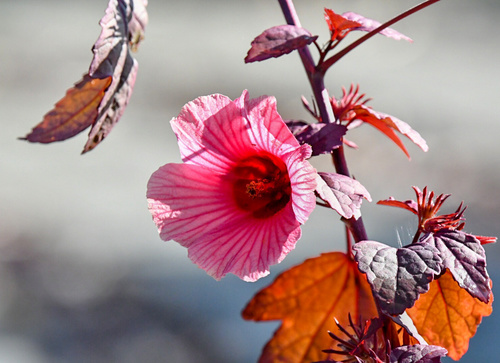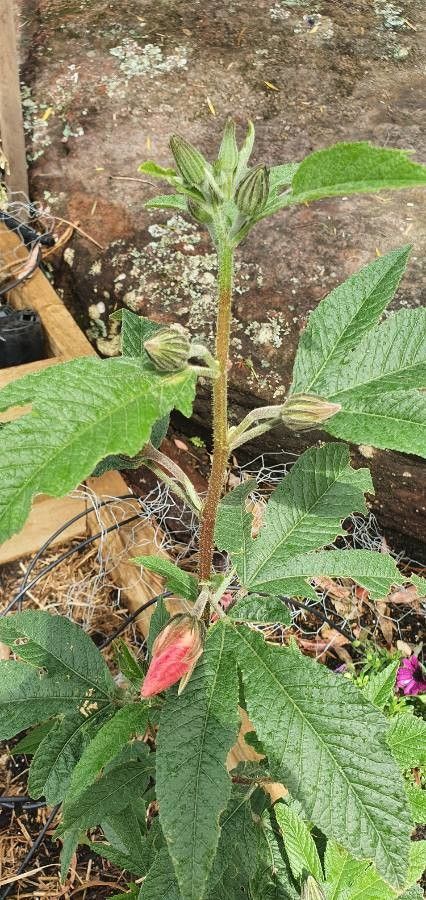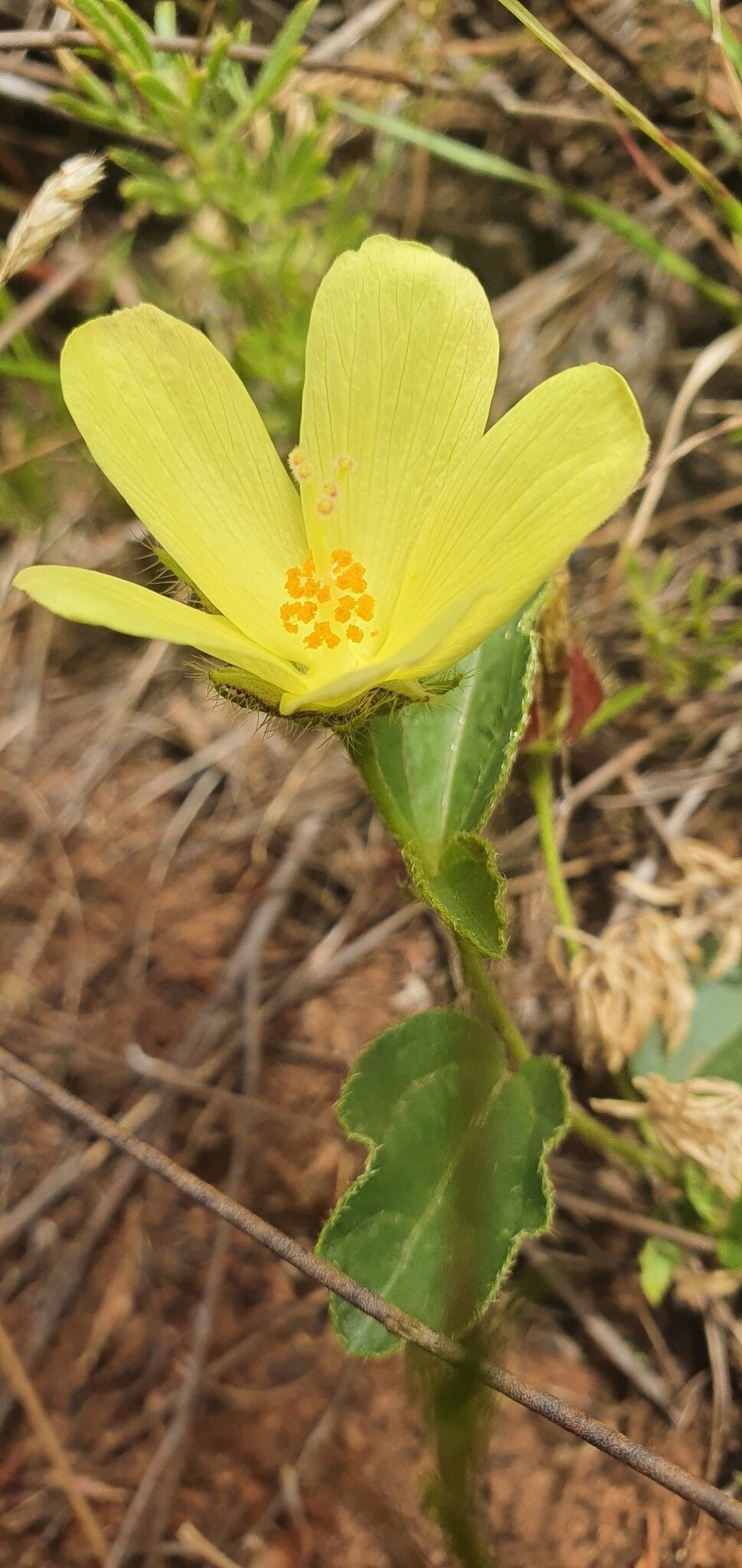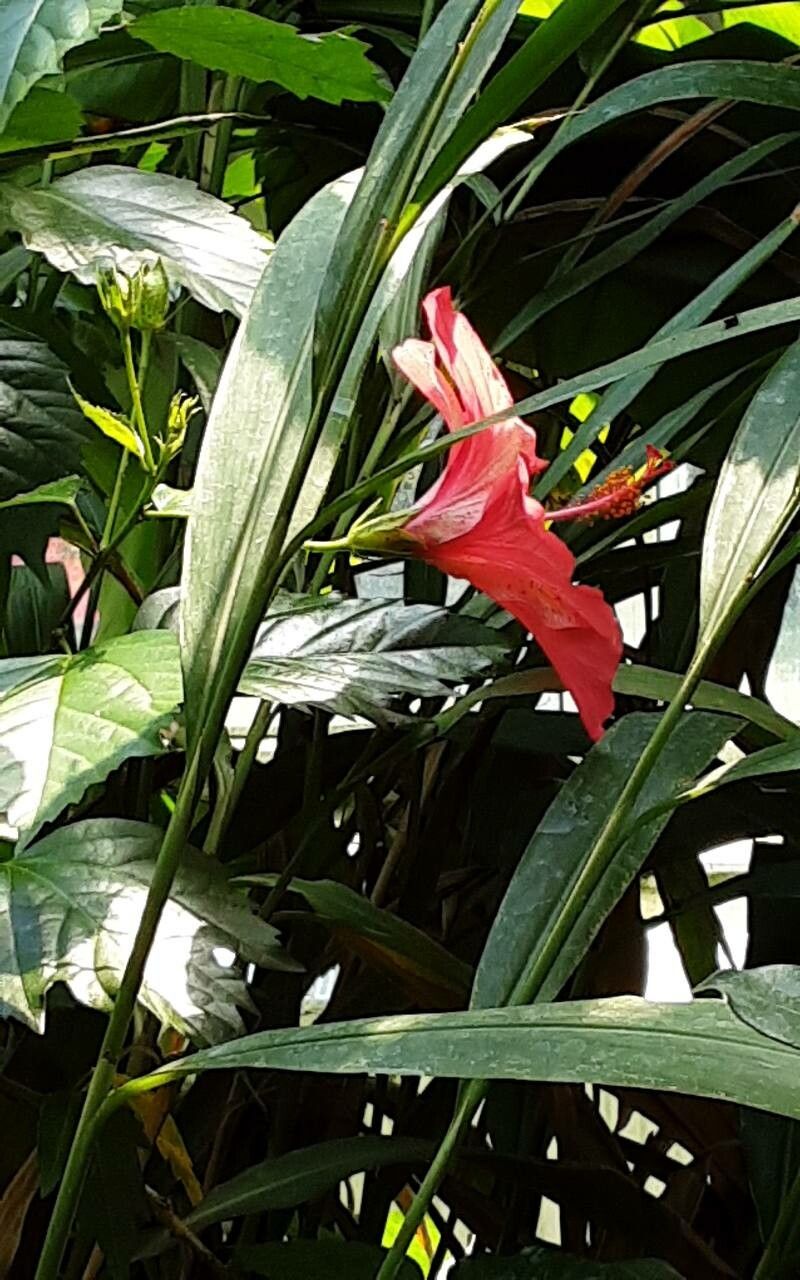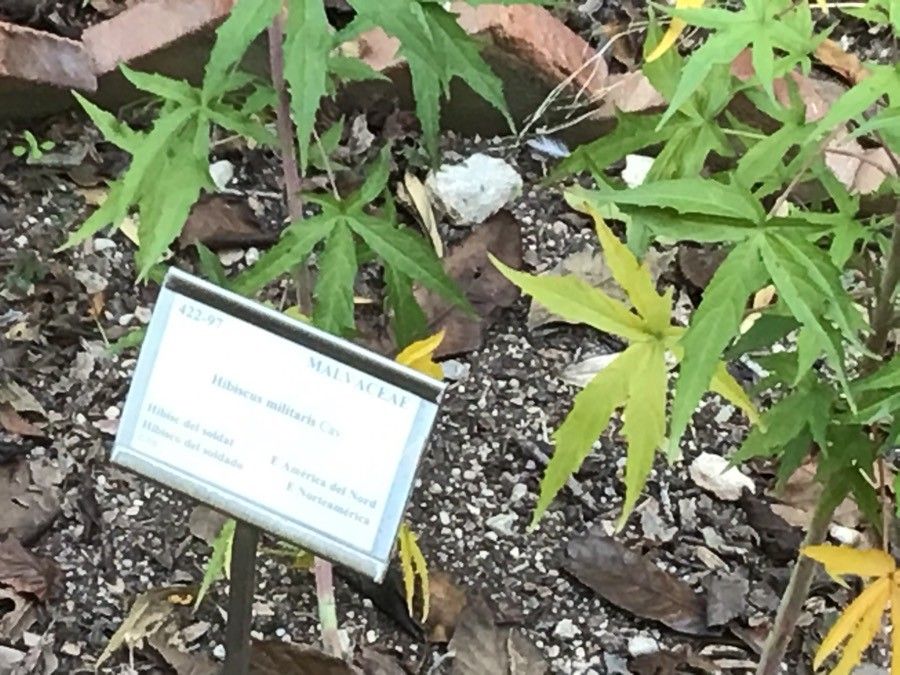
Hibiscus laevis (syn. Hibiscus militaris), the halberd-leaf rosemallow, is a herbaceous perennial flower native to central and eastern North America. Their showy, creamy-white or pink flowers are large, up to 15 centimetres (6 in) across, and are hard to miss. These flowers require exposure to sunlight to open up properly, and then last only a single day. The unbranched stems of this plant are round and hairless, frequently growing to 2 metres (6 ft) tall and sometimes taller. The root system includes a taproot. The hairless leaves are alternate, 8 to 15 centimetres (3 to 6 in) long, divided into 3–5 pointed lobes (cleft) and have serrate or crenate edges. They are simple and pointed at the tip. The leaves with three lobes resemble a medieval halberd because the middle lobe is much larger than the two side lobes. The five-lobed leaves also look like halberds or daggers. Flowers are solitary or occur in small clusters at the tops of the upper stems. They are fairly large, about 13 centimetres (5 in) across when fully open. They are mostly white or light pink, but the inside throat of the flower is often maroon or a rich purplish pink color. Each flower has five petals with five hairless green sepals below. There are numerous stamens, all attached to a central column. The pistils have superior ovaries and five stigmas protruding from the central column in the flower. The fruit is an ovoid capsule containing many seeds. The blooming period can occur from mid-summer to early fall (June to September) and lasts about a month. Each flower lasts only a single day. This plant spreads by reseeding itself. The stalks die down in the winter and grow back in the spring. This plant prefers full or partial sun and moist conditions. It can grow in sand or clay with sufficient moisture, and can tolerate poor drainage. They are frequently found along streams, ponds and lakes and in marshy areas, roadside ditches, and sometimes in shallow standing water. The seeds of this plant are eaten by waterfowl and bobwhite quail.
Halberd-leaf rosemallow is fairly disease-resistant and generally not prone to illnesses. However, it can be affected by pests and diseases present in its surroundings. These infections are typically not severe. In terms of care, this plant needs moderate maintenance. It should be pruned regularly to maintain a neat appearance and healthy growth. Fertilizing can also help promote flowering. Halberd-leaf rosemallow is suitable for anyone with outdoor space, such as a garden or patio, and does not demand extensive care experience. It may require more attention when grown indoors.
How to keep Hibiscus Militaris.
Light
The Halberd-leaf rosemallow thrives in locations with plenty of sun and adapts reasonably well to places with limited sunlight. Its robust health and flowering are a result of its original environment that was rich in sun exposure. The plant may encounter difficulty in growth and blooming if it's subjected to either insufficient or too much sunlight.
Temperature
The halberd-leaf rosemallow thrives in areas with temperature variations between 59 and 100 ℉ (15 to 38 ℃). This temperature bracket ensures its best growth and it may suffer in environments that are either too cold or too warm. In the winter season, it is advisable to regulate indoor temperatures to approximately 60 to 70 ℉ (15 to 21 ℃) to reproduce the conditions of its original habitat.
Fertilizer
Typically, a one-time fertilization in the spring is enough for Halberd-leaf rosemallow. However, feeding it multiple times can optimize its growth. Fertilize once every month to six weeks. The act of fertilizing not only improves leaf aesthetics and performance, encouraging steady color and a healthy feel, but it also triggers the growth of roots and the absorption of nutrients, contributing to the plant's overall well-being in the long run.
Pot & Repot
While repotting the Halberd-leaf rosemallow, select a pot that is 1-2 inches (2.5-5 cm) wider and has sufficient drainage. Employ a potting mix that drains well. Do the repotting in the spring or autumn, making sure to keep the root ball a bit below the edge of the flower pot. Drench thoroughly post-repotting and situate it in a warm location with soft sunlight.
Botanical profile.
- Plant Type
- Herb
- Life Cycle
- Perennial
- Genus
- Hibiscus
- Family
- Malvaceae
- Hardiness Zone
- 7-11
- Mature Height
- 2.13 m
- Mature Spread
- 61 cm to 91 cm
- Leaf Color
- Green
- Leaf Type
- Deciduous
- Flower Color
- Pink, White
- Flower Size
- 12.70 cm
- Bloom Time
- Early summer, Mid summer
- Planting Time
- Spring, Autumn
- Harvest Time
- Mid summer, Late summer, Early fall