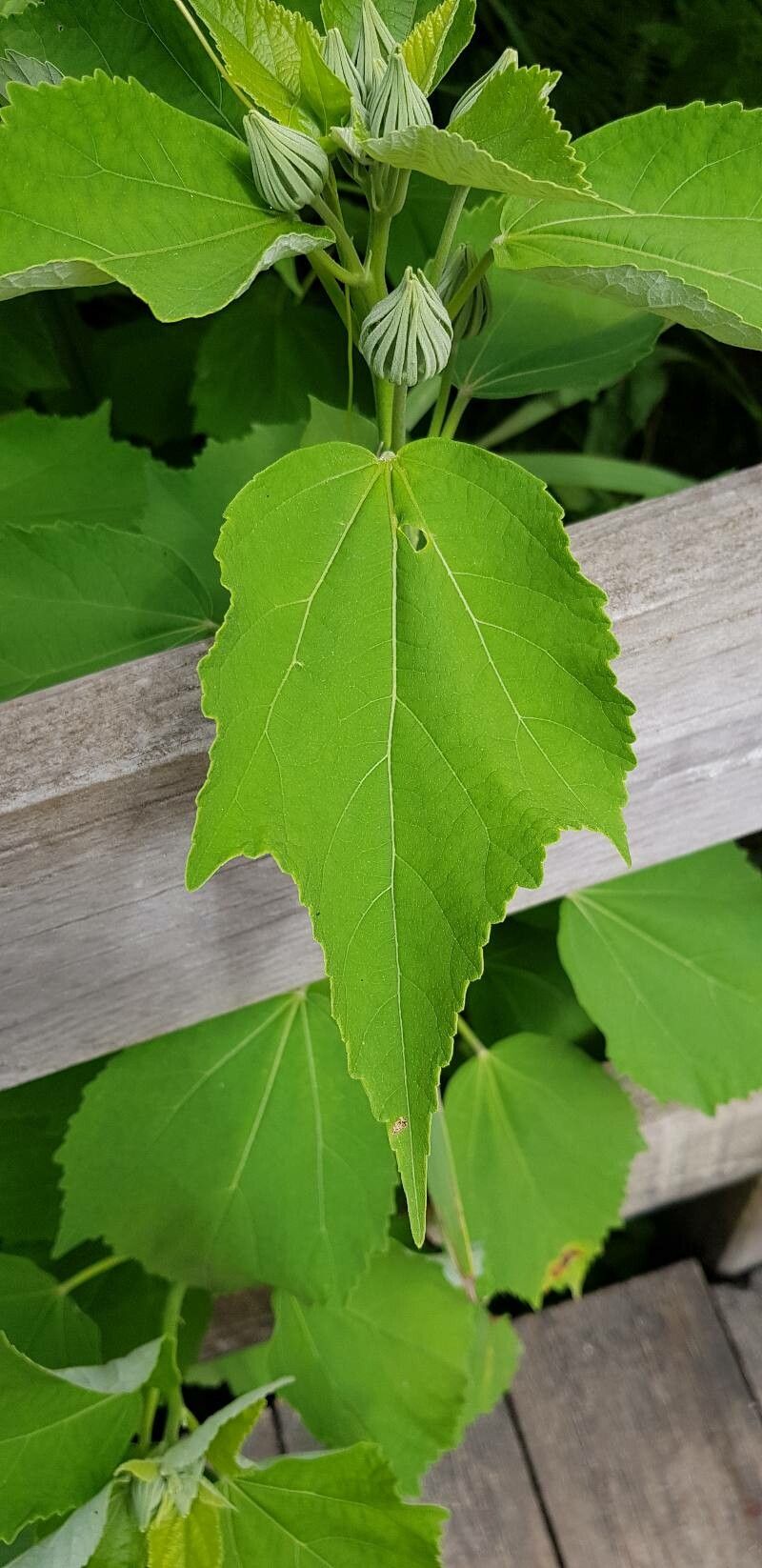
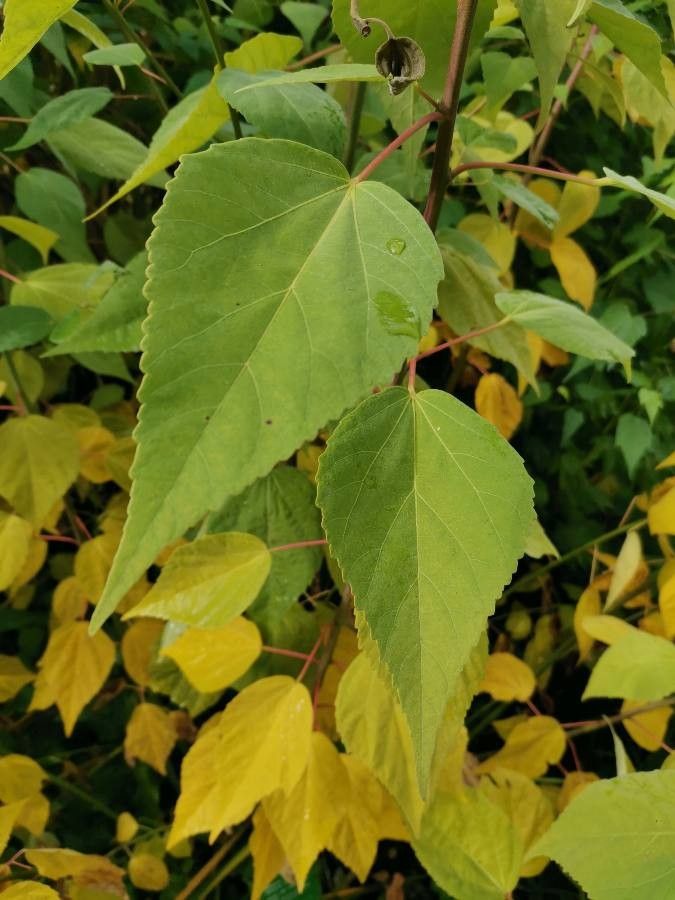
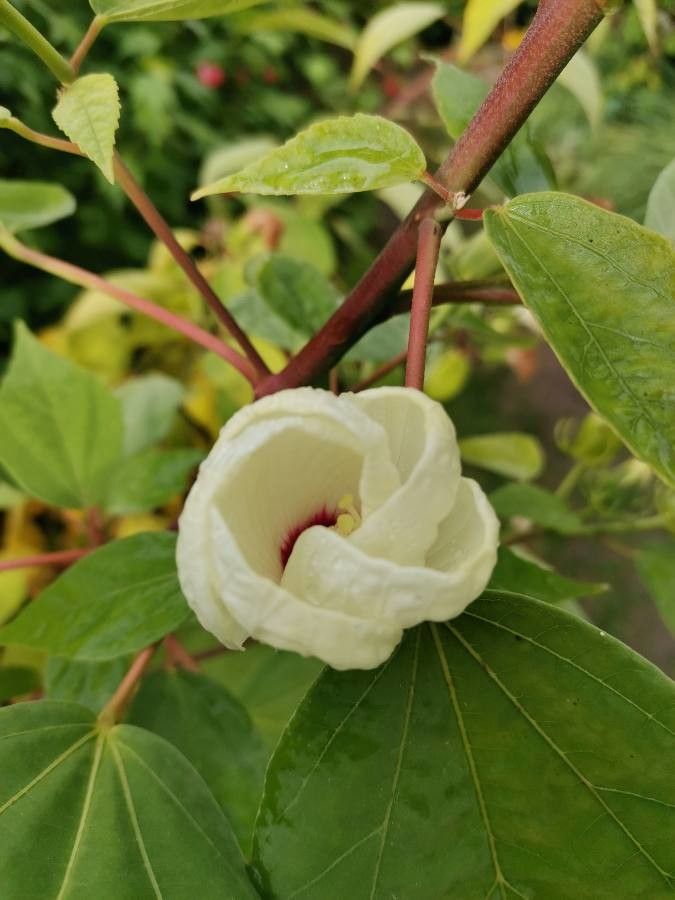
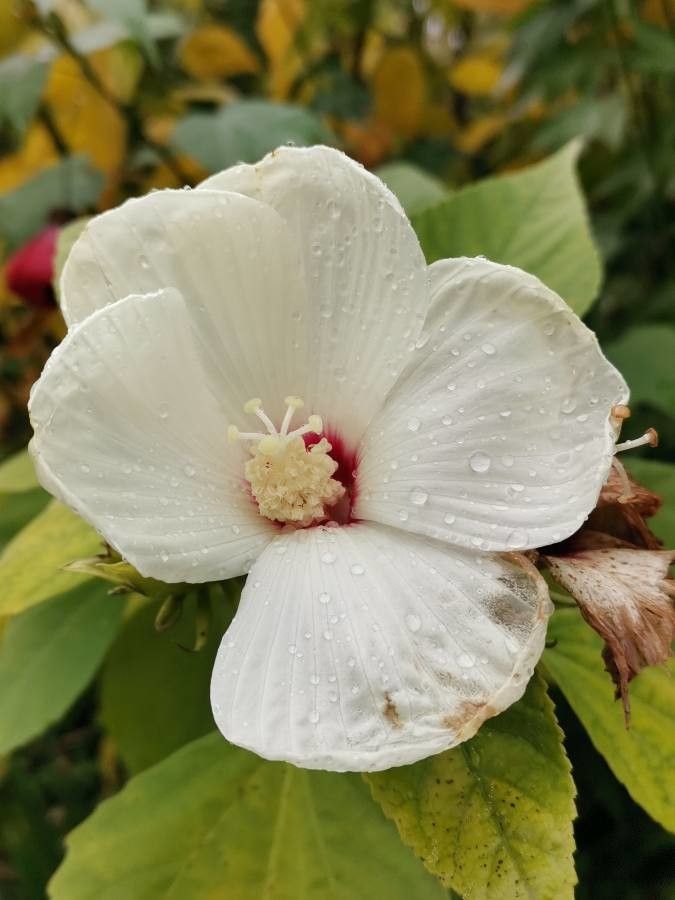
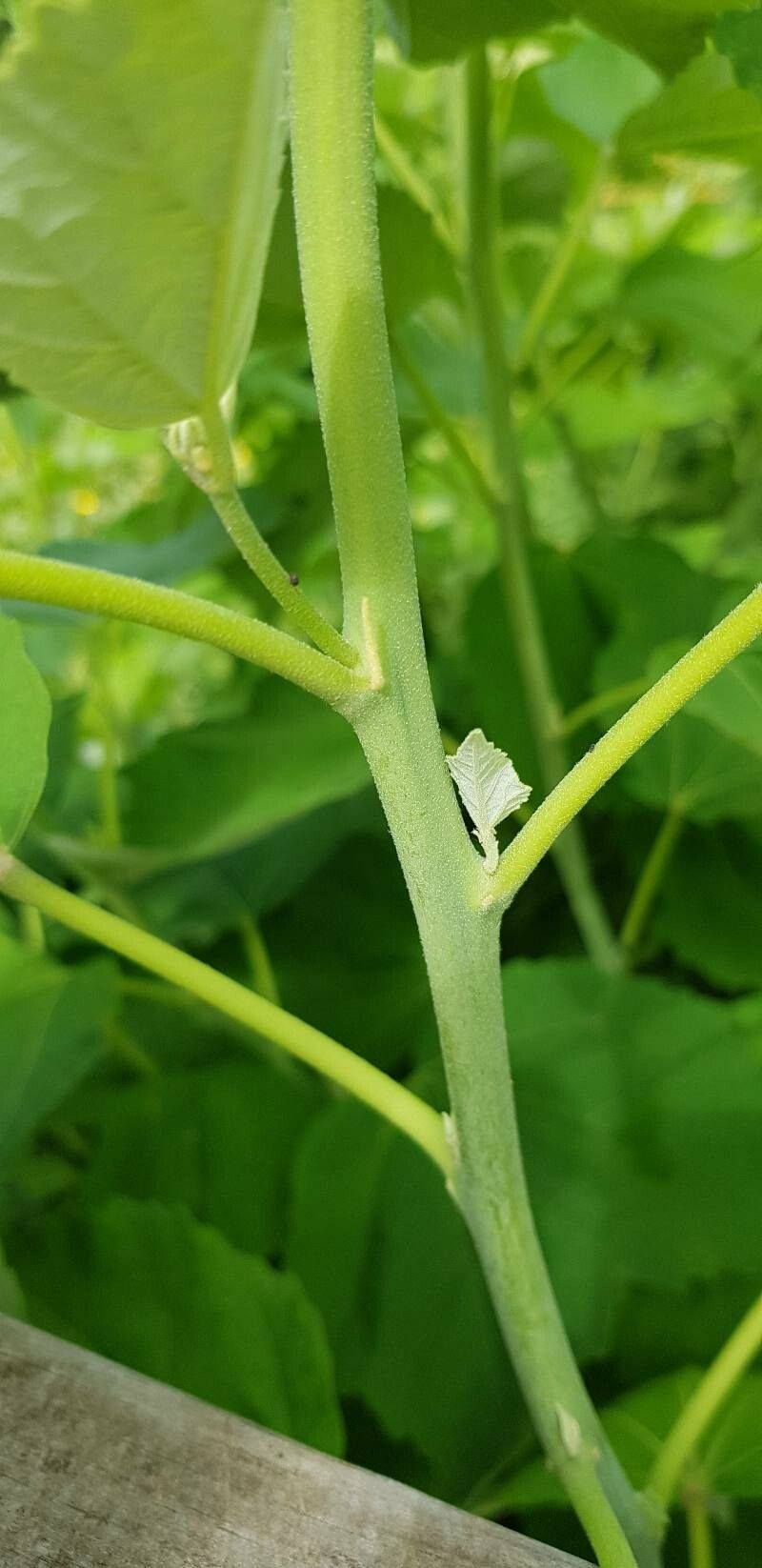
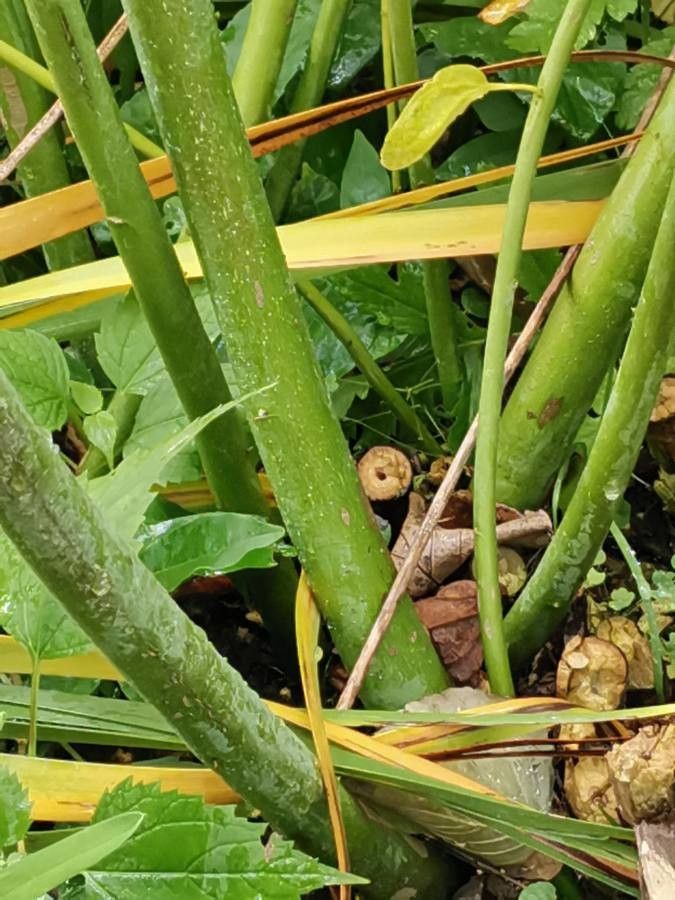
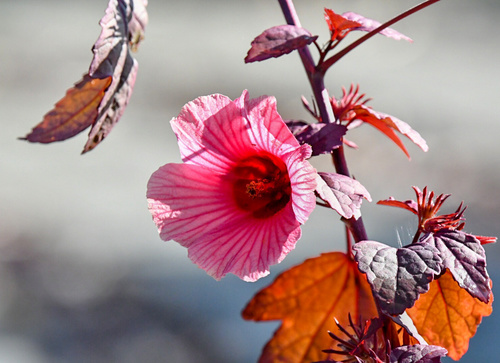
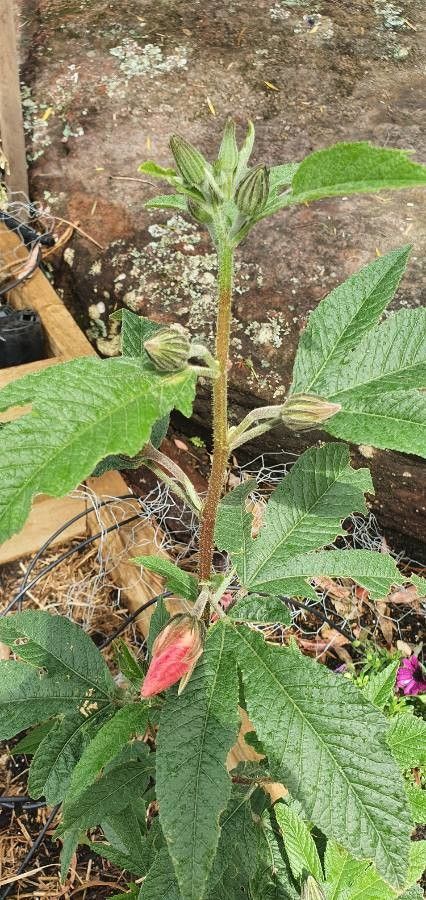
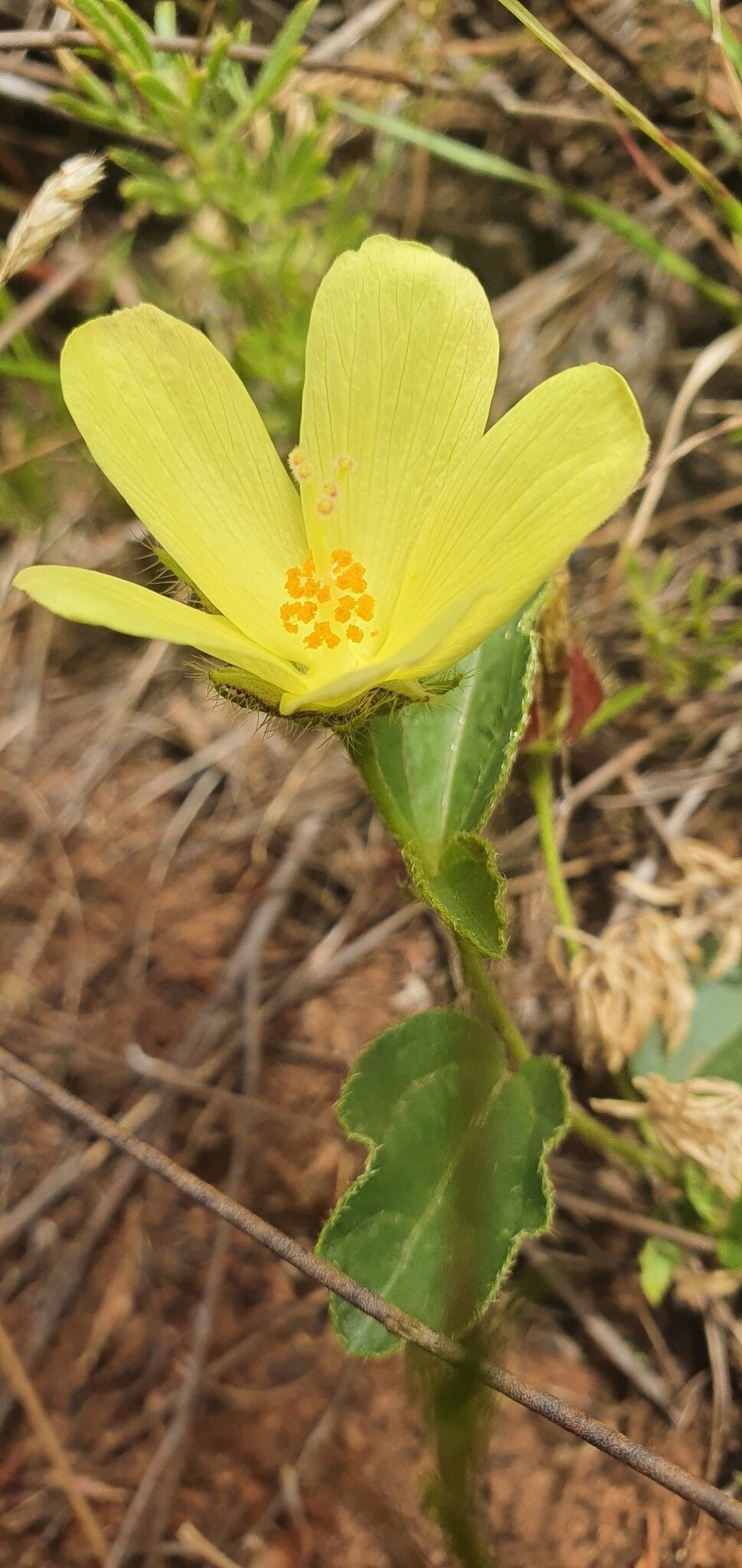
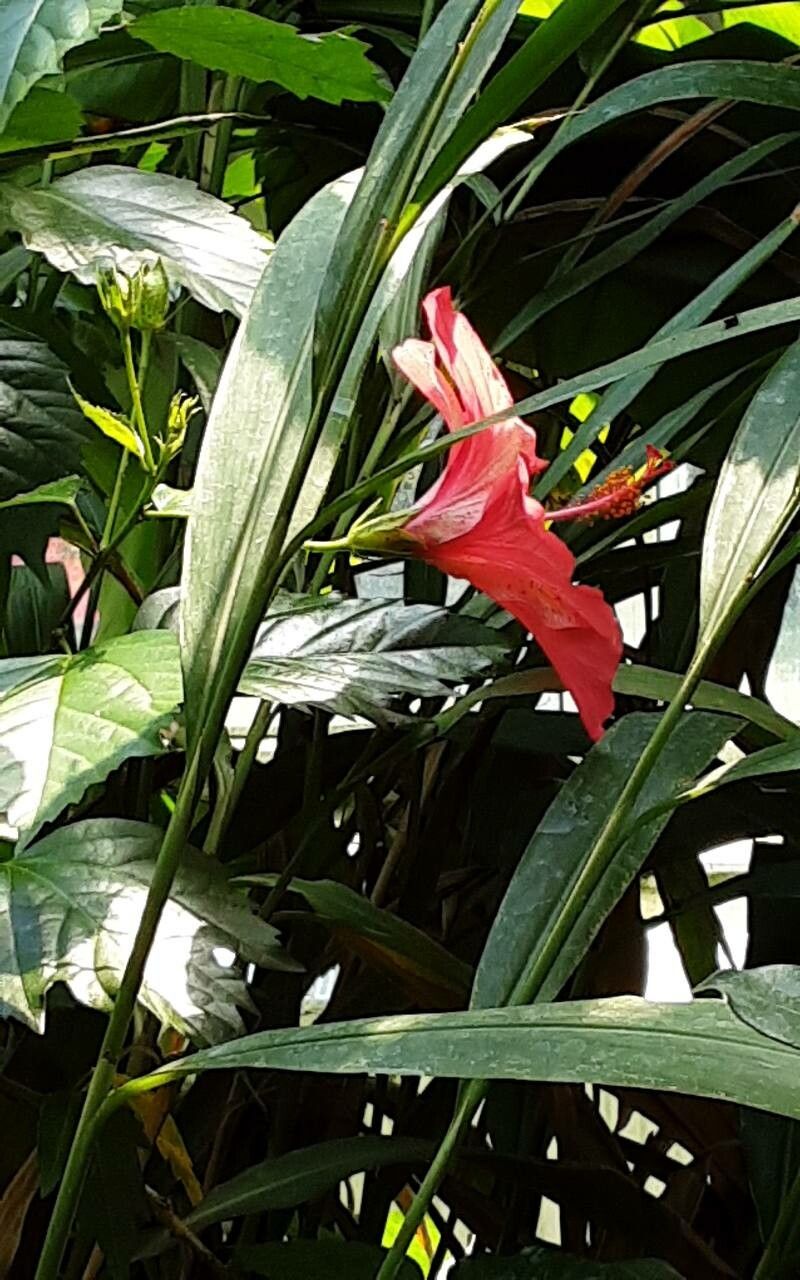
Hibiscus lasiocarpos (also, H. lasiocarpus orth. var.) is a species of hibiscus known by the common name hairy-fruited hibiscus. It is also one of several hibiscus called rosemallow. It is native to much of the southeastern United States, as well as parts of California and northern Mexico. It is a large, bushy perennial herb with sprawling stems reaching one to two meters long. The leaves are heart-shaped, toothed, and pointed, and generally between 6 and 10 centimeters long. The inflorescence holds large showy, solitary flowers. Each flower has a cup of partly fused sepals beneath a layer of slender bracts. These may be covered in hairs or woolly fibers. The flower's large petals may be up to 10 centimeters long and are generally bright white with red bases. The stamen tube and anthers are white or cream. The fruit is a capsule 2.5–3 centimeters long containing spherical seeds.
Wooly rose-mallow is fairly disease-resistant and generally not prone to illness. That said, it can be vulnerable to pests and diseases present in its environment, though these problems are typically not severe. Regarding care, this plant needs moderate maintenance. Regular pruning is required to preserve a neat appearance and healthy growth. Fertilizing can also help encourage flowering. Wooly rose-mallow is suitable for anyone with outdoor space, such as a garden or patio, and does not demand much prior care experience. It may need extra attention when grown indoors.
How to keep Hibiscus Lasiocarpos.
Light
The wooly rose-mallow is a perennial herbaceous plant that flourishes in the sun and hails from open environments, frequently prospering in grasslands and meadows. It has a preference for full sunlight but is also able to endure conditions of partial sunlight.
Temperature
The Wooly rose-mallow is capable of adjusting to diverse thermal conditions, however, varying permutations of heat and water conditions may still curtail its dispersion. The plant flourishes optimally in summer’s warm climates that also have sufficient rain or irrigation. Extended spans of overcast or soggy weather, along with persistent high temperatures, have the potential to heighten the chances of the Wooly rose-mallow’s demise. Giving it appropriate shielding from the cold in winter enhances the plant's chances of survival.
Fertilizer
The optimal period to provide nourishment to a Wooly rose-mallow is during the early spring, as it transitions from dormancy into active growth. This fertilization supplies essential nutrients for its robust development. Despite the Wooly rose-mallow's comparatively low fertilizer requirements, administering it annually can bolster its longevity and encourage improved, more enduring blossoms.
Botanical profile.
- Plant Type
- Herb
- Life Cycle
- Perennial
- Genus
- Hibiscus
- Family
- Malvaceae
- Hardiness Zone
- 5-9
- Mature Height
- 0.91 m to 1.83 m
- Mature Spread
- 0.61 m to 1.22 m
- Leaf Color
- Green, Dark Green
- Leaf Type
- Deciduous
- Flower Color
- White
- Flower Size
- 15.24 cm to 20.32 cm
- Bloom Time
- Summer, Early fall
- Planting Time
- Spring, Summer
- Harvest Time
- Fall
- Native Area
- Mexico
Other names.