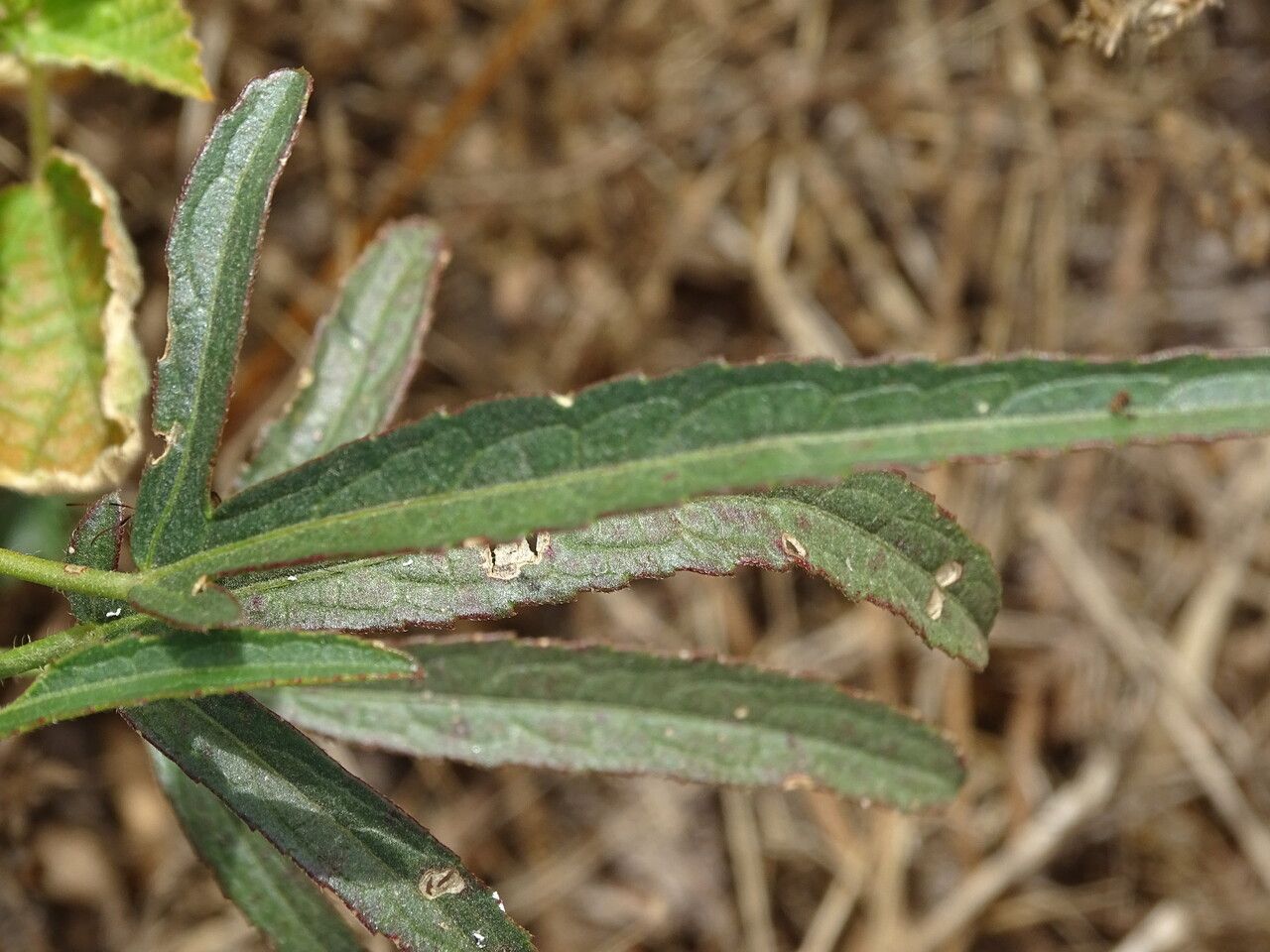
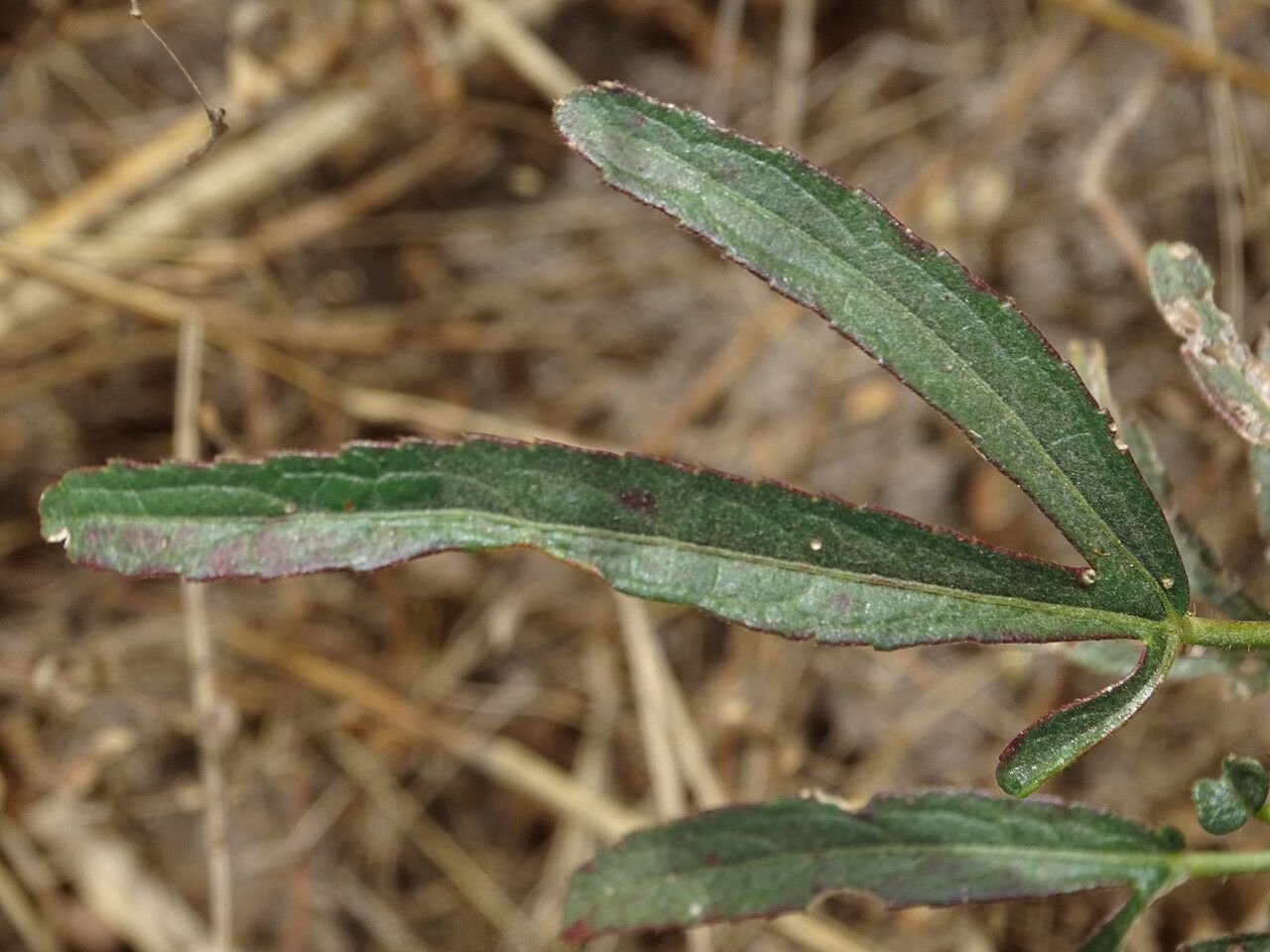
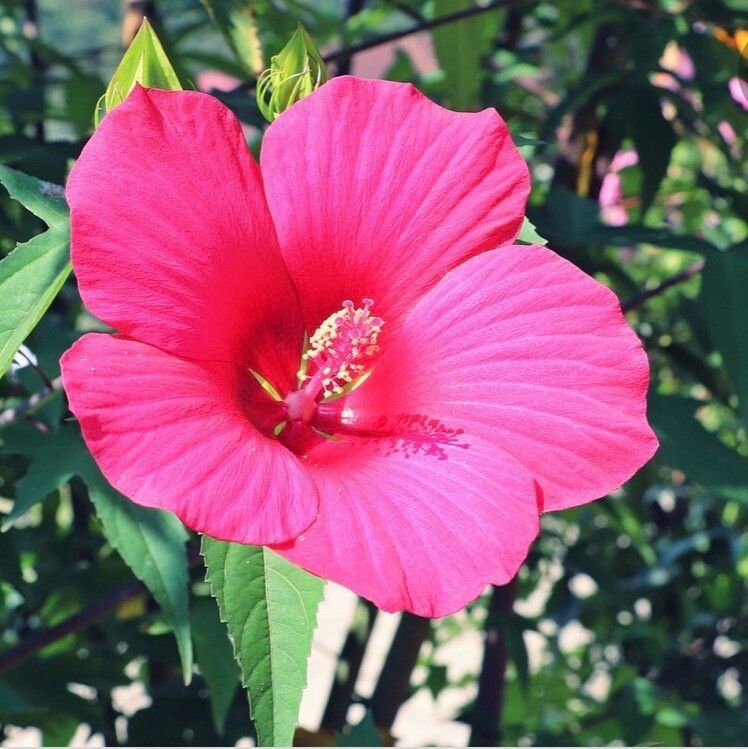
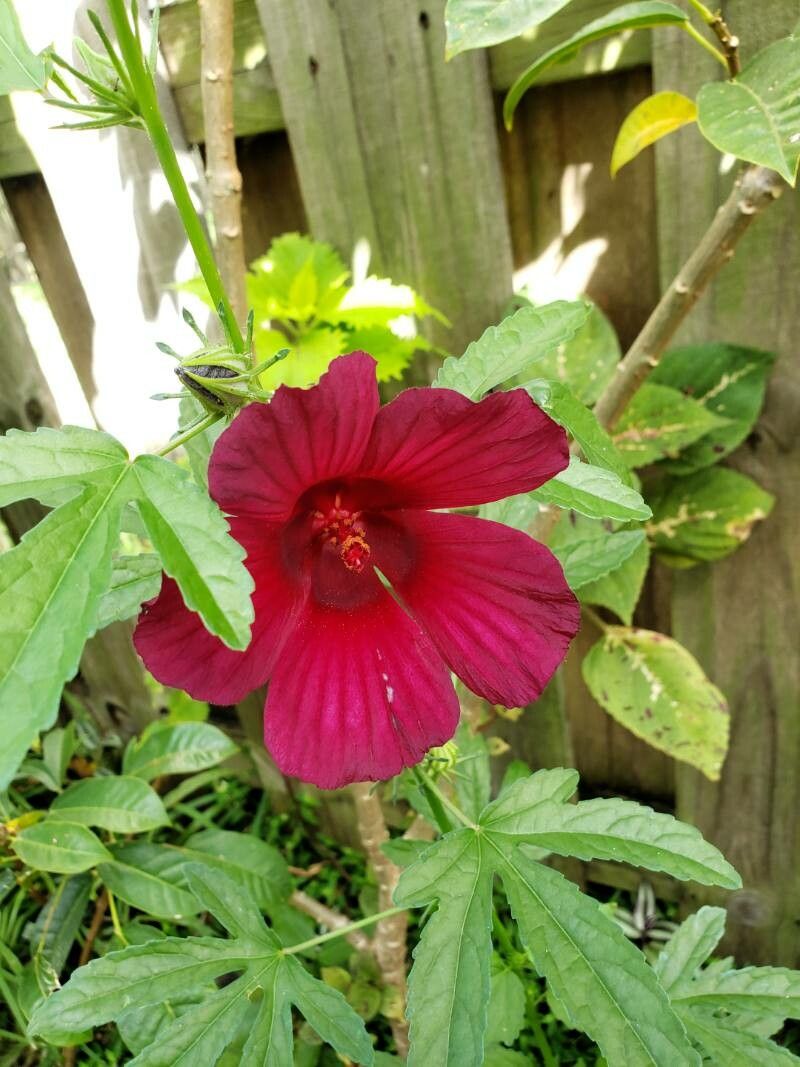
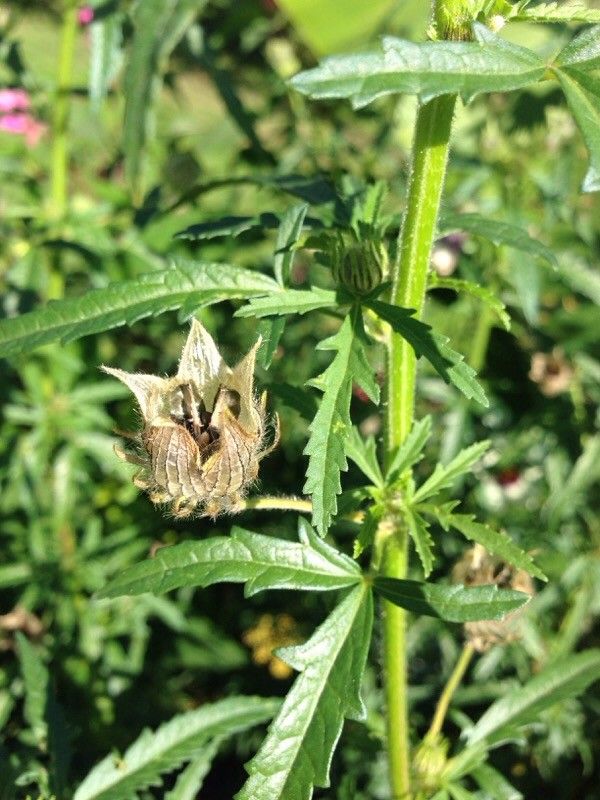
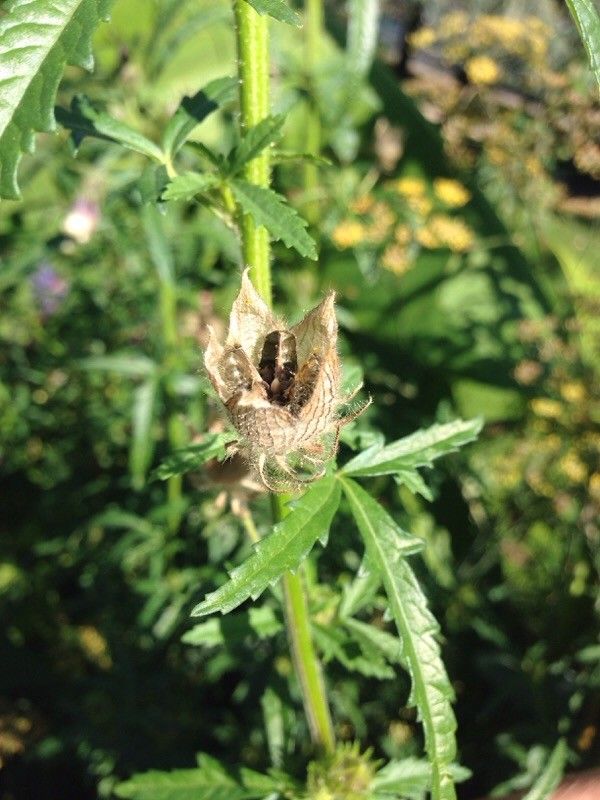
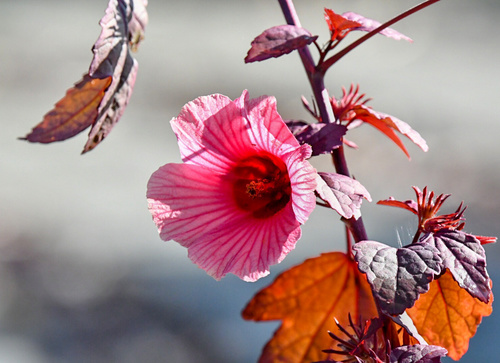
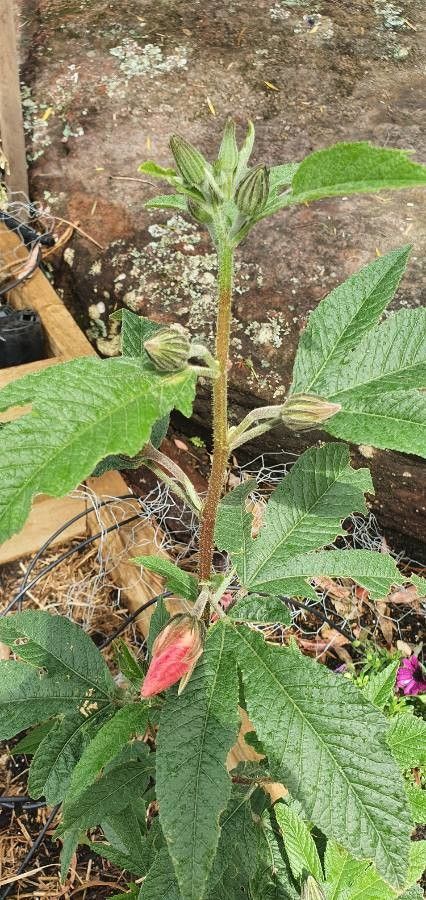
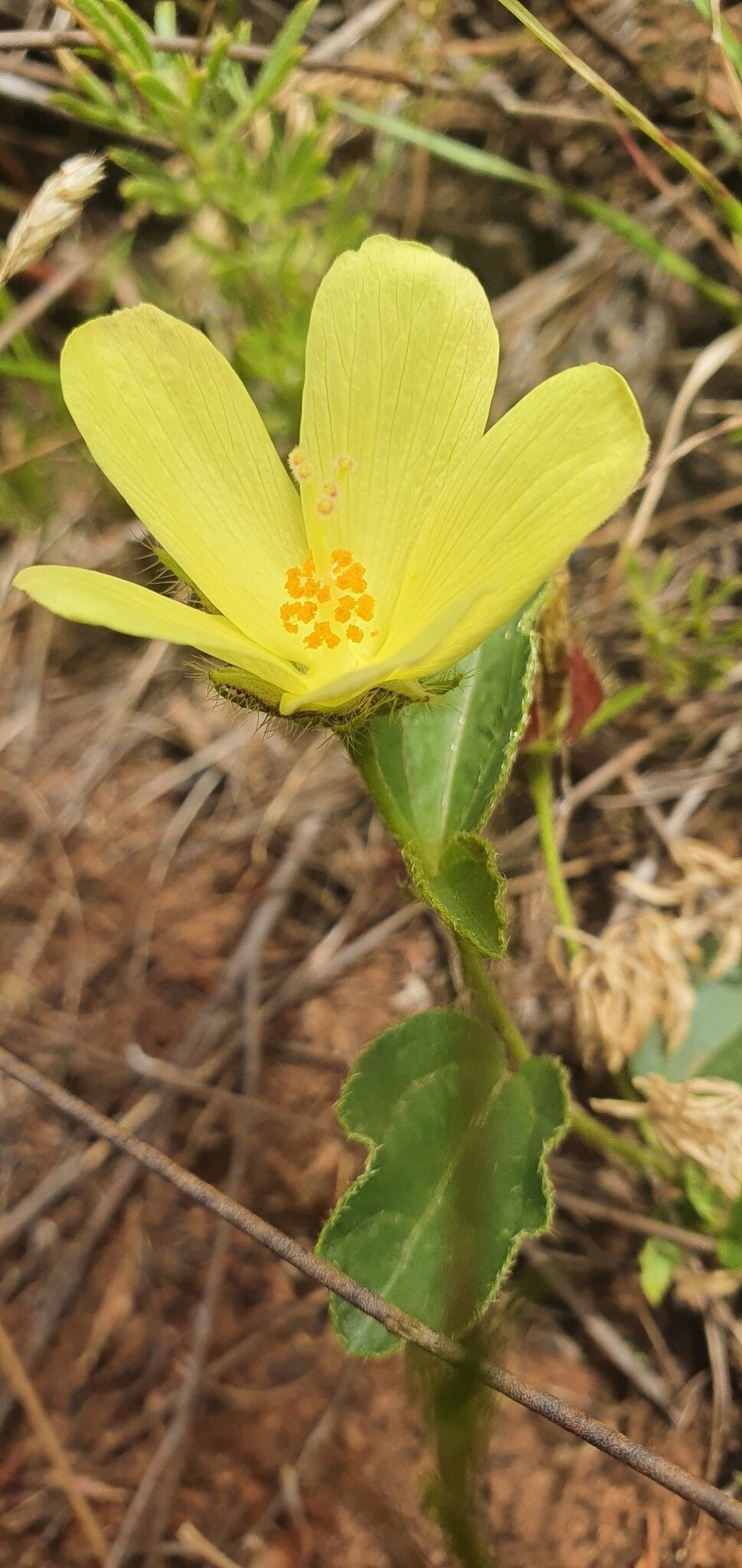
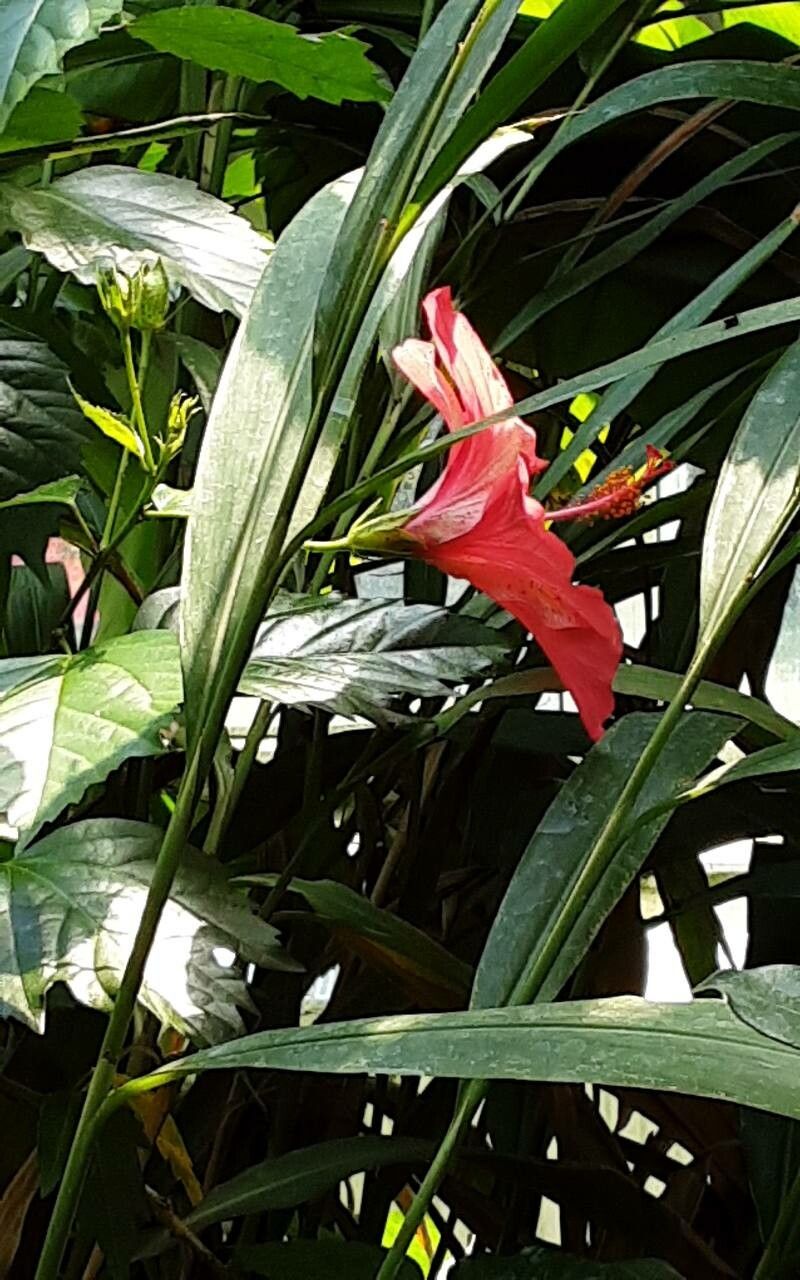
Hibiscus cannabinus, commonly known as kenaf, is a fast-growing annual plant within the Malvaceae family. Native to Africa and Asia, it has been extensively cultivated worldwide for its fiber and oil. The plant can reach up to 4 meters in height, with a straight stem up to 5 cm in diameter. The leaves of Hibiscus cannabinus are simple, alternate, and palmately lobed with serrated edges. Its large, showy flowers have five petals that vary in color from white to yellow or pinkish-red. These flowers bloom from summer through fall. The primary use of Hibiscus cannabinus is for its fiber, which is obtained from the stem's bark through a process called retting—soaking the bark in water until it separates easily from the woody core. The fibers are then processed into various products, such as paper, textiles, cordage, and insulation materials. In addition to its fiber content, Hibiscus cannabinus also produces oil that can be extracted by crushing its seeds. This oil has several industrial applications, including use as a lubricant for machinery and as a biofuel. Traditionally, Hibiscus cannabinus has been used for medicinal purposes, such as treating fever and inflammation, due to its anti-inflammatory properties. However, more research is needed to fully understand these medicinal uses. Overall, Hibiscus cannabinus is an important crop because it provides an eco-friendly alternative to synthetic materials like plastic. Its versatility, including its potential for biofuel production, makes it a valuable crop worth cultivating on a large scale.
Kenaf is fairly disease-resistant and typically does not suffer from many illnesses. Still, it can be affected by pests and diseases present in its environment. Such infections tend to be mild. Regarding maintenance, this plant needs a moderate level of care. It should be pruned on a regular basis to preserve a neat appearance and encourage healthy growth. Applying fertilizer can also assist in enhancing flowering. Kenaf is appropriate for anyone who has an outdoor area, like a garden or patio, and does not demand extensive plant-care experience. When cultivated indoors, it may need more attention.
How to keep Hibiscus Cannabinus.
Light
Kenaf grows best in locations with full sun, which promotes healthy development; however, it can also tolerate areas receiving only partial sun during the day. Its native growing conditions indicate a preference for plentiful sunlight. Too little light can restrict its growth, while excessive exposure may harm the plant.
Water
Kenaf thrives in tropical, humid climates and requires balanced moisture to grow well. Weekly watering is recommended to maintain this balance, as kenaf is an evergreen herb that keeps its leaves all year round. Consistent hydration is necessary even during cooler seasons.
Temperature
Kenaf comes from tropical areas where the climate is generally warm and humid. As a result, it is well suited to high temperatures and humidity. It is sensitive to sudden temperature changes and prefers a stable temperature, so indoor temperature fluctuations should be avoided. It usually does not tolerate cold and requires higher temperatures to grow. If the environmental temperature falls too low, the plant may stop growing or even die.
Fertilizer
When most of Kenaf's blooms have fully opened, resume fertilizing. During the peak bloom period, apply fertilizer every three to four weeks, weather permitting. After Kenaf begins to produce fewer new blooms, stop fertilizing; there's no need to feed the plant when it can no longer produce more blooms.
Pruning
Kenaf thrives when given proper care, particularly through regular pruning from early to late spring. To improve air circulation, remove dead branches and thin out crowded areas. Pruning about one-third of the oldest stems each year encourages growth and flowering, resulting in a healthier and more productive plant.
Botanical profile.
- Plant Type
- Herb
- Life Cycle
- Annual
- Genus
- Hibiscus
- Family
- Malvaceae
- Hardiness Zone
- 6-12
- Mature Height
- 1.52 m to 3.35 m
- Mature Spread
- 7.32 m to 14.33 m
- Leaf Color
- Green
- Leaf Type
- Evergreen
- Flower Color
- White, Yellow, Pink
- Flower Size
- 7.62 cm to 15.24 cm
- Bloom Time
- Mid summer, Late summer, Early fall, Mid fall
- Planting Time
- Spring, Summer, Autumn
- Harvest Time
- Fall
- Native Area
- Burkina Faso, Somalia, Angola, Namibia, Madagascar, Rwanda, Eritrea, Nigeria, Yemen, Kenya, Niger, Uganda, Tanzania, Zimbabwe, Mali, Guinea-Bissau, Benin, Sierra Leone, Cameroon, Burundi, Mozambique, Ghana, Ethiopia, Botswana, Congo, Central African Republic, Malawi, South Africa, Zambia, Sudan, Mauritania, Guinea, Chad, Togo, Senegal, Eswatini, Côte d'Ivoire, Gambia, Congo (DRC)
Other names.
Reader questions.
How should I water my Kenaf plant in the best way?
To water Kenaf, you have a few options. You can use a garden hose with a spray nozzle, a watering can, or any other common watering tool. Kenaf is not too picky about its water source. It can survive on rainwater, tap water, or filtered water. However, it's best not to water this plant from overhead since it can harm the leaves and flowers and potentially cause disease. A drip irrigation system is often the most effective method for watering Kenaf, as it distributes water evenly and directly to the soil. If your Kenaf is in a container, you can use a cup, watering can, or tap to water it directly at the soil.
What are the sunlight requirements for Kenaf?
Kenaf thrives best in areas that are fully exposed to the sun, necessitating over 6 hours of sunlight for optimal growth. It can, however, tolerate partial sun conditions, which involve about 3-6 hours of sunlight. This adaptability emphasizes the plant's origin in environments rich in sunlight. It's essential to monitor the movement of sunlight through your garden to find an ideal location that ensures a plant’s growth and health by balancing light and shade.
What should I do if I give my Kenaf plant too much or too little water?
Underwatering Kenaf can be fixed easily by watering it regularly when you notice it lacks moisture. On the other hand, overwatering can be much worse if not detected early. Overwatered Kenaf can become vulnerable to diseases that can cause it to decline and eventually die. To prevent this, it's important to choose a suitable location for growing Kenaf. This means selecting an area with plenty of sunlight to dry the soil and ensuring good drainage to prevent water from pooling and making the soil waterlogged. If you're overwatering Kenaf in a pot, you might need to consider changing to a new pot with better drainage. Make sure to add loose soil and use a pot that drains efficiently when repotting your overwatered Kenaf.
How does artificial lighting benefit indoor Kenaf plants?
When natural sunlight isn't ample, especially during winter or in less sunny spaces, artificial lighting becomes crucial for indoor Kenaf plants. It promotes faster, healthier growth by providing necessary illumination. LED lights are ideal for they tailor to the specific light wavelengths needed by plants. Full sun plants require 30-50W/sq ft, partial sun plants need 20-30W/sq ft, and full shade plants demand 10-20W/sq ft of artificial light. The light source should be placed 12-36 inches above the plant to imitate natural sunlight, ensuring plants get 8-12 hours of light each day.
How frequently do I need to water my Kenaf?
To successfully grow Kenaf, it is important to provide regular watering throughout the growing season. In spring, aim to water the plant once a week. As the weather becomes hotter, you may need to increase watering to two or three times per week. However, be careful not to exceed this rate, as it could harm the Kenaf. It is essential to keep the soil consistently moist, but not overly wet, regardless of the watering frequency. If you are growing Kenaf in a pot, you will need to water it more often compared to plants in the ground. Potted soil tends to heat up and dry out faster, so plan to water the container-grown Kenaf a few times per week, rather than just once per week for plants in the ground.
What symptoms indicate insufficient sunlight for Kenaf?
Several symptoms can signal insufficient sunlight for Kenaf, including smaller new leaves, leggy or sparse growth, early leaf drop, halted growth, lighter-colored new leaves, and chlorosis, leaf curling, wilting, leaf scorching, or sunscald from excessive sunlight. These symptoms reflect the plant's struggle with light deficiency or overexposure, impacting its growth, color, and overall health.
How much water does my Kenaf plant require?
There are multiple ways to decide how much water your Kenaf plant needs. One approach is to check the soil's moisture by feeling it. This method suggests watering until the top six inches of soil feel moist. Another option is to use a specific measurement. Normally, giving your Kenaf around two gallons of water per week is recommended, based on factors like temperature and soil dryness. However, strictly following this guideline might lead to overwatering if your plant needs less water. When growing Kenaf in a container, a different method applies. You should water enough to moisten all the dry soil layers. To check if it's enough, stick your finger into the soil to feel for moisture or water until a small amount of excess water drains from the pot's holes.
What solutions can help Kenaf plants with insufficient sunlight?
For indoor Kenaf struggling with light, gradually transitioning them to sunnier spots or using artificial lights for at least 8 hours daily can be beneficial. Outdoor plants should be moved slowly to sunnier areas to avoid shock. Removing obstructions that block sunlight or transplanting smaller plants during their dormant period to sun-rich locations helps ensure they receive adequate natural light. Though parts of the plant damaged by low light might not recover, new growth should be healthy with improved light exposure.
How do I know if I am giving enough water to my Kenaf plant?
Avoiding overwatering your Kenaf can be somewhat difficult. On one hand, these plants have deep roots that need weekly soil moisture. However, Kenaf is highly vulnerable to root rot, which can result in browning. Underwatering is less likely as Kenaf can survive without supplemental watering for some time, but it may cause wilting and dry leaves if left without water for too long.
How should I give water to my Kenaf during different seasons?
As the seasons change, the water needs of your Kenaf will vary. In spring, watering once per week should suffice. However, as summer approaches and temperatures rise, your Kenaf may require more water, potentially up to three times per week. This is especially important to note if your Kenaf is growing in containers, as the soil in containers tends to dry out faster than ground soil during warm weather. In autumn, when your Kenaf is still flowering, it may need less water due to the lower temperatures and less intense sunlight compared to summer.
How do I properly water my Kenaf at different stages of growth?
Throughout the year, Kenaf goes through different growth stages with varying water requirements. When starting with Kenaf as a seed, it is important to provide ample water during the germination period, keeping the soil consistently moist. As the Kenaf grows above the soil after a few weeks, it will need slightly less water compared to the seedling phase. Once the plant is mature, regular watering once a week will suffice. During flower development, slightly more water may be necessary to facilitate the process.
What's the difference between watering Kenaf inside and outside?
Most Kenaf plants are grown outdoors because they tend to grow tall. Additionally, they require more sunlight than most indoor growing locations can offer. However, if you have a suitable indoor growing location, you may need to water your Kenaf more frequently compared to outdoor growing. This is due to the drier conditions indoors caused by HVAC units and the tendency for soil in containers to dry out quickly.