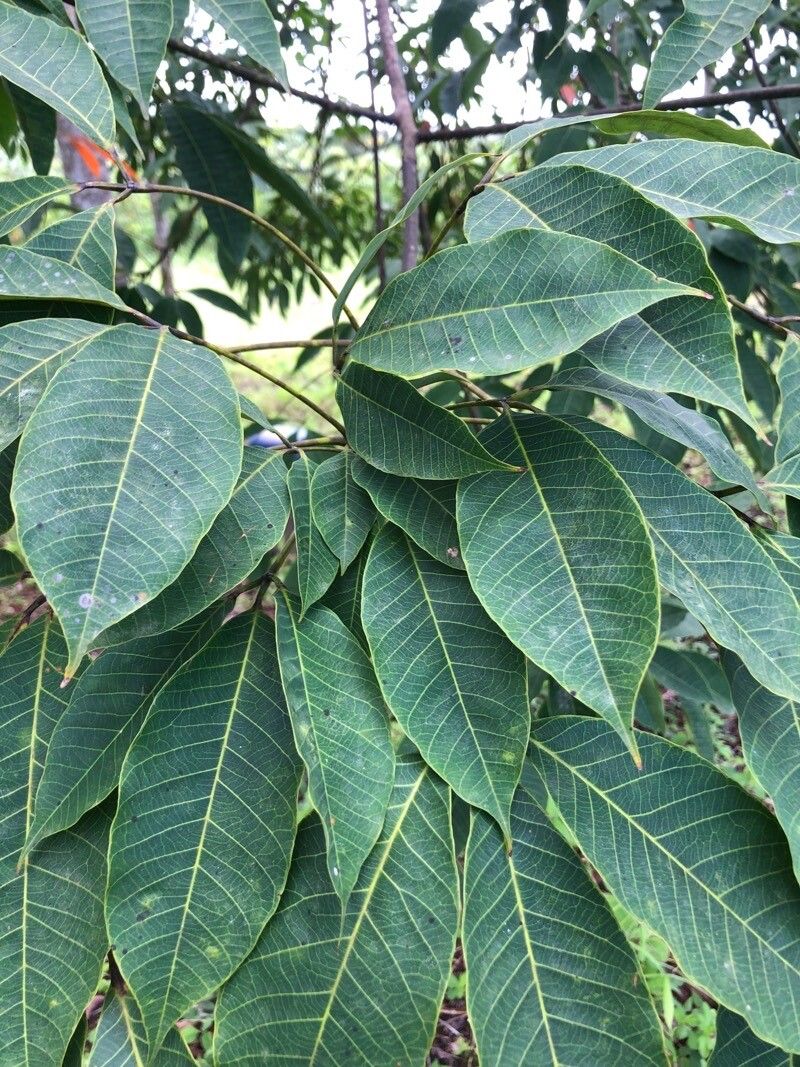
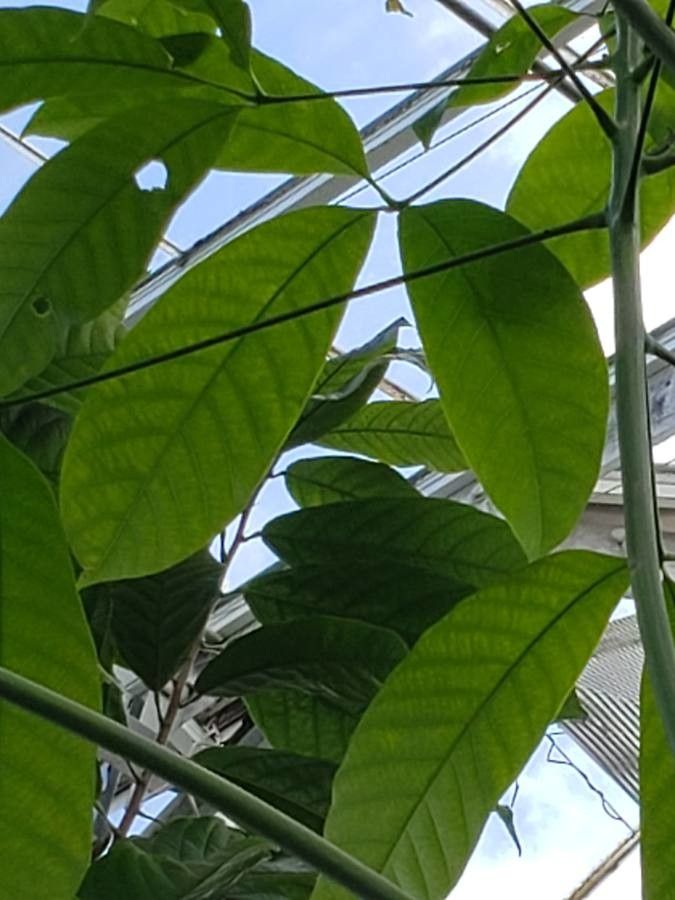
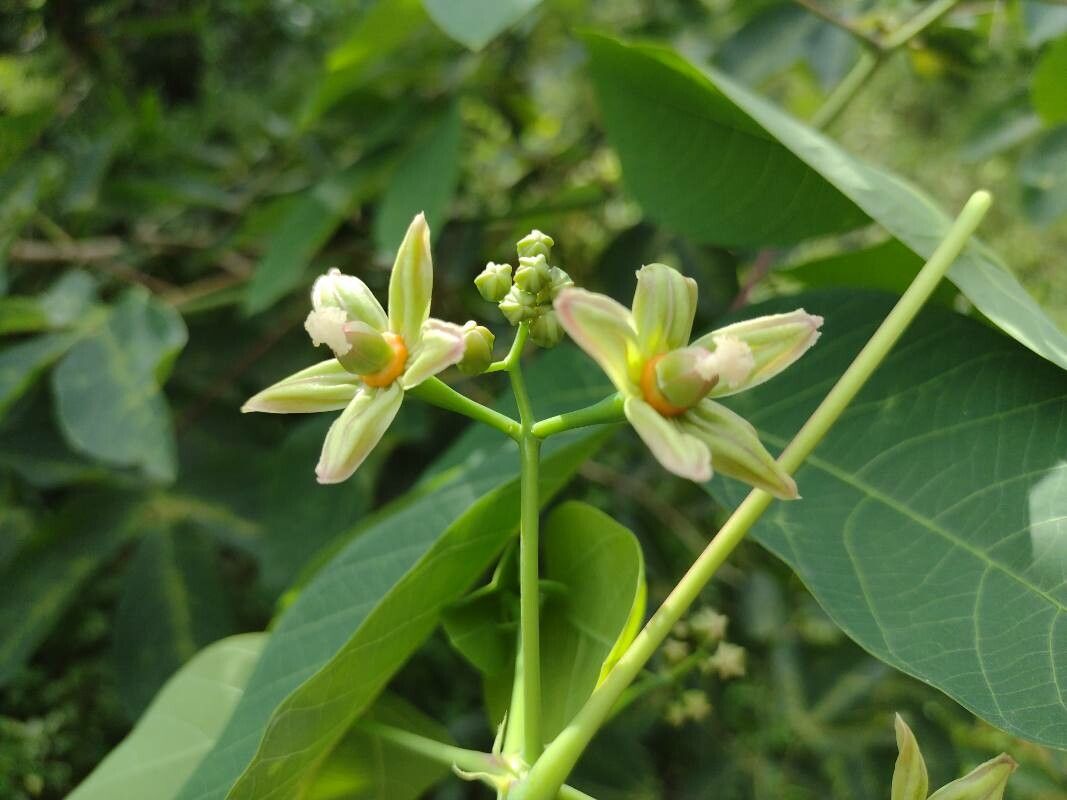
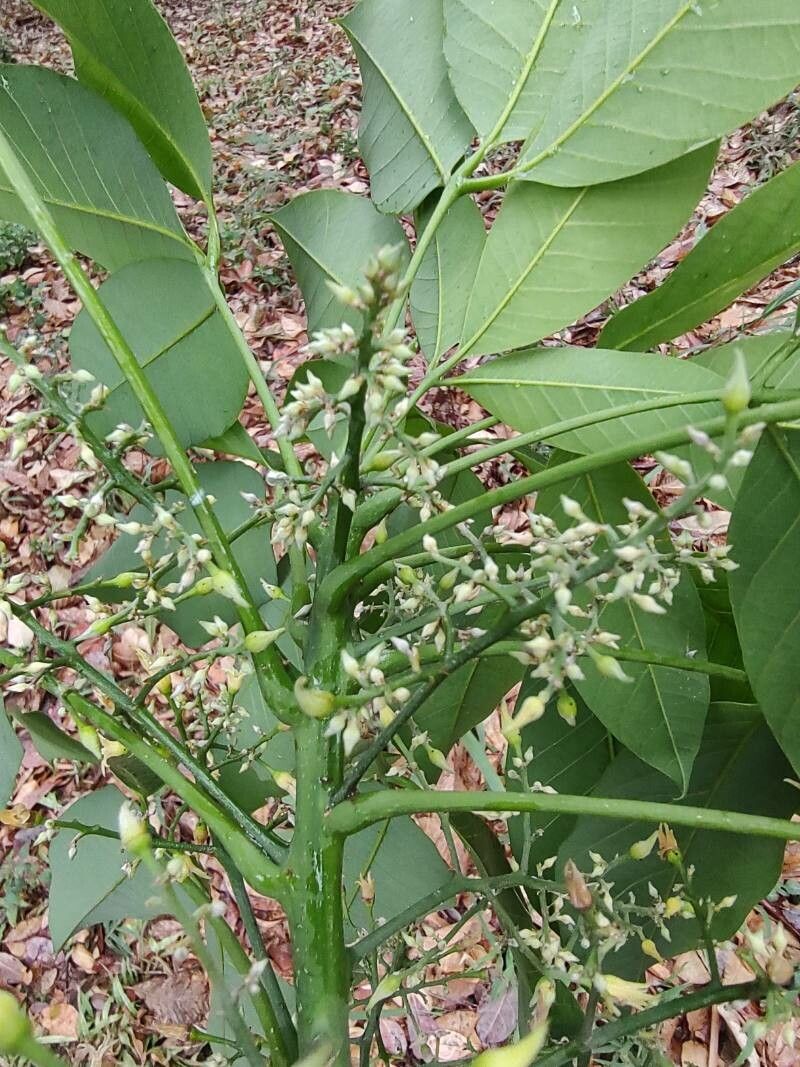
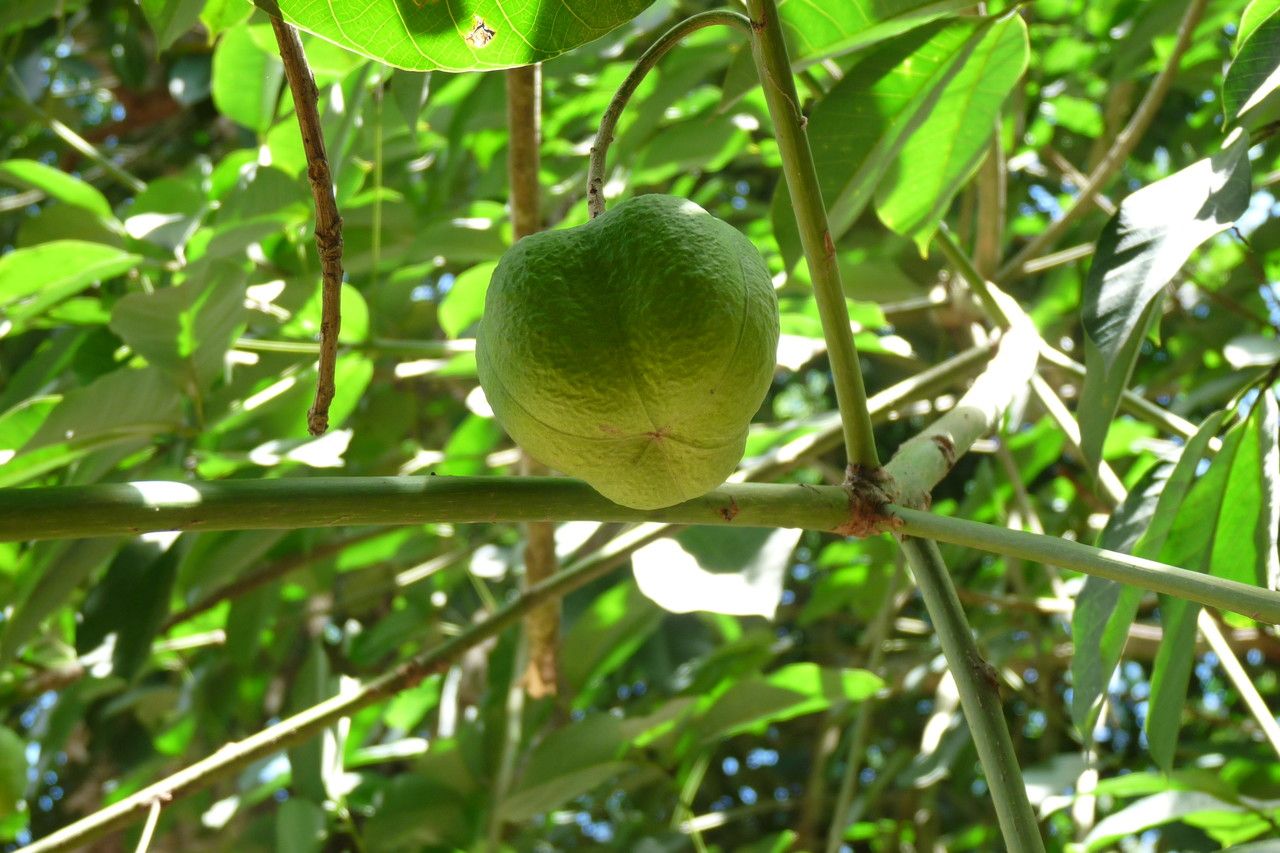
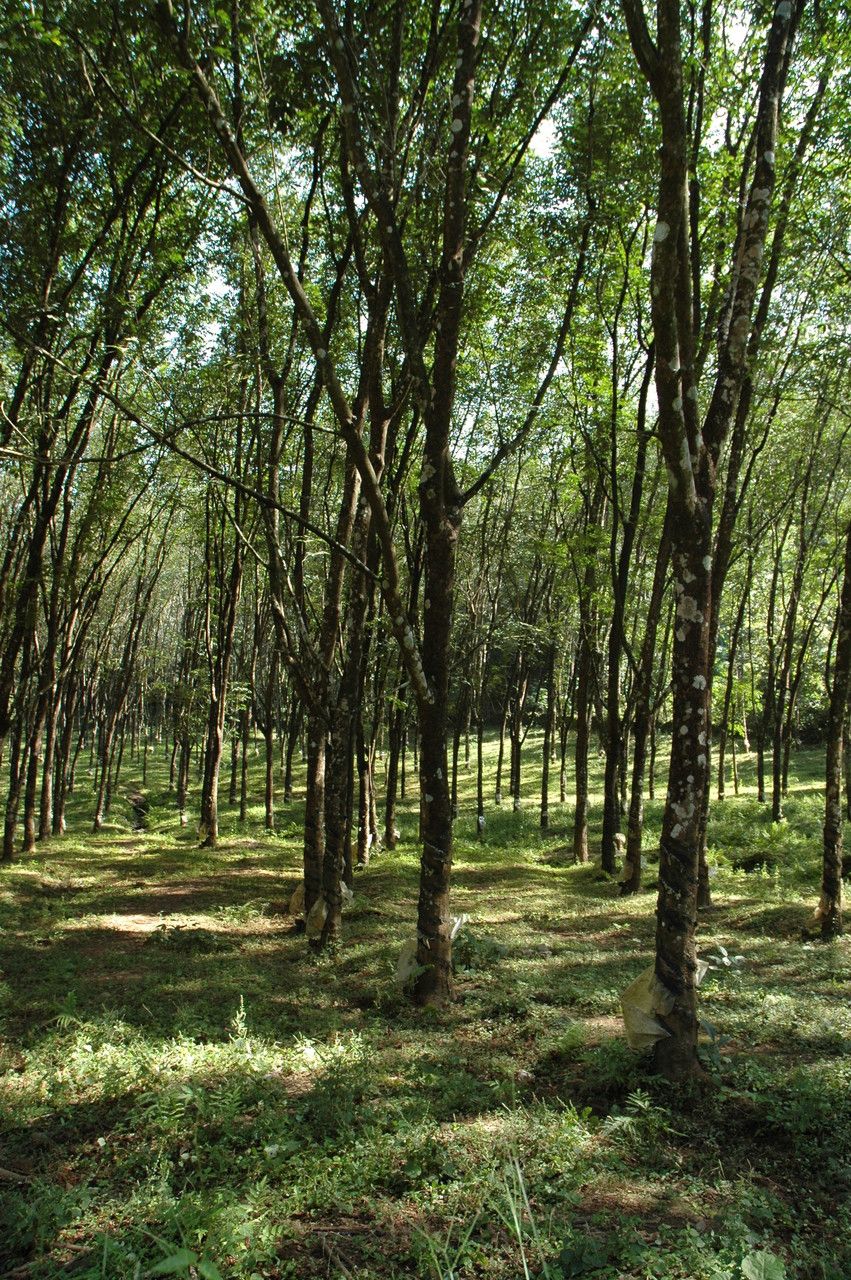
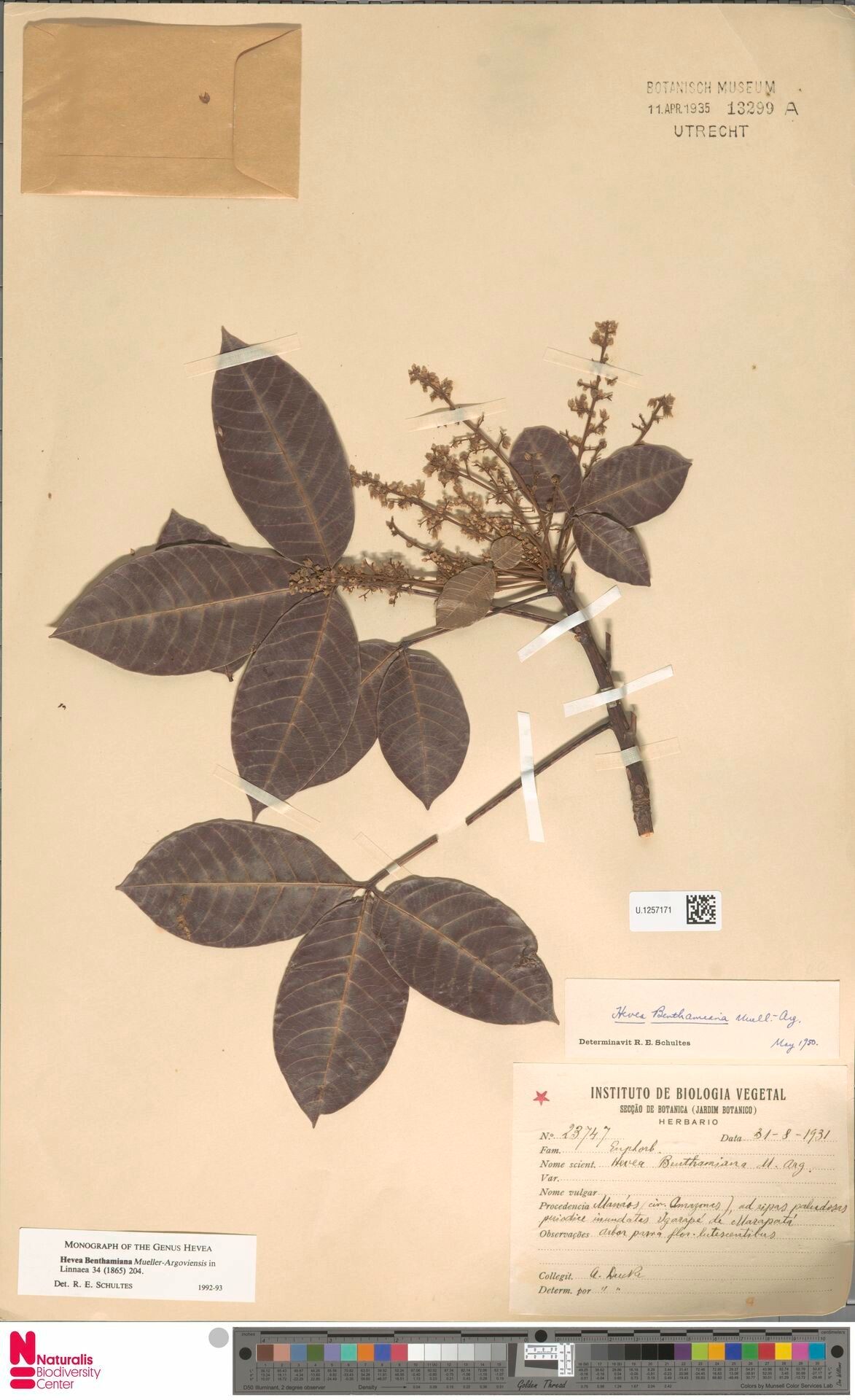
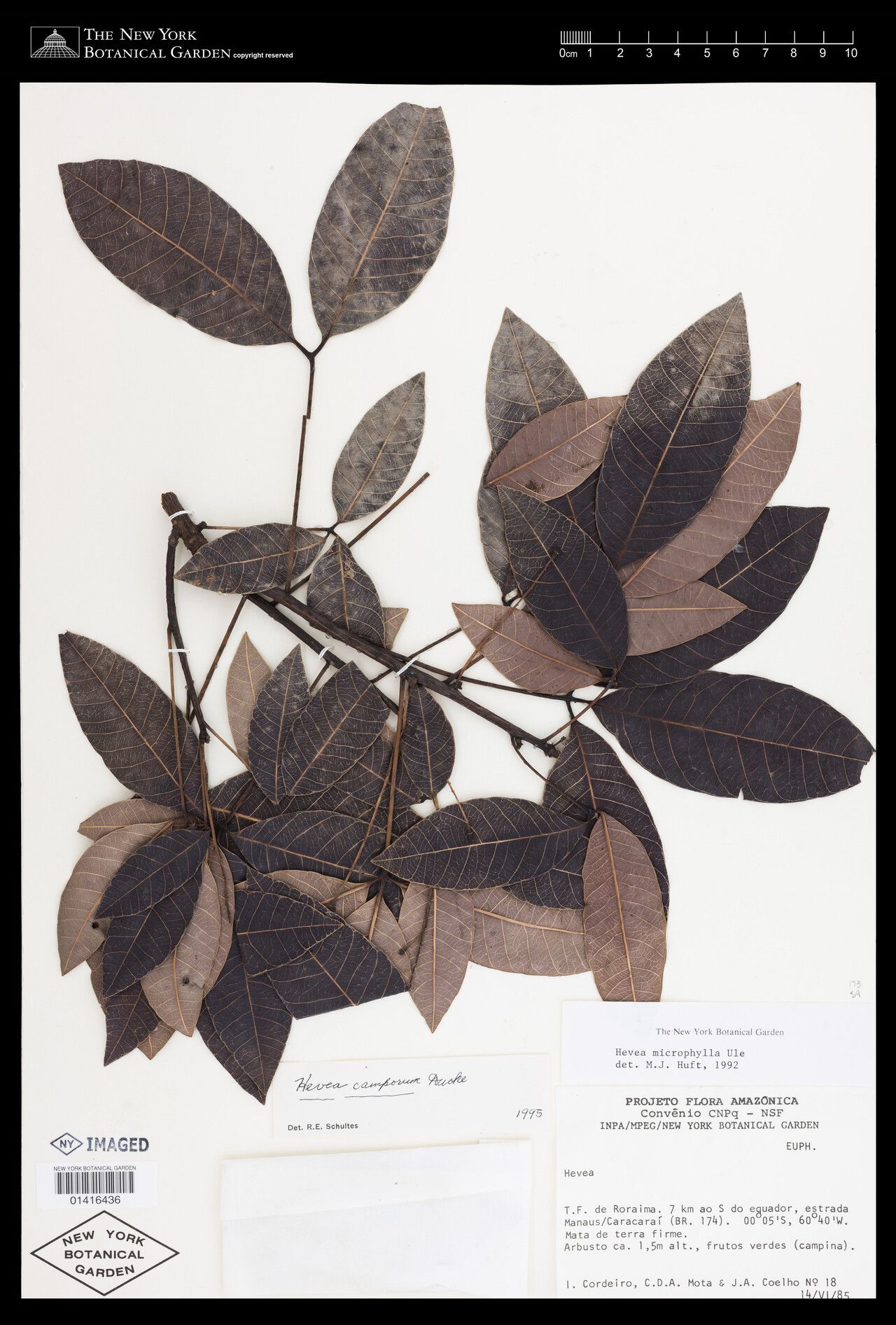
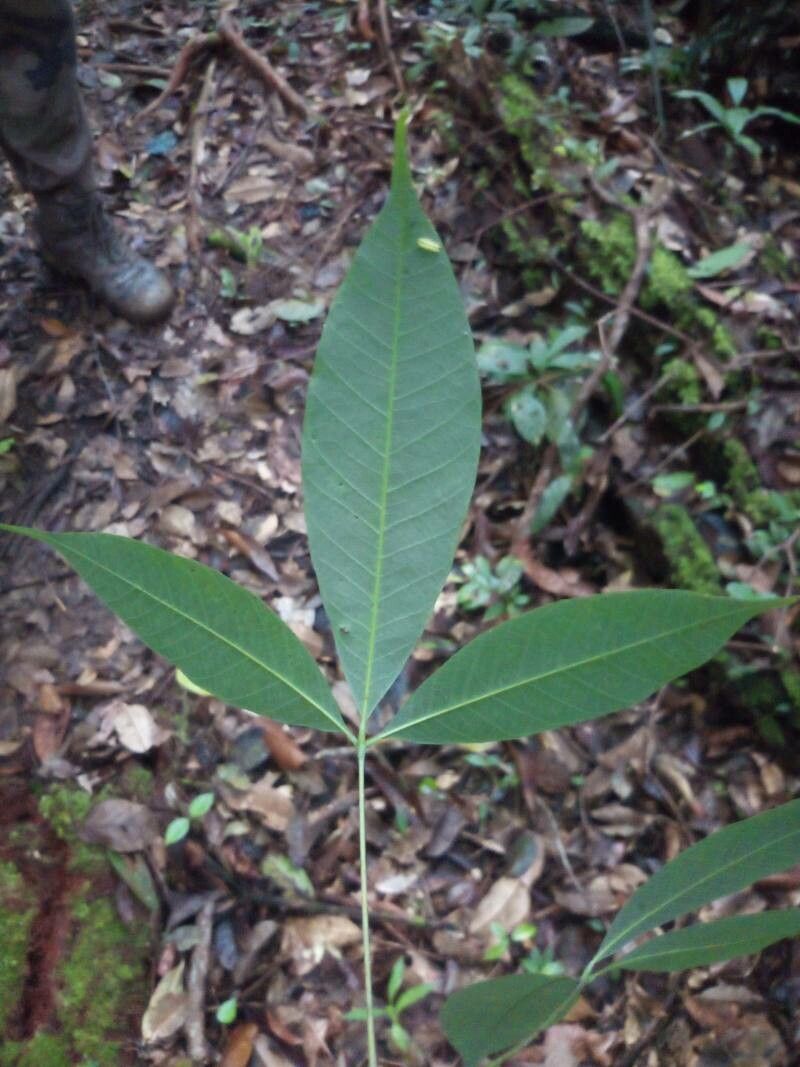
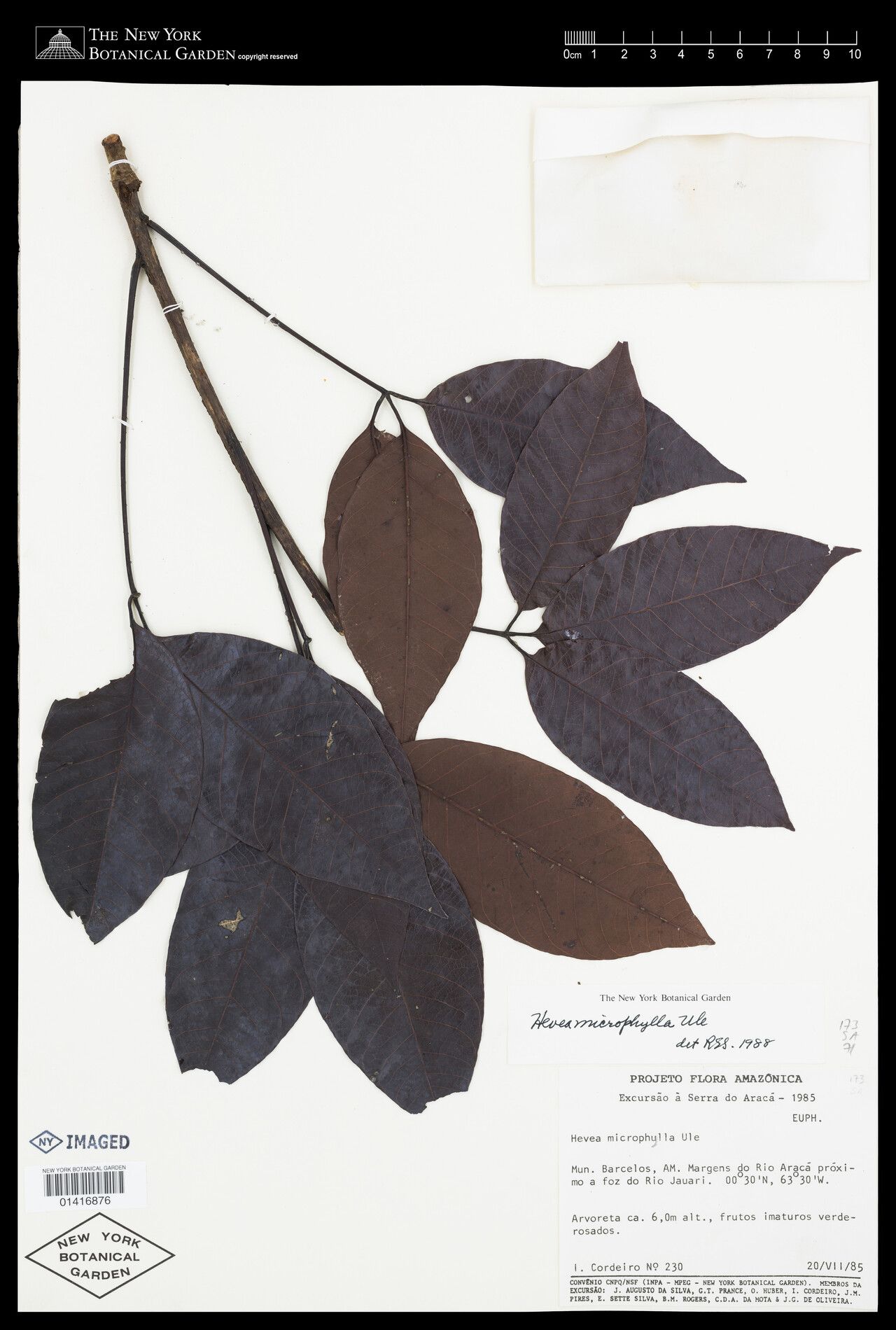
Hevea brasiliensis, commonly known as the rubber tree, is a flowering plant species in the spurge family. Originally from South America, it is now widely cultivated in tropical regions worldwide for its latex sap, which is used to produce natural rubber. The tree can grow up to 30 meters tall and features a straight trunk with smooth bark suitable for tapping latex. Its leaves are large, glossy green, and divided into three pointed leaflets. Although the flowers are small and inconspicuous, they give way to fruit capsules that contain seeds used for propagation.
Rubber trees thrive in warm temperatures and high humidity, making them ideal for tropical climates where they have become a significant economic crop. Besides its commercial use in rubber production, Hevea brasiliensis also possesses medicinal properties and is utilized in traditional medicine practices within its native region.
The rubber tree has good resistance to disease and is generally not prone to illnesses. In terms of care, this plant is relatively low-maintenance. When grown outdoors it needs minimal watering, and larger plants usually do not require pruning. Smaller plants, however, should be pruned after they have bloomed. The rubber tree is suitable for anyone with an outdoor area, such as a garden or deck, and does not demand a lot of gardening experience.
How to keep Hevea Brasiliensis.
Light
The rubber tree comes from environments where light is plentiful. A key requirement for its health and growth is exposure to an adequate amount of unfiltered, full‑spectrum sunlight. As it ages, it does not become more tolerant of low‑light conditions. Both too much and too little light can impede its growth and overall health.
Water
The rubber tree originally comes from the Amazon rainforest, where it thrives in high humidity and moist soil. Once established, it can tolerate drought, but it should be watered every two weeks to prevent overwatering. Indoor rubber trees benefit from occasional misting, which helps improve the health and growth of their leaves.
Humidity
This plant will thrive in moderate humidity, which is probably the level in your home. However, misting it a few times a week can be very beneficial. Make sure the room has good ventilation.
Temperature
The rubber tree is native to tropical rainforests and prefers a steady temperature of 68 to 100°F (20 to 38℃). Temperatures below or above that range can stress the plant. During seasons with extreme temperatures, sheltering or temperature-control adjustments may be necessary.
Fertilizer
Fertilizing is vital for the care of a Rubber tree. Regular feeding throughout the growing season helps preserve the energy for its showy leaves and supports overall growth. If fertilization is neglected, leaves can become unhealthy, the plant’s ornamental value may decline, and growth can be stunted or weak and prone to breaking.
Pruning
Pruning a rubber tree offers several benefits, such as removing dead branches, improving airflow through thinning, and controlling the tree's size. The best time to prune is from early to late winter, when the tree is dormant. This practice promotes overall health, boosts latex production, and reduces pest problems. To ensure vigorous growth, it's important to use sanitized tools and make clean cuts.
Botanical profile.
- Plant Type
- Tree
- Life Cycle
- Perennial
- Genus
- Hevea
- Family
- Euphorbiaceae
- Hardiness Zone
- 11-12
- Mature Height
- 42.98 m
- Mature Spread
- 21.95 m
- Leaf Color
- Green
- Leaf Type
- Evergreen
- Flower Color
- White, Yellow, Green
- Flower Size
- 15.24 cm
- Bloom Time
- All year round
- Planting Time
- Summer
- Harvest Time
- All year round
- Native Area
- Colombia, Bolivia, Peru, Brazil, Costa Rica
Other names.
Reader questions.
What are the sunlight requirements for a Rubber Tree?
Rubber Trees require above 6 hours of sunlight daily to thrive. It is essential to choose locations in your garden or home that provide a perfect balance of light and shade, as the Rubber Tree originates from environments with abundant light exposure. Despite its robust nature, the Rubber Tree does not develop a better tolerance for low light as it matures, and both excessive and insufficient light exposure can negatively affect its growth and health. Observing how sunlight moves through the space and selecting spots with adequate light are crucial for the Rubber Tree's happiness and well-being.
What is the native environment of the Rubber tree?
The Rubber tree, botanically known as Hevea brasiliensis, is native to tropical rainforests. It thrives in environments that provide a constant temperature range of 68 to 100°F (20 to 38°C). These conditions reflect its preference for warmth, making it crucial to maintain an appropriate temperature to ensure the plant's well-being.
How do you compensate for insufficient natural light for indoor Rubber Trees?
When natural sunlight is insufficient, especially during winter or in less sunny indoor spaces, artificial lighting becomes a vital solution for Rubber Trees. Using the right type of artificial light, such as LED lights customized to provide specific wavelengths, can promote faster and healthier growth. The recommended artificial light requirements vary: full sun plants need 30-50W/sq ft, partial sun plants need 20-30W/sq ft, and full shade plants need 10-20W/sq ft. The artificial light source should be placed 12-36 inches above the plant to mimic natural sunlight, and the duration of exposure should match the natural daylight hours for the plant species, generally between 8-12 hours per day.
How does temperature affect the Rubber tree and what are the necessary adjustments for different seasons?
Rubber trees are extremely sensitive to temperature changes. They require temperatures within the range of 68 to 100°F (20 to 38°C) for optimal growth. During seasons with temperatures outside this range, adjustments are needed. For instance, during cold autumn and winter months, it's advisable to bring outdoor Rubber trees inside and place them near a bright window while keeping them away from direct heat sources like heaters. This helps in maintaining a conducive temperature for the tree's growth.
What are the symptoms of light deficiency in Rubber Trees?
Common symptoms of light deficiency in Rubber Trees include smaller new leaves, leggy or sparse growth, faster leaf drop, slower or no new growth, lighter-colored new leaves, and chlorosis. Additionally, excessive sunlight can lead to symptoms such as sunscald, leaf curling, wilting, and leaf scorching. These symptoms signal that the Rubber Tree is not receiving the optimal light conditions it requires, either being too little or too much, negatively impacting the plant's health and growth.
What symptoms indicate a Rubber tree is affected by low or high temperatures and how can these issues be addressed?
For low temperatures, symptoms include lightening of leaf color, which eventually turns brown or black, alongside wilting and drooping after frost damage. The solution involves trimming off frost-damaged sections and moving the plant to a warmer indoor spot, preferably near a south-facing window, while keeping it away from direct air from heaters or air conditioning vents. As for high temperatures, symptoms involve leaf color lightening and susceptibility to sunburn. Addressing this involves trimming away sunburned parts, relocating the plant to a shaded area during intense sun hours, and maintaining soil moisture with morning and evening watering.
What solutions are available for Rubber Trees not receiving enough sunlight?
For indoor Rubber Trees not receiving enough sunlight, gradually moving the plant to a sunnier location, such as near a south-facing window, is recommended. Increase sunlight exposure each week until achieving at least 6 hours daily. If moving the plant isn't feasible, using artificial light sources like desk or ceiling lamps for at least 8 hours a day can provide the necessary light. For outdoor plants, relocating them gradually to sunnier spots while avoiding sudden changes in light intensity helps prevent sunburn. If the Rubber Tree is hindered by obstructions like trees, consider pruning to increase sunlight penetration. When transplanting smaller plants, do so during their dormant period in late winter or early spring to a location with ample sunlight and good drainage.