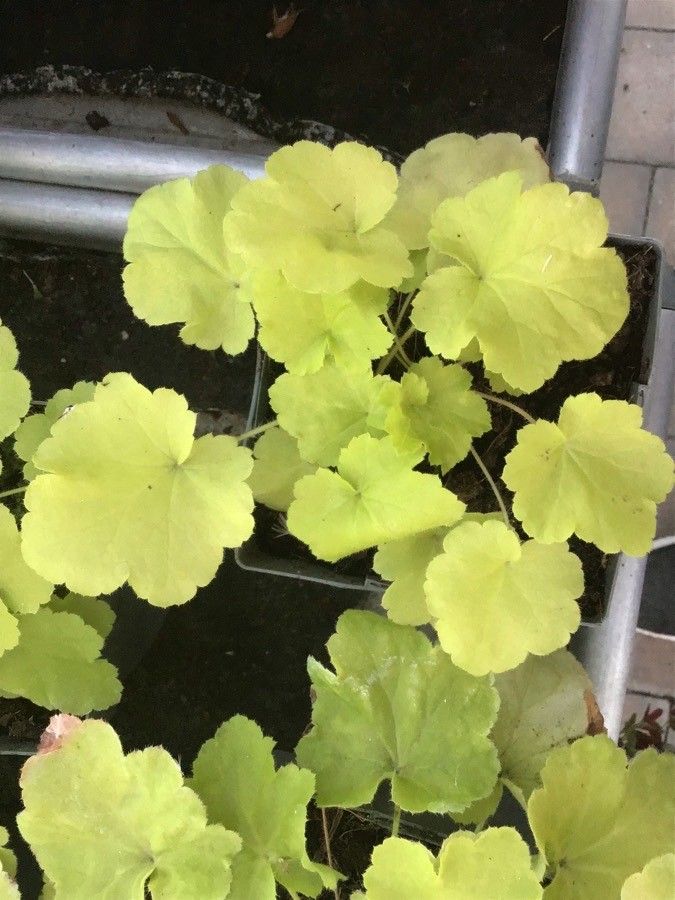
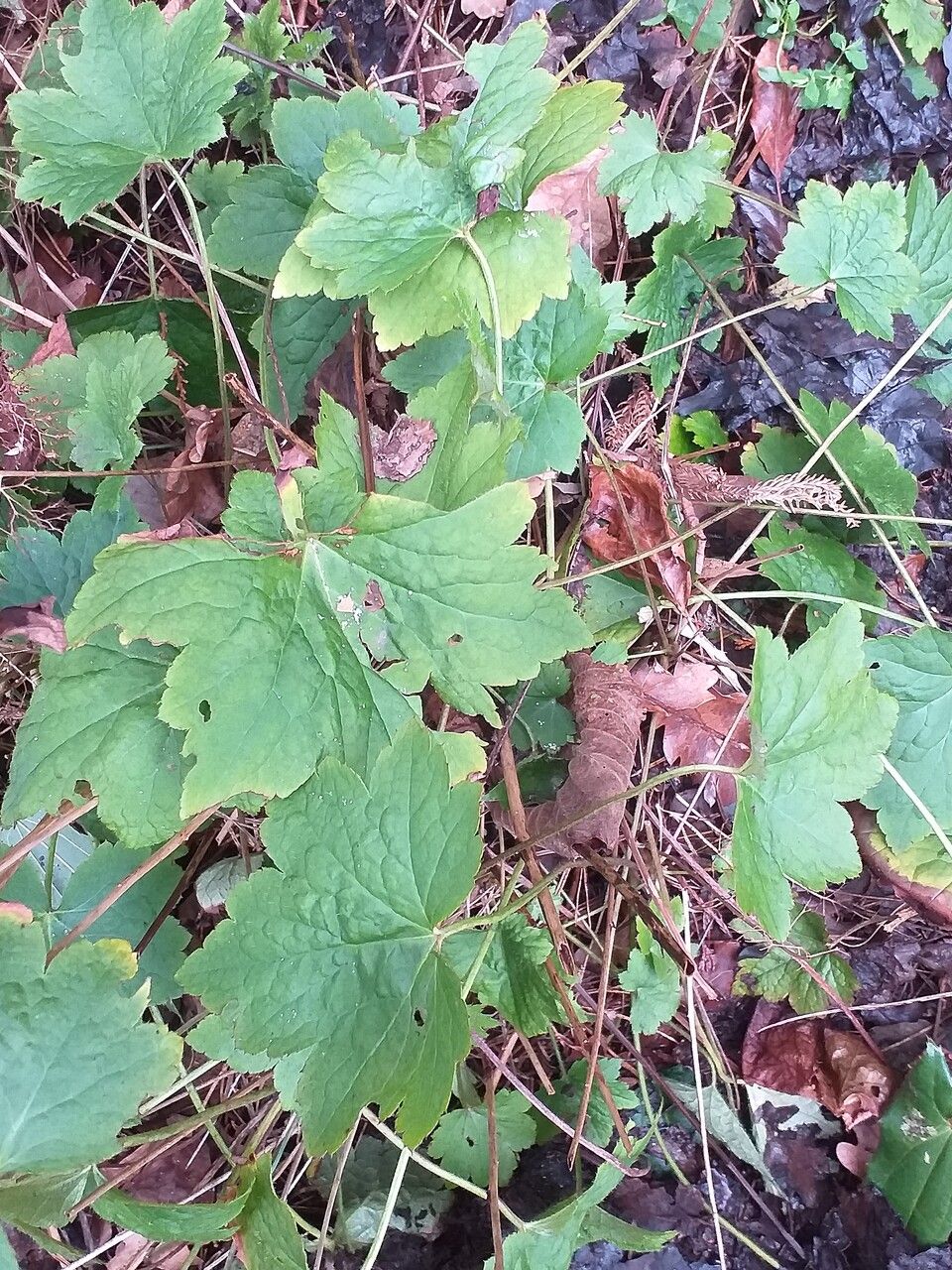
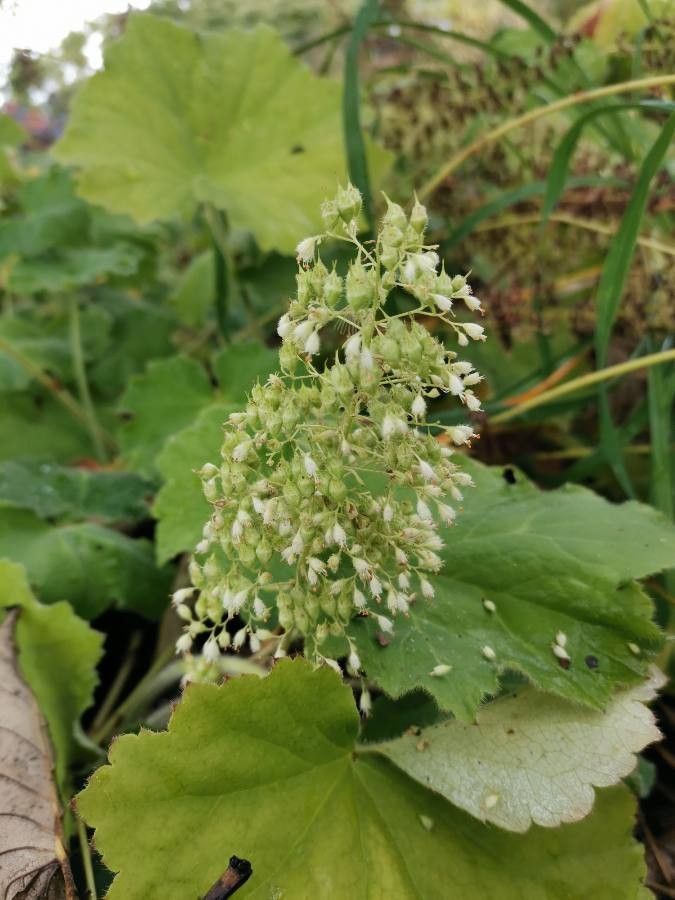
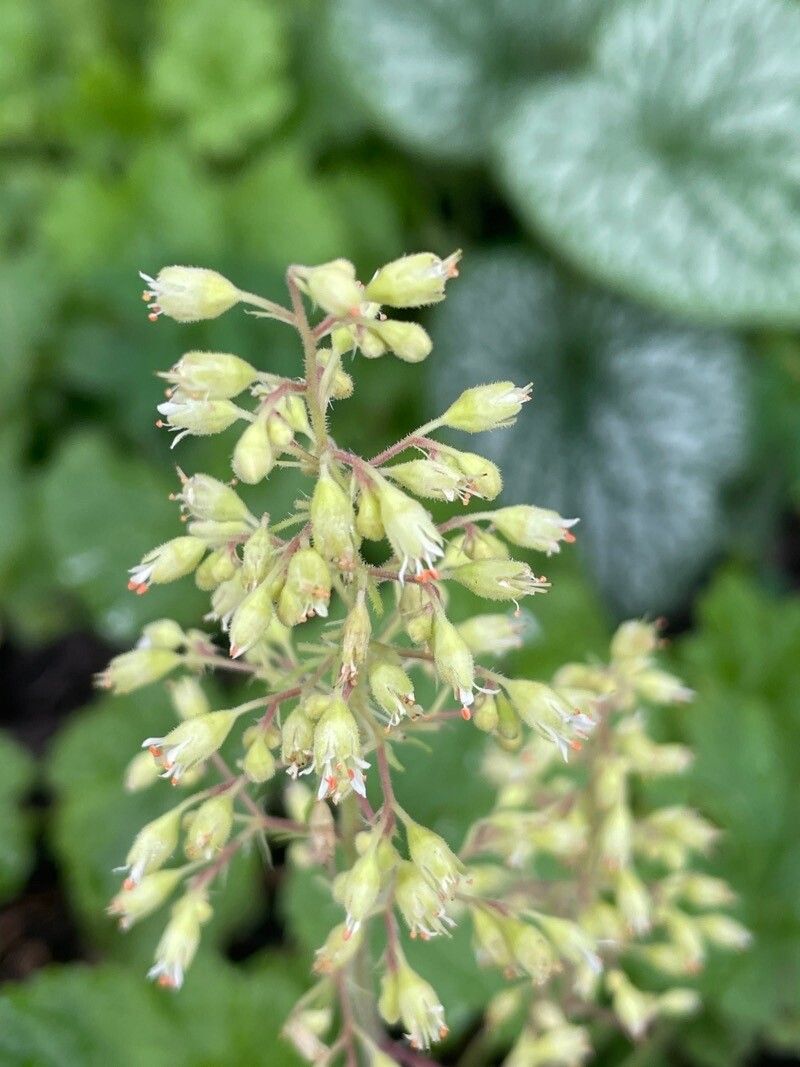
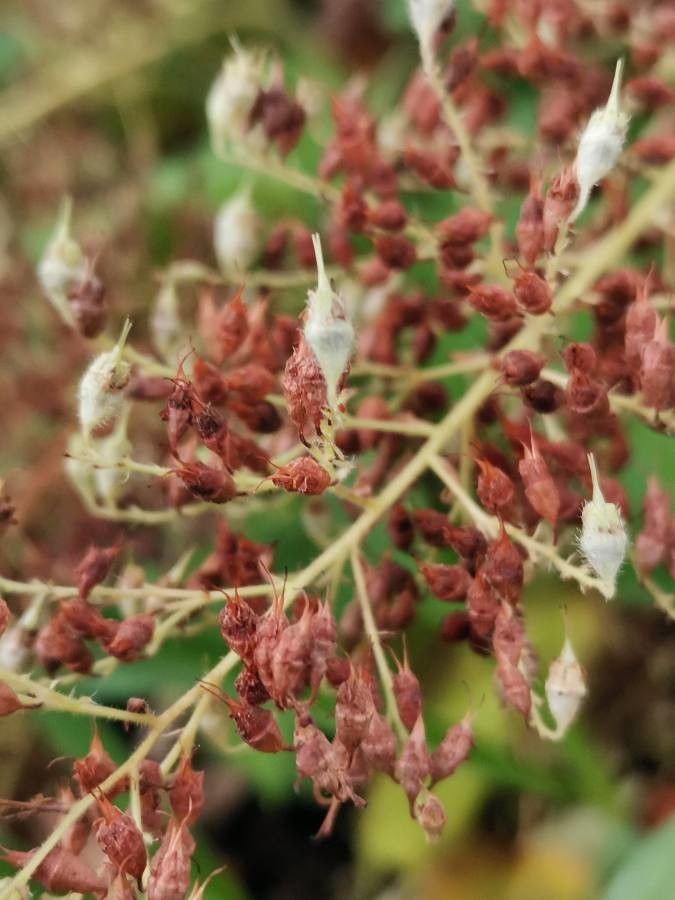
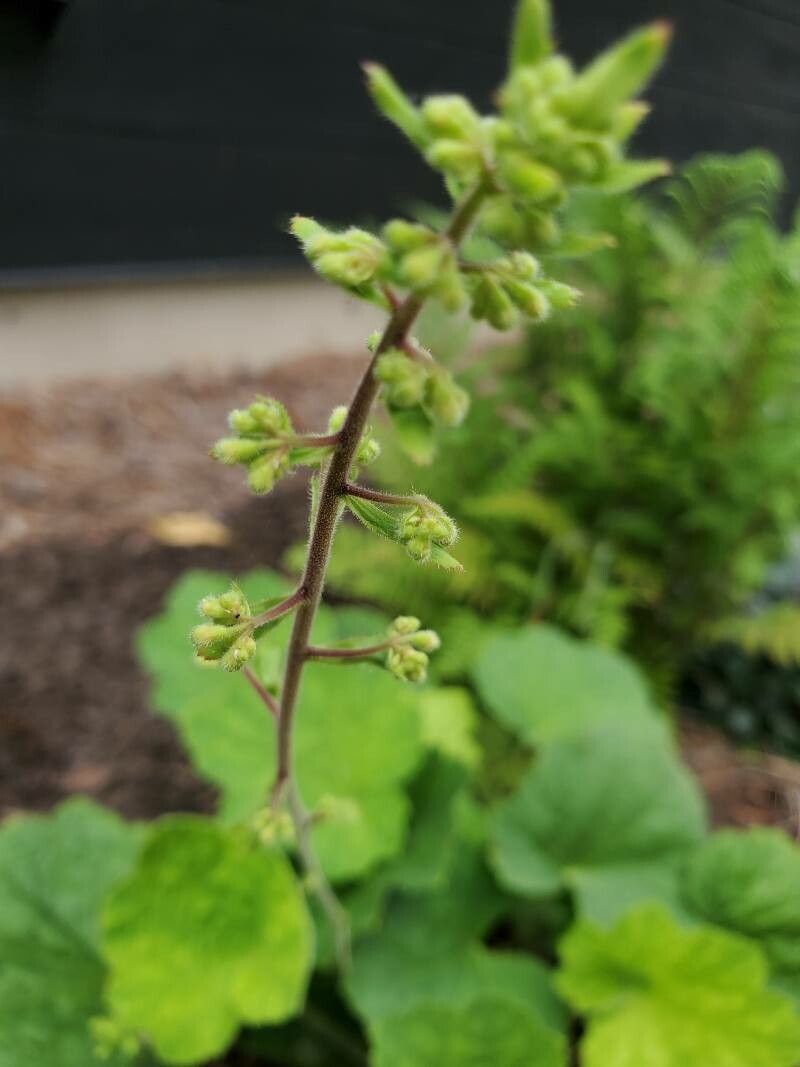
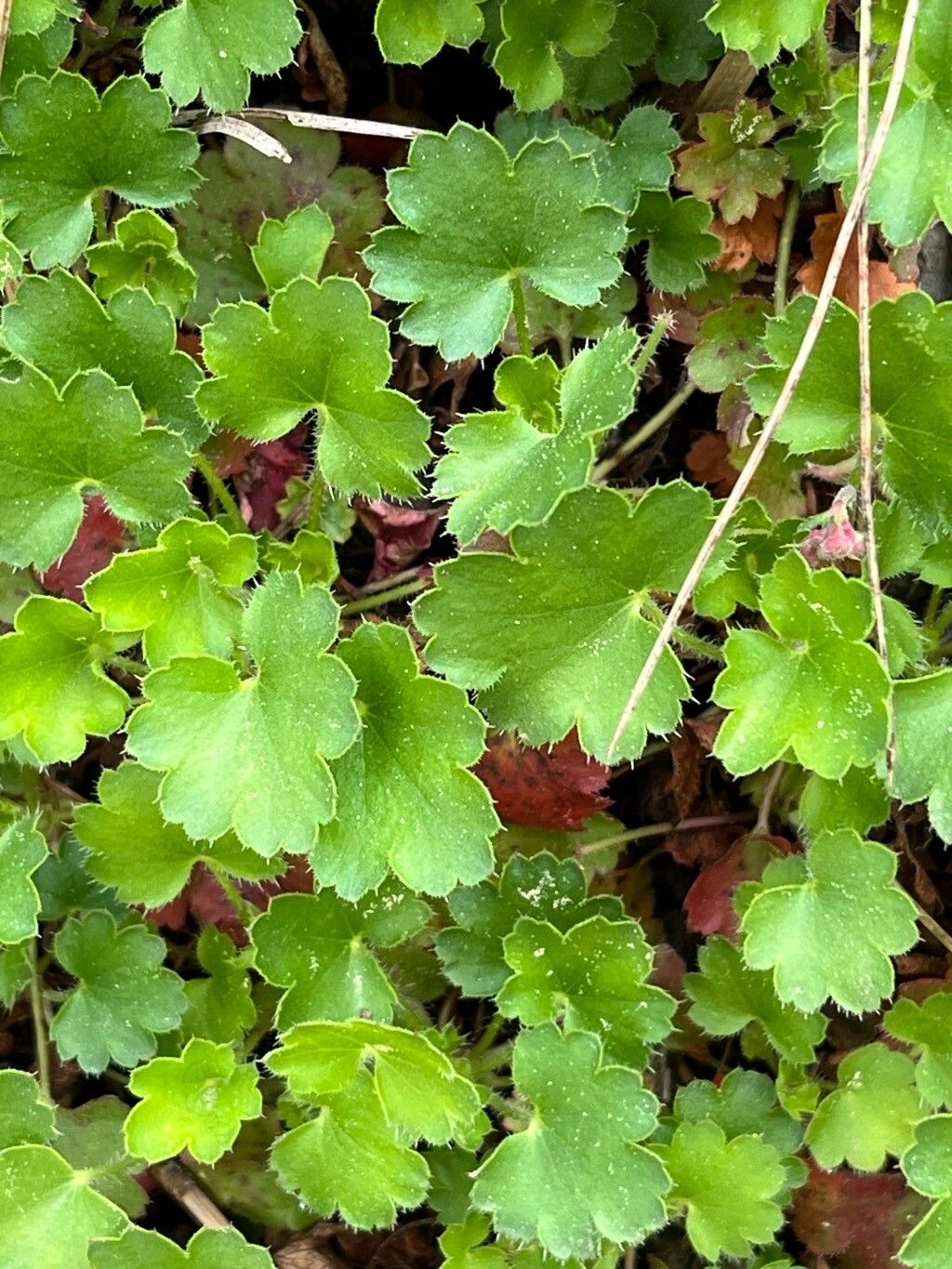
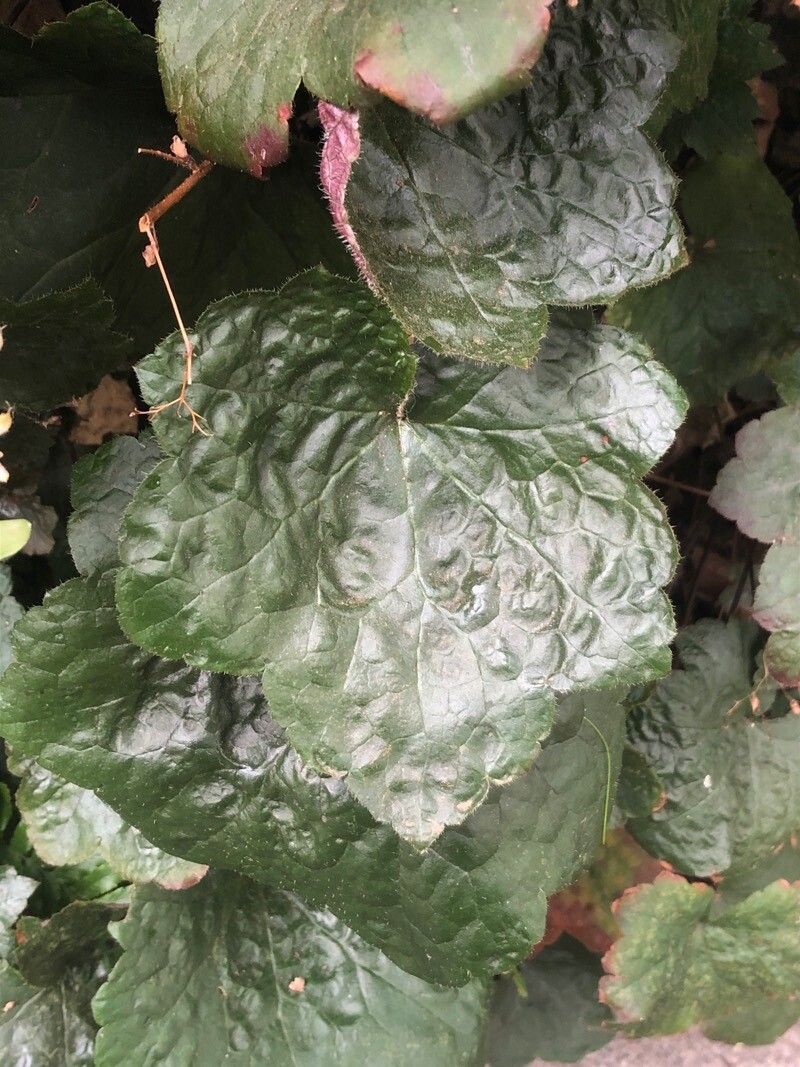
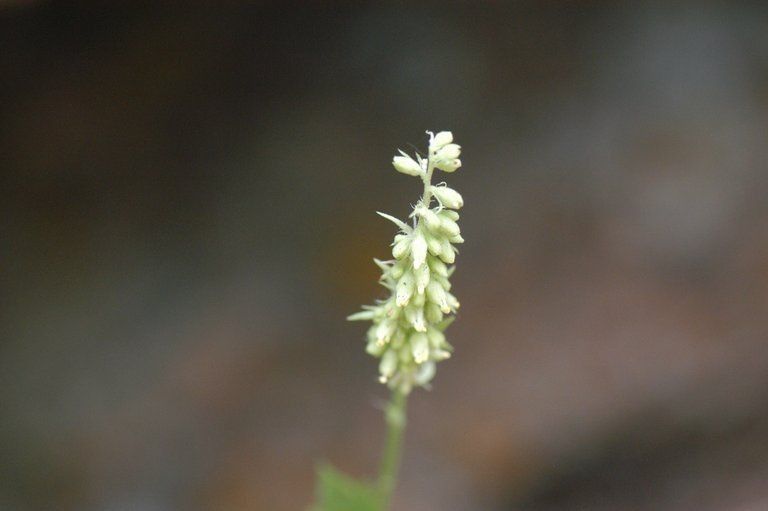
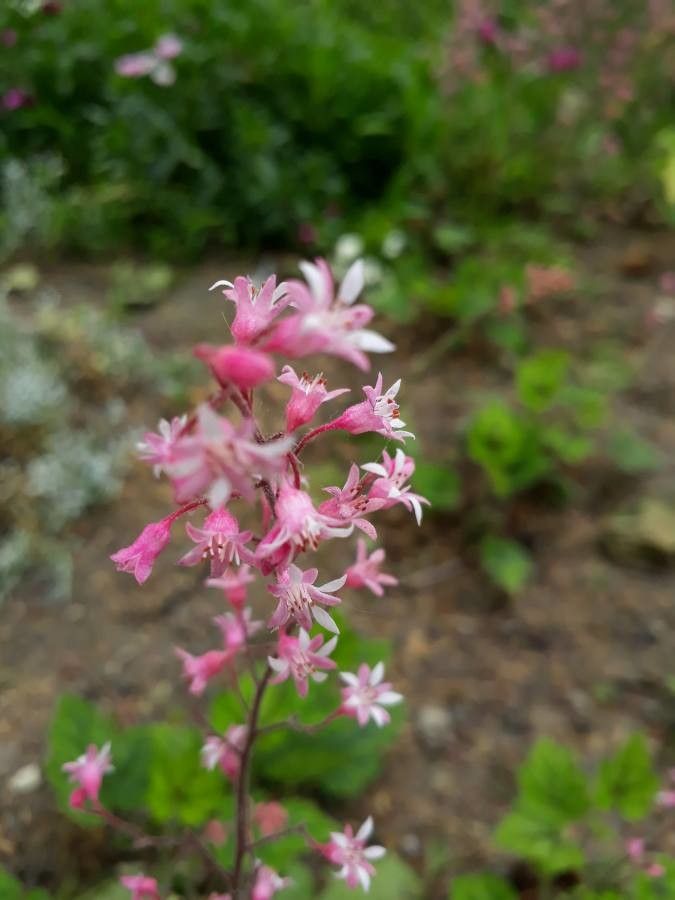
Heuchera villosa, commonly known as hairy alumroot, is a herbaceous perennial plant in the Saxifragaceae family. Native to the eastern United States, it thrives in rocky woodlands, slopes, and meadows. The plant typically reaches heights and widths of 1-2 feet, growing in a clumping formation. Its large, rounded leaves have scalloped edges and are covered in fine hairs, giving them a velvety texture. Depending on the cultivar, the leaves can be shades of green or purple-bronze. In late spring or early summer, Heuchera villosa produces tall spikes adorned with small bell-shaped flowers that are pinkish-white or cream-colored. These blossoms attract bees and butterflies, making hairy alumroot an excellent addition to pollinator gardens. Hairy alumroot prefers well-drained soil rich in organic matter but can tolerate some drought once established. It thrives best in partial shade but can also endure full sun if provided with sufficient moisture. Several cultivars of Heuchera villosa are available to gardeners, including 'Autumn Bride', 'Caramel', and 'Citronelle'. These cultivars offer varied leaf colors, ranging from lime green to deep purple-bronze. Overall, Heuchera villosa is an attractive perennial that adds color and texture to any garden, while also providing important ecological benefits for pollinators such as bees and butterflies.
Hairy Alumroot: This plant is known as alumroot because its flowers grow in neat clusters above its small leaves. It is found exclusively on rocky outcrops, such as cliffs and boulders. The leaves have a short, furry texture, which gives them a hairy appearance, hence the name "hairy alumroot."
Hairy alumroot has strong resistance to disease and is typically not prone to illnesses. Still, it can be affected by pests and diseases present in its environment. Such infections are generally mild. Carewise, this plant needs moderate maintenance. It should be pruned regularly to keep a neat appearance and support healthy growth. Applying fertilizer can also encourage flowering. Hairy alumroot is appropriate for anyone with outdoor space, like a garden or patio, and does not demand extensive plant-care experience. It may need more attention when grown indoors.
How to keep Heuchera Villosa.
Light
Hairy alumroot does best with moderate daylight but can tolerate both plentiful and limited light. Native to habitats with filtered light, it stays vigorous even when illumination varies. Excess light can scorch the leaves, while insufficient light may restrict growth and lower vigor.
Water
Hairy alumroot, native to Eastern North America, thrives in shaded gardens and prefers moderate moisture. While it is drought-tolerant, it does need to be watered weekly. Mulching is helpful for retaining moisture and regulating temperature, which promotes vigorous growth during the growing season.
Temperature
The hairy alumroot is native to regions with moderate temperatures ranging from 5 to 35 ℃ (41 to 95 ℉). It prefers cool, moist conditions and can tolerate temperatures as low as -20 ℃ (-4 ℉). In hotter areas it benefits from afternoon shade and regular watering. During winter, avoid exposing it to freezing temperatures and keep the soil moist but not waterlogged.
Fertilizer
One fertilizer application in spring is generally adequate for Hairy alumroot, though extra feedings can help achieve maximum growth. Apply fertilizer once every month to six weeks. Fertilization improves the leaves’ appearance and function, helping maintain even color and a healthy texture. It also encourages root development and boosts nutrient uptake for long-term plant health.
Pruning
Hairy alumroot features lobed leaves and delicate flowers. To encourage growth and maintain its shape, it should be pruned from early to late spring. Trim away any old or dead foliage, but be careful to avoid heavy pruning, as this can cause stress to the plant. Regular pruning helps enhance air circulation, reduce the risk of disease, and improve the plant's overall health.
Pot & Repot
When repotting Hairy alumroot, select a pot 1-2 inches (2.5–5.1 cm) larger with good drainage. Use a well-draining potting mix. Repot in spring or fall, making sure the root ball sits slightly lower than the rim of the flower pot. Water thoroughly after repotting and place it in a warm spot with indirect sunlight.
Botanical profile.
- Plant Type
- Herb
- Life Cycle
- Perennial
- Genus
- Heuchera
- Family
- Saxifragaceae
- Hardiness Zone
- 4-9
- Mature Height
- 10 cm to 76 cm
- Mature Spread
- 34 cm
- Leaf Color
- Green, Purple
- Leaf Type
- Evergreen, Semi-evergreen
- Flower Color
- Pink, White
- Flower Size
- 0.10 cm to 0.25 cm
- Bloom Time
- Late spring, Early summer, Mid summer
- Planting Time
- Spring
- Harvest Time
- Mid summer
Other names.
Reader questions.
How should I water my Hairy alumroot plant for the best results?
To properly water the Hairy alumroot, it is recommended to use filtered water at room temperature. Tap water may have harmful particles for this plant, so filtered water is preferred. The plant is adapted to warm environments, so cold water can be a shock to its system. It is also important to avoid overhead watering, as this can lead to foliage issues. Instead, water the plant by applying filtered room temperature water directly to the soil until it is fully soaked. This method is beneficial as it ensures that the roots are moist and can continue spreading through the soil to collect necessary nutrients.
Why do I have to put fertilizer on my Hairy alumroot plant?
The Hairy alumroot relies on its leaves for structure, and fertilization is key to keeping them healthy and attractive. Proper fertilization ensures that the leaves maintain consistent color and a pleasing texture. Additionally, fertilization benefits the plant below the soil, promoting the growth of new roots and maintaining the existing ones. This not only keeps the plant healthy in the present but also improves its ability to absorb nutrients from the soil in the future.
What are the sunlight requirements for Hairy Alumroot?
Hairy alumroot, also known as Heuchera villosa, thrives in conditions that offer an intermediate intensity of daylight hours. It can adapt to both abundant and scarce light due to its origin in environments with diffused light. Despite fluctuations in illumination, it grows robustly. Leaf scorch may occur from overexposure to sunlight, while underexposure could lead to limited growth and diminished vitality. For partial sun, it requires about 3-6 hours of sunlight, whereas for full sun or full shade, it needs more than 6 hours of sunlight. Monitoring the movement of sunlight in your garden to find locations that offer a balance of light and shade is beneficial for the plant's health.
What is the native climate for Hairy Alumroot?
The Hairy Alumroot, scientifically known as Heuchera villosa, thrives in moderate temperatures, specifically between 5°C (41°F) and 35°C (95°F). It is native to areas where it can enjoy cool, moist environments, ideally suiting its preference for such conditions. Though it tolerates temperatures as low as -20°C (-4°F), providing some afternoon shade and regular watering in hotter climates can be beneficial. Even in winter, protecting the plant from freezing temperatures by ensuring the soil remains moist but not waterlogged is crucial.
What should I do if I give too much or too little water to my Hairy alumroot plant?
Overwatering is a common issue for Hairy alumroot and can cause wilting, yellowing leaves, and diseases like root rot, mold, and mildew. Underwatering is less common but can result in brittle, brown leaves. It's important to recognize the signs of overwatering early and reduce watering immediately. Also, check the soil drainage and replace it with a well-draining potting mix if necessary. If your plant shows signs of underwatering, simply water more regularly until the signs disappear.
What is the best time to fertilize my Hairy alumroot?
If you grow your Hairy alumroot outdoors each year, it will start growing new leaves in early spring. This is the signal to begin fertilizing for the year. Normally, one application of fertilizer in the spring is enough for the plant to do well. However, if you want to maximize its growth, you can fertilize it multiple times throughout the spring and early summer. If you decide to do this, you can apply fertilizer about once a month to a month and a half.
How should artificial lighting be used for indoor Hairy Alumroot plants?
When natural sunlight is insufficient for indoor Hairy Alumroot plants, particularly during winter or in less sunny spaces, artificial lighting becomes a crucial support. It's recommended to use LED lights as they can be customized to provide the specific wavelengths needed by the plants. Full sun plants require 30-50W/sq ft of artificial light, partial sun plants need 20-30W/sq ft, and full shade plants should have 10-20W/sq ft. The artificial light source should be placed 12-36 inches above the plant to mimic natural sunlight, and the duration of artificial light exposure should mimic natural daylight hours, typically between 8-12 hours per day.
How does Hairy Alumroot handle cold weather?
Hairy Alumroot has remarkable resistance to cold, often not requiring special frost protection measures even in winter. However, for extra precaution, particularly when winter temperatures are expected to plummet below -30°C, cold protection using coverings like soil or straw is advisable. Prior to the onset of the first freeze in autumn, an ample watering routine is recommended to keep the soil moist. This strategy is vital for preventing drought conditions for the plant throughout the winter and early spring seasons.
How often should I give water to my Hairy alumroot?
If your Hairy alumroot is in a pot, the most precise way to determine if it needs water is by checking the soil. Stick your finger into the soil and if the top two to three inches feel dry, it's time to water it. For those growing Hairy alumroot outdoors in the ground, you can use a similar method to check the soil. Once the first few inches of soil are dry, it's time to water the plant. In spring and early fall, this usually means watering about once a week. However, during very hot weather, you may need to water it twice or more per week. That being said, mature and well-established Hairy alumroot plants can handle drought well.
When is the best time to not use fertilizer on my Hairy alumroot?
During late fall and winter, your Hairy alumroot goes into a dormant phase and stops producing new growth. It's best to avoid fertilizing it during this time. In spring and summer, if you decide to fertilize, gradually decrease the rate as summer approaches since the growth rate of your Hairy alumroot will also slow down. In general, it's not recommended to fertilize your Hairy alumroot when the weather is exceptionally hot or the soil is very dry. Fertilizing in these conditions can stress the plant and cause it to die prematurely.
What are the common symptoms of inadequate light for Hairy Alumroot?
When Hairy Alumroot does not receive sufficient light, it shows several symptoms indicating light deficiency. These include smaller new leaves compared to mature ones, leggy or sparse growth due to elongated spaces between leaves or stems, earlier shedding of older leaves to conserve resources, delayed or stopped growth as the plant enters survival mode, lighter-colored or irregularly patterned new leaves indicating a lack of chlorophyll and essential nutrients, chlorosis or the yellowing of leaves due to chlorophyll breakdown, sunscald characterized by pale, bleached, or necrotic areas on the plant from intense sunlight, leaf curling as a defense against overexposure to sunlight, wilting from loss of turgor pressure due to excessive transpiration and leaf scorching seen as brown, dry, and crispy leaf edges from overexposure to sunlight.
What should I do if the Hairy Alumroot experiences low temperatures?
The Hairy Alumroot tolerates cold well, performing optimally when temperatures stay above 5°C. In winter, it's essential to maintain a minimum temperature above -25°C to avoid impairment. If the temperature dips below -30°C, you might not observe immediate changes, but it could lead to a reduction or even absence of sprouting in the next spring. In such cases, it's best to remove any parts of the plant that have not successfully sprouted once spring arrives.