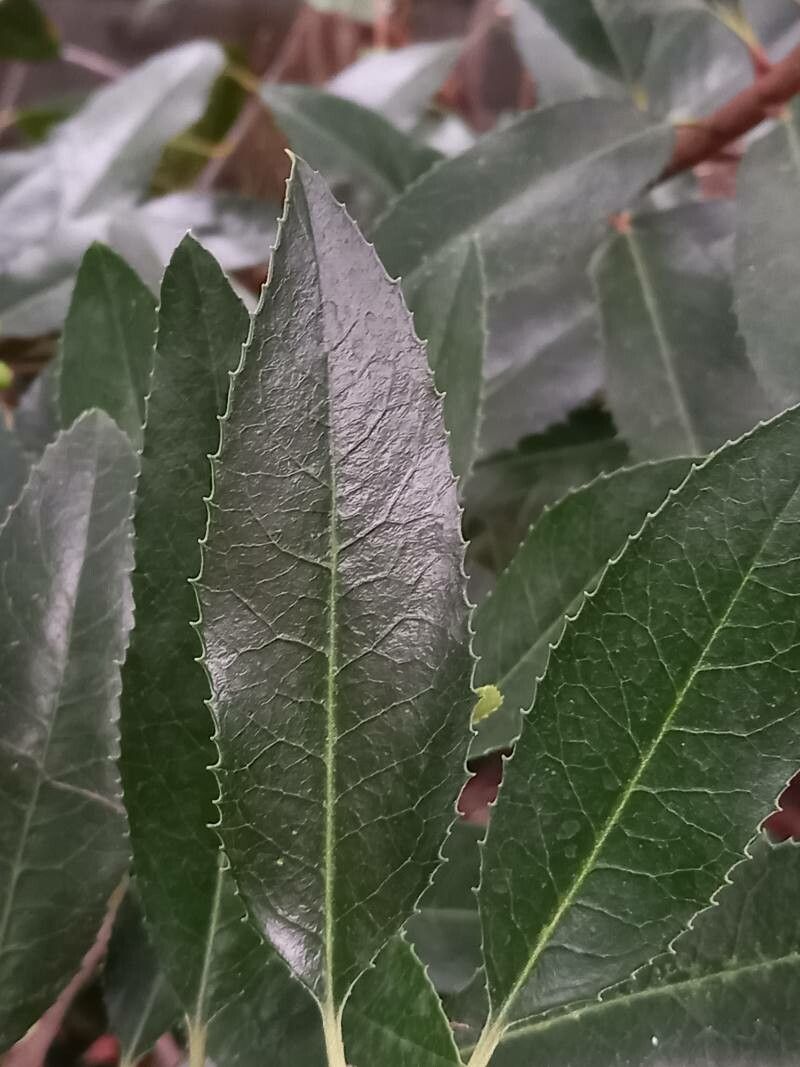
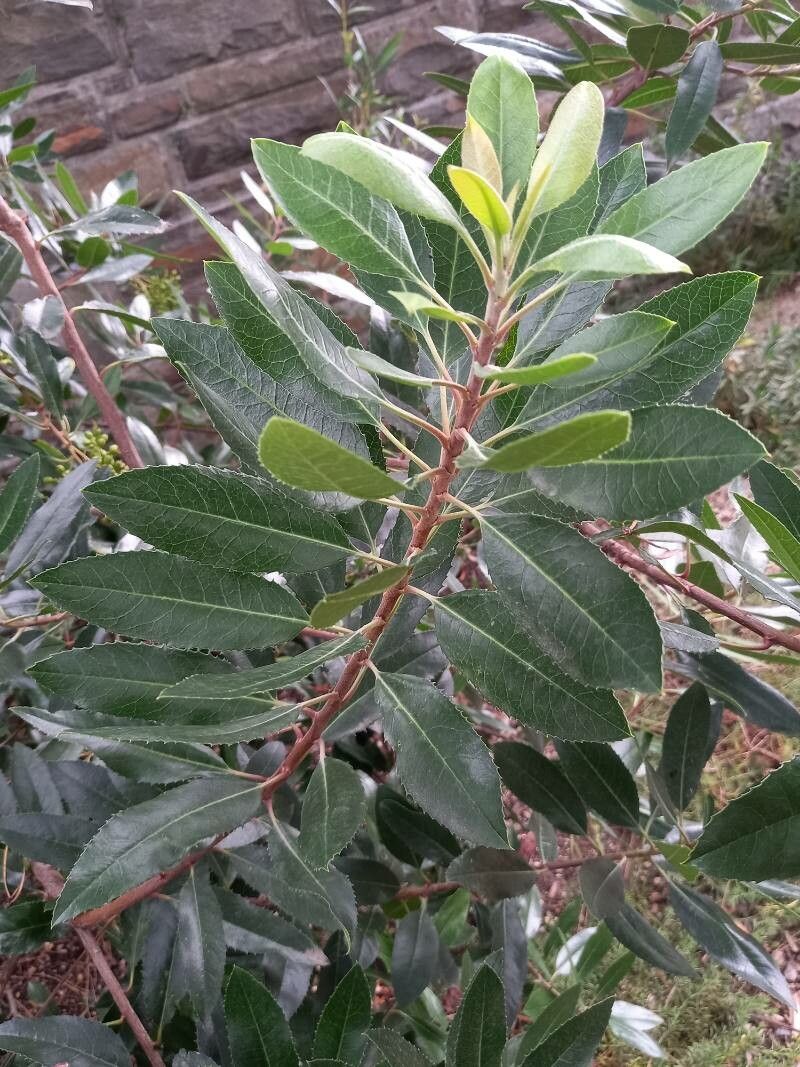
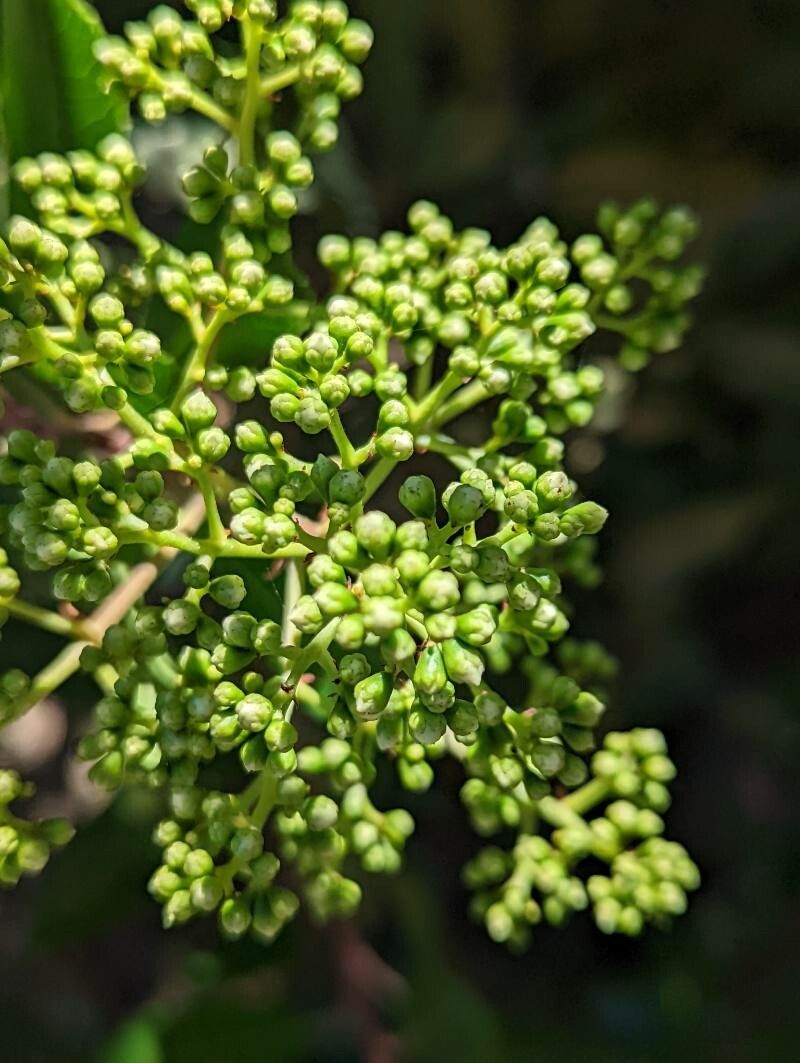
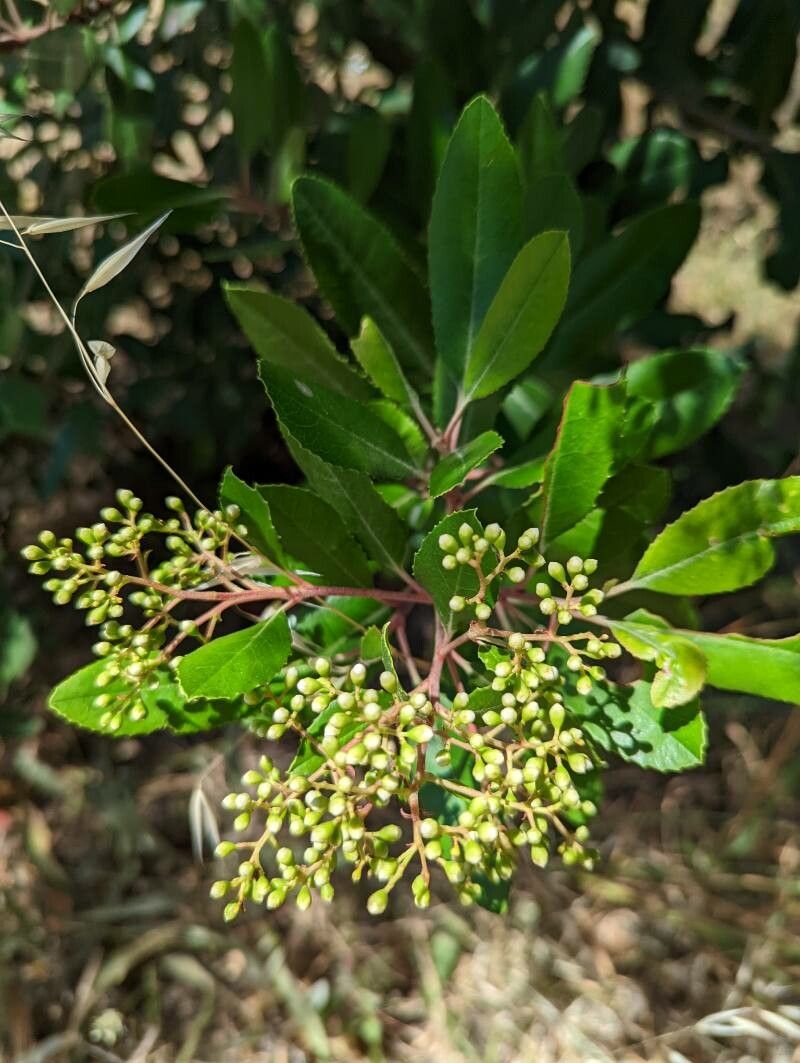
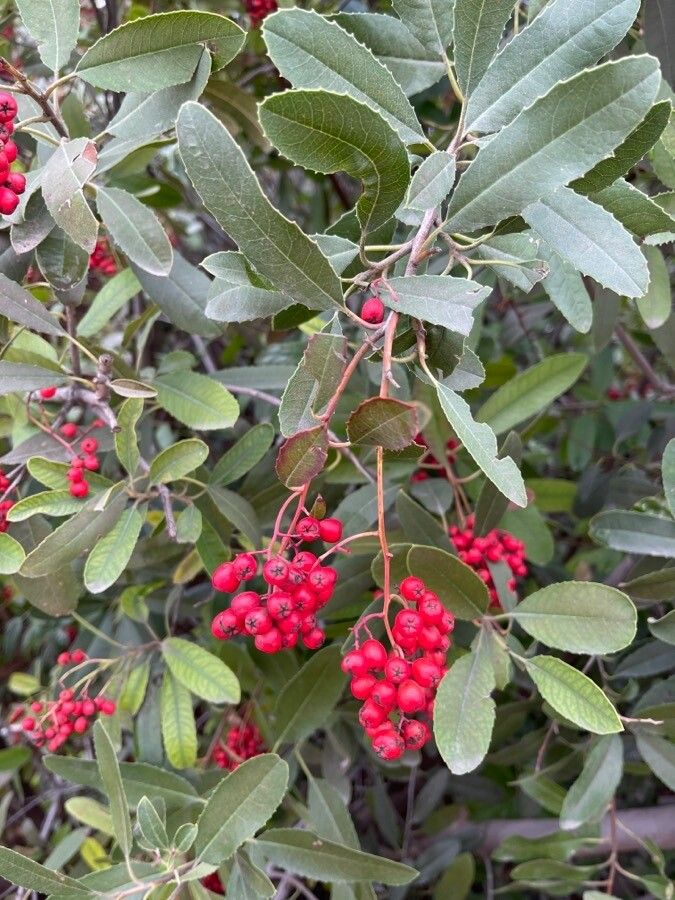
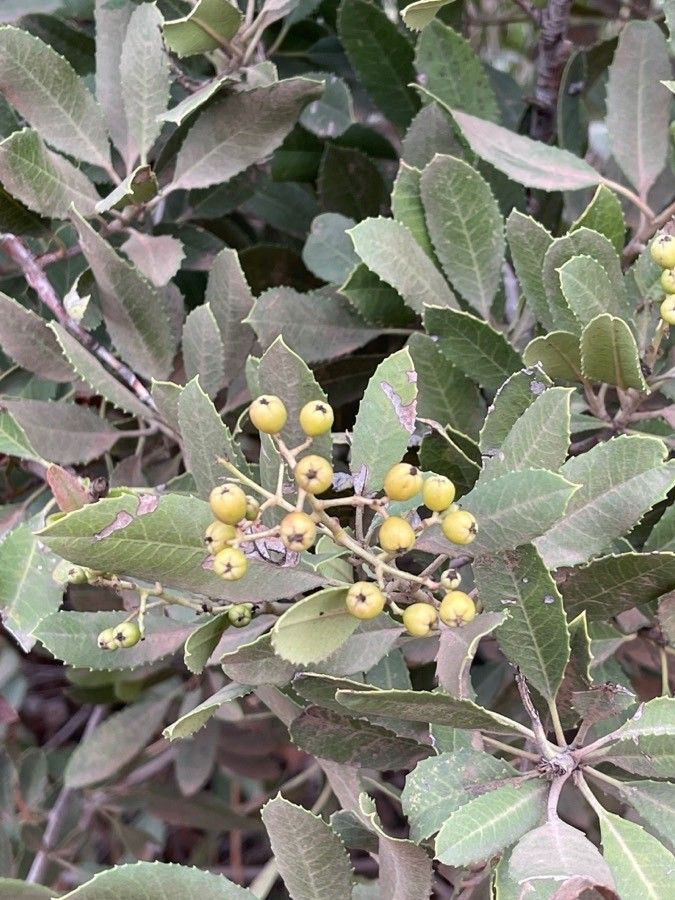
Heteromeles arbutifolia (; more commonly by Californian botanists), commonly known as toyon, is a common perennial shrub native to extreme southwest Oregon, California, and the Baja California Peninsula. It is the sole species in the genus Heteromeles. Toyon is a prominent component of the coastal sage scrub plant community, and is a part of drought-adapted chaparral and mixed oak woodland habitats. It is also known by the common names Christmas berry and California holly.
Toyon is resistant to disease and is typically not susceptible to illnesses. As for upkeep, this plant is fairly low-maintenance. When grown outdoors it needs only light watering, and larger specimens generally do not require pruning. That said, smaller plants should be pruned after flowering. Toyont is well suited for anyone with an outdoor area, like a garden or deck, and does not demand much gardening experience.
How to keep Heteromeles Arbutifolia.
Light
Toyon thrives when it has access to pure, all-day sunlight, but it can still live in areas with limited sunlight, although this could impede its ideal growth. Its indigenous habitats consistently demonstrate this preference for light. Too much shade could lead to poor health, whereas too much sunlight is usually tolerated well.
Water
Toyon thrives in California's dry chaparral and is known for its exceptional drought tolerance. To match its natural growth cycles, it should be watered moderately, about once every 1-2 weeks. For optimal growth, plant it outdoors in soil that mimics the irregular rainfall patterns of its native habitat.
Temperature
Toyon thrives in temperatures ranging from 59 to 95 ℉ (15 to 35 ℃). This species originates from areas with temperate climates and it favors mild temperatures. For indoor care, it is recommended to modify the temperature based on varying seasons to adhere to its preferred temperature scope.
Fertilizer
For the promotion of robust growth, apply fertilizer to your Toyon during the early parts of spring. Consistent fertilization boosts general health, leading to dynamic growth, endurance against harsh circumstances, and bolstered resistance to diseases and pests. Uphold a precise fertilization plan for your Toyon to guarantee bright, deeply colored foliage and a luxurious look.
Botanical profile.
- Plant Type
- Shrub
- Life Cycle
- Perennial
- Genus
- Heteromeles
- Family
- Rosaceae
- Hardiness Zone
- 8-10
- Mature Height
- 7.92 m
- Mature Spread
- 3.05 m
- Leaf Color
- Green, Blue
- Leaf Type
- Evergreen
- Flower Color
- White
- Flower Size
- 0.51 cm to 1.02 cm
- Bloom Time
- Early summer, Mid summer
- Planting Time
- Spring, Autumn
- Harvest Time
- Mid summer, Late summer, Fall
- Native Area
- Mexico
Other names.
Reader questions.
How should I water my Toyon plant?
When watering your Toyon, you have flexibility in choosing the watering tool. Watering cans, hoses, or even cups can all be used effectively. It's important to direct the water to the soil and ensure that all areas receive equal moisture to support the entire root system. Filtered water is preferable over tap water, as tap water may contain harmful particles. Using water that is at or slightly above room temperature is also beneficial, as extremely cold or hot water can be a bit shocking to the Toyon. However, the Toyon generally responds well to various types of water.
Why should I put fertilizer on my Toyon plant?
No matter what type of Toyon you have, regular fertilization is essential for promoting overall plant health. Providing the right nutrients will encourage vigorous growth and improve the plant's resilience against harsh growing conditions, diseases, and pests. Since the foliage is a prominent feature of your Toyon, it is important to maintain its attractiveness. This can be achieved by following a consistent fertilization schedule specific to your Toyon, resulting in beautifully colored and lush leaves.
How much sunlight does Toyon need to grow?
Tropical ornamental plants that thrive in full sun require at least 6 hours of direct sunlight each day. These plants are well-suited to areas with strong and direct sunlight, as they need this light to flourish. In their natural habitats, they tend to grow in open fields or along forest edges, where they can enjoy abundant sunlight all day long.
What temperature is best for Toyon?
Plants are affected by colder temperatures because they have the same temperature as the surrounding air. When exposed to sunlight, they can warm up, but this doesn't happen in winter. The Toyon plant can tolerate temperatures ranging from 70~85℉(21~30℃), and even as low as 20~30℉(-6~0℃) or 15℉(-10℃), but not for extended periods as it can lead to frost damage. To maintain the ideal temperature range, it is important to provide regular water sprays and some shade to prevent wilting.
What should I do if I give my Toyon plant too much water or too little water?
Outdoor plants, especially newly planted ones or seedlings, are prone to lack of watering. So, remember to water them enough for a few months, particularly when the tree is still small or recently planted. Once the roots have established, Toyon plants can usually rely on rain most of the time. However, when the Toyon is planted in pots, overwatering is more likely to happen. If you accidentally overwater your Toyon, there are steps you can take to remedy the situation. First, immediately stop watering the plant to minimize the impact of overwatering. Next, remove the Toyon from its pot to check its roots. If no root rot is found, you can put the plant back in its container. But if you do spot signs of root rot, trim any affected roots and consider using a fungicide to prevent further damage. Finally, replant the Toyon in well-draining soil. On the other hand, underwatering is also a common issue, but it's easier to fix. If your Toyon is underwatered, its leaves will droop, dry out, and fall off. However, they will regain their fullness quickly after receiving sufficient watering. Therefore, it's important to adjust your watering frequency as soon as you notice underwatering.
When should I fertilize my Toyon plant?
To keep your Toyon healthy, it's important to fertilize it at the right times. The first fertilization should be done in late winter or early spring. This will give your Toyon the nutrients it needs to grow well once the weather warms up. In warm climate regions, an additional fertilization in early fall is beneficial. This will provide extra nutrients for the following growing season and help the Toyon withstand the winter cold without damage. Fertilizing earlier will also allow enough time for new branches to grow and be resilient against the cold.
What will happen if Toyon doesn't receive enough sunlight?
Tropical ornamental plants that need full sun may face issues if they don't receive enough sunlight. They might become leggy and weak, and their leaves could turn yellow or pale. Furthermore, they may stop producing flowers. Ultimately, if these plants continue to lack the required amount of direct sunlight, there is a possibility that they may die.
Should I change the temperature for Toyon when it is growing at different stages?
Ensure the right temperature for growing Toyon by conducting some research. Some growers may choose to lower the plants' thermostats during the growing season to save on HVAC costs. However, it is important to consider that temperature can impact the plants' flowering, pest management, and overall quality. During the winter, Toyon may enter a dormant state and stop growing, as there is a specific temperature threshold for growth. As seasons change and temperatures increase, Toyon can grow more rapidly. Species naturally found in warm habitats have higher optimal temperatures compared to those thriving in cooler climates. Exposure to cool temperatures can result in reduced uniformity and delays in the growth of Toyon seeds. Lowering the temperature during flowering may be beneficial, but not during other phases. Additionally, cooler temperatures at night will require less water, so adjust irrigation accordingly.
How frequently should I water my Toyon plant?
Most outdoor plants can grow naturally with rainfall. But if your area doesn't have enough rainfall, you'll need to water your plants every two weeks in the spring and fall. In the summer, you'll need to water them more often. In the winter, when plants need less water, you can water them sparingly or not at all. If your Toyon plant is young or newly planted, it will need more frequent watering to establish itself and grow better in the future. For potted plants, there are two main ways to determine how often to water your Toyon. The first is to follow a set watering schedule, such as once a week or once every other week. However, this may not always work as it doesn't take into account the specific growing conditions for your Toyon. Another option is to base your watering frequency on the moisture of the soil. It's best to wait until the top two to four inches of soil, about ⅓ to ½ depth of the pot, have dried out completely before watering again. This approach may need adjustment during summer when the plant needs more water.
When is the best time to not fertilize my Toyon?
There are specific times of the year when it is not recommended to fertilize your Toyon plant. Firstly, during the early and mid-winter months when the plant is dormant and does not require any nutrients. Additionally, it is not advisable to fertilize during the late spring and summer as the weather is usually hotter and drier during this time, increasing the likelihood of a negative reaction to fertilization. To avoid these issues, it is best to follow a fertilization schedule that involves feeding only in early spring and early fall.
What happens if Toyon gets too much sunlight?
Tropical ornamental plants that thrive in full sun require ample direct sunlight, but excessive exposure to intense sunlight can harm them. Prolonged periods of direct sunlight can cause sunburned leaves or the development of unsightly brown spots. Additionally, if the soil dries out too rapidly in full sun, these plants may become dehydrated.
How do I make sure Toyon stays warm during cold seasons?
To prepare the plant for colder temperatures, it's important to stop fertilizing it to prevent new growth. Instead, let the existing growth become stronger and more resilient. To protect the plant from the cold, you can create structures like cages or trellises around it. Another option is to use heat mats, which can keep the soil at an ideal temperature for the plant.