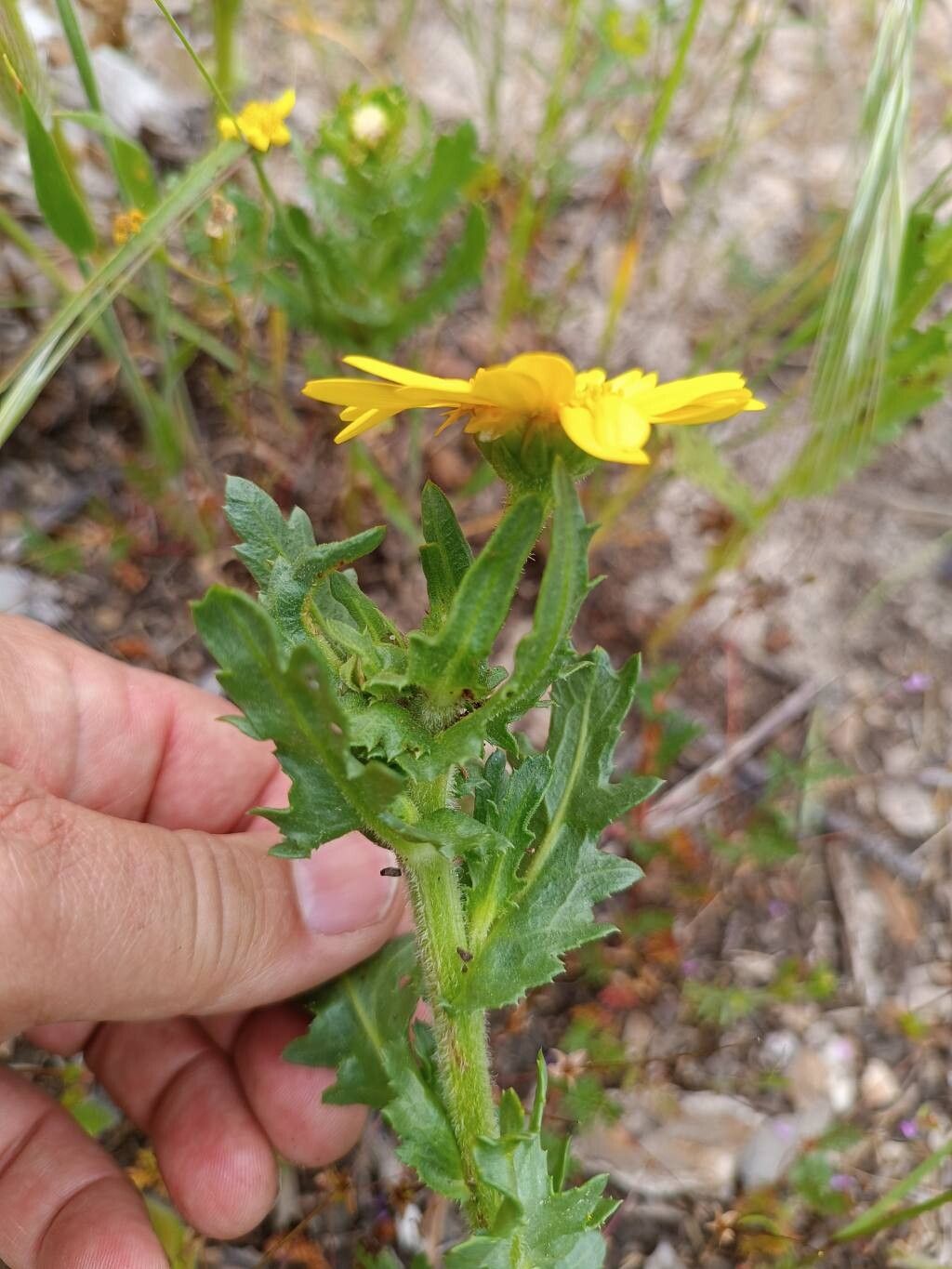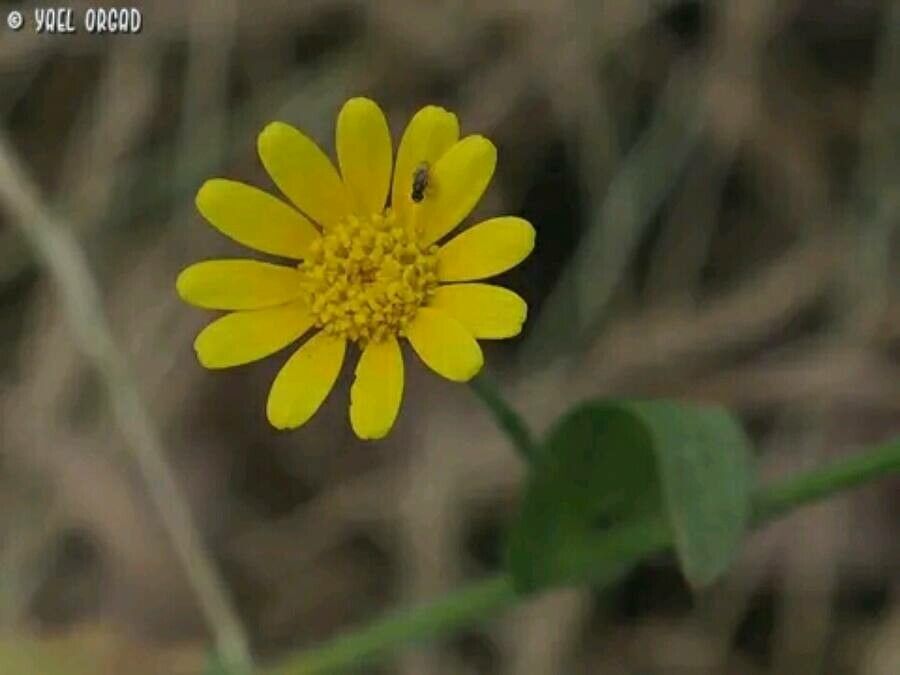
Heteranthemis is a monotypic genus of plants in the daisy family containing the single species Heteranthemis viscidehirta (orth. var. H. viscidihirta), which is known by the common name oxeye, or sticky oxeye. This plant is native to the Iberian Peninsula and adjacent areas in North Africa, but it can be found in other parts of the world as an introduced species. This is an annual herb growing erect stems 20 to 80 centimeters tall. Its abundant leaves are a few centimeters long, wavy to curly and divided into irregular toothed lobes. The stem and foliage are glandular and produce a sticky exudate. The plants produce bright yellow daisylike flower heads, with bases covered in large green phyllaries. The center of the head is filled with many yellow disc florets and the edge is fringed with toothed yellow ray florets about 2 centimeters long.
Sticky ox-eye generally has good resistance to disease and is not highly prone to illnesses. However, it can be vulnerable to pests and diseases present in its environment. These problems are usually mild. Regarding care, this plant needs a moderate level of maintenance. It should be pruned regularly to preserve a neat appearance and healthy growth, and fertilizing can encourage more blooms. Sticky ox-eye is suitable for anyone with outdoor space, such as a garden or patio, and does not require extensive care experience. It may need more attention if grown indoors.
How to keep Heteranthemis Viscidehirta.
Light
Sticky ox-eye is native to bright, open areas and flourishes in full sun. It will tolerate partial shade but prefers direct sunlight for the best growth. This plant, which can be annual or biennial, is noted for its sun-loving character.
Temperature
Sticky ox-eye can tolerate a wide range of temperatures, but its distribution may still be restricted by different combinations of moisture and heat. It performs best in warm summer climates with sufficient rainfall or watering. Long stretches of cloudy, rainy weather, as well as prolonged high temperatures, can raise the chance of Sticky ox-eye dying. In winter, adequate protection from the cold can increase the plant's survival rate.
Fertilizer
When the Sticky ox-eye has fully blossomed the majority of its flowers, it indicates that it's the appropriate moment to recommence the fertilizing process. You should initiate the fertilization cycle every three to four weeks, considering the weather conditions, precisely when the flowers are in their prime state. Subsequently, as the Sticky ox-eye begins to yield less fresh blooms, halt the fertilization process since it becomes unnecessary when the plant is incapable of generating any additional blooms.
Botanical profile.
- Plant Type
- Herb
- Life Cycle
- Annual
- Genus
- Heteranthemis
- Family
- Asteraceae
- Hardiness Zone
- 9-11
- Mature Height
- 30 cm to 61 cm
- Mature Spread
- 20 cm to 40 cm
- Leaf Color
- Green, Dark Green
- Leaf Type
- Semi-evergreen
- Flower Color
- Yellow
- Flower Size
- 3.05 cm to 5.08 cm
- Bloom Time
- Mid spring, Late spring, Early summer
- Planting Time
- Spring
- Harvest Time
- Summer
- Native Area
- Morocco, Spain, Algeria, Portugal