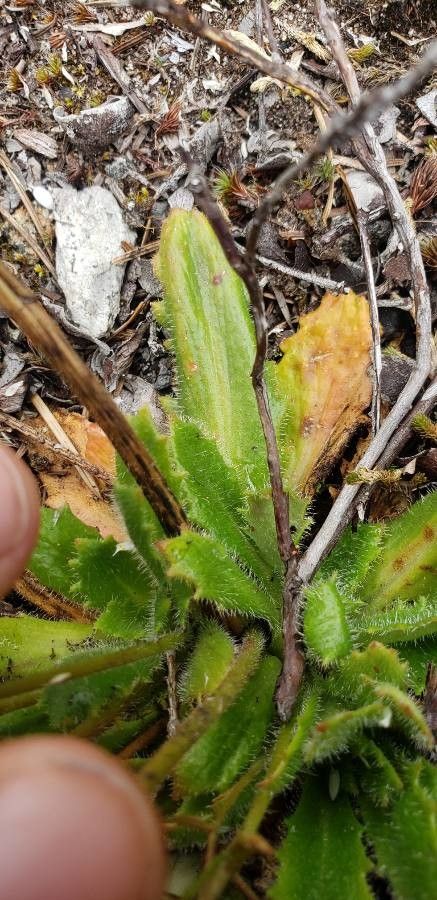
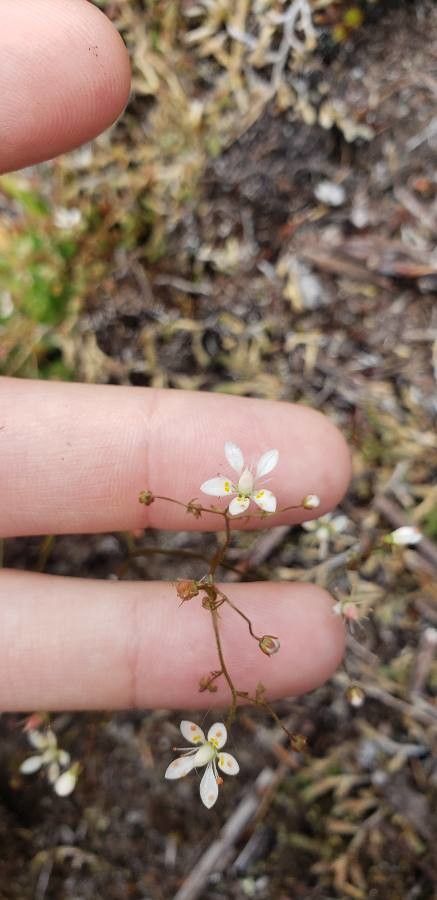
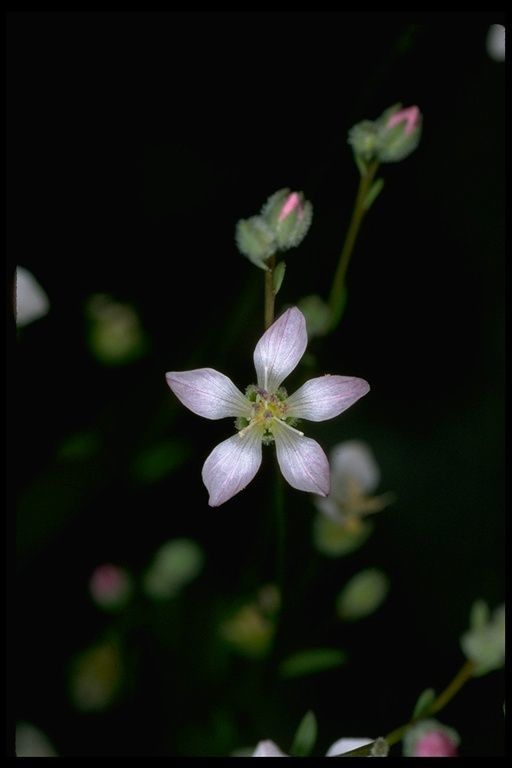
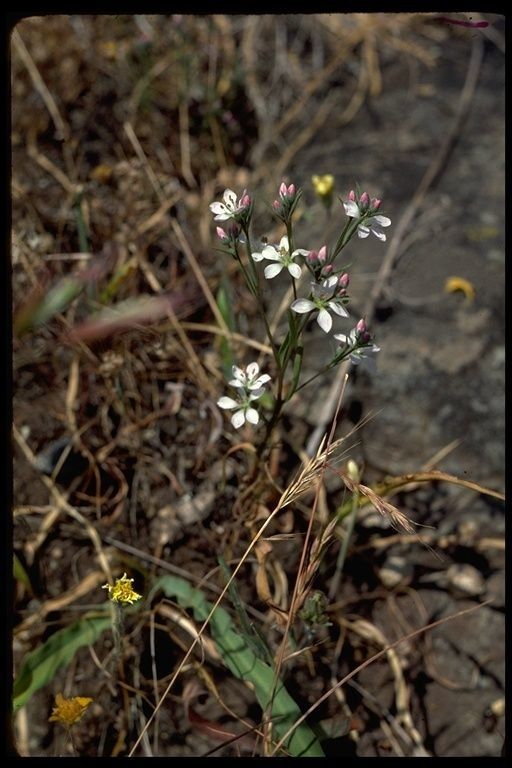
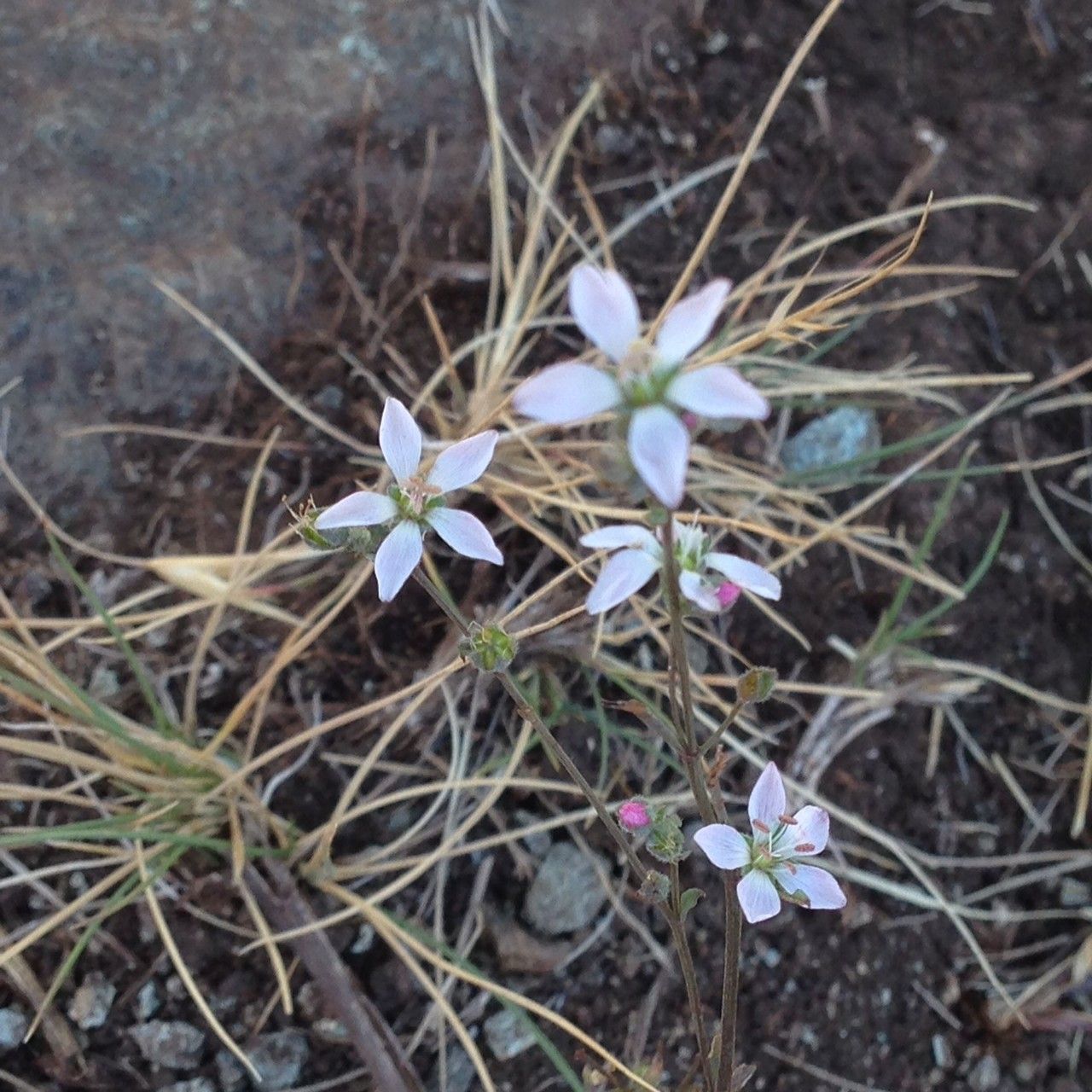
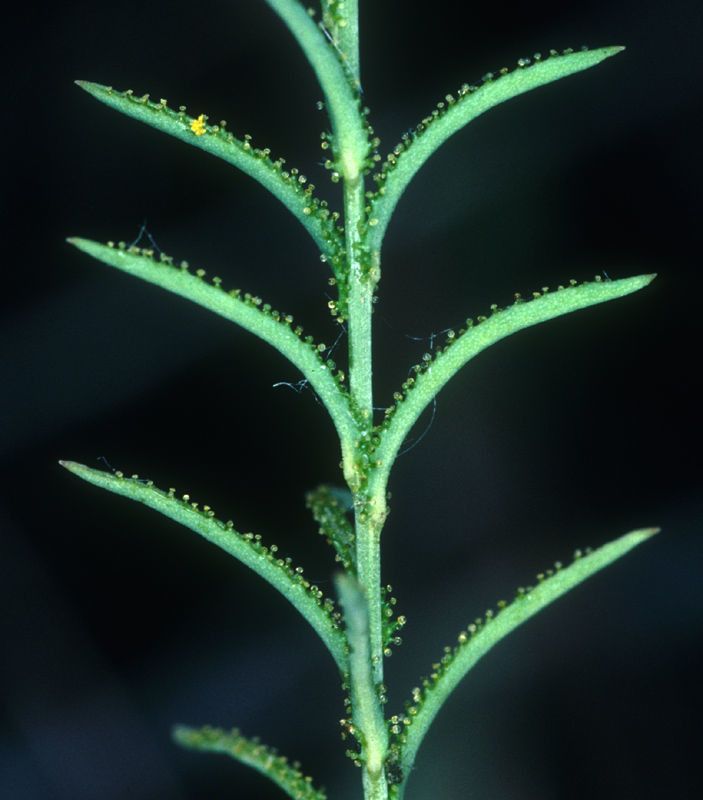
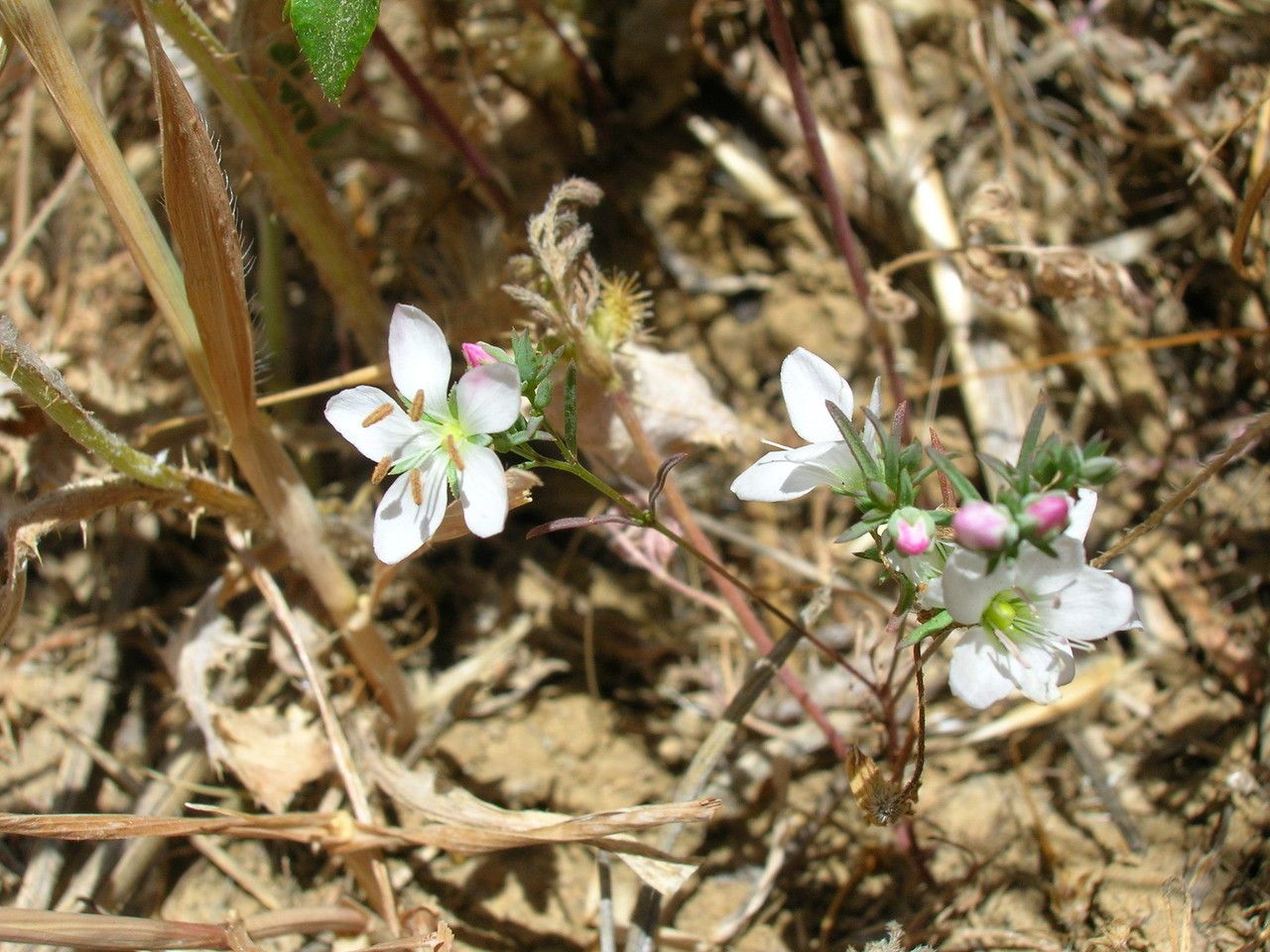
Hesperolinon congestum, or Marin dwarf flax, is an annual herb, which is known to occur only in San Mateo, San Francisco and Marin County, California, United States. This plant occurs chiefly on serpentine soils, especially in dry native bunch grasses, chaparral or other grasslands at elevations less than 200 meters. The flowers are congested at the tips of the dichotomously branching stems. H. congestum is in flower between April and July. The outlook for this plant depends on survival of only about twenty small colonies, most of which are not actively managed for protection, even though the species is federally and state-listed as threatened. This species is also less commonly known as Marin western flax.
Marin dwarf-flax shows strong disease resistance and is generally not prone to illnesses. However, it can be affected by pests and diseases present in its surroundings. Such infections are typically not severe. Regarding care, this plant requires moderate maintenance. It should be trimmed regularly to preserve its appearance and promote healthy growth. Fertilizing can also help encourage flowering. Marin dwarf-flax is suitable for anyone with outdoor areas like a garden or patio and does not demand extensive care experience. It may need more attention when grown indoors.
How to keep Hesperolinon Congestum.
Light
The Marin dwarf-flax is native to light, open settings where it flourishes under constant sunlight. Though it can cope with partial sunlight, it is more inclined towards full sun for its best growth. Recognized for its affinity for sunlight, this plant that grows annually and biennially prefers direct exposure to the sun.
Water
The Marin dwarf-flax thrives in arid regions due to its exceptional drought resistance. It requires only weekly watering to stay healthy. Although it is usually grown outdoors, it benefits from rainfall and stays evergreen, ensuring that its leaves can consistently absorb water even during dry periods.
Temperature
Marin dwarf-flax is capable of adjusting to an extensive variety of temperature environments, yet its propagation might be restricted due to diverse combinations of heat and water situations. It flourishes optimally in hot climates during the summer, given sufficient rain or irrigation. Increased periods of overcast and rainy conditions, along with sustained elevated temperatures, can heighten the risk of Marin dwarf-flax perishing. In the winter season, adequate shelter from the cold can enhance the plant's chances of survival.
Fertilizer
Frequent and mild applications of fertilizer can assist Marin dwarf-flax in developing healthy leaves. It is advisable to fertilize Marin dwarf-flax roughly once per month throughout the summer period. Nitrogen plays a key role for the growth of leaves, so providing Marin dwarf-flax with nitrogen-enriched supplements aids in its flourishing.
Pruning
Prune Marin dwarf flax from early to late spring to encourage healthy growth and vibrant blooms. Remove dead stems using sterilized tools to prevent disease. Aim to balance growth and aesthetics by shaping the plant carefully without over-pruning for the best results.
Botanical profile.
- Plant Type
- Herb
- Life Cycle
- Annual
- Genus
- Hesperolinon
- Family
- Linaceae
- Hardiness Zone
- 8-10
- Mature Height
- 10 cm to 30 cm
- Mature Spread
- 5 cm to 15 cm
- Leaf Color
- Green
- Leaf Type
- Semi-evergreen
- Flower Color
- Pink, White
- Flower Size
- 0.51 cm to 0.76 cm
- Bloom Time
- Mid spring, Late spring
- Planting Time
- Spring, Autumn
- Harvest Time
- Early summer, Mid summer
Other names.
Reader questions.
How should I water my Marin dwarf-flax plant?
To water Marin dwarf-flax, you have several options such as a garden hose with a spray nozzle or a watering can. This plant is not too particular about the type of water it receives, so rainwater, tap water, or filtered water will all suffice. However, it is advised to avoid watering from overhead as this can harm the leaves, flowers, and possibly lead to disease. A drip irrigation system is often the most effective method for watering Marin dwarf-flax, as it evenly and directly applies water to the soil. For container-grown Marin dwarf-flax, you can use a cup, watering can, or tap to water it directly into the soil.
How much sun does Marin dwarf-flax need every day to grow well?
In order to ensure the best growth and survival of the plants, it is important to provide them with a minimum of 6 to 8 hours of sunlight each day. In particular, they thrive when exposed to the morning light, especially during the summer. The Marin dwarf-flax, in particular, requires full sun and benefits from as much sunlight as possible. The more light these species receive, the better they are able to produce food, display stunning blooms, and maintain their overall well-being.
What should I do if I give my Marin dwarf-flax plant too much or too little water?
The remedy for underwatering Marin dwarf-flax is simple - water it regularly when you notice it lacks moisture. Overwatering, on the other hand, can be a more serious problem. It can lead to diseases that can cause the plant to decline and die. To prevent this, choose a growing location with plenty of sunlight and good drainage. If your potted Marin dwarf-flax is overwatered, consider changing it to a new pot with proper drainage and loose soil.
What kind of sunlight is necessary for Marin dwarf-flax?
The Marin dwarf-flax thrives in full sunlight, so it's important not to crowd them together. This allows each plant to receive equal sun exposure and prevents the leaves from being deprived of sunlight. If planted in pots, place them in windows with direct sun to ensure the herbaceous flowers receive full sunlight year-round. Avoid partial or filtered light, as this can weaken the stems and affect the health of the flowers. For the best results, always keep the Marin dwarf-flax exposed to the sun.
How much water does my Marin dwarf-flax need?
To keep your Marin dwarf-flax healthy, it is important to water it regularly throughout the growing season. Starting in spring, aim to water the plant once a week. As the weather gets warmer, you may need to increase watering to two or three times per week. However, be careful not to exceed this rate as it can be harmful to the plant. Regardless of how often you water, make sure the soil remains moist but not overly wet. If your Marin dwarf-flax is in a pot, it will require more frequent watering compared to those planted in the ground. Potted plants tend to dry out faster, so plan to water them a few times per week. In contrast, in-ground plants only need to be watered once per week.
Can the sun harm plants? How can we prevent Marin dwarf-flax from getting damaged by the sun and heat?
The Marin dwarf-flax is susceptible to damage from extreme temperatures, especially when exposed to many hours of sun above 90℉(32℃). It's best to provide some shade in the afternoon during the summer since sunlight is stronger and exposure is 50% longer compared to winter. To prevent stress, keep the plants hydrated by watering them when the top of the soil is about 2 inches dry. If it's too hot outside, consider moving container-planted dwarf-flax indoors. While it's normal for the leaves to wilt during the day and recover at night, if the plant continues to droop, it indicates rapid water loss and requires immediate watering.
How often should I water my Marin dwarf-flax plant?
Determining how much water to give to your Marin dwarf-flax can be done in a few different ways. Some gardeners prefer to gauge watering based on the moisture level of the soil. In this method, you would water until you feel that the top six inches of soil are moist. Another approach is to use a specific measurement. Generally, a weekly watering of around two gallons is recommended, taking into consideration the temperature and how quickly the soil dries. However, strictly following these guidelines might result in overwatering if your plant needs less water. When growing your Marin dwarf-flax in a container, a different method should be used. In this case, water enough to moisten all layers of dry soil. You can check this by sticking your finger in the soil or observing a slight trickle of excess water from the pot's drainage holes.
Should I keep Marin dwarf-flax away from the sun?
The Marin dwarf-flax thrives in the sun and is actually heliotropic, meaning it moves towards the sun. It is ideal to plant them in south-facing gardens so they can be exposed to the sun from morning to afternoon. However, it's important to note that while the sun is beneficial for them, some may experience sunburn. To protect them from the afternoon and midday sun, you can provide shade from a tree or a wall. Growing the Marin dwarf-flax in shady areas is not possible as the larger flowers require a lot of energy to grow and produce. For optimal results, always provide full sun lighting conditions in the area where they are planted.
How do I know if I'm watering my Marin dwarf-flax enough?
Avoiding overwatering your Marin dwarf-flax can be somewhat challenging due to their deep roots that require weekly soil moisture. However, these plants are highly vulnerable to root rot and can suffer from browning if overwatered. Underwatering is less of a concern as these plants can survive without additional watering for a while. However, if they are not watered for an extended period, they may wilt and develop dry leaves.
What will happen if Marin dwarf-flax doesn't get enough sunlight?
When the Marin dwarf-flax does not receive enough sunlight, its photosynthetic process slows down. This lack of sunlight causes the stems to become leggy as they stretch out in search of more light. Consequently, they will not bloom or produce seeds in shaded areas. Additionally, inadequate sunlight can result in the death of older leaves, lighter color in new foliage, and smaller new growth compared to previous growth. Despite their love for sunlight, Marin dwarf-flax plants can wilt when exposed to excessive heat and ultraviolet light during the summer months. It is advisable to cover them with a green shade net, especially in summer, to protect the leaves and flowers from scorching. When inside, using a fan to reduce heat can also be beneficial.
How should I water my Marin dwarf-flax during different times of the year?
As the seasons change, you can expect your Marin dwarf-flax's water needs to increase gradually. In spring, watering once per week should suffice. However, as the summer heat intensifies, you will likely need to provide more water, sometimes up to three times per week. This is particularly important for Marin dwarf-flax plants grown in containers since the soil in containers tends to dry out faster in warm weather. In autumn, when your Marin dwarf-flax is still blooming, it may require slightly less watering due to cooler temperatures and less intense sunlight compared to summer.
Does Marin dwarf-flax need specific attention regarding sunlight at different stages of growth?
The Marin dwarf-flax, when growing, requires more light than its mature counterparts. The younger plants should be given enough light, but sudden exposure to full sunlight, especially if grown in a nursery, may be overwhelming for them. Due to their sensitivity to the summer sun, it is best to gradually introduce them to brighter lighting conditions.