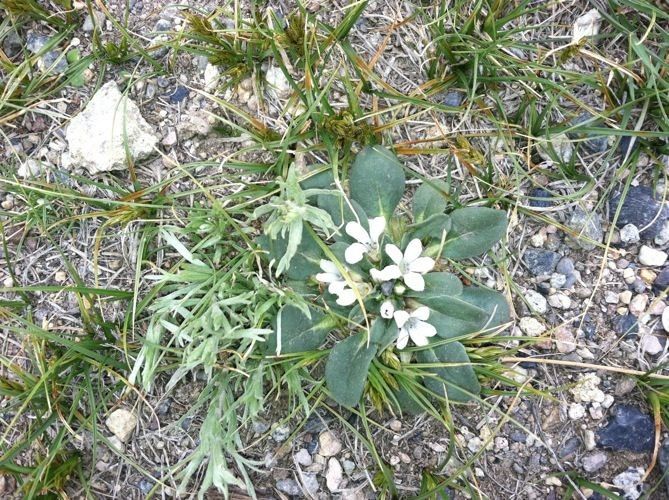
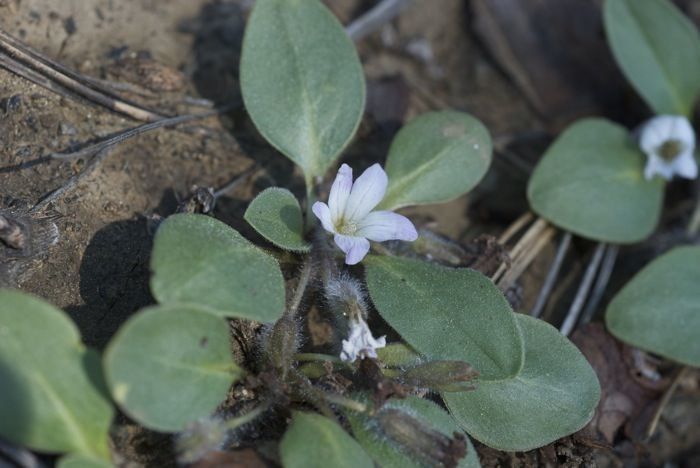
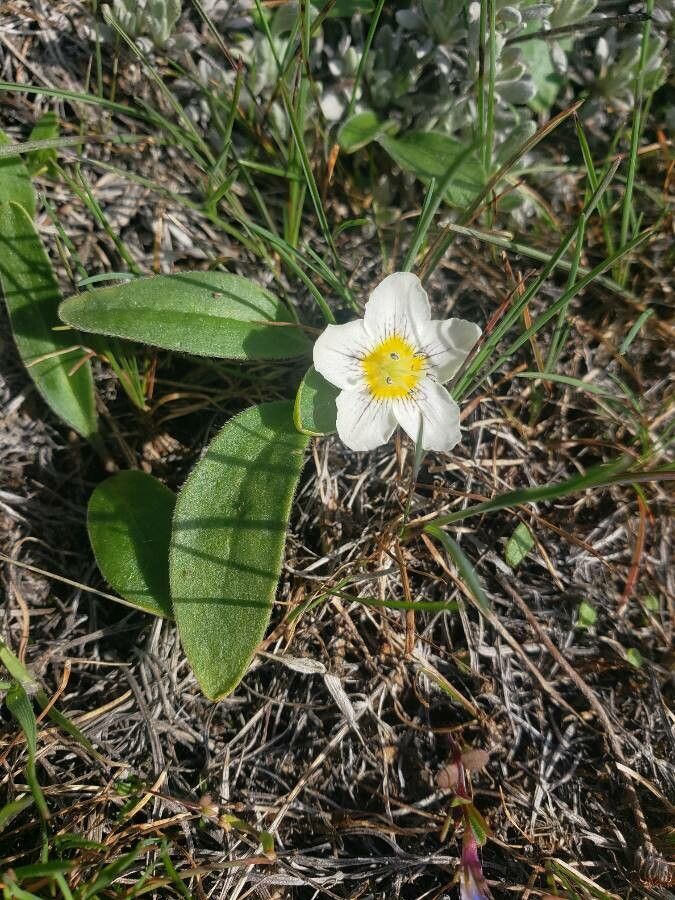
Hesperochiron is a small genus of plants in the waterleaf family containing two species native to western North America. These are thick-rooted perennial herbs growing in squat patches at ground level and producing bluish-white flowers with yellow throats. They grow in wet areas such as seepy meadows. The species are generally similar in appearance, with oblong green leaves up to 7 or 8 centimeters long and 2 to 3 wide, often coated with tiny hairs. Hesperochiron californicus, the California hesperochiron, produces slightly larger flowers than the dwarf hesperochiron, Hesperochiron pumilus. H. pumilus resembles wild strawberry, but has only five stamens and distinct elliptical leaves. They bloom briefly in early spring in the sagebrush steppe.
California hesperochiron has strong disease resistance and is generally not prone to illnesses. However, it can be affected by pests and diseases present in its environment. Such infections are typically not serious. As for care, this plant requires moderate maintenance. It should be pruned regularly to keep a tidy appearance and healthy growth. Fertilizing can also help encourage flowering. California hesperochiron is suitable for anyone with an outdoor area, such as a garden or patio, and does not demand extensive care experience. It may need more attention if grown indoors.
How to keep Hesperochiron Californicus.
Light
California hesperochiron does best in locations that receive full sun for most of the day. It can also persist in places that only get partial sunlight during the day. In its native habitat it is adapted to plentiful sunlight. Both excessive and insufficient sunlight can negatively affect its growth.
Water
The California hesperochiron thrives in temperate climates where there is consistent moisture. It requires soil that remains evenly moist and benefits from being watered weekly. As an herbaceous plant, it grows best outdoors, depending on sufficient soil moisture to support its growth during the active season.
Temperature
California hesperochiron can tolerate a wide range of temperatures, but its distribution may still be restricted by particular combinations of moisture and heat. It grows best in warm summer climates with sufficient rainfall or watering. Extended periods of cloudy, rainy weather or prolonged high temperatures can increase the likelihood of California hesperochiron dying. In winter, appropriate protection from cold can improve the plant's chances of survival.
Fertilizer
The best time to fertilize a California hesperochiron is in early spring, when it is coming out of dormancy and beginning active growth. Fertilization supplies essential nutrients for healthy development. Although California hesperochiron has relatively low fertilizer needs, applying fertilizer once a year can improve its survival and encourage better, longer-lasting flowers.
Pruning
The low-growing perennial herb, California hesperochiron, thrives in moist areas and showcases white flowers with dark veins. To maintain its health, prune the plant in early to late spring to remove dead foliage, promote healthy growth, and improve air circulation. Regular maintenance is essential for vibrant health and reduced risk of disease.
Pot & Repot
When repotting California hesperochiron, select a pot 1–2 inches (2.5–5.1 cm) larger with good drainage. Use a well-draining potting mix. Repot in spring or fall, making sure the root ball sits slightly below the rim of the flower pot. Water thoroughly after repotting and place in a warm spot with indirect sunlight.
Botanical profile.
- Plant Type
- Herb
- Life Cycle
- Perennial
- Genus
- Hesperochiron
- Family
- Boraginaceae
- Hardiness Zone
- 6-9
- Mature Height
- 5 cm to 13 cm
- Mature Spread
- 10 cm to 20 cm
- Leaf Color
- Green
- Leaf Type
- Deciduous
- Flower Color
- White
- Flower Size
- 1.02 cm to 2.03 cm
- Bloom Time
- Early spring, Mid spring
- Planting Time
- Spring, Summer
- Harvest Time
- Late spring, Early summer
Other names.
Reader questions.
How should I water my California hesperochiron?
To ensure the health of the California hesperochiron, follow these watering guidelines: Use filtered water that is at room temperature. Tap water may have harmful particles. The plant prefers warm water to mimic its natural environment. Avoid watering from above as it can cause issues with the foliage. Instead, apply filtered room temperature water directly to the soil until it is fully saturated. This helps the roots spread and collect nutrients.
Why should I use fertilizer on my California hesperochiron plant?
Fertilization is important for the California hesperochiron and other plants because it provides essential nutrients for growth. However, the California hesperochiron has relatively low fertilization needs and can sometimes survive without it. Still, annual fertilization can greatly benefit the plant, helping it stay alive and potentially improving flower longevity. Therefore, those wanting their California hesperochiron to thrive should prioritize regular fertilization.
What kind of sunlight does California hesperochiron require?
California hesperochiron requires full sun daily, needing at least six hours of sunlight to maintain healthy leaves, roots, and blooms. While most perennials also require six hours of sunlight, plants like the Orange Daylily or Giant Coreopsis can survive with only three hours of sun each day. However, they will not thrive as they would in sunnier conditions.
What should I do if I give too much or too little water to my California hesperochiron?
Both overwatering and underwatering can harm your California hesperochiron, but overwatering is more common. When this plant gets too much water, its stems and leaves may wilt and turn yellow. Prolonged overwatering can also lead to diseases like root rot, mold, and mildew, which can be fatal. While underwatering is less likely, it can still happen. In such cases, the leaves of your California hesperochiron may become brittle and brown. It's important to catch signs of overwatering early since some diseases from overwatering, like root rot, may be irreparable if detected too late. If you notice early signs of overwatering, reduce your watering immediately and consider replacing poorly-draining soil with a loose, well-draining potting mix. Conversely, if you see signs of underwatering, simply water more regularly until the signs improve.
What is the best time to put fertilizer on my California hesperochiron plant?
The best time to fertilize a California hesperochiron is in the late winter or early spring when the plant is transitioning from dormancy to active growth. This will give it a strong start for the season. While early spring is the most beneficial time, fertilizing in the fall is also acceptable. However, it is not recommended to fertilize during the summer or winter seasons.
Can the sun harm California hesperochiron plants? How can I protect California hesperochiron from sun and heat damage?
In warm climates, some Perennial Flowering Plants may struggle with excessive heat and suffer from sun damage. They can wilt, dry out, or even experience growth problems if they are consistently exposed to the intense afternoon sun. However, not all plants require protection from the light afternoon sun. For those that are harmed by intense afternoon exposure, it is recommended to provide them with some shade in warmer climates. Gardeners can achieve this by planting these plants in areas that do not receive direct heat during the afternoon, such as under trees or behind bushes.
How much should I water my California hesperochiron?
To determine if your California hesperochiron plant needs water, there are different methods depending on whether it is in a pot or planted in the ground. For potted plants, stick your finger into the soil and if the top two to three inches are dry, it's time to water. The same method applies for plants in the ground, checking for dryness in the first few inches of soil. Typically, watering once a week is sufficient during spring and early fall, but during hot weather, you may need to water twice a week or more. However, mature California hesperochiron plants have a good tolerance for drought.
When should I not put fertilizer on my California hesperochiron plant?
To properly care for a California hesperochiron, it is best to fertilize it only during late winter and early spring. This plant has low fertilization needs, so a single annual feeding is sufficient. Avoid fertilizing during spring, summer, and fall as it can lead to overfertilization and its accompanying complications. An exception is if you missed fertilizing in spring, then fall feeding is permissible. Similarly, there is no need to fertilize during winter when the plant is in a dormant growth phase and not producing new growth.
Should I keep California hesperochiron out of the sun?
Certain perennial plants require ample sunlight to reach their maximum bloom. However, in warmer climates, some of these plants actually benefit from less sun. For instance, individuals residing in hotter regions might find it beneficial to shade their flowering perennials during the intense afternoon sun, especially during summer months. Although many perennial flowering plants prefer partial shade in the hottest climates, there are exceptions. Take the Giant Coreopsis, for example, as it is not bothered by excessive sun exposure. These plants can flourish even when placed in the full sun during scorching weather.
How much water does my California plant need?
When watering your California hesperochiron plant, don't be afraid to use a substantial amount of water. Make sure the top two to three inches of soil are dry before watering thoroughly. Water the plant until the soil is completely soaked, allowing excess water to drain through the pot's drainage holes. If you don't see any excess water draining, you may not have watered enough. However, be careful not to let water accumulate inside the soil, as this can harm the plant. If water isn't draining properly, it could be due to poorly draining soils, which should be avoided for the plant's health. If the plant is outside, one inch of rain per week will suffice.
What kind of fertilizer should I use for my California hesperochiron plant?
For a California hesperochiron, almost any general-purpose fertilizer with a balanced amount of the three main plant nutrients will work well. However, there are specific nutrient blends that can provide even greater benefits. Some gardeners recommend using higher levels of phosphorus to promote stronger roots and better flowers, which is particularly helpful for this flowering plant. Whether you choose a granular or liquid fertilizer, it's important to ensure that there are plenty of nutrients present. Additionally, aside from manufactured fertilizers, you can also improve the soil for your California hesperochiron with organic methods such as compost, manure, and similar materials, as they can greatly enhance the growing medium for this plant.
What will happen if the California hesperochiron doesn't get enough sunlight?
If you are cultivating California hesperochiron and not receiving sufficient sunlight, you will observe signs of insufficient requirements in your plants. Lack of full sun exposure will result in fewer blooms. Although some plants may develop dry spots on their leaves, most will still manage to bloom in inadequate sunlight. However, these flowers will be smaller and less full in appearance.