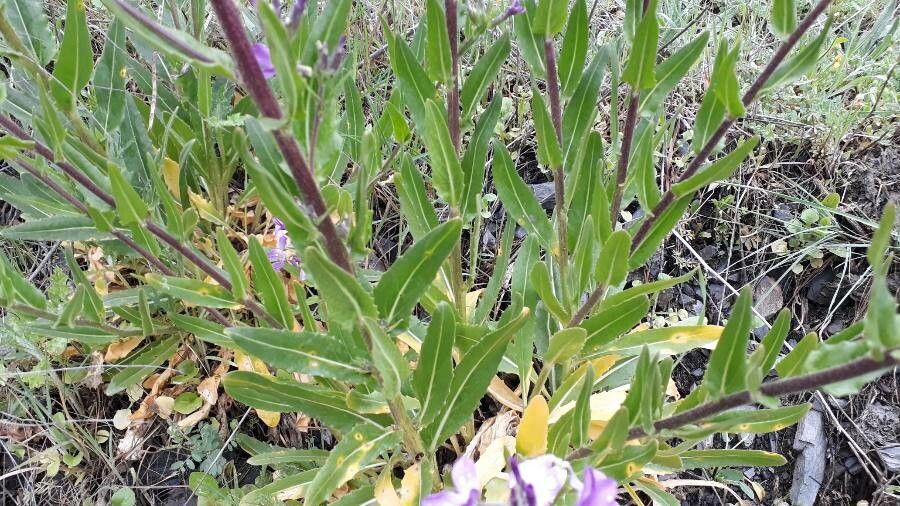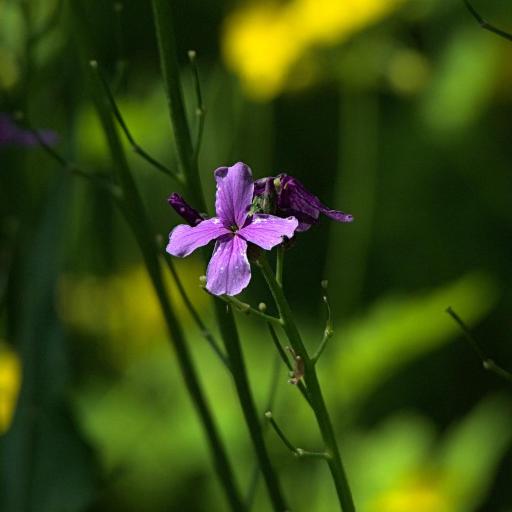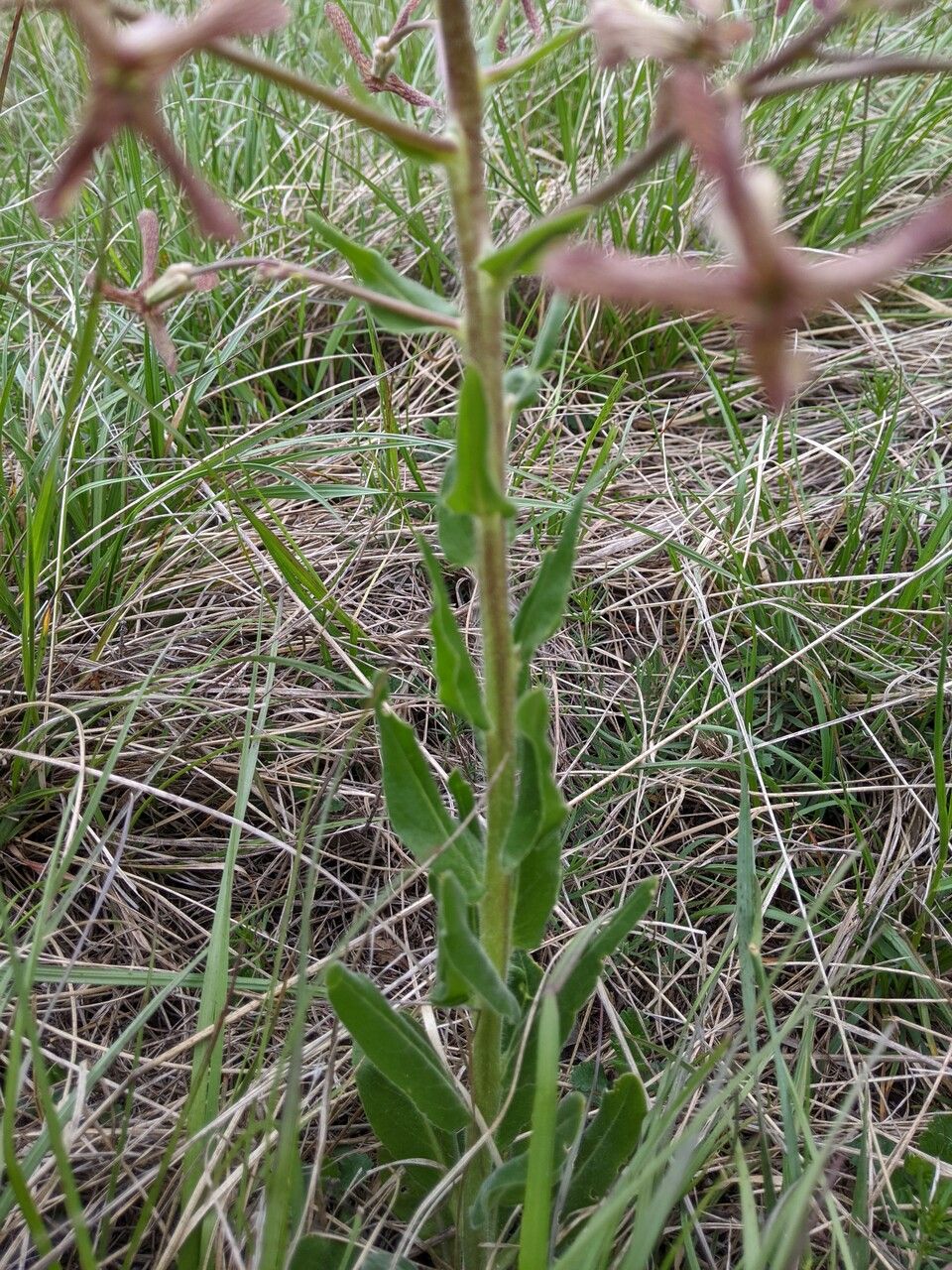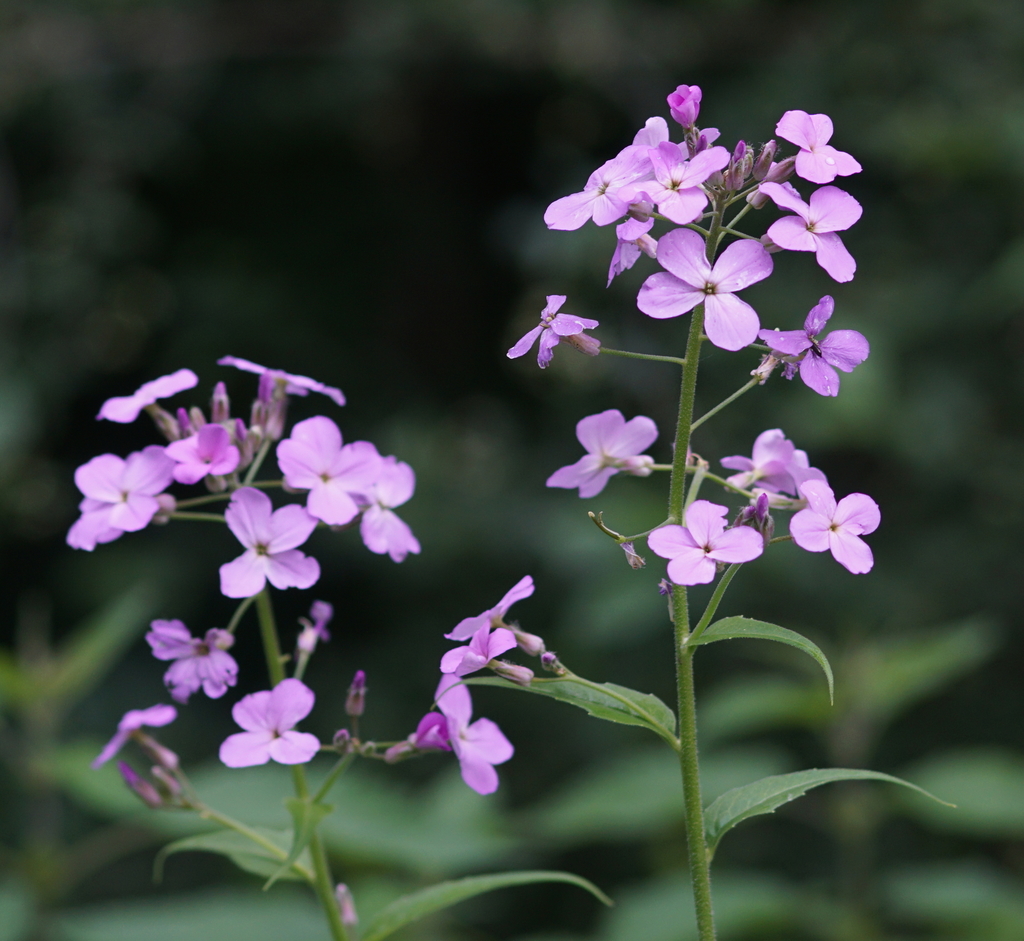
Hesperis matronalis, commonly known as Dame's Rocket, is a biennial or short-lived perennial plant belonging to the Brassicaceae family. Native to Europe and Asia, it has since been introduced and naturalized in North America. The plant can grow up to 3 feet tall and features lance-shaped leaves with toothed edges. Its fragrant flowers come in shades of pink, purple, or white, each with four petals arranged in a cross shape.
Dame's Rocket blooms from late spring through early summer, attracting bees, butterflies, and other pollinators. It thrives in full sun to partial shade and prefers well-drained soil, although it can adapt to a wide range of soil types.
Historically, the plant has been used for medicinal purposes, thanks to its anti-inflammatory compounds. However, it is important to note that all parts of the plant are toxic if ingested.
Dame's rocket, also known as Sweet Rocket, was cultivated by Lady Skipwith in the late 18th century. Lady Skipwith, a Virginian botanist, maintained an extensive garden and owned a large botany library, which was the largest female-owned library at the time of her death. Dame's rocket was also grown in Bartram's Garden, a renowned historical arboretum in Philadelphia established in the 18th century. FUN FACT · FROM THE LIBRARY
Often grown as an ornamental garden flower, Dame's Rocket is valued for its attractive blossoms and sweet fragrance. Its ability to self-seed readily makes it an easy addition to any garden or landscape design.
Overall, Hesperis matronalis is a beautiful flowering plant that adds color and fragrance wherever it grows. It also supports pollinators, such as bees, making it an excellent choice for gardeners seeking both beauty and functionality in their plants.
Dame's rocket: The Latin specific epithet "matronalis" is derived from the Roman festival Matronalia, which honored the goddess of motherhood and childbirth. This connection is how the name "Dame" originated. Regarding the term "rocket," it may have arisen because the plant is known for its edible leaves. Additionally, its closest relative is a plant known as "rocket," making the most common name for this plant "Dame's rocket."
Dame's rocket has strong resistance to disease and is generally not highly susceptible to illnesses. However, it can be vulnerable to pests and diseases present in its environment, and these infections are usually mild. For care, this plant needs a moderate amount of maintenance. It should be pruned regularly to keep a neat appearance and promote healthy growth. Fertilizing can also encourage better flowering. Dame's rocket is suitable for anyone with outdoor areas like a garden or patio and does not require extensive experience in plant care. It may need extra attention if grown indoors.
How to keep Hesperis Matronalis.
Light
Although dame's rocket performs best in plentiful light, it can still persist in locations where lighting is interrupted. As a species that naturally occurs in open, unobstructed areas, it has adapted to take advantage of high light levels. When light is scarce, both its flowering and overall vigor are diminished, producing weaker growth.
Water
Dame's rocket flourishes in temperate regions that have moderate moisture. To keep the soil moist without becoming waterlogged, water the plant every 1-2 weeks. It thrives in cooler climates and indirect sunlight. Natural rainfall is particularly beneficial during its active growing season, promoting optimal growth and healthy foliage.
Humidity
This plant will thrive in moderate humidity, which is probably the level in your home. However, misting it a few times a week can be very beneficial. Make sure the room has good ventilation.
Temperature
Dame's rocket is native to habitats with temperatures between 68 and 95 °F (20 to 35 ℃). It favors these moderate climates and adapts to seasonal fluctuations within that range.
Fertilizer
The best time to fertilize Dame's rocket is in early spring, as it comes out of dormancy and starts active growth. Fertilization supplies essential nutrients needed for healthy development. Although Dame's rocket has relatively low fertilizer requirements, applying fertilizer annually can improve its survival and encourage better, longer-lasting blooms.
Pruning
To help Dame's rocket thrive, it's important to prune it properly. The best time for pruning is from early to late spring, which allows you to remove any damaged growth and encourages fuller development. After the plant blooms, you should deadhead it and cut back about one-third of the growth. This will maintain a tidy appearance, promote reblooming, and improve air circulation, reducing the risk of fungal diseases.
Pot & Repot
When repotting Dame's rocket, select a pot 1-2 inches (2.5–5.1 cm) larger with good drainage. Use a well-draining potting mix. Repot in spring or fall, making sure the root ball sits slightly below the rim of the flower pot. Water thoroughly after repotting and place the plant in a warm spot with indirect sunlight.
Toxicity
Dame's rocket leaves, sprouting seeds, and dried seeds are all edible. They've been used for medicinal purposes, and they're said to have aphrodisiac effects.
Further reading →
The toxicity and danger assessments provided are for reference only. We do not assure their accuracy, so it's crucial not to depend on them. Seek professional advice when necessary for accurate guidance.
Botanical profile.
- Plant Type
- Herb
- Life Cycle
- Perennial, Biennial, Annual
- Genus
- Hesperis
- Family
- Brassicaceae
- Hardiness Zone
- 4-10
- Mature Height
- 40 cm to 91 cm
- Mature Spread
- 30 cm to 40 cm
- Leaf Color
- Green
- Leaf Type
- Deciduous
- Flower Color
- Lavender, Pink, White
- Flower Size
- 2.03 cm
- Bloom Time
- Late spring, Early summer
- Planting Time
- Spring
- Harvest Time
- Early summer, Mid summer
Other names.
Reader questions.
When Should I Water My Dame's Rocket?
Watering Dame's Rocket is essential to its health and blooming. Check for soil dryness by inspecting if the soil is dry, crumbly, or if moisture is absent 2 inches below the surface - this is your cue to water the plant. Also, watch for droopy leaves, a sign the plant is thirsty, particularly in dry or sunny periods. Delayed flowering indicates a need for more water to boost the plant's floral display. Be cautious of over or under-watering, as both can result in root rot, dehydration, or even plant death. Also, environmental factors like sunlight, heat, and wind affect watering needs, so adjust your watering routine accordingly.
Why should I put fertilizer on my Dame's rocket plants?
Fertilization is important for the growth of Dame's rocket and other plants. It provides essential nutrients that support their overall development. While Dame's rocket has relatively low fertilization requirements, occasional fertilization can greatly benefit the plant. It helps to maintain its health and may enhance flower production and longevity. Therefore, those wishing to ensure their Dame's rocket looks its best should consider annual fertilization.
What are the sunlight requirements for Dame's Rocket?
Dame's Rocket requires different levels of sunlight depending on its specific needs. For full sun exposure, it needs above 6 hours of sunlight, while partial sun exposure amounts to about 3-6 hours of sunlight daily. It is important to observe how sunlight moves through your garden to find the perfect balance of light and shade, ensuring the plants' optimal growth and happiness.
What are the ideal temperature conditions for Dame's rocket?
Dame's rocket thrives in environments with temperatures ranging from 68 to 95 °F (20 to 35 °C), which are moderate climates it prefers. The plant has strong cold resistance, meaning special frost protection measures are not usually necessary. However, if winter temperatures are expected to drop below -30°C, it's important to protect the plant by covering it with soil or straw. Additionally, watering the plant abundantly before the first freeze in autumn helps keep the soil moist and prevents drought and water scarcity during winter and early spring.
How Should I Water My Dame's Rocket?
Dame's Rocket thrives with deep, infrequent waterings, making sure the root zone is thoroughly saturated and the soil allowed to dry out slightly between sessions. Avoid shallow waterings. Use a watering can with a narrow spout to direct water at the plant base, preventing foliage wetting and ensuring gentle watering that doesn't disturb roots. A moisture meter can help gauge soil moisture levels accurately, avoiding over or under-watering. Overhead watering should be avoided to prevent potential fungal diseases. During hot weather, water more frequently, but reduce in cooler or rainy periods to prevent waterlogging.
When should I fertilize my Dame's rocket plant?
The best time to fertilize a Dame's rocket is during the late winter to early spring when the plant is transitioning from dormancy to active growth. Fertilizing during this time promotes healthy growth and sets the plant up for a successful season. While early spring is generally recommended for fertilization, it is also possible to fertilize during the fall. However, it is not advised to fertilize during the summer and winter seasons.
How does Dame's Rocket react to different lighting conditions?
Dame's Rocket thrives best in abundant light but can also survive in areas with limited illumination. Naturally, it grows in open lands and benefits significantly from high levels of light for both flowering and general health. Insufficient light leads to weaker growth, showcasing the plant's adaptability to varied lighting environments.
How does Dame's rocket react to low temperatures?
Dame's rocket is cold-tolerant, best thriving when temperatures stay above 20°C and should remain above 0°C during winter. In the event that temperatures fall below -30°C, while the plant may not show noticeable changes during winter, there could be a decrease in sprouting or even no sprouting during spring. In such cases, it is advised to remove any parts of the plant that have failed to sprout in spring.
How Much Water Does Dame's Rocket Really Need?
The watering needs of Dame's Rocket depend on various factors like pot size and plant size. Generally, aim for consistently moist soil without waterlogging. For potted plants about 8 to 10 inches deep, starting with 1.5 to 2 cups of water weekly is a good rule, adjusting based on plant size and weather conditions. Properly watered Dame's Rocket will display lush foliage and vibrant blooms. Watch out for signs of both under and over-watering, such as yellowing or wilting leaves, and adjust accordingly to avoid growth stunting or reduced flowering.
When is it best not to fertilize my Dame's rocket plant?
To avoid overfertilization and its potential complications, it is best to only fertilize your Dame's rocket during late winter and early spring. This plant has low fertilization needs, so a single annual feeding during this time is sufficient. Fertilizing throughout spring, summer, and fall can easily lead to overfertilization, unless you did not fertilize in spring, in which case it is acceptable to feed the plant in fall. Additionally, there is no need to fertilize during winter as the Dame's rocket will be in a dormant phase with no new growth occurring.
Can artificial lighting be used for Dame's Rocket, and how?
Yes, artificial lighting can be used to support the growth of Dame's Rocket, especially in conditions where natural sunlight is not sufficient. Indoor plants benefit from artificial lights like LEDs, which can be customized to provide necessary wavelengths. For optimal growth: full sun plants need 30-50W/sq ft, partial sun plants 20-30W/sq ft, and full shade plants 10-20W/sq ft. The light source should be placed 12-36 inches above the plant, mimicking natural sunlight for 8-12 hours per day.
What should be done if Dame's rocket is exposed to high temperatures?
During the summer, it's crucial to keep Dame's rocket's temperature below 35°C. Exposure to temperatures exceeding 41°C may result in the leaves becoming lighter in color, prone to curling, susceptible to sunburn, and in severe cases, causing the entire plant to wilt and dry. To mitigate these issues, trim away the sunburned and dried-up parts of the plant, move it to a shaded location away from the midday and afternoon sun, or use a shade cloth for protection. Watering the plant in the morning and evening helps keep the soil moist and reduces heat stress.